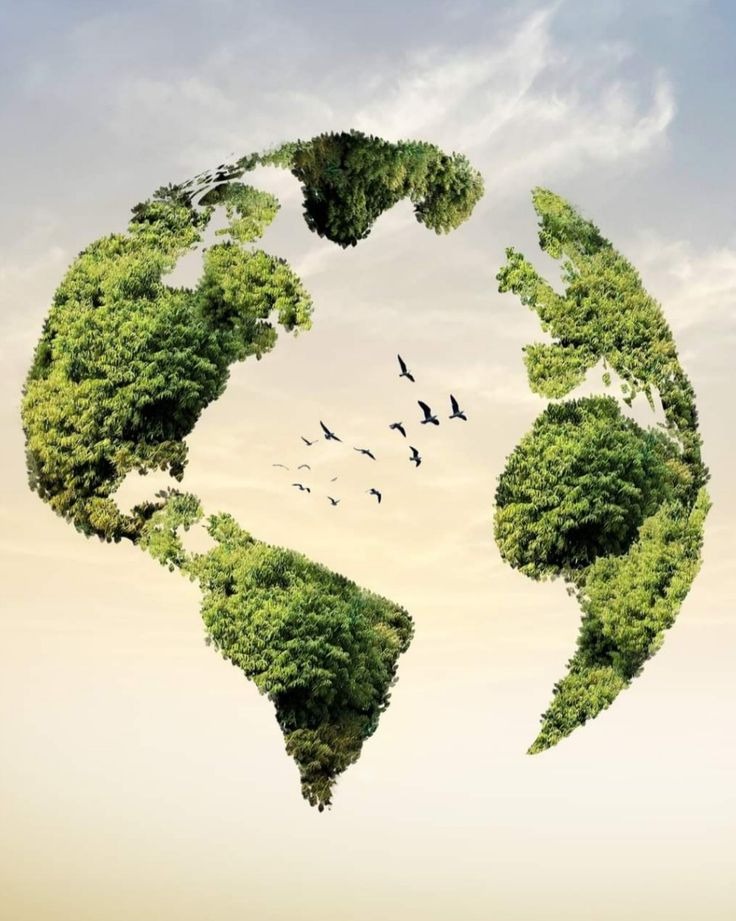
Today, World Environment Day, in Baku, Azerbaijan, world leaders are gathering under a beautiful theme: “Inspired by Nature. For Climate. For Our Future.” They will take photos. They will give speeches, and then they will fly home on private jets.
Meanwhile, in Nigeria, the rain is coming. And we already know what that means.
We’ve been behind for a long time. We Just Didn’t Know It Yet
In 2015, Nigeria had a government that made a lot of promises about the environment. The Renewable Energy Master Plan said we would reach 23% clean electricity by 2025. The target for electricity access was ambitious: move from 40% of the population having power to 75% by 2020. The forests, though already devastated, between 2000 and 2005, Nigeria had lost 55.7% of its primary forest, giving it the highest deforestation rate in the world over that period, were supposed to be protected and restored.
In reality, most of us were just trying to manage NEPA (electricity). You would know, you were also managing.
The warning signs were already there. Less than 10% of Nigeria’s forest cover remained. Floods, drought, and desertification were already degrading the environment, especially in the semi-arid north. Nearly three-quarters of Nigerian households were using wood fuel for cooking. The land was tired, the air was dirty and polluted, and the government’s plan for all of it was mostly a PDF.
Today, June 5, 2026: Are We Any Closer To An Environmentally Safe Country?
Here is the current state of the country you live in
On electricity: Every single target from 2015 has been missed. Only 21 megawatts of renewable capacity were added between 2015 and 2022. In 2024, fossil gas still supplied about 80% of electricity generation. The share of renewables in Nigeria’s overall power mix has barely changed over the last five years. Over 85 million Nigerians still lack reliable electricity. We did not solve the generator problem. We just started buying solar.
On floods: Flooding is no longer a disaster in Nigeria. It is a yearly subscription, one Nigerian can’t remember subscribing to. In 2024 alone, flooding killed over 1,200 people, injured at least 2,712, and displaced 1.2 million across 31 states. Then 2025 came, and one single flood in Mokwa, Niger State, killed over 500 people, left 600 missing, destroyed more than 4,000 homes, collapsed two bridges, and swept away two roads. The cause? Heavy rainfall, yes. But also: poor drainage and deforestation.
We are not just victims of climate change. We are contributors to our own suffering.
On plastic: Nigeria generates more than 2.5 million tonnes of plastic waste annually, with over 70% ending up in landfills, drainage channels, and water bodies. Lagos alone generates between 50 million and 60 million discarded sachet water nylons every single day. Every. Single. Day. Those nylons are not disappearing. They are sitting in your drainage. And when the rain comes, they are the reason your street becomes a river.
On forests: From 2001 to 2022, Nigeria lost 1.25 million hectares of tree cover, at a rate of 163,000 hectares per year, the 15th fastest deforestation rate among all nations. The trees are not growing back fast enough. The desert is not waiting.
The maths is not mathing, and that’s because nothing has changed
If Nigeria continues on its current path, the floods will get worse and more frequent because deforestation keeps removing the natural buffers that absorb rainfall. Food prices will keep rising because northern farmlands will keep shrinking as the Sahara moves south. More people will die in their homes during rainy seasons, not from bad luck, but from policy failure dressed up as an act of God.
Nigeria has announced a net-zero target of 2060, but there is a major funding gap, and experts criticise the continuing lack of grid access for millions of citizens, pointing to funding problems, energy loss, corruption, and poor maintenance as the core drivers of the crisis.
The Climate Action Tracker by Climate Analytics and the New Climate Institute currently rates Nigeria’s climate targets and policies as “Almost sufficient”, which sounds polite until you realise that “almost” is doing a lot of heavy lifting in a country where children are now flood victims.
The trajectory for 2036, without mincing words, does not look promising, especially if the current pace holds. More sachet water is blocking more drains. More families will rebuild from flood damage they cannot afford. More generators, more fuel costs, more carbon in the air. It’s a natural disaster armageddon.
So Who Is Actually Responsible Here?
Let us be clear about this, because too many people want to make this a “we all have a role to play” conversation and then go home feeling good about themselves.
The government owes you big time
The Federal Ministry of Environment exists. NESREA (the National Environmental Standards and Regulations Enforcement Agency) exists. The National Emergency Management Agency exists. These are not volunteer organisations. They are funded by your taxes to protect you from exactly what is happening right now.
The government is responsible for building and maintaining drainage infrastructure. For enforcing the laws against illegal dumping. For holding oil companies accountable for the decades of devastation in the Niger Delta. For funding the Great Green Wall reforestation effort properly, not just on paper. They are responsible for ensuring that Nigeria’s NDC 3.0 climate commitments, including the pledge announced by Vice President Kashim Shettima to reduce deforestation by 60% and plant 20 million trees annually, actually happen on the ground and not just in a UNGA speech.
Hold them to it. Ask your local government rep why your drainage is blocked. Ask your state government why the environmental impact of that new development was not assessed. Ask the federal government why the National Gas Expansion Programme, designed to convert over 30 million homes from wood fuel to LPG, has seen no significant developments.
You owe yourself and your neighbours
Stop throwing sachets on the ground. That is not a moral lecture; what it is is a direct line between your behaviour and your street flooding in July. Those 50 to 60 million sachet bags Lagos produces every day? They come from hands. Our Hands.
Here is what you can actually do, starting today
Sort your waste: Many estates and local waste collectors now accept separated plastics. Apps like Wecyclers and Pakam connect Lagos and Abuja residents to recyclers who will pay them for their sorted waste. Turning your rubbish into money is the most Nigerian solution to an environmental problem that has ever existed.
Stop burning: Open burning of household waste releases toxic fumes and contributes to the very air quality crisis that is quietly damaging lungs across the country. If your estate burns waste in a corner, push back and report it to your state environmental protection agency or your local government.
Go outside and plant something: The Nigerian Conservation Foundation runs community tree-planting programmes you can join or support. The Great Green Wall Nigeria initiative is actively looking for partners at the local government level. One tree does not fix a forest, but 200 million Nigerians planting one tree each absolutely does.
Use your voice as a citizen and consumer. We cannot ask for change and not play our part in bringing that change to fruition.
The Bottom Line
World Environment Day is not a day to feel inspired and then go back to normal. It is a day to look at the numbers: the 1,200 dead in 2024 floods, the 500 dead in Mokwa in 2025, the 50 million sachet bags Lagos throws away before lunch, according to a 2023 research, and decide that “normal” is not acceptable.
The floods are not a coincidence, the dying forests are not a coincidence, the food inflation people are complaining about at the market is directly connected to soil degradation and drought in the north.
The government must do its job, and while it is busy deciding on how to do it, we must do ours.
Happy World Environment Day. Now go sort your waste.