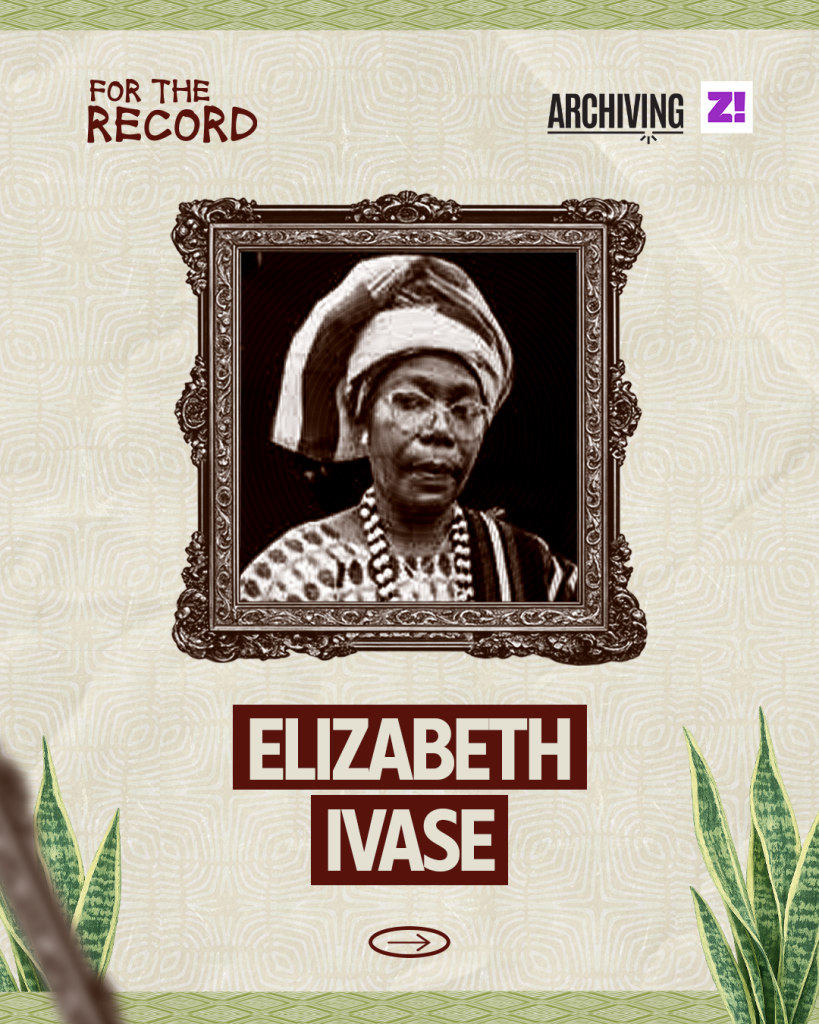
We don’t always recognise ripple effects, and oftentimes never know who is touched by them. For Elizabeth Afadzwana Ivase, that moment came at just nine years old, at a political rally where she heard figures like Funmilayo Ransome-Kuti speak on independence and the role of women. It would go on to define the trajectory of her life and ignite her lifelong passion for equality and public service.
Elizabeth Ivase hails from Gboko, Benue State. At 18 years old while a student at Sacred Heart Teachers’ College in Kaduna, she testified before the Willink Commission, a body appointed by the colonial government to investigate the concerns of minority groups and recommend safeguards. Chaired by British lawyer Sir Henry Willink, the commission intended to address the anxieties of ethnic minorities ahead of Nigeria’s 1960 independence.
Ivase’s testimony in Kaduna boldly advocated for Northern women’s civic rights, including the vote, which they lacked due to regional customs. In doing so, she challenged Northern leaders such as the NPC’s legal adviser, Abdul Ganiyu Abdul Razaq, despite discouragement from peers like Ladi Kwali. Her intervention contributed to the broader momentum that would secure women’s franchise nationwide by the 1979 elections.
An astute educator, Elizabeth’s career began in 1957, the year she testified before Willink, as a teacher. She rose and became the first Tiv woman appointed Chief Education Officer. She made significant contributions on the Board of Governors for Women Teachers College in Kabba, where she served from 1959 to 1961, and the Tiv Local Education Authority, where she championed the establishment of day secondary schools to expand access to education in rural Benue, particularly for girls.
Her dedication earned her a Bachelor of Education and Master of Education, which further solidified her as a leading proponent of education for the girl child during Nigeria’s second republic. She supported institutions like Katsina Ala College of Education and facilitated policies to reduce barriers for female students in the North.
Before joining politics at the federal level, she served as a Gboko Town Council member in 1971 and was involved in the Benue-Plateau State administration as the first female member of the Benue Plateau Scholarship Board and the first and only female member of the Benue-Plateau Leaders of Thought group from 1973 to 1974. She eventually rose from grassroots activism, formally entering politics during the Second Republic when she was appointed by Benue State Governor Aper Aku as the first woman in the state’s Executive Council in 1979.
She went on to serve as Commissioner for Special Duties between 1979 and 1982. In this role, she initiated infrastructure projects like the Taraku Soya Mill and the Ahungwa Earth Dam, which boosted local agriculture and economy.
She also broke national barriers in February 1982 when President Shehu Shagari named her Federal Minister of State for Education, a role she held until 1983 and a historic first for any woman from Northern Nigeria. In this position, she focused on educational reforms and women’s inclusion.
Following the 1983 military coup that ended civilian rule, Elizabeth transitioned from core politics to community and civil society leadership. She served as chair of the Benue Women’s Commission for two years in 1991, a role that enabled her to further empower women economically and socially.
Afterwards, she served as chair of the Nigerian Association of Women Entrepreneurs Board of Trustees. She also led the Mzough U Kase Tiv Wives Association worldwide, promoting cultural preservation and support for Tiv women and culture.
Elizabeth’s legacy lives on as the first woman in Northern Nigeria to serve in several political roles and the first woman from the region to be appointed a federal minister.