Nigeria is in a water crisis. Millions of people, in cities and rural areas, cannot access clean water or basic sanitation. Children are dying from cholera. Young girls are missing school to walk miles for water that may still make them sick. The government has, for decades, made promises it has not kept. And yet, quietly, in communities across the country, young Nigerians have been refusing to wait.
Every year, on the 25th of May, the African Union (AU) celebrates the diversity of the continent through the Africa Day commemoration. The celebration is also always accompanied by accountability and reflections regarding the welfare of the continent.
This year, the African Union wants its member states to focus on Assuring Sustainable Water Availability and Safe Sanitation Systems to Achieve the Goals of Agenda 2063. It is an ambitious theme for a continent where millions still cannot access the most basic of things. In Nigeria, the distance between that continental vision and daily reality is disappointing.
According to the 2021 WASH NORM report carried out by the Federal Ministry of Water Resources (FMWR) and the National Bureau of Statistics (NBS), “90% of approximately two hundred and forty million Nigerians lack access to basic water, sanitation and hygiene services.”
This lack of basic WASH resources bears dire consequences for Nigerians, who can’t afford to escape it. In June 2025, for instance, Nigeria recorded 3,109 cases of cholera and 86 deaths across 34 states, making it the second-worst-affected country in West and Central Africa, according to UNICEF.
Behind these numbers is a person with a life, a plan, a future, and a government that has, for decades, failed to deliver the most basic of things.
But this article isn’t just centred on government failures. It highlights six Nigerians who decided to step in when the government failed.
Meet Elizabeth Korolo & Abdulsalam Ajara
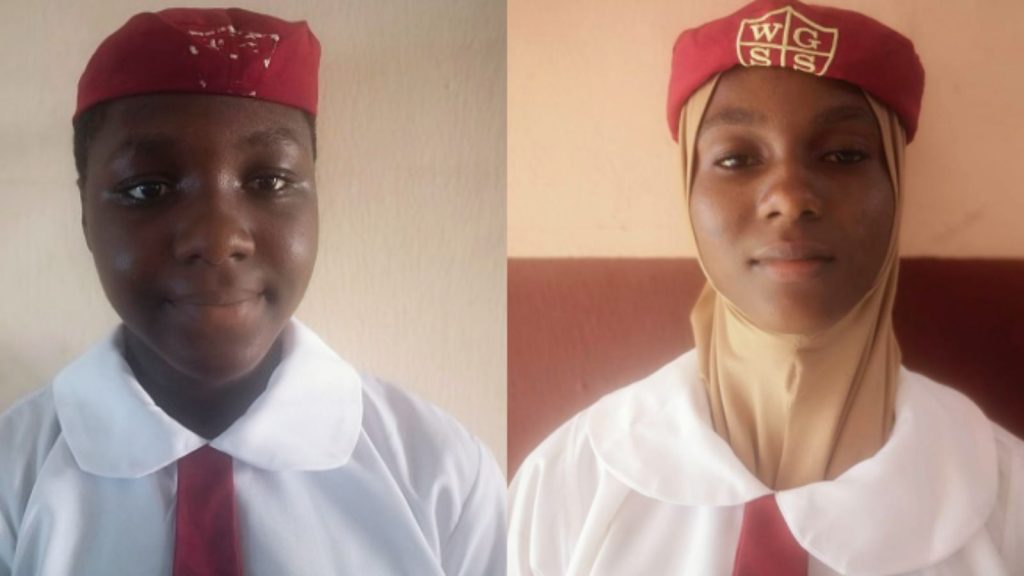
In 2023, what started off as an idea while boiling water in the kitchen ended with two 16-year-old girls inventing a Bi-thermal water distillation device built with sand, gravel, charcoal, and fibre. This device turned contaminated water into safe drinkable water for Makoko, a largely impoverished community in Lagos mainland built around a waterfront and plagued by extreme pollution and open sewage.
As residents of the Makoko community themselves, Elizabeth and Abdulsalam’s motivation, amongst other things, included the danger of going far distances to fetch water. A reality that left them and other young girls at the mercy of street urchins, and exposed them to cholera and typhoid, their community faced due to being surrounded by undrinkable water.
This invention meant that inhabitants of rural and riverine communities could access water at minimum cost using solar energy, making it economically viable. Elizabeth and Abdulsalam made history, winning the Stockholm Junior Water Prize in Nigeria and gaining global attention.
Joshua Ichor
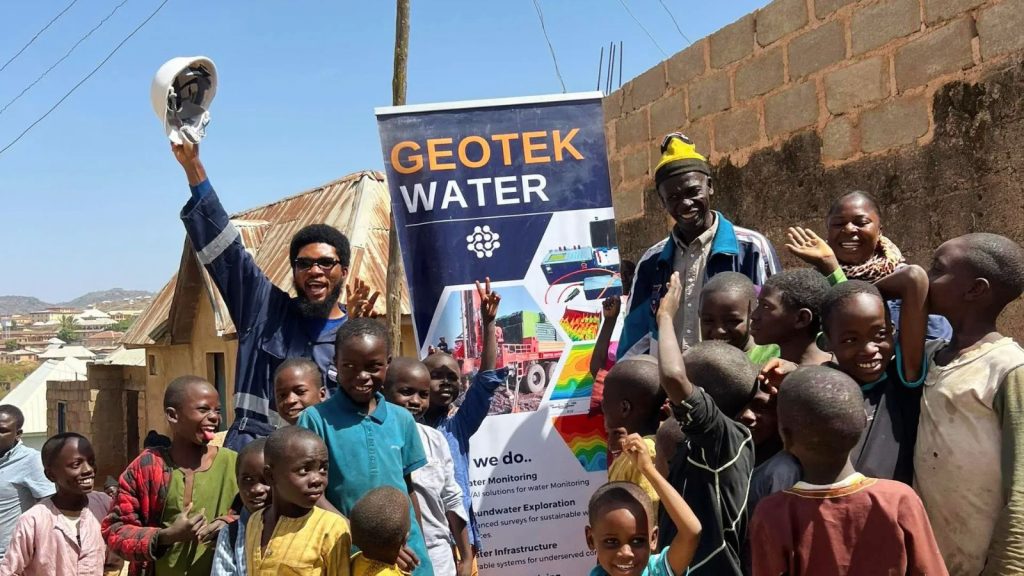
“For the first time in months, we don’t have to worry about whether the water is safe. We can drink it, cook with it and trust it”, said Kwatri Mnana, a visually impaired student of the University of Jos.
Joshua Ichor made this possible. After suffering for hours waiting for people to pump water and falling severely ill with Typhoid fever, such that doctors found it terrifying to attend to him due to his peeling skin, he knew that something had to be done.
And so, he set out to build Geotek water solution, a startup centred on using smart underground sensors and a mobile app to find clean water, catch natural energy, and instantly alert people if a pump breaks.
This dream has led him to communities in northern Nigeria where he has consumable water because, according to him, if he doesn’t go there, then it’s not just insecurity that kills people, but waterborne diseases as well. A 22-year-old man decided to lend a hand in fixing his country, a decision that has seen children in underserved areas have access to clean water.
Emeka Nelson
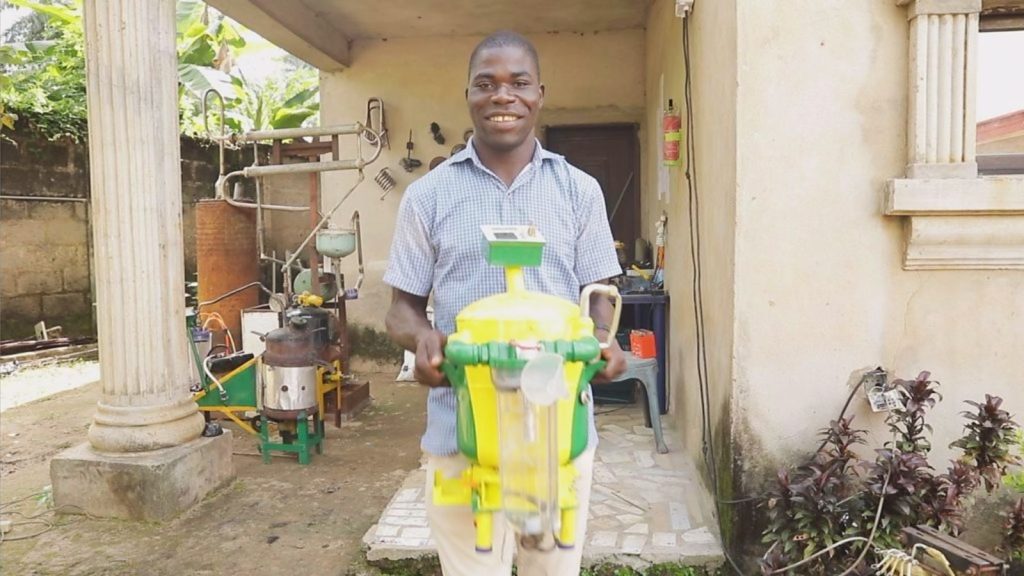
Water and energy are more connected than most people think. Without power, pumps don’t run. Without pumps, boreholes sit idle. Without boreholes, communities walk miles. It is a cycle that keeps water out of reach for millions of Nigerians, and it is the cycle that Emeka Nelson decided to break.
Emeka was twelve years old when he lost a close friend to a generator fume incident. That loss sent him on an endless search for a cleaner, safer alternative. By 26, he found it: a generator that runs on water. Too good to be true, but Emeka tested this in his two-bedroom apartment in Awka, Anambra state, and it worked.
With no formal engineering education, his personal savings, chippings from friends and family and ninety-five per cent of locally sourced materials, he did what many would have termed impossible.
For rural and riverine communities where water exists but power doesn’t, this kind of innovation is a lifeline. A water-powered generator means pumps can run and boreholes become viable in off-grid communities.
In 2026, with electricity and fuel as luxury goods for the average Nigerian, Emeka’s invention speaks directly to that gap and is proof that technological advancement and water security are not separate conversations.
Chibuzor Mirian Azubike

In 2011, Chibuzor was posted to Bigi Tudun Wada, a town in Bauchi state, Nigeria, for her mandatory one-year National Youth Service Corps (NYSC). She didn’t know it at the time, but that posting would be the catalyst for helping over 6,000 people access clean and drinkable water.
At the time of her posting, Chibuzor recounts experiencing violence and unrest in Bauchi State, brought on by the 2011 presidential election that saw Goodluck Jonathan sworn in and the peak of the Boko Haram insurgency.
Despite these, she decided to stay back and very quickly found out that the lack of water in the state not only increased the potential of widespread waterborne diseases, but also caused the death of many children and kept young girls out of school, due to the long distances they trekked to fetch water for their families.
By October 2011, Chibuzor had constructed the first borehole in Bigi Tudun Wada, providing potable water for a community that had lost all hope for potable water. This act was followed by many more acts of community service that earned her the name “Lady Haske,” meaning Lady of Light, and a chieftaincy title in the community.
Years later, she founded Haske Water Aid and Empowerment Foundation. An initiative that has gone on to provide clean water for over 12,000 people in rural communities across Nigeria. In a 2025 interview with Guardian News, Chibuzor says, “In many communities in Nigeria, trust for potable water has been eroded by years of broken promises and failed systems”.
Wilson Atumeyi
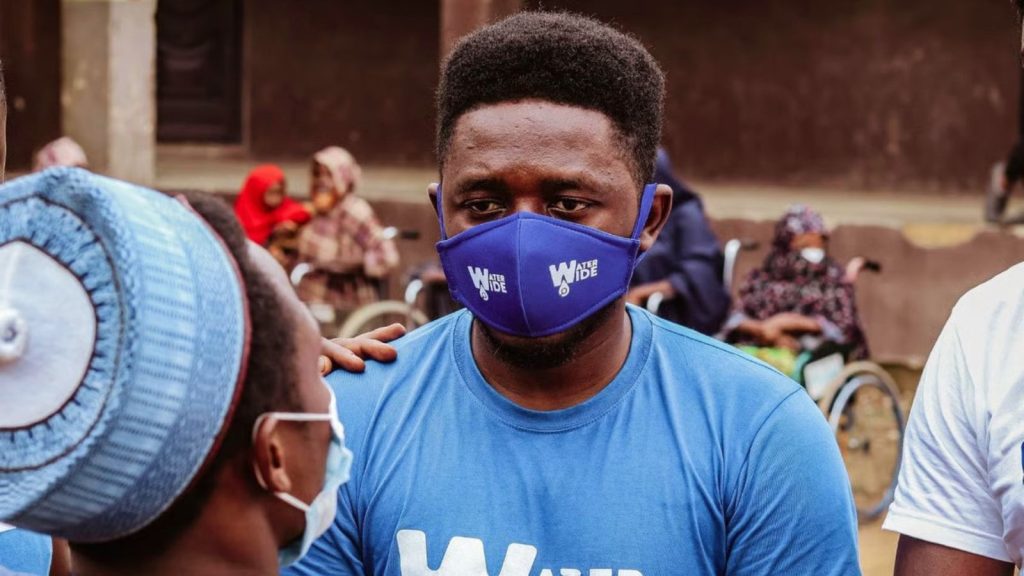
As an 11-year-old child, Wilson and his friends knew that the only way to access water was to walk miles away to fetch water from wells dug by farmers. To scoop the water, one person in the group would have to go down into the well and pass up the pail of water to others.
As he grew older, it didn’t make any sense to him that his community, especially children, had to go through dangerous hoops to access water. So in 2019, he founded WaterWide, a non-profit that tracks government spending and international aid for water, sanitation and hygiene
Within a year, Wilson had already led an investigation in Tika town in the Federal Capital Territory (FCT), Abuja. The organisation was tipped off about the dire situation caused by a lack of water. Wilson and his team of volunteers reached out to the Chairman of the local government area council, all to no avail. Undeterred, he probed the Minister of State of the FCT while sharing the story of the community online, which garnered reactions, enough to facilitate the drilling of a borehole in the community within a week.
This relentless activism allowed over 2,000 inhabitants of Tika town to have access to potable water. Today, Waterwide has gone on to win international grants that have made it possible to expand its operations and help keep track of governmental projects worth millions of Naira.
Why these efforts matter
The African Union asks its member states to ensure sustainable water availability and safe sanitation for their people. The question this Africa Day is not whether Nigeria has the vision for a water-secure future. The vision exists. The question is whether the institutions meant to carry it will finally show up or whether they will continue to leave that work to the Elizabeths, the Wilsons, the Chibuzors, who were never supposed to be doing it alone.
When citizens become the last line of defence against cholera, against darkness, against thirst, it is worth asking plainly: For how long will Citizens perform the job of the government?
We want to hear about your personal experiences that reflect how politics or public systems affect daily life in Nigeria. Share your story with us here—we’d love to hear from you!
Click here to see what other people are saying about this article on Instagram