• Feyikunmi* (33) left Nigeria in 2022 with a promise to reunite with her husband once she settled abroad. They’d survived a lot together, and both believed nothing could shake their love for each other. But a year after his arrival, she’s not sure the husband she waited for is the one who arrived. 

    This is Feyikunmi’s story, as told to Adeyinka

    When I think about the man I married six years ago, I picture the boy who would stay on the phone with me until one of us fell asleep, the man who always reached for my hand in public, the partner I built a life with from university to NYSC to our first apartment. These days, when I look across the bed at night, I sometimes feel like I’m sharing a room with a stranger.

    In early 2022, I joined the growing wave of Nigerians packing up their lives for better opportunities abroad. At the time, I’d only been married for a year and some months. The plan had always been for my husband to travel first. He had the visa process in motion while I kept working in Lagos. But when my travel opportunity came, it made more sense for me to go first.

    His life in Nigeria was going well; it was almost perfect if you ask him. Alongside his well-paying job, his cocktail business was booming. He’d carved a niche in the event space, mixing drinks at weddings, corporate functions, and private parties. It felt reckless to abandon such financial stability for the uncertainty of starting over in a new country.

    We both agreed I should go ahead and settle in, and then he would join me when the timing was right.

    Leaving him behind was hard. We’d done everything together since we met in university — lectures, late-night study sessions, corper life in the same city, even small hustles. We’d never been apart for more than a month, and now I was about to cross continents without him. But we told ourselves this was a sacrifice for our future.

    Get More Zikoko Goodness in Your Mail

    Subscribe to our newsletters and never miss any of the action

    Settling in was easier than I expected. I had family here, and they made sure I didn’t feel too lonely. And for someone who had always sworn she could never do long-distance, I surprised myself. My husband and I spoke every day. We got on long phone calls, exchanged voice notes and video chats. We shared meals over FaceTime, fought over data bundles like we were still in Nigeria, and found ways to make the distance feel less heavy. We barely had issues, and sometimes it felt like we were more in sync than when we lived under the same roof. The plan was working.

    After about two years and some months, we started talking about his relocation again once I had settled into my new job and routine. That’s when things got tricky. Visa delays and bureaucratic wahala were part of it, but even beyond that, he started hinting that he wasn’t in a hurry to leave Nigeria. His cocktail business was exploding. He had landed more high-profile events, celebrity clients, and steady money.

    I’d complain and ask why he wasn’t making the move, but he’d soften me with bank alerts so large they’d make sense even in dollars. Arguing with that kind of support was hard, so I’d let it go. But the back and forth dragged on for months. Finally, in early 2024, he joined me. I remember the excitement in the days leading up to his arrival. I  cleaned the apartment like we were newlyweds again, and imagined all the little things we’d do together now that the distance was over. We were ready to start our family, ready for a new chapter.

    The first red flag came a few weeks after he arrived. I got home from work one evening and found him smoking on the balcony.

    [ad]

    My husband had never smoked a day in his life. Or at least, that’s what I thought. He looked so casual about it, like it was a normal thing. When I asked, he said friends in the Nigerian event industry had introduced him to it. I wanted to press, but I told myself it was just one of those changes that happen when people live apart. And besides, he said the cigarettes helped with the cold.

    But it wasn’t just the smoking.

    There was a bluntness to him that I had never known before; a new way of raising his voice in arguments, keeping malice for days, sometimes even weeks. Back in Nigeria, he could never go to bed angry, and intimacy was non-negotiable, no matter what we argued about. Now, if we disagreed, he could go weeks without touching me. It was like he’d brought an entirely new version of himself to the US, one I didn’t recognise and wasn’t sure I liked.

    There are still moments when I catch glimpses of the man I fell in love with, like when he cracks a silly joke in the middle of my rant or makes one of his ridiculous dance moves while we’re cooking. But more often than not, I feel like I’m tiptoeing around him, unsure of which mood I’ll get that day.

    I’ve tried to talk to him about it. He insists that nothing is wrong, just adjusting to a new environment. But deep down, I think the truth is he never wanted to be here in the first place. He’s never said it outright, but the signs are there. I see the way his eyes light up when he talks about his old clients in Lagos, the way he lingers on photos from events he used to work. Some days, I feel like he’s counting down to the day he can leave. And honestly? I’ve thought about telling him to go back.

    It sounds crazy, but sometimes I miss our long-distance marriage. The version of him who would spend hours on the phone with me, who would fall asleep mid-conversation and wake up apologising, felt closer than the man I now share a bed with.

    We’re expecting our first child this year, and the thought of raising a baby in this strange, quiet space between us terrifies me. I want the warmth we had before, the closeness that made me so sure we could weather any storm.

    Some days, I hold on to the hope that this is just a phase, that maybe he’ll find his rhythm here and we’ll settle back into each other. Other days, I’m not so sure.

    What I do know is that I’m still here, still trying, still hoping to get my husband back before we become parents. Because if there’s one thing I’ve learned in this whole japa journey, it’s that distance isn’t just about miles, sometimes it’s right there in the same room with you.


    *Names have been changed to protect the identity of the subjects.


    Click here to see what other people are saying about this article on Instagram

  • Everyone wants to japa, but not everyone makes it. Almost Abroad shares the near-misses and big wins of Nigerians chasing greener pastures against all odds in 2025.


    Tired of the stress of moving money across borders? With Juicyway, you can seamlessly send, receive, and convert fiat or stablecoins like USD, CAD, USDT, and USDC in Nigeria—at great rates. Free multi-currency accounts, instant transfers, and top-tier security? Say no more. Click here to get started!


    When did you start considering the idea of leaving the country?

    I’ve never been the type of person who just wants to japa and say goodbye to the country forever. Even when my brother offered to sponsor my masters in the United Kingdom (UK) in 2022, I turned it down.

    My decision might seem stupid, but I have no regrets. I made it for three reasons: My brother and I don’t have the best relationship, I don’t want to owe anybody that much, and I wanted to leave Nigeria on my own terms with my own money.

    In 2024, I finally felt ready for my master’s and started working towards it. My original plan was to get my master’s degree in the UK and return to the country afterwards. But that plan is no longer valid. 

    What changed?

    Nigeria changed. In 2023, I was earning ₦250,000 and could easily save ₦1 million from my annual income. I’m 23 now, and I earn ₦600,000, yet I can barely afford to buy clothes. The worst part is that I’m not a reckless spender, and no matter how much I stretch myself, it’s never enough; I no longer go out or work from cafes. I don’t even go to the cinemas anymore. My favourite type of therapy used to be retail therapy, but now, I can barely afford to buy clothes just for fun.

    Every month, I ask myself where my money is going, and I can confidently tell you it’s going where it needs to go. I pay my tithe and try my best to give to people in need. I contribute to crowdfunding efforts I come across on X. Sometimes, I send some money to my parents and siblings, but most of my money is spent on food.

    Can you break it down a little?

    I live alone, and my grocery shopping for each month costs ₦50,000. That doesn’t include the cost of cooking. For almost three weeks now, I’ve been buying pepper for the most ridiculous price. And don’t even get me started on the price of plantain.

    Once in a while, I fill my gas cylinder and pay my light bill. I also spend close to ₦30,000 on my monthly wifi plan and about ₦30,000 on beauty maintenance. As I mentioned earlier, I don’t go out anymore. The only place I go to is church, and I don’t spend more than ₦5,000 on Uber every Sunday. 

    Get More Zikoko Goodness in Your Mail

    Subscribe to our newsletters and never miss any of the action

    That’s a lot

    Yes. I’ve suddenly realised that the economy is working against me. I’m not doing anything unusual, yet my money can barely keep up with my expenses. I’m getting ready to pay ₦800,000 in rent, and I honestly don’t see how that’s sustainable anymore.

    There has been a power outage here for one week now. Since then, I’ve been spending ₦5,000 once every two days to power my generator. I can’t afford to cook until the electricity is restored because there’s no way to store my food. As a result, I have been ordering food from Chowdeck. It’s time for me to leave the country because the country itself is working against my personal growth. 

    I feel that. How’s the relocation process going?

    People have called me crazy because my entire relocation plan is based on faith and prayer. I have no money to spend, yet I have these big dreams.

    One of the reasons I didn’t take my brother’s offer was because of the kind of school he wanted me to attend. Many immigrants go to schools that are not ranked high globally, and that’s not something I want to do. Considering my line of work, my best shot at creating an excellent life for myself as an immigrant is attending an Ivy League or any other highly respected school. That’s the plan I’m working towards. I’ve managed to get into one of those schools, but I’m still waiting to hear back from the scholarships I applied for.

    What has trying to fund your UK plans from Nigeria felt like?

    You’d think I could at least cover some part of my tuition with what I earn, but I can’t even cover rent. I’m supposed to book my accommodation at school with £300 this month; I considered it a fair amount until I converted it to naira and found that it’s way over ₦600,000. 

    Right now, all I have is my faith. Is it crazy? Yes. But with God, all things are possible. All I know is that there’s nothing for me in Nigeria anymore. I feel like I’m slaving away, and there’s no chance it will improve.

    With my qualifications, I can get another job that’ll pay ₦1 million per month, because my former salary was close to that (I earn less now because I made some sacrifices to follow my passion), but that wouldn’t change anything. It won’t change the exchange rate or the price of pepper in the market. 

    Do you have a backup plan?

    That’s not how faith works. I’ve done crazier things out of faith, and they’ve worked out. I’m not about to start doubting God now. God is my main plan and backup plan. My brother’s offer is still available, but like I mentioned earlier, I don’t want to owe anybody that much in life. He doesn’t want to pay for the school I got into because it costs more than the lower-ranked schools, and that’s completely understandable. But I won’t leave this country and move somewhere else without at least some sort of academic advantage. I’d hate myself if I did that. 

    The school I’m going to has big clout and an incredibly low acceptance rate. It’s faith in God that got me there. And I’ll keep that faith alive until everything else falls in place. 

    I’m also saving as much as possible, but saving in naira is a waste. I’ve also tried saving in dollars, but it’s still not a match for pounds. I plan to sell a couple of things in my apartment to raise some money. I don’t know how it will go, but I know I’m starting my master’s this fall. 

    I’m rooting for you. I wish you a safe flight in advance

    Thank you!


    Want to share your Almost Abroad story? Reach out to me here

  • Whether you’ve lived in Lagos before or not, the city’s reputation as one of the most expensive places to live in Nigeria precedes it, and you’re likely familiar with how crazy it gets. 

    From rent prices that feel like daylight robbery to transport costs that leave you actually feeling robbed, the cost of living in Lagos can be overwhelming. For some people, it’s a worthy price to pay to live in the “centre of excellence”. For others, the figures just stopped matching up.

    We spoke to four young Nigerians who left Lagos for cheaper Nigerian cities about changes in their living expenses and overall financial well-being since their move.

    Yemi*, 33, moved to Jos in 2024

    Can you describe your quality of life in Lagos? I lived in Ikorodu and worked at a real estate company in Victoria Island. For those who don’t know these places in Lagos, Ikorodu and VI are two very separate, far-flung locations. 

    The commute was crazy. I woke up at 4 a.m. every day to avoid the Ikorodu traffic. Also, my salary was only ₦150k, and I was spending almost ₦100k on transportation. I tried the Ikorodu to VI ferry a few times, but after the boat stopped in the middle of the sea on two separate occasions, I ran for my life. 

    I considered moving out of Ikorodu to reduce my transport costs, but rent in the central parts of Lagos was even crazier. I saw a one-bedroom apartment in Ketu that cost ₦900k/year. In fact, every place I saw in different locations was at least ₦500k. 

    It didn’t make sense to me; I wasn’t moving to the island, so transport costs and commute stress wouldn’t disappear. It wasn’t worth leaving my family’s house in Ikorodu to go and suffer even more.

    In 2024, a friend referred me to a job opportunity with an NGO in Jos. At that point, I’d already been toying with leaving Lagos. I have friends in other states and knew they lived far better than I did. I couldn’t progress or even consider marriage if I kept living like I did in Lagos — something needed to change. So, when the job opportunity came, I jumped on it. 

    What money-related change surprised you the most when you moved? Things are much cheaper in Jos. I expected things to be cheap, but the difference was startling. Some people still sell pepper for ₦50 here. Where will I see that in Lagos? Rent is also far more reasonable. I live alone in a spacious room and parlour apartment and pay only ₦300k. 

    What’s the most significant way moving has impacted your financial well-being? For the first time in a long time, I can consider buying things after receiving my salary. I’m not struggling to repay one loan and keep money aside for transport fare. 

    My ₦250k salary isn’t that much different from what I earned in Lagos, but I feel like I can now plan for my life. I only spend ₦30k/month on transportation, and ₦150k covers food and the rest of my living expenses. Don’t get me wrong; Nigeria is still hard, but at least I’m not spending all my money and my life on the road fighting with agberos.


    Rayo, 27, moved to Ado-Ekiti in 2023

    Can you describe your quality of life in Lagos? I’d lived in Lagos all my life, and just before I left in 2023, I got my first job as an HR assistant at a travel centre in Ikeja. 

    My salary was ₦80k/month, which was only enough to cover my basics: transport fare, data, and lunch at work. I lived with a family member, so rent was sorted. 

    I had no financial responsibilities and was pretty comfortable. It bothered me that I didn’t have any money left over at the end of the month to save, but I figured it was because I didn’t earn a lot. 

    I moved to Ado-Ekiti because my aunt fell terminally ill, and my mum wanted family around her. My aunt passed away in 2024, but I stayed back in Ado because I’ve grown to love the city. Nothing ever happens here, and it’s slow, almost to the point of boring, but it’s peaceful. 

    What money-related change surprised you the most when you moved? People aren’t in a terrible hurry to make money here. In Lagos, everyone moves fast, and most people are looking for someone to cheat. But I don’t get that vibe here. You can even carry your bag on the side of the road without worrying that someone is about to snatch it. 

    However, Ado-Ekiti is not the best place to find a great job. When I arrived, I thought I’d easily find a company to work for while I cared for my aunt, but jobs are very scarce here. Most people work in the universities and polytechnics. 

    Fortunately, my uncle helped me find a job at a bank last year. I earn ₦115k and save ₦50k every month because there’s nothing to spend money on besides eateries.

    What’s the most significant way moving has impacted your financial well-being? I went from zero savings to ₦500k within two years. It’s a big deal for me. I feel grown, like I can now start considering investment options and thinking about serious things like wealth building.


    Feranmi*, 31, moved to Ibadan in 2021

    Can you describe your quality of life in Lagos? I was the music director of a church and earned ₦85k/month. I got married during the COVID lockdown, and most months were just me trying to stretch the salary to cover our food and utility bills, while still trying to save ₦20k/month for rent. The rent for my room and parlour apartment was ₦400k, and my wife often covered most of it since she earned ₦180k/month.

    I tried to supplement my income by offering keyboard piano lessons at ₦15k/month, but clients weren’t regular. Sometimes, I’d have two clients in a month, and other times, I wouldn’t get a client for three months. 

    I couldn’t get an actual 9-5 job because my responsibilities at the church took up so much time, so my wife and I just managed as much as possible. 

    In 2021, the church transferred me to our new branch in Ibadan, and we’ve been here ever since.

    Get More Zikoko Goodness in Your Mail

    Subscribe to our newsletters and never miss any of the action

    What money-related change surprised you the most when you moved? I’m unsure why I expected Ibadan to be a village, but I did. So, I was surprised when I came and saw that things weren’t much cheaper than in Lagos. Sure, rent is more affordable, but that’s the only significant difference. I thought ₦85k would have me living like a king in Ibadan, but I was wrong. 

    Thankfully, I live in a church-provided apartment, so at least rent is out of our expenses. 

    What’s the most significant way moving has impacted your financial well-being? My financial anxiety levels have slightly reduced, mainly because I don’t have to worry about rent. The church increased my salary to ₦100k last year, so even if we have to rent our own apartment someday, I’m not very worried about being unable to afford it. 

    My wife also got a better job and now earns ₦250k. With both our salaries, we can afford to live a fairly comfortable life with our child. I don’t think that would be the case if we were still in Lagos.


    Nike*, 26, moved to Makurdi in 2024

    Can you describe your quality of life in Lagos? It was hectic. I was a secondary school teacher with a thrift business side hustle, making an average of ₦100k/month; ₦25k of which was the salary from my 9-5.

    I’d work all week, then enter the market on weekends to struggle with other thrift sellers to share bales of clothing for my business. Then, I’d iron the clothes, wear them for videos, post on Instagram, and fight with customers and delivery riders. 

    Even with all that stress, I didn’t see the impact of the money on my life. I was always broke and living from hand to mouth. The only thing I can point to using money for was paying my ₦350k/year rent. Sometimes, I even took loans when rent was due. I’m not sure how my money was going, because I hardly bought anything for myself. 

    I got married in 2024 and moved to Makurdi to join my husband. He’s a missionary and has lived here for the past three years.

    What money-related change surprised you the most when you moved? This is funny, but it’s how Makurdi makes you know exactly how you spend your money. I live in a quiet area of Makurdi, and there’s almost nothing to take your money here. 

    When you only buy food and fuel, there’s no room to wonder where all your money went — you can see it. Maybe I just find this interesting because it felt like my money had wings when I was in Lagos. 

    Since I moved here, I’ve not had an income, but my husband gives me ₦50k/month for the home’s expenses. I can budget ₦30k for food and spend exactly that—nothing more. Maybe it also helps that neighbours constantly give us free food from their farms. But it’s nice to plan my money and stick to a budget.

    What’s the most significant way moving has impacted your financial well-being? I just feel more relaxed. I’m still looking for ways to earn money, but I don’t feel this intense rush to hustle till I drop. In Lagos, I thought I’d end up under the bridge if I stopped moving and hustling for a second. It’s nice to be away from all that pressure.

    *Names have been changed for anonymity.


    NEXT READ: 5 Nigerians Open Up on How Relocation Has Shifted Their Financial Realities

    Join 1,000+ Nigerians, finance experts and industry leaders at The Naira Life Conference by Zikoko for a day of real, raw conversations about money and financial freedom. Click here to buy a ticket and secure your spot at the money event of the year, where you’ll get the practical tools to 10x your income, network with the biggest players in your industry, and level up in your career and business.

    [ad]

  • In the past decade, thousands of Nigerians have left the country to find better economic opportunities. Moving abroad is almost seen as a golden ticket to financial stability — higher earnings, a stronger currency, and a better quality of life. But beyond the surface, navigating money in a new country is often more complicated. 

    We spoke to five Nigerians who moved to the UK, Canada, and the US in the past five years about how migration has reshaped their income, spending habits, and overall financial mindset.


    Philip, 31, moved to the UK in 2022

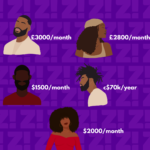
    Current income: £3k/month

    Last income (in Nigeria): ₦300k/month

    Can you describe your quality of life in Nigeria? I was a marketing communications manager for a fintech company. My salary was ₦300k/month and my wife made ₦400k/month. We combined our resources and kept our expenses low. Our rent was ₦300k/year for a self-contained apartment. 

    However, my work was on the island, and I lived on the mainland, so I spent about ₦60k on transportation every month.

    Our ultimate financial goal was to japa, and we spent much time and resources saving and preparing for it. Naturally, that meant we had to make multiple tradeoffs. For example, I really wanted a car because I was tired of leaving my house at 5 a.m. to get cheaper bus fares. We also wanted to move into a 2-bedroom apartment, but both wants would have derailed our plans. So, we stuck with what we had. 

    We weren’t living a glamorous life, but we could take care of ourselves and our families and put something aside for our relocation, a process that  took about two years.

    What money-related change surprised you the most when you moved abroad? Cash is not king in the UK. When my wife and I were leaving the country, I converted some money into pounds. But we were stranded when we got to London because every service we needed insisted on card payments. It was quite a culture shock. 

    What’s the most significant way moving to a new country has shifted your financial mindset? My perception of debt has changed. I’ll use properties as an example because  I work in property management, and my wife and I have started discussing buying a house.

     It’s so freeing that it’s relatively easy to take a mortgage, drop a 25% downpayment, and spread the rest across 20 years. Yes, paying off a mortgage is like paying rent for two decades, but the house becomes yours. 

    An investor I work with tells me that if she has £600k to invest in properties, she’d prefer to divide the money into four parts to use as a downpayment for four houses rather than buying one £600k house outright. Then, she’ll put tenants in those houses, and their rents will pay the mortgage. 

    You need to become comfortable with using debt to your benefit. Sometimes, it’s a pathway to financial freedom, and I got on board with the program. 

    What does your life look like now? The key word is stability. My wife and I have fewer things to worry about, especially now that we have a kid. Healthcare is almost free—the insurance pays for it—and there’s no limit on what’s covered. 

    When I lived in Nigeria, I barely worked at a place for one year. I was always optimising for a better-paying job; the only way I knew to do that was to switch jobs as often as possible. I’ve been at the same job in the UK for a while, and I’ve grown and gotten promotion and salary reviews. In addition to this, I have a better work-life balance. 

    That said, the cost of our utilities has increased. We pay £1,250/month for a 2-bedroom apartment. Electricity costs are around £325/month, and council tax is another £250.

    The good thing is that I’m earning considerably more, and my wife makes money, too. Being married works here because neither of us can afford all of these alone. It’s possible, but it’d also be incredibly difficult. 

    Our finances have grown since we’ve been here. We’ve made more progress working for two years in the UK than we did in over five years.  

    If you do the same thing consistently here, you get results. That wasn’t my experience in Nigeria. 


    Tayo, 34, moved to the US in 2024

    Current income: $1,500/month

    Last income (in Nigeria): ₦200k/month

    Can you describe your quality of life in Nigeria? I worked at a private school for 10 years, and my last salary was ₦200k/month. This was primarily what my family—my wife and three kids—lived on. Also, I built a few businesses and other side hustles from the ground up: I had a bookshop and a laundry business my wife manages.

    My income wasn’t as great as I’d have liked, but I made it work. The key factor was that I was very prudent with money. For example, my house rent was ₦300k/year, and two months’ worth of my salary could easily cover it. When I wanted to invest in real estate, I knew I had to save up for it, and I managed to purchase a half-acre piece of land.  However, I had my struggles, too. I’d have liked to stay 100% debt-free, but I took a few business loans. 

    What money-related change shocked you when you moved abroad? The volume of monthly bills. The system is designed to take your income the second you get paid. 

    There are multiple monthly recurring bills: phone, internet, electricity. Then you have to think of rent as a monthly expense. In Nigeria, I paid rent once a year and moved on to other things. I wish that was a thing here, too.

    Also, I couldn’t—and still can’t—get over how easily accessible credit is. My life philosophy is to avoid debt unless it’s a last resort, and I only took business loans in Nigeria. In the US, using my credit cards for everyday use is a price I must pay to stay. It’s not great for me, but that’s how the system works. 

    What’s the most significant way moving to a new country has shifted your financial mindset? My relationship with black tax has changed. The US quickly taught me I can’t take on other people’s responsibilities or finance their lifestyles. 

    Short story: My first paycheck in the US was $1300, which I thought was a lot of money. My thinking, of course, was to take care of my people in Nigeria. So, I started sending money home — ₦50k here, ₦20k there. In little time, the money got down to $200. Then the monthly bills came, and I found out about the number of things I had to pay for.

    I prioritised helping people in Nigeria because of our communal nature, but it’s impossible here. Now, I don’t care much about expenses that aren’t within my budget. I only send money from my miscellaneous budget to people who fall outside the scope of my wife and kids. If it runs out, it runs out.

    Also, I was pro-saving in Nigeria, but that thinking has shifted, too. My time here taught me that building wealth through savings is almost impossible. Investing is king.  A few months ago, I started buying some ETFs and putting money into the S&P 500 and Roth IRA, which is pretty much my retirement account. 

    What does your life look like now? I’m not sure yet. I’m still trying to figure out if my quality of life has improved. The competition for resources is fierce for immigrants.

    At the moment, I make $1500/month as a graduate assistant. Thankfully, my funding covers the cost of rent. Without that cushion, 70% of my income would have to go to accommodation alone.

    I like that the basics are sorted, but building something new and sustainable takes time. The first step is bringing my family here, and I’m currently saving for that. I’ll finally have my answer when this happens.


    Cynthia, 29, moved to the UK in 2022

    Current income: £50k/year

    Last income (in Nigeria): ₦250k/month

    Can you describe your quality of life in Nigeria? After I finished law school in 2020, I moved to Lagos to work. My first job paid me ₦80k/month. Two years and a few jobs later, this number grew to ₦250k/month. Also, my ex, who lived abroad, sent me ₦250k/month, bringing my monthly inflow to ₦500k.  As you can imagine, I was comfortable and could afford a decent lifestyle — I took Ubers everywhere and outsourced my laundry and house cleaning. 

    I always had help, which was an important safety net. For example,  when I moved to Lagos, I squatted at a friend’s with other girls. But we fell out. Then, I lived with my family until I moved to a shared two-bedroom apartment, and the rent was ₦800k/year. My parents sent me ₦500k, and my boyfriend paid the rest. 

    I left Nigeria because I became disillusioned with the country after the 2020 EndSARs protest. I also suspected the current President would win the elections, and I had no faith in him.

    What money-related change surprised you the most when you moved abroad?  Labour costs more in the UK. In Nigeria, I paid ₦6k/month for cleaning. In the UK, the average cleaning costs between £12/hour and £20/hour, which is very close to my hourly wage. The same goes for food. I spend between £20 and £40 per meal, so I’ve had to adjust by cooking more.

    It’s not that I can’t afford these things, but it doesn’t make financial sense anymore.

    Another shock? I feel every pound I spend. In Nigeria, I could justify spending ₦300k on a single purchase. But here, I think twice before spending more than £100. That shift has made me more intentional with money.

    And then there’s my visa situation. I renewed my visa recently for £3500, and even though my partner refunded me, I was still upset. It’s frustrating that I have to pay to stay in the country.

    What’s the most significant way moving to a new country has shifted your financial mindset? The biggest shift has been in how I budget and invest. I barely paid attention to either in Nigeria because I had a stronger support system.

    But the moment I landed in the UK, I felt an intense fear of everything that could go wrong. Although I’ve settled now, I still fear being deported to Nigeria without anything to fall back on. As a result, I’m focused on what I can control, and investing is a big part of it. About 10% of my monthly income goes into my pension fund, and I’ve started putting money in the S&P 500.

    I really want to have a soft landing when I retire. For context, I don’t want kids. My ultimate goal is to make enough money to afford a quality private care home when I’m old. This future is possible in the UK, and I must work to achieve it. I have four decades to plan for that. 

    What does your life look like now? I’ve lived in the UK for almost three years, and the quality of my life has only improved. Let me tell you something: I recently spent £1300 on clothes, which I could never do in Nigeria. This is exactly where I want to be. 

    But I have a lot of help, so my experience may differ from many people’s. 

    I work with the government and make £50k/year, which comes down to £2800 per month. My monthly net would be higher, but my pension contributions take a chunk of my net. 

    Now, my rent is £800/month, but I don’t pay for it; one of my “men” handles it. My partner is also moving in with me shortly, and we’ve talked about him picking up the rent and other household bills. This means I have an extra £800 to save every month.

    Beyond the money, my life feels fuller. In Nigeria, travel wasn’t even an option. Now, I take 3 to 4 trips a year. Even the small things—like buying cotton and linen sheets—feel like luxuries I can finally afford. It’s hard to explain, but I don’t constantly feel like I’m in survival mode anymore.


    Tony, 25, moved to Canada in 2021

    Current income: $70k/year

    Last income (in Nigeria): ₦63k/month

    Can you describe the quality of life in Nigeria?  My life was simple. Before leaving the country, I was an intern video editor and earned ₦30k/month. It was also my service year; the government paid me ₦33k. I thought my income was decent, but it was because I had no financial pressure.  I lived rent-free with my parents, and my most significant expense was my commute to work. 

    At some point, I moved in with a few colleagues to be closer to work. There, the only thing I worried about was contributing to household expenses. 

    I got my student visa, which my parents funded, and moved to Canada in October 2021.

    What money-related change shocked you when you moved abroad? I’ve lived in Canada for three years and haven’t gotten used to not getting SMS transaction alerts. I may get an email notification for money sent and received, but that’s it.

    It made it almost impossible to track subscription payments. Sometimes, I found random charges on my account and had to determine where they came from. It’s not very intuitive. Now I have a notepad where I list all the services I’m subscribed to, their due dates and the cards the charges go to. 

    What’s the most significant way moving to a new country has shifted your financial mindset? I had to understand how the credit card system works. When I arrived in 2021, it didn’t sit well with me that I had access to money that wasn’t mine. I was uncomfortable with the credit card options and feared getting carried away was easy. 

    I’ve lost most of that fear now. As a result, I feel more secure in my finances—knowing that I don’t need all the cash in the world or have to wait until payday before I can sort basic things out. This gives me a sense of security, and I’m hardly flustered about money anymore. 

    What does your life look like now? My quality of life took a dip when I first moved to Canada. For context, I had to work two jobs and crazy hours. That said, I had some safety nets in my parents and a few family members, who paid my first-year tuition and my rent for the first six months. This took a heavy weight off my shoulders. However, I had to figure out most of these myself in the following two years, and this was where the crazy work hours came in. 

    Three years later, I’m a software engineer making about $70k/year. It’s the base pay for my experience level, but it works. That puts me around the low- to middle-income level. It’s not where I want to be, but I could be worse off. 

    I’m better off here than I was in Nigeria, and for good reason. The effort I’ve put into growing my income and building something here is on the same scale as the rewards I’ve gotten. That wouldn’t have happened in Nigeria. 


    Oyinloluwa, 29, moved to the US for school in 2021

    Current income: $2k/month

    Last income (in Nigeria): ₦100k

    Can you paint a picture of your quality of life in Nigeria? I was a graduate assistant at a Nigerian uni and ran my Master’s programme concurrently. Every month was pretty much figuring out how to get by with my ₦100k salary; it was my only income source and funded my education.  I had to be very intentional about money to prepare for my next life stage — going to school abroad. My money was tied in cooperative schemes, and I had salary deductions to sort out my Master’s payment. All this left me with about ₦30k-₦40k to spend for the rest of the month.

    It helped that I lived in a small town, so it was relatively easier to sort out the basics. For example, my rent was about ₦50k/year, and the distance between my house and work was short, cutting down my transportation costs.

    That said, even though I was operating on low maintenance mode, there were multiple times I had to contact my dad for loans. In retrospect, I think I struggled more than I remember. It wasn’t clear at the moment because I had my eyes on a specific agenda—moving to the US. Everything else was secondary.

    I got a scholarship and moved to the US in August 2021. 

    What money-related change surprised you the most when you moved abroad? Housing costs and the monthly rent schedule. In Nigeria, I paid my rent once and was done with it. Then I came here and found out I had to constantly think about making rent every third day of each month. My rent + utility is  $600/month, and I share the apartment with three people. This number would easily climb to $1k/month if I lived alone. Having to plan and set aside money every month took some toll. 

    On the plus side, it also shocked me that I could live without thinking much about the cost of things. I didn’t know that was possible. The context here is that I was always on a tight budget, and spending money on the non-essentials was always hard. But I got here and could do that without derailing my budget. It shouldn’t have surprised me, but it did.

    What’s the most significant way moving to a new country has shifted your financial mindset? I’ve lived here for almost four years, and I’m getting used to the fact that I don’t necessarily have to be stingy with myself, for lack of a better word. It’s like a switch flipped in my brain, and now, I operate from a place of abundance or something close to it. The primary manifestation of that is that I don’t beat myself over the cost of things. If I want it and can afford it, I go for it. The heavens won’t fall. 

    Not much has changed about how I save and budget. I was decent at it when I lived in Nigeria and have even become better. The primary driver for this is the constant realisation that I have bills to pay and live far away from home. 

    What does your life look like now? I’m still a graduate assistant, and my only source of income is from my scholarship.  I get paid a monthly stipend of ~$2k/month to sustain my living, which covers the basics. That said, it can only go so far, especially compared to what I might earn from a full-time job. So, I don’t think my financial reality has turned 180 degrees. For context, students in the US are classified as low-income earners.

    That said, on a basic level, my living standards have improved dramatically. I easily save more than I ever did in Nigeria, and I’m not one expense away from reaching out to my parents for help. That means something. 

    Speaking of parents, an element of black tax is in my life now, and I can do much more for my folks. At times, it can be overwhelming, but it’s a tradeoff I’m mostly comfortable with. 

    I plan to remain in academia after my PhD. If I get a postdoc position, my earnings will double. The standard base pay for many academic postdoc roles is ~$50k—$60k/year, with the upper end in states with a higher cost of living. 

    That’s a start. 


    Names have been changed for anonymity.

    Next Read: I’m 18, and I Made ₦6m From Freelancing in a Year

    [ad][ad]

  • Life is hard, but life in Nigeria is even harder for young people under Emilokan’s government. If you’ve managed to secure a sugar mummy who hasn’t yet taken the hint to make your life easier by shipping you off to the UK or US, don’t worry. We’ve got you covered.

    Here’s a no-fail guide on how to make your glucose mummy sponsor your relocation from Nigeria.

    Dump your Nigerian name

    If you’re a Mukaila Alao or Adeniji Ifasowapo, it’s time for you to abandon those names and insist on your sucre mamito calling you a Jack Ferguson or Brandon Hammerman. It’ll make it easier for her to start seeing you as a foreign somebody.

    Organise a “send forth” party for yourself

    Throw an elaborate party where you invite her entire clique, and call it “Baby Brandon takes Europe.” Complete with a cake that says, “To Europe, With Love from Mama Sugar.” Guilt trip her into making the relocation dream come true.

    Become her travel content creator in training

    Convince her that sponsoring your relocation is in her best interest because you’ll start a social media series documenting “The Adventures of Lady Suzzy and Boy Brandon.” Promise her she’ll be famous worldwide.

    Introduce her to International Sugar Mummy Societies

    Tell her she needs to network with sugar mummies in London or Dubai for “business connections.” Obviously, you must go ahead first to prepare the way for her royal arrival.

    Start speaking only in foreign currency

    Refuse to acknowledge Naira anymore. Every time she asks you how much something costs, respond in dollars or euros, and explain that you’re just preparing for your new life abroad. She’ll get with the programme.

    Fake an international sponsorship deal

    Tell her an “abroad-based” Nigerian sugar mummy has offered to sponsor you, but you turned her down out of loyalty. Remind her that “opportunities like this don’t wait forever,” so she needs to act fast.

    [ad]

    Start a countdown clock

    Set up a giant clock that counts down the days until you “have to leave for abroad” and put it in her living room. Tell her it’s a motivational reminder that life is short, and the time for action is now!

    Master the art of emotional blackmail

    If everything else fails, you’ll most likely secure that abroad sponsorship with the emotional blackmail card. Tearfully tell her that whenever you dream about your future together, it’s in an exotic location, like Santorini or Paris. Hold her hand and whisper, “Mama, do you really want us to die in Mowe Ibafo?”

    Read this next: How to Get Your Sugar Mummy to Pay for Your Wedding

  • Japa is more than just the Nigerian dream these days; it’s a necessity — making visa rejections all the more heartbreaking.

    The Nigerians in this story understand this all too well. While they didn’t find it funny when their visa applications were rejected, they can look back and laugh about it now because the only other option is to cry. 

    Emma*, 29

    I don’t know who advised me, but I was feeling lucky on the day of my first US visa interview in 2017, so I wore an “I love New York” shirt to the appointment. I wanted them to see I was already “embracing” life in the US. You need to see the speed with which the consular officer rejected me.

    I tried again the following year, and even fasted for 21 days before the interview. They still rejected me. I’ve left their US for them.

    Jola*, 33

    I was a member of a popular apron-wearing church when I went for my Schengen visa interview in 2019. I wore the apron to the interview as an act of faith and even gave testimony in advance at church. The way the officer looked at me throughout the interview, I knew it was over long before the rejection finally came.

    John*, 33

    I applied for a US visa in 2018 and prepared for the interview like my life depended on it. I think I paid someone about ₦60k to coach me, and I travelled down to Lagos from Warri two days before the interview because I didn’t want my village people to use bus delays to spoil my plan. 

    The interview day came, and the consular officer asked if I was married. I said “No”. She immediately rejected me. I was shocked. I changed mouth and started claiming I had a girlfriend at home, and we were planning marriage, but aunty was already giving me the blue slip. That’s how I began to tearfully repeat, “Why would you do this to me?” as if she knew me from anywhere. 

    I swore for our politicians all through the journey home. What would I be looking for in America if the country was working?


    RELATED: The 10 Stages Of Becoming A Nigerian Politician


    Nadia*, 18

    My mum got rejected while seeking US visas for the family in 2007.

    We were all dressed in aso-oke and beads because my mum thought it’d mean that we were proud of our country and would come back. After they rejected us, she carried us to Mr. Biggs to eat our sorrows away. The interview was on a Tuesday morning. Imagine the weird looks we got when we pulled up to Mr Biggs dressed like we were going to an owambe.

    Chisom*, 27

    I don’t know who sent me to form accent during my UK visitor’s visa interview in 2021. I have a very thick Igbo accent and was trying to avoid a thing where the officer would ask me to repeat myself.

    I’m not even sure which accent I was impersonating. I just wanted to sound clear. It didn’t work sha. The officer asked me, “Have you lived outside Nigeria before?” even though it was clear I hadn’t. I’m sure she must’ve been wondering where this one found accent. I don’t blame her for rejecting me sef. Who does that?

    Favour*, 25

    I dry fasted and prayed for three days and nights on this US visa matter. The appointment was for 6:45 a.m., coinciding with the day I was supposed to end the fast. I didn’t even sleep the previous night because I prayed all through.

    Two minutes into my interview, the officer said I looked sick, and that he didn’t believe I’d return to Nigeria. To say I was shocked is an understatement.

    Dami*, 28

    I applied to India to study nursing in 2014. I can’t even remember the reason the interviewer gave for rejecting my visa application. I was just so angry. Like, common India? In anger, I told him, “Out of all the countries, do you think it’s India I’ll choose to migrate to?” The guy was shocked. He started saying something about reapplying, but I just carried myself away from there.

    *Names have been changed for the sake of anonymity.


    NEXT READ: 7 Nigerian Millennials Share Hacks for Living Through Inflation


    Psst! Have you seen our Valentine Special yet? We brought back three couples – one now with kids, one now married and the last, still best friends – to share how their relationships have evolved in the last five years. Watch the first episode below:


    [ad]

  • The Nigerian experience is physical, emotional, and sometimes international. No one knows it better than our features on #TheAbroadLife, a series where we detail and explore Nigerian experiences while living abroad.

    Today, we are doing things a little bit differently. Instead of discussing the Japa experience for Nigerians in other countries, we will touch more deeply on why some Nigerians moved back home from abroad and why anyone in the diaspora might consider returning to Nigeria. 

    Just think of it like the usual “Japa” move,

    The inspiration for this article came from a viral tweet that one of my editors spotted and tagged me on. 

    A marriage therapist, Shamseddin Giwa, shared the story of his previous life abroad and how he and his wife could barely make a sustainable income. This forced the couple to return to Nigeria.

    Many Nigerians received the story with lots of scepticism and speculation that they left due to “illegal migration.” It was unbelievable for many people. How could anyone make such a decision with Nigeria’s economy crumbling day and night?

    On this table, amidst the ongoing debates on social media, illegal migration isn’t always the sole reason for anyone to return to their homeland, Nigeria. There are myriad reasons behind such decisions. To gain a better sense of this decision, six Nigerians who previously lived abroad but have now chosen to reside in Nigeria share their motivations for relocating.

    “I had issues with European culture and racism”

    Bayo*, an entrepreneur, didn’t experience the stress of European culture and racism while seeking a Master’s degree as a student in Italy. His once cordial relationship with white people changed after graduation due to his lifestyle upgrade through internships. 

    “After I started to make money from my internships and look nice, I started experiencing racism. My neighbours harassed me and, at one point, even involved the police in minor incidents. For the average Nigerian, every day as an immigrant is stressful,” he shares.

    Bayo moved back to Nigeria in 2020, and he has never regretted his choice. He has made “five times the income” he made in Italy, has gained more job opportunities, and describes his lifestyle as “feeling like a king in my own country.”

    “My mother’s ill health drove me back to Nigeria”

    Even though Dele and Dante relocated to Nigeria from the UK in 2011 and 2018, respectively, they have one thing in common about their relocation stories—their mothers. Dante’s mom fell ill, and Dele’s mom passed on.

    But the one difference they have, however, is their feelings about relocation. Dante, a software engineer, hates that he moved, while Dele, a business development expert, has never regretted it because he is doing “way better financially” than the friends he left behind.

    “I would still have been in the UK if not for my mother’s health. Life there was cool, and there were no worries. I miss the job opportunities and friends I’ve left behind,” Dante shares. 

    Dele is also of the opinion that Japa is only for “economic survival” and that most Nigerians only travel to “gain exposure and enhance their skillset”, not to reside there permanently.

    “I came back to Nigeria because of the conflict in Sudan”

    In April 2023, John* was among the many Nigerian students in Sudan who had to be immediately evacuated due to the conflict in the nation’s capital, Khartoum, and the Darfur region. 

    But even though he is grateful for life, John hates that his education has come to an unprecedented halt since he arrived. “I’m doing nothing at home and haven’t finished my studies yet. And I’m currently finding it difficult to get admission as a transfer student,” he complains.

    “My dreams of becoming a diplomat can be fulfilled here in Nigeria”

    For many Nigerians, they see the Abroad Life as a means of fulfilling their dreams. But not for a recent graduate, Osione. Moving to Nigeria after living in the UK, Switzerland, and Australia is one step towards her long-term goal of becoming a UN Ambassador or diplomat.

    She sees this move as important because of “the connection one needs to have with his or her home country” before becoming a diplomat.

    Does she regret relocating? Not in any way. She is determined to stay.

    According to Osione, “Nigeria can be a hard country to live in and find job opportunities in, but nothing will deter me from my long-term goal of an international diplomacy career. If I want to achieve this, I have to stay.”

    “I left Ireland because of COVID”

    Peter* was halfway through the final year of his undergraduate degree in Ireland when the pandemic struck. As a result, he had to leave Ireland in March 2020 and only go back to school a few months later to finish his degree.

    After graduating in 2021, he never returned to Ireland, and he doesn’t see the need to.

    “I didn’t plan to work or live there,” Peter shares. “I have more family in Nigeria, and I am more comfortable here with my enterprises and accounting career. In Nigeria, if you find the opportunity to be who you want, it’s not as difficult to live here, unlike living an immigrant life abroad.”

  • The increased fuel and food prices — with electricity costs and exchange rate following bumper to bumper — means the average Nigerian thinks about running away at least once a day.

    To japa or not to japa?

    But since japa money doesn’t exactly grow on trees, you can do the next best thing: Get a job that’ll sponsor your japa. Let’s teach you how.

    Resign from your current job

    How can you look for a job that’ll change your status when you’re still limited to your Nigerian job? Free yourself, so you can move forward.

    Get creative on LinkedIn

    You’ll need to highlight skills you may not have if you want abroad recruiters to notice you. Now’s the time to put your lying skills to good use. The idea is to become irresistible.

    Manifest it

    Write your desired country down somewhere you’ll see it every day. You can even make it your laptop wallpaper. Even if your boss and coworkers see it, they can’t blame you. Who no like better thing?

    Tell your Nigerian parents

    Just tell them you’re hoping for a job that’ll relocate you, and let them do the rest. They’ll carry your name to the mountain and pray until you get it. Side effects include forcefully tagging you along to these prayer sessions.

    Start small

    If you deep it, Cotonou is also “abroad”. So, start by getting a job in Cotonou or Togo. Are they foreign countries or not?

    Get a job with a witch

    You may not get any sleep at night, but at least, you’ll fly from country to country. A win is a win.

    Become a full-time sugar baby

    An opportunity to catch flights and not have to bow to capitalism anymore? Sounds like a plan. Sure, you might meet the one that’ll want to use you for rituals or the one whose wife will beat you like a thief, but that’s small occupational hazard.


    NEXT READ: How to Finesse a Job Interview, According to a Recruiter

  • Every week, Zikoko seeks to understand how people move the Naira in and out of their lives. Some stories will be struggle-ish, others will be bougie. All the time, it’ll be revealing.


    The recurring theme in this #Nairalife is safety nets. The 32-year-old project manager in the story saved up ~₦21m in about five years. Now he lives in a country with free healthcare and earns $90k/year. He may have 101 problems right now, but being broke isn’t one.

    Here’s how he got there.

    What’s your oldest memory of money?

     When I was six or seven, my allowance was ₦20. Every morning, I found the money on the table without fail. One day, I found two ₦20 notes and took both to school without thinking much about where the second note came from.  

    When I got home, my mum asked me why I took more than I usually did, and I had no good answer. It was at that moment I realised that I didn’t confirm if the extra money was meant for me. I’ll never forget the punishment I served. But it was a lesson in contentment and accountability. This event taught me not to touch any money that doesn’t belong to me. 

    What was it like growing up?

    My dad was an insurance executive and my mum was a nurse. Both of them had thriving careers, so we were very comfortable. We were the typical working-class, upwardly mobile Nigerian family of the late-90s and early 2000s. My dad changed cars every three years because of where he worked. We had two drivers, and I was dropped off and picked up from school every day. I was pretty much a “get-inside” kid. 

    So when did you actively start thinking about money?

    When I was 15 or 16. I’m the last of my parent’s four kids, and there’s a 12-year age gap between me and my eldest brother. Somehow, my brother convinced my parents to pay me for house chores and I was getting ₦500 – ₦1000 for this. However, it wasn’t set in stone. This was the first time I earned money. 

    Things changed at home around the same time. 

    What do you mean?

    In 2007, my dad decided to run for political office. The people around him made him feel like he stood a chance, so he sunk his savings into his campaign. 

    He lost the election, and there was nothing to return to post-election. He’d resign from his job to focus on his campaign, even though his company’s board advised him not to. 

    Omo.

    My mum retired from work in 2003, so she didn’t have a regular stream of income either. Things became a little shaky. The drivers were the first to go, followed by small adjustments.

    What sort of adjustments?

    The plan was for me to go to university in the UK. But when this happened, the plan changed to a private university in Nigeria.

    In hindsight, things weren’t entirely rough – my parents had some financial structure we fell back on. We had houses, so we didn’t have to worry about rent. My parents also had some investments in stocks, which gave us some financial cushion. It was the first time I saw how safety nets worked. That event spurred my interest in keeping resources aside for rainy days.

    How did that manifest?

    When I got into university in 2007, my allowance was ₦15k. By the time I left in 2011, it’d increased to ₦20k. During my time in school, I made sure to save every month – ₦2k here, ₦3k there. It helped me build my savings muscle. 

    What happened after uni?

    NYSC. I served in the south-south and worked at an architecture firm as a site supervisor. The pay was ₦10k/month and the federal government also paid ₦19800, which brought my monthly total to ₦29,800. My boss also tipped me between ₦1k and ₦2k every weekend. 

    The cost of living in the state was low and I could live comfortably on ₦500 per day. There were barely any additional expenses. I lived on my salary at the firm and saved most of my government allowance for the whole year. At the end of my service year, I had about ₦180k in savings. 

    Sweet.

    I returned home, moved in with one of my siblings and started job hunting. Three months later, I got a job in a telecom serving firm. My salary was ₦60k. 

    However, the people that ran the place were unserious. Three months into the job, I hadn’t received an offer letter, which was a red flag for me. Fortunately, I found another job at a furniture company.

    How much did they offer you?

    ₦60k. When I told the people at the telecoms servicing firm I was leaving, they finally sent me a proper offer letter, bumping my salary to ₦130k. But my heart wasn’t in the job anymore, so I did the next best thing.

    You used their offer letter as leverage, didn’t you?

    I did and renegotiated my salary with the furniture company. We settled for ₦90k, and I resumed work in July 2013. The most interesting thing about the job was the high-network individuals I met. It was eye-opening. 

    Tell me more. 

    The furniture company helped HNIs set up their homes. I could be called into a meeting to give a presentation and the client would be this wealthy person I’d seen on TV. It was a thrill watching them listen carefully to what I had to say about our plans for their spaces. Like, they were genuinely interested and asked questions. For a 22-year-old, this was a massive confidence booster. 

    I guess I also started thinking of how to unlock an extra means of income. A few months into the job, I found it. 

    What did you find?

    I always cleaned up nicely and looked good. I usually wore trad outfits to work on Fridays, and people always asked me who made the outfits for me. Although I didn’t know how to sew clothes, I had relationships with the guys who did. 

    So, I started telling people that I could make attires for them if they wanted. Like that, I was in business. I’d take their measurements, and give them fabric samples to select from and a three-week timeline to deliver the clothes. 

    My 9-5 definitely helped pick things up. I was close to how the business ran, so I knew how sales were closed, and how to interact and manage people’s expectations. I took these lessons, scaled them down, and applied them to this fashion business I started. 

    What were the margins like?

    They were pretty good. A yard of fabric was about ₦500, and I needed between three and four yards for each order. That was ₦2k. Then I paid the tailors between ₦2k and ₦2500. 

    When it was ready, I sold the trad for ₦12k to ₦13k. Sometimes, as high as ₦15k. 

    Man. You were making at least ₦8k in profit from each order 

    Yes. On average, my profit ran into ₦40l – ₦60k every month. By this time, my salary had also increased to ₦100k. That was pretty good money for me.

    How good?

    I didn’t need to spend what I earned from my 9-5. I saved my salary for the next three years without touching it and ran my life with whatever I made from my business. 

    Fascinating

    In 2015, I was just turning 25 and was thinking about what to do next. My boss’s wife kind of gave me the clarity I needed. 

    She’d joined the business and was firing and hiring people at will. Then at one point, she queried me for taking two days off work. She claimed it wasn’t approved even though we had a conversation about it. The penalty was a salary deduction for that month.

    I wasn’t even bothered.

    Why not?

    While I was away from work, I got an order and made about ₦200k in profit. I made 2x my salary in one day. It was enlightening, and I realised that the 9-5 might be taking too much of my time.

    Ah. That point of no return. 

    I started looking for an exit, which came when I found another means of income — interior design. A friend referred me for my first job because of my experience at the furniture company. I made about ₦600k on that job alone. The following month, I got another project. Then the third one came. In a few months, I made about ₦1.3m doing what I did at my 9-5 for ₦100k. 

    I was like, mad o. 

    LMAO.

    By the end of 2016, I quit my job. But I didn’t go straight into starting a business. I needed a break to map out my next steps. So I returned to school for my Masters. I spent the next two years there. 

    Did you do anything for money during this time?

    Nah. I focused on school. It helped that I didn’t have to. My parents chipped in for my school fees, but I was in charge of my upkeep and accommodation. I had ₦3.5m in core savings and about ₦1m from my recent side gigs. I lived on this throughout my time in school.

    Safety nets, eh?

    Absolutely. I graduated in August 2018. A few days after my convocation, I got a call from someone I’d been referred to. They had a ₦375k project for me, and I got right to work. However, I didn’t use my usual guys for some reason. I went for cheaper labour, and it cost me. The guys messed up the job. Naturally, I wasn’t paid my ₦175k balance. 

    That wasn’t even the most painful part. 

    It wasn’t?

    A few months later, I found out the guy I did the job for was a nephew of the state governor. I couldn’t help but think that I lost a plug there. 

    I took the lessons and moved on.

    Sorry, man. But how easy was it to get jobs when you got out of school?

    My referral network made sure I had projects to do — ₦80k here, ₦100k there. Then a big one came in November 2018. The first person I designed for in 2015 was expanding their space and commissioned me for the interior design. Because of my background in architecture, they also made me a project manager. The scope of the project ran into ₦6m. I executed the project and got paid. 

    Baller. 

    My payments were spread over a few months, which worked because I wasn’t sure when the next job would come. That said, I was now certain that I could make the business work.

    What happened next?

    Growth. In 2019, I was busy from one project to another. I did some work for some good brands that paid well. I moved into a mini-flat in March and the rent was ₦500k. I bought a Nigerian-used car in April for ₦750k and spent ₦400k on early mechanic work. By the end of the year, I had saved about ₦6m. It was a good year. 

    Also, I got into a new talking stage with an ex-girlfriend in the same year. She lived in Canada and we hung out when she came home for Detty December in 2018. That kicked things off again and we wanted to give the relationship another shot. However, she didn’t want to do long distance. This put japa on the table for me. In December 2019, I wrote IELTS and officially began plans to join her in Canada.

    What did this mean for your business?

    On some level, I stopped consciously trying to grow it. I thought it’d be selfish to grow the brand, hire people and let them go in the end. I just kept to the level I was.

    Fair. What was your planned relocation route to Canada?

    It was originally going to be via Express Entry. But Covid happened, and they stopped the draw. My girlfriend and I decided that I’d come in on a visitor’s visa and apply for permanent residency when we got married. I was set to leave in December 2021, but a new wave of Covid hit. As a result, flights were grounded and borders were closed. I didn’t leave until May 2022. 

    The months must have dragged slowly

    Not really. In August 2021, I got a huge project and the cost came to about ₦53m. Since I’d planned to leave at the end of the year, I brought someone on board and agreed to a 60/40 split. My profit from the job was going to be ₦8m. 

    When I couldn’t leave in December, I focused on the job. However, the guys I was working for didn’t stick to their timelines. We were supposed to complete the project in January 2022, but it went on and on because they wouldn’t tidy up things on their end. Gradually, the relationship turned sour and they terminated the contract right after I left in May 2022. My business partner and I cut our losses and moved on. In the end, I made ₦6m from the project. 

    I’d started a new life in Canada anyway.

    True. How’s it been going?

    Pretty good. I got married in mid-2022, and my wife and I filed for Permanent Residency afterwards. 

    I became a permanent resident in January 2023. 

    Congratulations. What were the first few months in Canada like, financially?

    I came to Canada with about ₦21m saved up from my efforts in the past few years. This was about C$40K, and it helped me settle in. My wife took care of the rent and I picked up groceries and other miscellaneous. My average spend was C$1200 – C$1300/month. 

    Also, I still got some jobs in Nigeria. But since I wasn’t on the ground, I found someone to execute and I supervised them from here. At the end of each project, we split the profits. This brought in a few million naira.

    Once my permanent residency was approved in January 2023, it was time to transition back into construction and project management. I’d taken a course on project management the previous year. So I started job hunting. 

    How did that go?

    A few rejections here and there, but I got a job in February. 

    In construction?

    Yes. I’m not a project manager at a construction company. The pay is C$90k per annum. That’s C$7500/month.

    This is my first salary job since 2016. Mostly, it’s to provide some financial security while I settle in here. In a few years, I’m hoping to start up my own thing. Fingers crossed.

    Fingers crossed. What’s your current mindset about money?

    Since 2018, I’ve been saving at least 70% of my income because I felt Nigeria could happen anytime. Now I feel like I’ve saved fairly enough, and I’m confident about my safety nets. Also, the possibility of things going awfully wrong is low because of where I now live. The government of Canada has our back. In addition, there is my pay, which is a miracle considering I don’t have any Canadian work experience. 

    The bottom line is that I’m in a safe space and can afford to take a foot off the pedal. Money is for spending right now. At least until I start thinking about starting my own business here. It’s why I’m excited about our wedding ceremony in Nigeria later this year. 

    Exciting. Speaking of spending, what do your monthly expenses look like?

    What about your savings?

    It’s distributed across Canadian Dollars, US dollars and Naira.

    Canadian Dollars – ~ C$13K

    U.S Dollars – $4k

    Nigerian Naira – >₦2m

    Love it for you. Is there anything you want but can’t afford?

    To be fair, nothing at the moment. I’d have said a second passport but I’m already on the path to getting that. No rush. 

    God when. I have to ask, when was the last time you felt really broke?

    Not since my adult life started. I started building a secure chest as soon as I could. And as the years progressed, I delayed instant gratification of giving in to it would put me in a vulnerable financial situation. I really don’t remember the last time I was broke. 

    Energy. Is there a part of your finances you wish you could have been better at though?

    Maybe I should have started actively investing. Not just save money but get it to work. A primary goal in the next three years is to build an investment portfolio. 

    Let’s circle back in three years and see how that goes. 

    Haha. No worries. What’s your financial happiness on a scale of 0-10?

    It’s a 7 or an 8. I’m just happy about where I am, man. I’m planning my wedding, and I have the finances for it. I have some travel plans in the works and I can afford them. Most of all,  I have the safety net to cover my immediate needs. There’s definitely room for improvement, but am I doing badly? Nah.


    If you’re interested in talking about your Naira Life story, this is a good place to start.

    Find all the past Naira Life stories here.

  • Before you dream too much about your japa plans, you should know there’s such a thing as a visa interview, which determines if your japa dream will become a reality.

    In other words, you can do everything right, but your village people can still jam you at the interview. Not on our watch, though. Take note of these clever answers to all the most-asked questions.

    “Have you been to this country before?”

    Yes, I have, actually. In my dreams. That’s why I’m here to make my dreams a reality. Please, help me.

    “What will you do if you run out of money there?

    Nigeria has taught me how to hustle. I run out of money here, so it’s nothing new. I also like fasting. It’s my best hobby.

    “Do you have health insurance for this journey?”

    I don’t really used to fall sick like that. 

    “How long do you plan to stay?”

    As long as God is on the throne. Besides, only God knows my tomorrow.

    “Do you currently have relatives or friends in this country?”

    I can make friends easily. Don’t even worry.


    RELATED: If Your Friend Is Doing Any of These 10 Things, They’re Going to Japa Without Telling You


    “Can you show us your bank statement?”

    See, officer, I don’t want to offend you by showing you something that’ll spoil your mood. Let’s just be thanking God for life.

    “Why do you want to leave your country?”

    Shey you dey whine me ni? I love your sense of humour, officer.

    “What do you do for a living?”

    I wake up every day determined to leave this country. My japa dream is all I live for.

    “Who will take care of your properties in Nigeria while you’re away?”

    It’s someone who has properties that’ll be thinking that one. Just let me go, make money and come back first.

    What’s your opinion of this country?

    I know my destiny helpers are there. Just let me pass.


    NEXT READ: 8 Ways to Let Your Enemies Know You’ve Japa’d