• The Nigerian experience is physical, emotional, and sometimes international. No one knows it better than our features on #TheAbroadLife, a series where we detail and explore Nigerian experiences while living abroad. 


    Peter* (28) left Nigeria to escape discrimination for his sexuality and find better career prospects. But he faced a tough settling-in period, including almost being evicted for owing rent. He shares how he found love, family and acceptance in the UK.
    This model is not affiliated with the story in any way

    Where do you currently live, and when did you leave Nigeria?

    I live in the United Kingdom (UK), and I left Nigeria in 2023.

    What inspired you to leave?

    Well, two things inspired me: my sexual orientation and the economic situation in Nigeria. I was bullied a lot because of my sexuality. My secondary schoolmates would call me by female names because I was effeminate.

    I actually tried to leave immediately after secondary school, but that did not work out. I tried again in my second year of university, but that also did not work out.

    After my National Youth Service Corps (NYSC) service, it was really hard to find a good job. I worked at a laboratory for a short period, but I quit because I was owed my salary and they were verbally abusive. After that, I got a job teaching at a government college, but that too was rough. We got daily doses of insults from the principal.

    In the end, I just knew I would only be able to find my ideal life abroad.

    Sorry you had to experience all of that. How did you finally leave Nigeria?

    This was not straightforward at all. I initially got admission to do my master’s in Lithuania. All I had to do was pay some fees, but it happened during the cash crunch period in early 2023, so I ran into some complications as a result. My payment refused to go through, and even though the school extended the deadline for me to sort it out, the challenge persisted, and they could not wait any longer. So that opportunity slipped.

    Before that time, I had also applied to some UK universities, but I was not really thinking about them seriously because I could not afford them on my own. For me, the UK was a last resort. But after I lost the Lithuanian opportunity, the UK became my only option. Fortunately, I was able to rely on my father and uncle to help me with funds.

    But it was really difficult, especially the first year.

    Get More Zikoko Goodness in Your Mail

    Subscribe to our newsletters and never miss any of the action

    How so?

    Academically, it was a bit confusing at the start. So my grades in my first couple of semesters were about average. But after that, my grades were mostly A’s. I love how you can just walk up to your lecturers and talk freely, ask questions about anything you do not understand. I found it really, really weird at first because it was not like that in Nigeria.

    The easy access to lecturers helped, but things were still difficult for me because I had to juggle school with work. I missed a lot of classes. It was really tough. There was no time to rest. I barely slept.

    What kind of work did you do?

    I got two jobs to keep up with the bills. The first was a cleaning job at an event centre that would host weddings, holiday parties, book launches and so on. So I would clean on the weekends. The problem was that it was really far away from where I lived near my school. I had to take three buses to get there, so it could take me around four to five hours to get to work.

    The second job was as a quality control officer at a car factory. I did this on weekdays. After classes, I would leave for work around 3 p.m. Then on the weekends, I would head to the event centre for the cleaning job.

    The cleaning shifts were really long. I would typically work ten to twelve-hour shifts. I once did sixteen hours each day for three days. It was a brutal experience but I was grateful for that weekend because the bulk sum I got paid for it really helped me take care of my school fees debt.

    It must have felt good to be able to offset your debts.

    Yes, it did. The pressure was telling on me mentally and even physically. I was barely sleeping and was mostly surviving on spaghetti and rice, because that was what I could cook in bulk.

    Do you still work the cleaning job?

    I work in care at the moment, but I am working on getting a licence so I can get a laboratory job. I work with people with disabilities. I like my patients; we have a really good rapport. Many of them have a really good sense of humour. I also really like my coworkers. It is just a great environment. Sometimes I would even rather be at work than at home.

    That sounds great. How would you sum up your experience in the UK?

    Overall, it has been great. I feel like it has been in stages. Early on, you are trying to pay your fees and sort out school stuff, and maybe get a good job. But then if you get through all that, you can really start looking forward to settling down, getting a better job, getting your own house, getting your own car if you need it and stuff like that.

    So, so far it has been great. At the moment, I feel like I am in this calm period where I am a bit settled and can now look forward to all of those things, starting with getting my licence and then getting a better job.

    Have you visited Nigeria since you travelled?

    No, I have not. But I speak with my parents almost every day.

    What kind of support system do you have in the UK?

    My partner and his family. I also consider my colleagues a sort of family, my work family. They are excellent.

    You are in a relationship?

    Yes, I am. We actually met on a dating app. I did not feel the connection at first. I went off the app for some time. When I came back, we started talking again and arranged to meet.

    Meeting him has been the peak of my experience in the UK. It has really helped me settle in here. I realised that the problem was that I had no one here. I do not have any family members in the UK. I did not really have friends except maybe my roommates in my shared accommodation. So I did not really have anyone I was close to, and I think that is why a lot of people slip into depression.

    It was really tough, but when I met him, everything became settled. I now had someone to talk to, someone to cry to, someone to rely on if I needed help. Once I met him, everything changed. I now have family because his family became mine.

    Happy to hear you found such a connection. What is dating like in the UK?

    I actually dated a few people here and there, but none of them lasted long. The problem with men in the UK is that many of them are not looking for long term relationships.

    How does it compare to your experience in Nigeria?

    Okay, so the main difference for me has been honesty. In the UK, especially with white men, they will tell you upfront that they do not want a relationship, that they are just looking to have some fun, no commitment.

    Nigerians, on the other hand, both at home and even some in the UK, will lie that they are looking for a relationship when they too just want to have fun and go.

    I prefer dating here because it is honest, and I quickly understood how it works. But I did have a few good relationships in Nigeria, and I also had one really bad one.

    What happened?

    While I was in university, I dated a Master’s student. He was older, but he was just dishonest about everything, while I was open. I let him know my house, but he would not let me know his. He kept promising to take me there and then dodging it with one excuse or the other.

    In addition to these, he lied about his line of work and made a move on a guy I was mentoring. There was another guy he introduced to me as his brother, but I later found out they were dating. And even though I was still schooling and he was working, I was the one doing the spending in the relationship.

    Wow. That sounds rough. Do you have any plans to visit Nigeria?

    Yes, I intend to visit Nigeria with my partner soon.

    Do you consider the UK home now, or is there a possibility of a permanent return to Nigeria?

    The funny thing is that I do see the UK as home, but my partner sees Nigeria as our potential home in the future.

    We actually just bought a property in Nigeria. We plan to have kids and want them to experience both countries and cultures. So we want to have homes in both Nigeria and the UK. And maybe in the future, when we are old, we might actually retire in Nigeria. That is the plan. I just worry about the medical services in Nigeria, it is just too poor. But we are hoping it will get better by then.

    Fingers crossed. What kind of culture shocks did you experience moving to the UK?

    Numbers one and two are really easy; they hardly drink water here, and they do not rinse their dishes. I do not let my partner wash the plates. I hope he does not see this. 

    The first time I visited him, he offered me juice, but I asked for water. He got me the cup of water, and as I drank it, I could taste soap. Now, I always get my drink myself, or I do the dishes.

    Another thing for me is the pets. It is like everyone has a pet here — it could be a dog, cat, bird, or something. And they have insurance for them. Why are you paying £50 for insurance every month for a pet? How can a dog have free MRI scans? People in Nigeria do not even have that.

    Also, the Christmas gifts. They really take it seriously here. Last year, our house was filled with gifts and cards. The office, overflowing with gifts. We had to tell people to just start picking their gifts from 1st December because there was no more space under the Christmas tree.

    Let us talk about highlights and lowlights. What would you say has been your worst experience in the UK?

    That has to be almost getting locked out of my apartment because I could not pay rent. So this was early on, just a few months after I came here, and I had not gotten a job yet. I was at the student accommodation. I was already going nuts worrying about the rent.

    We use these keycards to open the doors, and once you are owing, your card deactivates. Luckily for me, the day my card deactivated, I had a shoe at the door, and it stopped the door from shutting.

    I had to call my uncle. He sent me some money, and the church I was attending then helped me with the rest, so I was able to pay for three more weeks. Within those weeks, I was able to get a job.

    But it was so scary because I just imagined what would have happened if that shoe had not been at the door. What if my uncle had not sent the money, or the church had not helped me out?

    Glad it worked out in the end. What about your best experience in the UK?

    I feel like there have been a lot of really good experiences. I think I would say going on my first proper holiday. This was late last year. So, you know, coming from Nigeria, going on holiday means going to one relative’s house. So this felt so different.

    It was actually a recommendation from my partner’s mother. She told us about this island she thought we would have a great time at. And we did. It was for a week, and it was such a great time for me to reflect, think, and just recharge. All I had to do was see beautiful stuff, sing, visit museums, play games, go to the bar, karaoke, and just chill. I went to bed and woke up whenever I liked. It was just really fun.

    Sounds awesome. On a scale of one to ten, how happy would you say you are in the UK, and why?

    I would say nine because I strongly believe I have a future here. But it is not a ten because of the whole far right stuff we are starting to see.


    Do you want to share your Abroad Life story? Please reach out to me here. For new episodes of Abroad Life, check in every Friday at 12 PM (WAT).


    Before you go, help us understand how you and other young people feel about the 2027 general elections by taking this 10-minute survey.


    Click here to see what other people are saying about this article on Instagram

    [ad]
  • Gabriel* (31) moved to the US to live freely as a queer man. In this story, he shares how loneliness, discrimination, and the toxic culture of the queer community turned out to be a very different reality than he expected.

    This model is not affiliated with the story in any way

    Where do you currently live, and when did you leave Nigeria?

    I live in the US, and I left Nigeria in 2021.

    What inspired you to leave?

    I left for graduate school. I wanted to do my master’s abroad.

    Why the US?

    I wasn’t particular about it being the US. I just wanted to leave Nigeria and be as far from home as possible. I considered other countries, Canada, for example, but I got admitted to a university in the US, so I went with that. I just wanted to be anywhere but home.

    Why did you want to be anywhere but home?

    I wanted to go somewhere I’d be allowed to be myself, to live as a queer man without fear. It’s affected my relationship with my family because I’m always trying to stay away from them, just to have some independence and privacy. So when the opportunity to leave Nigeria came, I grabbed it.

    Does your family not approve of your sexuality?

    They don’t know.

    They might have their suspicions, but I haven’t come out to them yet. I’ve heard my parents talk about other queer people in a homophobic way, so I have a good idea of how they’d react.

    I might come out to them eventually, but I don’t know when. Maybe soon, but I’m not quite ready yet.

    How was life as a queer man in Nigeria? 

    During my undergraduate years, I really got to be myself. My university was in a different state from where we lived, so my parents couldn’t visit. I had the freedom to live my life as a queer person. I also had supportive friends. Some were queer too, and even straight ones who were allies.

    How did you find the experience in the US?

    Surprising and uncomfortable. I’m not having fun here. I’m learning what it means to be a queer Black person, and the experience is entirely different from Nigeria. It hasn’t been pleasant.

    You said it’s been surprising. What were your expectations, and what’s the reality?

    I think you’ll agree that in Hollywood films we watched back in Nigeria, the US is always shown in a glorious light.

    It always looks like everyone lives freely, people having abortions, homosexual and transgender people just everywhere, flaunting their sexuality on the streets. All of that is a bloody lie. It’s just propaganda. It’s really not all that when you get here.

    So, you’re experiencing discrimination?

    Yes. Homophobia, racism, and xenophobia because I’m an immigrant. It’s just too much. And because I’m effeminate, even being in public is difficult. I live in what they call a “Red State,” which means it’s mostly Republican and very conservative. Some people stare at me. 

    This current administration is attacking what little freedoms queer people used to have. In some cities, there used to be rainbow-coloured crosswalks as symbols of queer freedom and reminders that homophobia shouldn’t exist. Now they’re repainting them black and white. They remove queer flags wherever they’ve been put up. They’re trying to erase anything supportive of queer rights.

    Do you still see your future in the US?

    I’m done with my master’s now, and I want to do a doctorate at some point. If I get the chance to do it elsewhere, I’ll take it.

    I’d love to go somewhere with better healthcare, better public transport, and where you’re allowed to live your life as a queer Black man. But for now, I’m just trying to survive this administration. I don’t know what my future in the US will look like.

    Get More Zikoko Goodness in Your Mail

    Subscribe to our newsletters and never miss any of the action

    Any chance of a return to Nigeria?

    No.

    I love my country. I love my people, my heritage, and where I come from. But no.

    Do you visit, or have you visited since you left?

    No, I haven’t. There’d have to be a serious reason to visit, like if my family really needed my presence for something. But that hasn’t happened since I got here.

    I can’t even go right now because Trump is introducing new immigration laws, and I’ve heard people are getting stuck back home when they visit. I don’t want to risk it.

    So what’s your connection like with Nigeria?

    I have my family, of course. I also have friends in Nigeria that I still talk to. Some of them are planning to come to the US for studies too.

    Do you have a support system in the US?

    I’d say I have a fair support system. I have friends, but I’m an introvert, so it’s not like I have loads of them. The few I do have are very supportive. Some are classmates, and some are people I met randomly.

    But it still gets really lonely sometimes.

    You feel lonely?

    I think it’s part of being an immigrant. You’ve been transplanted into this new culture that makes you feel like an alien. Americans are very individualistic, so it’s not communal like Nigeria, where you can bond with someone just because you’re neighbours.

    I’ve tried being friends with more Nigerians here, but many of them are homophobic, so I can’t. For example, there’s this African Student Association I used to be involved with, but I’m not anymore because they’re a bunch of homophobic, transphobic, and sexist people.

    Like I said, I’m visibly feminine, so I’ve had experiences where I’m just minding my business, and a fellow African student will stare at me with disgust. It’s made me very self-conscious, and I’d rather keep to myself.

    But sometimes, loneliness creeps in.

    Are there any Nigerians in your friend group?

    Yes, I have Nigerian friends here, the ones who aren’t homophobic, transphobic, or sexist.

    What about romance? Could you compare your experience dating as a queer man in Nigeria versus the US?

    The main difficulty with dating in Nigeria is not being able to be public about it. You can’t truly be yourselves.

    Dating in the US has its own challenges. The queer community here can be toxic, especially for someone like me who’s an immigrant. People fetishise you. Someone I was seeing once told me they enjoy dating “international people.” What does that even mean? They started listing all the countries their exes were from, like they were ticking off nationalities on a checklist. It felt very strange.

    You also meet people who discriminate against you because you’re an immigrant. I’ve even had African-Americans mock my accent. You constantly feel like an outsider when you’re around them.

    Even the dating apps aren’t helpful. Most people on there just want to hook up and move on. But I’m a lover boy. I’m looking for a real, monogamous relationship. I’ve had my share of fun in the past; now I just want something committed.

    The queer community here can also be very vain. It’s all about appearances. People care about how rich you are, how good you look, what kind of car you drive, or whether you have a six-pack. I’m not someone who’s moved by material things. 

    Also, even within the queer community, there’s this disdain for effeminate men. So dating here has been difficult and unpleasant for me.

    What are the biggest culture shocks you’ve experienced?

    You know how Nigerians don’t mind their business? That doesn’t happen here. I barely even know my neighbours. Everyone just keeps to themselves. Sometimes I think it’s nice, other times, I find it unbearable. We’re human, and humans are social creatures. We should try to get to know one another.

    Another shock was the lack of public transportation. It’s better in the bigger cities, but where I live, you either have your own car or enough money to use rideshare services. It’s not like Nigeria, where you step outside and there are buses, taxis, tricycles, and motorcycle options to pick from. 

    The monthly rent system here was also a surprise.

    What has been the highlight of your experience in the US, and what has been the lowlight?

    The highlights have been the times I’ve met friends from Nigeria here in the US. It’s always great when we link up and have fun.

    The low points are when I feel lonely and miss home. It’s the little things that trigger it, like remembering I haven’t eaten yam in years. That’s something I could easily get back home, but it’s too expensive at the African stores here.

    I miss my family. The best I can do is talk to them on the phone, but it’s not the same as being there in person.

    On a scale of one to ten, how happy are you in the US, and why?

    I’d say six. I’m happy because I’m finally independent from my parents and I can be myself. I wear whatever I want, go clubbing, and love whoever I want. But I’m hopeful that better days are ahead. I want to meet more people who’ll make me feel less lonely. And I hope I find the love of my life, too.


    Do you want to share your Abroad Life story? Please reach out to me here. For new episodes of Abroad Life, check in every Friday at 12 PM (WAT).


    Click here to see what other people are saying about this article on Instagram

    [ad]
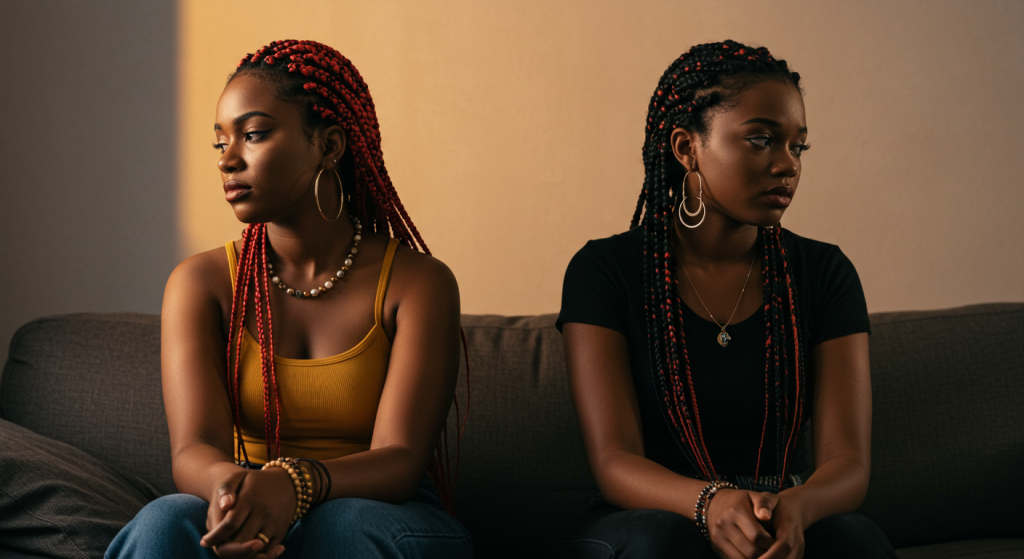
  • Irete* (24) and Tinu*(25) met at a mutual friend’s birthday party and went from polite small talk to a full blown friendship in a short while.

    But, when feelings blurred the lines between friendship and romance, it complicated their new friendship in ways neither of them expected. 

    This is Irete’s story, as told to Betty:

    On a rainy Tuesday morning, a WhatsApp notification dinged on my phone as I struggled to get out of bed. Tinu’s name sat on my screen. But instead of the excitement I felt at the start of our friendship, or the butterflies I felt when we got even closer, all I felt was anxiety.

    Get More Zikoko Goodness in Your Mail

    Subscribe to our newsletters and never miss any of the action

    Communicating with Tinu* wasn’t always that difficult. There was a time I told her everything. But as I stared at her message that morning, I had nothing to say. I only felt a deep wave of regret as I reflected on what used to be the good days of our friendship.

    ***

    When Tinu walked into the room at my friend’s party in July 2021, I almost felt time slow down. She was one of the most beautiful women I’d ever seen in my life. 

    I’d come across her social media profile many times, but this party was the first time we met in person. She was far better looking than any photos she had posted online.

    She oozed charisma in her flower-patterned dress as she made small talk here and there with other guests. Her arms jingled when she moved with the weight of the bracelets and bangles that adorned them.  Her braids were long and colourful, making it impossible to simply ignore her presence. When she walked up to me and introduced herself, our conversation flowed so easily, it was surprising that we hadn’t met before.

    During our talk, we realised we had so much in common — we loved pink, sappy Korean dramas and colourful accessories. By the end of the night, we realised we followed each other on social media and so began our friendship. Like I said, talking to Tinu was easy. Something about her made me feel safe about having hard conversations, sharing the most intimate parts of myself with no holds barred. 

    So, in August, when I saw some disturbing, sad posts on her profile, I felt obliged to ask if all was well.

    Tinu shared that she was going through a terrible heartbreak. Her last relationship had ended suddenly and left her struggling to hold on. I felt her pain as if it were mine, and I was determined to cheer her up. 

    I made it a point to check on her, tried to make her laugh, and even bought her little presents when I could. What I didn’t catch fast enough was that Tinu was getting under my skin. With every laugh, call and touch we shared, my heart was getting entangled in her magic, blurring the lines between a platonic sisterhood and deep feelings.

    ***

    One evening  in September 2021, while doomscrolling the internet on the couch, I came across an ad for a dress. It had a gorgeous floral pattern, and I immediately thought of buying it as a gift for Tinu.  In that quiet moment of making an unplanned purchase, I caught myself smiling as I thought about Tinu’s jokes, her kindness and her beauty. That was when it hit me: I had feelings for Tinu.

    I tried to keep my feelings a secret at first. As much as my heart yearned for something more, I wasn’t going to lose our friendship.  But my feelings didn’t go unnoticed. 

    Tinu noticed everything, the way my emotions betrayed my facial expressions and the messages that carried deeper meanings than intended. One Saturday, during a call, she confronted me with a question that seemed so simple yet unrattling: “Why have you been acting weird?” As soon as I heard the question, I felt cold sweat run down my back and the sides of my face. But my fear didn’t stop me from blurting out the words before I had time to consider them. 

    “I think I like you. No, I’m sure I have a crush on you,” I said.

    I expected an awkward silence, anger even, but she just laughed. Then almost immediately, she said she liked me too. Relief washed over me. At least whatever I felt wasn’t one-sided.

    But while Tinu and I shared a lot in common, it wasn’t just the good things. We also shared the same bad habits:  fear of commitment, poor communication and messy emotional patterns.. 

    After we talked about our feelings, we decided we didn’t want to ruin our friendship by getting into a relationship. So instead of dating, we became friends with benefits, who still blurred the lines between emotional attachment.

    ***

    Two months in, Tinu confessed her love for me for the first time. 

    We were alone in a quiet, dimly lit room. Tinu’s confession made my heart sing. I loved her company, the sound of her laughter and the way I felt around her. It was easy to say it back because I was also in love.

    Despite confessing our love for each other, we couldn’t make it official. Beyond the butterflies in our tummies and the glaring truth that we were deeply in love, neither of us could nurture a full-blown relationship, so our arrangement stayed the same.

    But things began to fall apart in November 2022, almost a year after I first found the courage to pursue what we shared. 

    I fell in love with someone else. 

    I’m polyamorous, and Tinu always knew. Still, she was taken aback when she found out I was dating another person. She couldn’t get past the fact that after almost a year together, we’d never defined our relationship, yet I gave someone else the “girlfriend” label in months. I tried to reassure her that she meant more, but she didn’t see things from my point of view. Slowly, our connection struggled, and after a while, we lost the easy click that defined the beginning of our friendship. 

    We eventually agreed to make up and return to being friends, but nothing felt the same. 

    [ad][/ad]

    I no longer felt the same giddiness when her name popped up on my phone; we went days without speaking.  It was heartbreaking to watch our friendship wither away the way it did. I regret everything and I miss the things that once pulled us together. The easy conversations, her laughter when I shared a dumb joke, the way we gushed at K-dramas. If I had known that my feelings would ruin our friendship, I’d have hidden them better.

    I’ve tried to rekindle our friendship, but it just isn’t the same. It feels like an invisible wall is holding us back from where we used to be.

    Through it all, I miss Tinu and what we once shared. 

    See what people are saying about this article on Instagram


    READ ALSO: He Called Off Our Engagement After a Prophet Said Marriage to Me Meant Death


  • The Nigerian experience is physical, emotional, and sometimes international. No one knows it better than our features on #TheAbroadLife, a series where we detail and explore Nigerian experiences while living abroad. 


    Saratu* (25) spent most of her life in Kaduna, trying to survive as a queer woman in a country that criminalises her identity. After years of hiding and dodging persecution, she knew she had to leave. In this story, she shares how she fled Nigeria, sought asylum in the UK, and is finally learning what it means to live freely.

    This model is not affiliated with the story in any way.

    Where do you currently live, and when did you leave Nigeria?

    I live in the United Kingdom. I left Nigeria in 2024.

    What inspired you to leave? 

    Nigeria didn’t really feel like home. At some point, as a young adult, you have to seriously think about your future, and mine wasn’t in Nigeria. I was studying English at Kaduna State University, but the environment wasn’t mentally conducive for me. It felt like I was on autopilot. I was putting in so much energy, and I wasn’t seeing any results.

    How did you travel out? 

    I’ve always been into art, so I got admitted to study Art and Design in the UK. I went there on a student visa. Unfortunately, I didn’t finish the program. I dropped out to begin the asylum process.

    What is the asylum process? 

    It’s a process where you ask the UK government for refuge because you can’t return to your country for safety reasons. You have to prove why going back would put you in danger, which I successfully did.

    What was the process like? 

    While I was going through it, a friend introduced me to a legal representative who gave me free advice. They warned me that the asylum process usually takes a long time, and even after all that, your application might still be rejected. So it didn’t make sense to just sit around and gain nothing during that time.

    While seeking asylum, you’re not allowed to work. So I decided to apply to another school to study Construction.

    Get More Zikoko Goodness in Your Mail

    Subscribe to our newsletters and never miss any of the action

    Why Construction? 

    It was free. Some high-level courses require tuition, but as long as you have the right to study, either as an asylum seeker or through your student visa, you’re eligible to enrol in any university offering free courses.

    Certain fields automatically guarantee you a job once you study them. That’s usually in labour-intensive industries like care work or construction. It’s not like Nigeria, where you could go to a polytechnic and still struggle to find a job after graduating. Here, if you study courses that are always in demand, you’ll have jobs waiting for you once you finish. That’s what I wanted to do while waiting for my asylum decision.

    So how did that go?

    Thankfully, my asylum process was very quick. I applied in June 2024, had my interview in November, and was granted asylum in  January 2025. That’s a very short time compared to others. I know some people who have been going through the process since 2019.

    After I was granted asylum status, I dropped out of the construction course to find a job. There’s something called Universal Credit, where the government assists refugees, but it’s not enough. I had to find my own place to stay and earn money, so I left the course to work.

    I’m working as a carer now. Hopefully, I’ll save enough to further my education in the future. Who knows?

    You said your process was thankfully quick. Is it usually difficult?

    Yes, the UK Home Office can be quite unpredictable. I know a lot of people who applied for asylum and didn’t get it. It feels random sometimes, so I can’t really say why I was granted refugee status and others weren’t. 

    Some people get denied, go to court, and still get rejected. Maybe it’s because they didn’t seek proper legal advice or didn’t know what to do. I’d say I had some grace, or maybe I was just lucky. Honestly, I can’t even advise anyone on how I did it, because I don’t fully understand it myself.

    Do you know why other people got rejected or why it’s so difficult? 

    I think it’s because the UK government doesn’t want the world to think it’s easy to get asylum here. But I’ve noticed that they won’t refuse you if you know how to present your case properly.

    I didn’t give them any reason to deny me. I think some people are careless with their cases. They don’t seek legal advice and treat it like a lottery. You have to be very intentional.

    Could you give an example of something that would disqualify someone seeking asylum?

    Some people aren’t honest or consistent. For example, lying about your age, when you arrived in the country, or claiming the UK is the only country you’ve been to. They’ll find out. It’s all about being truthful.

    If you’ve been consistent in your case, you can be confident going into your main interview. That’s when you explain why you need refuge. You also have to write a personal statement, which is basically your life story.

    They ask you questions based on that statement. They’re very intentional with how they ask and know how to catch you if you lie. It’s  really all about being consistent.

    Why were you eligible for asylum? 

    Well, Nigeria doesn’t accept gay people, and I’m queer. My activism and involvement in the queer community were actually the evidence that helped with my asylum application. Even before applying, I was already attending Pride events and queer social gatherings here in the UK.

    Did you ever do things like that in Nigeria? 

    Yes, but in Nigeria, we had to hide. I used to attend social gatherings with my queer friends and a gay activism club. Even though it’s not allowed and extremely risky, we still found ways to connect. When we couldn’t meet in person, we’d do it online. Anything to feel connected to ourselves.

    I hope this won’t be dragging up any trauma for you, but what was it like being queer in Nigeria? 

    It wasn’t easy. The constant need to hide. The sadness of not being able to express myself really got me down. I lived in fear — fear for my life, fear of my family finding out.

    Being queer in Nigeria is not easy at all. It’s like you’re shouting and screaming, but nobody wants to hear you. The religious beliefs, the people who think being queer is a choice, and if you try to stand up to them and say they’re wrong, you’re putting your life in danger. They can report you, beat you, or worse. So you have to hide.

    I knew I was in danger in Nigeria as a queer woman. I’ve been in situations so dangerous I wouldn’t be here today if I hadn’t run for my life.  Sometimes, I have survivor’s guilt. I have friends who have died or gone missing.

    So what’s it like living in the UK now that you’re settled? 

    “Settled” is a very big word. I wouldn’t say I’m settled yet but my day-to-day life now feels more relaxed. I don’t feel pressured. I feel freer. I feel lighter. I can dress how I want.

    I’m very masculine-presenting, and growing up in Nigeria, walking down the street meant being stared at constantly. People here don’t stare. Everyone’s busy, chasing their own goals, trying to make money. Nobody has time to judge you. In Nigeria, I think a lot of people aren’t doing much, so they have time to be judgmental.

    Here, there’s always support. If you really look, you’ll find someone to help you. It’s about finding people who understand your situation. And the support here doesn’t come with strings attached. In Nigeria, nobody helps you for free. But here, there’s opportunity for everyone, if you’re willing to search for it.

    What was the biggest culture shock when you moved? 

    For me, the biggest culture shock was the smoking. It’s like everyone smokes here, whether it’s cigarettes or vapes. People even take smoking breaks at work.

    Everyone’s just free to do what they want, without criticism or judgment. You can marry who you want. Nobody has time to judge you. Mental health is taken seriously here. They want people to be in a good mental state so they can do their work well.

    Of course, some are still judgmental, but it’s frowned upon. Racism is frowned upon. Some people still do it, but it’s not culturally accepted. You can actually get sued for being racist.

    Another shock was how there are no guns here. Even police officers don’t carry guns. They use tasers and batons.

    What’s been your biggest highlight and lowlight since moving?

    My biggest highlight was getting my papers. That has to be it. Like I said, some people have been here for years and still haven’t gotten theirs. It took me less than a year.

    Another highlight was moving into my current place. I’ve stayed in so many uncomfortable places, but this one is nice. I also have a job I don’t hate.  I actually like taking care of people.

    As for lowlights, I’d say working as a warehouse operative. I almost died. It was a warehouse that stored chocolate and confectionery, and every shift I had to pick and move 4,000 boxes in 12 hours individually. Some of the boxes were huge and very heavy. You had to complete your 4,000 boxes or face penalties. And we were only allowed 70 minutes of break time.

    I’m so sorry about that experience. Do you have any long-term plans now? 

    I’d like to get married. Although my job doesn’t give me much time to go out, move around, or maybe even find love, I’m still thinking about it.

    I’d also like to get a better job, maybe after doing a short course or even getting a degree. At this point, I’m just open to anything. I don’t want to put pressure on myself or say, “By this particular time, I must have achieved this particular thing.” I’ve done that before, and it didn’t work out. I failed.

    Any chances of coming back to Nigeria? 

    Now that I’ve gotten refugee status, I’m not allowed to go back to Nigeria for the next five years. After that, I’ll be eligible to apply for Indefinite Leave to Remain (ILR), which means I’ll be allowed to stay in the UK as long as I want. Once I have an ILR, I can apply for citizenship.

    When I get citizenship, maybe I’ll visit Nigeria  just to see family and friends. But I wouldn’t say I want to live there again.

    How happy would you say you are on a scale of one to ten, and why?

    I’d say eight. No — I’ll say nine, because I’ve tried. For my age and what I’ve achieved, I’ve really tried. So I’ll give myself a nine.

    It’s not ten because there’s still more I want to do. Maybe it’s productivity guilt. But I’d say I’m very, very happy.


    Do you want to share your Abroad Life story? Please reach out to me here. For new episodes of Abroad Life, check in every Friday at 12 PM (WAT).

    [ad]

  • It’s no secret that Nigeria is a homophobic country with a low tolerance for the LGBTQ+ community. I wanted to highlight the more positive queer experiences and so I spoke to a few queer people about what it’s like having supportive parents and how that has influenced their lived experiences.

    “My parents love and accept my partner. It means the world to me.” — *Fatima, 24. Lesbian

    What do you wish more parents of queer kids understood?

    I wish they understood how hard it is for the queer child to be different from every one around them. Their child didn’t just wake up and decide to be different to spite them; they’re figuring life out, too. I remember coming out to my mum.  She just sighed and told me she couldn’t imagine the amount of mental stress I had been under trying to figure my queerness out on my own. That made me start crying because being seen so clearly by my mum was a relief beyond words. I wish more parents of queer kids put themselves in their children’s shoes so better conversations can be had.

    Get More Zikoko Goodness in Your Mail

    Subscribe to our newsletters and never miss any of the action

    What has their support looked like?

    Their support has looked like warmth, especially to my partner. I love how intentional they are about making her feel like a part of the family. It stands out for me and warms my heart because she is my world, and they treat her like it. 

    I know my parents deep down are not fully onboard with my lifestyle because of their faith, but I love that they try to accept that I am my own person, having my own experiences, and they let me do my own thing while still loving me.

    “My parents stand up for me and I love it.” — *Tolu, 24, Nonbinary

    What do you wish more parents of queer kids understood?

    I wish they understood that their silence speaks louder than they think. I am acutely aware of my mum’s facial expressions when I dress in a more femme way, even though she tries to hide it. I also wish they understood that even the smallest gestures matter when trying to reassure their child that they’re accepted the way they are. Your child’s queerness doesn’t dishonour you, rejecting them based on that is what is dishonourable.

    What has their support looked like?

    My parents stand up for me in front of my extended family members. If someone says something about me being effeminate, my mum will say they should leave her child alone, and I love it. Even though we don’t always agree, it helps me feel secure knowing that I have love at home.

    [ad][/ad]

    “Knowing I don’t have to pretend to be what I’m not at home takes a burden off my shoulders.” — Chika, 21, Lesbian

    What do you wish more parents of queer kids understood?

    I wish they knew that their support can be the difference between a child who thrives and a child who barely survives. I already feel like society hates me, and knowing I don’t have to pretend to be what I’m not at home really takes a burden off my shoulders.

    What has their support looked like?

    It’s in the little things. My mum will often buy rainbow-themed things for me. She’ll come home with a shirt that has a rainbow on it and say, “Chika, I know you’ll like this one.” I think it’s adorable. I know she struggles with accepting my sexuality, but the effort she puts into trying to understand me warms my heart.

    “Queerness is not a failure or a phase” — *Azeez, 30, Gay

    What do you wish more parents of queer kids understood?

    That queerness is not a failure or a phase. I wish more parents knew that trying to “protect” us by silencing or denying our identity only makes us feel more isolated and othered.

     What has their support looked like?

    My mum doesn’t play about me and defends me at every turn from my siblings and the rest of our extended family. There’s a lot of pressure from home for me to “marry a nice girl” and “settle down”, and my mum tells me to forget about it and do what I want. I love that there’s at least one person in my corner.

    “We don’t need to be fixed.” — *Jeremiah, 27, Gay

    What do you wish more parents of queer kids understood?

    They need to understand that their child isn’t lost. We don’t need to be fixed, we need to be loved and seen.

     What has their support looked like?

    I recently started dating, and they asked me to bring him home for a visit. It’s a huge leap from their initial reaction to me coming out to them as gay. It makes me feel like I can show them more of myself than before.

    Click here to see what other people are saying about this article on Instagram


    If you enjoyed reading this you also enjoy reading: “One Drunken Kiss With My Guy Changed Everything” — 5 Nigerians on Realising They’re Queer


  • Coming out is often portrayed as a single, dramatic moment. But for many Nigerians, queerness isn’t a sudden realisation. It’s a slow, complicated journey — pieced together over years, shaped by silence, shame, religion, family, and fleeting moments of clarity.

    For Pride Month, we spoke to five queer Nigerians about when and how they realised they were queer. They share how they came to terms with who they truly are and what it cost them.

    “I’d force myself to kiss boys, just to convince myself I wasn’t ‘like that’” — Vera*, 26, Lesbian

    Vera’s queerness bloomed in the one place her parents thought would “protect” her. She finds it funny that Nigerian parenting often creates the very thing it’s trying to avoid.

    “I went to an all-girls Catholic boarding school because my parents wanted to protect me from boys and sin. The joke was on them because we made do with ourselves. It was normal to crush on each other, and we would hold hands, exchange love letters, and hide in dark corners to kiss. My first sexual encounter was in SS1, with a senior girl who made me feel everything at once, but the guilt afterwards was horrible. It went against everything I had been taught.

    So I tried to correct it by chasing boys over the holidays, but it never worked. I didn’t like them. By university, I was tired of pretending. I admitted to myself that I was a lesbian and told a few close friends. The acceptance I got gave me the courage to tell my brother, who is just indifferent.

    My parents don’t know yet. But I’ve started playing the ‘bad daughter’ card. I got tattoos, piercings, and changed my dressing. I figured if I soften the blow in layers, it won’t shock them as much. I’ve even hinted to my mum that I like girls. She laughed it off, but one day I’ll say it plainly. They may not accept it right away, but I have a feeling they’ll come around.”

    “One drunken kiss with my guy changed everything” — Usman*, 33, Bisexual

    On a random night out with a friend, the last thing Usman expected was to realise that he liked men. Since then, his journey to finding a safe space has been anything but random. 

    “I was drunk when I discovered I liked men. My guy and I had gone to the club to pull girls. We were goofing around and somehow, we kissed. It wasn’t a quick one, but a full-on makeout session. I pulled away after a while, but I didn’t hate it.

    The next day, I wasn’t sure it had even happened. He acted like nothing was wrong. Days passed, and I finally texted him about it. He said I had forced myself on him, even though I remember him pulling me close and placing my hand on his hard-on.

    We blocked each other, but the feelings didn’t go away. I started exploring with threesomes and casual hook-ups. Slowly, I accepted I was bisexual. I left my girlfriend at the time because I felt guilty for cheating and hiding this from her. I needed to figure myself out.

    After three years of being single, I dated a guy briefly. It didn’t last, but it helped me grow. I’m now in a relationship with a woman who’s also bisexual, and honestly, it’s the best relationship I’ve ever had.”

    Get More Zikoko Goodness in Your Mail

    Subscribe to our newsletters and never miss any of the action

    “My mum noticed I didn’t fit in, so she sent me abroad for therapy” — Josh*, 25, Genderqueer

    Josh always knew they were different, even before they had the words for it. But growing up in a world that demanded they “act like a man” made life feel like a performance. Their story is a raw look at how toxic masculinity stifles identity.

    “I’ve always been soft and effeminate. The way I talked, walked, and expressed myself made people see it before I did. My dad hated it. He kept telling me to behave like a man, but I never wanted to. I loved women — not romantically at first, but in the way I wanted to be them.

    Makeup fascinated me. I told my mum I wanted to be a makeup artist just to be closer to it. She was reluctant and didn’t understand. Nobody really did.

    In secondary school, the boys called me ‘Risky’, after Bobrisky. I was bullied constantly. So my armour was to lean in and play the character. Still, it was lonely. I wasn’t sure where I fit in. Girls treated me like one of them. Boys avoided me entirely. I was never seen as a romantic possibility. It got to me, and I fell into depression. My mum noticed and fought with my dad to send me abroad for therapy.

    I’ll always be grateful to her because she saved me. Being abroad and in a space where I wasn’t considered abnormal helped me accept myself fully. Now, I identify as genderqueer. I’m still discovering myself and healing, but I’m happier than ever.”

    “I thought I was just being womanist — until I wanted her all to myself” — Bisola*, 22, Bisexual 

    For the longest time, Bisola told herself she just admired women because she was a feminist. But eventually, that admiration started to feel a lot like desire.

    “I’ve always told myself I just really admire women. I’d hype their Instagram posts and stare a little too long at random pictures of women. But I chalked it all up to being a good womanist. That’s what I believed.

    Then one day in class, I hugged Stella, a girl I wasn’t particularly close to. But the hug felt different. I felt something like electricity stir in me. She must’ve felt it too, because later that night, we met up and made out.

    Even then, I convinced myself it was just a one-time experiment out of curiosity. I was in a relationship with a guy at the time, so I couldn’t let myself think too deeply about it. But it didn’t stop there.

    I eventually talked to a friend about what happened with Stella, and she casually suggested we try a threesome — I, Stella, and my boyfriend. The idea made me nauseous. I couldn’t bear the thought of him touching Stella. That was when my feelings for Stella dawned on me.

    That moment unravelled everything I thought I knew. I realised I wasn’t just admiring women. I wanted them. Since then, I’ve explored more and come to terms with the fact that I’m bisexual. 

    I haven’t come out to my parents. They’re extremely religious, and I already know they won’t take it well. I’ve made peace with the fact that they may never fully know who I am. I barely go home, and staying closeted feels safer. But I know I’m more scared of finding out if their love is as unconditional as they say.”


    You’ll enjoy reading: “My Parents Love And Accept My Partner” — Queer Nigerians On Having Supportive Parents


    “Men sucked the joy out of me, but women made me feel giddy” — Ulomma*, 23, Lesbian

    For Ulomma, it was less about a moment and more about finally choosing to stop performing. It tells us that self-acceptance is often a slow, liberating undoing.

    “Looking back, I think I always knew I was queer. I didn’t have an exact experience, but what took time was accepting I didn’t like men, at least not the way I thought I was supposed to. I’d be around women and feel giddy and flirty, but with men? I was tense and irritable. Still, for years, I tried to convince myself I liked them because it seemed easier.

    I came out for the first time when my cousin tried to set me up with a guy. I told her it wouldn’t work because I like women. She just shrugged, then offered to set me up with a girl instead. I told her I already had a girlfriend. Her only concern was that  I was being safe. Her reaction helped me be more confident. 

    Since then, I’ve come out to almost everyone in my family. My mum took the longest. She had those ‘you can’t be gay!’ moments, but she eventually admitted she always suspected and wasn’t as shocked. Now, I lie less and show up more fully as myself. No one can hold my queerness over me because there’s no secret to weaponise. My family knows and loves me  — and my gay ass — as I am. That’s a privilege I don’t take for granted.”

    Click this to see what other people are saying about this article on Instagram


    If you want to share your own story, I’d love to hear it here.

    [ad]

  • Sewa (*27) is many things — a queer woman, the breadwinner of a family of five, and a tired Nigerian with immigration dreams. In this story, she shares how her desire to flee the troubles that come with being a breadwinner with no job security almost forced her to marry a gay man who promised to fund her relocation. 

    Like Sewa, about 56% of Nigerian youths are considering relocating in search of greener pastures. This japa wave does more harm than good to the country. For instance, the healthcare sector in Nigeria is dangerously losing its best hands. The country’s 200 million+ citizens are at the losing end of this loss, as the current doctor-to-patient ratio stands at one doctor to ten thousand patients.

    Everyone has their own story and reason for wanting to leave, but Sewa’s story highlights the bigger issues pushing many to make that choice: limited opportunities and a struggling economy.

    This is Sewa’s story, as told to Margaret

    Earlier this year, the US President, Donald Trump, suspended USAID funding, and it hugely affected the organisation where I work. The impact was so bad that the management began a downsizing process that reduced the staff size from 22 to eight. Immediately, the number got to eight, and I realised that I no longer had job security.  I also realised that it would be nearly impossible to get a job that would pay as much as what I’m earning right now.. I currently earn about ₦2 million monthly; getting that sort of pay in Nigeria won’t be easy 

    I weighed all my options and realised it was time to leave the country.  I first started applying to schools and international jobs. Unfortunately, I got no job offers, but was admitted to schools. That also didn’t work out because I didn’t get any scholarships, and the school fees were more than I could handle.

    The cheapest school fees from the offers I got were £16,000. I had only $3,000 and about ₦6 million in naira. I considered saving 1 million per month until September, but it felt useless when I calculated and converted it to pounds. For context, if I save ₦9 million, it would be around £4,200. That would barely cover tuition, accommodation, visa, health insurance, and other expenses. I also happen to be the breadwinner of my family, and relocating wouldn’t stop me from sending allowance to my parents, paying school fees for my siblings, and paying my parents’ rent. 

    Get More Zikoko Goodness in Your Mail

    Subscribe to our newsletters and never miss any of the action

    Even if I figured out a way to suspend sending money home for one month, it still wasn’t a sustainable option. It was hard, but I came to terms with this. I also accepted that I could only move abroad through a fully funded scholarship.  That would mean waiting in Nigeria for one more year, so I decided to do something for myself— travel the world with about ₦5 million. I started with some West African countries that cost me about ₦500,000  to explore.  When I returned to Nigeria, I felt better than I had felt in a long time. While all of this happened, the nagging job insecurity was still there. It made me depressed because the next round of downsizing will likely force two or three people to leave their jobs.  But I didn’t want to keep thinking about it, so I took another vacation to Qatar, Rwanda, Kenya, and Ghana. 

    It felt like a financially reckless decision because I could lose my job anytime, but I just wanted to put myself first for once. My friends were against it because ₦5 million seemed like a lot of money, but it was nothing when I compared it to the amount  I needed to relocate. I just had to convince everybody to let me do what I wanted.

    Being the breadwinner is draining, mainly because it’s been that way since my third year in university. My family were above average, so I went to private school. I remember my dad giving me ₦100,000 for feeding in my first year of university. Money had more value then, so that should give you an idea of how comfortable we were.

    In my second year of university, my dad had a diabetes relapse. It got so bad that he had to retire early. His health kept getting worse, and we had to sell most of our properties. We had only one car left, so my dad gave it to his driver at the time for use in public transportation. The driver got into an accident, and the other driver he crashed into died instantly. That was the beginning of the end for my family. The driver was arrested, and my dad had to bail him out. He also had to handle the funeral fees for the person who died. 

    Unfortunately, the man who died was the breadwinner of his family. The family insisted on an expensive burial rite and kept his body in the mortuary until my dad agreed to pay for it. He also had to start sending money to his kids and the other people who were hospitalised. At some point, he had to start taking a loan to pay those bills.

    My mom was a housewife before all of this, so finding a job was difficult. They stopped sending me money, and I had to take up ushering jobs. I was a first-class student when these things started happening, but my grades dropped to a second-class upper after I began skipping classes to help other people write their exams for extra cash. My siblings also had to leave their private schools to attend public schools. Then I started getting calls from neighbours at home, telling me that my mom was looking thin and my siblings were no longer going to school. I had to start doing whatever I could to send enough money to cover their feeding, medication, rent and school fees. 

    Luckily for me, I started earning well when I graduated from university. I got a job in a bank and eventually transitioned to a Non-Governmental Organisation(NGO). I was earning better than most people my age, but I couldn’t afford what they could because my money was going to my family. Most people who find themselves in my shoes usually feel some sort of relief when they find romantic partners who are willing to lift some of that financial burden off them. But I’m queer and that’s never really the case. Even in romantic relationships, I’ve gotten used to playing the provider role. So far, most of the relationships I’ve been in are 50/50. Sometimes, I look at my straight friends and how much they get to experience the provider perk, and I love it for them.

    I know I need therapy to unpack some of these feelings, but I’m not ready to be that vulnerable yet.  That’s the main reason why I chose traveling. It’s healing some parts of me in a unique way. Those experiences are mine. When I buy even things that are as small as clothes, there is a chance that my siblings or even my girlfriend will take them. But those travel experiences are mine and nobody can take them from me. 

    But I’m back to work now, and another downsizing process is starting. I’m not sure how that’s going to go. That’s why I need to leave Nigeria. I don’t even care what country I go to, as long as I find a fully funded way. I got a proposal from a gay man who wanted to get married to please his parents. It would be a lavender marriage, but he promised to sponsor my relocation.  He seemed like a rich and well-travelled man, so I thought it was a good idea. But I chickened out after we started the process. 

    I would have to lie to my parents and his parents, and it just didn’t seem fair to enter that kind of contract marriage. 

    That was the easiest way for me to relocate. But I couldn’t do it when he said I would need to rebrand every part of my life to fit the perfect wife image his parents had in mind. 

    Now that that’s no longer an option, I must find another way to leave the country. When I leave this job, I don’t want to earn less than I currently earn because I have too many bills to pay. I have no idea what the future holds, but I know I need to figure it out soon.

    [ad]

  • Most of us remember our first crush — the sweaty palms, the racing hearts, and the confusing whirlwind of emotions. 

    But what happens when that crush is on another girl, and no one ever told you that could even be a thing? For these Nigerian women, their first girl crushes were tender, dizzying, and sometimes heartbreaking introductions to queerness. From hostel cuddles to secret love letters and silent heartbreaks, they share the moments that made them stop and think, “ Whoa, I like like her.”

    “I’d never kissed anyone before, but I remember I wanted to kiss her so badly” — Chinasa*(25)

    Chinasa* got her queer awakenening in SS3 when she bonded with one of her roomates in the hostel. Her racing heart told her it was more than just a platonic feeling.

    “I had my first girl crush in SS3. Her name was Aanu, and she was one of my roommates in the hostel. She was the most beautiful and incredibly kind woman I’d ever known. She’d rub my back when I was tired and sometimes wash my clothes. Whenever she got close to me, my heart would start racing. I didn’t even know I was gay then. I think she was the beginning of my questioning.

    One day, Aanu said we should dance. We were in our housewear, in the middle of the hostel, and she pulled me in to teach me how to ballroom dance. She was taller than I was, so I kept looking up at her. I’d never kissed anyone before, but I wanted to kiss her so badly. She looked perfect in her tank top and skirt.”

    Get More Zikoko Goodness in Your Mail

    Subscribe to our newsletters and never miss any of the action

    “Another time in the dining hall, I was eating plantain, and she asked for some. I said she could share it with me, and she just grabbed my face and bit off the rest of the plantain from my mouth. My face was hot. I couldn’t look her in the eye. I’d get flustered and giggly whenever I was around her. Sometimes I’d ask if I could get in her bed with her, and she’d agree, and we’d cuddle.

    The feelings were so confusing. It’s been years, and I’ve tried looking for her after school. Not for any reason, just to see what she has been up to.”

    “I’m 23 now, and I actually looked her up recently” — Bolwa 23*

    Bolawa* had a crush on her friend’s sister, who was much older than her. Looking back, she thinks she already had a good eye for women even then.

    “My first crush was my friend’s sister. I was 11 and she was way older — maybe in her late teens or early 20s. I don’t think we ever spoke one-on-one, but looking back, it was obvious I had feelings. Everybody knew I thought she was prettier than her other sister, who was everyone’s fave.

    I’m 23 now, and I actually looked her up recently. I’m way over the crush, but I have to admit, young me had a good eye.”

    “She’s still, to this day, the most amazing girl I’ve ever met” — Tina*(25)

    Tina* always knew she liked girls, but only desired to pursue her first crush in 2022. It didn’t end how she hoped it would but she cherishes the experience.

    “I knew I was attracted to women, but I never had a real crush or wanted to pursue one. That changed in 2022.

    I had my first real crush on a coursemate in school, and I didn’t even meet her until our fourth year. We started talking online and found out we had so much in common — music, hobbies, TV shows. 

    When I found out she was also queer, I was excited because it raised my hopes that we would get together. I loved that phase of my life because it was the first time I found the courage to tell someone I had a crush on them. She turned me down, and I cried, but she’s still the most amazing girl I’ve ever met.”

    [ad][/ad]

    “I never told her about my feelings because I wasn’t sure she was queer” — Bamike*(28)

    Bamike*’s first girl crush was a classic case of bad timing. Her crush liked someone else and by the time she confessed felt the same way, Bamike had moved on.

    “I was 22 when I had my first girl crush. I met her at a cafeteria in school, and it was like I got hit by a truck. She was two years younger and so beautiful. She was studying medicine while I was studying sociology. 

    We soon started talking and bonded over our love for books. But I never told her about my feelings because I wasn’t sure she was queer. She had a crush on one of my male friends at the time. Four years later, she finally confessed that she also had a crush on me, and I almost went mad. I wish I had acted on my feelings then, but I still loved how genuine and powerful my emotions felt when I was into her.”

    “She was beautiful, strict, but very kind” — Romade* (30)

    Romade*’s feelings for the hostel prefect in her boarding house were more than admiration for a senior. She shares how her crush made her feel content when she was around her.

    “I was in SS1 when I moved into the hostel and fell in love with the hostel prefect in SS3. There’s no other way to describe it — it was love.  Maybe it was because she reminded me of my mum. She was beautiful, strict, but very kind. 

    She eventually became my school mother because I was looking for any excuse to get close to her.,  My feelings were so consuming. Every time I was around her, I just felt content. We still keepin touch. She’s married now with two kids, but she’ll always be my first love.”

    “ I would write her love letters and hide them in the books we exchanged” — Tamilore*(29)

    Tamilore* walked into the dream world of teenage love with her first crush, but it all came crashing down after her crush got scared.

    “Those first few weeks of a new crush are unmatched. It was like I was in a hazy dream world. But then my crush got scared and told her mum. Her mum said we were possessed by lesbian spirits and everything fell apart.  It caused a lot of problems for both of us.

    My parents changed my school. I went through deliverance services and beatings. It was an awful time. The worst part? We stopped talking. I felt betrayed that she would expose us like that, but looking back, I understand. She was a scared and confused teenager. I loved it when the crush began, but the aftermath was terrible”

    “I was confused by my feelings at first” — Yetunde*(26)

    Yetunde* started off feeling like she had only platonic feelings for her friend until she couldn’t deny it any longer.

    “My first girl crush was a friend I met in 100 level during orientation week. I thought she was cool, and we started off as friends, but soon enough, I developed feelings for her. It was hard not to because she was so beautiful, and she spoke so intelligently. She’d schooled abroad, so that was a factor.

    I didn’t realise I was crushing on her at first. It took months to admit that’s what was happening. After a year, I finally found the courage to come clean about my feelings, but she turned me down. She said she was straight. It was devastating then, but I’ve gotten over it now.”


    If you enjoyed reading this, you’ll also enjoy: My Ex Made a Love Playlist With Her Coworker. I Haven’t Dated Since


  • Sunken Ships is a Zikoko weekly series that explores the how and why of the end of all relationships — familial, romantic or just good old friendships.


    Joshua*(30) created a close group of friends who weathered the storms of university with him. However, they began to avoid him after they graduated, and he was having a hard time finding his feet.

    In this story, he discusses how he realised that their friendship had run its course.

    Tell me how your friend group began.

    In 2012, I met *Chidi at the University of Nigeria. His roommate was a mutual friend, and as I kept visiting, Chidi and I eventually became really close friends.. By late 2012, I introduced Chidi to my other friend, Nonso. They clicked immediately, and the three of us became a tight trio. Then, in early 2013, I met Richard, who was a year below us.  I saw him as a younger sibling and was fiercely protective of him because of his effeminate traits, which made him a bullying target. 

    By 2016, all these friendships merged into one, and we became a clique of four.

    What was your friendship like with your group?

    It was tight-knit and fantastic. We’re all queer, so we naturally became each other’s primary community— our own little found family. We all had creative interests, so we shared poetry and stories with each other. We also went through some tough times together. 

    In 2016, Chidi, Nonso and I were meant to graduate, but all three of us had extra semesters. The experience was not as bad because we had each other. It even felt like the universe wanted to keep us together a little longer. We spent a lot of time together that year.

    It sounds like your friendship was great. What changed?

    Things slowly started to get weird in 2017, though at the time, I shrugged it off as nothing. Chidi began hanging out with a group of queer people who were much older and prominent in the school’s creative community. After a while, he became noticeably more elitist in his interactions with others. 

    He started saying things like, “If you use this type of phone, don’t talk to me.”At first, I thought it was playful banter. Everyone at UNN that year was obsessed with Drag Race culture, and it was trendy to be a diva. But for Chidi, it stopped being jokes and became his actual personality. 

    He would constantly throw shade at everyone in the group, especially me. In hindsight, he found every opportunity to belittle or insult me, but at the time, I took it in stride because I thought he was just being silly.

    Things didn’t get better as time went on. 

    Get More Zikoko Goodness in Your Mail

    Subscribe to our newsletters and never miss any of the action

    Tell me about it

    After school, we were scattered across the country. I was in Enugu, Chidi moved to Lagos, Nonso was in Akwa-Ibom, and Richard went off for NYSC in Ife. Our friendship became more virtual. Chidi didn’t really talk to us anymore; he was stuck in his elitist ways and drifted further away. But the three of us— Nonso, Richard and I remained close. In 2022, due to some family issues, I quit my job and moved to Port Harcourt. Port Harcourt isn’t far from Akwa Ibom where Nonso stayed, so I told him  I’d like to visit him. He seemed excited at first, but anytime I proposed a date, he would say he was busy. At first, I understood. Life happens. Jobs are demanding. But then something else happened that made it clear he just didn’t want to spend time with me. 

    What incident was that?

    In early 2023, Richard had to be in Uyo for work. I was excited because I hadn’t seen him since we graduated. I suggested that Nonso and I visit Uyo so we could hang out like the old days, but Richard declined, saying he’d be too busy with work. I thought that was fair and took his words for it. 

    A few days later, I saw videos and pictures of Richard and Nonso hanging out together on social media. They’d planned it. They cut me out so I wouldn’t try to join them.

    How did that make you feel?

    Foolishly, I didn’t read much into it at the time. I just thought it was great that two of my closest friends found a way to spend time together. I wish I was there, but I didn’t think they intentionally cut me out. 

    Looking back now, it’s obvious.

    Fair enough. What happened after that?

    Nothing, really. I remained unemployed in Port Harcourt, and eventually,  I got tired and moved back to Lagos. While there, I applied for a master’s degree abroad and was awarded a scholarship in 2024. I was excited and shared the news with Richard, and I remember him saying it was nice that something good was finally happening to me. He then admitted he’d been avoiding hanging out with me because it felt like I didn’t have anything going on. 

    It really stung, but I shrugged it off again. 

    Shortly after that conversation, in September, my phone broke down, and I went offline. I couldn’t afford to change it, so I got a little torchlight phone as a replacement. It was during this time that I noticed something significant: Acquaintances from social media checked up on me when I went offline. But none of my so-called best friends reached out—not even one.

    In October 2024, I called Nonso for his birthday. He didn’t respond, not even with a “thank you.”


    READ ALSO: My Mother Abandoned Me, But Chose to Raise My Brother


    Whoa. That’s terrible.

    The experience made me realise I was the one carrying the relationship. If I didn’t reach out, they wouldn’t reach out. They didn’t want to hang out with me, and they didn’t care how I was doing.

    I reviewed our friendship and realised I’d ignored so many signs: the belittling insults, the constant distancing and the outright avoidance. I decided to cut my losses and stopped reaching out entirely.

    Have any of them tried to reach out to you since then?

    When I got a new phone and posted something online, Richard tried to worm his way back with weak excuses about being “too busy” and “missing me”, but I’m not about that life. I responded politely, but I know better now. He’s not my friend.

    [ad][/ad]

    What’s something you learned from this experience?

    First, just because you’re in the same community doesn’t mean you’re truly friends. 

    Second, you have to stay vigilant. Sometimes, you outgrow friendships. Sometimes people outgrow you. Not all friendships last forever, but forcing a dying friendship to stay alive is more painful than letting it go.

    Do you think you’d ever reconcile with your friend group?

    No, never. I think we’ve become different people with different beliefs. It hurt, but I think we’re better off apart. I’m making new friends, and I’m happier now than I was before.


    If you want to share your own Sunken Ships story, fill this form.


  • In December 2022, Daniel Orubo, content marketer, strategist and Head of Content at Piggyvest, wrapped up his animated short, Hanky Panky. A month later, he submitted the independent wuruwuru-produced project to the New York Animation Film Awards. By September 2023, Daniel’s film had appeared on the festival’s nomination list for Best Animation Short Film, eventually emerging as a semi-finalist.

    Daniel shares how a heated conversation inspired Hanky Panky, the power of storytelling and rich queer stories. He also cites his influences and what comes next for him.

    How does it feel to be recognised for your first short film?

    I was shocked to be a semi-finalist at the New York Animation Film Awards. But it felt validating. I’ve always cared about being good, not just “good for a first-timer” or “good for a Nigerian”. I want anybody anywhere to recognise the quality of my work. 

    I’ve done some editing to tighten up scripts for friends in the past, but with Hanky Panky, I got to decide what I wanted — from the look of the characters to the score — and it was fun. Although it didn’t win the award, it got that far, and for my first film, I’m very proud of that.

    What’s Hanky Panky about?

    It’s about a phone call between an aunt and the niece she suspects is a lesbian. 

    It’s based on a conversation that happened while my friends were hanging out. They’d had a joint birthday party the night before, where they danced together like friends do. The next day, an aunt called one of them with “What was that?” and “What’s going on with you two?” questions. The conversation stuck with my friend, Opemipo Aikomo (producer and co-director of Hanky Panky), who was in a car with them when it happened. He told me the story and the idea to turn it into a film.

    The friends whose story inspired Hanky Panky aren’t queer. What matters about this storyline is how the mere perception of queerness was enough to generate such animosity. But in my storytelling, I don’t feel the need to spell everything out for the audience. I allow them to decide what they want the story to represent. 

    How did the story come to life?

    At the time, Ope wanted to make an animated film and just needed a story. He really loves animation and wants to see more Nigerian stories expressed through the medium. So he took it upon himself to make this film and document the process.

    For me, I’ve always wanted to direct a short film, but when he sold it to me to direct, I wanted to refuse. I consider animation one of the highest levels of art, and I didn’t think I could pull it off on my first try. I was scared, but I trusted myself because Opemipo, who has excellent taste, trusted in my ability to do it. I did a lot of studying. Jessica A., our excellent scriptwriter, worked with what Opemipo recollected of the story, and I did some script editing.

    We took some creative liberties. The real event didn’t happen in a traffic jam or at Falomo. Those were added to make the film feel very “Lagos” and Nigerian. Osas, the main character, went from vibing to Odunsi to being angry and stuck in unending traffic. That felt very Lagos to me.

    The dance scene stood out

    In my head, their dancing wasn’t nearly as provocative as the aunty described, but that was what she saw. That’s why the scene feels almost otherworldly. 

    In my experience, when Nigerian adults see something they disagree with, their minds don’t see reality. When they see an earring on a young guy’s ear, it quickly escalates to “you must have joined bad gang”. I wanted to capture that tendency to exaggerate.

    Is Hanky Panky anything like what you expected of your first work?

    For one, I always knew my first work would be a queer story. The initial plan was a live-action short about a guy discovering his sexuality. But Opemipo’s enthusiasm sold Hanky Panky to me. I found the story exciting, and I thought making an animation would be cool.

    How long did production take?

    I started working on the character profiles in December 2020. That took two days. 

    We began filming in 2021. The whole production took two years to complete because we were obsessed with nailing details like the sound of traffic and the music they’d be listening to. There were periods when nothing happened because we had to juggle our day jobs. We’d never done it before, so we were all learning on the job.

    And it wasn’t cheap or easy. Opemipo, the producer, put money into getting it made. We had to pay to get the rights to use Odunsi’s Wetin Dey, for example. Our music director, Osarumen Osamuyi, AKA Skweird, facilitated the process. We met the payment requirement, and it was approved.

    How much does filmmaking mean to you?

    It means the world. I have a deep love for storytelling in films. 

    One of the most significant examples of how important storytelling is to me is how my parents unlearnt homophobia because of Mitch and Cam in Modern Family. They watched it without me, and suddenly, gay marriage was normal to them. 

    Storytelling is powerful. I had a similar experience as the creator of Zikoko’s Sex Life — a written series. A married woman DMd me on X that reading Sex Life made her realise she was queer. She saw herself in someone else’s story that I’d written for the series. She realised it was too similar to hers, and it made her think about things she’d never considered. She eventually left her husband. That’s how powerful stories can be.

    I want to make a Nigerian TV series that follows young people in Lagos — think of a show like Insecure. Lagos is an exciting place, and Lagosians are the most interesting people on earth. I’d love to work on that.

    What’s the most important aspect of storytelling in your opinion?

    I’m huge on realism and believable dialogue. Nothing throws me off more than hearing someone in movies or books say things I’ve never heard anyone say in real life. 

    So whenever my friends say something clever, funny or exciting, I write it down in my notes. I’m like, I’ll use this in something someday because it’s just so great. Whenever I read a script, I do it out loud to hear how it sounds to the ear, not just in my head. “Does this sound real?” “Does this sound believable?” I always strive for realism. 

    I also want to be entertaining. It doesn’t need to be the world exploding. Sometimes, just watching somebody go through something stressful can be entertaining — like Squid Game. I think it was popular for that reason. Even the spin-off game show is a hit.

    Who are your filmmaking influences?

    I like filmmakers with distinct styles. I like Barry Jenkins. He has only two films out, but they’ve been impactful. I like Denis Villeneuve too — Arrival is my shit. Georgios “Yorgos” Lanthimos is also an influence; he’s a weird and interesting filmmaker.  I look for weird and interesting films, and if I really like them, I look out for the director and watch all their work. That’s how I got into these three.

    Did you ever attend a film school?

    Daniel: No, not yet. It’s expensive. I actually picked up content writing to save up for film school. My friends have encouraged me to keep learning independently and do what I can before film school falls into place.

    I agree with them because I wanted to find my voice first. Working on Hanky Panky has made me recognise my passion for telling relatable queer stories. Now, I’m ready to attend a film school with some experience.

    How would you describe your style

    I’m not sure I’ve fully formed a style yet, but I’m drawn to telling queer stories, real queer stories. Besides Hanky Panky, I’ve produced Feel Good, a written anthology of happy queer stories available online. Schitt’s Creek inspired it. There’s a queer couple in it, and they’re one of my favourite fictional couples because they’re so happy and healthy from start to finish. The other shoe never dropped; I’m not used to that.

    But at the same time, only showing the positive side isn’t rich enough. It doesn’t give you the whole story. In Hanky Panky, we showed that moving into the world as a queer (or queer-presenting) person also comes with unnecessary stress.

    Will you ever make a film out of “Feel Good”?

    A lot of people are already saying they need more. That’s validation, and if a studio wants to help us fund a film adaptation, who are we to say no? 

    We did Hanky Panky on our own and put it on YouTube. It’s a passion project. We didn’t sell it to any production house. Opemipo’s independent studio, wuruwuru, made it happen. Making another film requires an adequate budget.

    So, as a burgeoning Nollywood guy, what was your favourite Nollywood production of 2023?

    Breath of Life

    I don’t watch many Nollywood films where a very internal or deep emotion drives the story. Breath of Life gave me that. As much as I love spectacle, a good human drama will always do it for me.

    What’s next for you?

    I’m still trying to gauge how Hanky Panky performs. If there’s an opportunity, I want it, but I also try to be realistic. I want to see what I can do career-wise, maybe make some money to continue making passion projects. I’m leaning more towards making more money as a content strategist.

    Your content writing career is just to raise money for your future films?

    Everybody needs money. But I’ve never done a job I wasn’t passionate about. Being a multi-disciplinary creative has allowed me to try my hands at writing, content creation, content marketing and more. I’ll never see it as only raising money.


    [ad][/ad]