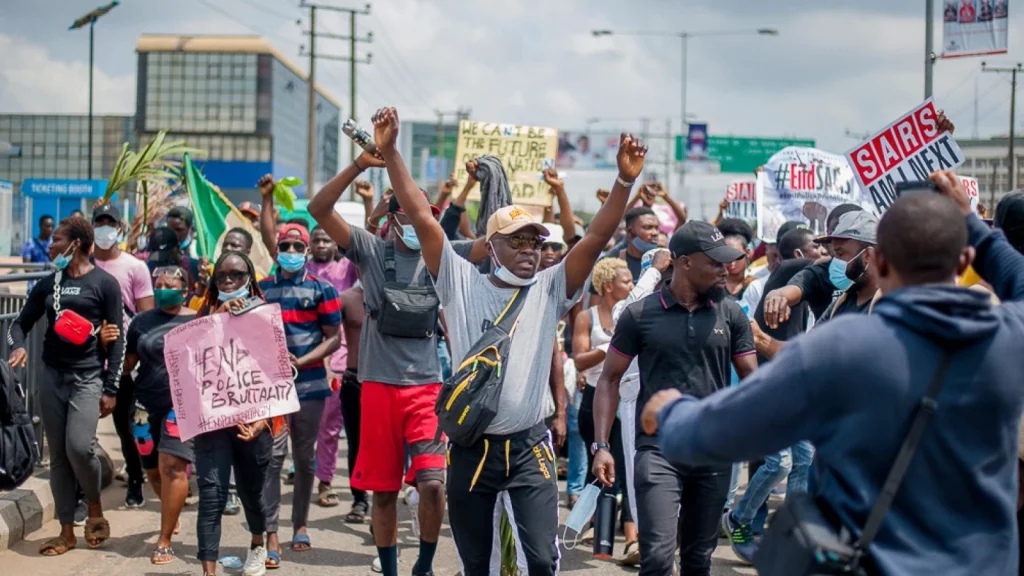
• Globally, there have been a number of youth-led protests in recent times. All around the world, young people seem to be reaching the end of their patience with corrupt, ineffective and repressive governments.

    Analysts suggest Gen Z (born between 1997 and 2012) got the worst end of the stick when it comes to the economic fallout of the 2008 financial crisis. But Boomers, Millennials and Gen X probably have something to say about that. 

    We can argue about who has it the hardest all day long, but what is clear is that the youthful Gen Z have the energy to actually go out onto the streets and do something about their frustrations.

    And that is exactly what they have been doing.

    Lately there have been youth-led protests in several countries including Kenya, Morocco, Peru, and Nepal.

    So, are we likely to see a Gen Z protest in Nigeria? Well, let us look at the similarities Nigeria shares with the countries that have had protests.

    Kenya

    In Kenya, the protests kicked off in June 2024 after the William Ruto government tried to pass a Finance Bill that came with heavy taxation including a 16 percent Value Added Tax (VAT) on bread.
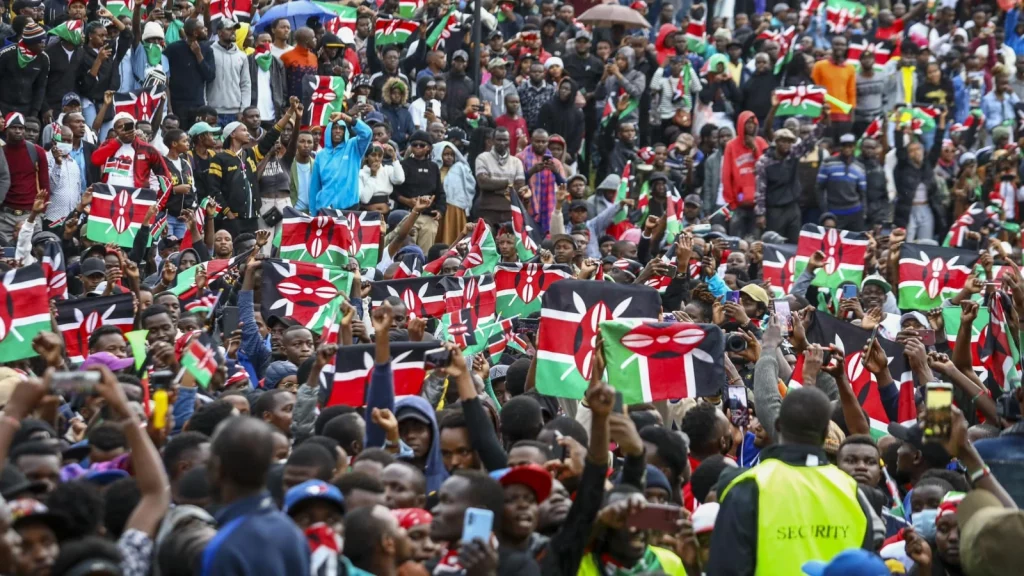
    After the first wave of protests, the government tweaked some parts of the bill and passed it, but the youth were still not having it. More intense protests followed.

    Protesters stormed the parliament building and were met with brutal police resistance. Over 20 people died and many others were injured. But on June 26, 2025, President William Ruto announced he would not sign the bill into law.

    In Nigeria, the Tinubu administration is trying to make up for a revenue shortfall caused by lower oil prices by taxing an already struggling population and turning government agencies into revenue-focused, money-printing machines.

    Apart from widening the tax net through four tax reform bills set to kick off in January 2026, the government has been flirting with several other taxes on goods and services.

    The Nigeria Immigration Service (NIS) has increased passport fees twice since Tinubu became president, including doubling the fees in 2025. Then there is the 4 percent Free-On-Board (FOB) charge on imported products to boost the revenue of the Nigeria Customs Service (NCS). It was suspended in February, reintroduced in August after the senate raised the NCS revenue budget from ₦6.584 trillion to ₦10 trillion, then suspended again in September due to public backlash. 

    The government has also floated the idea of a 5 percent surcharge on petroleum product purchases. Even the police are not left out, with attempts to bring back tinted glass permits which were scrapped in 2022 because officers were using them to extort and harass motorists.

    Get More Zikoko Goodness in Your Mail

    Subscribe to our newsletters and never miss any of the action

    Peru

    Peruvian youth have been protesting since early September 2025. On October 22, the government declared a state of emergency to try and stop the protests, which have already seen at least 19 people injured in clashes with law enforcement.
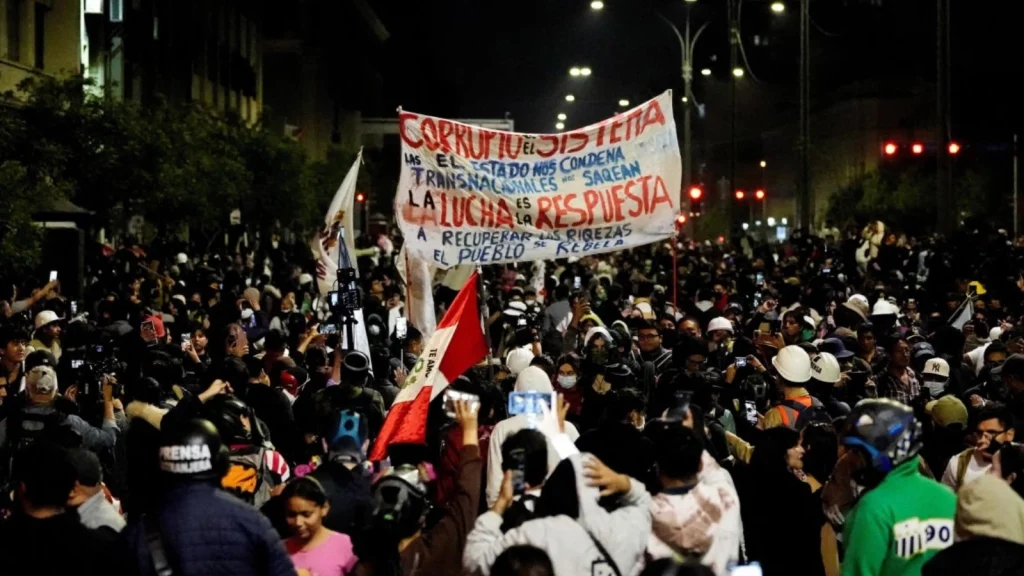
    The youth are pushing the government to do something about the country’s high crime rate. Kidnapping by organised crime groups is a serious issue in Peru.

    In Nigeria, insecurity is also a major problem, and kidnapping has become a trillion-naira industry.

    The National Bureau of Statistics estimated that Nigerians paid a total of N2.23 trillion as ransom between 2023 and 2024. And according to SBM Intelligence, N2.56 billion was paid between 2024 and 2025.

    Nigerians have even turned to social media crowdfunding campaigns to meet ransom demands.

    Morocco

    Gen Z protesters in Morocco have been filling the streets since September 27, 2025 to complain about the poor state of public education and healthcare.

    A big part of their frustration is watching their government spend money on hosting international sporting events like the 2030 FIFA World Cup and the 2025 Africa Cup of Nations, while public services remain underfunded and youth unemployment is through the roof.
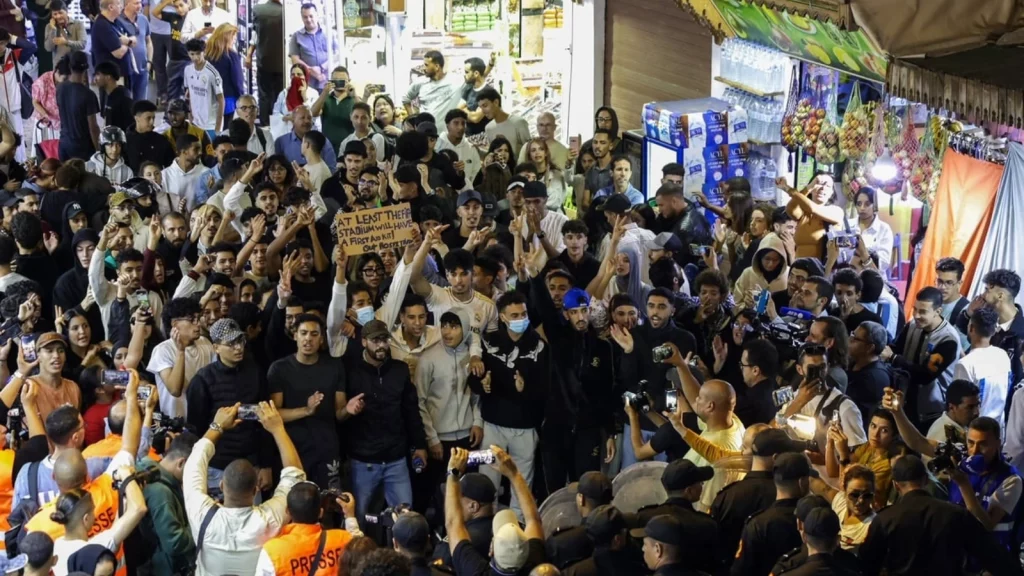
    The parallels with Nigeria are uncanny. We have all the same problems, yet Tinubu was determined to host the 2030 Commonwealth Games. Thankfully, India’s bid beat ours.

    Nepal

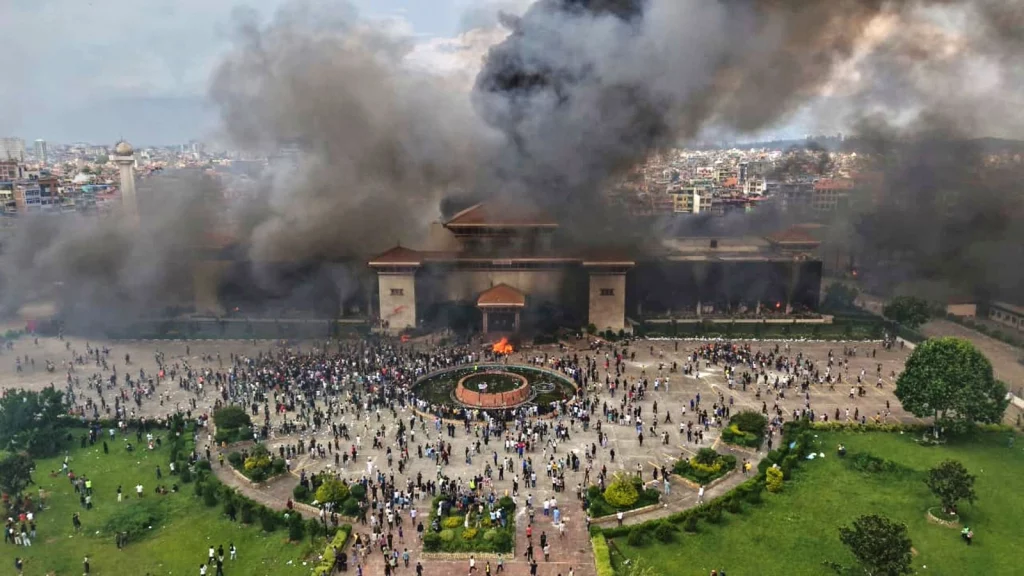
    Nepal had its own Gen Z protests in September. The trigger? The government shut down social media platforms during a viral trend that exposed the lavish lifestyles of politicians’ family members.

    It has been reported that the ban was a way to pressure social media platforms into complying with a new Digital Services Tax that placed stricter VAT rules on foreign e-service providers. It was all part of the government’s plan to boost revenue.

    Over 70 people were killed in the protests, government buildings were vandalised and burnt, and Prime Minister K. P. Sharma Oli, along with a few other ministers, resigned.
    Nigerians are no strangers to flashy displays of wealth by government officials and their families on social media. And recently, OpenAI announced it would be increasing its subscription fee for Nigerian users of ChatGPT to account for the 7.5 percent VAT mandated by the government.

    Who will barb us this style?

    With how similar Nigeria’s situation is to these countries that have had protests, it is almost surprising that Nigerians have not taken to the streets already, or at least mobilised some other ways.

    While a few factors have sparked protests elsewhere, Nigeria has a cocktail of all of them. Yet, Nigeria’s Gen Z remains silent.

    Quite understandably, many Nigerians have been watching these protests with a bit of envy. Nobody wants chaos and violence, but it is easy to wish for a day when Nigeria’s political class finally get what many think they deserve.

    But can Nigeria’s youth actually make a stand against the government like their mates have done globally?

    Well, the simple answer is yes. Anything is possible. But the more honest answer? It is currently very unlikely.

    The tower of Babel Nigeria

    “…let us go down, and there confound their language, that they may not understand one another’s speech.”

    ~Genesis 11, verse 7

    Nigeria has many problems, but one of the biggest is the problem of cultural identity.

    Obafemi Awolowo wrote in his 1947 book, Path to Nigerian Freedom, that “Nigeria is not a nation, it is a mere geographical expression. There are no “Nigerians” in the same sense as there are “English” or “Welsh” or “French”. The word Nigeria is merely a distinctive appellation to distinguish those who live within the boundaries of Nigeria from those who do not.”

    In Chimamanda Ngozi Adichie’s 2006 novel, Half of a Yellow Sun, the character Odenigbo says, “I am Nigerian because a white man created Nigeria and gave me that identity… But I was Igbo before the white man came.”

    This sentiment still lives in Nigeria today—the idea that ethnic identity must come before the national identity of being Nigerian. This means it is still very easy to divide Nigerians along ethnic lines, and opportunistic politicians take full advantage.

    In the 2023 elections, people were profiled and harassed if they were perceived to be from the wrong ethnic group. In Lagos, hoodlums stopped people from exercising their constitutional right if they were suspected to be Igbo.

    Since then, there has been a rise in ethnic supremacy sentiments in the South West under the guise of “Yoruba, ronu!”

    For a united stand to be taken against the government, Nigeria’s youth will have to look beyond their differences and fight for collective interests.

    We came, we saw, they opened fire

    We must not forget that young Nigerians have had a nationwide movement before. And they are still reeling from the fallout.
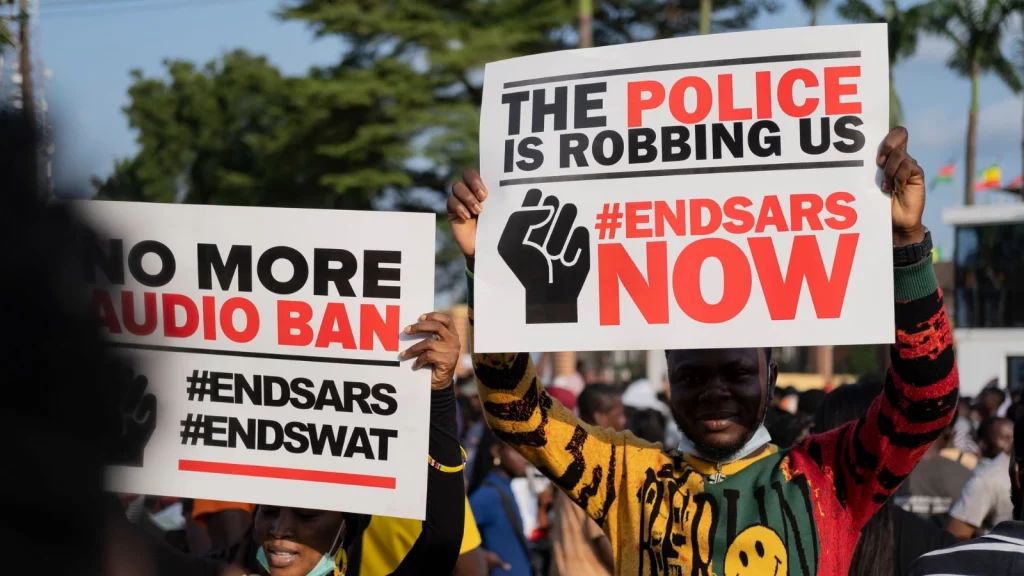
    October 20, 2025, marked the fifth anniversary of the Lekki toll gate massacre, where officers of the Nigerian Army opened fire on peaceful protesters during the nationwide EndSARS protests in 2020.

    The shooting basically marked the end of the protests, which had seen young people all over the country unite under the common goal of ending police brutality and extortion.

    The EndSARS protest was exactly the type of organic, united movement that has led to youth-led change around the world. Police brutality affected a wide range of young Nigerians, regardless of class, religion, or ethnicity.

    But the fatal response from the government took the wind out of the sails of the youth, and five years later, they have not returned to the streets in such force again.

    Whether young Nigerians can overcome the trauma of the violence they faced in order to start a similar movement seems unlikely.

    Many are scared. And they have good reason to be.

    What was it all for?

    It is hard not to look at the EndSARS protests as a thorough defeat.

    In the wake of the Lekki shooting, several All Progressives Congress (APC) members denied the events of that night. Five years later, the APC is still the ruling party.

    Days after soldiers killed innocent citizens, Bola Ahmed Tinubu said those who had been shot had to “answer some questions.” He implied they deserved their fate for staying at the protest site and questioned their characters. He is currently the president of Nigeria.

    Despite the Judicial Panel of Inquiry describing the events of October 20, 2020, as a massacre, none of the deniers has taken back their words or apologised. Nobody with the power to have ordered the soldiers to the toll gate has been held accountable.

    Five years later, activists trying to honour the victims of the massacre by placing flowers at the toll gate were harassed by security operatives.

    In August 2024, angry citizens held demonstrations and marches to protest hunger and bad governance. Afterwards, a group of minors were arrested and tried for treason which carries the death penalty. They were eventually pardoned and freed after public outrage, but the fact that the death penalty was even on the table shows the kind of culture of fear the government wants to instill in Nigeria’s youth.

    In this climate, it is understandably hard to build the motivation and momentum for mass movements.

    Many ways to kill rat

    “A problem well stated is half solved.”

    ~Charles Kettering

    Knowing why a youth protest would be difficult in Nigeria means we also know how to solve those problems.

    Nigeria’s youth need to realise that, just like with police brutality in 2020, many of today’s problems affect all of us, regardless of ethnicity. Nigeria might be the product of colonialism, but so are many other countries where people have found ways to work together regardless. Cultural identity is not an insurmountable challenge, and a Nigeria that works for everyone is possible if we work together for it.

    Many of the countries that have had successful youth protests were also met with stiff, even lethal, government resistance. But they did not back down.

    If Nigerians do come out to the streets again, they must be ready for resistance from security forces. Momentum cannot be lost in the face of state violence. It must become fuel for even more stubborn demonstrations.

    While it is easy to be envious of global examples of youth protests, we must not fall into the trap of seeing civil unrest as the only route to achieve the change we want. Democracy offers a peaceful way to get rid of unwanted governments.

    The art of the follow-through
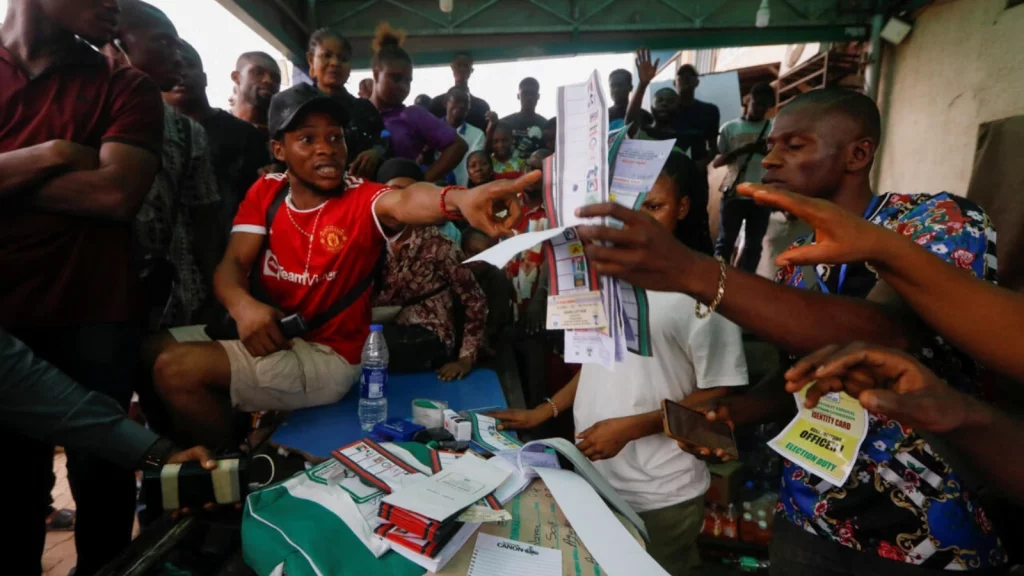
    Three years after the EndSARS protests, Nigerians went to the polls in 2023. And while the lead-up to the election saw increased registration numbers for young people and women, the voter turnout was one of the lowest in our history.

    Nigeria’s youth are its largest demographic group and, as a bloc, would be a voting majority. But they need to shake off their apathy, realise the impact that politics has on their lives, and get involved. And when elections come round, they need to follow through by actually showing up on the day and casting their vote.

    We could hope for another organic protest movement that balloons into the toppling of the government in a blaze of violence and chaos. Or we can put our energy towards having a quieter but equally impactful revolution at the polls.

    Dear Nigerian Gen Z, which one you dey?


    Before you go, help us understand how you and other young people feel about the 2027 general elections by taking this 10-minute survey.


    Click here to see what other people are saying about this article on Instagram

    [ad]


  • Picture me as a content creator doing a storytime TikTok (sorry, boomers) because that’s the energy I’m coming with. The Nigeria Labour Congress (NLC) is dragging the Federal Government (FG) for filth, and I have all the details. Stay with me.

    What’s going on?

    The real question is, what’s not going on because there’s been a ton of drama in the past couple of days, and it all started with an announcement made on Monday, January 20.

    On Monday evening, the Nigeria Communications Commission (NCC) released a statement on its Twitter account saying it is giving telecommunication operators in the country permission to increase the tariff on phone calls, SMS, and data subscriptions by 50%. The implication of this announcement is that phone calls will move from ₦11 per minute to ₦16.50 per minute, SMS from ₦4 to ₦6, and 1GB data bundle from ₦287.50 to ₦431.25.

    Protests and lawsuit threats

    The ink from NCC’s pen had barely dried on their paper when they were hit by draggings from different corners. The first was from the National Association of Telecoms Subscribers (NATCOMS), which announced on Tuesday, January 21, that it’d be dragging the NCC by its hair to court for trying to add to the already heavy burdens that Nigerians carry.

    The second lawsuit threat came on the same Tuesday, from the Socio-Economic Rights and Accountability Project (SERAP). The legal advocacy group is no stranger to calling the Nigerian government’s BS, regardless of the administration. Regarding this tariff hike, SERAP says that the government’s decision to increase the tariff violates the rights of Nigerian citizens to affordable communication as contained in international human rights standards.

    The next dragging came from the National Association of Nigerian Students (NANS) on Wednesday, January 22. “This decision is not only abnormal but also highly inconsiderate and unjustifiable, especially in the current socio-economic climate,” the student association said in a statement.

    NANS said that while it understood that telecommunication companies were facing operational challenges, it does not believe the burden should be passed on to Nigerians, especially students, because they already have way too much on their plate as it is.

    Unlike SERAP and NATCOMS, the student association not only dragged the NCC but also bundled the Ministry of Communications and Digital Economy along with it, saying it would embark on a nationwide protest if the ministry and the NCC did not reverse the tariff hike in 72 hours.

    The Nigerian Labour Congress (NLC) was not as gracious with their time though. On the same Wednesday, January 22, the NLC released a statement saying the tariff hike was highly unfair to Nigerian workers, giving the government a 48-hour deadline to reverse the hike, but unlike the other groups and associations before it, the NLC did not threaten a protest or lawsuit, it threatened an industrial boycott which it wants Nigerians to get on board with.

    But why did the NCC hike the tariff by 50%?

    Everyone is (rightly) pissed off at the tariff hike, but the gag is that telecom operators in Nigeria actually asked the government for a whopping 100% increment. This would have seen phone calls climb from ₦11 per minute to ₦22, SMS climb from  ₦4 to ₦8, and 1GB data subscription from ₦287.50 to ₦575.

    Telcos explained that the telecommunication industry was at risk of crumbling if an increase was not effected; they also threatened to suspend their services in some parts of the country if their demand was not met. After stalling and stalling, the NCC met them halfway and increased the tariff by 50% instead of 100%. We previously wrote an article explaining this in detail.

    Why does the NLC want you to boycott telecom companies?

    Explaining the position of the union on Arise TV on Friday, January 24, NLC President Joseph Ajaero argued that the government increased the tariff prices for its own gain. “When you increase tariffs by 50 per cent, aside from the taxes the government may collect, it’s seen as a way to boost government revenue. This has been the same approach even in the power sector,” he said.

    He pointed out that while he understood the need for telcos to seek an increase in tariff due to operational struggles, he still thinks the government did not act in favour of ordinary Nigerians by making the 50% increment as he believes the NLC as a regulator, has the duty of striking a balance between the corporate interest of telcos and the welfare of Nigerians.

    “The government needs to strike a balance. For someone earning N70,000, paying over N10,000 on this tariff increase alone is significant. How will they afford transportation, housing, and other basic needs? It’s not realistic because, in reality, there’s no housing that costs N10,000, and transportation costs are equally high,” the labour President said.

    Explaining further, Ajaero said that the government could actually reduce the operational costs weighing down on telcos (as well as other industries) and save Nigerians the stress of extra expenses by producing essential items in the country rather than importing everything.

    “For instance, even for metering, we’re importing cables. These are items we could produce domestically, but instead, we rely on imports and then blame rising costs on currency value and importation expenses,” he said, explaining that it made no sense to import these things and then push the extra costs of importation on Nigerians.

    “Where did we go wrong that ordinary Nigerians must always bear the brunt? We need to rethink these policies and ensure that people aren’t left struggling to survive while corporations thrive,” he asked.

    So what now?

    Except for the Nigerian people, I have no dog in this fight. However, the NLC President made a fair argument in pointing out that certain things should be manufactured within the country to save Nigerians unnecessary headaches, sort of like how the entire country has always pushed for the establishment of functioning refineries that’ll supply petroleum products directly to Nigerians rather than going the importation route and incurring extra costs.

    What can we do?

    Your next point of action will be highly dependent on which side of the divide you stand on. You can do nothing if you believe the 50% tariff hike is fair. If you think it’s unfair, you can do either of the following to make your opinion known:

    1. Pressure your lawmakers: If citizens pressure their lawmakers about issues affecting them, they can summon the parties involved to explain what’s happening and possibly change the issue (again, only when pressured). You can find the lawmaker representing your constituency in the national House of Assembly here.
    2. Stage a protest: This is usually a no-brainer in situations like this. In this particular case, you can either start your own protest, join the one proposed by NAN or join NLC’s boycott.
    3. Use social media: Social media has quickly become a powerful tool for change globally, and it’s no different in Nigeria. One of the most effective ways to start a social media campaign is by consistently talking about an issue and using hashtags to do it. Strong movements such as the #EndSars originated through the use of hashtags.

    4. Start a digital campaign: Starting an online petition is also another way to  effect change that you want to see. Platforms like this are a great start and are pretty straightforward to use.

  • It’s been two weeks since the results of the governorship elections on March 18, 2023, were announced. With it, we finally said goodbye to the election season, and now we can focus on surviving the consequences of our actions. 

    However, do you know that if you’re a supporter of the ruling party, the All Progressives Congress (APC), you’ve automatically subscribed to a shege-free experience in Nigeria for the next four years? 

    Allow me to walk you through some of the benefits you’re entitled to as an APC supporter:

    The police can’t touch you

    It’s not news that Nigerians are often victims of police brutality; after all, it was the reason behind the #EndSars protests in 2020. But, I have great news if you belong to the “E mi lokan” brigade. 

    To be completely free from police wahala for the next four years, you only need to tell the Police that you serve in the Jagaban Army, and they’ll let you go based on esprit de corps. 

    And if you’re not courageous enough for that, quote Portable and say: “I’m a Federal Government liability, I work for the APC, and we own Nigeria”. The police will apologise and send you on your way with kisses and hugs.

    Your properties receive double protection

    On March 28, 2023, the APC National Youth Leader, and Chief of Army Staff of the Jagaban Army, Dayo Israel, shared a picture of his vandalised vehicle in Maitama, Abuja, on his Twitter page. 

    And it’s shocking that despite his position, he doesn’t know that there’s a standard protocol to prevent things like this from happening to APC supporters. All you have to do is follow Sanwo-Olu’s advice – wind up your car windows properly, and voila! Your car immediately becomes invisible to criminals. 

    And besides, everyone knows these things don’t happen in Maitama.

    You get discounts on bus fares

    In February, the Lagos state governor, Babajide Sanwo-Olu, slashed the price of bus fares for all state-owned buses by 50 per cent. Although he claimed it was to reduce the hardship caused by fuel and money scarcity, it won’t be far-fetched to think this was to help him in his re-election bid. But now the elections are over, and he got a second term in office, so we’re returning to the status quo.  

    On March 28, 2023, the Lagos Metropolitan Area Transport Authority (LAMATA) released ‘PUBLIC NOTICE’ that bus fares will return to 100 per cent effective April 1, 2023. But again, like I already said, this shouldn’t concern you if you support APC. With your membership card, you can get 50% off all trips.

    I find it amusing how every election, people forget the amount of suffering they went through under an administration. Instead, they’d rather lose their conscience and relationships to help a ruling party keep power. At this point, a nationwide therapy session should be held for Nigerians. 

    What else happened this week?

    Youths Appeal to ECOWAS over Election Results

    The 2023 elections can be summed up with one word: Controversial. 

    While some people have begun to move on from their disappointment towards the elections, a group of Nigerian youths, under the Free Nigeria Movement, stormed the Economic Community of West African States (ECOWAS) headquarters on March 28, 2023. They peacefully protested the conduct of the elections by the Independent National Electoral Commission (INEC) and the results.

    They handed their protest letter to the director of Administration and General Services for ECOWAS, who promised to take appropriate action. It’ll be interesting to see the following line of action the regional body takes, if any is taken at all. 

    Video of the week

    Question of the week

    On March 14, 2023, the CBN released a directive stating in compliance with the Supreme Court rule, the old banknotes will remain the legal tender until December 31, 2023. So far, has this helped with the naira scarcity problem? 

    Ehen one more thing…

    The general census is expected to be conducted by the National Population Census (NPC) from May 3 to 5, 2023. Find out how much this exercise is supposed to cost here.

  • A popular saying goes, “Life be like standing fan, e go touch everybody”. During the governorship elections in Lagos on March 18, 2023, thugs violently suppressed voters to help the ruling party retain power in Lagos state. 

    These thugs were identified as road transport workers, known as agberos.

    Many people rationalised this behaviour under the guise of protecting Lagos from ‘invaders’. But barely two weeks after successfully ‘saving’ Lagos, it seems the “protectors of Lagos” now have to protect their interests.

    What happened?

    On March 29, 2023, a protest by commercial bus drivers broke out along the Lagos-Abeokuta expressway, which left passengers stranded. The reason behind this protest is the latest increment of taxes by the agberos

    For anyone who stays in Lagos, bus drivers paying different thugs money at almost every bus stop is as normal as traffic on a Monday morning. According to the International Centre for Investigative Journalism, these drivers pay about ₦82.13 billion annually at bus stops to agberos, which is remitted to the National Union of Road Transport Workers (NURTW). 

    The money is often collected forcefully, and drivers who resist have their vehicles damaged. During the protest yesterday, drivers complained that the tax increment further reduces their profit margin as they currently pay between ₦10000-15000 daily to the Union.

    Commercial bus drivers thugs agberos extortion protest

    Has the government intervened?

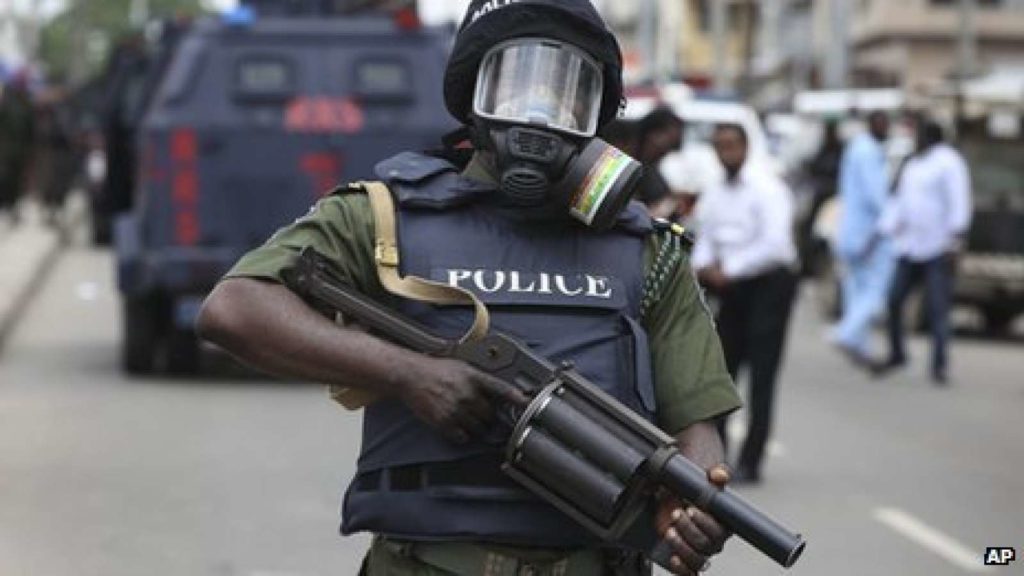
    There hasn’t been an official statement from the Lagos state government yet, but the police have responded to the protest the only way they know how: by shooting. 

    Police officers from the Alagbado police command reportedly opened fire on protesting drivers on orders from the agberos.

    What’s more mind-boggling is that a driver at the scene said the Police officers came with thugs who held cutlasses and chased them into the streets. 

    Commercial bus drivers thugs agberos extortion protest

    Also read: Where’s the Nigerian Police When You Need Them

    Hopefully, the bus drivers win their fight against the extortion they’re facing, but given Lagos’ history with protests, chances are this will, unfortunately, be swept under the rug. 

  • Nigeria has  been blessed with extraordinary women across different fields. Dora Akunyili, Chimamanda Adichie and Ngozi Okonjo-Iweala will be remembered for their vast achievements.  But one woman in our history books appears relegated to merely being the first Nigerian woman to drive a car. 

    Funmilayo Ransome-Kuti, once described as the “Lioness of Lisabi”, was an activist, a politician, a teacher and a women’s rights advocate. Let’s take a look at some of her exploits.

    The first female student at Abeokuta Grammar School

    It’s not weird in this age to have more girls than boys in a classroom, but this wasn’t always the case. Ransome-Kuti, born in 1900 as Frances Abigail Olufunmilayo Thomas, was the first female student to be admitted into Abeokuta Grammar School — the first grammar school in Nigeria. She enrolled as a student in 1914, the  same year five other female students joined the school. 

    She founded the Abeokuta Women’s Union (AWU)

    In 1932, after her education in London and her marriage to Reverend Israel Ransome-Kuti, she founded the Abeokuta Ladies Club (ALC) which was exclusive to only western-educated women. 

    However, the club gradually became more feminist and political. By 1944, it finally became open to market women who were illiterate and suffering under colonial rule. The club became open to all Abeokuta women in 1946 and changed its name to the Abeokuta Women’s Union (AWU).

    In 1918, colonial rule brought changes that made life particularly difficult for everyone, especially for women. One of these changes was a tax imposed on women considered to be of marriageable age and affected girls who were as young as 14 years old. They were required to pay a tax of three shillings yearly. 

    Another problematic policy was the food price control tax placed on market women. When they defaulted on these payments, the women were beaten, stripped or even arrested.

    By 1948, the women had finally had enough. Since protests were banned, they gathered at the palace of the then-traditional ruler of Abeokuta, Oba Ladapo Ademola II, for “picnics” and “festivals”. Ransome-Kuti taught the protesters how to deal with the tear gas thrown at them. 

    Day after day, the protesting women sang war chants calling for the abolition of taxes. They also demanded the removal of Oba Ladapo Ademola II for implementing the colonial policies. Eventually, the women won the drawn-out battle as the colonisers removed the taxes and the king abdicated his throne for two years. 

    She was the only woman in Nigeria’s 1947 delegation to London

    Nigerians often celebrate men like Obafemi Awolowo, Nnamdi Azikwe and others like them for their role in the country’s struggle for independence. But many people don’t know Ransome-Kuti was a member of the 1947 National Council of Nigeria and the Cameroons (NCNC) delegation to London to table demands before our colonisers. 

    While in the United Kingdom, she stirred things up with an article she used to blame colonial rule for the political and economical marginalisation of Nigerian women.

    She’s the only Nigerian woman to receive the Lenin Peace Prize

    Ransome-Kuti travelled far and wide, and gave lectures everywhere she went to highlight the struggles of Nigerian women and campaign for their rights. In recognition of her efforts, she won the Lenin Peace Prize in 1970.

    She’s a Member of the Order of the Niger (MON)

    After AWU’s win against tax impositionin 1948, Ransome-Kuti created the Nigerian Women’s Union (NWU) to support women’s rights across the country. She set up branches around Nigeria and ensured educational opportunities for girls and women. She also worked towards improving the participation of Nigerian women in politics.  And the government named her a Member of the Order of the Niger (MON) in 1965 to appreciate her hard work

    As we already know, Ransome-Kuti passed much of her activism onto her third child, the famous Fela Anikulapo-Kuti. Unfortunately, during a military raid of her son’s house in 1978, soldiers threw her out of the two-storey building, and the injuries she sustained claimed her life at 78. 

    Funmilayo Ransome-Kuti lived a full life and was passionate about Nigerian women and their representation in the country. With everything she achieved, it’s a great disservice if we remember her only for her motor skills or simply as “Fela’s mother”.  

  • Citizen is a column that explains how the government’s policies fucks citizens and how we can unfuck ourselves.

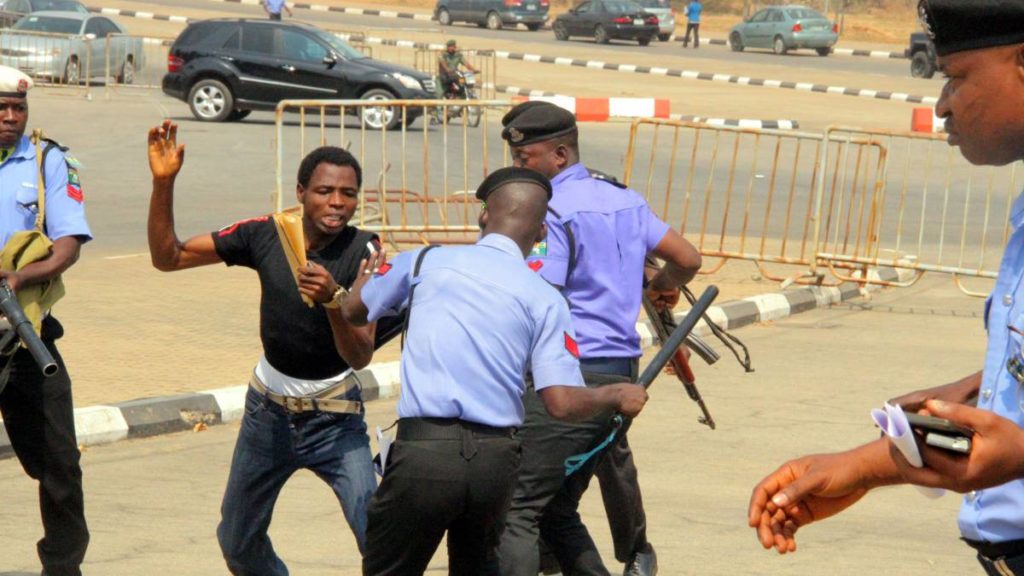
    The Nigerian police are always averse to protests. But things took a different turn earlier today when the Lagos State government, through its official Twitter account, stated that the Lagos State police command has vowed to resist any protests in Lagos State, under any guise or “nomenclature”.

    As expected, a lot of social media users were angry at the declaration. Many people referred to the constitution as supporting the rights of citizens to protests, and they went on about how the police and the Lagos State government were trying to stifle the rights of displeased Nigerian or protesters.

    Curiously, we decided to look at the laws that guide assembly in Nigeria, including if and when the Nigerian police can put an end to protests in Nigeria. Just maybe the police and the Lagos State government were seeing some things we weren’t.

    Read: Who Has Powers Over The Nigeria Police Force?

    1. Section 40 of the Constition

    The most important position of the law for anyone who wants to understand the position of Nigerian laws on protests is Section 39 and 40 of Nigeria’s 1999 constitution.

    Section 39 of the constitution guarantees free speech while Section 40 of Nigeria’s 1999 the constitution states that:

    Every person shall be entitled to assemble freely and associate with other persons, and in particular, he may form or belong to any political party, trade union or association for the protection of his interests.

    This provision states simply that everyone is entitled to assembly freely and associate with other people.

    However, Section 45 of the constitution states that any law against section 40 is valid if it is in the interest of defence, public safety, public order, public morality or public health, or in the interest of protecting the freedom of other people.

    So, the only thing that can affect the right to hold a peaceful protest is if the government makes a law that restricts movement in the interest of defence, public safety, public order, public morality or public health or in the interest of protecting the freedom of other people.

    But the laws on assembly are not finished.

    2. Public Order Act of 2004

    The “Public Order Act” was enacted in 2004.

    Section 1(1) of the act gives a governor of a state the power to direct the conduct of any assembly on a public road or all public places of resort in the state, and prescribe the route any procession may pass.

    Section 1 (2) also states that anyone who wants to convene any assembly or meeting or of forming any procession in Nigeria must have a licence to do so.

    The person must first make an application for a licence to the governor not less than 48 hours before the assembly, and if the governor is satisfied that the assembly is not likely to cause a breach of the peace, he must direct any superior police officer to issue a licence, not less than 24 hours to the assembly, specifying the name of the licensee and defining the conditions on which the assembly to take place.

    If he is not so satisfied, he must convey his refusal in the same manner to the applicant within the time stipulated.

    Section 1 (4) of the Act also gives the governor the power to delegate his powers in relation to the whole state or part thereof, to the Commissioner of Police of the State or any superior police officer of a rank not below that of a Chief Superintendent of Police.

    This means that a state governor has to give a licence before people can assemble in any state, and he can delegate his powers to the commissioner of police of the state.

    But the position of the law is still not over with regards to protests.

    3. All Nigeria People’s Party v. Inspector General of Police (2006)

    In this case, All Nigeria People’s Party (ANPP) took the IGP to court and challenged the constitutionality of the police permit under the Public Order Act after the police disrupted their rally.

    At the Federal High Court, the Judge stated the Public Order Act is a violation of section 39 and 40 of the constitution, and chapter 11 of the African Charter on Human and People’s Right, and the law is a violation of the right of people’s assembly to free speech.

    The judge agreed with Mr Falana, the lawyer for ANPP, that Nigeria’s criminal law should be used to prosecute violent protesters, but the rights to assemble cannot be taken away if they protest peacefully.

    The judge conclusively stated that “sections 1(2),(3),(4),(5) and (6), of the Public Order Act are inconsistent with the fundamental rights provisions in the 1999 Constitution and to the extent of their inconsistency, they are void. I hereby so declare.”

    4. In Conclusion

    The Federal High Court has held, through a continuous order, that the Inspector-General of Police, whether by himself, his agents, privies and servants cannot prevent aggrieved citizens of Nigeria from organizing or convening peaceful assemblies, meetings and rallies against unpopular government measures and policies.

    The Court of Appeal also held, on the same case, that permits for peaceful demonstrations are things of the past, and that protesting peacefully is part of the fundamental pillars of a democracy.

    It is now a settled case that peaceful protests are guaranteed under the Nigerian constitution, and are an important part of Nigeria’s democracy. And they cannot be denied except in a situation where Nigeria or part of the country is in a special emergency like a disaster.

    Quiz: What Are You Most Likely To Get Arrested For?


    [donation]

  • Citizen is a column that explains how the government’s policies fucks citizens and how we can unfuck ourselves.

    Let’s start here:

    On the 20th of October, 2020, armed men of the Nigerian army allegedly shot at peaceful protesters in the recent #EndSars movement. It is estimated that at least twelve people were killed in Lagos, and hundred more were injured around Nigeria.

    In light of this unfortunate and avoidable incident, we decided to take a look at all the times Nigeria has killed innocent, peaceful protesters.

    1) The Women’s Market Rebellion of 1929.

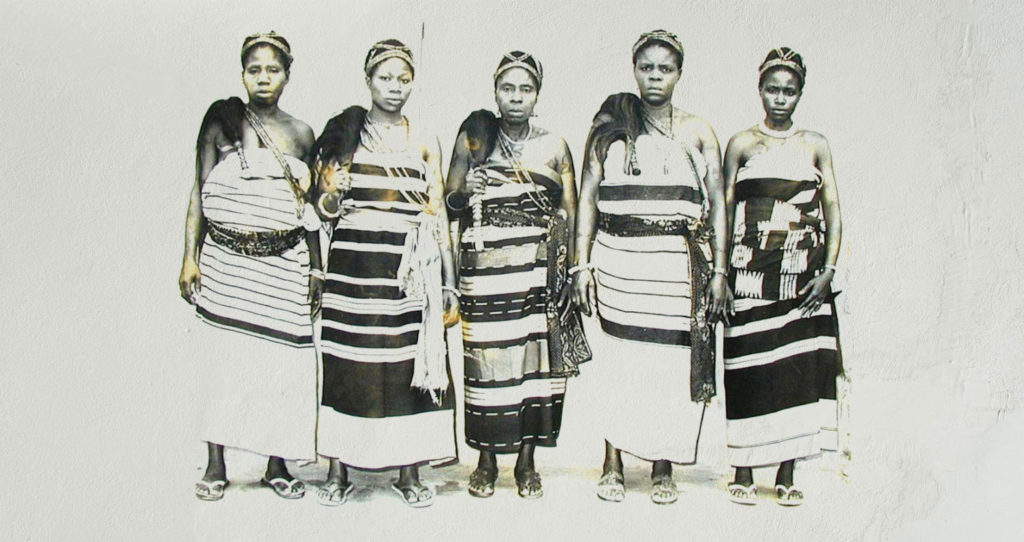
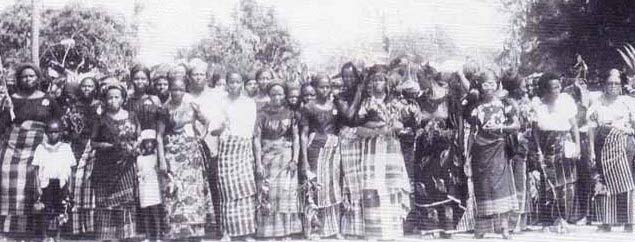
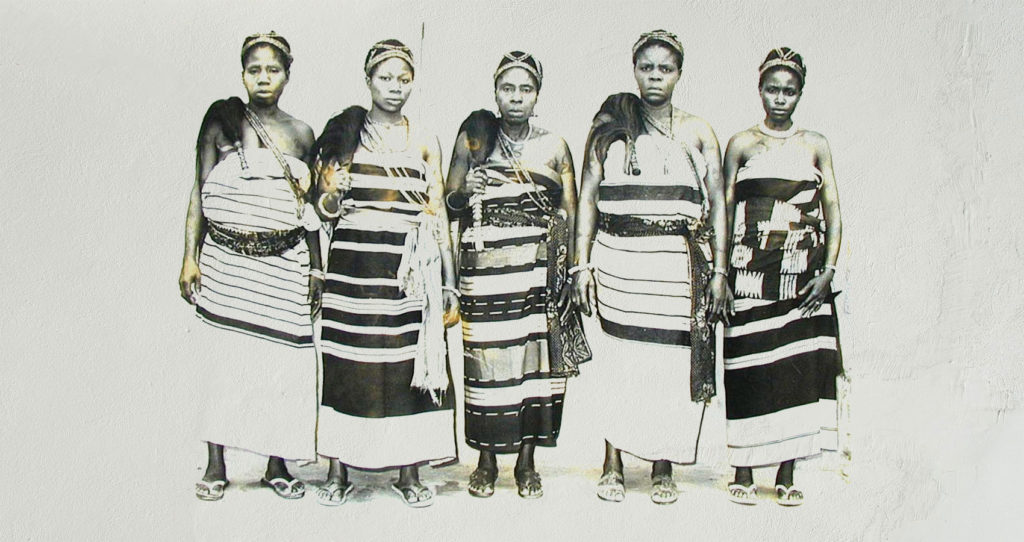
    The Aba market women rebellion of 1929 was a largely peaceful protest against the colonial government’s plan to tax women. Inspired by a woman called Nwanyereuwa, and strengthened by the popular Oloko trio, [mostly] market women executed a strategic anti-colonial revolt. The aim was to address social, political and economic grievances. The women wanted more participation in government, removal of direct taxation of women, and better overall treatment.

    The women employed methods like “sitting on a man”, or donning male traditional attires to express their displeasures. In some cases, this resulted in [some] destruction of properties. Especially properties of warrant chiefs who were the direct link to the colonial masters.

    To restore normalcy, British officers were brought in. By the time order was restored, at least 50 [protesting] women were shot dead and 50 others were injured. As a result of the unfamiliar tactics [to the British] used by the women, and the casualties, an enquiry was called for. The name “Aba Women’s Riots of 1929” is how this enquiry was named in the British colonial records leading to the misinformation that the event was a riot.

    2) The Iva Valley Massacre of 1949.

    In 1949, striking miners demanding for better wages and living conditions in Enugu were shot dead by British police.

    In the 1940s, Enugu had become Nigeria’s biggest coal producer and was called the coal capital of West Africa. Two major mines were responsible for this – Iva valley and Obwetti mine.

    The life of a miner was dangerous. They worked 6 days a week underground with low oxygen, low morale, and low pay. To further worsen things, Europeans who worked on the surface and did lesser work were better off than the miners.

    Increased resentment led the miners to a strike action which was rejected by the colonial officers. The miners were sacked and immediately asked to leave the premise after which they refused. British police were called to remove the striking, peaceful miners from the site.

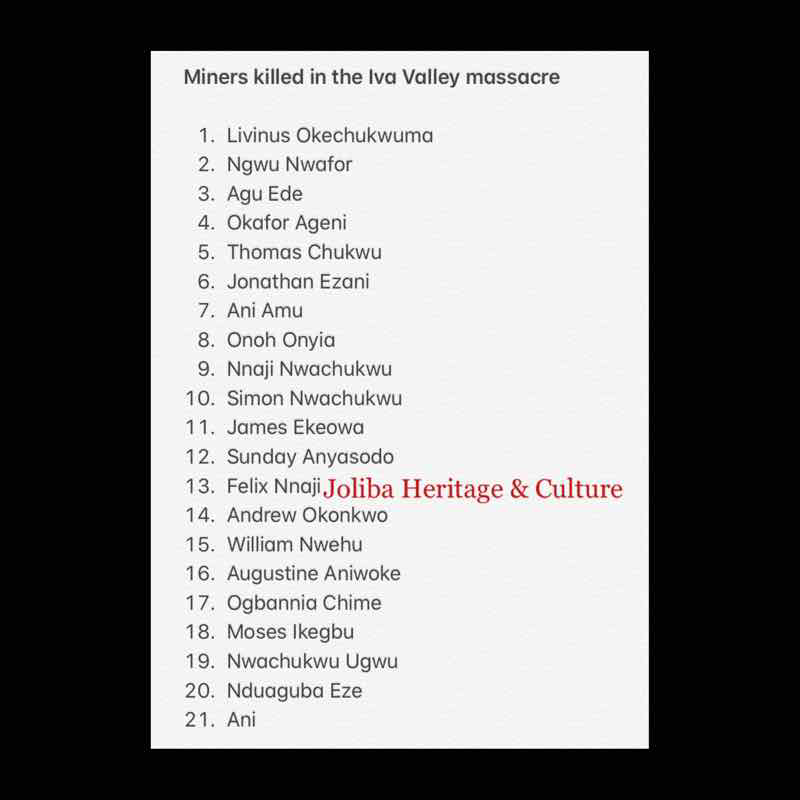
    Not to be intimidated by the police, the miners chanted songs of solidarity. The British officers led by Superintendent of Police, F.S Philips opened fire on them. He would go on to say that the miners were indulging in a war dance and looked menacing. 21 miners were killed on that day and were mostly shot in the back.

    The protest increased agitations and united a large swathe of Nigerians for the first time, and this helped push our final claim for independence from colonial rule.

    3) Occupy Nigeria Protest of 2012.

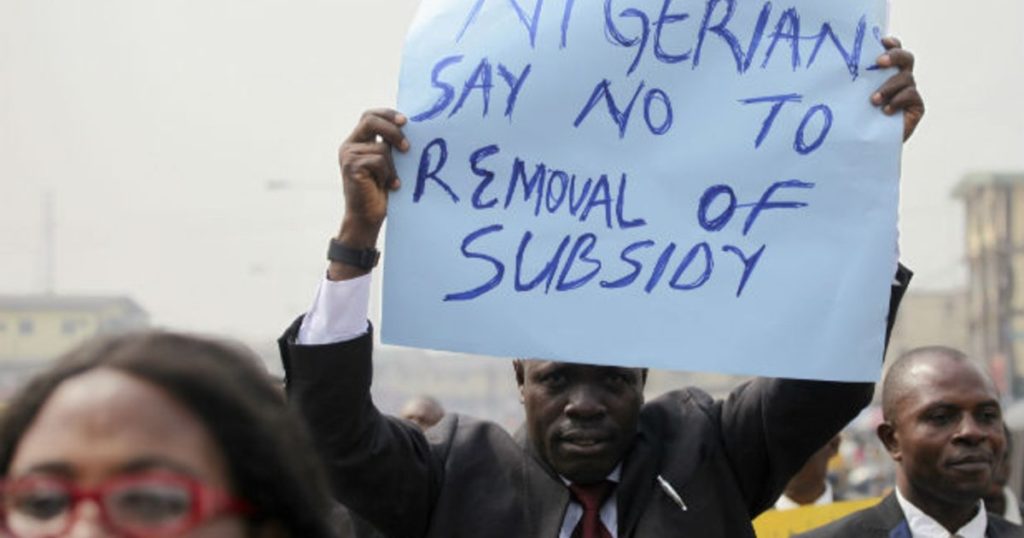
    In the Occupy Nigeria protests against fuel subsidy removal, at least 12 people died. Two people were reportedly shot dead when the police fired into the crowd in an attempt to disperse peaceful protesters.

    4) IPOB Protest of 2015/16.

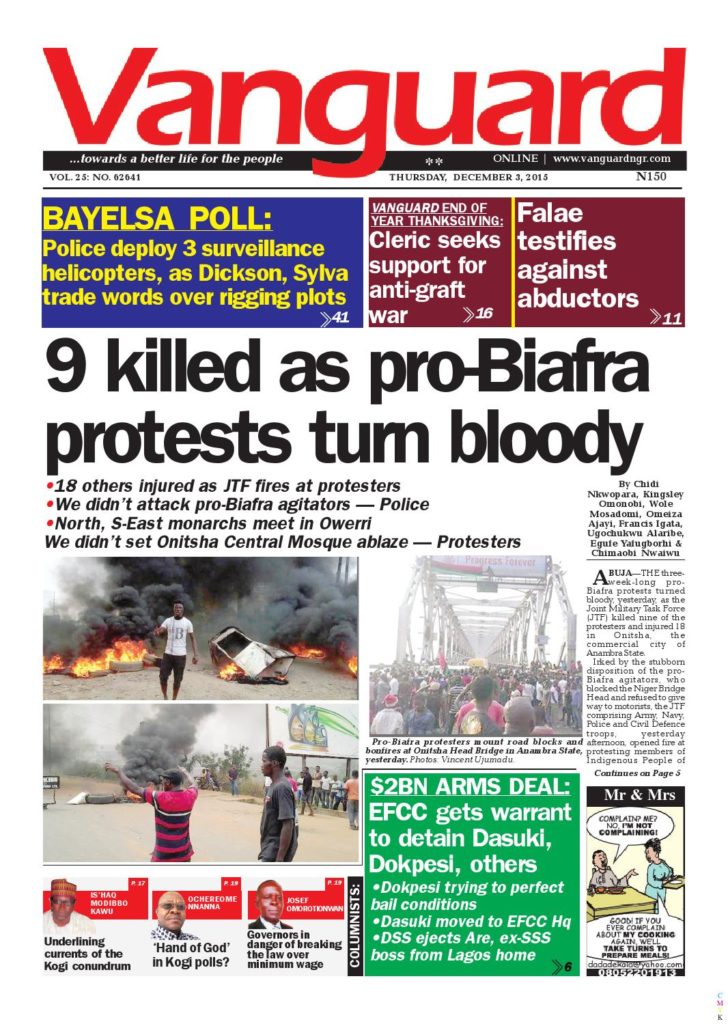
    The Indigenous People of Biafra (IPOB) supporters were allegedly shot at and killed by the Nigerian military between August 2015 and September of 2016. The group and its supporters were protesting for secession and restoration of the Republic of Biafra. The most notable incident was in December of 2015 where 11 protesters reportedly lost their lives.

    6) Shiite Protest In 2019.

    In July of 2019, the Nigerian police allegedly fired at peaceful protesters of the Shia Islamic Movement of Nigeria (IMN) in the capital city of Abuja.

    The protest was to demand urgent medical care for the detained leader of the Shiites, El Zakzaky, and to also request his release. Reportedly, eleven protesters, one journalist, and a police officer were killed. Additionally, scores of protesters were either injured or arrested in the aftermath of the protests.

    7) Lekki Massacre of 2020.

    On the night of October 2020, peaceful and unarmed protesters were allegedly shot and killed at the Lekki toll gate by Nigerian soldiers. The protest was a social movement to call for an end to police brutality in Nigeria. A rogue unit [The Special Anti-robbery Squad] notorious for killing, harassing, and stealing from young Nigerians was the focus of the protests.
    According to reports, in the evening, light was allegedly cut from the tollgate, and the CCTV cameras were removed. It is believed that the aim was to reduce video evidence of the massacre.

    In one of the clips that emerged from the site, protesters can be heard singing the Nigerian anthem and crying as they are shot at. We owe it to them to never forget the incident of 20/10/2020.

    Notable mention is the Agbekoya Farmer’s Revolt of the late 1960s where farmers protesting against taxation were shot and killed by policemen.

    We hope you’ve learned a thing or two about how to unfuck yourself when the Nigerian government moves mad. Check back every weekday for more Zikoko Citizen explainers.

  • Women have been said to be at the forefront of this protest. Although some people say women should not join the protest, they did anyway. We asked six Nigerian women why they joined the #EndSARS protests.

    Linda, 21

    Every day I spend on the road, is for the women and the queers. Police brutality affects those two groups strongly, and people

    Elizabeth, 25

    My brother has been extorted by SARS. I don’t consider it centering men, I consider it fighting for family. It’s a family thing now.

    Chika, 27

    Women. That’s it. Women are raped, assaulted, and STILL extorted by SARS officers. They’re the reason I protest.

    Folorunsho, 26

    I’ve been a victim of SARS. They’ve taken some money from me before, and I’m honestly done with the institution. This protest is for me. For what they’ve taken from me.

    Adaeze, 19

    I want a new Nigeria. A safer one for all of us irrespective of their gender and sexual orientation. If by going to the streets every day will get me that, then so be it.

    Dimso, 35

    I do not want to be on the wrong side of history. I want to be able to tell my children that I stood for something as great as this.


    For more women do focused content, please click here

  • As the #Endsars protests continue into the week, some protesters might be losing focus. We’ve heard reports of [some] bad behaviour among protesters. We the good people at Zikoko thought it right to remind us all of the dos and don’ts of a peaceful protest.

    Let’s begin:

    1) No alcohol.

    Alcohol and good behaviour rarely go well. It’s important not to give the government the ammunition they need to end the protest.

    2) No stimulants or drugs.

    These people are the reason why we protest and we must never forget:

    3) No games.

    We should avoid anything that makes our protest look indulgent or unserious.

    4) No carnival/parties.

    Again, please.

    5) No sexual harassment.

    Of both men and women. Especially of women! Keep your hands to yourself and focus on #Endsars.

    https://twitter.com/MisterNigerD/status/1314909903182495744?s=20

    6) No bullying.

    If people don’t subscribe to your belief, leave them alone and focus on the goal which is #Endsars. People SHOULD not be attacked for their sexual orientation or beliefs. Leave them alone and let’s focus on ending Sars.

    7) Please, no violence.

    Do not damage government property in the heat of the moment. If you see anyone inciting violence, call someone’s attention. Remember, this is a peaceful protest.

    8) No spraying of money or display of wealth.

    There’s a crowd and we should try to prevent anything that can result in a stampede.

    9) No stealing.

    Please.

    We hope you’ve learned a thing or two about how to unfuck yourself when the Nigerian government moves mad. Check back every weekday for more Zikoko Citizen explainers.

  • When they said train a woman and you train a nation, they forgot to add that when you fight a woman, you fight a community. Throughout history, women have fought for their right to vote, own properties, and be included in government together as a force.

    In light of everything happening in Nigeria with #EndSARS, we decided to curate different times in Nigerian history where women have led protest for change.

    1. Agbaja women protest of 1910s

    When the women in Agbaja area saw a decrease in domestic animals and observed an increase in female mortality, they stayed away from home for a month in protest. These women left their husbands’ villages and went to either Umunumu or to Orie Ekpa (market) with their mats so they could sleep wherever night met them. When their husbands went to ask the reason for their withdrawal, they said too many women were dying.

    The men were forced to cook for themselves and even prepared food in large quantities to be taken to the place the women were encamped. To resolve the issue, every man had to swear on Ala – the earth – that they had not stolen the women’s animals nor killed any woman. Refusal to swear had a death penalty.

    You have to stan these pre-colonial queens.

    2. Calabar women protest of 1924

    In the year of our lord, 3,000 women in Calabar went out to protest a market toll that was required by the government. Imagine mobilising a crowd of 3,000 without the help of social media. Back then, the presence of women associations and market women networks helped the protest movement.

    3. Aba women riot of 1929

    The Aba Women’s riot is also known as the Women’s war of 1929. Nigerian history is incomplete without the story of these women who fought against the injustice of the colonial administration. Before the colonisers took over, women in Igboland had a place in government. They were represented in all meetings and recognised as an important part of the political movement. The colonisers in trying to set things up in their own way completely shut the women out of power, choosing only Igbo men as representatives.

    They tried to establish a “moral order” with patriarchal tactics that backfired when the women revolted against the increase in school fees, corrupt officials, forced labour and the final straw; taxing of women. These women were already burdened with supporting their families and helping their husbands pay tax. Faced with hyperinflation and low output of agricultural produce, the women settled that they would not pay taxes nor have their property appraised. 

    The protest succeeded in giving women representation in government. 

    4. Abeokuta’s women revolt of the 1940s

    These women spent several years protesting the tax increase and the lack of women representation in government. The Abeokuta women believed that until they were granted representation in local government, they shouldn’t pay taxes differently from men. This revolt lead to the creation of Abeokuta Women’s Union (AWU) under the leadership of Fumilayo Ransome-Kuti. This political organisaton, united market women and middle class women. It challenged the colonial rule and patriarchal structure. 

    During the protest, the government promised and failed them. Each time, they regrouped and hit harder with their protest. They continued to advocate for women’s rights in Nigeria and were recognised for the role they played in the Nigerian nationalist movement. The group emerged as one of the first proto-nationalist feminist activist groups in Nigeria. 

    5. Bring Back Our Girls movement of 2014

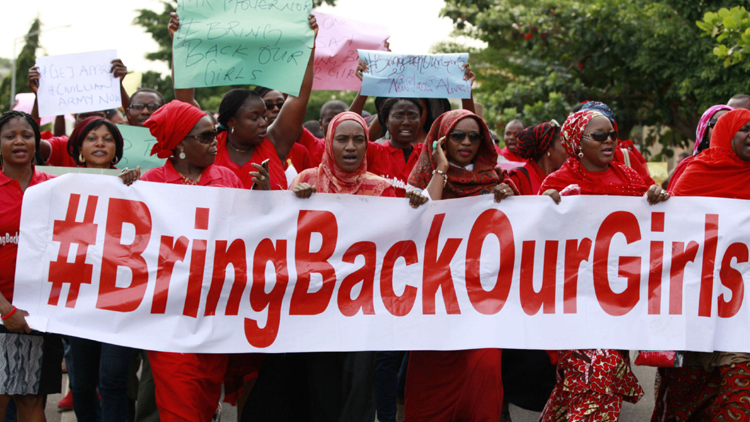
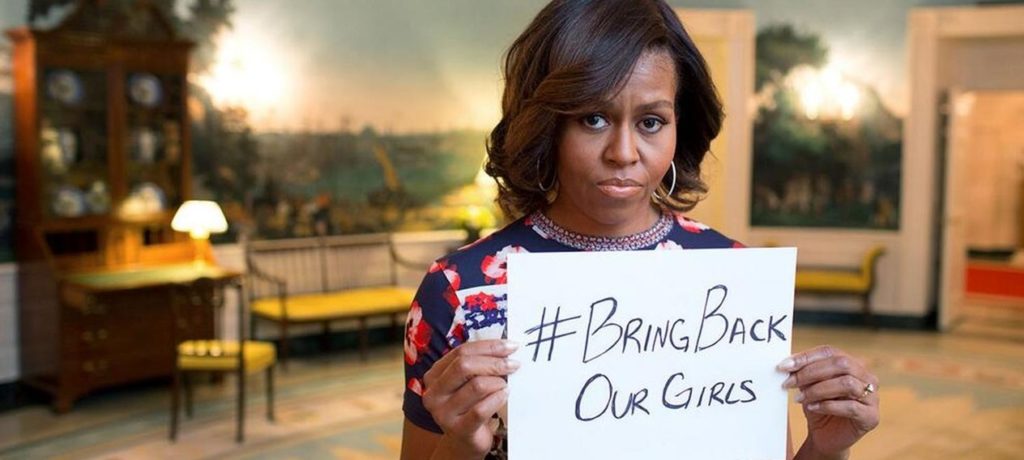
    After over 200 girls were abducted from the school in Borno state by Boko Haram, all eyes were on the Nigerian government to do something. When it seemed like the government wasn’t making progress, Nigerian women mobilised themselves in Kaduna, Abuja, Lagos and across the country to protest for the rescue of these girls. The #BringBackOurGIrls and #SaveOurGirls went viral and piqued the interest of the international community. Women from all over the world joined the protest and over a million people signed the petition to mobilise world leaders to help rescue the girls. 

    6. Market march “stop touching us” movement of 2018

    Women are fed up with being groped and harassed in market spaces. In 2018, Damilola Marcus started the Market March Movement to bring an end to sexual harassment at Yaba and other markets across the country. The traders who did the touching tried to justify their actions as a business strategy to get customers and in some cases, the women were “indecently” dressed. The march had young women in market spaces demanding not to be touched. Although some people tried to make a joke of the movement, it was effective in raising awareness. They are active on twitter as @MarketMarch.

    Watch Zikoko exclusive interview with Dami on this movement: 

    https://twitter.com/zikokomag/status/1079417919921111040?s=20

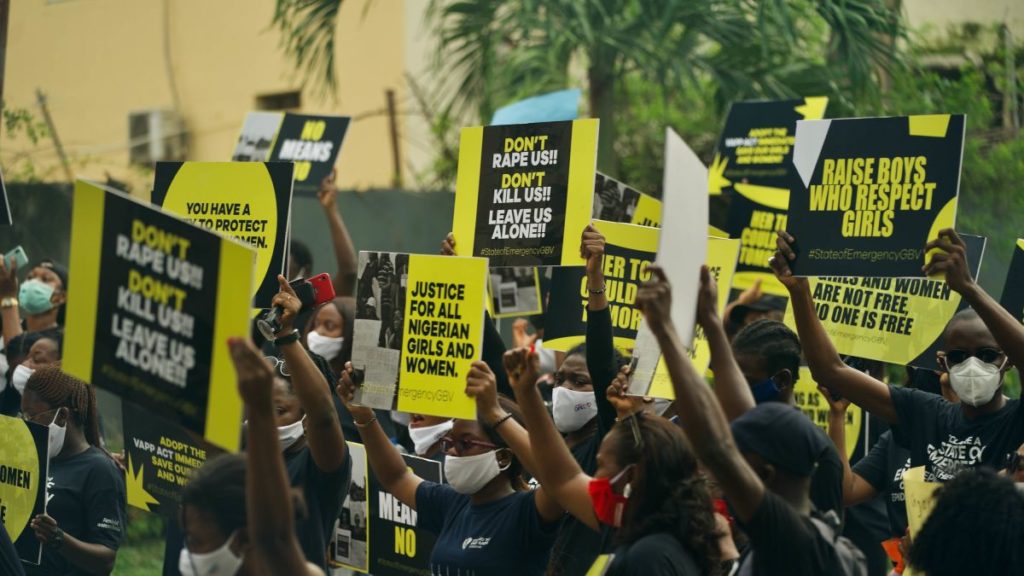
    7. Nigerian women protest against rape and sexual violence

    In June 2020, Nigerian women took to the streets after a series of high-profile rape cases caught the interest of the people. Following the story of 22-year-old Uwa Vera who was raped and murdered in a Church, more stories of women getting raped and killed surfaced online and this led to a protest organised by women. Women mobilised themselves and held a protest in Abuja and Lagos. The hashtag #NOmeansNo trended online as more victims of rape shared their story. There was a movement to stop victim-blaming and to discourage people from enabling rape with their silence. 


    Kindly reply this with other notable protests that were led by women. This list will be updated as you do.