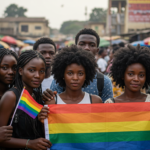
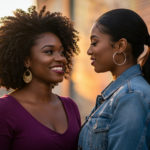
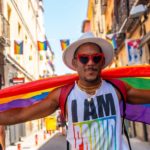
• It’s no secret that Nigeria is a homophobic country with a low tolerance for the LGBTQ+ community. I wanted to highlight the more positive queer experiences and so I spoke to a few queer people about what it’s like having supportive parents and how that has influenced their lived experiences.

    “My parents love and accept my partner. It means the world to me.” — *Fatima, 24. Lesbian

    What do you wish more parents of queer kids understood?

    I wish they understood how hard it is for the queer child to be different from every one around them. Their child didn’t just wake up and decide to be different to spite them; they’re figuring life out, too. I remember coming out to my mum.  She just sighed and told me she couldn’t imagine the amount of mental stress I had been under trying to figure my queerness out on my own. That made me start crying because being seen so clearly by my mum was a relief beyond words. I wish more parents of queer kids put themselves in their children’s shoes so better conversations can be had.

    Get More Zikoko Goodness in Your Mail

    Subscribe to our newsletters and never miss any of the action

    What has their support looked like?

    Their support has looked like warmth, especially to my partner. I love how intentional they are about making her feel like a part of the family. It stands out for me and warms my heart because she is my world, and they treat her like it. 

    I know my parents deep down are not fully onboard with my lifestyle because of their faith, but I love that they try to accept that I am my own person, having my own experiences, and they let me do my own thing while still loving me.

    “My parents stand up for me and I love it.” — *Tolu, 24, Nonbinary

    What do you wish more parents of queer kids understood?

    I wish they understood that their silence speaks louder than they think. I am acutely aware of my mum’s facial expressions when I dress in a more femme way, even though she tries to hide it. I also wish they understood that even the smallest gestures matter when trying to reassure their child that they’re accepted the way they are. Your child’s queerness doesn’t dishonour you, rejecting them based on that is what is dishonourable.

    What has their support looked like?

    My parents stand up for me in front of my extended family members. If someone says something about me being effeminate, my mum will say they should leave her child alone, and I love it. Even though we don’t always agree, it helps me feel secure knowing that I have love at home.

    [ad][/ad]

    “Knowing I don’t have to pretend to be what I’m not at home takes a burden off my shoulders.” — Chika, 21, Lesbian

    What do you wish more parents of queer kids understood?

    I wish they knew that their support can be the difference between a child who thrives and a child who barely survives. I already feel like society hates me, and knowing I don’t have to pretend to be what I’m not at home really takes a burden off my shoulders.

    What has their support looked like?

    It’s in the little things. My mum will often buy rainbow-themed things for me. She’ll come home with a shirt that has a rainbow on it and say, “Chika, I know you’ll like this one.” I think it’s adorable. I know she struggles with accepting my sexuality, but the effort she puts into trying to understand me warms my heart.

    “Queerness is not a failure or a phase” — *Azeez, 30, Gay

    What do you wish more parents of queer kids understood?

    That queerness is not a failure or a phase. I wish more parents knew that trying to “protect” us by silencing or denying our identity only makes us feel more isolated and othered.

     What has their support looked like?

    My mum doesn’t play about me and defends me at every turn from my siblings and the rest of our extended family. There’s a lot of pressure from home for me to “marry a nice girl” and “settle down”, and my mum tells me to forget about it and do what I want. I love that there’s at least one person in my corner.

    “We don’t need to be fixed.” — *Jeremiah, 27, Gay

    What do you wish more parents of queer kids understood?

    They need to understand that their child isn’t lost. We don’t need to be fixed, we need to be loved and seen.

     What has their support looked like?

    I recently started dating, and they asked me to bring him home for a visit. It’s a huge leap from their initial reaction to me coming out to them as gay. It makes me feel like I can show them more of myself than before.

    Click here to see what other people are saying about this article on Instagram


    If you enjoyed reading this you also enjoy reading: “One Drunken Kiss With My Guy Changed Everything” — 5 Nigerians on Realising They’re Queer


  • Coming out is often portrayed as a single, dramatic moment. But for many Nigerians, queerness isn’t a sudden realisation. It’s a slow, complicated journey — pieced together over years, shaped by silence, shame, religion, family, and fleeting moments of clarity.

    For Pride Month, we spoke to five queer Nigerians about when and how they realised they were queer. They share how they came to terms with who they truly are and what it cost them.

    “I’d force myself to kiss boys, just to convince myself I wasn’t ‘like that’” — Vera*, 26, Lesbian

    Vera’s queerness bloomed in the one place her parents thought would “protect” her. She finds it funny that Nigerian parenting often creates the very thing it’s trying to avoid.

    “I went to an all-girls Catholic boarding school because my parents wanted to protect me from boys and sin. The joke was on them because we made do with ourselves. It was normal to crush on each other, and we would hold hands, exchange love letters, and hide in dark corners to kiss. My first sexual encounter was in SS1, with a senior girl who made me feel everything at once, but the guilt afterwards was horrible. It went against everything I had been taught.

    So I tried to correct it by chasing boys over the holidays, but it never worked. I didn’t like them. By university, I was tired of pretending. I admitted to myself that I was a lesbian and told a few close friends. The acceptance I got gave me the courage to tell my brother, who is just indifferent.

    My parents don’t know yet. But I’ve started playing the ‘bad daughter’ card. I got tattoos, piercings, and changed my dressing. I figured if I soften the blow in layers, it won’t shock them as much. I’ve even hinted to my mum that I like girls. She laughed it off, but one day I’ll say it plainly. They may not accept it right away, but I have a feeling they’ll come around.”

    “One drunken kiss with my guy changed everything” — Usman*, 33, Bisexual

    On a random night out with a friend, the last thing Usman expected was to realise that he liked men. Since then, his journey to finding a safe space has been anything but random. 

    “I was drunk when I discovered I liked men. My guy and I had gone to the club to pull girls. We were goofing around and somehow, we kissed. It wasn’t a quick one, but a full-on makeout session. I pulled away after a while, but I didn’t hate it.

    The next day, I wasn’t sure it had even happened. He acted like nothing was wrong. Days passed, and I finally texted him about it. He said I had forced myself on him, even though I remember him pulling me close and placing my hand on his hard-on.

    We blocked each other, but the feelings didn’t go away. I started exploring with threesomes and casual hook-ups. Slowly, I accepted I was bisexual. I left my girlfriend at the time because I felt guilty for cheating and hiding this from her. I needed to figure myself out.

    After three years of being single, I dated a guy briefly. It didn’t last, but it helped me grow. I’m now in a relationship with a woman who’s also bisexual, and honestly, it’s the best relationship I’ve ever had.”

    Get More Zikoko Goodness in Your Mail

    Subscribe to our newsletters and never miss any of the action

    “My mum noticed I didn’t fit in, so she sent me abroad for therapy” — Josh*, 25, Genderqueer

    Josh always knew they were different, even before they had the words for it. But growing up in a world that demanded they “act like a man” made life feel like a performance. Their story is a raw look at how toxic masculinity stifles identity.

    “I’ve always been soft and effeminate. The way I talked, walked, and expressed myself made people see it before I did. My dad hated it. He kept telling me to behave like a man, but I never wanted to. I loved women — not romantically at first, but in the way I wanted to be them.

    Makeup fascinated me. I told my mum I wanted to be a makeup artist just to be closer to it. She was reluctant and didn’t understand. Nobody really did.

    In secondary school, the boys called me ‘Risky’, after Bobrisky. I was bullied constantly. So my armour was to lean in and play the character. Still, it was lonely. I wasn’t sure where I fit in. Girls treated me like one of them. Boys avoided me entirely. I was never seen as a romantic possibility. It got to me, and I fell into depression. My mum noticed and fought with my dad to send me abroad for therapy.

    I’ll always be grateful to her because she saved me. Being abroad and in a space where I wasn’t considered abnormal helped me accept myself fully. Now, I identify as genderqueer. I’m still discovering myself and healing, but I’m happier than ever.”

    “I thought I was just being womanist — until I wanted her all to myself” — Bisola*, 22, Bisexual 

    For the longest time, Bisola told herself she just admired women because she was a feminist. But eventually, that admiration started to feel a lot like desire.

    “I’ve always told myself I just really admire women. I’d hype their Instagram posts and stare a little too long at random pictures of women. But I chalked it all up to being a good womanist. That’s what I believed.

    Then one day in class, I hugged Stella, a girl I wasn’t particularly close to. But the hug felt different. I felt something like electricity stir in me. She must’ve felt it too, because later that night, we met up and made out.

    Even then, I convinced myself it was just a one-time experiment out of curiosity. I was in a relationship with a guy at the time, so I couldn’t let myself think too deeply about it. But it didn’t stop there.

    I eventually talked to a friend about what happened with Stella, and she casually suggested we try a threesome — I, Stella, and my boyfriend. The idea made me nauseous. I couldn’t bear the thought of him touching Stella. That was when my feelings for Stella dawned on me.

    That moment unravelled everything I thought I knew. I realised I wasn’t just admiring women. I wanted them. Since then, I’ve explored more and come to terms with the fact that I’m bisexual. 

    I haven’t come out to my parents. They’re extremely religious, and I already know they won’t take it well. I’ve made peace with the fact that they may never fully know who I am. I barely go home, and staying closeted feels safer. But I know I’m more scared of finding out if their love is as unconditional as they say.”


    You’ll enjoy reading: “My Parents Love And Accept My Partner” — Queer Nigerians On Having Supportive Parents


    “Men sucked the joy out of me, but women made me feel giddy” — Ulomma*, 23, Lesbian

    For Ulomma, it was less about a moment and more about finally choosing to stop performing. It tells us that self-acceptance is often a slow, liberating undoing.

    “Looking back, I think I always knew I was queer. I didn’t have an exact experience, but what took time was accepting I didn’t like men, at least not the way I thought I was supposed to. I’d be around women and feel giddy and flirty, but with men? I was tense and irritable. Still, for years, I tried to convince myself I liked them because it seemed easier.

    I came out for the first time when my cousin tried to set me up with a guy. I told her it wouldn’t work because I like women. She just shrugged, then offered to set me up with a girl instead. I told her I already had a girlfriend. Her only concern was that  I was being safe. Her reaction helped me be more confident. 

    Since then, I’ve come out to almost everyone in my family. My mum took the longest. She had those ‘you can’t be gay!’ moments, but she eventually admitted she always suspected and wasn’t as shocked. Now, I lie less and show up more fully as myself. No one can hold my queerness over me because there’s no secret to weaponise. My family knows and loves me  — and my gay ass — as I am. That’s a privilege I don’t take for granted.”

    Click this to see what other people are saying about this article on Instagram


    If you want to share your own story, I’d love to hear it here.

    [ad]

  • Most of us remember our first crush — the sweaty palms, the racing hearts, and the confusing whirlwind of emotions. 

    But what happens when that crush is on another girl, and no one ever told you that could even be a thing? For these Nigerian women, their first girl crushes were tender, dizzying, and sometimes heartbreaking introductions to queerness. From hostel cuddles to secret love letters and silent heartbreaks, they share the moments that made them stop and think, “ Whoa, I like like her.”

    “I’d never kissed anyone before, but I remember I wanted to kiss her so badly” — Chinasa*(25)

    Chinasa* got her queer awakenening in SS3 when she bonded with one of her roomates in the hostel. Her racing heart told her it was more than just a platonic feeling.

    “I had my first girl crush in SS3. Her name was Aanu, and she was one of my roommates in the hostel. She was the most beautiful and incredibly kind woman I’d ever known. She’d rub my back when I was tired and sometimes wash my clothes. Whenever she got close to me, my heart would start racing. I didn’t even know I was gay then. I think she was the beginning of my questioning.

    One day, Aanu said we should dance. We were in our housewear, in the middle of the hostel, and she pulled me in to teach me how to ballroom dance. She was taller than I was, so I kept looking up at her. I’d never kissed anyone before, but I wanted to kiss her so badly. She looked perfect in her tank top and skirt.”

    Get More Zikoko Goodness in Your Mail

    Subscribe to our newsletters and never miss any of the action

    “Another time in the dining hall, I was eating plantain, and she asked for some. I said she could share it with me, and she just grabbed my face and bit off the rest of the plantain from my mouth. My face was hot. I couldn’t look her in the eye. I’d get flustered and giggly whenever I was around her. Sometimes I’d ask if I could get in her bed with her, and she’d agree, and we’d cuddle.

    The feelings were so confusing. It’s been years, and I’ve tried looking for her after school. Not for any reason, just to see what she has been up to.”

    “I’m 23 now, and I actually looked her up recently” — Bolwa 23*

    Bolawa* had a crush on her friend’s sister, who was much older than her. Looking back, she thinks she already had a good eye for women even then.

    “My first crush was my friend’s sister. I was 11 and she was way older — maybe in her late teens or early 20s. I don’t think we ever spoke one-on-one, but looking back, it was obvious I had feelings. Everybody knew I thought she was prettier than her other sister, who was everyone’s fave.

    I’m 23 now, and I actually looked her up recently. I’m way over the crush, but I have to admit, young me had a good eye.”

    “She’s still, to this day, the most amazing girl I’ve ever met” — Tina*(25)

    Tina* always knew she liked girls, but only desired to pursue her first crush in 2022. It didn’t end how she hoped it would but she cherishes the experience.

    “I knew I was attracted to women, but I never had a real crush or wanted to pursue one. That changed in 2022.

    I had my first real crush on a coursemate in school, and I didn’t even meet her until our fourth year. We started talking online and found out we had so much in common — music, hobbies, TV shows. 

    When I found out she was also queer, I was excited because it raised my hopes that we would get together. I loved that phase of my life because it was the first time I found the courage to tell someone I had a crush on them. She turned me down, and I cried, but she’s still the most amazing girl I’ve ever met.”

    [ad][/ad]

    “I never told her about my feelings because I wasn’t sure she was queer” — Bamike*(28)

    Bamike*’s first girl crush was a classic case of bad timing. Her crush liked someone else and by the time she confessed felt the same way, Bamike had moved on.

    “I was 22 when I had my first girl crush. I met her at a cafeteria in school, and it was like I got hit by a truck. She was two years younger and so beautiful. She was studying medicine while I was studying sociology. 

    We soon started talking and bonded over our love for books. But I never told her about my feelings because I wasn’t sure she was queer. She had a crush on one of my male friends at the time. Four years later, she finally confessed that she also had a crush on me, and I almost went mad. I wish I had acted on my feelings then, but I still loved how genuine and powerful my emotions felt when I was into her.”

    “She was beautiful, strict, but very kind” — Romade* (30)

    Romade*’s feelings for the hostel prefect in her boarding house were more than admiration for a senior. She shares how her crush made her feel content when she was around her.

    “I was in SS1 when I moved into the hostel and fell in love with the hostel prefect in SS3. There’s no other way to describe it — it was love.  Maybe it was because she reminded me of my mum. She was beautiful, strict, but very kind. 

    She eventually became my school mother because I was looking for any excuse to get close to her.,  My feelings were so consuming. Every time I was around her, I just felt content. We still keepin touch. She’s married now with two kids, but she’ll always be my first love.”

    “ I would write her love letters and hide them in the books we exchanged” — Tamilore*(29)

    Tamilore* walked into the dream world of teenage love with her first crush, but it all came crashing down after her crush got scared.

    “Those first few weeks of a new crush are unmatched. It was like I was in a hazy dream world. But then my crush got scared and told her mum. Her mum said we were possessed by lesbian spirits and everything fell apart.  It caused a lot of problems for both of us.

    My parents changed my school. I went through deliverance services and beatings. It was an awful time. The worst part? We stopped talking. I felt betrayed that she would expose us like that, but looking back, I understand. She was a scared and confused teenager. I loved it when the crush began, but the aftermath was terrible”

    “I was confused by my feelings at first” — Yetunde*(26)

    Yetunde* started off feeling like she had only platonic feelings for her friend until she couldn’t deny it any longer.

    “My first girl crush was a friend I met in 100 level during orientation week. I thought she was cool, and we started off as friends, but soon enough, I developed feelings for her. It was hard not to because she was so beautiful, and she spoke so intelligently. She’d schooled abroad, so that was a factor.

    I didn’t realise I was crushing on her at first. It took months to admit that’s what was happening. After a year, I finally found the courage to come clean about my feelings, but she turned me down. She said she was straight. It was devastating then, but I’ve gotten over it now.”


    If you enjoyed reading this, you’ll also enjoy: My Ex Made a Love Playlist With Her Coworker. I Haven’t Dated Since


  • Folu* is a 35 year-old gay Nigerian man living in Atlanta, Georgia. Before leaving Nigeria, he didn’t have or feel like he needed a gay community of friends. But everything changed when he finally moved to a country where he didn’t have to hide behind machismo. 

    This is Folu’s story, as told to Conrad

    Have you ever heard of straight-passing? It’s the queer version of how biracial people like Mariah Carey can often pass for white, but for sexuality, it’s a queer person passing as straight. Even though straight-passing is a controversial subject, it’s something I’ve always done, consciously and unconsciously.  

    I’d always known I was gay for as long as I could remember. There wasn’t any significant moment of realisation; my queerness just came with my consciousness as a human being. But the thing is, I didn’t tick any of the stereotypical boxes gay men were supposed to tick. I didn’t care about fashion, pop music or Drag Race. I was a “guy’s guy” who liked football and beer. The only thing that differentiated me from the next guy was that I might be attracted to that guy. 

    Because of my ability to easily assimilate into the straight community, I never suffered any form of bullying or discrimination. All my friends were straight except one — another straight-passing guy. I’d always assumed it was an unconscious choice, but the older I got, the more I had to confront the truth that part of my blending in was a defence mechanism. If I looked and sounded “straight”, no one would suspect anything, and I’d be safe. 

    But all of that changed when I relocated from Lagos to Atlanta in 2021. 

    When I started applying for jobs in Atlanta, I honestly didn’t think I’d get one. In a post-lockdown world where people were losing their jobs everywhere, here I was on a plane to take up a job that would’ve easily been given to an American. 

    I left Nigeria, never knowing what it felt like to have openly gay friends. All the other gay men I knew were men I’d met on hookup apps and had sex with. And because of my internalised homophobia and the fear of being outed, I’d confined our relationships to just sex. I didn’t really have a gay male friend until I met my co-worker, Nathan*

    Like me, Nathan was Nigerian, but he’d moved to Atlanta right after secondary school for university. He was nothing like I’d ever experienced, and till today, I still like to say he forced our friendship. Because he’d moved to America earlier, Nathan had a surer sense of self and sexuality. He’d experienced loved loudly, chopped breakfast, gone back to the streets and expressed himself freely as a gay man. I avoided him at first because I didn’t want to be the new gay guy from Nigeria, but he saw through my bullshit and persisted. 

    RECOMMENDED: 6 Queer Nigerians Tell Us What It Is Like Being Outed

    Even though I knew I was finally in a country where I didn’t have to pretend, I was still very discreet. I  kept all my interactions with queer men to just sex. And oh boy, I was having a lot of it. However, when the novelty of meeting new men every two days started to wear off, I started to feel lonely, and that’s when Nathan and I became friends. He was the first Nigerian I got close to and the only person who understood the loneliness I was feeling at the time. I eventually warmed up to having my first openly gay friend. 

    The first time I admitted to being gay in Atlanta was while filling out a hospital form. After the “Male”, “Female, and “Others” part of the form, there was a box for “Sexual Orientation”. Coming from Nigeria, this was new to me. After much thought, I ticked the “Gay” part. That moment turned out to be a major turning point for me. 

    The final part of my acceptance happened when Nathan dragged me to the 2021 pride ceremony in Atlanta. I’d heard about pride when I was in Nigeria, and I also remember when young Nigerians were calling for one. I distinctly remember reading an article by Vincent Desmond and wondering why we needed pride in Nigeria, knowing we weren’t even safe in the first place. I thought it was the new generation of gays being extra and overly influenced by Western media. 

    Before getting to America, I used to think of pride as a massive petri dish of gay men and women looking to hook up. And while that can be true, in Atlanta,  I also noticed something more: community. Thanks to Nathan, I ended up talking to many people, and everyone there had a story to tell. Some struggled with self acceptance, some had accepted themselves but struggled with a lack of acceptance from their friends and family while others just came out with a “fuck the world” attitude. 

    Despite the diverse skin tones and experiences, we were all connected, not just by our pain but by our joy. Pride was a celebration I didn’t know I needed until I was smack in the middle of it. 

    The emotions during the pride march got so overwhelming that I found myself crying. The tears were for many things: for the time I’d lost building relationships where I was scared to be myself; for the fact that this glorious thing I was experiencing was something many Nigerian queer men needed but lacked access to; andbecause I recognised how lucky I was to be in a space where I could love and be loved without fear. 

    I’m not big on tears, so this was a moment for me. 

    Even though I’d made plans to go back home with someone and have lots of sex, I left that march with something more. For the first time, I not only realised who I was, but I also accepted it. I’ll never tick the stereotypical boxes of being gay, and that’s alright. While I’m still the football-loving, super macho gym bro, I’m also gay AF and not afraid to show it anymore. It took leaving Nigeria for me to finally accept who I really am. 

    *Name has been changed to protect the identity of the subject involved. 

    ALSO READ: 5 Queer Nigerians’ Thoughts on Celebrating Pride Month

  • June is Pride Month — an annual celebration of LGBTQ+ people from all around the world. Granted, it’s not easy to celebrate in a country like Nigeria, that has its queerphobia boldly written into law.

    Still, this vibrant community refuses to be silenced. So, to celebrate their resilience, we asked a bunch of Nigerians to reveal the moment they discovered their queerness, and what that means to them.

    Titi, 26/Female/Lesbian

    I kind of always knew I wasn’t straight; I just didn’t know what I was. When I got to college, I had my first boyfriend and I remember telling my friends that I didn’t like having sex with him, even though I liked him. 

    He and his friends would also accuse me of talking about girls and looking at them in a way that indicated I was interested in them as more than friends. At that point, I started to realise and accept that I wasn’t straight.

    I broke up with my boyfriend in 2013, but I didn’t experience being with a woman until 2015. I came out as bi after being with her. I still dated men and women after that, even though I knew I was really a lesbian.

    In 2019, I met a guy that ticked every conceivable box, but the more serious it got, the more trapped I felt. A few months later, I broke up with him and finally came out as a lesbian to my friends and family. 

    James, 26/Male/Gay

    I was 7 when I first kissed a boy, and I really liked it. At 13, I had kissed more boys and I didn’t feel like kissing girls at all. I called myself bisexual, even though I knew I wasn’t. I just wanted to seem slightly normal. 

    I was 19 when I finally decided to accept myself and my sexuality. It was right after another one of my failed attempts to ‘pray the gay away’. It didn’t take me long after that to embrace myself fully

    Mary, 25/Female/Bisexual

    I finally realised I wasn’t straight in university. I fell in love with a female friend and I was suddenly very willing to explore for her. The signs of my queerness had always been there, but I just refused to see it.

    I grew up deeply religious, and I think that stopped me from allowing myself to feel those things. When I finally realised I was queer, I struggled with it for a few months. Then, gradually, I began to accept who I am.

    Emeka, 26/Male/Bisexual

    I’ve always kind of known something was different about me. I remember trying to kiss a classmate when I was 10 in boarding school, but he rebuffed my advances. 

    Anyway, I was 22 and visiting New York. I went to a club that called itself an “expressive space” — there were stripper poles on the dance floor and people were dressed pretty interestingly.

    A couple (M/F) walked up to me and we started talking. They seemed really nice and welcoming. After a couple of drinks, we started to dance and, in the euphoria of the moment, the man kissed me.

    I actually kissed him back. It was weird for me, but I enjoyed it. After that night, I did some self-reflection and connected the dots from past experiences. That’s when I came to the conclusion that I’m not straight.

    I’m still embracing this part of myself. I haven’t even had sex with a man yet, and it’s been 4 years since that night. I think I’m just trying to be careful because of how Nigeria is. 

    Cynthia, 20/Female/Pansexual

    I’ve always been attracted to both boys and girls, but because of the way our society is, I kept mute. I even tried praying it away, but that obviously didn’t work.

    It wasn’t until I joined social media that I found a bunch of voices in the LGBTQ+ community that made me feel aware that there wasn’t anything wrong with me.

    Then just last two years, I realised that my attraction wasn’t limited to just the binary spectrum and cis-normative. I fully embraced my queerness a year ago, but I’m not yet out to everyone in my life.

    Timi, 21/Male/Bisexual

    I always just knew I wasn’t straight. I may not have known the words to define myself, but I can’t remember a time I wasn’t attracted to men. I even had a huge crush on Pat Attah growing up. 

    I always just assumed that something was fundamentally wrong with me, so I never spoke about it to anyone. Later I’d learn from religion that my feelings were abominable. 

    Then I read a religious book that said the feelings were normal during puberty, but with time and prayers, they would go away. Even though I knew puberty wasn’t the reason, I still held out hope.

    Well, I got older and prayed a lot, but the feelings never went away. I don’t know that I’ve even fully embraced my queerness. I’m still not out to my family or any of my real-life friends. 

    I even struggled with answering the sexual orientation question. I have been intimate with women and I feel some attraction for them, but I’m more attracted to men. I’m still figuring it out.

    Bunmi, 26/Female/Bisexual

    I’d say I have known I was attracted to women since I was 5. Whenever we played ‘mummy and daddy’, I had to have a wife. So, yeah, I’ve always liked being with girls.

    I was 9 when I had my first kiss. It was with a 13-year-old girl I met at a birthday party. My heart would race every time I saw her. She fully had my mumu button.

    That being said, I never dated women. I avoided that part of myself for so long. For the longest time, I described my bisexuality like it was a bad habit I needed to quit.

    I hooked up with women now and then, but I dreaded any form of emotional intimacy. So, I was very clinical about it. I never slept with a woman more than three times. 

    Well, all of that has changed. I finally met a woman who drives me wild. I love her and, for the first time in my life, I feel fucking free.  I wish I had the courage to own my sexuality sooner.

  • We know some of you like doing shakara and carrying your shoulders up every time. But don’t worry, we’re not judging, just take this quiz to know how high your shoulder really is.