• When a Twitter debate erupted about whether women should tell their partners about past abortions before marriage, the takes were hot. Some people called it essential healthcare information, others said it’s private and nobody’s business but yours.

    Even in the Zikoko HER WhatsApp group chat, opinions were split. The majority agreed it depends on the person, but one question lingered: If you’re scared to tell your partner, are you with the right person?

    So, we asked eight Nigerian women to share their thoughts on what disclosure really means and why this conversation isn’t as black and white as some might make it seem.

    Should you tell your partner about a past abortion?

    Amara*, 29: I agree with the tweet that says not people claiming “private life” in marriage. If we’re talking about full partnership, then health-related things, and yes, abortion counts, should be on the table. Same as debts or health preconditions. Obviously, you build trust first, but why marry someone who can’t handle the truth of your life?

    Teni*, 34: Please, let’s stop turning marriage into a medical consultation. Abortion is healthcare, yes, but it’s also private. You don’t owe disclosure to anyone. If it comes up, it comes up. It’s not hypertension or HIV; it’s something you did with your body, period.

    Ijeoma*, 27: You know what’s funny? The same people shouting “abortion is healthcare!” are the ones saying don’t tell your partner. Which one is it? Either it’s normal and open, or it’s shameful and secret. Pick a struggle.

    Rukky*, 32: Some women didn’t have abortions as a statement of feminism. They were just trying to survive. Then you want them to disclose it to a man who might use it to insult or abandon them? Nah. Protect your peace first.

    Tari*, 42: I had multiple abortions in my 20s. From age 16, I had nothing and no one looking after me. I was sleeping with multiple men just to cover school fees, feeding, everything. By the time I finished school, NYSC, and got a job, I thought that chapter was closed. I’m happily married now with three kids. But about two months ago, people from my past resurfaced in my husband’s life, and he found out. Our relationship has not been the same since.

    Bimpe*, 38: I’m team disclosure, but from a health perspective. Things like the Rhesus Factor matter; it can literally affect future pregnancies or emergencies. Imagine your husband saying “No” when asked if you’ve ever been pregnant before. That small lie can cause big wahala.

    Chidera*, 36: I had an abortion once in my early 20s. Everyone I dated after that and told, either left or never took me seriously again, just a nice fuck, nothing more. So when I met my husband, I didn’t say anything. Now we’re trying to conceive and can’t. I don’t know if I can say anything at this point. I’m terrified.

    Zina*, 35: I’m a lesbian, Nigerian, born and raised in the UK. I’ve had two abortions, one at 15 after I was raped by a family member, and another in my early 20s when I had a boyfriend who constantly wanted raw sex. I was still figuring myself out. I’ve had multiple female partners who had serious issues with my past, but I never hid it. My wife now doesn’t give a fuck. But I’ve been treated like shit for it before, even by women.

    Is it really a medical issue or just privacy?

    Bimpe: From experience, it’s not about gossip, it’s about safety. Rhesus incompatibility can lead to miscarriage or stillbirth if doctors don’t know your history. That’s not something to gamble with.

    Chidera: But what if you didn’t have complications? I didn’t at the time. Everything was fine. So why does it need to come up if it’s not affecting anything?

    Teni: Exactly. Abortion isn’t a chronic condition. It’s not like you need to tell someone you once removed your appendix. It’s private and not always medically relevant.

    Ijeoma: Calling abortion a “health precondition” is wild, sha. It’s a procedure, not a diagnosis. Still, I understand telling your partner if there’s a chance it could affect you later, that’s fair.

    Amara: It’s both. It’s about honesty and health. You can’t say you want a partnership but then hide big things. If your partner finds out later from somewhere else, you’ve broken trust.

    Tari: My husband says it’s because I never told him. That trust is broken. But I don’t believe that. I think it’s the fact that I had the abortions at all. If I had told him in the beginning, he probably would have left. I didn’t have any health complications. It never came up. I didn’t lie. So why is there such a rift now? Women cannot win. With decisions about our own bodies, we can never win.

    Get More Zikoko Goodness in Your Mail

    Subscribe to our newsletters and never miss any of the action

    You’ll Also Like: I Tried IVF Three Times in Nigeria. Here’s What It Cost Me


    And the possibility that your partner might judge you? 

    Rukky: That’s the main problem, fear. Most women keep quiet because they know the man will use it against them. And honestly, can you blame them? Society is quick to call women “spoiled goods” over something that was never a crime.

    Chidera: Every man I told before my husband either ghosted me or stopped seeing me as wife material. I learned my lesson. Sometimes silence is survival.

    Teni: If you’re hiding it, then maybe you’re not with the right person. Simple. Why marry someone who makes you shrink yourself?

    Tari: Because you don’t always know they’ll make you shrink until it’s too late. My husband was wonderful before this. Now he looks at me differently. He says it’s about trust, but I see the disgust. I see the way he’s pulling back.

    Amara: But Tari, don’t you think finding out from someone else made it worse? If you’d told him yourself, at least he would’ve heard it from you first.

    Tari: Maybe. Or maybe he would’ve walked away before we ever got married. Either way, I lose.

    Ijeoma: I agree with Amara. All this talk about “he won’t understand” is just fear disguised as logic. If he’s truly unprogressive, why do you still want him? You can’t complain about patriarchy while trying to impress it.

    Rukky: True, but sometimes it’s not even about patriarchy, it’s about survival. Some people just want peace, not confrontation.

    Zina: Honestly, I’ve had female partners treat me worse than any man could. Women can be just as judgmental. My ex used the “damaged goods” line on me because I’d been with men before. Another one said the abortions proved I was reckless. My wife now? She doesn’t care. She knows my story and loves me anyway. That’s the difference.

    Is it about trust or self-protection?

    Ijeoma: Let’s be real, sometimes it’s not about the man at all. It’s about control. If you’re deliberately hiding something that could change how he sees you, you’re choosing deception over honesty.

    Rukky: Abeg. Not every silence is deception. Sometimes it’s self-protection. Nigerian men are not exactly known for being emotionally safe spaces.

    Chidera: I’m protecting myself right now. My husband and I are struggling to conceive, and I’m sitting here every day wondering if I should tell him. What if he blames me? What if he says I killed our chance at having kids? I can’t take that risk.

    Amara: But if you’re planning to build a life with someone, at what point does protection become lying?

    Tari: I didn’t lie. I just didn’t bring it up. There’s a difference. But now I’m being punished like I committed fraud. He’s treating me like I deceived him when really, I was just a girl trying to survive.

    Zina: I’ve always been upfront because I learned early that hiding parts of yourself only attracts people who can’t handle the real you. My wife knows everything: the rape, the abortions, all of it. And she still chose me. That’s what I want, not someone I have to tiptoe around.

    Amara: I do think that the fear of rejection is the real issue. People hate accountability. Instead of saying, “I don’t want to deal with possible judgment,” they shout misogyny. Both sides have valid fears, but let’s call it what it is.

    Bimpe: There’s no universal answer. Some women value privacy; others see disclosure as love. Both are valid, just be prepared for the consequences of your choice.

    Chidera: But what if the consequences are losing everything? What if telling him means he leaves, or worse, stays but resents me forever? How is that fair?


    What She Said: He Asked for Sex Days After My Abortion


    So… What’s is the right answer?

    Teni: Nobody owes disclosure. If it comes up, it comes up.

    Amara: I disagree. It’s better to be open up front.

    Ijeoma: If you’re hiding it to protect your image or hold onto a man, maybe check your own values first.

    Rukky: Please, let women protect themselves. Until the world stops judging us, silence will always be a shield.

    Tari: I thought I was protecting myself. Now I’m paying the price anyway. So what was the point?

    Bimpe: When it comes to health, silence can kill. Comfort won’t save you in an emergency room.

    Zina: The right answer is finding someone who doesn’t make you feel like you need to hide. Period.

    Chidera: And if you’ve already married them? Then what?


    Poll: Which woman do you most agree with?

    • Amara: Disclosure builds trust and honesty.
    • Teni: It’s private, nobody owes anyone that info
    • Ijeoma: If you’re hiding it, maybe you’re marrying the wrong person
    • Rukky: Women deserve to protect themselves from judgment
    • Tari: Women can’t win either way: damned if we do, damned if we don’t
    • Bimpe: Health safety makes disclosure non-negotiable
    • Chidera: Sometimes silence is survival
    • Zina: Find someone who doesn’t make you hide

    Tell us in the comments!


    You’ll Love: 7 Nigerian Women Talk About Life Post-Abortion

    Single? Married? Divorced? Dating? In a situationship? We’re surveying Nigerians about love, relationships, marriage, and everything in between, and we want to hear from YOU.

    You only need to give us a few minutes of your time and participate in this quick survey. It’s 100% anonymous too!

    [ad]

  • I remember a conversation I had with a cousin once. I shared a post on my Instagram stories about how a woman’s body’s ultimate purpose is not to carry a child. It is whatever we choose. She responded with “..that was what God created us for, and it would be a sin not to actualise the ‘commandment’, to be fruitful and multiply”. I was so shocked that at the time, I didn’t have anything to say. This cousin wasn’t yet 20 years old. 

    For aeons, women have been fed the narrative and conditioned to revere marriage and children above all else (besides maybe God), across the globe. We have been taught that it is the greatest thing we could ever amount to. Forget your education, accolades or your life in general. If you are not married, you are incomplete. If you are married without a child, you are considered barren and, by extension, without ‘use’. 

    One ethnographic study, Women in Limbo: Life Course Consequences of Infertility in a Nigerian Community, found that among the Ijaw people, women who had never given birth were considered “useless”, and excluded from rites of passage; they were typically stripped of the adult respect society conferred on those who had carried a pregnancy to term. The research notes that even a single birth could shift a woman’s societal status entirely.

    These patriarchal views are deeply rooted in colonial Nigerian traditions that are archaic and extremely harmful to every girl child and woman trying to exist and be seen as a person with autonomy in this world. There is so much more to us than a womb, and I wanted to add to the growing discourse about the worth of a woman and how it cannot and should never be tied to our ability or decision to reproduce or not. 

    I’m interested in shedding light on what it can look like for Nigerian women to exist childfree, by choice or circumstance. But before that, what exactly does it mean to be child-free, and how is it any different from being childless?

    What Does it Mean to be Childfree?

    The term Child-free or voluntary childlessness is when an individual actively chooses not to have children. This choice can stem from various factors, including personal preferences, lifestyle choices, career aspirations, environmental concerns, or a lack of desire for parenthood. The defining characteristic is the choice not to have children. “Use of the word childfree was first recorded in 1901 and entered common usage among feminists during the 1970s.”

    Childfree vs Childless

    The terms “childfree” and “childless” describe different situations regarding parenthood. “Childfree” refers to individuals who actively choose not to have children, while “childless” refers to those who do not have children but may or may not desire to have them, often due to circumstances beyond their control.

    Some people use these words interchangeably, while others may be triggered by the word childless. A good rule of thumb is to wait to hear how they prefer to address themselves or politely ask. 

    Below are ten Nigerian women who tell us what it looks like to live childfree in today’s world.

    “I focus on the life I have built and am building for myself”— Rebecca*, 41, Port Harcourt

    She considers herself childfree by circumstance, specifically, by being single. There isn’t much of a “story” she says, except that she’s been careful not to become a single mother. But if it ever happens, she wants to be financially stable and have a supportive partner to raise the child with.

    Society’s response, largely from family, friends, doctors, religious spaces, work, and even strangers, has been full of pressure. “But I don’t look at them,” she says. “I focus on the life I have built and am building for myself.”

    When asked what she wishes people understood about living child-free in Nigeria, she explains that you can’t really explain anything to Nigerians. “If it’s your choice, you have to face all that will come out [of] it, and try not to run away from your family. Give them time to come to terms with what your life will look like. Create boundaries around what you are willing to talk about and what you won’t. Just generally stay away from negative people who will not support your choice.”

    Though I didn’t want to be child-free, I would not change my choice.

    Also helps that I’m bi and currently in a committed queer relationship” — Mofiyin*, 30, Lagos

    She is child-free by choice. “Also helps that I’m bi and currently in a committed queer relationship, so my chances of just popping a kid reduced drastically.”

    Mofiyin is in a committed relationship, and they’ve bounced around the idea of strongly not having children, to possibly having, and to not wanting one. “Some days I wake up and absolutely detest the idea, other days I see an Instagram video of a family and want one too.” She notes that she also sees a lot of things on IG that she wants, but that doesn’t automatically mean she should have them.

    No one says anything to her about being childfree. “I’m surrounded by many women who are also child-free, and my only friend who has a kid tells me to be certain it is what I want before I do it.” It’s never a conversation that comes up for her. She thinks it helps that she doesn’t live in the same city she grew up in, so the level of familiarity that would require such a conversation to come up is not there.

    “First of having a child is as much a choice as not having one. Everyone should be allowed to make either choice freely. Secondly, having children requires a level of emotional and financial stability; it’s not just the “next thing” on a bucket list that you need to tick off.”

    Living child-free means you can wake up and go on a trip without thinking of who needs to cater to your child whilst you are away.

    “Don’t hold on strongly to the weight of other people’s expectations or perceptions of you”— Amara*, 32, Lagos

    She identifies as childfree both by circumstance and by choice. For her, it’s about being truly ready, in all the ways that matter, and having a partner aligned in her understanding of what parenting means.

    The societal response has been mixed. Some people say, “Why? I think you’d be a great mother,” while others feel she’s been westernized and is “too exposed”, which will ultimately end in her regretting her choice. But there are also people who understand and respect her decision, often sharing the sentiment of being selective with having children.

    Her advice? “Honestly, everyone would be okay at some point. Don’t let anybody unnecessarily pressure you into a decision you really don’t want.” She emphasizes the importance of having a partner or community who supports and encourages you. “You can also always modify your choices,” she adds. “Don’t hold on strongly to the weight of other people’s expectations or perceptions of you.”

    “I could change my mind, life is always evolving, and so am I, but at this point, I am content with my choice.”

    My mental health, physical, and even financial capacity can’t carry a child right now” — Jessica*, 26, Lagos

    She is child-free by choice, “definitely.” With pressure mounting from her parents to get married, she’s hesitant, knowing the next question would be: “When are you giving birth?!” And she is not ready for that at all.

    “Having children is a lot to handle,” she says. “My mental health, physical and even financial capacity can’t carry a child right now.” She’s still figuring herself out, and bringing a child into the world at this stage would feel selfish.

    Her parents are eager for grandchildren, but also understanding, still, the pressure lingers.

    “I wish people knew that being childfree doesn’t change anything but even gives you room to be freer, no responsibilities. ‘You can’t miss who you never met.’”

    As for the future: “I’m open to any changes honestly, but for now, I’m sure of my decision.”

    I knew I didn’t want to have kids since I was 16” — Funmi*, 32, Lagos

    Her child-free status is entirely by choice. “I knew I didn’t want to have kids since I was 16,” she says, after witnessing the exhaustion of mothers around her, the way motherhood took their time, energy, and identity. “I was upset that no one knew my mother’s name except ‘mummy this person.’”

    She is also autistic and bipolar, and being the first daughter has left her perpetually drained. “I am exhausted all the time and only have enough for myself.” As she grew older and learned how religion and patriarchy use childbearing to subjugate women, she knew her answer was a firm, “Absolutely the fuck not.”

    The world’s reaction? “Bewilderment, Confusion and just sheer stupidity.” Despite having PMDD and requesting to have her tubes tied since she was 16, doctors wouldn’t take her seriously. “One even told me to go bring a husband or my father.” These experiences have made it painfully clear that “it’s a man’s world FR—it really humbles you.”

    She wants others to know that “there are more of us than you think.” She warns against listening to people who project their fears about ageing alone and believes that building a community can be life-saving. “Society is confused about a woman who doesn’t fit the mould and it’s okay to leave them confused.”

    Would she ever change her mind? “Absolutely not and my why would always be: I simply do not want a child. That should be enough.”

    Get More Zikoko Goodness in Your Mail

    Subscribe to our newsletters and never miss any of the action

    READ NEXT: Blessing Uzzi is Running Zikoko’s Life Series Production


    Some pray for me, some have been angry” — Nancy*, 32, Ibadan

    She is child-free by choice. “I don’t want to have kids. I don’t want the responsibility.”

    Society’s reactions range from shock to acceptance to anger. “Some people have been shocked, some are okay with it. Some pray for me, some have been angry.”

    What does she wish people knew? “We are happy.”

    She is open to change, but only if it involves adoption. “Cause life changes, but if I do, I will adopt. I do not want any of that pregnancy or baby stuff. Stressful.”

    “I’ve never actively tried to have a baby, at least not now” — Miebi*, 25, Port Harcourt

    She identifies as childfree by choice, though more by timing than rejection. “I’ve never actively tried to have a baby, at least not now.”

    She loves children and looks forward to having her own, at least three, she hopes. “By God’s grace, I will have them when it’s time,” she says. But she wants to be married first, loved and in love, and in a healthy, beautiful relationship with her spouse.

    There hasn’t been much societal reaction to her child-free status. “I’m single and still quite young so there’s no negative or positive response from society, and even if there was I couldn’t care less.”

    What she wants people to understand: “Women have the right to decide if they want to have children or not because, guess what, it’s their body, and they would be the ones responsible for caring for the children if they were born.” She also reminds Nigerians to “mind their own business and be gracious to people,” because you never really know what someone is going through.

    Yes, when the time feels right. “And even if it just happens, cause you can never really plan these things, I will try my best to embrace it.”

    “I’ve been pregnant twice but aborted both times” — Rita*, 45, Lagos

    She is child-free by choice and has made that choice twice.

    “I’ve been pregnant twice but aborted both times,” she shares. The first time was just after university, before her convocation. “I wasn’t even up to 20 yet,” she says. Her then-partner wanted her to keep it, but she knew they were both not financially ready. “My parents would be so disappointed.” She made the decision to terminate the pregnancy at one month.

    The second time was in 2022 after she had broken up with her boyfriend. “That one wasn’t even there for me,” she explains. When she told him, he acknowledged they were both still figuring things out and not ready for parenthood. “He sent me 50k to get it removed which wasn’t even enough.” She took the pill, but the first attempt didn’t work. The second dose worked, but came with excruciating pain. “I wasn’t ready to be a mother,” she repeats. Her perspective is firm: “No one should bring a child to a world to suffer financially. Also, I want to be married before giving birth. I fear the stigma or judgment that comes with getting pregnant when you’re not married.”

    Society’s response has been shrouded in silence and shame. “My friends have told me to keep the abortion a secret and never tell anyone, even when I get married. I feel it’s absurd.” She stands by her decision: “It was my choice. I wasn’t ready. It’s my body. It’s my past. If you can’t be with me because I had an abortion, then we aren’t meant to be.”

    What she wishes Nigerians understood is simple: “Figure your life out before you bring another life to the world.” She’s pro-abortion and unapologetic. “I know religiously it’s a sin, but it’s more of a sin if you give birth and can’t care for the child financially, mentally, and otherwise.”

    “I want to be happily married and financially stable, and then I can consider having a child. There are no intentions of making a child suffer on my part.”

    “They make it seem like time is running out and your value goes down if you don’t have kids” — Tolu*, 31, Lagos

    She is child-free by choice and currently unmarried.

    Society hasn’t made it easy. “They ask intrusive questions, make it seem like you have expired as a woman after 30.” She notes that some female friendships dissolve or strain when one of the friends becomes a mother. “They make it seem like time is running out and your value goes down if you don’t have kids.”

    But there are upsides, she says: “You can plan your finances better.”

    Would she ever change her mind? “When I’m financially buoyant and married, it could change, or not.”

    “Aunties really do expect children to grow on trees or just have them with anyone.” — Ibinabo*, 27, Lagos

    She considers herself childfree by choice. She’s not in a place to have or raise children. “I would love to have a couple of kids when I have a responsible partner.”

    Family has been on her ass about a romantic relationship and having kids. She shares that the phrase “do things in a timely manner” is typically the narrative. “Aunties really do expect children to grow on trees or just have them with anyone.”

    I need people to know this: “It is responsible to live childfree.”

     *Names have been changed to protect the identity of the subjects.

    Do you have a story to share? Fill this form

    14 Ridiculous Things People Say to Childfree Women 

    TW: No 14 mentions rape.

    1. “You’ll regret it—who will take care of you when you’re old?”

    This one is common. It assumes that the only reason to have children is for retirement care, reducing parenting to an insurance policy.

    2. “You’d make such a great mother!”

    Often meant as a compliment, but it undermines a woman’s choice by suggesting she’s denying some natural destiny.

    3. “Not a real woman—you’re selfish!”

    This accusation assumes that womanhood is defined solely by motherhood and that prioritising yourself is a moral failing.

    4. “Are you gay?” or “Is this just because you’re copying Western ways?”

    As though queerness or Western influence are the only logical explanations for a Nigerian woman not wanting children.

    5. “You’ll end up lonely—who will look after you then?”

    Fearmongering at its finest. It’s rooted in the belief that a child is a lifelong emotional and financial safety net.

    6. “Your body was made for this.”

    A classic example of biological essentialism. It reduces a woman’s value to her reproductive organs.

    7. “Why don’t you just adopt?”

    This completely ignores the fact that adoption is still parenthood, and assumes the woman’s decision is based solely on biology.

    8. “When you turn 30 or 40, you’ll change your mind.”

    Because clearly, women can’t be trusted to make decisions about their lives until they’re old enough to ‘know better.’

    9. “People say barren women are cursed or useless.”

    Infertility and child freedom are often unfairly lumped together, with both being used to shame or isolate women, especially in traditional communities.

    10. “What about your husband? Won’t he want kids?”

    This centers the man’s desires and assumes that marriage automatically comes with babies, no negotiation.

    11. “At least get married first, then you’ll see.”

    This implies that marriage is the magical switch that will trigger baby fever in all women. Spoiler: it’s not.

    12. “You must be infertile or hiding the truth.”

    The assumption is that no sane woman would choose to be childfree, so she must be lying or broken.

    13. “How can a young woman not want children?”

    It’s seen as unnatural or rebellious for a woman in her twenties or thirties to declare she doesn’t want kids, even temporarily.

    14. “I hope you get raped so you’ll enjoy motherhood.”

    One Nigerian Redditor shared this horrifyingly misogynistic wish.

    Click this to see what other people are saying about this article on social media


    ad

  • Yewande*, 29, has been married to her husband for seven years. After he lost his job in 2023, she became the sole breadwinner of the household— a fact that’s making her resent her husband. 

    This is Yewande’s* story, as told to Itohan

    I met my husband while  I was still in university. My friend had dragged me out to a party hosted by one of her “friends”, and that was when I saw him. The first thing I noticed about him was how he seemed to know everyone. There was always someone or a group of people around him, laughing at something he was saying. 

    I didn’t get a chance to speak to him until much later in the night. Apparently, the guy who threw the party was toasting my friend, so we stayed later than most people. I got tired, and at my friend’s request, the host gave me the key to one of the rooms in the house to sleep in. While I was there, drunk and exhausted, Folarin*, my now-husband, walked in. He said he was the host’s friend and had been asked to watch me to make sure I didn’t hurt myself or get hurt. He told me I looked beautiful, and we talked for a huge part of the night till I fell asleep. When I woke up, I was alone on the bed, but he had written his number on a piece of paper and placed it under my phone. 

    I called him when I got home, and we talked for hours. He was in his final year, and I was still in 200 level, but it didn’t matter to me. He was just four years older. By 300 level, we were officially dating. By my final year, I was pregnant. When I found out, I told him I wanted to get an abortion. I’d promised myself I wouldn’t raise a child outside of wedlock.  He was vehemently against it. He proposed to me on the spot, and the following week, he came with his family to my parent’s house to declare his intention to marry me. It all happened quickly, mostly because I didn’t want to appear visibly pregnant before the wedding. Within three months, I was married, pregnant, and in my final year at 22.

    READ ALSO: I Called Off My Engagement Because of a Joke

    After I graduated, Folarin and I moved in together. We lived in a two-bedroom apartment, and that’s where we had our daughter. It took me a while to start working again because Folarin insisted I stay home and raise the child until she was at least two years old, and I agreed. He had a decent job that allowed for money not to be an issue and assured me he could handle it. 

    However, after a year of staying home, I got restless. I was bored and itching to do something with my life that didn’t require changing diapers or losing sleep to care for a child. Around that time, Folarin got a promotion at work and was earning even more money. When I brought up the idea of returning to work, he was against it, so I didn’t bring it up again. 

    Just as I was about to start applying for jobs and register for NYSC, COVID-19 happened.  Everyone was at home, and nobody was hiring. If anything, people were losing their jobs. Luckily for us, my husband kept his, but they reduced his salary.  It wasn’t enough to make us homeless, but enough to make us cut down on certain things. 

    During this period, I took some free online courses. By the time restrictions were lifted, I had started applying for jobs without my husband’s knowledge. I didn’t tell him until I got an offer at a marketing agency. We needed the extra money, and our daughter was over two years old, so he couldn’t object. 

    By 2021, things were better. With our combined salaries, we moved into a bigger apartment and started saving to buy a car. We still kept our finances relatively separate but had a joint account for rent, crèche fees and other household expenses. The rest was for us to spend however we wanted. 

    In 2022, my husband got a job offer from a startup. It paid more than double his current salary, but I didn’t want him to take the job. I told him about all the things I’d read about how startups tend to pay well and shut down suddenly. It felt like I was talking to myself. He kept going on about how this new job would change our lives, introduce us to a new calibre of people, and give our daughter better opportunities. That’s why, despite my pleas, he took the job. My salary also increased around that time due to commissions, so things seemed even better. We bought a car earlier than planned, started going out more, and he started introducing me to his tech friends. I felt like he was living the life he always wanted, and I was content to be along for the ride. I saved as much as I could and worked hard, but I really liked my job. Things were great until tragedy struck. 

    READ ALSO: After My Parents Died, My Uncles Came for Everything

    In 2023, my husband lost his job. The startup downsized, and let him go. He was upset and didn’t leave the house for weeks. No matter what I did, I couldn’t cheer him up. I stopped telling him about things happening at work because he’d either grumble or ignore me. I understood it was hard, so I let him be. Whenever I mentioned job hunting or asking his tech friends, he shut me down. I became the sole breadwinner, but I didn’t have a problem with it because we could afford it as long as we didn’t do too much. I thought we’d be fine until he got another job, but things got worse. 

    Folarin started nagging me about silly things. It started with the time I got home from work. He said I spent too much time in the office, and it made no sense why I’d return at  6-7 pm when the office closed at  5 pm. That annoyed me. We live far from my office because we chose the new apartment based on its proximity to his office. He claimed my lateness delayed his dinner, affecting his health. Then he started complaining about how I spent money, especially on my appearance. I tried to explain that looking good is a part of my job, but he just hissed and walked away.  

    Another thing he started doing was asking me to give him my ATM card when we went out with his friends, even though I’m the one paying the bill. The first time, I declined. He accused me of trying to embarrass him. I didn’t understand what was embarrassing about me paying for a meal, but he said it was emasculating. I didn’t answer him and I paid, but he didn’t talk to me for the rest of the day. Since then, I just let him. 

    Get More Zikoko Goodness in Your Mail

    Subscribe to our newsletters and never miss any of the action

    The worst was when it came to his family. I found out that Folarin didn’t tell them he’d lost his job.  They believe he’s the boss of the house, and I’m just using my job to keep busy. Almost every week, he asks me for large sums of money to send to his family. ₦50k for his sister in the university, ₦150k for his mum to attend a party, ₦230k for medication for his parents. I understand sending money home to care for the family, but we barely have enough as it is, and I can’t bring myself to tell them. I don’t want to distort their view of him, but I need him to be more reasonable.  

    I feel like I’ve come to the point where I kind of hate my husband. He sits at home all day doing God knows what, while I go to work and bust my ass off. When I return, our daughter is home with him, watching TV. Homework not done, shower not had, food not made or eaten. Then, I, the woman who had a busy day at the office, will have to change our daughter’s clothes, instruct her to do her homework, cook, and clean up after. I’m stressed out. I barely have time to do anything for myself.

    I look older than I am, and I don’t have the energy to rest and recharge. The weekends I would have typically spent getting my wits together, Folarin insists we go out and hang with his tech friends, another expense I bear. To top it off, he keeps saying we should have a second child. How? I can’t afford to slack off at work or to take leave for so long. It’s such a competitive industry that time away can ruin my career. Plus, who will take care of the children? The bills? Children are ridiculously expensive. One child’s school fees is stressful enough, what happens with two? 

    Sometimes, just looking at him, there’s a foul taste in my mouth. My best friend says I indulge him. She’s told me to either get him to help around the house or insist he gets a job so we can afford help, but he doesn’t listen. He’ll say things about how a 9-5 is not meant for him and that the dreams he has are bigger than that. He keeps investing in these ridiculous get-rich-quick schemes with my money, and it bothers me. I’m thinking of leaving him, but I don’t want my daughter to grow up in a broken home. Then again, I also don’t think this situation is ideal for her. I just want a break. 

    READ ALSO: It Took Four Marriages for Me to Realise I’m Better Off Single

    [ad]

  • The textbook definition of feminism describes  it as “a socio-political movement and ideology that advocates for the political, economic, and social equality of the sexes.” In other words, feminists believe women deserve equal rights and that restrictions should not be placed on their lives simply because they are women. 

    Now, where does religion and spirituality come in? 

    A lot of feminists have argued about the intersection between feminism, spirituality, and religion. Some believe that religion is harmful to the feminist movement and that to truly be a feminist, one must divest from and denounce religious practices. Others, however, believe their religion and spirituality should not, and do not, affect their feminism. 

    We sat down with a few women, some of whom identify as feminists and some who do not, and listened to what they had to say about feminism, religion, and spirituality. 

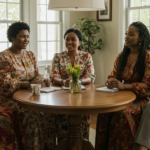
    women of different religions sitting at a table to discuss feminism and religion

    “Religion never felt real to me” – Anjola*, 20

    I started questioning religion when I was 15, and it’s been downhill ever since.  

    Every time I tried to be religious, it felt like a performance that everyone else seemed good at except me. The speaking in tongues, the long hours of prayer, etc. I could never get into it. Religion never felt real to me. It didn’t help that most of the  Christians I knew were hypocrites. 

    Realising I was queer also played a role. I couldn’t rationalise homophobia, and it didn’t feel right to participate in a religion that stood against who I was. The same thing happened with feminism. There was so much casual misogyny in the Bible. Lots of “Men are the head” conversations while women suffered and were treated as afterthoughts. I don’t think I can fully participate in religion with a clean heart while being queer and a feminist. 

    READ ALSO: I Dated a Man of God. It Was the Closest Thing to Hell

    “I think a huge part of my hesitancy to accept feminism is a result of my religion” – Christiana*, 23

    I believe women should have equal rights with men, but not in every aspect. The Bible and my religion make that very clear. I have never called myself a feminist because I don’t see myself as one. Feminism encourages women to be the head of the family and to not be submissive. But submission in itself isn’t bad; it’s just a sign of respect to your husband. Sure, you can be a feminist and a Christian, but I think my hesitancy to accept feminism is a result of my religion. If I wasn’t a Christian, I don’t think I’d care so much about what the Bible says about submission, but I am, so I do. 

    “I am not blinded by faith to look the other way when something is misogynistic” – Blessing*, 18

    I’m religious because I don’t believe human beings just spawned; I believe we were created with purpose and that there is a God. I’ve had certain experiences in my life that I don’t believe were just coincidences. I believe in something beyond myself. However, I am not blinded by faith to ignore misogyny, even if it’s in the Bible. I know it sounds contradictory, but that’s how I make it work. People will call it cherry-picking, but I focus on Jesus and His teachings, not what any other man in the Bible says. I am aware that even though a lot of the men mentioned in the Bible were influential figures in the church, they still had their biases. 

    Get More Zikoko Goodness in Your Mail

    Subscribe to our newsletters and never miss any of the action
    “What does Christianity have to do with equality?” – Ose, 66

    Feminism is why  I was able to go to school when I did. It is why  I can read, write, own property, and save money. I was born in a time when people said things like, “Why will I send a girl to school?” and “How person go just born girl, wetin you go use am do?” and other demeaning things, and no one batted an eye. Sure, some of those things are still being said today, but at least now people can publicly stand  up for girls being denied education. 

    I’ve been Catholic all my life, and that is not going to change. I believe in God the Father, the Trinity, and the Holy Catholic Church. I also believe God ordained different roles for us. A man being ordained to lead a home should have nothing to do with whether a woman can become the General Manager of a company or be paid equally. What does Christianity have to do with equality? 

    “When people tell me they’re religious and feminist, it feels like a joke” – Elizabeth, 19

    I wasn’t always irreligious, but to be fair, I never really felt the connection to religion like others did. Church and prayer always felt like a chore. I didn’t peg that I was an atheist at first, but I called myself a feminist from secondary school. Still, I used to excuse a lot of bad behaviour with, “Oh, the Bible says,” even when it felt wrong. Ever since I left religion completely, it felt like the scales fell from my eyes. There’s no longer any bias or excuse for misogyny. 

    When people say they’re both religious and feminist, it feels like a joke to me. Something would suffer for it.  But I don’t t say it out loud because I know people have different relationships with religion, and they hold on for whatever reasons. 

    “If I  ever had  to pick between identifying as a Muslim or a feminist, I’d pick feminist” – Aisha, 32

    Most days, I think I’m Muslim because there’s nothing else for me to be. My father, his father, and all the fathers before them were  Alhajis, Imams, and clerics. To be anything else feels like disobedience to an entire generation. Does that mean I always agree with what the clerics teach or what the Qur’an says? No. Do I agree that a lot of men used Islam as a means to control and subjugate women? Yes, I do. Do I also think that some women have found solace and peace in the religion? Yes, there’s that as well.

    Still, I saw how  Islam was used to punish my grandmother. I also saw how my mother and sisters fought for me to have peace and comfort. If I ever had to choose between Islam and feminism, I’d pick feminism. I know what my grandma endured at the hands of my grandfather, and I know it was feminism that saved her. If I ever find myself in her position, feminism will save me, too. It would be an insult to the women who risked their lives for me to deny that. 

    READ ALSO: 10 Nigerian Women Share What It’s Like Being a Hijabi

    “I am tired of people assuming I’m a feminist because I say I don’t believe in the existence of any god” – Fola, 28

    Whenever I tell people I am an atheist, they automatically assume I’m a feminist or that I support the LGBTQ+ community. While I don’t care what a gay person does with their time or body, I’m tired of people assuming  I’m a feminist because I say I don’t believe in the existence of any god. 

    Sure, I think women should go to school and have rights, but I don’t believe we can ever be equal. Based on biological and social factors, men are just better suited to leading society, and honestly, let them. I don’t want to have to worry about money or a 9-to-5 job. I want to marry a good man who’ll take care of me, so I can focus on raising our children and building a home. That’s what I believe women were biologically made to do, and it’s the life I want. 

    “If some women need to hold on to religion to keep living and they can square off the contradictions, then by all means, they should go for it” –  Amaka*, 24

    I think I’ve always been a feminist, I just didn’t have the word for it. I was raised by a single mother, and while it wasn’t easy, it was obvious to me from really early on that a woman can do anything a man can do. Sure, there was a lot of internalised misogyny I had to unlearn. Phrases like “A woman is the neck and a man is the head,” stuck because my mum said them when my sisters got married. Plus, it sounded catchy, so it stuck. But it wasn’t until I started my journey of discovery that I started unlearning all of those things. 

    I grew up Christian, but I remember a friend who lost his sister and father within a few years. I tried to comfort him the way I knew how, with the typical “God knows best,” but when he sat in the hospital crying and praying, he concluded that if he lost yet another person after everything, it was either God was callous or didn’t exist. That was the beginning of my journey into spirituality. I just stopped caring. I thought the worst thing that could happen would be I’d die and go to Christian hell, and I was okay with that.  If I died and God was real, I’d make Him answer for the convoluted and messy system he created before I went down to hell. 

    Now, I’ve gotten to a point in my life where I can say boldly that I am spiritual. There’s so much about being a human being that we can never understand. I think we live in a largely disinterested universe, and but I also believe in things only the spiritual can touch: love, kindness, music, connection, art. 

    At the end of the day, religion has morphed depending on what the times look like. If some women need to hold on to religion to keep living, and they can square off the contradictions, then by all means, they should go for it. Who am I to take that away from them?

    READ ALSO: I Called Off My Engagement Because of a Joke

  • Bimbo* (44) always thought she would marry just once in her life, but after her first husband and childhood best friend passed, she found herself remarrying again, and again, and again. Thereby bringing her total marriages to four.

    This is Bimbo’s story as told to Itohan 

    My first marriage was to a man I still consider the love of my life. We were childhood friends, and people always joked that we would one day get married. Then, when I was 21 and he was 23, we eloped. When we returned, our parents were upset because we’d denied them the opportunity to have a huge wedding, but we were happy, and that’s all that mattered.

    The two years I had with him were the best of my life, but they were cut short by his death. He was so young and full of life, but God had other plans. I was distraught when I heard the news and even more disappointed by the ways people tried to console me. I was told I was lucky to still be young and without children, so I could easily remarry. Why that was something people felt comfortable saying to my face was beyond me, but it happened regardless. 

    After his death, I withdrew into myself. He had left everything he owned to me, and I suddenly had more money than a young woman my age should. My dad warned that it would make me a target for young men looking to take advantage, so he arranged for me to marry one of the young men he mentored. I was 25; he was 34. My dad felt the man had a good head on his shoulders. He was not wrong, but I’m a woman who values her freedom and the ability to have fun. I’m a passionate person, and it was the most passionless marriage I’d ever been in. Our sex life was horrible. He used to schedule sex for 8 p.m. twice a week, and it lasted all of 15-20 minutes on a good day. No foreplay, no passion, no pleasure. Just thrusting and ejaculating. 

    Get More Zikoko Goodness in Your Mail

    Subscribe to our newsletters and never miss any of the action

    I remember once asking my dad if he could reduce my husband’s workload so he might have more time for me. That’s when I found out it was my husband constantly picking up extra work and handling business. My dad told me. I realised my father had done it on purpose. He’d always said I was a bit of a wild child, so this marriage was his way to calm me down. Once I realised that, I filed for a divorce. We’d been married for three years, but I knew I couldn’t spend another second in that marriage. One thing my father did get right was the prenuptial agreement. So all I lost was time, and a bit of my sanity. My money remained intact. 

    I met my third husband at a friend’s 30th birthday party. He was 32 and I was 29, and we hit it off almost immediately. The sexual chemistry was electric, and although I wasn’t looking for anything serious, I enjoyed his company. We travelled to several countries together, tried new cuisines and had fun. For the first time in years, I felt like I had something great going for me. I felt young again. We started dating a few months later, and when I got pregnant, we got married. It was a nice ceremony and I felt absolutely beautiful. It truly felt like one of the happiest moments of my life. My parents, friends and I thought this would be the one that stuck. We were so wrong. 

    My pregnancy was difficult. I was pregnant with twins, and they stressed me from the beginning to the end. I couldn’t enjoy many of the things I used to. Morning sickness, swollen feet, heartburn, body pains, etc. At one point in my second trimester, I was rushed to the hospital because I was bleeding. Thankfully, the babies and I were fine, but the whole experience took a toll on me physically and mentally. After I gave birth, I thought things would get better, but I was wrong.

    The babies were born through a caesarean section and my body did not snap back as fast as I thought it would. I was stuck at home breastfeeding and cleaning up the babies I was miserable. I was battling postpartum depression, I thought about killing myself and my babies so many times, just so it could end. There was a time I found myself screaming at them as they cried. Our nanny found me on the floor, screaming at them my lungs out while the babies lay in their bassinet. In all of this pain and suffering, where was my husband? He was out. Suddenly, he became much busier than ever. I was left alone with the children and the nanny for days. I needed his help and support, but he was nowhere to be found. He wouldn’t pick up my calls or respond to messages. I was deeply hurt. 


    ALSO READ: What She Said: I Didn’t Know I Was Almost Six Months Pregnant


    A year and a few months after I had the twins, I was slowly getting myself back, but I still wasn’t as active or interested in sex and the partying lifestyle I enjoyed. One night, while getting the twins ready for bed, I received a video from a friend. It was of my darling husband in a club, kissing and touching a woman who looked like she was still in university. That was the first time in a long time I thought of ending my life again. I was disappointed. When he came home a week later, I confronted him with the video. He blamed me for no longer being “fun” and said he had needs that had to be met. That night, I packed a few things, took the twins, and left. 

    The following week, I called my lawyer and filed for a divorce. It was the hardest marriage to dissolve because of the children and how long it had lasted, but with evidence of adultery, the court allowed me to end it. Custody was granted to me, with visitation rights for him, and he paid monthly for our upkeep. 

    By the time the twins turned seven, I filed for custody to be transferred to their father. I’d gotten a job that required constant international travel, and I didn’t feel I was providing a stable environment for children. Plus, my ex-husband had remarried and they had another child. I believed it was better for the twins to be with them. Luckily for me, the court agreed. At 38, I felt freer than I had in a decade. I decided to start living for myself and enjoying life. I saw my children when work allowed and sometimes took them on trips. Life was good. I was happy, but a bit lonely. 

    At 39, I decided to get a “sugar baby”. I was rich, I could afford it, and I wanted regular sex. I had always dated older men, I wanted something different. My friend introduced me to someone she knew. He was 30, smart, and the sex was great, and I was enjoying myself. A year or so later, he said he wanted to be in an actual relationship. I agreed. A year after that, he asked me to marry him. And so, at  41, I was getting married again. It was a small courthouse ceremony with a few friends as witnesses. My parents didn’t  attend, and honestly, I don’t blame them. 

    After we got married, he became a househusband. He worked, but I was the breadwinner. He managed the staff and took care of the home. My children liked him, and it was nice to hand over “wife” duties, I’ve never been that type anyway. I was happy and content. That is, until I came home early from one of my trips and found him in the bed with another man. I dropped my bag from my hands, and that’s when they realised I was there. 

    My “husband” explained that he was a bisexual and the man he was having sex with was his boyfriend of over five years. Apparently, he only got into a relationship with me for money. He and his boyfriend were planning to relocate and start a new life together, but they couldn’t afford it on their own. After listening, I wish I could say I was angry, but I wasn’t.

    I understood why they did it, I was just irritated he hadn’t told me from the start. I would have gone along with it from the very beginning. All the sneaking around was unnecessary and disrespectful. He said their end goal was marriage and a new life together. I called my lawyer and asked her to help them with the process. I also donated some money towards it, called it their wedding gift. Then we began the process of ending our marriage. 

    I’m 44 now, and I’ve officially been married four times. I have another sugar baby, but I’m not interested in having another husband. After reflecting on the life I have lived, I think marriage isn’t for me. Being single isn’t so bad. I love my children and get to spend time with some of my friends in their 40s. Life is good, and I’m content.


    ALSO READ: I Called Off My Engagement Because of a Joke

    Participate in our riddle callout for a chance to win ₦25k. This campaign is open only to Zikoko Daily newsletter subscribers and ends May 10, 2025!

    [ad]

  • Gina* (37) has had her life planned since her teenage years. The goal was simple: finish school, run a business, make a lot of money, get married, and adopt a child. She was close to getting everything she wanted until a joke from her fiancé’s friend led her to call off the wedding. 

    This is Gina’s story, as told to Itohan

    I’ve always known what I wanted from life. Maybe it’s because I had strict parents or simply my nature, but I’ve always been a planner. In primary school, while other children were uncertain about their futures, I knew I wanted to study and do business. 

    The interest I had in business began at the age of 10, in the very same primary school. My eldest brother, then at university in another state, would bring back packets of candy when he came home. My mum included them in my school snacks. I noticed that the candy I had was not the kind everyone else in school had, so when my classmates asked for a taste, I sold it to them. Unfortunately, this only lasted a term; a child took some candy home, and upon investigation by their parents, they reported it to the school. My mother made me promise not to sell candy in school again. I agreed, but the experience taught me that I never wanted to work for anybody. I wanted to run a business, and I wanted it to be a great one. 

    In SS2, I was 16 and running a surprise package business for the boarders. In my first year of University, I got my first carryover in the second semester while running a jewellery business and so I switched to helping other people finance their own business ideas. Then, after graduating, I opened a shop and started selling jewellery.

    When I turned 26, after running a business for a couple of years, I decided to get my MBA. I had a shop on the island, where I officially sold jewellery; I wanted to close it when I was travelling out, but my mother insisted I leave it open. I am eternally grateful to her. She had retired from her job as a teacher and decided to help me run the day-to-day operations while I went to get my degree. Honestly, she was my best friend and the only person I could truly trust, so I let it happen. 

    Get More Zikoko Goodness in Your Mail

    Subscribe to our newsletters and never miss any of the action
    A couple of months into my stay in the UK, I met someone. His name is Yinka*, and he was two years older than me. We lived in the same building, so I saw him almost every day. Either when he was returning from work, or I was heading to class. Sometimes, we’d stop to chat about life back home, and he’d give me tips on how best to adjust since he had been in the UK for over five years before I arrived. Our friendship was nice and I felt lucky to find someone I could confide in so early into my stay. 

    A few weeks after we became friends, he asked me out on our first date, and I agreed. I was about to be done with my MBA, and my mother told me my business was running smoothly (by this time we’d added importation of weave-ons and wigs). Life was going great, and I genuinely believed I’d won the lottery. We started dating a couple of months after that first date. We spent weekends together and went on a few trips. I had shared my plans and my goals with him; how I just wanted to work for as long as I could, and then adopt a child to care for. He seemed so aligned with my vision, I thought it was too good to be true. 

    I finished my MBA at 28 and was ready to return home and continue building my business. But Yinka asked me to stay back in the UK with him for two more years before we both moved back to Nigeria. I didn’t want to wait, my body was itching to get back to work. There was so much to do, and my mum was no longer as young as she once was. That caused one of our first major fights, but after not speaking for two days, we talked it through. The plan became that I would go back to  Nigeria, and he’d stay in the UK. Then, when he was ready to return permanently, we’d do our introduction and get married. Simple, right? Well, it should have been. 


    ALSO READ: My Family’s Abuse Pushed Me to Become Financially Independent


    When I got back home, my small shop, thanks to my mother’s help, had grown bigger. Gold, fashion jewellery, lace, hollandaise, weave-ons, we sold it all. We had various smaller shops, plus a main shop for those buying wholesale. The first thing I did when I got back was buy my mother a new car. She had basically helped me build my empire. It was the least I could do for her.

    Yinka, however, was not impressed. He complained that I was splurging, instead of saving towards our marriage plans and settling in Nigeria. We fought again. Most of our fights were around money, how to manage it, and investment. We operated a 50/50 household because that’s how I was raised. Your money is your money, my money is mine, and household needs are our money. I was confused as to why these issues kept coming up when we were not even on the same continent. I tried to chalk it up to the distance and stress from work and business, but something just felt off. 

    After two years in Nigeria, Yinka finally came to join me. A month later, he proposed after asking my parents for their permission to marry me. I was 31, happy, and finally about to achieve everything I’d planned for myself since I was a teenager. We planned to marry the following year, we saw no need for a long engagement when we’d known what we wanted for years. 

    Four months into our engagement, I’d already met with a wedding planner, booked a venue, and sorted some other things. My mum was having the time of her life with the planning, while Yinka was hardly ever around to contribute. He said, “Weddings are women’s things. Do whatever you like, I’ll show up that day and marry you.” And that’s what I did. I chose items that I felt represented both of us. I wanted it to be special. That’s why I decided to have a bridal party. We invited his groomsmen and my bridesmaids and organised a beach party. The plan was for everyone to become friends and just get closer. I didn’t want situations where people would have bad blood. 

    That night, Yinka and some of his friends were drinking and chilling by the beach. I had excused myself to go to the bathroom, and on my way back, I overheard their conversation. His friend, Bode*, asked if we’d be moving to the UK after our wedding. Yinka had said no because we’d planned to stay in Nigeria, run my business, and raise our adopted child. Then Bode started laughing. He called Yinka a woman and said, “Are you not ashamed that your wife’s dick is bigger than yours? Instead of getting her pregnant and moving her to the UK where you can open a corner store for her, you’re doing as she says.” All his friends burst into laughter like Bode had just cracked the funniest joke.

    But it wasn’t their laughter that bothered me, it was that Yinka laughed too. He laughed as his “friends” reduced my business degree and years of hard work to a “corner store in London.” He laughed, knowing full well I didn’t want to birth children. And when he didn’t correct them but instead shook their hands and patted their backs, I knew I’d seen enough. I quietly went back to the room at the beach house and sent a message to my mother: I’m not interested in getting married anymore. It was a brief summary of what had happened. I knew she wouldn’t see it until the morning, but I sent it anyway. Early the next day, before anyone else was awake, I placed the ring on the table and sent a message to Yinka to tell him I was calling off the wedding.

    On my way home, my phone wouldn’t stop ringing. My siblings, my mother, Yinka, and his family, everyone was calling. Yinka and his family kept insisting I misunderstood, but honestly, I don’t think there was anything to misunderstand. I thought he was comfortable with the life I’d chosen, but it turns out I was wrong. Instead of keeping both of us in a relationship that would turn sour and miserable, I chose to save us. He begged for months but eventually gave up when he realised I wasn’t changing my mind. 

    It’s been years since I called off the engagement. My business is doing great. I still invest in people’s businesses from time to time and work to get loans for female small business owners so they can pursue their dreams. Last I heard, Yinka is seeing someone, and I’m happy for both of them. His mother and I still keep in touch, because unlike her son, she doesn’t make jokes like that at my expense. I’m happy where I am right now, and I still plan to adopt a child. I may not have gotten everything I planned to get, but I got a lesson and a happy life. What more could I ask for?


    READ ALSO: After My Parents Died My Uncle Came for Everything

  • Some women enjoy watching cartoons, some enjoy makeup, and there are those who love music. But the women in this article find peace and joy in watching anime. However, how does misogyny affect their viewing experience? 

    “I avoid the ecchi genre completely” – Anita*, 24

    I enjoy watching light-hearted, funny anime in the comfort of my home. My current favourite is “Attack on Titan”, mostly because I enjoy fight scenes just as much. Honestly, I’ll watch any anime as long as it is interesting, but I avoid the ecchi genre completely. Not only have I heard really bad things about the fanatics of the genre, I can’t bring myself to sit through the way the Japanese writers depict women. It is very weird and predatory. Why are you and your fans sexualising children? 

    “I love talking about anime with women” – Comfort*, 23

    I love watching anime with complex characters, but the moment I notice even the slightest hint of misogyny or a female character being objectified, I drop it. That’s why I stopped watching “Seven Deadly Sins”. There was just too much going on. When I first got into watching anime and started tweeting about it, men kept questioning my interest and insinuating that I wouldn’t enjoy it simply because I am a woman. I get so engrossed in conversations about anime that I really enjoy that I don’t always catch the issues in the moment, but once  I do, I address them then and there. They’ll often backpedal and say it’s not what I think it is, but I know and understand these microaggressions when I see them.  

    That said, I still tweet and talk about whatever anime I like. I don’t engage much with the wider community, but I love talking about anime with women. They understand the tropes that often go over the male viewers’ heads. 

    “I wish they’d stopped sexualising cosplayers” – Fatima*, 20

    I like watching dark psychological anime with plot twists and animation that leave me thinking for days. But it’s rare to find anime that doesn’t objectify women. It’s almost a theme for them to portray women as naive and helpless. When I decide to watch anyway, I do my best to focus just on the plot. That’s why I like “Attack on Titan”. The plot is tight, everyone’s a badass, and no one’s being objectified for sexual relief. 

    I hate the objectification of women so much. As someone who cosplays for a living, it is something I have had to deal with continuously. Men I’ve never met send me explicit messages, telling me what they’d like to do with me in cosplay. I found out that as a goth girl and cosplayer, I’m a fantasy to them. They don’t see us as human beings but as experiences. I just wish they’d stop sexualising cosplayers. 

    “I don’t want to deal with people questioning things I enjoy” – Jane*, 23 

    I really like shonen anime. The whole idea of the protagonist with a grand goal, facing enemies, growing stronger, and the power of friendship? Inject it directly into my veins. Unfortunately, with some shonen, you’re deep into a show, and the next thing they’ll drop is a bit or a gag that was intentionally added to please male fans. It adds nothing to the plot, just random sexualisation or nudity. There’s this anime called “Fire Force”, it has a character whose clothes are always “accidentally” falling or ripping. Why? Who asked for that? Honestly, I don’t expect morality from the media we consume, so there are some things I just roll my eyes and overlook, but it gets to a point. 

    I try not to interact with the community online. I prefer staying in my bubble. The few times I’ve tried, I’ve had men quiz me on what anime I’ve watched. Why? I don’t want to deal with people questioning the things I like. And the random mansplaining that follows? No, thanks. I’d rather talk anime with close friends. I have an anime-themed pouch, and men often come up to ask about it. But my first reaction is scepticism. The conversation always leads to a lecture or an impromptu quiz. 

    Get More Zikoko Goodness in Your Mail

    Subscribe to our newsletters and never miss any of the action
    “You have to filter the rubbish in your search” – Fola*, 25

    I try hard to avoid misogynistic themes and tropes, but a lot of anime is geared towards the male audience, and they love pandering unnecessary sexual things like showing panties or huge bulbous breasts jiggling forever, or even little girl characters in revealing clothes. Once I see a show has any of these things, I log out. Despite the prevalence of this, however, there are shows that are animated amazingly and don’t rely on the rubbish. You just have to find them, and finding them is also not that difficult. You have to filter the rubbish in your search. There are articles, forums, and lists where people ask and give similar recommendations. Sometimes, you can even tell from the poster whether a show will be full of nonsense. 

    I wish there were more women I could talk to about anime. Because with men? It’s like they’re vetting you or competing with you. “Oh, you’re a babe, that’s why you’re saying that,” “You can’t really like anime, which ones have you watched?”  And then they proceed to name the most basic anime in all of existence. Or, they start asking you to list all the anime you’ve watched so they can tell you how it is “basic, entry-level anime.” Sometimes, I hit back by listing anime even their dads have never heard of, not to prove anything, but to shut them up. Then I’ll go, “Oh, you don’t know it? Wow, I thought you said you watched a lot of anime.” The look on their faces gives me joy. 

    “Him being male and misogynistic means we wouldn’t see certain anime the same way” – Winifred*, 20

    I wasn’t always a feminist, but I’ve always had common sense. Even then, some anime spooked me. Since becoming  “woke,” I can’t tolerate misogynistic anime anymore. In fact, I just dropped “Fire Force” because of this.

    I love anime a lot and was once very active in an anime community. And not to toot my own horn, but an educational post I made went viral and helped them gain over 100 new members. But one of the moderators turned out to be misogynistic. I blocked him, which meant I was automatically removed from the community. That’s when it hit me: him being male and misogynistic means we’d never see certain anime the same way. His view will always be clouded by his bias. 

    “Personal messages get very sexual quickly most times because of the characters I cosplay” – Halima*, 20

    I  cosplay a lot of big-breasted characters. Most of the time, people are respectful at cons and in the comment section of my posts. But in my DMs?  Different story. Personal messages get very sexual quickly.  Once, a guy offered me a million naira to have sex with him in one of my cosplays. He was a scammer, obviously, but omo. It would be nice to meet other female anime fans. Maybe then, my DMs would rest. 

    “I’ve never tried to impress a man in my life” – Yinka*, 23

    I love anime because there is something for everyone. If you’re in the mood for romance or to watch small children beat up grown men, there’s something for you to watch and immerse yourself in. What I don’t like is when I talk about my love for anime, and there’s a man in my comment section asking, “What’s his name?” Why are you insinuating that I am dedicating hours of my day, every day, to impress a man? I have never tried to impress a man in my life. Why would  I want to start now? And why would  I spend almost a whole year watching over a thousand episodes of “One Piece” just to do that? Am I unemployed? 

    READ ALSO: I Fell in Love With an Otaku and Now I Watch Anime

  • What does it mean to be a hot babe? As we celebrate women all through this month of March, this is one of the questions that we hope to answer.

    There’s nothing like the feeling of walking into a room, hair swaying, hips moving, and instantly commanding attention — not just for how you look, but for the confidence and energy you exude — no apologies, no second guesses.

    To tap into that energy, I asked fifteen Nigerian women to share the Afrobeats songs by female Nigerian musicians that make them feel like hot babes.

    All the songs recommended are featured in our #BumpThis playlist at the end.

    “Anytime these songs come on, I feel smarter, like I’m Maradona” — Chidinma

    Songs: Cash” by Lady Donli; “Maradona” and “Sicker” by Niniola

    Cash” by Lady Donli makes me feel like the baddest babe. I get goosebumps from the song’s intro: “Ego nwere oma lusi o’luke, ego nwere…” which translates to “The money I have.” So, imagine dressed up, walking and listening to this song while I have my money in my account and cash in my purse — nobody can stop me. I feel proud and elated whenever I hear that song. 

    Also, “Maradona” and “Sicker” by Niniola make me feel like a woman who can get any man she wants. Those moments make me feel smarter like I’m Maradona.

    “There’s a girly energy in it that I deeply connect to” — Blossom

    Song:Wickedest” by Tems

    It’s Tems’ “Wickedest” for me. Whenever it gets to the “Came for the wickedest whine / Me and my girls on the wickedest time” part of the song, I jump up. There’s a girly energy in it that I deeply connect to. I think it’s feminine energy that Tems knows too well, and she embodies it fantastically in this song.

    “This song allowed me to be free of the fear of “What if something bad happens?”” — Zia

    Songs:Cash” by Lady Donli; and “Cast (Gen-Z Anthem)” by Ayra Starr

    Cash” by Lady Donli. It’s pretty self-explanatory, but wallahi, I’m addicted to cash. Money is power, and it makes me feel like a hot babe. Nobody encompasses it like Lady [Donli] in this song. Ayra Starr’s “Cast” allowed me to be free of the fear of “What if something bad happens?” And truly, what is the definition of a hot babe if not someone that doesn’t give a fuck about consequences?

    “It’s just a bad bitch song” — Chioma

    Song:Boytoy” by SGaWD

    Oh, it’s SGaWD’s “Boytoy.” It’s just a bad bitch song. I followed her on X and was hooked on a teaser of the song she posted. So, I patiently waited until release day. That was the only song I listened to for a week.

    Now and again, when I want to remind myself that I’m a big bad bitch or I just want to talk my shit, I listen to it. I know every single word. It’s two minutes of her talking her shit, and I just love it.

    “It makes me feel untouchable” — Dami

    Song:Bloody Samaritan” by Ayra Starr

    Bloody Samaritan” by Ayra Starr does it for me. It’s bold, confident, and has that “nothing can kill my vibe” energy.

    I connect with it because it’s about protecting your peace and not letting negativity get to you. The first time I heard it, it instantly hooked me — the beat, the lyrics, and Ayra’s delivery just scream main-character energy.

    What I love most about it is the attitude. It makes me feel untouchable like I’m walking slowly with the wind in my hair. It’s that perfect song to remind myself that I’m that girl and nobody can dim my shine.

    “It’s basically about being a baddie and a boss babe who wants only money and jollof rice, not love”  — Folu

    Songs:Shake It To The Max (FLY)” by MOLIY; and “Omo To Sexy” by BLNDE

    I’ll say “Shake It To The Max” by MOLIY and “Omo To Sexy” by BLNDE. I found them while trying to create a personal playlist for Nigerian Alté female songs. “Shake It To The Max” has a great vibe, and the lyrics are pretty interesting, too. It’s basically about being a baddie and a boss babe who wants only money and jollof rice. That’s where I am right now. I’m not looking for love, I just want food and money.

    “It gives that ‘step into your power’ feeling” — Maryanne

    Song:Rush” by Ayra Starr

    Ayra Starr’s “Rush” makes me feel like a confident and unstoppable babe. The message speaks to me, especially the lyrics: “Me no get time for the hate and the bad energy.” It reminds me to focus on myself and my success.

    I first heard it when she released it, and it was everywhere—on the radio, even in the Ubers I was in. However, it hit me when I played it while I dressed for a night out with my friends. It gives you that “step into your power” feeling.

    What I love most about it? The beat, the energy, and how Ayra sings it confidently. It’s more than a song—it lifts my mood.

    “It evokes an emotion that makes me feel very sexy” — Illy

    Song:Right Now

    Seyi Shey’s “Right Now” is hot, and the music video elevates the song. It evokes an emotion that makes me feel very sexy and comfortable in my own skin.

    “It’s the perfect song to do my makeup to when I’m heading out” — Steph

    Song:Boytoy” by SGaWD

    It’s SGaWD’s “Boytoy.” I heard it for the first time on Lotanna Don’s Instagram story. She’s friends with SGaWD, so she was trying to get her followers on to her music. It’s a song about female dominance, sexual liberation, and putting nonchalant men in their place. It’s also about knowing when to get lit, when to hustle as a woman, and being the hottest babe in the room.

    I like that it’s very daring. The first line says, “Girls like me, you know we like sex.” You just know SGaWD doesn’t care about the stereotypes they place on sexually liberated women. She goes on to give her commandments on being THAT girl. Singing “Boytoy” out loud gives a feeling that everything else is beneath you and you’re the most daring version of yourself in that moment. It’s the perfect song to do my makeup to when heading out.


    Hot babes, HERtitude 2025 is back! Get your tickets to the hottest women-only party in Lagos here.


    “These songs have latent energy that transforms you into your smoothest self” — Anita

    Songs:Focus On Me (All the Sexy Girls The Club Tonight)” by Darkoo and “Omo To Sexy” by BLNDE

    It’s “Focus On Me” by Darkoo, and recently “Omo To Sexy” by BLNDE. I discovered both songs on the internet on New Music Friday. The songs are silky and have latent energy that transforms you into your smoothest self — it doesn’t matter where you hear them.

    “I generally thought Tiwa was hot, and I felt hot, too” — Chigor

    Songs:Love Me X3” by Tiwa Savage; and “Woman Commando” by Ayra Starr

    I love Tiwa Savage’s “Love Me X3” and Ayra Starr’s “Woman Commando.” This Tiwa’s song gives me that feeling mainly because of its video. I can’t even remember the first time I heard it. I didn’t even own a phone then. I just remember seeing it on TV anytime I passed the sitting room. I’d stop to stare instead of doing the chores I was probably going to do.

    I was much younger then, but I remember watching the video repeatedly and doing the small choreography towards the end. I generally thought Tiwa was hot, and I felt hot, too.

    Then Ayra. Ayra is naturally hot, but there’s just something about “Woman Commando.” From the sass in the choreography to the sass in the lyrics and the babes [Coco Jones and Anitta] she put in the song. The lyrics, melody, and everything just get me. I first discovered it last year when she released her album. I listened and instantly loved it. It was in my top 3 at first listen and then my top 2 when she performed it on The Tonight Show.

    “This song makes me feel like a baddie” — Tiana

    Song: “POP!” by Adanna Duru

    There’s a Nigerian artist based in the US called Adanna Duru. Her song “POP!” is my anthem. It makes me feel like a baddie. I just want to dance and move my body. It’s also a really sexy song.

    “Both songs make me feel like I own the room” — Lola

    Songs:Bad Vibes” by Ayra Starr and “Crazy Tings” by Tems

    My choices are Ayra Starr’s “Bad Vibes” and Tems’ “Crazy Tings.” The former has that playful, confident energy that makes me feel like the main character. It’s bold, fun, and effortlessly doesn’t give a hoot about your judgment. Meanwhile, “Crazy Tings” carries that smooth, self-assured vibe that makes me feel untouchable, like I’m gliding through life with an effortless glow.

    I love the confidence both women bring. Whether it’s through the lyrics, the beat, or the attitude in the delivery, both songs make me feel like I own the room, like I’m unstoppable, and I must let no man or woman kill my energy because I’m the main character in my life and story. 

    “The music makes it feel like someone switched on a different atmosphere” — Ngozi

    Song:Baby Riddim” by Fave

    My pick is Fave’s “Baby Riddim.” I’m not big on Nigerian music, but I discovered this song three years ago. I love Fave’s voice! It adds so much depth to the music and makes it feel like someone switched on a different atmosphere. I also like the lyrics. I’m big on lyrics that tell a story that’s easy to follow, and this one does.

    “Her song resonates because it affirms women as sensual and sexual beings” — Adeyele

    Song:Too Sweet (O Dun)” by Niniola

    Niniola is that girl who makes me feel like a hot babe every time. Her songs have the right balance of sultry, sexy, and hip. I have no choice but to embrace the baddie I am. Her song, “Too Sweet” does it for me. It’s a self-praise that gives off this “I’m that girl don’t mess with her” vibe I love. Listening to this song adds a little more pep to my step, and gives me that confidence not to let anyone look down on me.

    I love how Niniola infuses Yoruba into her songs and hypes herself as a beautiful lady. As a woman, listening to that song resonates because it affirms women as sensual and sexual beings. It encourages confidence, too. The first time I heard Niniola as a teenager, I watched her “Maradona” music video on Soundcity, and the song stuck in my head for days. And I’ve been a fan ever since. I like that her sound is upbeat and bold. She gives this IDGAF attitude in her songs, which I just love. As a hot girl who enjoys life, Niniola is up there for me.

    Listen to the playlist here:

    [ad][/ad]

  • Beyond the health challenges that come with PCOS, the condition can take a toll on women’s professional lives.

    From a student with dreams of working in a bank who’s now leaning towards remote work to a woman who had to leave her well-paying job, these Nigerian women open up about how PCOS has impacted their careers.

    “I’m Known for Always Taking Days Off” — 6 Nigerian Women on How PCOS Affects Their Careers

    Image by Freepik

    Fareedah*

    I have the kindest boss who doesn’t make me feel inadequate for needing time off whenever my period starts. But it’s frustrating to miss out on opportunities just because it’s that time of the month. I always try to compensate by working extra hard when I return, but that also means losing time I could’ve spent with family or on personal projects. Life would be so much easier if I didn’t have to deal with PCOS.

    Bisi*

    I run my own catering business, so I can take time off whenever needed. But dealing with PCOS has its challenges. I’ve struggled with being overweight for a while, and people love to make backhanded comments about how my weight must be due to the nature of my business. That’s far from the truth. I’ve been on a strict diet even before my diagnosis. Over time, those comments affected my confidence, and I started turning down public events. Now, I’m always self-conscious about how I look in public, and it’s taken a lot of effort to work on my mindset.

    Joy*

    In 2021, I left my well-paying job in banking, but only my family knew why. I didn’t want to share my PCOS diagnosis with my bosses because I was scared they’d label me unfit to work. I’d seen it happen to others and didn’t want to be passed over for promotions. But not opening up was a mistake. My mood swings and aggression during painful periods were misunderstood, and I became the person everyone thought was difficult to work with. I was only lashing out because I was in pain.

    Ibukun*

    NYSC taught me I couldn’t do a 9-5 job with PCOS. I worked at an e-commerce company in Ikeja, and we only got one day off per month. If you took more, it got deducted from your salary, or you’d get a query. The first time I asked for sick leave due to period pain, my boss looked at me like I was crazy. He even suggested I plan my day off around my period. I was too stunned to respond. That experience made me realise I didn’t want to depend on anyone regarding something as basic as resting when I was sick. Now, I run my own business and take all the time I need when my period hits.

    Ife*

    I had a female boss who knew about my PCOS but didn’t care. She’d make comments like, “You’re not the only one menstruating, so why should you get special treatment?” Once, I asked to work from home because I wasn’t feeling well, but she insisted I come to the office for an important meeting. I made it to work, but the pain got so bad that I started rolling on the floor, screaming. She still thought I was faking it until one of the clients suggested taking me to the hospital. The next morning, she texted me asking about work—not even a word about how I was feeling. That was the last straw for me. I quit, and although it hurt because I needed the money, I had to choose my peace of mind.

     [ad]

    Abibat*

    I’ve always dreamed of working in one of the new-generation banks, but the stories I’ve heard about how difficult it is to take time off keep making me rethink it. I was diagnosed with PCOS in 2022, but even before then, I’d always had intense period cramps. I’ve lost count of how many times I’ve missed classes or tests because of my period. It scares me to think about the choices I’ll have to make when I start working. I already know I’ll lean towards remote work—not because it’s what I want, but because it’s what I’ll need to do to manage my health.


    Are you looking for more information about PCOS? Famasi Africa has worked on a resource, and it’s full of practical tips and essentials for Nigerian women navigating PCOS. Find it here.

    Read this next: 5 Nigerian Women on Getting Diagnosed with PCOS After Doctors Ignored Their Symptoms

  • Trigger warning: Sexual harassment

    When women complain about sexual harassment, the typical question that follows is, “Where were you?” implying that they had to be in a questionable location for it to happen. 

    But what happens when the harassment happens somewhere that’s supposed to be safe? Seven Nigerian women share their experience with sexual harassment in situations where they least expected it’d happen.

    Image designed by Freepik

    At the gynaecologist’s office

    — Audrey, 27

    I went to the hospital for a pap smear, and the male gynaecologist kept saying I had a beautiful face. I was uncomfortable, but I politely smiled and said, “Thank you”. When it was time for the smear, he directed a female student doctor to do it. I was immediately relieved, but my relief was short-lived. 

    Anyone who’s taken a smear test knows you’re naked from the waist down, knees in the air, and entirely exposed when the speculum is inserted. The person performing the test usually sits at eye level of your cervix. In this case, it was the female student doctor. But this guy stood behind the female doctor all through, staring at my cervix. He made it seem like he was directing the student, but he was staring at me, and even commented that I had a “beautiful cervix”.

    When the student was done, she had issues with removing the speculum. So, this guy reached in — with ungloved hands — to remove it. Then he slightly tapped my vagina. I felt violated, but I wasn’t sure if I was thinking too much about it. After the test, he asked for my WhatsApp number so he could “forward the results” to me. I didn’t report him. Who would take me seriously in a government hospital? 

    In her home

    — Nini*, 24

    My dad had a stroke a few years ago that left him mute and immobile. After the initial treatment at the hospital, he was discharged, and my family paid for a physiotherapist to come help with his movement thrice a week.

    I was usually the only one at home when the physiotherapist came, and he soon started flirting with me. I didn’t think he was serious, so I’d just laugh him off. He was much older and really friendly. He would say stuff like, “Shey you’ll be my second wife?” but I didn’t see the need to complain to my mum.

    Then, one day, he asked me to help him move my dad for a particular exercise. When I did, he grabbed and kissed me. My dad’s back was turned, but he was literally in the room! I screamed, and he must’ve panicked because he hurriedly left. He never came back to treat my dad.

    In a place of worship

    — Moyin*, 21

    I used to have nightmares as a 12-year-old, and my typical Nigerian mum decided I needed deliverance. I was taken to one ori-oke (mountain top) for a three-day vigil, and my mum wasn’t allowed to stay with me. 

    It was a youth-focused deliverance program, so every other person was underage like me. On the last night, we had to meet the religious head individually for special prayers. He wasn’t alone when I got to his office. There was one other man and two women holding candles, praying. They made me lie on my back on the floor, and the religious head lay spread out on top of me. I think it was supposed to be a power transfer or healing thing.

    I should note that we were both fully clothed, but the man was moving back and forth on top of me. It went on for about five minutes before I was asked to leave. I only realised years later that this man was actually grinding on me with a full-on erection.


    RELATED: A Timeline of Silence: Why Does Sexual Violence Have Little Consequence?


    At the office

    — Lola, 29

    I once had a boss who, for the one year I worked with him, didn’t hide the fact that he wanted to sleep with me. 

    Anytime he managed to catch me alone, he’d smack my ass or pinch my cheeks. When he noticed I deliberately tried to avoid him, he’d give me never-ending tasks or shout at me for no reason. I endured it for a year because I was dead broke and wasn’t about to leave my salary without having another job lined up.

    In a police station

    — Flora*, 31

    A friend was picked up by the police for riding on an okada, so I went with some of his family to try to get him released. The officer handling his case leered at me all through the time we were there. 

    At first, I ignored him, and he kept frustrating us. But my friend’s brother begged me to try to be friendly with the officer so he’d be more helpful. I plastered a smile on my face, and sure enough, the officer became helpful. When my friend was finally released, the officer went, “Won’t you hug me to say thank you?” I acted like I didn’t hear him and walked out of the station as fast as I could.

    In the library

    — Sarah, 19

    I used to visit a public library close to my home frequently until the day a man exposed his genitals to me. 

    He was sitting across from me, and I noticed he kept fidgeting. After a while, he called my attention and gestured under the desk, implying that I had dropped something. I bent to look and instantly came face to face with his genitals. I was too shocked to say anything, and immediately moved to another section. There were a few other people in the library, but I kept thinking, “What if he comes to meet me here?” So, I just decided to leave altogether. It was crazy.

    With a family member

    — Danielle*, 22

    When I was around 6 years old, there was this uncle who regularly visited. I really disliked him because he always made me sit on his legs even when I protested.

    My parents didn’t mind, but the day I complained to my mum that there was “something in his pocket” that always poked me was when I stopped seeing him at our house. Now, I know what the something in his pocket was, but I wish my parents had prevented him from making me sit on his legs in the first place. That’ll never happen to my kids.


    *Some names have been changed for anonymity.

    If you found this relatable, you should read this next:

    “He Shared My Nudes With His Friends” — Nigerian Women on Being Slut-Shamed by Their Partners


    [ad][/ad]