• In 2012, UNESCO predicted Igbo would become extinct by 2025. Instead, the language has become an internet sensation.

    By Gabriella Opara, bird story agency

    On a regular school day at a junior secondary school in south-eastern Nigeria, an Igbo language teacher walks into a classroom and begins the lesson with a greeting. 

    When the learners greet her in unison, with “Good morning!” their teacher responds: “Mba, na Igbo!” (“No, in Igbo!”) 

    To which the students reply, “Ututu Oma.” (“Good morning’)

    “Daalu. Nodu ala, ka anyi malite,” (“Thank you. Sit down, let’s get started”) the teacher responds, again in Igbo.

    Junior secondary school students are among the thousands of young learners in Nigeria and worldwide who are learning the language that the United Nations Educational, Scientific and Cultural Organisation (UNESCO) declared would be extinct by 2025.

    In 2013, Emmanuel Asonye, Postdoctoral Research Fellow at the University of New Mexico, explained that the sentiments of its speakers and bastardisation of the language were broadly threatening the language.

    “It is a fact that Igbo people acknowledge that they exhibit a negative attitude towards their language. This includes both the educated and non-educated population. It is in fact, an irony that those who claim that UNESCO’s prediction is untrue are among those who can neither read nor write Igbo – those who have no scholarly work on Igbo language to their credit – those who boldly but ignorantly murder both Igbo and English language in their speech and writing,” he wrote, in the Journal of the Linguistic Association of Nigeria (2013).

    The UNESCO announcement seems to have shocked those who use the language – one of the more than 500 spoken across Nigeria – into action and given the language wings, locally and globally. Ten years on, it is becoming a common language of instruction and study in the region, much as Kiswahili, another African language recently adapted for official use at the Africa Union, did in east Africa.

    RELATED: Everything You Need To Know About Ńdébé A New Writing System Invented by Lotanna Igwe-Odunze

    Igbo is now one of the five top languages in Nigeria and is spoken by an estimated 25 million people, mainly in the southeastern part of the country. In popularity, it comes second to Hausa, spoken by an estimated 50 million people, mainly in Northern Nigeria. Other languages include Yoruba, Hausa, Kanuri, and Ibibio.

    Online communities have emerged to ensure its survival and spread from its cradle to the rest of the world – and new generations. 

    Igbo History & Facts, Igbo Dances, and Okwuid are some platforms on Twitter and Instagram promoting the Igbo culture and its language to the world.  Others are Learn Igbo for Kids, Igbo Amaka and Igbo 101 by Genii Games. 
    African Language Goes Viral
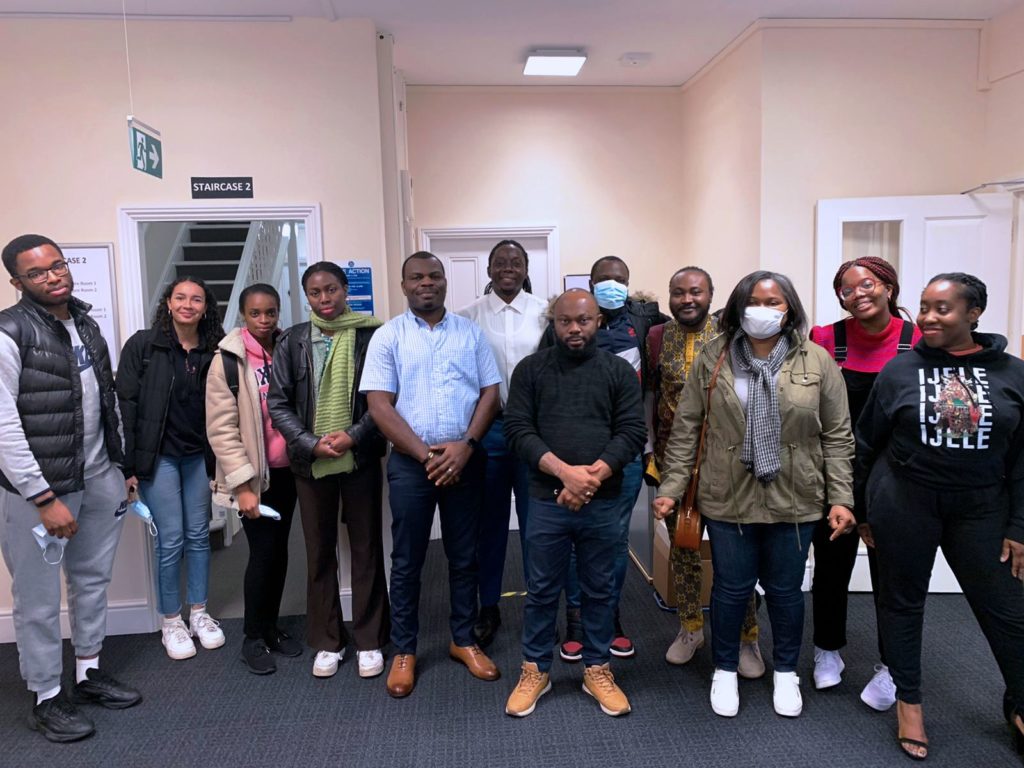
    Members of an Igbo language class at Oxford University. Photo Courtesy: Dr Adaku Jennifer Agwunobi

    Igbo mobile language apps have proliferated with many showing substantial download numbers, while websites such as igbotic.net, created by Maazi Okoro Ogbonnaya, an Igbo linguist, researcher and historian, are also helping first-time learners to grasp the language quickly. 

    “The platform is designed bilingually. Additionally, I have been travelling, documenting the cultural and linguistic history of the Igbo and making the information available for the public through social media and blogs,” said Ogbonnaya, who believes that there must be deliberate efforts to keep the language alive.

    “UNESCO is right. We can only prove their prediction wrong by taking action immediately. As a linguist, I believe that when a language is neglected by its speakers, it will become extinct. Many people cannot boast of speaking Igbo fluently. When a language is gone, culture is gone. It means that identity has gone too.” 

    Already in 2013, Asonye was seeing a reaction to the shocking pronouncement, which appears to have jolted the Igbo-speaking community into action.

    “UNESCO’s prediction itself has awoken Igbo scholars and indigenes towards a greater conscious effort to keep their language alive, as several clarion calls are being made by many Igbo scholars for a positive attitude towards the language,” he wrote.

    According to the UNESCO Atlas of The World’s Languages in Danger, “external forces such as military, economic, religious, cultural or educational pressures,” build a “community’s negative attitude towards its own language or into a general decline of group identity,” contributing to the demise of a language. 
     
    “Parents in these communities often decide to bring up their children in other languages than their own. By doing so, they hope to overcome discrimination, attain equality of opportunity and derive economic benefits for themselves and their children,” it states.

    According to musician and self-proclaimed Igbo language advocate Ifechukwu Mercy Michael, a new, conscious effort to maintain the language is making it more dynamic and its popularity is growing amongst the youth.

    “As long as people like myself exist, our language can never die. I infuse Igbo into everything I do; my music, interviews, campaigns, and style,” Ifechukwu said.

    For decades after independence. Nigerian households and institutions widely regarded indigenous languages as being for the ‘ordinary and unschooled’.  Those who spoke their mother tongues in schools where English was the language of communication and instruction, were punished.

    English is the only official language in Nigeria. Urbanization, cross-cultural marriages, and migration have also played a role in the gradual demise of many of the country’s indigenous languages, especially among the youth. In 2012, Igbo, spoken by over 20 million people, had been in danger of going the same way.

    But there are new champions of the indigenous African languages, promoting their use and preservation.

    One of them is Onyeka Nwelue, Founder of the James Currey Society. Nwelue promotes the Igbo language through a collaboration with the African Studies Centre and the Faculty of Medieval and Modern Languages at Oxford University.  

    The society started offering Igbo language classes at the university in February. To ensure the programme was running smoothly, in February 2022, Emmanuel Ikechukwu Umeonyirioha was inducted as an Igbo language lecturer.

    Sharing the news on Twitter, Umeonyirioha said: “This will be the first time the Igbo language will be taught at the university, made possible by the James Currey Society. History has been made.”

    In an interview with BBC Igbo, Nwelue said the drive for creating Igbo language classes at Oxford University was his desire for “whites to learn to speak Igbo, just as we learn English.”

    For Adaku Jennifer Agwunobi, a post-doctoral researcher in Engineering Science at Oxford University, this was exciting news.

    Born in the United Kingdom to Igbo parents, Adaku had visited Nigeria for the first time when she was ten-years-old, and the second time when she was twenty-three. Growing up, she mainly connected to her community through the Igbo highlife music her family had played in the house when she was a little girl.

    While understanding her native language was easy, however, the problem was speaking it. 

    RELATED: 13 Things Nigerians Who Can’t Speak Their Native Language Will Understand

    “I always struggled with speaking Igbo. It doesn’t sound right when I speak it because of my British accent. I had to learn to pronounce my (first) name properly,” Adaku said.

    Adaku hopes Igbo will evolve from being taught by the James Currey Society at Oxford University to becoming a course of study in the university, just as Igbo has at top institutions in the United States, like Boston University, Yale University, and Harvard.

    Across Africa, attitudes are also changing, as more Africans seek to reclaim their disappearing languages – the vehicles of their culture and identity.

    “During my tour and the #AfricaEducatesHer campaign for the African Union International Centre for Girls and Women’s Education in Africa, I spoke Igbo in the countries I visited, although most people spoke French. Eventually, I related with the Igbos I met, and they were very excited to see and listen to me,” said Ifechukwu.

    Already there is far greater awareness of the geographical spread of the language and its different dialects – and not just in Nigeria.

    According to a report by Indiana University, “The Igboland is now situated in seven states of Nigeria (Abia, Anambra, Ebonyi, Enugu, Imo, Rivers, and Delta with a variety of dialects that include Ikwere, Etche, Ika, and Ibo). There is also a great number of Igbo speaking people in the Diaspora (U.S.A., Canada, Great Britain, Germany, and every part of the world).”

    “If you go to any country, and an Igbo person isn’t there, just know that humans cannot survive there. There are Igbo descendants in Equatorial Guinea with a similar culture to Igbos in Nigeria. But they don’t speak exactly like us. The reason is that of a linguistic factor,” explains Maazi Ogbonnaya.

    “In sociolinguistics, there is language contact and shift. Language contact takes place because of proximity between two or more languages. The Igbo tribe of Bioko, Equatorial Guinea had contact with others which influenced their language, and it shifted from the original Igbo form.”

    Ikhide Ikheloa, Chief of Staff to the Board of Montgomery County Public Schools, Rockville, Maryland, believes that staying true to one’s culture gives true identity.

    “Every language depends on its speaker for survival. That’s what gives it purpose and agency,” Ikheloa said.

    “However, we’re a colonised people. We hold everything we do to the standard of the white man, so our food, language, and culture have become gentrified. Our children learn Chinese, Spanish, and other foreign languages, but there’s a need to reorient our way of life and the value of our languages. We can’t continue to be embarrassed about ourselves. At some point, our culture will become revived and fashionable again.”

    Related: QUIZ: Only Language Experts Can Score 9/13 On This Nigerian Languages Quiz

  • Europe is witnessing its worst-ever outbreak of monkeypox since the UK Health Security Agency (UKHSA) announced the first case this year on May 7th 2022. 

    Since that first case, monkeypox cases have been reported in at least 20 countries. In the European Union (EU) alone, Austria, Belgium, Czech Republic, Denmark, Finland, France and Germany have reported at least one case each. Italy, Israel, The Netherlands, Portugal, Slovenia, Spain, Sweden and Switzerland are other EU countries that have been affected. Outside of the EU, Australia, Canada, the United States and the United Arab Emirates have also confirmed monkeypox cases. No deaths have been reported.

    What’s Nigeria’s business with this?

    The first case reported in the UK on May 7th was of a person who had recently travelled from Nigeria where they’re believed to have been infected. And even though the next two cases reported in the UK one week later had nothing to do with that first case, Nigeria has been cast as a central figure in the outbreak. 

    On May 27th 2022, Russian official, Igor Kirillov, accused the US of using biolabs in Nigeria to spread the virus across the world. The chief of the Russian Radiation, Chemical and Biological Defence Troops asked the World Health Organisation (WHO) to investigate the US-funded labs located in Abuja, Lagos and Zaria. This allegation is not being taken seriously by WHO, but the organisation has advised health authorities in Europe and the Americas to be on the alert for recent travellers from Nigeria where the virus is regularly found.

    History of monkeypox in Nigeria

    What's Nigeria's Business With the Monkeypox Virus?

    Monkeypox was first identified in humans in the Democratic Republic of the Congo in 1970, according to the WHO. Since then, the virus has been endemic in almost a dozen African countries, including Nigeria.

    Nigeria’s first large-scale monkeypox outbreak didn’t happen until 2017 when the virus spread to over a dozen states and caused nationwide panic. The country has confirmed a total of 247 cases since then. This is the breakdown by year:

    2017 — 88 cases

    2018 — 49 cases

    2019 — 47 cases

    2020 — 8 cases

    2021 — 34 cases

    2022 (Jan – May) — 21 cases

    Nine monkeypox deaths have been confirmed since 2017.

    States affected by monkeypox

    Since 2017, monkeypox cases have been confirmed in 22 states: Rivers (53), Bayelsa (45), Lagos (34), Delta (31), Cross River (16), Edo (10), Imo (9), Akwa Ibom (7), Oyo (6), FCT (8), Enugu (4), Abia (3), Plateau (3), Adamawa (5), Nasarawa (2), Benue (2), Anambra (2), Ekiti (2), Kano (2), Ebonyi (1), Niger (1) and Ogun (1).

    What's Nigeria's Business With the Monkeypox Virus?

    Monkeypox deaths have been recorded in six states since 2017: Lagos (3), Edo (2), Imo (1), Cross River (1), FCT (1) and Rivers (1).

    Despite the ongoing outbreak in Europe, the Nigeria Centre for Disease Control (NCDC) has maintained that there’s no evidence of any new or unusual transmission of the virus in Nigeria. 

    There have been 66 suspected monkeypox cases in Nigeria between January and May 2022, but only 21 of them have been confirmed, with one death recorded. The affected states are Adamawa (5), Lagos (4), Bayelsa (2), Delta (2), Cross River (2), FCT (2), Kano (2), Imo (1) and Rivers (1).

    The NCDC is confident that there’s no significant threat to life or the community that can result in severe disease or a high case fatality rate.

    How does monkeypox spread?

    The monkeypox virus can spread from infected animals like monkeys, squirrels and rodents, to humans, usually through direct contact with body fluids, blood or the skin or lesions. Transmission can also happen through a bite, scratch, poor handling of, or consuming inadequately cooked or other products of infected bushmeat. 

    Monkeypox can also spread from human to human through contact with respiratory droplets and contaminated materials such as bedding.

    What are the symptoms of monkeypox?

    What's Nigeria's Business With the Monkeypox Virus?

    The symptoms of monkeypox include sudden fever, headache, body pain, weakness, sore throat, and enlargement of glands (lymph nodes) in the neck and under the jaw. These can be followed by the appearance of a rash on the face, palms, soles of the feet, genitals and other parts of the body. 

    The monkeypox fever can escalate the rash which tends to spread across the body of an infected person with the face and palms being the most affected. The rash can also occur in and around the genitals, which is why contact during sex is also a mode of transmission.

    The illness caused by monkeypox usually lasts between two to four weeks.

    How to protect yourself from monkeypox

    There are many tips on how to protect yourself from monkeypox infection, but here are the highlights from the NCDC:

    1. Avoid contact with host animals like monkeys, gorillas, squirrels and rodents, especially in areas where infections have been confirmed.

    2. Avoid unnecessary physical contact with infected patients.

    3. Practice frequent handwashing with soap and water especially after caring for, or visiting sick people.

    4. Ensure all animal food products are properly cooked before eating.

    5. Report all cases with the associated symptoms to the nearest health facility.

  • Stop guessing and take this quiz to find out if your co-workers like you or are secretly plotting your downfall.

    What’s the worst that can happen?

    Pick which of these apply to you:

  • You’ve probably seen a lot more Netflix Naija movies than before, but we bet you won’t get all 10 movies right.

    Water Brothers

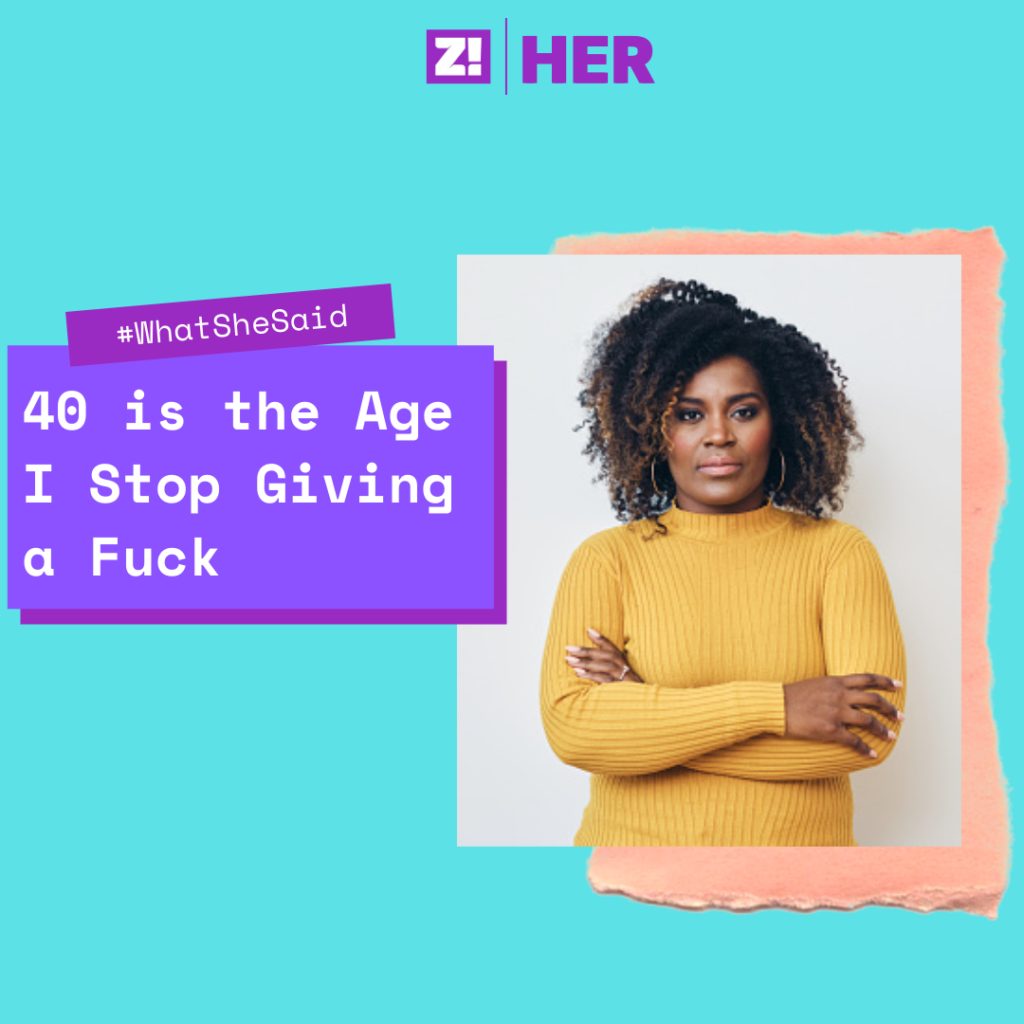
  • Navigating life as a woman in the world today is interesting. From Nigeria to Timbuktu, it’ll amaze you how similar all our experiences are. Every Wednesday, women the world over will share their experiences on everything from sex to politics right here. This is Zikoko’s What She Said.

    Today’s #ZikokoWhatSheSaid subject is Meye Ebie, a 40-year-old Nigerian woman. She talks about how she found out she may never have kids, the dating scene for black people in Canada and what enjoyment looks like at 40.

    What’s something you love about turning 40?

    Not giving a fuck anymore. Not about marriage, not about kids, all I have to do is focus on myself. I’m tired of degrading my peace trying to date men. The Canadian dating scene hasn’t been the best experience for me either, especially with these 40+ men.

    LOL. Let’s start from the beginning. What was the dating scene like while you were in Nigeria?

    I’d say the guys back home were much more respectful. At least, they’d feed you. Here, people assume you’re after their money. No one wants to go to a restaurant. They’d rather meet up at a park, and that’s no different from going to walk my dogs. It’s a waste of time.

    I spent my 20s in Nigeria, and the guys actually cared to impress me then. I was a hot cake too. They’d buy me gifts and chase me for weeks just to get one date. That’s how it should be, but men here want to skip all of that.

    Lol. Did you have any serious relationships back then?

    Oh yes. I had one when I was 28. He is three years younger, but I was sure I would’ve married him if I didn’t have to leave for Canada. He wanted to make a long-distance relationship work, but I wasn’t interested. I felt distance would eventually end the relationship. Doing it earlier was better.

    Now, he’s married with two kids and we’re still on talking terms. I loved being with him because It never felt like he was younger than me. We had conversations I wish I could have with the men I’m meeting now. He talked about his dreams; I knew exactly what he wanted from life. There were no games.

    Is that something you think is missing from your dating life right now?

    Yeah. It’s like men my age are having a mid-life crisis and want to be young and free. What I want right now is a man who can hold a decent conversation. Not just a night of drinks and sex, then it’s all over. I want to laugh, go dancing and have a genuine connection. I’m tired of wearing expensive makeup and dressing up to meet boring men.

    LOL. I’m sorry it’s been tough on the streets.

    When I moved to Canada in 2013, I was 30. My seven older siblings and friends were already badgering me about meeting someone, and I was worried time was running out too. Being in a new space didn’t make it easier to find someone after my last relationship ended. The easiest way to meet men was online because I was adjusting to my new life.

    I was living with my older brother in Alberta and shuffling between classes, watching my older brother’s kids and trying to earn money on the side. There was no time to go out and meet new people, so I tried dating apps. At first, I was focused on dating only black men.

    How did that go?

    That was a big mistake. Whether they were Nigerian or Ugandan, the African men were all the same.

    Like the Nigerian man I dated when I was 32. I’d been in Canada for two years at the time. I thought being with him was great because of course we shared the same culture, so I assumed our values were the same. A few months into the relationship, it turned out he was married and had kids back home. I even found copies of his marriage certificate and a kid’s birth certificate in a drawer, and he still tried to deny it. He spent the next week calling and crying about how sorry he was. 

    LOL… And after that?

    The next was a year later and a  guy from Haiti. I knew he had grown kids, but while we were dating, a newborn popped up. I confronted him, and his offer was that I should be his fifth baby mama rather than leave. I didn’t have the energy to be upset at that point, so I asked him to drop me at home and never contact me. As usual, he called a week later to cry and explain.

    It always ends in tears. 

    Then the following year, there was the Hawaiian guy with three children from his ex-girlfriend. I can’t blame him because my instincts told me to run from the beginning. That was the last time I dated a black or brown-skinned man. 

    My friends tried to make me go on some blind dates, but desperately hooking me up just never worked out.

    So were the white guys better?

    LOL. I did have one decent relationship when I was 33. We met on Facebook at a time when I felt even lonelier than I had when I first moved to Canada. I’d moved out of my brother’s house to get more time to myself, and worked at a department store I hated. The endless loop of going to work and coming home made me sad. I eventually got two dogs, but I still wanted to be with someone.

    So when this white guy started sending texts on Facebook asking about my day, it felt good. As things started to get serious, I made it clear to him that I wanted a relationship that would lead to marriage. He didn’t object, so I committed myself to him. 

    Awwn… Sweet

    For the first three years, sure. After that, I realised he was a douchebag. All he wanted was a partner to live with, cook and clean after him. A housekeeper with relationship perks, essentially. All the talk of wanting to marry me suddenly seemed unreasonable to him. I didn’t have any more time to waste and that ended the relationship in 2018. 

    I’ve been single ever since, dealing with the ups and downs of dating apps. 

    LOL. Is it better now that you’re older?

    Not at all. 40+ men are out here looking like grandfathers and expecting to date an Agbeni Darego at their age. It doesn’t make any sense. The worst part is how they play mind games.

    Take my last potential date for example. He was a white older man, and we’d been chatting for a while. When we finally wanted to meet, he kept talking about seeing me during the week. Since I have a busy schedule with a job and school, I asked him to choose a specific date to plan my week out. Suddenly, he got defensive. His response was, “What if things don’t work out between us? Why waste time planning?” 

    That sounds weird.

    It was. I didn’t understand why he was on a dating app in the first place. The point is to go on dates to see what happens. After that, he went on about how he was hurt in his last relationship, but I’ve been on these apps for eight years. I wasn’t falling for that. 

    Why stay on the app for eight years if it hasn’t been great?

    It’s either that or nothing. I don’t trust my friends to hook me up, and I don’t have the energy to dress up to meet someone I’ve never had a conversation with. With online dating, it’s easier to screen people out of your life. 

    Like the guy I’m chatting with right now. He claims that he’s over his fiancée and wants to get into a relationship with me. I’ve asked him many times to explain why the engagement ended, but he has no tangible reason except, “It was her fault.” There’s no part that was his fault, and that already tells me he’s not serious. It’s better to meet those kinds of people online than to waste a date to find out. 

    LOL. I see.

    Besides, I’m not bothered that I’ll never find a man. I was a hot cake in my 20s, and I’m a hot cake now. 

    A baddie at 40. Love it! So 40 may be your best year at this point?

    LOL. Yeah, but the toughest transition into 40 has been accepting that I may never have kids. I found out almost two years ago when I was rushed into the emergency room. I was at work and started feeling extreme abdominal pains and couldn’t move. The doctors thought it was a gallstone that would eventually pass, but when I couldn’t walk without assistance for a week, they ran more intense tests. 

    That’s when they found the fibroids.

    I’m so sorry. 

    Thanks. One of the fibroids is located too close to my womb, so if I chose to do surgery this year, I could lose my womb in the process. I’ve always loved kids. I have five older sisters and two older brothers, and they all have kids of their own now. I took care of each of them at some point and always wanted mine too. Accepting that it may never happen was hard. At first, I was worried, scared but… I don’t know. There was anger, grief and finally, acceptance. 

    I’ve blamed God and myself these last two years, but fibroids aren’t something any woman can control or avoid. I had to come to terms with that reality. I have to fight for my health. 

    I’m sick of waking up every morning and feeling pain around my hips and waist like my grandmother. I’ve also realised that I don’t have to worry about the idea of not having kids so much.

    What do you mean?

    The only person that could’ve made this choice more emotional for me would’ve been my mother. She passed away in 2018, and she’d cry knowing I’ll probably never have kids. But without her, more grandchildren aren’t exactly a priority for anyone. My dad is 89 and has at least 10 grandkids. His bloodline is secured, so I have the space to do me.

    But you still want them, right?

    A part of me does, but I have my nieces and nephews. When that stops being enough, I can adopt or get someone’s sperm and go for surrogacy. The options are endless.

    My siblings and friends who are invested in me having kids have advised me to freeze my eggs, but the financial and mental stress involved isn’t worth it. I’m already in enough pain. I’m not interested in the hormonal injections and egg retrieval process. All because I want to create life? No, please. The unending badgering about marriage is enough stress. I want to be single and happy in peace right now.

    I just turned 40, and I’d like to focus on enjoying that.

    What does “enjoying 40” look like for you?

    Beyond accepting that I may never have kids and not giving a fuck about that or marriage. The beauty of 40 is that it can be anything I want it to be. 

    Right now, I’m trying to get another degree, so I can get out of my department store job. I want to give myself a lot more options than I’ve had in the past. There’s so much life ahead of me, and that’s enough to look forward to every day.

    If you’d like to be our next subject on #WhatSheSaid , click here to tell us why

  • Bone marrow transplants can help people with life-threatening blood diseases. However, a critical requirement for the success of this treatment is the availability of a Human Leukocyte Antigen (HLA) donor who matches a given patient. Because of this, a common practice around the world is the establishment of institutions called bone marrow registries. The registries exist as places where willing donors can get screened and, if found fit, are able to donate HLA to those who need it.

    According to HealthCareTrends, over 150,000 children are born with Sickle Cell Disease (SCD in Nigeria each year, and about 40 million people suffer in total, making Nigeria the country with the largest number of SCD patients globally. Even with these high numbers, the country has only one bone marrow registry. It’s a non-profit located in Enugu that isn’t as effective as it should be due to a lack of funding and awareness. The registry has existed for eight years and contains less than 1000 people.

    Sickle Cell Disease (SCD) is one of the blood diseases that a bone marrow transplant can treat. So we’ve interviewed two SCD patients who live in Nigeria about their experiences managing the disease, how it affects their lives, and why they think the bone marrow registry is essential.

    Ngozi, 34

    I’ve lived with it for 34 years, and you can’t predict what your next day will be. You could be very active one day and be totally down the next.  It’s not anyone’s fault. Our parents didn’t know better because there wasn’t enough advocacy. But now that there is advocacy, I hope that the disease ends with our generation. 

    Growing up, and because I required many drugs and hospital visits, it seemed like I was the only one of my siblings spending my family’s money. There’s also the stigma that comes with growing up with SCD. People treat you differently when they find out you have it. As a child, people wouldn’t want to play with me or be my friend or even touch me because they were afraid I could drop dead at any moment. It also affected my schooling. In my university days, I wrote most of my exams in the hospital, which made many people assume that I was using it as an excuse to cheat. 

    Whenever I’m not at home or church, I’m at the hospital because of a crisis. In many Nigerian hospitals, nobody cares about SCD patients. Even the government isn’t making things better. We used to have an NHIS that set our treatments and drugs cost N15k. It’s now N45k. And even with that, you’re not assured of quality service. There are some SCD platforms where patients encourage and help each other with money. 

    I’ve always known that a bone marrow transplant can help SCD patients, but I also heard it has a 50/50 chance of working. I also heard that it doesn’t change the genotype but gives you a crisis-free life, which sounds like an excellent deal because the pains of a crisis are worse than labour pains.

    Henry, 28

    Living with SCD in Nigeria is tough because SCD costs a lot of money. Like me, those who work and earn enough set aside cash from our income for unforeseen health issues that will undoubtedly arise from time to time.  But the warriors, as we call ourselves, who don’t earn enough money are often at the mercy of loved ones and family.


    SCD affects a warrior’s life in different ways. When a warrior suffers a crisis, their family members and loved ones take them to the hospital and stay with them for the hospital visit, which might last up to a week. Even though it’s no one’s fault and no one can predict it, having their lives upended like this every few weeks can strain the relationship between a warrior and their family. SCD even affects employment. Going to the hospital often means more time out of work, and there is only so much time off one can take before a boss lets you go. Let’s not even talk about the effects on relationships.

    Most Nigerian hospitals don’t have haematology doctors. And the downside of a warrior going to just any hospital is that the doctors available probably won’t be trained to handle SCD patients. But in the national hospital where I go, a haematology doctor is usually called to treat SCD patients. The only problem is that the wait time might be extended because of the many patients waiting.

    I don’t know much about the bone marrow registry. I know there’s one in Benin, but I don’t know if people register for it. However, it would be highly encouraging for people to assist us warriors and donate stem cells to the registry. A high-performance liquid chromatography HPLC test determines eligibility to donate. More warriors would be willing to undergo surgery if the bone marrow registries have all they need in terms of donations.  

    One thing that both sickle cell warriors hope for is that more people learn about the bone marrow registry. With more awareness comes more funds (from the government or in form of contributions from the general public) and more stem cell donations from viable donors. If these things are in place, more warriors would be willing to undergo surgery. Click here to visit the Nigerian bone marrow website and learn more about the process.

  • There was a time I thought I couldn’t survive without eating roasted catfish. Gone are those days, my dear. With the way prices are going up, I’m convinced that I don’t need meat or fish in my food again. How about you though? Here are the foods ten Nigerians are cancelling for the sake of their account balances.

    1. “I’ve convinced myself that corned beef is too unhealthy to be almost ₦2k.”

    Ebere, corned beef

    Everyone talks about how expensive sardine is, but how about its cousin, corned beef? In 2015, I could eat it with every meal because the big can was just about ₦500. If I was frying eggs, cooking jollof rice, or just looking for something to munch, I’d add corned beef. Now, not even the smallest can of corned beef is ₦500. It’s triple the price, and I’ve convinced myself that it’s too unhealthy to eat. This isn’t life sha.

    2. “It’s not like my salary doubled, so why am I still buying grapes?”

    Uche, grapes

    I’m the kind of mum who wants her kids to have fruits every day. I stay in Abuja, and at some point, I could buy apples and grapes for my two kids for ₦4000, and it would last two weeks. Now, I spend the same amount for half the quantity. It’s not like my salary doubled since January 2022, so how can I keep up? I’m convinced they can do without grapes. After all, Ribena has vitamins too. At least, a carton can last for two weeks. 3.

    3. “I really don’t need shrimps to survive.”

    Lanre*, shrimps

    Shrimps used to be my go-to seafood. There was a time I couldn’t live without them, but look at me now, thriving in Bubu’s economy. Last year, a small portion of shrimps was ₦1200, but in a matter of months, they’re going for ₦1900. That’s a no for me, please.

    RELATED: 8 Things That Taste Better When They’re Free

    4. “I can’t look at the price of turkey without getting angry.”

    Pam*, turkey

    The price of turkey has doubled in the last two years. I thought not eating it would be the death of me, but seeing how much it costs makes me so angry now. I spent ₦3600 the last time I closed my eyes to buy a kilogram of turkey. I can’t keep doing that. Since chicken breasts cost the same thing, I’ve decided that it’s a healthier option for me.

    5. “I don’t mind if soda kills me.”

    Linda*, black Bullet and 5Alive Berry Blast

    Black Bullet once retailed for ₦350. The moment the price reached ₦800, my alcoholism was cured right away. The other thing is 5Alive Berry Blast. I would drink it every time, forming “it’s healthier than soda.” When it reached ₦500, I realised that soda can kill me, I don’t mind.

    6. “I went from eating steak bi-weekly to only monthly.”

    Maxwell*, steak

    I used to buy steak bi-weekly for about ₦7k – ₦15k, from supermarkets around Lagos. Now, I buy it online, and to be fair, the price isn’t significantly cheaper than in the stores. Also, I can’t keep eating it every other week, so I’m down to just once a month. 

    7. “I can’t think of buying suya anymore.”

    Chinwe, suya

    There was a time I could get a stick of suya for ₦500. Right now, that amount buys like six small pieces of suya, and that’s if the vendor likes you. They don’t even garnish it with onions and cabbage anymore. How am I supposed to drink garri without decent suya? Even the milk I’m trying to maintain is getting so expensive.

    RELATED: Where To Get The Best Suya in Lagos

    8. “Until the price comes down, I’ll live without plantain.”

    Chris, plantain

    In 2016, ₦200 could get me enough plantain to eat with beans, and still cook into a porridge the next day. It’s 2022, and I can’t even buy a banana for ₦200. I didn’t actually stop buying plantain with my money until ₦1000 became useless though. I love plantain, but I’ll wait for the price to come down.

    9. “Granola for ₦3k can’t work for me.”

    Chuka, granola and pringles

    How pringles went from ₦600 to ₦1200 in a matter of months still shocks me. I can’t even imagine swiping my card to pay for it anymore, so it’s been almost six months since I had any. Then, there’s the granola that I used to eat for breakfast every day of my life. When it went up to ₦3k, I knew that the mallam’s bread and fried eggs close to my office were good enough for me.

    10. “I’ll fully break up with shawarma when my guy starts selling to me at the normal price.”

    Mark*, shawarma

    In 2019, I was working in Yaba, Lagos, and shawarma cost ₦400 or ₦500. I’d buy at least three almost every night! In 2020, it jumped to ₦800 or ₦1k, and I stopped buying so much. Eventually, it went up to ₦2k in Lagos, and by the time I moved to Anambra in 2021, it cost almost the same there. My only saving grace now is one particular shawarma guy. He sells to me at a special price, two for ₦1600 each, because I’m consistent. The day he decides not to sell, it’s all over.

    ALSO READ: “Nigerian Business Owners Are Going Through Another Pandemic” — Let’s Talk About Inflation in Nigeria

  • I complain a lot about going to the same restaurants and eating the same meals (side-eyeing you, pasta) over and over again. But I never do anything about it because I’m not a big fan of drastic change. 

    But recently, I started thinking about the different Asian restaurants in Lagos that I’d like to visit —  Chinese, Japanese, and Thai restaurants. I’d finished writing my list when I remembered that I hadn’t added any Korean restaurants. But I didn’t exactly know any. This made me wonder about the Nigerian K-pop community, how many people in Lagos have visited Korean restaurants and what their experiences were like. I only knew one person, and I decided to reach out to her.

    Chidinma Igbokweuche, a writer, producer, director by day and a tech sis at night, is a lover of almost everything Korean. She’s so in love that she’s learning the language and learning about the country from Nigeria, and she’s hoping to go to film school there someday. But for now, she shares how she’s doing her best to experience Korea in Nigeria. One of those experiences was Korean food tourism in Lagos.

    As told to Dammy Eneli

    ………………………………………………………………………………………………………………………………………………………………………………………………..

    I always say that I’m a Korean who got born in Nigeria by mistake. I’ve loved K-dramas since 2009 and in 2018, I fell in love with  BTS. I’ve seen several kinds of Korean food in their movies and series, and I’ve always wanted to try them.  So, in 2020, when I randomly found a restaurant named Huahan in Ikeja, while Googling, I figured I might as well go and try the food of my real country. 

    I was ready to go there as soon as possible, despite the fact that I live in Victoria Island and the restaurant is far from my house. On one of the days when I felt I deserved good things, I called my fellow K-drama-obsessed group of friends and we all went to have a taste of the cuisine.

    Getting there and falling in love with the ambience 

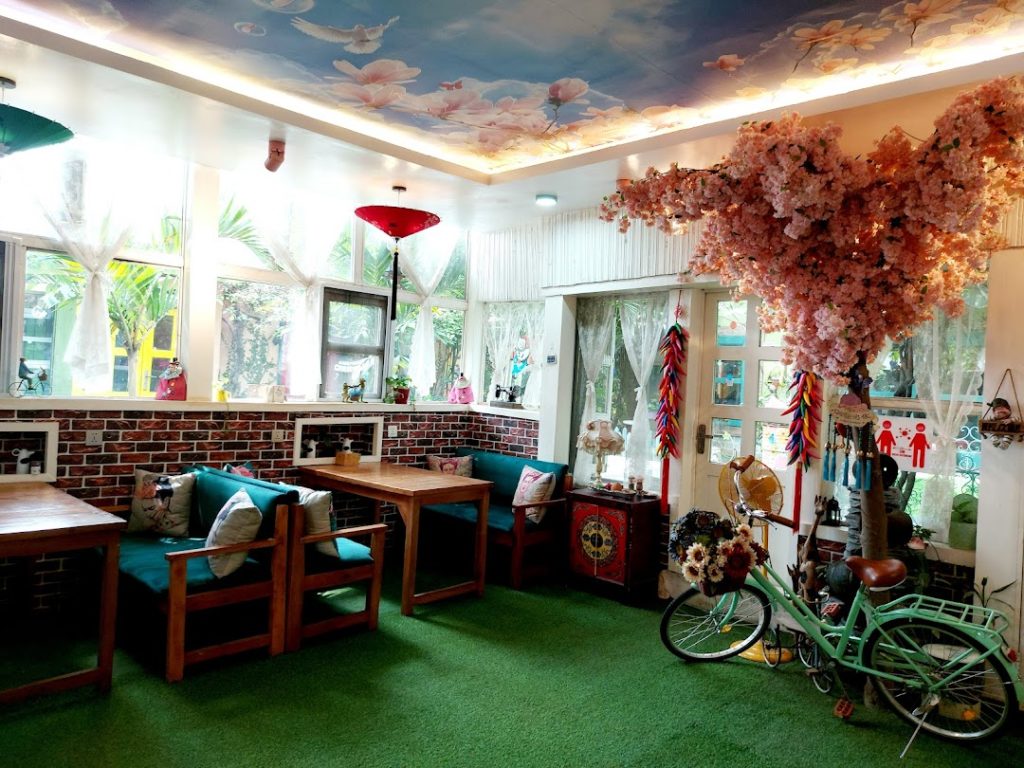
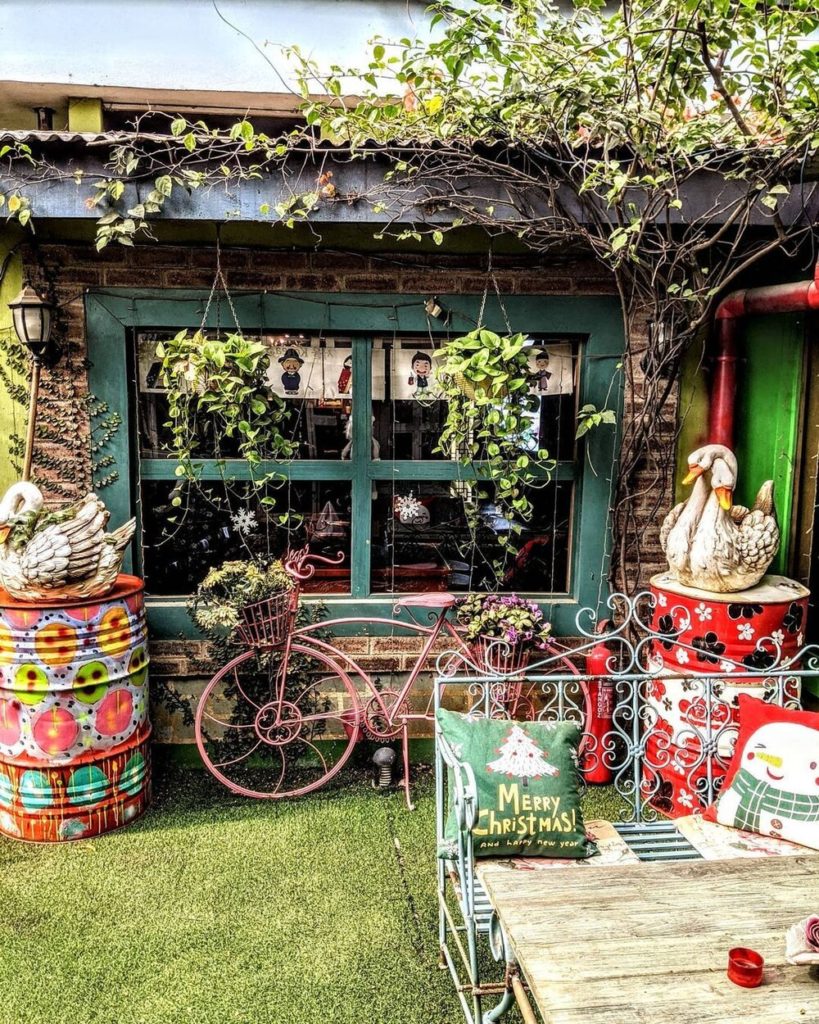
    I haven’t been to Korea yet, but from the many movies and series I’ve watched, I know that one of the most common trees in Korea is the cherry blossom.  And while the cherry blossom at Huahan is artificial, it does enough to evoke that classic Korean ambience. There are many (many) other artificial plants on the ceilings, walls, and tables popping with bright and muted colours complementing one another. Korean restaurants and stores in Korea are very colourful; they always have many unique pastel colours all over the space and Huahan has exactly that. It’s as close to Korea as possible in Lagos.

    The Food that made me feel like I was in a K-drama

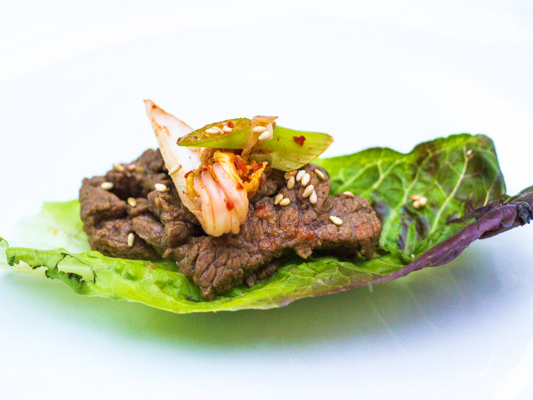
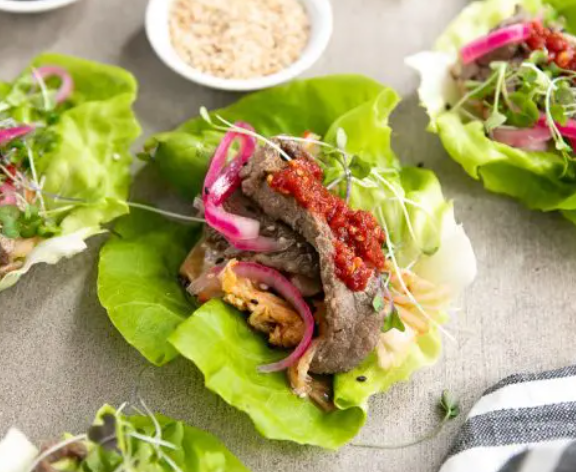
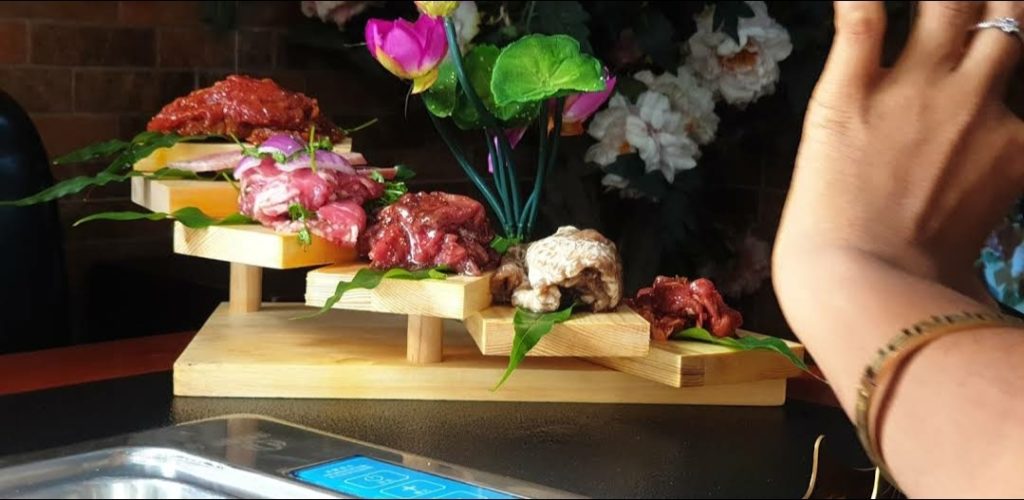
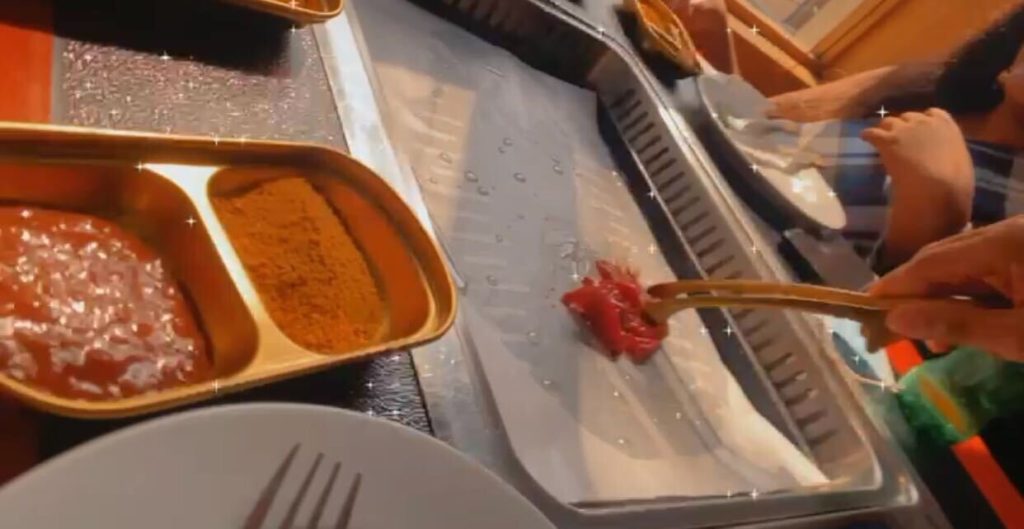
    In  K-drama restaurant scenes, there’s this thing restaurant guests do where they grill meat themselves — an experience I was looking forward to. One of the things I ordered was the meat platter, which I grilled myself. The table my friends and I sat on came with a grill installed in the middle of it (this is how every table at every Korean restaurant is). The waiter brought the raw meat, and I began to grill it. The meat was thinly cut so it didn’t take much time to grill. I used the cooking tongs to move the meat around the grill till it was done. After, I made a lettuce wrap. Lettuce wraps are like tiny meat tacos; they’re made by adding a slice of the grilled beef to a small wrap of lettuce, alongside some garlic, onions and Kimchi. After adding everything, I wrapped up and dug in.   

    Korean food korean restaurant

    For drinks, I ordered Soju, which is a Korean alcoholic spirit, and it was quite strong. It’s like the Korean version of the Nigerian kai-kai.

    RELATED: Every K-Drama Fan Wants to Try These 7 Dishes

    The one thing that surprised me was the VAT (Value Added Tax). It was ridiculously high. The VAT was 22% of our total bill, and it dramatically increased our bill. While we were eating our food,  we were also thinking about how high your bill was because of the tax.

    But of course, I still go there as often as I can because I’m obsessed and I’ll always take any chance to eat Korean food. After all, better food, na money kill am. I went there for my birthday in 2021 and I also went there last month. This is a place that takes me as close to Korea as much as possible, so until I finally go to my true country, they can collect all my money.

    ALSO READ:10 Best Korean Series You Must Watch

  • WATCH TRAILER

    On the 4th of April 2022, Telemundo premiered a brand-new telenovela series titled The Scent of Passion (Café Con Aroma de Mujer) which airs every night at 9 p.m WAT on DStv Channel 118 and on GOTV Channel 14. The telenovela stars an acclaimed cast led by fan favourites William Levy, Laura Londoño and Carmen Villalobos. 

    The Scent of Passion follows the love story between a local coffee picker, Gaviota (Londoño), and the son of a rich farm owner, Sebastián (Levy). The series shows how these two characters must overcome the resistance of Sebastian’s family, his past relationship and the challenges imposed by society due to the clash of two different worlds.

    Gaviota and her mother visit Hacienda Casablanca to pick coffee from the second harvest of the year. During this planned visit, Gaviota saves the owner of the farm, Octavio Vallejo, from kidnappers by risking her life to create a distraction. Octavio then rewards Gaviota and her mother with one hectare of his land as a reward for saving his life. As the episode proceeds, Octavio suffers a heart attack and dies. His son, Sebastian must now return from New York to manage the business. As Gaviota tries to retrieve her reward, she meets Sebastian, and an instant connection develops between them. With both parties coming from different walks of life, will their love stand the challenges thrown at them? 

    This classic love story has kept us glued to our screens with drama, romance, and thrilling scenes. The great love triangle features Sebastian’s bitter ex, Lucia, who will not accept that her relationship with Sebastian is over. As Sebastian and Gaviota try to build their relationship, Lucia continues to make efforts to win Sebastian back. Her efforts are supported by Sebastian’s bitter family who cannot allow their son to get engaged to someone who is a coffee picker. Another interesting triangle involves Sebastian’s mother who prefers Ivan to manage the family business over Sebastian.  

    Over 10 episodes in, The Scent of Passion promises to be that engaging love and heartbreak story that Nigerians love so much. We have seen many telenovelas, but this has a fresh taste to it that makes it, unlike any other TV dramas. The Scent of Passion is the remake of a classic love story, but this new version incorporates modern-day elements that makes it even more exciting to watch!

    You can tune in daily to watch The Scent of Passion on Telemundo at 9 p.m WAT on DStv Channel 118 and on GOTV Channel 14.

    Follow Telemundo Africa on Instagram and Facebook to stay updated.

  • Graduating from university is a major milestone in a person’s life. A lot of people look forward to it because they’re looking forward to exploring what the world out there is like beyond school. I spoke to four Nigerian graduates who finished uni in 2020, about how life has been treating them since they left the struggle that is Nigerian universities and this is what they had to say.

    “I have two businesses but neither of the businesses is making much money at the moment”

    — *Chidinma, 22

    Studied: English (Literature major), Babcock University 

    I graduated in June 2020, and my life has been a mess since then. I was excited about graduating; I couldn’t wait to be done with school. I didn’t exactly have high expectations for life after school: I wanted to get an internship at a media house, I wanted to go for NYSC and then come back and continue working at a media house. I wanted to earn real money, take care of my family and live the baby girl life. What a joke. 

    A managing director of a popular media house in Nigeria promised me an internship once I graduated, only for him to ghost me. That was one of the first ways that life showed me pepper. After many interviews, I finally got a job in October 2020, but unfortunately, I ended up having the worst boss ever. He’d ask me to do ridiculous tasks that had nothing to do with my job description. I swept office and got sent to buy food. The last straw was when he asked some of my colleagues and me to close the office for the day and come over to his house to clean it. 

    After that, I got a teaching job at a school, but the school owed salaries month after month and they also treated staff terribly, so I left. I decided to go the entrepreneur way. 

    I now have two businesses, but neither of the businesses is making much money at the moment, but I’m pushing through. I’m starting my NYSC with the next batch that’s coming up in July 2022. After my service year, I want to either leave this country or marry a rich man, because a girl is tired. 

    RELATED: 5 Fears a Lot of Nigerian Students Have About Graduating From University


    “Why does all my money go into buying essentials I need to survive?”

    —*Tolu, 22

    Studied: Psychology, Covenant University 

    I was done with school in November 2020, but because of COVID, I officially graduated in May 2021. Schooling during the pandemic wasn’t easy, and I was tired. I couldn’t wait to be done with school. 

    In my third year at university, I had already started thinking about life after graduation. I knew I would have to do NYSC before getting a full-time job, so I planned to take courses related to my field and learn some new skills while serving. I started NYSC in May 2021 in Akwa Ibom, and I got a job in June at a psychiatric home. I was happy when I got the job because I wanted to work in a place that would allow me practise psychology, but honestly, it’s been tough. 

    I knew leaving school, working and adulting wouldn’t be easy and I had mentally prepared myself for it, but the fact that I’m working and most of my money goes into buying essentials I need to survive is the ghetto. I want to use my money for enjoyment. I knew I’d be responsible for myself, but nobody ever tells you that it’d be this difficult. 

    I’m finishing my NYSC this April. I plan to get a virtual assistant job for about six months while I take a course about mental health. Then, at some point, I want to start applying for jobs. I’m looking at jobs in a clinic or HR firm. Hopefully, it works out.

     ALSO READ: 17 Things That Accurately Describe Life Just After Graduating From University

    “Apart from the money, I get the chance to live my life beyond the walls of a single place.”

    —Moses, 26

    Studied: Mechanical Engineering, Lagos State Polytechnic 

     I graduated with one of the highest grades in my class. I was optimistic about life after graduation, but not too optimistic as the degree I hold is a Higher National Diploma (HND). Do you know how hard it is to get a job as an HND holder without NYSC?

    I couldn’t wait to graduate, especially because I was schooling and working a part-time job at the same time. I was excited to leave the stress of school behind and focus solely on working and earning proper money. 

    Thankfully, I didn’t really have to look for a job. A friend that worked in an oil and gas firm in Edo state called me in April 2021 to send my CV, and that’s how I started working in June. I haven’t done NYSC because I never liked the idea of going off for one year and then coming back to begin job hunting. I’ve always planned to get a job first and then serve so that I don’t have to look for work for too long once I’m done.

    So far, I like working and I like the world outside of school. I miss school sometimes, and school had its fun moments, but school gets boring. You see the same old faces, have classes, and it’s all just the same cycle at some point. 

    But in the outside world, you meet different people, and so you have so many different experiences. Apart from the money, you get the chance to live your life beyond the walls of a single place.

    “I think the wildest thing about adulting and work-life for me so far is how cynical and unhappy I’ve become.”

    — *Chibuike, 22

    Studied: Electrical and Electronics Engineering, Covenant University

    I had very high expectations for life after graduation. I expected to get a job immediately after graduation and to be earning ₦500,000 before the end of 2021. I also expected to work remotely. I didn’t want to deal with the ghetto that’s traffic and didn’t want any anxiousness over lateness. Plus, I wanted to be very flexible with work, to do things on my own time. In summary, I expected my work life to be very soft. 

    My work life is anything but soft. I have the flexibility I want, but everything else is stressful and I’m struggling. NYSC is one of the things that’s making my life a living hell. Ever since my relocation from Benue to Lagos didn’t work, I’ve been suffering. 

    I think the wildest thing about adulting and work-life for me so far is how cynical and unhappy I’ve become. I feel like a shell of my former self. I just get through each day after the next. Even things I used to enjoy feel stressful now. I have a Netflix subscription, but I haven’t watched a single show in months because I’m either working or sleeping or fighting for my life in Nigeria.

    I’ll be done with NYSC in a few weeks, and I’ll be moving back into my parents’ house. This should give me some peace of mind. Maybe I’ll be able to plan my life and my time better when I’m not worrying about a thousand things.

     ALSO READ: 10 Things to Do With Your Life Immediately After Uni