Is your life always running helter skelter? Does it seem like your guardian angel is never on seat? Well, he may be a Nigerian politician.
Take this quiz to find out which Nigerian presidential candidate is your Guardian Angel.


Is your life always running helter skelter? Does it seem like your guardian angel is never on seat? Well, he may be a Nigerian politician.
Take this quiz to find out which Nigerian presidential candidate is your Guardian Angel.
On June 30th, 2022, our coloniser the United Kingdom’s Home Secretary, Priti Patel, announced the signing of an immigration deal with Nigeria.
She tweeted, “Our new landmark agreement with Nigeria will increase the deportation of dangerous foreign criminals to make our streets and country safer.”

The deal is part of the UK’s New Plan for Immigration policy, and Patel’s announcement caused some unease in Nigeria, for obvious reasons.
Why would Nigeria import dangerous foreign criminals to make the UK safer? It’s not like we don’t already have our own steady supply of criminals just roaming the streets.

The UK is easily a favourite destination for legal and illegal immigrants from all over the world. It has one of the world’s oldest monuments, gave us James Bond and there’s always Royal Family drama so we understand the appeal.
Sometimes, the foreigners landing in the UK may commit crimes and get into trouble with the law. Such an offender is classified as a foreign national offender (FNO) by the New Plan for Immigration. If the foreign offender is sentenced to a prison term of at least 12 months, they get a bonus punishment — automatic deportation.

This means once you trigger that release clause, you should be ready to return to the trenches your country of origin when you finish your sentence, or even before then.
But here’s where the UK’s headache sets in. As outlined in the New Plan for Immigration policy statement, foreign national offenders aren’t interested in returning to their own countries.

So foreign national offenders use the instruments of the law to file claims in courts to delay their removal or even nullify it, if they get lucky. This was how the UK ended up with 10,000 undeportable foreign national offenders as of 2020. The UK also has 42,000 foreigners whose asylum applications have failed but have refused to leave.

ALSO READ: “When I Got to the UK, I Realised the Meaning of ‘It’s So Cold Outside’” – Abroad Life
To be clear, the “dangerous foreign criminals” the UK will be sending to Nigeria are Nigerian-born, not random citizens of other countries as was initially feared.
The agreement between the two countries also affects immigration offenders, not just convicted criminals. It speeds up the process of removing Nigerian-born convicted criminals and illegal migrants.
The UK has already deported 13 Nigerians as a result of the deal. Eight of the deportees were convicted criminals, and the remaining five were described as immigration offenders. The UK government has signed similar deals with Albania, Ghana, India and Serbia.

The Nigerian government hasn’t released any public statement addressing the UK deal, so it’s impossible to speculate what the thought process — if any — behind the agreement was.
But the New Plan for Immigration policy statement was clear that the UK would pressure countries into accepting their convicted citizens in an expedited manner.
The UK government could enforce stricter control of UK visa availability to any stubborn country. We can guess one or two reasons why that’s the kind of thing to turn a few heads in Abuja. Hint: It starts with “m” and ends with “edical tourism”.

ALSO READ: How to Stay Safe in Nigeria — Tips from the Nigerian Police
On July 1st, 2022, Nigeria and Germany reached a deal for the return of over 1,000 Benin Bronzes to their roots. These artefacts are part of the collection of historical metal plaques and sculptures stolen by British soldiers who sacked Benin City 125 years ago.

In 1897, a British force of 1,200 soldiers attacked Benin City after locals killed British members of a previous expedition party to the ancient city. The vengeful British force came to steal, kill and destroy the prosperous Benin Kingdom. But they didn’t stop there; they also looted the Oba of Benin’s palace of all its valuables. British soldiers stole thousands of Benin Bronzes and shipped them off abroad where many of them remain today, 125 years later.

First, it’s not simply the fear of God.

The advocacy for the return of stolen art has gained momentum over the past decade. Colonial spoils of war still being displayed in foreign museums have started to become an ugly reminder of their past. Benin Bronzes are some of the most prominent poster faces for the campaign that has hit the art industry to return stolen property.

Germany wasn’t directly involved in the looting of Benin, yet hundreds of artefacts ended up there through trade and donations. But the European giant is one of the first to admit the shame of the Benin expedition and actively attempt to correct course by returning them to their home country, Nigeria.
The return of the artefacts is a joint effort between the German government and museums that are housing the Benin Bronzes. The museums are members of a multilateral group known as the Benin Dialogue Group. The group’s main objective is the cultural restitution of stolen West African art. The Benin Dialogue Group was established in 2007 and includes other European museums, the Nigerian government and the Royal Court of Benin.

Global institutions including in the United Kingdom and the United States of America have been gradually returning their collections of Benin Bronzes and other Nigerian artefacts over the past few years.
Nigeria’s Minister of Information and Culture, Lai Mohammed, described the July 1st deal as the “single largest repatriation of artefacts anywhere in the world.” What the return of Germany’s haul does is put additional pressure on other institutions and countries that can be doing better to soften the blow of a horrendous crime committed 125 years ago.
The biggest beneficiary of the Benin heist remains the British Museum which still houses the largest and most valuable collection of Benin artefacts. Yet, it remains reluctant to take a progressive stand on the return of the artefacts to Nigeria where they were stolen.
The Nigerian government wrote an official demand to the museum in October 2021 requesting the return of the artefacts. The museum’s response?

The British Museum’s most innovative compromise in the past is the suggestion to loan the artefacts back to Nigeria on a temporary basis.

The German deal is a good pressure point to force the conversation of complete reparation with the British Museum and other global institutions still holding out.

In the words of the German foreign minister, Annalena Baerbock, “This is a beginning to right the wrong.”
The returning artefacts will be displayed in museums being built or renovated in Nigeria. For example, in 2019, the Benin Dialogue Group, pledged to support the construction of the Edo Museum of West African Art (EMOWAA) in Nigeria. The project is led by the Legacy Restoration Trust (LRT), a Nigerian nonprofit organisation, in partnership with the British Museum.
The EMOWAA project seeks to reunite Benin artworks currently scattered all over the world, and the German deal will be remembered as one of its pivotal moments. Maybe the British Museum will read the room and take a cue.

ALSO READ: 4 Artefacts That Were Stolen from Africa
Insecurity is one of the biggest threats to the Nigerian way of life as we know it. Thousands of people are being killed by terrorists all across the country, and security agencies appear too overwhelmed to contain them.
This is the dire situation that compelled the Zamfara State government to announce a new plan to arm civilians to defend themselves. The government plans to put “basic weapons” in the hands of 9,500 residents, especially farmers, so they can have a fighting chance.
The problem with Zamfara’s plan is Nigeria is notoriously strict on gun ownership. Even though the constitution doesn’t have a hard line on the topic, bearing arms is mostly restricted to members of the Armed Forces.
Notwithstanding the red tape, Nigeria still has a guideline for how ordinary citizens can obtain a licence to legally own guns.
According to the Firearms Act, anyone who falls under the following categories shouldn’t even dream of getting a licence:
Too young to shoot.
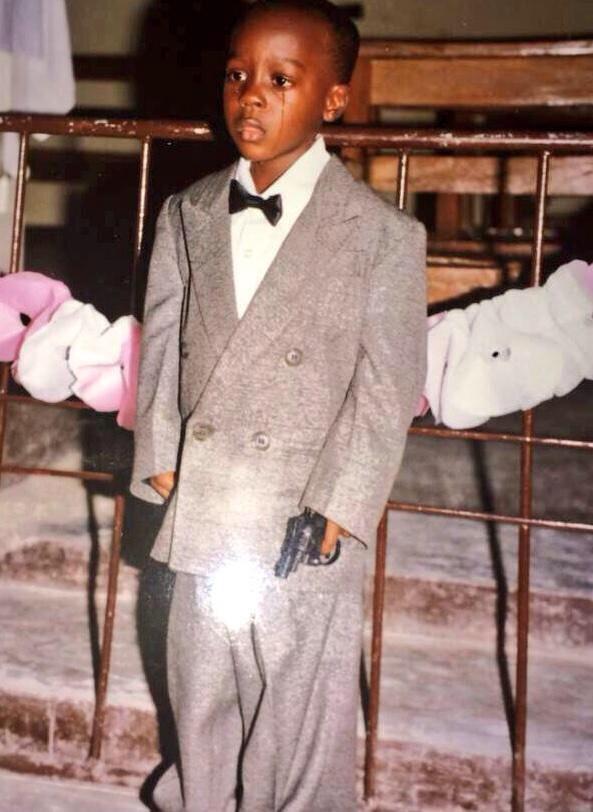
Well, no one would want someone like that owning a gun.
Maybe your head used to touch on days that end with “y”.

It’s kind of important to be hitting the target when shooting.
Because the Nigerian system doesn’t forgive and forget, and we understand this one.
To apply for a licence to own a gun in Nigeria, you have to face the Nigeria Police Force.

The application requires basic personal information and a certified medical report. If the licence is granted, the applicant has to register the serial number of the purchased firearm with the police, and the licence must be renewed annually.
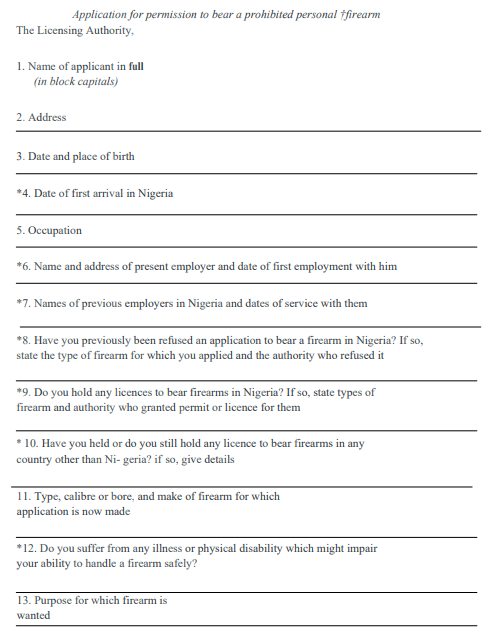
But applying for a gun licence isn’t always smooth sailing for a number of reasons.

The right to own a gun isn’t protected by the Nigerian constitution, so the police aren’t obligated to grant you a licence just because you asked nicely. Even if you tick all the right boxes, the response can be:

Which is exactly what it says in Section 6 of the Firearms Act. But if that rejection happens, an applicant may petition the president to reconsider. Good luck with that sha.

By applying for a licence to become a gun owner, an applicant vows to abide by these six specific responsibilities:
1. Storing the firearm in a safe place
2. Not allowing the firearm to be used by someone else
3. Producing the firearm and licence when required by a police officer
4. Notifying the licensing authority if the firearm is lost, stolen or destroyed
5. Notifying the licensing authority and surrendering the firearm to a public armoury when the licence holder travels abroad
6. Notifying the licensing authority when the licence holder changes residential address
The Nigerian government isn’t favourably-disposed to civilians bearing arms despite the escalating insecurity in the country. The Zamfara State Police Command has already announced that it won’t grant licences as ordered by the government.
So, even though there’s a process to becoming a legal gun owner, the government isn’t too invested in its success. It’s not impossible to become a legal gun owner in Nigeria, it’s just not as easy as subscribing for Netflix.
ALSO READ: Do You Know About Nigeria’s Firearms Act?
One day you’re a senator of the Federal Republic of Nigeria; the next day you’re a guest in a UK prison. That’s currently the (developing) story of Senator Ike Ekweremadu.

This guy.
Ekweremadu first won an election to the Senate to represent Enugu West senatorial district in 2003. He’s also Nigeria’s longest-serving deputy senate president, from 2007 to 2019.
But before he became a parliamentary Methuselah, Ekweremadu bagged a bachelor’s and master’s degree in law and also served in the Enugu State government between 1999 and 2002.
British media outfit, Sky News, reported on June 23rd, 2022 that Ekweremadu and his wife, Beatrice Nwanneka, had been arrested by the Metropolitan Police. Authorities accused the couple of conspiring to harvest the organs of a child in the United Kingdom (UK). They were charged to court for arranging the travel of a homeless Nigerian boy for an organ-donation operation in the UK.

ALSO READ: These Politicians’ Kids Are Taking Over from Their Parents
The Ekweremadus have four children: two sons and two daughters. Their UK prosecutors told the Uxbridge Magistrates’ Court that one of their daughters, Sonia, suffers from kidney failure. This made it necessary for her to get a kidney transplant to save her life.
It’s important to note that the average wait time for a kidney transplant from a deceased donor is two to three years in the UK. But this wait time drops down to between three and six months for a living donor transplant. Crucially, living donors must also be aged 18 years or older according to the UK’s National Health Service (NHS). But the Ekweremadus said:

In contravention of this requirement, the living donor procured from the streets of Lagos by the Ekweremadus is only 15 years old. The minor in question has been identified as Ukpo Nwamini David. The UK prosecutors told the court that the facilitation of his travel for exploitation took place between August 1st, 2021 and May 5th, 2022.
The Metropolitan Police’s Specialist Crime unit launched an investigation into the Ekweremadu family in May after detectives were alerted to potential offences under modern slavery legislation.
The two suspects were finally arrested on June 21st, 2022 at Heathrow Airport in London. Prosecutors said they were on their way to Turkey, still trying to make the organ donation procedure happen for their daughter.

Senator Ekweremadu and Beatrice have denied the allegations in signed statements their lawyers presented to the court. Ekweremadu’s lawyer, Gavin Irwin, said his client has led a blameless life as a public servant and can’t possibly be guilty of what he’s accused of. Beatrice also claimed she has an unblemished record and couldn’t be involved in illegal trafficking.

A letter has surfaced online showing Ekweremadu notifying the British High Commission that David was a potential donor for Sonia. But the UK’s issue appears to be David’s minor status which makes it impossible for him to be a donor.

The court has adjourned a further hearing of the case till July 7th, 2022. The Ekweremadus were also denied bail and will remain in prison until the adjourned date.

ALSO READ: How Senate President Ahmad Lawan Is Getting Served Political Breakfast
This movie is proof once again that the Nollywood industry can only get better. We can all agree that everything from plot to actors in Breaded Life was spot on, but only people that really paid attention to details will ace this quiz.
One thing about the Buhari government is that it’s never met a problem it can’t ban. It doesn’t matter if it’s souvenirs at government events or a social media company that won’t allow the president tweet whatever he wants.

The government’s hard-on for banning or censoring things was what informed the ill-fated attempts to pass anti-social media bills, to regulate the spaces where Nigerians more freely express themselves. Those attempts have failed so far, but the Buhari government works harder than the devil so it’s no surprise there’s a new attempt.

While Nigerians celebrated June 13th, 2022, as a public holiday in honour of the June 12th democracy day, the National Information Technology Development Agency (NITDA) made an announcement. This announcement was about a draft document for the Code of Practice for Interactive Computer Service Platforms/Internet Intermediaries and Conditions for Operating in Nigeria. It’s quite a mouthful, but the summary of it is, “Attention kids, we have some brand new rules for online platforms in Nigeria.”

Before diving into the meat of the government’s ransom demands, it’s important to note that much of the code is targeting the spread of “prohibited material” online. But what are prohibited materials according to this document? The list covers things that violate public interest, morality, order, security, peace and the rule of law. So…pretty much anything. Prohibited material could be amala slander, or calling the president an incompetent travel blogger.

Doesn’t matter if it’s a naming ceremony in Djibouti or a youth conference in Iceland, Bubu loves a good reason to travel.
So, what are these new rules that look like social media regulation, you ask?

Sure, this snitching won’t happen without a court order (wink, wink), but online platforms are to provide any information to assist government agencies investigate and prosecute users. It wouldn’t matter if your Twitter handle is @precious_catfish76432, Twitter would have to hand over all that backend identifying information you don’t know they have.

If you post online that “Pounded yam is the most overrated swallow in the world”, and a Nigerian government agency flags it as unlawful content (and, let’s face it, we all know you’re lying here), the online platform is obligated to delete that post within 24 hours. Any information deemed to have violated Nigerian law gets the chop.

The NITDA code also mandates online platforms to open up dedicated channels for government agencies to directly lodge complaints on content deemed to be unlawful or harmful to others. These platforms also need to write their findings and resolutions of complaints to the complainant.
ALSO READ: Lai Mohammed Is Itching to Give Facebook the Twitter Treatment

NITDA also wants the online platforms operating in Nigeria to give it the power to verify official government accounts. The agency wants to reserve the right to grant or withdraw approval of verification and dictate action to the platforms.
The government is mandating the physical presence of online platforms operating in the country. This includes registering as a legal entity and appointing a designated country representative so they know whose shirt to hold when a platform disobeys orders from above.


The government also compels the online platforms to conduct media literacy programmes, educating users on critical thinking and informed decisions when they encounter false information online. Okay, maybe this one isn’t so bad because we need to know how to spot misinformation, disinformation and mass-report lies like this:

Like all of the previous attempts at social media regulation in Nigeria, the NITDA Code is another vessel to undermine citizen engagement in the final frontiers where government control is limited. The blanket definition of terms like “prohibited material” gives the government an undue advantage to further suppress the freedom of speech in Nigeria. This code affects platforms like Twitter, Facebook, WhatsApp, Instagram, TikTok and Google.
Resist. The NITDA Code is still a draft copy for the public to review and offer feedback. You can email NITDA at info@nitda.gov.ng to give them constructive feedback. Before the code becomes operational, you can also contact your National Assembly representatives here and compel them to move a motion on the topic in the chambers. Your freedom to continue to say “Buhari has been a bad boy” depends on this repackaged social media regulation bill ending in the dustbin.

ALSO READ: 5 Nigerians Laws That Shouldn’t Exist
Many Nigerians say coffee is trash, but that’s because they lack good taste. This article is for those who want to live a little. I’ve spent the last two years trying out coffees at home and at cafes, so I know what I’m talking about. What’s the best coffee for a Nigerian in Nigeria? Find out at number one.
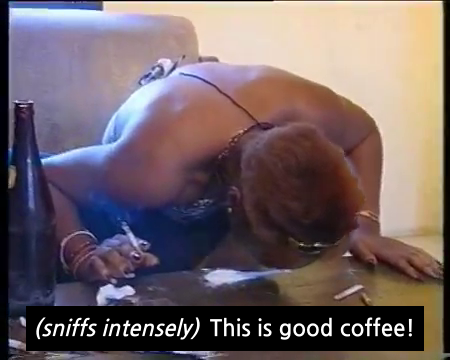
If you drink Nescafe, you might as well sniff crack. This coffee tastes like burnt cardboard dried under Abuja sun then ground into pieces and sold in a container. I understand Lagos people that drink this because they need all the energy they can get to sit in traffic all day. But for people who live elsewhere (or Lagosians who work from home), why put yourself through this??
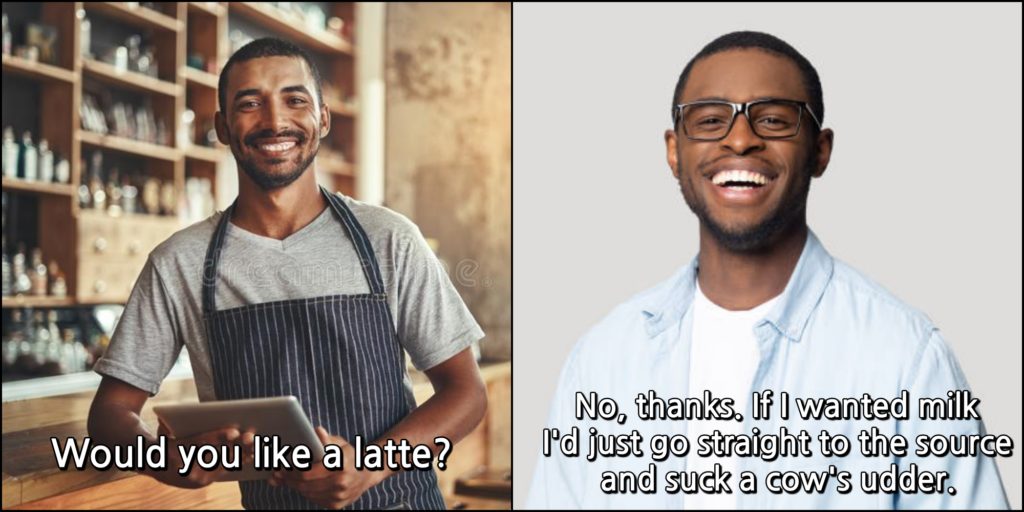
Just drink milk.

Because why drink coffee when you were colonised by the British? And then why drink British teas when you have coconut head?
The spellings of cappuccino in this article were brought to you by Grammarly. And that is this coffee’s first problem; the name is too difficult to spell. The second problem is that it has no character and is a forgettable bitch. It almost didn’t make this list, even.
I really don’t think anyone should be drinking anything with “American” in the name. It’s giving self-hating Nigerian and goes well with a spoonful of the real Nigerian dream: to be better than your neighbour. Everything is okay as long as someone is suffering more than you. I see you, Americana.

Just drink milk with ice.
This would be number one if it wasn’t so hot. Still better than most.
No amount of air conditioning can convince me that people who drink hot coffee in this country are not in an unhealthy relationship with suffering. The weather is too damn hot. The right amount of sun, whipped cream, and coffee makes this taste like hot ram suya on a rainy evening in Kubwa.
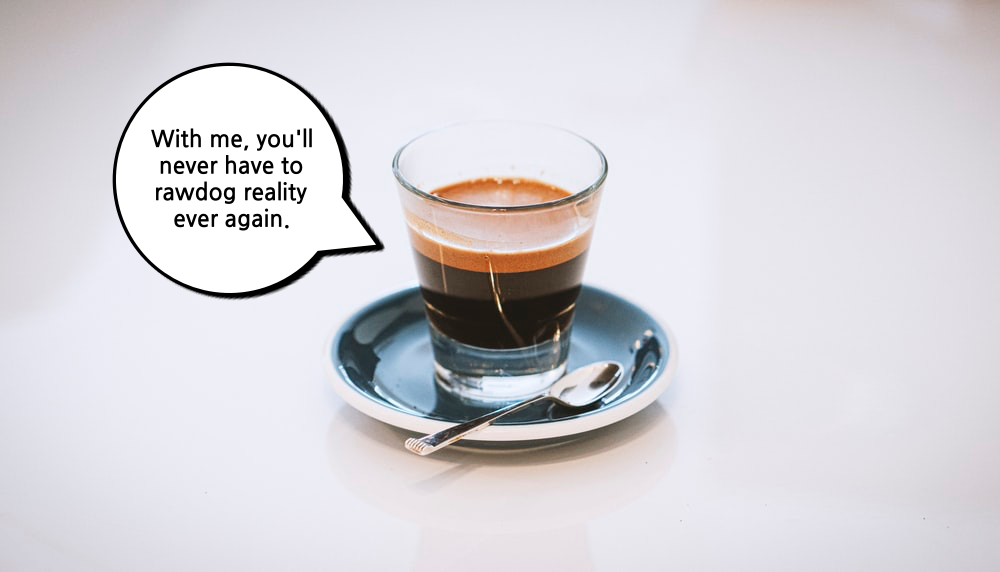
You need espressos to withstand the madness of Nigerian employers. You can also use this to practice tequila shots. I stan a multitasking babe.
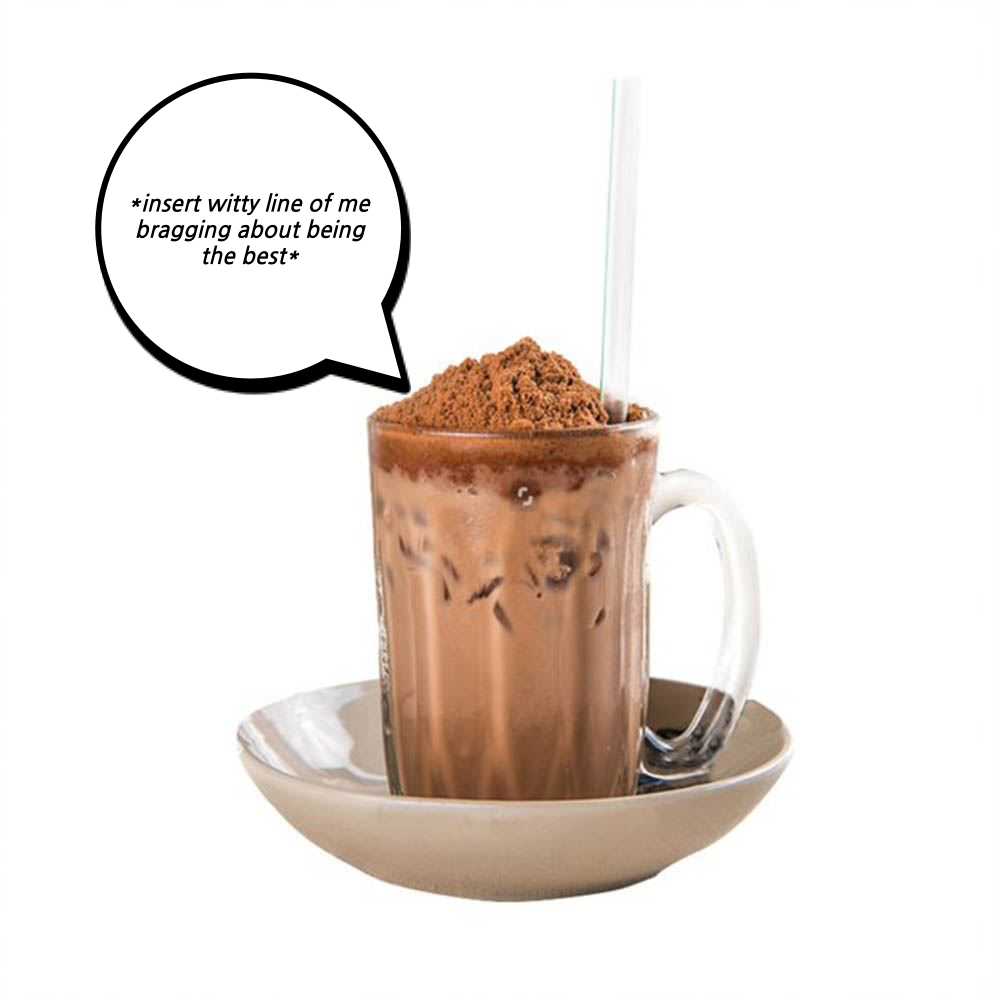
The only thing better than coffee is iced coffee, and the only thing better than iced coffee is this. An iced milo mocha feels like getting the email of your visa approval. Even Nescafe becomes elite once you add milo. Try it today and start seeing life in technicolour.
24 years ago on June 8th 1998, General Sani Abacha died five years after he launched a military coup to take over Nigeria. What caused his death? It depends on who you ask. The official cause of death was that he died of a heart attack. But word on the streets was that he was poisoned by prostitutes who used an apple — you know, the same device that logged us out of the Garden of Eden.

Abacha’s death caused a ripple effect that altered the course of Nigerian history. But what if he never died? What would Nigerian history look like then? Let’s find out.

Before his death, Abacha’s government was transitioning Nigeria from military rule to democratic rule. But the kind of democracy Abacha planned to transition Nigeria into was as democratic as a mushroom is a fruit.
For starters, he arm-twisted all five political parties he approved at the time to nominate him as the only presidential candidate on the ballot. If he’d stayed alive to win that election, you’d expect that he’d have written the Nigerian constitution on his toilet seat and kept himself in power for life.

Sani Abacha didn’t come off as a guy that’d just be content with a life presidency. You just get the feeling he’d want his image to continue to loom large, long after he was gone. In 2022, it just so happens that his oldest surviving son, Mohammed Abacha, is on the ballot for the 2023 Kano governorship election. So it’s very likely he’d have wanted to directly transfer power to his children.

ALSO READ: Is the Abacha Stove Making a Comeback?
President Buhari banned Twitter for seven months because his controversial tweet was deleted and everyone was mad about it. But Buhari is learning work where Abacha was, because the first person to make an inevitable joke about President Abacha’s tribal marks would easily get Twitter a permanent ban in Nigeria. VPNs wouldn’t work too and we’d have to sneak into Cameroon to tweet amala slander.

It’s hard to see a path that leads Buhari to become the president he is today if Abacha stayed alive. But despite Abacha’s terrible human rights atrocities and the well-documented fact that he was a big-time thief, Buhari is a strong defender of Abacha’s legacy. This makes it easy to imagine that in an Abacha lifetime presidency, Buhari would be his Lai Mohammed.

It’s no secret that Abacha wasn’t a great fan of the media. So, if he didn’t die 24 years ago, there probably would be no Channels TV to win “Best Station” for 12,000 consecutive years. All Nigerians would have would be an NTA remote-controlled from Abacha’s bedroom. The inflation rate and unemployment rate wouldn’t even exist.

General Sani Abacha’s place in Nigerian history cannot be forgotten for better or for worse, but it’s probably best for everyone that he left when he did. May affliction not rise a second time.
The shooting in Ondo was a devastating incident. But let’s try to focus on the things we can control as we approach the primary elections next week. In the meantime, if you feel overwhelmed right now, here are nine things you can do for self-care this week.

Political leaders have taken over the timeline to post about their hearts being with us. If you’re enraged, scared or just over the conversation, don’t feel responsible for debating over who said what right now. It’s alright to delete social media and come back to it later.

RELATED: The Zikoko Guide To Self-Care In These Corona Times
It doesn’t change what has happened, but you deserve to rest. You can’t carry Nigeria on your head all the time. Take a break from that for a little while.

I know you feel like your vote doesn’t matter, but at this rate, we have nothing to lose from actually voting. Let’s stick together and try our best to fight for a different narrative. Sha vote.

RELATED: Time Is Running Out for You to Register for Your
It may seem extreme, but if everything going on is affecting you emotionally and mentally, ask for time off. Take a sick leave if your HR is disguised as your village people. And if that doesn’t work, tell your boss you’re the boss of your own life, and come and knock on Zikoko’s door.

Whether it’s an annoyingly chatty Bolt driver who got all his facts from some imaginary bureau of statistics or family members continuously giving their hot takes on the group chat, feel free to ignore everything. Mute or block people until you feel comfortable with receiving information.

Old series and movies can be comforting. Let all the Aki and Pawpaw memes come to life or watch the Nollywood movies that will raise your standards for love. The nostalgia will give you the escape you need right now.

RELATED: These 7 Nigerian Movies Will Raise Your Standards for Love
It’s important to stay close to the people you love because thinking about the state of things alone is depressing. So, don’t isolate yourself. Call a friend, and talk about the partner you promised you’d never take back but eventually did. That’ll turn into a one-hour conversation on how you tell dirty lies.

We need all the feel-good music we can get, so #BumpThis by Zikoko is your plug. And if you’re really upset and need some light-hearted conversation, check out these Nigerian podcasts killing the scene right now.

What’s even better than food? Free food. So if there’s someone you can drag out for a quick brunch or try a ridiculous recipe on Youtube, please indulge yourself. Fitfam can circle back next week, or never. Either way, you’ll be fed.

ALSO READ: Are Nigerians Hoping to Manifest a Better Life and Country?