• On August 4th, 2022, a High Court in Akwa Ibom State sentenced Uduak Akpan to death. That name sounds familiar because he’s the main suspect in the chilling rape and murder of Iniobong “Hiny” Umoren in 2021.

    Umoren was a young lady who advertised her job search online only to fall prey to Akpan’s scheme. Her rape and murder in 2021 caused a nationwide outrage so much that Akpan’s final fate appeared sealed before he even stepped inside a courtroom.

    Why the Death Penalty Doesn't Work in Nigeria

    Justice Bassey Nkanang sentenced him to death by hanging, but what does it mean to be on death row in Nigeria?

    First, a little bit of history

    One of Nigeria’s most notorious use of the death penalty is the execution of the Ogoni Nine in 1995. The military government of Sani Abacha executed the nine Niger Delta activists and suffered international ridicule for it. 

    Many Nigerian military governments used the death sentence to punish political opponents and keep them in line. The execution of armed robbers was also a public spectacle to serve as deterrence. 

    But there’s been a shift since Nigeria returned to a democratic system of government in 1999.

    Who meets the hangman?

    There are a number of offences in Nigeria that attract the death penalty — treachery, treason, armed robbery and murder. And depending on the location of the crime, suspects convicted for kidnapping, homosexuality and blasphemy can also get the death penalty. 

    Convicts can be hanged, shot by a firing squad, stoned to death or killed by lethal injection.

    Why the Death Penalty Doesn't Work in Nigeria

    Nigerian courts have sentenced tens of thousands of people to death for these crimes for decades. But many of these convicts aren’t actually executed as ordered. In fact, executions have happened in only a handful of states, including Kaduna, Plateau, Enugu, Rivers and Edo, since 1999.

    Governors aren’t very cool with killing people

    When a court sentences a convict to death, they’re allowed by law to appeal all the way to the Supreme Court. If the court upholds their death sentence, then they’re at the mercy of state governors who have to sign the death warrant to seal their fate. 

    But many Nigerian governors have displayed a reluctance to sign death warrants since 1999. 

    Why the Death Penalty Doesn't Work in Nigeria

    This reluctance forced former President Goodluck Jonathan in 2013 to publicly beg the governors to sign the warrants.

    In 2021, the Minister of Interior, Rauf Aregbesola, made a similar appeal for governors to enforce the death penalty. He said this would help to decongest prisons. This came from a man who never signed a death warrant himself in his eight years as the governor of Osun State.

    Why the Death Penalty Doesn't Work in Nigeria

    “Do as I say, not as I do.”

    The death penalty debate in Nigeria

    The death penalty is a very controversial topic anywhere in the world, considered by activists a human rights violation. The utility of the government executing someone has come under serious question in the modern world and is seriously frowned at.

    Many countries, including in Africa, have abolished the death penalty on grounds of being archaic and inhumane. And many more countries, like Nigeria, have shown cold feet about following the law to the letter on death sentences.

    The last known death sentence executed in Nigeria happened in Edo State in 2016. Civil societies and international organisations have pounced on this reluctance from governors to ask for an official end to the death penalty in Nigeria.

    Many death row inmates already live out the rest of their lives in prison anyway. Their sentences are sometimes officially commuted to life imprisonment or, in rare cases, the government pardons them after a long stint in prison.

    Why the Death Penalty Doesn't Work in Nigeria

    There are currently more than 3,000 death row inmates stashed away in Nigerian prisons. But with how things stand in the country, a death sentence is essentially life imprisonment. It may be time to make it official and remove the death penalty. But the debate will remain controversial, especially with people like Uduak Akpan as a beneficiary of that change.

    ALSO READ: 5 Nigerians Laws That Shouldn’t Exist

  • Before you shade the Nigerian government again (which is totally fine), just how well do you actually know it?

    We’re sure anyone in secondary school can pass this quiz — it’s that easy. Try it.

  • The executive, legislative and judicial arms of government are the essential pillars of a democracy. They’re as important to democracy as firewood is to making firewood jollof rice.

    All three arms perform different functions to ensure that the country continues to run smoothly and without one suppressing the others.

    And while the elected executives and members of the legislature are the rockstars of governance in Nigeria, the judicial arm is the introvert who usually operates away from the limelight. But the judiciary is just as pivotal to maintaining a nation’s balance. And at the top of that arm of government is the Supreme Court.

    What’s the Supreme Court?

    The court is the highest-ranking court in Nigeria, just like in other countries. It’s the King of Boys without the violence and bloodshed.

    This is the court that has jurisdiction in any dispute between the Federation and a state or between states, according to the 1999 constitution. When two elephants fight, the Supreme Court is there to determine the winner.

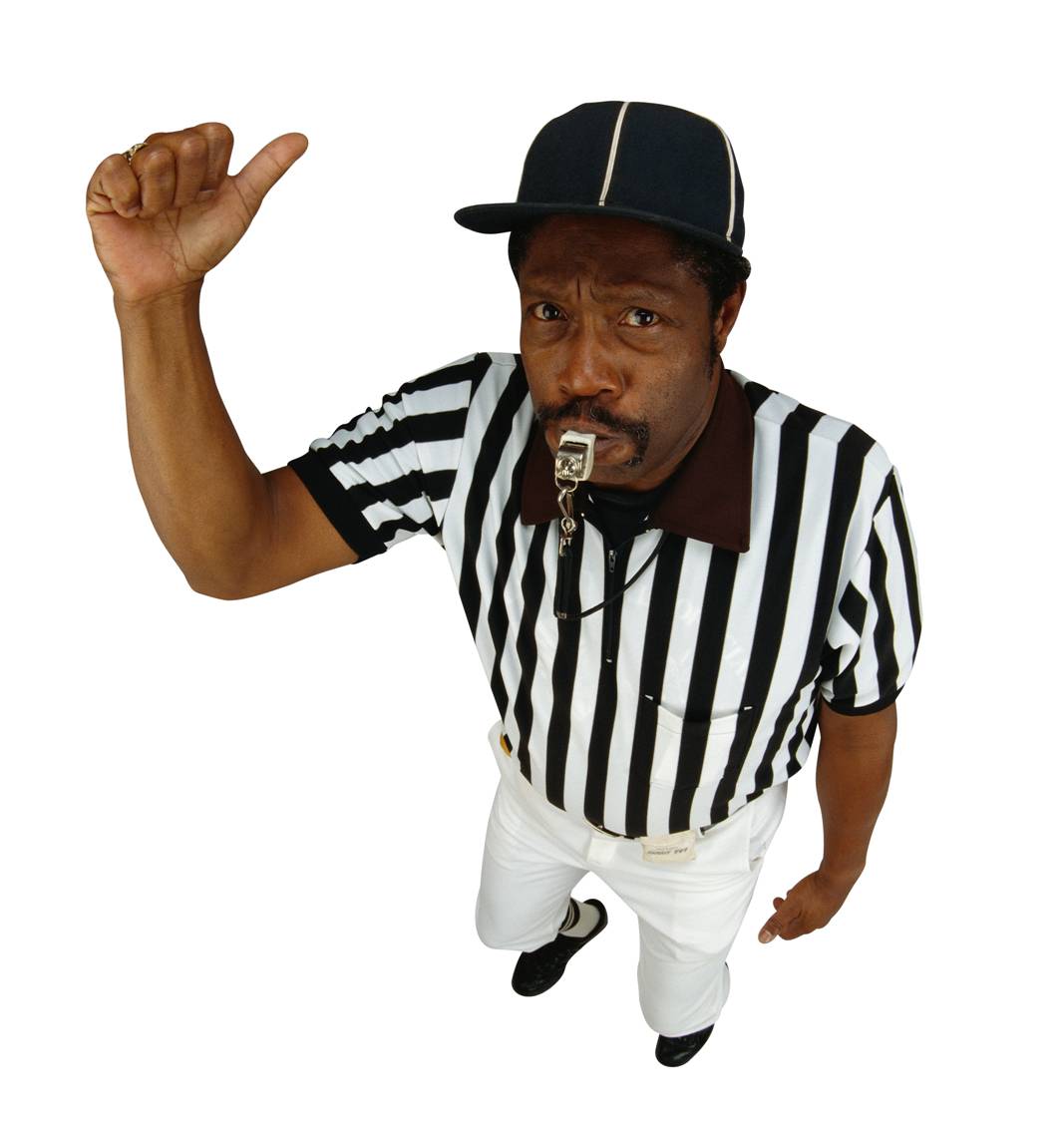
    Referee Pregame to Players | Lou Bega Called

    The best jollof is firewood jollof and that’s final!” – Supreme Court, maybe

    The court answers questions on the law in civil and criminal proceedings brought before it and makes decisions on constitutional disputes.

    Such cases first have to pass through the lower courts and the Court of Appeal before landing on the Supreme Court’s table.

    ALSO READ: Supreme Court Tells Buhari to Drink Executive Order 10 And Mind His Business

    Composition of the Supreme Court

    What Every Nigerian Should Know About the Supreme Court

    The Supreme Court consists of a maximum of 21 justices with a Chief Justice as the head. 

    How does one become a justice?

    A Supreme Court justice must have been a legal practitioner in Nigeria for at least 15 years before they can serve at the court. 

    They also have to retire at the age of 70, but there have been attempts to extend the retirement age. Countries like the United States don’t have a retirement age for Supreme Court justices.

    What Every Nigerian Should Know About the Supreme Court

    In which case, it’s a “till death do us part” marriage

    Justices are nominated

    Unlike how members of the executive and legislature get into office through periodic elections, the elevation of Supreme Court justices runs through the other two arms of government. 

    When the president appoints a Supreme Court justice, after consultation with the National Judicial Council (NJC), the Senate has to confirm such an appointment. 

    The Supreme Court is… supreme

    No other court in Nigeria can overturn the decisions of the Supreme Court. It’s why many people regard it as the last hope of the common man, especially when it rules on constitutional matters. 

    The court makes rulings that can have a real impact on the lives of Nigerians. And justices do this job without all the attention that comes with being an executive or member of the legislature.

    Can justices be sacked?

    The constitution frowns on the removal of judicial officers except in specific cases when they’re incapable of discharging their duties due to illness or misconduct. Even when that happens, the president can’t sack them without the approval of a two-thirds majority of the Senate.

    Bonus fact

    The Nigerian Supreme Court has only ever had one female Chief Justice: Aloma Mariam Mukhtar who served between 2012 and 2014.

    What Every Nigerian Should Know About the Supreme Court

    ALSO READ: Why Nigeria’s Supreme Court Has a New Chief Justice

  • When monkeypox made a splash in the United Kingdom (UK) in May 2022, it felt like an isolated incident that would quickly pass like a social media trend. This was because the virus has been a largely African problem for decades. 

    But then it spread to a few other countries in Europe and North America. This August visitor was starting to cause of bit of a panic by popping up in strange places but health officials were still confident about easily containing it. But monkeypox said:

    How Monkeypox Spread Across Nigeria in 2022

    They were so wrong that the World Health Organisation (WHO) had to declare monkeypox a public health emergency of international concern on July 23rd 2022. By the time this happened, monkeypox had already hopped into dozens more countries across the world. It was like someone told the virus to feel at home and it took control of the TV remote.

    Between May 2022 and August 2022, monkeypox cases climbed from a few dozens to over 30,000 in nearly 90 countries. The outbreak is the first wide outbreak of monkeypox outside of Central and West Africa.

    And while many non-endemic countries have been worse-hit, endemic countries like Nigeria haven’t been having the best time too.

    Monkeypox’s origin story in Nigeria

    The WHO recorded the first case of monkeypox in the Democratic Republic of the Congo (DRC) in 1970.

    Nigeria’s first large-scale monkeypox outbreak happened in 2017 when the virus caused a nationwide panic. The Nigeria Centre for Disease Control (NCDC) recorded 88 cases that year. The agency further recorded 49 cases in 2018, 47 cases in 2019, eight cases in 2020 and 34 cases in 2021. The annual case load was low enough that Nigeria didn’t need to sweat in monitoring the virus. Until 2022.

    How monkeypox got its groove back in Nigeria

    With monkeypox doing a rare worldwide tour in new locations, endemic countries like Nigeria heightened surveillance of the disease. And what that has shown is that 2022 is the worst year on record ever for monkeypox in the country. 

    How Monkeypox Spread Across Nigeria in 2022

    While authorities recorded 226 cases in five years, they have have confirmed 157 cases between January and July 2022. The trend of the outbreak shows that the upsurge in cases didn’t start until May when the global trend started building.

    In January, Adamawa, Imo and the Federal Capital Territory (FCT) recorded one case each. In February, the NCDC confirmed one additional case in Lagos. 

    The NCDC confirmed six cases in March and five more in April. At this point, monkeypox was present in seven states, with Cross River, Kano and Delta joining the roster. 

    Rivers and Bayelsa joined the party when the NCDC found six more cases in May and one person died.

    On May 26th, with monkeypox attracting more global attention, the NCDC activated a national emergency operations centre to improve response to the virus. This improved attention may have been responsible for what happened in June when the number of cases skyrocketed.

    The NCDC confirmed 61 new cases between May 30th and July 3rd. Two more people died within this period, and the virus had already spread to 21 states in total.

    An additional 72 cases popped up between July 4th and July 31st, leaving the total number of monkeypox cases in 2022 at 157 in 26 states. The total number of deaths also increased to four.

    How Monkeypox Spread Across Nigeria in 2022

    What was responsible for the surge, in the NCDC’s words? 

    Enhanced surveillance at national and subnational levels with improved case detection and reporting as well as the recent attention from the global outbreak have contributed in part or whole to the observed increase in cases which we have seen this year.

    Since 2017, Nigeria has recorded a total of 383 monkeypox cases in 30 states and 12 deaths.

    The only states not affected by the virus in Nigeria are Jigawa, Kaduna, Kebbi, Osun, Sokoto, Yobe and Zamfara.

    How Monkeypox Spread Across Nigeria in 2022

    How does monkeypox spread?

    The monkeypox virus can spread from infected animals like monkeys, squirrels and rodents, to humans, usually through direct contact with body fluids, blood or the skin or lesions. Transmission can also happen through a bite, scratch, poor handling of, or consuming inadequately cooked or other products of infected bushmeat. 

    Monkeypox can also spread from human to human through contact with respiratory droplets and contaminated materials such as bedding.

    What are the monkeypox symptoms?

    The symptoms of monkeypox include sudden fever, headache, body pain, weakness, sore throat, and enlargement of glands (lymph nodes) in the neck and under the jaw. The appearance of a rash on the face, palms, soles of the feet, genitals and other parts of the body is also possible. 

    The monkeypox fever can escalate the rash which tends to spread across the body of an infected person with the face and palms being the most affected. The rash can also occur in and around the genitals, which is why contact during sex is also a mode of transmission.

    The illness from monkeypox usually lasts between two to four weeks.

    How to protect yourself from monkeypox

    How Monkeypox Spread Across Nigeria in 2022

    There are many tips on how to protect yourself from monkeypox infection, but here are the highlights from the NCDC:

    1. Avoid contact with host animals like monkeys, gorillas, squirrels and rodents, especially in areas where infections have been confirmed.

    2. Avoid unnecessary physical contact with infected patients.

    3. Practice frequent handwashing with soap and water especially after caring for, or visiting sick people.

    4. Ensure all animal food products are properly cooked before eating.

    5. Report all cases with the associated symptoms to the nearest health facility.

    Is there a vaccine?

    At least three vaccines which were developed as smallpox vaccines are considered suitable to fight the monkeypox outbreak

    The vaccination is strictly meant for those who have been exposed to monkeypox and people who may be more likely to be infected. But there’s a shortage of vaccines and poorer countries like Nigeria are at the back of the queue. This means, as a Nigerian, prevention is better than cure.

    ALSO READ: What’s Nigeria’s Business With the Monkeypox Virus Spreading Through Europe?

  • You can’t deny that APC gives off sugar daddy vibes and Labour party feels very working-class. But there are 16 other political parties that need introduction. And we’re here to do just that.

    All Progressives Congress (APC) 

    Founded in 2013, these are the loud-mouthed sugar daddies who spray mint ₦100 notes at parties. When you ask them what it’s for, they tell you beans and garri. These men have zero shame and no problems borrowing money to fund their sugar daddy lifestyle. On top of that, nobody even knows where all the sugar is going because it’s not really helping or touching anybody.

    People’s Democratic Party (PDP)

    Founded in 1998

    This party gives off old money vibes but with a touch of sugar daddy too. The only problem is the money has finished. So when you ask them to show workings, you’re just playing yourself.

    All Progressives Grand Alliance (APGA)

    Founded in 2003

    This band of people keeps rising and falling just like crypto, except they don’t have the money most crypto bros do. They remind us of that aunty who’s been around the longest but we keep forgetting to invite for family parties.

    People’s Redemption Party (PRP)

    Founded in 1978

    Nobody knows anything about these ones except that they’ve been around since 1978.

    Social Democratic Party (SDP)

    Founded in 1989

    They give off boomer vibes but  with a high debt-to-GDP ratios instead of plenty money. Nobody understands anything they say, but we like having them around.


    RELATED: These Are the Funniest Nigerian Political Party Logos We’ve Ever Seen


    Young Progressives Party (YPP)

    Founded in 2017

    This party gives off tech startup vibes. They say a lot of nice-sounding things, but we all know they’re also just hustling for money.

    African Democratic Congress (ADC)

    Founded in 2005

    They give off freedom fighter vibes, but when you need actual freedom fighters, they’re surprisingly quiet. 

    National Rescue Movement (NRM)

    Founded in 2017

    You get firefighter vibes from this party. You can’t blame them for this because, technically, the country is on fire. The only thing we need to explain is why there’s an insect on their logo. It’s giving mosquito coil.

    Boot Party (BP)

    Founded in 2019

    We’re pretty sure this party was going for ajebutter vibes with their name, but they ended up giving malaria drug vibes with a logo that looks like sadness.

    New Nigeria People’s Party (NNPP)

    Founded in 2001

    This party feels like it was created in a hurry and nobody inside it really knows why they’re there. 


    ALSO READ: How Much Are Nigerian Parties Charging Aspirants to Run for Office?

  • Not every time APC and PDP. Did you even know there’s a party called the National Rescue Movement? We just gave you a bonus answer for free but you have three minutes to guess these political parties from their abbreviations.

  • For a group of people who aren’t doing their jobs well, Nigerian lawmakers earn a lot. In fact, they’re some of the highest-paid lawmakers anywhere in the world.

    And they earn a lot for debating things like making naira coins great again, how much shinier toilets can become, and how to recreate a military-era policy

    The reward system for Nigerian lawmakers has been the subject of controversy for many years. Even the actual figures of how much they earn are controversial, especially with respect to the allowances they receive separately from their salaries. 

    As Nigeria’s financial position continues to see shege, the pressure to review the reward system for lawmakers and other officials grows more intense. And a recent development several thousand kilometres away in Kenya may be the best blueprint for Nigeria to follow.

    What’s happening in Kenya?

    Kenya’s Salaries and Remuneration Commission (SRC) announced a review of the remuneration package of public officers in a notice issued on July 28th, 2022. The commission removed car grants for state officers and plenary sitting allowances for 416 members of parliament. The cut allows the Kenyan government to save at least Ksh382.2m that can be channelled elsewhere.

    The general review still leaves the parliamentary officials earning more than before in gross salary, but the SRC rejected a proposal to increase their pay to as high as Ksh1.2 million per month. The review clearly outlined the pay package for political office holders including the president, ministers, governors and others. 

    Why can’t Nigeria do a review?

    Nigeria’s version of Kenya’s SRC is the Revenue Mobilisation Allocation and Fiscal Commission (RMAFC). Among other things, this commission determines the remuneration package of political, public and judicial office holders in Nigeria. 

    The RMAFC is made up of a chairperson and 37 other members of “unquestionable integrity” picked from each state and the Federal Capital Territory (FCT).

    Elias Mbam served as the chairman of the RMAFC between 2010 and July 2022 when he resigned to run for governor in Ebonyi State. He complained many times about how difficult it was for Nigeria to review the remuneration package of public officers. 

    In fact, the last time Nigeria reviewed the package was in 2007, a year when inflation was still in single-digits.

    The good old days

    In 2009, the late President Umaru Musa Yar’Adua asked the RMAFC to do a downward review of salaries and allowances of public officers due to Nigeria’s dwindling revenue. In the RMAFC’s proposal, the commission cancelled the 300% severance gratuity allowances for presidents (₦10.5 million) and vice presidents (₦9.1 million) and reduced their hardship allowance of ₦1.8 million and ₦1.5 million, respectively, by 20%. 

    This is how much a Nigerian president earns

    The proposal also reduced the number of cars allocated to the senate president and the speaker of the House of Representatives, and reduced constituency allowances to federal lawmakers by half. The allowances for entertainment, personal assistants and severance gratuity for local government officials also ended up on the chopping block. 

    The RMAFC was cutting everything on sight

    But the National Assembly never passed the draft bill of the proposal and President Yar’Adua was too distracted by illness to see it through before his death in 2010.

    Another attempt to review the remuneration package failed in 2015 under the watch of the outgoing administration of Goodluck Jonathan. The same proposal failed to gain traction with his successor, Muhammadu Buhari, and never even made it to the National Assembly to be ignored a second time.

    This is how much a Nigerian senator earns


    ALSO READ: The 2023 Presidential Campaign Promises We Already Find Laughable


    What can Nigeria do differently?

    It’s clear that Nigeria’s biggest problem with reviewing the remuneration package for political officers is that those affected are also in charge of approving any proposals. 

    The chairman of the RMAFC is appointed by the president and confirmed by the National Assembly. And for a review proposal to pass, it must go through those same channels. It’s no surprise Nigeria cannot get a review done.

    Mbam said in 2019, “Perhaps, the most challenging issue the RMAFC faces is the abuse by stakeholders at both the national, state and local government levels in the implementation of the approved remuneration package for political, public and judicial office holders.”

    Kenya’s SRC isn’t burdened by such problems, as it has an automatic timeline of four years to review the package for Kenyan politicians; this is usually set just before general elections for a new government. 

    Nigeria needs a process that’s just as transparent and independent for any progress to be made here. The country needs a fiscally leaner government based on its revenue weakness, and what better place to start cutting the fat than from the top?

    ALSO READ: After 35 Years of Service, All I Have Is a Monthly Pension of ₦80k

  • You’ve probably heard some gist about different places in Nigeria, and the north is one of them. Things like “everywhere’s hot up there” or “one man can have 35 kids”. We’ve asked the northerners themselves, and here are a few myths they want you to stop believing.

    “It’s always very hot up there”

    Samuel, 25. Lives in Taraba

    “I always thought this was weird because where I live is a lot colder than most places down south. I live in Gembu, Taraba State, and I don’t feel the heat people talk about when they speak of the north. I think people forget some parts are high above the sea level, and therefore, have higher temperatures.”

    “All northerners are Muslims”

    Deborah, 32. Lives in Kaduna

    “I think people have this opinion because they assume northerners are Hausa, and that’s not true at all. A lot of states in the North have tribes that are hugely Christian or even multireligious. There’s more diversity than one would expect.”

    “It’s very unsafe”

    Ibrahim, 29. Lives in Kano

    “While there has been a lot of destruction in some parts of the north. Most places are still relatively safe. Southerners tend to forget the north is really big, and the same way these things come as news to them is the same way they do to us. That’s not to excuse the horrific things that’ve been happening.”

    “It’s a very conservative place”

    Aisha, 20. Lives in Sokoto

    “You’ll be surprised to go to a party and find people dancing to Naira Marley’s songs with crazy passion. While it’s certainly more conservative than other parts of the country, there’s still a lot more freedom than people expect. This leaves them shocked whenever they come here.”


    RELATED: 10 Historic Pictures From Northern Nigeria You Don’t Want To Miss


    “Northerners are Fulani/Hausa”

    Gidado, 44. Lives in Maiduguri

    “Whenever I mention my name, people just assume I’m Hausa or Fulani. I don’t mind it, but please, there are hundreds of ethnicities here, and it’s more diverse than most people think. It’s not a monolithic place like that.”

    “Life is very cheap, and you don’t need much”

    Josephine, 24. Lives in Jos

    There’s a going falsehood that things such as food and other perishable items are cheaper to get here, and nothing is more absurd. It’s even worse here sometimes because of the cost of transportation from farms to markets. I think people have been sold a lot of lies about this place.”


    NEXT: Read This Before You Travel Up North

  • If the most common staple foods in Nigeria had to line up in order of popularity, bread would easily be in the top three. Bread is one of the most versatile meals and isn’t limited to any social class — it can be the much-loved agege bread in the trenches or the fancy sliced bread on high-brow dining tables

    Bread simply doesn’t discriminate. But, like everything in Nigeria, it’s facing a hard time.

    Nigeria's Bread Strike, Explained

    On July 13th, 2022, the Association of Master Bakers and Caterers of Nigeria (AMBCN) commenced a nationwide strike to force a conversation. The association is an umbrella body that caters to players in the Nigerian baking industry.

    When the AMBCN first announced the strike in June 2022, the association accused the government of neglecting its members who are facing many business challenges. The association warned the government to use the warning strike as motivation to address its concerns. 

    Nigeria's Bread Strike, Explained

    What caused the bread strike?

    The high cost of production is the AMBCN’s biggest concern. Data compiled by the National Bureau of Statistics (NBS) shows that the average price of 500g of unsliced bread rose by 35.21% from N310.81 in May 2021 to N456.79 in May 2022.

    This hike in the average price is down to the prices of ingredients like flour which is made from wheat. Wheat can also be milled to make other popular meals in Nigeria like cereals, pastries, cookies, biscuits, cakes and noodles.

    Nigeria's Bread Strike, Explained

    Wheat is the Michael Jackson of grains

    Like many of Nigeria’s consumables, wheat is a largely imported product. Nigeria produced only 55,000 tons of wheat in 2020, despite consuming an average of 5 million tons annually. The NBS reported that Nigeria’s durum wheat import rose from N401.31 billion in 2019 to N1.29 trillion in 2021.

    Russia and Ukraine are two of the top producers of wheat globally. They jointly account for about 30% of the global wheat trade. Their output means that the February 2022 invasion of Ukraine by the Russian military would have an impact on the wheat supply chain to countries like Nigeria. 

    Even before the Russian invasion, the COVID-19 pandemic had created shipping disruptions that affected imports in Nigeria and drove up prices of wheat-affiliated products like bread. The Russian-Ukraine war just made things worse globally for the wheat trade.

    The average prices of other bread-making ingredients such as sugar and butter have also skyrocketed over the past year.

    The worsening value of the naira against the dollar is another issue that Nigerian breadmakers have to face.

    Nigeria's Bread Strike, Explained

    This is what the cost of production of bread looks like

    Regulatory overreach blamed for bread strike

    Another one of AMBCN’s complaints to the Nigerian government is the conduct of regulatory agencies. The association accused agencies like the National Agency for Food and Drug Administration and Control (NAFDAC), Standards Organisation of Nigeria (SON) and the National Environmental Standards and Regulations Enforcement Agency (NESREA) of making life difficult for its members. The main complaint is that the agencies are charging bread makers “outrageous levies” at a time when business is more difficult than ever.

    The high cost of production is forcing many bakeries to shut down nationwide as owners simply can’t keep up. Shutting down businesses means more Nigerians are further populating the already saturated unemployment market. These issues are what inspired the AMBCN to embark on its strike.

    What do bread makers want?

    Bread makers have steadily increased the price of their products to adjust for the high cost of production over the past year. But the July 13th strike is a statement to the government that simply increasing bread prices isn’t a sustainable strategy. So this fight with the government is for your benefit, dear bread customer reading this.

    Nigeria's Bread Strike, Explained

    The AMBCN has requested that the government take deliberate steps to arrest the inflation of prices for the ingredients driving up production costs. 

    One of such suggested steps is the reduction of tariffs on baking materials like the 15% levy on wheat importation. The AMBCN also wants the government to open up the competition on sugar importation and not limit it to only three licenced importers.

    Another obvious step is to give dealers easy access to foreign exchange at the official rate to buy important bread ingredients like wheat.

    They also want the government to make NAFDAC the sole regulator of bakeries to prevent exploitation by other regulatory agencies.

    Okay, but will I still get my bread?

    Nigeria's Bread Strike, Explained

    The bread strike will create some disruption in bread supply nationwide, but not enough that production would completely halt. The strike is only a warning strike and will end on July 27.

    ALSO READ: What Just Happened in Kuje Prison?

  • Do you remember what you learnt in social studies? If you’re confident in your knowledge of northern Nigeria, take this quiz and prove it.