• Valentine is coming; where’s ya candidate?

    “About a month ago, I liked your pictures” are the lyrics to a song that’s always on the lips of Nigerians every February. But in 2023, that song won’t enjoy its usual annual fame, as Nigerians will be too busy getting ready to vote for their next president on February 25th 2023.

    It’s almost eight years since the tenure of the current administration began and the stakes have never been higher. The battle is on for who’ll become the next Nigerian president

    Twitter and 2023 Presidential Election

    …and there’s a long queue of candidates

    Every political party is trying to win the hearts of Nigerians and the action is happening everywhere, including on Twitter where political seduction is in full swing. 

    Twitter and 2023 Presidential Election

    As politicians seek to dominate Twitter for the purpose of election, there’s a question that’s become prominent: Is Twitter sentiment influential enough to determine the outcome of the 2023 election?

    But before I attempt to answer the question, an important announcement: this is a non-partisan piece. This piece doesn’t endorse or discredit any candidate. You have your choice to make. Vote wisely.

    What are the numbers saying?

    Let’s start with a statistical dive into the previous elections. After our dive, we’ll analyse and draw some sensible conclusions. I’m not your STS101 lecturer so I won’t be boring, I promise.

    I tried to get INEC’s data from the past elections and it wasn’t a very friendly process. I couldn’t find all I needed concerning the previous elections, but let’s work with the little I found.

    First, what do we know?

    Let’s start with the number of voters.

    At the end of the 2019 elections, INEC declared a total number of 84 million voters. You can verify this on INEC’s home page.

    Twitter and 2023 Presidential Election

    INEC’s homepage

    Interestingly, INEC’s post-election report in 2019 indicated that only 36% of those 84 million registered voters turned up to vote on election day. You can access INEC’s summary of 2019’s election here.

    Twitter and 2023 Presidential Election

    INEC’s 2019 election result summary

    In the above image, there is a “percentage turnout” at the bottom. This turnout represents the number of people among the registered voters who voted on election day. For example, if Country A has 100 registered voters and 50 people go out to vote on election day, it means the percentage turnout of voters is 50%. 

    The percentage turnout for the 2019 general election reflected a prevailing culture of “chilling at home” on election day among Nigerians who are registered to vote.

    I know what you’re thinking: “But there’ll be more voters for this election.” Of course, there’ll be more voters. The question is how many new voters?

    First, we’ll try to compare the average increase in registered voters every four years, then see what increase we’re working with for 2023.

    Unfortunately, I could only obtain useful data for the 2015 and 2019 elections. Every other data source for the previous election wasn’t directly attributed to INEC, so I decided to leave them out. Let’s look at the 2015 election data obtained from INEC’s report. This data is available for public viewing here.

    Twitter and 2023 Presidential Election

    INEC’s 2015 election result summary

    In 2015, 47% of the registered voters showed up for the election but the percentage turnout in 2019 was just 36%. This means that the percentage turnout rate fell by 11% between 2015 and 2019.  In four years, more people decided to abstain from voting on election day.

    What are we expecting on 2023?

    According to INEC reports, the total number of registered voters increased from 67 million in 2015 to 84 million in 2019. This means the number of registered voters grew by 17 million between 2015 and 2019, a whopping 25% growth rate.

    The voters’ registration exercise for the 2023 election ended on July 31st, 2022 and the following day, INEC reported approximately 12.2 million newly-registered voters. 

    Twitter and 2023 Presidential Election

    INEC will still verify the new accounts, which means the tally will still likely drop by one or two million, but as it stands Nigeria has 96.2 million voters registered for the 2023 elections. 

    Working with that figure, the question is will they all vote on election day?

    ALSO READ: What We Learned From the PVC Registration Drive Now That It’s Over

    We’re getting somewhere

    From the last two elections, the voter percentage turnout didn’t reach the 50% margin. If that trend is anything to go by, it probably won’t reach 50% in 2023 too.

    But let’s get optimistic and assume all the clamour for greater political participation pays off and more people are ready to exercise their franchise in 2023. If we assume a 50% voter turnout, it means we’re expecting 48.1 million voters on election day. That’s significantly more than the number of voters we’ve seen in the past two elections.

    Twitter and the power within

    The EndSARS protest in 2020 proved beyond doubt that Twitter has a significant influence in Nigeria. The movement started a Twitter trend and permeated global conscience and Nigerians took to the streets to demand change. 

    But we still have to determine if Twitter is influential enough to swing the outcome of the 2023 election.

    Nigeria’s 2023 elections mean a lot to over 200 million citizens, but only an estimated 96.2 million of them have the power to vote. The data raises a question — how many of these registered voters are on the bird app?

    How many registered voters are on Twitter?

    We need to first figure out the question of how many of our expected 48.1 million voters are on Twitter. This isn’t an easy question to answer, but we can do some guesswork.

    Is there a probability that a Twitter user who’ll vote on election day won’t engage with a tweet on a political subject?

    How many retweets and likes can we find on these political tweets? How many tweets do we find under the hottest trends? 10k, 70k, 150k, 300k?

    500k?

    I checked the tweets of all the major presidential candidates and I found that, compared to the others, one of them had an overwhelming edge in popularity on the app. He had more likes and positive comments. So, I just decided to stick with that candidate. I checked through his tweets — all of his tweets, actually, because they were less than 500 in total. His most engaging tweet posted on June 7th, 2022 has 102k likes. 

    Let’s cook further

    I checked the number of Twitter followers of the three major presidential candidates. I  have a “no-name” policy so I’ll refer to them as Candidates A, B and C. At the time of putting this together, the total number of followers these candidates have are 1.3 million, 1.9 million and 4.4 million respectively.

    The reality is that all their followers are not Nigerians. Also, not all their followers own a Permanent Voter’s Card (PVC). It’s also very common for one person to own up to four Twitter accounts and follow the same person on these four accounts. And of course, we also know that buying followers is a possibility.

    Let’s make an “unrealistic” assumption and use the candidate with the highest number of Twitter followers to drive home the point.

    If we place the candidate’s 4.4 million side-by-side with our expected 48.1 million voters, it’s not up to 10%. But are there even 4.4 million Nigerians on Twitter?

    In July 2021, The Cable concluded that the number of Nigeria’s Twitter users is around three million. That publication, heavily referencing a report from Africa Check, estimated the number of Twitter users in Nigeria to be less than 3.4 million.

    Twitter and 2023 Presidential Election

    Recent data from Statista highlighted 20 countries with the highest number of Twitter users and Nigeria didn’t make the list. Cuba is currently at the bottom of Statista’s top 20 list with 4.3 million active Twitter users. This means that countries not on that list don’t have up to 4.3 million Twitter users. 

    If Nigeria’s active Twitter users are not up to 4.3 million, then, how many of these “less than 4.3 million” users are registered voters for the 2023 presidential election?

    The plot thickens…

    Twitter can try, but if statistics and numbers mean anything, Twitter alone can’t do too much. If the previous statement is true, then Twitter can’t be described as a major influence on the 2023 elections.

    Of course, Twitter has a soft influence that can snowball into an outsized movement as we saw with EndSARS, but its population alone can’t swing a national election going by just the numbers. The perspective this offers is that the influence battle can start from Twitter but it needs to move offline where the larger populations of voters exist.

    I don’t know who will sit in Aso Rock in 2023 and I choose not to make predictions. But I’m sure of one thing: the presidential election will be filled with unexpected twists, turns and roundabouts. May Nigeria win.

    Twitter and 2023 Presidential Election

    ALSO READ: How to Help Your Presidential Candidate Win Elections in Nigeria


    ‘Leke Olushuyi is an audience-oriented writer. He’s an accountant by day and a writer by night. Leke prides himself in providing content and finance-related services for businesses. He can be found on Twitter @LekeOlushuyi.

  • Queen Elizabeth II of the United Kingdom has died after 96 long years on this rock planet. She ascended the throne in 1952, just eight years before Nigeria finally became independent from the colonial grips of her British empire.

    We look at her relationship with Nigeria through the lenses of many cameras over the decades.

    1956: Queen Elizabeth II’s first time in Nigeria

    Queen Elizabeth’s first excursion visit to Nigeria happened in 1956. She spent 20 days after landing on January 28th, making a lit entrance in this borrow-pose Rolls Royce:

    Queen Elizabeth II's "Relationship" With Nigeria in Pictures

    Here are a lot of black and white pictures from the visit:

    [Image Source: Nigerian Finder]

    Queen Elizabeth II's "Relationship" With Nigeria in Pictures

    [Image Source: Arewa Cycle]

    Queen Elizabeth II's "Relationship" With Nigeria in Pictures

    [Image Source: Guardian Nigeria]

    [Image Source: Nigerian Nostalgia Project]

    [Image Source: Nigerian Nostalgia Project]

    Queen Elizabeth II's "Relationship" With Nigeria in Pictures

    [Image Source: Facebook/TalkRealSolutions]

    Queen Elizabeth II's "Relationship" With Nigeria in Pictures

    [Image Source: Only Africa Facts]

    The Queen got some colourful pictures too:

    Queen Elizabeth II's "Relationship" With Nigeria in Pictures

    [Image Source: Nigerian Nostalgia Project]

    Queen Elizabeth II's "Relationship" With Nigeria in Pictures

    [Image Source: Study HQ]

    Queen Elizabeth II's "Relationship" With Nigeria in Pictures

    [Image Source: Nigerian Info]

    [Image Source: Nigerian Nostalgia Project]

    And she had adoring fans at the time too, or people who just needed to make their urgent ₦2k:

    Queen Elizabeth II's "Relationship" With Nigeria in Pictures

    [Image Source: Nigerian Nostalgia Project]

    2003: Queen Elizabeth II’s reunion with Nigeria

    Queen Elizabeth visited Nigeria a second time for the Commonwealth Heads of Government Meeting (CHOGM) summit in 2003. She spent only two days, so you only get two pictures from her visit.

    President Olusegun Obasanjo played host: 

    Queen Elizabeth II's "Relationship" With Nigeria in Pictures

    [Image Source: Alamy]

    ALSO READ: Operation London Bridge: Queen Lizzie Is Dead

    Handshakes with Nigerian presidents

    President Obasanjo was Nigeria’s only democratic president to host Queen Elizabeth, but she hosted others in her country.

    Like President Yar’Adua:

    Queen Elizabeth II's "Relationship" With Nigeria in Pictures

    [Image Source: Dominic Lipinski/PA Images]

    Queen Elizabeth II's "Relationship" With Nigeria in Pictures

    President Jonathan and his orange juice:

    Queen Elizabeth II's "Relationship" With Nigeria in Pictures

    [Image Source: Getty Images]

    She also shook hands with this guy:

    Queen Elizabeth II's "Relationship" With Nigeria in Pictures

    [Image Source: Presidency]

    …on more than one occasion:

    Queen Elizabeth II's "Relationship" With Nigeria in Pictures

    [Image Source: Presidency]

    And then, there was this one time she synced in formation with the Nigerian High Commissioner, George Oguntade:

    Queen Elizabeth II's "Relationship" With Nigeria in Pictures

    [Image Source: Vogue]

    ALSO READ: But How Does Queen Elizabeth II’s Death Affect Nigeria?

  • Queen Elizabeth II of the United Kingdom lived a long eventful life, but she finally died at the age of 96 on September 8th, 2022. 

    The queen’s exit is the end of an era and its impact isn’t limited to just her home from where colonialism did a global tour. Her death will directly impact many things in Britain from the nation’s anthem to its banknotes. 

    But what impact can the queen’s death possibly have in Nigeria?

    We’ll probably name something after her

    But How Does Queen Elizabeth II's Death Affect Nigeria?

    As Nigeria’s former monarch, it should come as no shock to anyone when the Nigerian government decides to (re)name something important after Queen Elizabeth.

    Serial presidential aspirant, Adamu Garba, is already ahead of everyone and suggesting the University of Nigeria, Nsukka (UNN) be renamed in the queen’s honour

    We can expect the Nigerian government to do oversabi and name the Fourth Mainland Bridge or soon-to-be-completed Second Niger Bridge in her honour.

    There may be a public holiday

    But How Does Queen Elizabeth II's Death Affect Nigeria?

    The United Kingdom will likely set aside a day as a public holiday in honour of the queen. As part of the Commonwealth of Nations, Nigeria may decide to adopt this holiday, but this isn’t set in stone. We can always do with an extra holiday sha, and treat it as a final gift from the queen. Buhari, make it happen!

    ALSO READ: Why the FG Needs to Give Us More Public Holidays

    Renegotiate Commonwealth membership

    Speaking of the Commonwealth of Nations, the queen’s death is expected to affect the political association that’s been criticised as a post-colonial legacy of the British empire. It’s a PR club to launder the history of an empire that colonised and exploited the world. And the queen’s death may be the catalyst to finally burn it to the ground.

    But How Does Queen Elizabeth II's Death Affect Nigeria?

    Those Benin Bronzes

    Over 100 years after British soldiers destroyed the Benin Kingdom and stole thousands of artefacts, many of them remain scattered all over the world. While many institutions are starting to return these artefacts, the British Museum which houses the biggest collection has insisted on hanging on to them. They keep telling Nigeria:

    Maybe King Charles will press the museum’s neck to return them in an attempt to earn some low-hanging goodwill?

    Buhari has a trip to plan

    But How Does Queen Elizabeth II's Death Affect Nigeria?

    Buhari can’t allow a good excuse to travel to the UK go to waste, and the queen’s death is a reason as good as any. Expect our travel blogger-in-chief to hop on a plane anytime soon to go console King Charles.

    But How Does Queen Elizabeth II's Death Affect Nigeria?

    ALSO READ: Operation London Bridge: Queen Lizzie Is Dead

  • This is Zikoko Citizen’s Game of Votes weekly dispatch that helps you dig into all the good, bad, and extremely bizarre stuff happening in Nigeria and why they’re important to you.

    Subscribe now to get the newsletter in your email inbox at 8 am every Friday instead of three days later. Don’t be LASTMA.

    The public image of the Nigeria Police Force (NPF) is as black as the uniform the officers wear. And when Nigerians protested with the call to #EndSARS in 2020, the police washed their very dirty underwear, overwear and all sorts of wears before the global community.

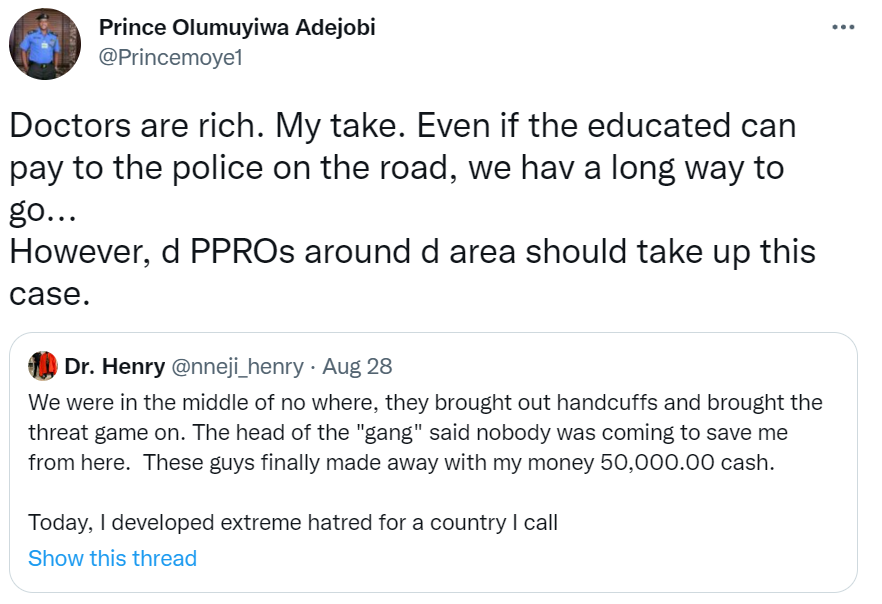
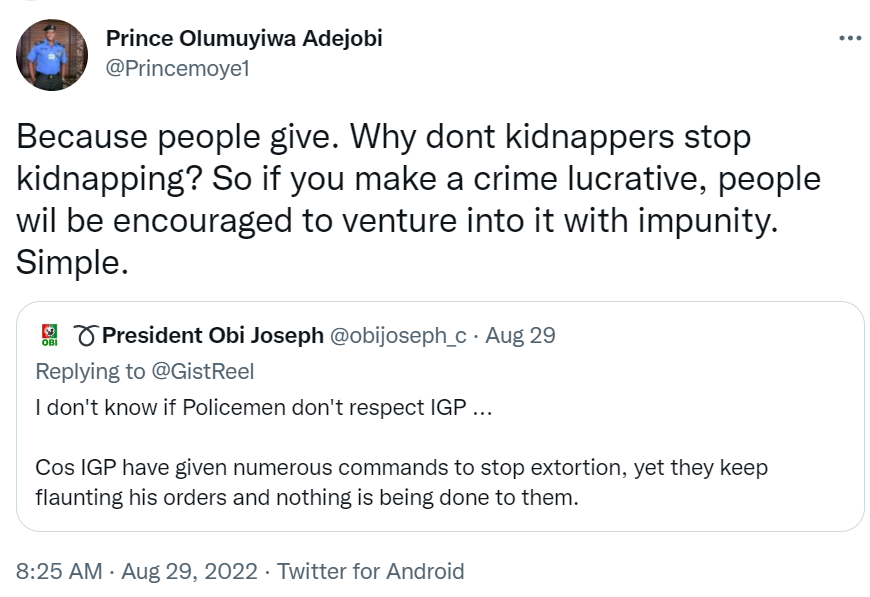
    To gain a bit more control over the narrative, there are now many police spokespersons on Twitter directly attending to public complaints. But these spokespersons still do messy things like trying to act savage or victim-blame.

    Game of Votes

    The NPF is now trying to mend fences with Nigerians through the magic restorative power of improved public relations. This week, the Inspector-General, Usman Baba, announced plans to launch a Police PR School for officers. This school will focus on things like behaviour management, professionalism, and hopefully, the medicine that banishes the spirit of extortion and high-handedness.

    That training can start with the Force spokesperson himself to prevent more tweets like this:

    Game of Votes

    Whatever the NPF is cooking here, improved engagement with Nigerians shouldn’t be about putting paper over cracks, but committing to true reforms that Nigerians can get behind. For starters, it would be nice for officers to stop extorting Nigerians. We don’t have anything for the boys.

    What Else Happened This Week?

    Nigerian Politicians Can’t Stay in One Place — It’s Science

    One thing you can always trust a Nigerian politician to do is fornicate with party membership, especially around elections.

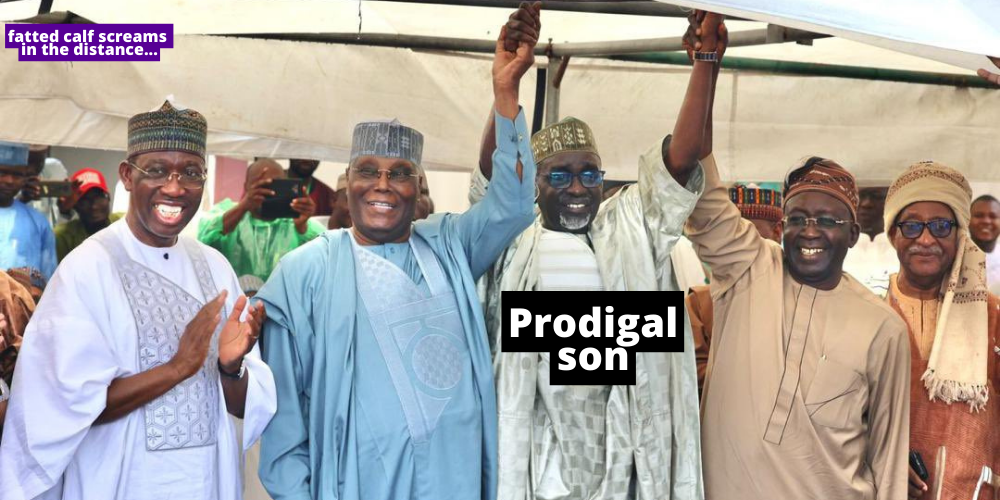
    On August 29th, 2022, the presidential candidate of the People’s Democratic Party (PDP), Atiku Abubakar, travelled down to Kano for a lavish celebration. The party held the ceremony in honour of a prodigal son that had just returned to its fold — Senator Ibrahim Shekarau.

    Game of Votes

    Shekarau left the PDP in 2018 when he joined the All Progressives Congress (APC). And there was similar fanfare when he dumped the APC for the New Nigeria People’s Party (NNPP) three months ago in May 2022.

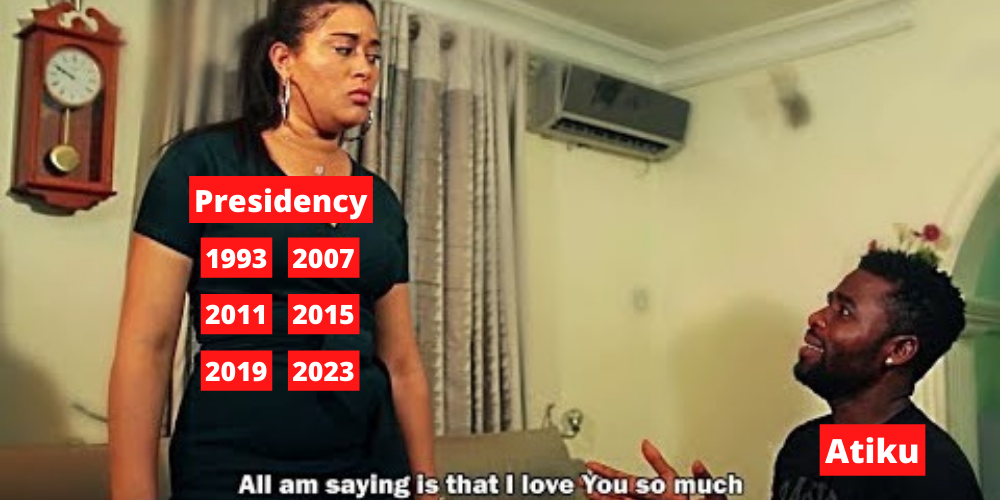
    Shekarau proves the science that Nigerian politicians can’t be trusted to stick to one party, and you can always expect them to move in the thirst for power. Even the Atiku that went to welcome him in Kano has moved across parties four times since 2007. Well, he wants to be president, and the game is the game. 

    Game of Votes

    What this culture of repeated defection highlights is there are no ideological principles guiding Nigeria’s politics. No wonder the country is in the state that it is.

    Have You Seen This Video?

    Question of the Week

    How many Nigerian political parties are participating in the 2023 general elections?

    Click here to tweet your answer to @ZikokoCitizen on Twitter.

    Ehen, one more thing…

    Buhari publicly assured Nigerians he’ll allow them to vote for whoever they want in 2023, and we can only wonder, “What kind of democratic president allows democratic stuff to happen?” Such a weird guy.

    Don’t forget to subscribe to the Game of Votes newsletter.

  • “The grass is always greener on the other side” is half the reason many Nigerians are jumping on the japa wave to move abroad. But even when you can’t see the greener grass, a lot of Nigerians just assume it’s there because they’re eager to escape the country. 

    Why You Should (Probably) Remove Northern Cyprus From Your Japa List

    Does it matter that you can’t find Cambodia on a map?

    One of the foreign countries that keep coming up as unsafe for Nigerians is Northern Cyprus. Officially known as the Turkish Republic of Northern Cyprus, this island nation is different from the Republic of Cyprus. Why?

    A brief history of Northern Cyprus

    Cyprus split into two in 1974 after years of hostilities between Greek Cypriots and Turkish Cypriots. The split was sealed when the Turkish Army invaded Cyprus under the pretext of protecting the interests of Turkish Cypriots. 

    The Turkish occupation of Northern Cyprus has made it impossible for anyone else to officially recognise it as a country. For example, Nigerians who want to travel there have to obtain a visa through the Turkish embassy.

    And a lot of Nigerians are going down that route to get their japa fix. But there are repeated red flags about the country for Nigerians.

    The red flag

    Why You Should (Probably) Remove Northern Cyprus From Your Japa List

    In October 2019, a 25-year-old Nigerian student, Ibrahim Bello, died in Northern Cyprus. Authorities claimed that he died by suicide with no foul play involved. But his family suspected plenty foul play and publicly pressed for answers.

    The Nigerians in Diaspora Commission (NIDCOM) used the opportunity of the family’s petition to raise alarm about the fate of Nigerians in Northern Cyprus. The agency’s director-general, Abike Dabiri-Erewa, announced in 2020 that 100 Nigerian students studying in Northern Cyprus died under mysterious circumstances between 2016 and 2020

    The Nigerian government expressed concern that authorities there failed to prosecute anyone for the apparent attacks on Nigerians. Even worse, a direct line of communication was missing because Nigeria has no diplomatic ties with island nation (because, well, it technically doesn’t exist).

    Two years after the first warning, the Nigerian government has raised alarm again. On August 25th, 2022, Dabiri-Erewa warned Nigerians against going over to Northern Cyprus for anything. She said authorities took no action on the cases of more than 20 Nigerian students killed there over the years.

    ALSO READ: “Northern Cyprus Can Be Scary for Nigerians” — Abroad Life

    Why do Nigerians ever go to Northern Cyprus?

    Why You Should (Probably) Remove Northern Cyprus From Your Japa List

    Nigerians flock to Northern Cyprus for education due to affordable tuition fees, like one Abroad Life subject told us. Travel agents also sell the country to potential Nigerian travellers without being honest about its problems. And over-eager travellers are likely to commit to travelling there without doing basic research that would turn up important information like the (il)legitimate status of the country.

    But since Nigeria has no diplomatic relationship with the country, it can be hard for the government to act in the interest of Nigerians when they run into trouble there.

    “If you ask Nigeria for help, we can’t do much,” Dabiri-Erewa warned on August 25th, 2022. Her statement is a diplomatic way of saying you’re on your own.

    Why You Should (Probably) Remove Northern Cyprus From Your Japa List

    So, the next time you go over your japa list because you want to escape the Nigeria that’s fashioned against you, weigh the pros and cons of Northern Cyprus very carefully.


    ALSO READ: How To Japa: Migrating From Nigeria


    Wouldn’t you like to read a newsletter that helps you dig into all the good, bad and extremely bizarre things happening in Nigeria and why they’re important to you? Then you should sign up for Game of Votes.

  • It’s simply impossible not to have noticed the presidential campaign of Bola Ahmed Tinubu. He’s not just the candidate of the ruling All Progressives’ Congress (APC), he’s one of those faces that have lasted in Nigerian politics as long as that stubborn piece of corn stuck in your teeth.

    Emi Lokan: Why Tinubu Feels Entitled to Nigeria's Iron Throne

    Tinubu’s long game

    Tinubu first won an election in Nigeria in 1992, a year that millions of people voting next year had not yet been born. His tenure as a senator didn’t last long due to General Sani Abacha‘s military takeover in 1993. But like yeast, Tinubu didn’t stay down.

    He contested and won the election to become the governor of Lagos in 1999 and was a thorn in the side of the Olusegun Obasanjo-led Federal Government for much of his eight-year reign.

    When Tinubu finished his tenure in 2007, he might have felt he was ripe for the presidency, but he had a problem: Olusegun Obasanjo, a fellow Yoruba man, had just finished a two-term tenure at the Aso Rock Villa

    The political climate was calling for a northerner to replace him in fulfilment of an unwritten gentleman’s agreement to rotate the president’s seat between the north and the south. 

    Tinubu realistically couldn’t make an immediate run for the presidency, and so his plotting began.

    Operation Emi Lokan

    Emi Lokan: Why Tinubu Feels Entitled to Nigeria's Iron Throne

    Tinubu’s 2023 campaign has been standing firm on an entitled slogan that it’s his turn to sit on Nigeria’s Iron Throne. “Emi lokan” was the soundbite of his infamous rant in June 2022 when the APC was considering choosing a consensus candidate that would likely not be him. Nigerians mocked him for his rant and the soundbite in particular, but Tinubu has turned around to make it the tagline for his presidential bid.

    Where exactly did the sense of entitlement come from? Let’s go back to 2007.

    2007

    In 2007, Tinubu was in control of the Action Congress (AC), a party with enough clout to contest a national election. But since he couldn’t compete because of his limited chances of victory, he needed a northern ally to use his formidable platform. 

    For the 2007 election, he found Atiku Abubakar, a vice president and outcast who left the ruling party to fulfil his own presidential ambition.

    Emi Lokan: Why Tinubu Feels Entitled to Nigeria's Iron Throne

    It was a plot convenience that worked for everyone

    It would appear that Tinubu’s plan in 2007 was to ride a northerner into Aso Rock Villa. The payoff for him would be the northerner’s support for his own shot at the presidency after eight years. He even tried to be appointed Atiku’s running mate, but they’re both Muslims and would have upset the typical religious balance of a presidential ticket. So Atiku said:

    Even though Atiku finished in the third position at the polls, Tinubu had hacked a formula to plot his way to Aso Rock Villa through delayed gratification. It was the perfect plan.

    2011

    By 2011, Umaru Musa Yar’Adua, the northerner who won the 2007 election, had died and Goodluck Jonathan, his vice president, stepped up as president. Jonathan, a southerner, contested for his first term in office in 2011, spitting in the face of the PDP’s rotational arrangement because he already had a taste of presidential power and wasn’t willing to let go.

    Emi Lokan: Why Tinubu Feels Entitled to Nigeria's Iron Throne

    But Tinubu failed to run yet again, offering up the platform of the AC, already renamed Action Congress of Nigeria (ACN) at the time, to another outcast northerner, Nuhu Ribadu. In fact, all the four aspirants who contested for the ACN’s presidential ticket were northerners even though southerners dominated the party. 

    Again, the gambit failed and Ribadu finished third. But even before that election concluded, Tinubu’s ACN was already plotting with a more established northerner for a merger.

    In the search for a solution to his presidency problems, Tinubu found one Muhammadu Buhari.
    Emi Lokan: Why Tinubu Feels Entitled to Nigeria's Iron Throne

    2015 and 2019

    By 2015, Tinubu’s ACN had merged with other established opposition parties including Buhari’s Congress for Progressive Change (CPC). This merger gave birth to the APC we know today.

    Buhari had been running for the president’s seat since 2003 with little success. But with Tinubu’s political “structure”, he made new inroads to southern votes and the APC rose to power on the promise of change.

    Emi Lokan: Why Tinubu Feels Entitled to Nigeria's Iron Throne

    Even then, Tinubu was desperate to become Buhari’s vice president. The only problem, again, was they’re both Muslims and that made the ticket politically-radioactive.

    And even though Tinubu didn’t get what he wanted then, the only thing that sustained him was the thought of biding his time for what the future held for him. In 2015, he did his part and put a northerner in Aso Rock Villa. All he had to do was wait eight years for his turn.

    Emi Lokan: Why Tinubu Feels Entitled to Nigeria's Iron Throne

    2023: Emi lokan 

    According to the permutations of the unwritten rotation policy which has now been thrown inside the dustbin, 2023 is the time for another southern president after eight years of a northern one at the helm of power.

    When Tinubu had his infamous “emi lokan” rant in June 2022, he didn’t just weaponise it for himself, but also for his ethnic Yoruba group. This is despite the fact Nigeria already had a Yoruba president for eight years, unlike the southeast region which has produced none. 

    Emi Lokan: Why Tinubu Feels Entitled to Nigeria's Iron Throne

    Irrespective of his attempt to make it about the south, it’s clear that Tinubu’s ambition is solely about him and the long game he’s been playing down the length and breadth of Nigeria for years, just so he can retire in Aso Rock Villa

    Tinubu now has what he wants: his name on the presidential election ballot, his very own Muslim-Muslim ticket and a shot at Nigeria’s Iron Throne. But will he ever sit on it?


    ALSO READ: Atiku Can’t Stop Running for President Despite His Record


    Wouldn’t you like to read a newsletter that helps you dig into all the good, bad and extremely bizarre things happening in Nigeria and why they’re important to you? Then you should sign up for Game of Votes.

  • Governor Nyesom Wike of Rivers State is undoubtedly the hottest political bride in Nigeria right now. 

    Since his presidential ambition crashed after losing the ticket of the People’s Democratic Party (PDP) to Atiku Abubakar in May 2022, Wike hasn’t allowed anyone a moment’s rest. He’s been sleeping and waking like this:

    No one doubts Wike’s political weight and the kind of influence he can have on the direction of votes for the 2023 presidential elections. The man himself knows this and has been lording it over everyone.

    On August 25th, 2022, Wike kicked the drama up a notch with an eventful trip to London from which we learnt quite a few lessons.

    Wike is a hot kek

    On his London trip, Wike met Atiku in what many PDP operators would hope is the end of his theatrics. But he also met with the candidates of the All Progressives’ Congress (APC), Bola Tinubu, and Labour Party (LP), Peter Obi. That’s the kind of reverence top presidential candidates usually reserve for OG former Nigerian leaders like Olusegun Obasanjo, Ibrahim Babangida, Yakubu Gowon and Abdulsalami Abubakar.

    It’s a testament to how much everyone understands Wike’s outsized influence and wants him to pitch his tent with them.

    Obi is (most likely) Obasanjo’s candidate

    Obasanjo has been shy about publicly endorsing any of the candidates for the 2023 presidential election, but it’s almost impossible that he won’t do it at some point. 

    And the former president appeared to show his hand on Wike’s tour by participating in the governor’s meeting with Peter Obi. Since his dramatic exit from the PDP, Obasanjo has taken a liking to popular anti-incumbent candidates — Buhari in 2015, Atiku in 2019, and now Obi in 2023. 

    Time will tell where he throws his hat but it seems he’s leaning towards Obidience.

    Governance is on autopilot, sorry to Nigerians

    There were at least five current state governors in London with Wike and Tinubu attending to political business that has nothing to do with the people who elected them into power. 

    Governors Seyi Makinde (Oyo), Samuel Ortom (Benue) and Okezie Ikpeazu (Abia) all followed Wike on his London tour. Crowd Controller Governor Babajide Sanwo-Olu (Lagos) and Governor Kayode Fayemi (Ekiti) were also part of Tinubu’s team for the meeting with Wike.

    These governors have less than a year to the end of their current terms and aren’t too invested in governance anymore, but the politics that prolong their stay in power. 

    The only people that suffer are the ones who gave them a taste of power to begin with.

    Wike is Captain Nigeria

    On their return from London, of course, the actors tried to spin the trip as some holy trip they took in the interest of Nigerians. Ikpeazu called the trip a “rescue” mission for Nigeria and Ortom said they’re “looking at the larger picture”.

    Wike also said all the trouble isn’t about him or his group but in the service of Nigerians. And if you believe all of that, we have a profitable Nigerian oil refinery to sell you.

    There’ll be more meetings

    If you think meetings in London would be enough to calm Wike’s blood and get him to fall in bed with one candidate, then think again. The London tour is only one phase of his consultation and he’s not done. There are more meetings to follow for the most in-demand political bride in the country. Everyone will have to wait to see who Wike walks down the aisle with for the 2023 elections.

    Hopefully, he brings his merry band.

    Wouldn’t you like to read a newsletter that helps you dig into all the good, bad and extremely bizarre things happening in Nigeria and why they’re important to you? Then you should sign up for Game of Votes.

    ALSO READ: What We Learned From the PVC Registration Drive Now That It’s Over

  • So many things don’t change about a typical Nigerian election: candidates, colourful election rallies, laughable campaign promises and of course, fake news.

    Who's Responsible for All the Fake News Around the 2023 Elections?

    Fake news is typically weaponised to manipulate perceptions about candidates or situations and we’re already seeing, in real time, how that’s affecting Nigeria’s 2023 presidential election.

    It’s raining fake news

    Campaigns for the 2023 elections don’t officially start until September 2022, but the pre-season campaign has been littered with an abundance of misinformation. On August 9th, 2022, Ghanaian president, Nana Akufo-Addo, raised alarm on Twitter that his name was being used for dirty business in Nigeria.

    He was responding to a story that was trending on social media, where he allegedly wrote a letter to the presidential candidate of the All Progressives Congress (APC), Bola Tinubu. In this letter, he supposedly advised Tinubu to consider his supposedly frail health and step down for Peter Obi, the presidential candidate of the Labour Party (LP).  The long and short of Akufo-Addo’s reaction was that the story was fake and the reply was:

    Who's Responsible for All the Fake News Around the 2023 Elections?

    Obi has also been the subject of endorsements from Hollywood stars — endorsements that have turned out to be fake.

    Who's Responsible for All the Fake News Around the 2023 Elections?

    Tinubu has featured in another story involving the circulation of a presidential campaign council list that he said was fake.

    There have also been fake social media accounts of prominent people like the former president, Olusegun Obasanjo, being used for misinformation.

    Who's Responsible for All the Fake News Around the 2023 Elections?

    This account is fake

    But who cares about fake news?

    Every fake story allowed to spread unchallenged pollutes the public consciousness heading into the elections. Fake news can be harmless mischief, sure, but it can also be malicious and dangerous.

    And the tension of this current fake news season is already getting to the presidential candidates themselves. 

    Tinubu has called out Obi’s supporters to stop spreading lies against him. In an indirect response, Obi accused faceless “opposition” of creating misinformation materials for his benefit so that his campaign can be blamed.

    How to deal with fake news

    Unfortunately, it’s impossible to completely eliminate fake news online, whether it’s created unintentionally or intentionally to manipulate. But it doesn’t matter what the intention of creators of fake news is, they need unsuspecting people to carry this message.

    It’s important for internet users to step into the gap and ensure they don’t help the spread of fake stories. Because, more than the creators, it’s the people who share fake news that really give such news life. This is why it’s important that everyone is cautious about the kind of stories they share online.

    So how can I help to stop the spread of fake news?

    Who's Responsible for All the Fake News Around the 2023 Elections?

    There are a few obvious things to look out for to help curb the spread of misinformation:

    Question the source

    The source of a message can be as important as the message. Before you share a story of any weight, ask yourself if you trust the source to be telling the truth.

    Corroborate

    If there’s an opportunity to double-check the information from other sources, do that for sure. Trust is fine, but verify first.

    Check your bias

    Emotionally-charged topics like elections can make us more likely to fall for fake news, especially when it’s something that fits neatly into our biases. Always check to see that your judgement isn’t clouded by your bias.

    Think twice before sharing

    Before you share that juicy story about a candidate or party, are you sure that you need to? You need to answer this question especially if you can’t find corroborating sources, or feel your bias is in the way of good judgement.

    Don’t think you’re too smart to be fooled

    Who's Responsible for All the Fake News Around the 2023 Elections?

    It can be ridiculously easy to fall for fake news, no matter how refined you think you are. This is why it’s important that you tick all the boxes on this list. Scrutinise everything carefully. Be curious and don’t stay stuck inside your bubble.

    Burst it

    You may not create fake news, but you’re needed as fuel to make it spread to more people.

    ALSO READ: What We Learnt About the 2023 Presidential Candidates at NBA Conference

  • To some people, Nigeria is a land with milk and honey flowing into the pockets of politicians. But to others, Nigeria is a country living a fake life just to stunt on Instagram.

    Why Buhari Isn't Making Enough Dough for Nigeria

    In reality, Nigeria’s a country neck-deep in debt with its borrowed milk and honey still flowing into the pockets of politicians.

    As a business, Nigeria is a company in distress. We recently found out that the country isn’t making enough money to even service the debt it owes. Where did all the money go?

    In a recent meeting at Aso Rock Villa, senior civil servants reminded President Buhari that the civil service needs a general salary review because sapa is in town and taking hostages. Buhari offered some excuses explanations on why the salary review is unlikely to happen. 

    Why? His government isn’t making enough dough for Nigeria.

    Why Buhari Isn't Making Enough Dough for Nigeria

    And what were the reasons Buhari highlighted for why Nigeria’s not making enough?

    Thieves

    Nigeria is one of the biggest producers of oil in the world. And oil is the country’s biggest source of revenue. But thieves in high places are stealing the country’s oil and pocketing trillions of naira that belong in the treasury. This culture of theft has always existed but got so much worse under the Buhari administration. 

    Why Buhari Isn't Making Enough Dough for Nigeria

    Nigeria was producing 2.13 million barrels of oil per day in 2015, but that has dropped to 1.25 million barrels per day as of May 2022.

    So it’s convenient that Buhari will use theft as an excuse even though he’s not doing enough to curb it. His administration recently promised to expose the “big men” responsible for all the stealing, but we’re still waiting for him to expose the ones funding terrorism, so don’t hold your breath.


    ALSO READ: Who Are the Biggest Onigbese Governors in Nigeria?


    Vladimir Putin, sort of

    Why Buhari Isn't Making Enough Dough for Nigeria

    In February 2022, President Vladimir Putin ordered Russian troops to invade Ukraine because he didn’t like his neighbours making powerful new friends. The ongoing war has disrupted the global economy and given many world leaders a convenient excuse for their domestic struggles. Of course, Buhari isn’t the type to let a good excuse go to waste so he’s blaming the war for Nigeria’s revenue issues.

    COVID-19

    COVID-19 came for everything when it ripped through the world in 2020. Nigeria even slipped into a recession after months of socio-economic lockdown across the country. So it’s only natural that Buhari would blame the virus for Nigeria’s long-lasting struggles with generating revenue. 

    Security investment

    Buhari told the civil servants his administration has poured so much into fixing security that other sectors which could boost the economy have suffered. 

    It’s the kind of excuse that made him shrink Nigeria’s Excess Crude Account (ECA) from $2.5 billion in 2015 to $376,655 in July 2022. 

    He justified the security spending by saying it’s finally being rewarded, but are Nigerians safer now than they were seven years ago?

    Why Buhari Isn't Making Enough Dough for Nigeria

    ALSO READ: How Buhari Negotiated With Terrorists and Lost

  • When you’re caught pants down doing something you probably shouldn’t be doing, the honourable thing to do is be humble and show remorse.

    There's a Place for Animals in the Nigerian Public Service

    But for people in the Nigerian public service, animals have become the ultimate scapegoats for all manner of fraud. 

    Animals want to have fun too?

    In 2018, an audit found that ₦36 million had magically cat-walked out of the accounts of a Joint Admissions and Matriculation Board (JAMB) office in Benue State. When the EFCC identified the main suspect, she blamed a mysterious snake who conspired with her housemaid for the theft. 

    There's a Place for Animals in the Nigerian Public Service

    Shortly after, a former senator, Shehu Sani, speculated that monkeys raided the home of another senator and stole ₦70 million. It was more of a joke, but the public ran with it and it joined the collection of bizarre animal events in Nigeria.

    And, of course, it’s impossible to forget President Buhari aka Travel Blogger’s brush with his own animal episode. When he returned from three months of medical leave in the United Kingdom in 2017, rats were presiding over the affairs of his office. This forced him to work from home for three months before remote work became a global phenomenon three years later.

    There's a Place for Animals in the Nigerian Public Service

    We can now add another animal to the collection in 2022

    In 2013, the management of the Nigeria Social Insurance Trust Fund (NSITF) sent more than ₦17.2 billion into various untraceable accounts. The Office of the Auditor General of the Federation (OAuGF) audited the agency’s accounts in 2018 and found these shady transactions. In a sane world, these spendings were supposed to have supporting documents to justify the transfers, but auditors didn’t find any.

    And this is where the Senate Public Accounts Committee (SPAC) stepped in. The committee called on present and past officials of the NSITF to explain what happened with the money. 

    All the Senate needed to see were payment vouchers and supporting documents relating to the transfers. The absence of these means Nigerians would just have to accept the words of the NSITF that the fund was spent wisely.

    Like on an owanmbe

    Umar Abubakar was the managing director of the NSITF when the transfers were made in 2013 but he distanced himself from making any explanations because he wasn’t in office anymore when the audit happened in 2018. 

    There's a Place for Animals in the Nigerian Public Service

    Adebayo Somefun was the managing director during the 2018 audit and simply told the panel that the NSITF’s account section should be able to trace the documents.


    ALSO READ: ₦80 Billion Fraud: Accountant-General Has Been Doing More Than Accounting


    Enter the termites

    Things only got interesting when the current managing director, Michael Akabogu, finally told the panel that the documents actually exist and there’s nothing shady going on. The only problem, according to him, was that the documents weren’t properly stored and had fallen victims to rain and termites. 

    There's a Place for Animals in the Nigerian Public Service

    How did that happen? Apparently, the NSITF kept the documents in a container that was abandoned in an isolated area at its Abuja office.

    Does it sound fishy at all that the documents that should prove ₦17.2 billion worth of fraud didn’t happen nine years ago were left for termites to feast on? 

    We’d like to hear from these termites what their interest is in a corruption probe of this magnitude. At least put them on trial for obstruction of justice or something.

    What will happen now?

    It just so happens that shady transfer of money isn’t the only thing that the audit turned up. Auditors also found that the NSITF routinely pays salaries to dead or retired staffers. 

    There's a Place for Animals in the Nigerian Public Service

    The NSITF is also under the microscope for buying vehicles and other properties without proper documentation.

    The Senate committee asked the managing directors to reappear for another round of questioning in September to clear the air on these other allegations. And we imagine there are many animals in Nigeria right now living in dread of being accused of something they probably didn’t do.

    There's a Place for Animals in the Nigerian Public Service

    Or maybe these animals are actually as guilty as charged and are just preying on the public’s disbelief. And if we allow these animals to continue to get away with it, don’t be shocked when hyenas steal ballot boxes in 2023 or dogs drive dubious-looking bullion vans filled with money for vote-buying.

    There's a Place for Animals in the Nigerian Public Service

    ALSO READ: How to Get Away with $9.8 Million — the Andrew Yakubu Story