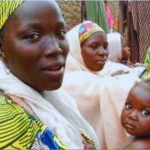
• A Week In The Life is a weekly Zikoko series that explores the working-class struggles of Nigerians. It captures the very spirit of what it means to hustle in Nigeria and puts you in the shoes of the subject for a week.


    The subject of today’s “A Week In The Life” is an Alaga Iyawo. These are women who host Yoruba wedding ceremonies, sing songs of praises, double as MC’s and serve a host of other functions. She talks to us about not liking parties even though her job revolves around them, the challenges she faces in day to day life, and what a perfect retirement looks like for her. 

    MONDAY:

    The first thing on my mind when I wake up today is that I’ve been an Alaga for weddings for close to 22 years. And that feels unreal. It feels like a lifetime ago when I stumbled into this job. Becoming an Alaga for me was by luck/chance because I didn’t go to school to learn neither was I trained; it just happened. 

    In those days, as a youth in church, we used to rally round to help members of the church getting married — planning, declaration, coordination and any other thing. It was during one of these moments my journey started. There was a particular sister we helped out with planning her wedding, and it is wasn’t until the day of the wedding that we knew we were supposed to get an Alaga. The only reason we even knew was because the groom’s family came with theirs. In the midst of all the confusion, all the other sister’s pushed me forward saying: “Sister Bisi, you can do it. You can talk very well.” I mean this was true; I was an interpreter in church, I sang in the choir, and I was also a teacher in the children department, but the fact remained that I had never done something like that before. As if it was ordained by God, I now wore one very fine cloth that day. Grudgingly, I stepped up to represent the bride, and that was the beginning of my journey. It wasn’t perfect and I’m thankful I had help from someone who guided me on what to do and say. I was also lucky that it was a small church event, so we just said opening prayer, praise the Lord, let the bride come in, let the groom come in and we were done. 

    However, my second time on the job was intentional. After witnessing my performance, one of the sisters in church said she was not going to pay what the professionals were asking for, and I had to be her own Alaga. Her argument was since I had done it for someone else, I could also do hers. I told her I was scared and that event was impromptu but all she told me was to go and prepare. Because I was unmarried at the time, I spent a lot of hours watching videos from my sister’s wedding to learn the mannerisms, songs, routines etc. Thankfully, I pulled it off. After the success of the second wedding, I officially became the church’s Alaga. Couples would come in for marriage counselling and the church would provide options for them to save money, part of which usually involved my services. 

    That’s how I began full time with no prior training or anything. God just showed me that this is a calling, and ever since then, I’ve been able to train at least over 120 people who are doing well. That alone is enough reason for me to get out of bed every morning. 

    TUESDAY:

    One question people ask me is “What do we do with all the money we collect at weddings?” I try to break it down for them. Firstly, the money is for the family. We share the proceeds into like thirteen envelopes which are then distributed to the family members on the paternal and maternal side. The money is a token to appreciate people who took off time to attend the wedding. It’s not as if the money will change their lives, because some people get as low as ₦200 or ₦500, but it’s for them to say that during so and so wedding, they went home with something. 

    We also collect specific money like money for unveiling the bride, which goes to the bride. There’s money for reading letter which goes to the person who reads the letter the couple writes to each other. We also have “aeroplane” money for people who bring in the wife to the venue. 

    I make my own money from being sprayed during the programme. Or after the groomsmen finish prostrating to both families, I ask them to bless me with anything they have. The reason why it seems like some of my colleagues charge a lot of money from the groomsmen and bridesmaid is that they probably collected a cheap amount for their services. Parents usually boast about the calibre of people coming to the wedding to make sure we don’t charge a lot. In cases like that, the Alaga has to make up for the difference in fees. That means that everyone present at that ceremony will pay through their nose. I charge a fixed fee before the wedding, and that’s why I don’t collect money more than once at the venue, and I remit the money for the family to the family. 

    There’s a class of people called “no bowl show”, where the family instructs us not to collect any money at the venue. In cases like that, we charge them two times the fee.

    WEDNESDAY:

    Every job has challenges, and my own is not an exception. Sometimes, the other side [bride or groom] might also have their own Alaga, and the person is trying to show off their talents or skills while you’re working on a fixed time, and that can be frustrating. It can cause a lot of issues when both of you are not the same page. You just have to pray to meet someone who is understanding.

    Also, Nigerians do not keep to time. Sometimes they know an event won’t start till 2 p.m., but they’ll tell you to come by 8 or 10 a.m. So I end up spending time I could have used on other productive things waiting for the event to start. I went for an event on December 24th that was supposed to start by 8 a.m. In my head, plus Nigerian time, we’d start at 10 a.m. and be done by latest 2 p.m — I’d still have ample time to get home and make Christmas plans for my family. This event didn’t start until some minutes before 1 p.m. When I wanted to introduce the groom, I was told that he was stuck in traffic. Thank God I went along with one of my colleagues that day because after waiting for a few minutes and no show, I just picked up my car and left the venue. My colleague was the one who anchored the rest of the event. 

    Another issue that is now “normal” is men making advances at me during this work. It’s always annoying when some father of the groom or bride makes advances at me because most times, I get close to the mother of the bride or groom first. Imagine talking to someone for months and planning a wedding with them; there’s a form of friendship that occurs from spending a lot of time together. Then suddenly on the day of the event, her husband is making a move on you. It’s very somehow. I just chalk it up to men’s nature, ignore and face my work. I know my worth, and I know what the men are doing is all noise.  

    THURSDAY:

    A good Alaga must have a very good dress sense. They must also smell nice, look nice and have a good voice. They should be able to coordinate themselves. If you can’t control your temper you can’t do this work. Mostly because people will step on your toes intentionally or unintentionally. To succeed in this job, you also need to learn time management — don’t waste people’s time and make sure you finish early enough for the family to entertain their guests. These are the things any exceptional Alaga must know. 

    I’m always training people. In fact, I’m starting another training in February. Today, I’m counting the number of students who have enrolled for the class, and ten slots have been filled out the twenty I planned for. I’m glad that people are interested in learning about this job. It’s very lucrative to use your voice and talent to make money. All you have to do is transport yourself to the venue and you’re good. I call my tribe the “Exceptional Alagas” because we train them on how to sing, coordinate events and not be greedy. The beauty is that the training happens over WhatsApp, so it accommodates my busy schedule. After the online class, we have an internship period where people shadow professionals for six months to a year. I’m always excited to pass on knowledge to the younger generation. 

    FRIDAY:

    Without my husband, I wouldn’t be anything at all and I’m not even joking. If I didn’t marry him, I don’t see any man who could have married me. Because of how demanding my job is, it’s not easy combining it with family duties. But my husband is so understanding. In fact, he’s unique. In addition to my Alaga work, I also run a jewellery and Aso-Oke store, and my office is quite a distance from my house. What this means is that I leave the house from Monday, and I don’t return home until Saturday. My husband holds down the house until I’m back. It helps that I have grown-up children and always make arrangements before leaving the house, but there’s just something about a man who supports your career no matter what you choose. My husband and I both started our careers as teachers until I decided to pursue this work full time. When I told him, he agreed. And ever since then his okay has been okay. I don’t know how many men can do that for a woman. 

    SATURDAY:

    I have an event today, so I’m up early to prepare. People ask me how I’m always in the mood to perform my duties. Maybe because they think it requires so much energy. I tell them that there’s no dull moment as long as it’s work. The only thing is that I don’t party outside of work. If I’m not with the mic at an event, it’s rare to catch me attending a party. I get fed up and pissed easily at parties. Even when I’m working, once I’m done with my duties, I’m out. I always want to retreat into my shell and go to either my house or the office. 

    I know I can’t do this job forever and that’s why I’m planning for retirement. All these other businesses [Aso-Oke] are my retirement plan, God willing. When I look back at my life, I see that God has been able to do what us men can’t do through this job. At least I can say that through this job we’ve gotten houses, we’ve gotten cars, we’ve started a business and we’ve trained our children. I want to retire by the time I turn 60, 65. At least by then, my kids will have given me grandchildren. At that point, all I want to do is focus on my family. 


    Check back every Tuesday by 9 am for more “A Week In The Life ” goodness, and if you would like to be featured or you know anyone who fits the profile, fill this form.

    [donation]

  • Nigeria’s President, Muhammadu Buhari opened 2021 with a national address to Nigerians. We know you did not watch it, so here are seven things Buhari said in his address. 

    1. 2020 was a bad boy

    “The year 2020 was one of the most trying years since our existence as a Nation”.

    Buhari’s address opened with him acknowledging that 2020 was a difficult year for Nigeria. We agree; ignoring the death of peaceful #EndSARS protesters killed in public view must have been very difficult.

    2. Our enemies did not win

    “We have confounded the many pundits at home and around the world who never gave the newly-born country that emerged unto the world stage on 1st October 1960 a chance of surviving much longer than a few years.”

    Buhari’s address reflected on Nigeria’s 60th independence anniversary that happened last year, stating that our enemies said we would not survive but look at us today.

    3. Home or away, Nigerian youths are proper ballers

    “Our young people are our most valuable natural resource, at home and abroad. Their ingenuity, creativity, innovation and entrepreneurial spirit is evident to all. Many of our young people are excelling in various spheres of life including sports, entertainment, information and communication technology, commerce and are globally recognised as achievers.”

    Buhari admits here that the youths have brought their A-game, stop calling them lazy. Let us support them small, especially those Paystack boys.

    4. We will SEA what we can do

    “This administration would continue focusing on delivering key strategic priorities under our “SEA” – (Security, Economy and Anti-Corruption) Agenda.

    SEA is the version of Yar’Adua’s 7-point-agenda that did not finish from school.

    5. We have been trying since Jonah left, ha, you people should see nau

    “Nevertheless, I call upon all Nigerians to carefully recall the circumstances of our coming to office, the facts on the ground and the resources at our disposal since 2015 with the accomplishments of this administration”.

    Buhari said he has been trying since 2015 — e no just easy to be starboy. That Jonah boy did not do his work, so Buhari says he has to be the tough guy.

    6. COVID-19 vaccine fit come and e fit no come

    “…Keeping our country safe from a resurgent cycle of COVID-19 as this administration finalises its plans to procure and efficiently and effectively distribute the COVID-19 vaccines.”

    That COVID-19 vaccine is expensive small o, but I’ll see what I can do.

    7. I remain the starboy

    “As your elected President, my pledge to you is the same as it has always been; I will play my part fully and without fear or favour.  I invite all of us to do the same”

    Buhari has noted that he remains the baddest boy in the hood, and you should support his ambitions, even if you do not believe in him dreams.
  • On March 10 2020, I published the first-ever “A Week In The Life” story. It addressed the struggles of a female Keke driver who was punching her weight in a male-dominated field while also doubling as a breadwinner. This theme of understanding people’s work struggles set the tone for the rest of the episodes in the series.

    Since then, I’ve spoken to over 40 Nigerians with different jobs, struggles, and wins. These stories have opened minds, sparked conversations, and changed the life of subjects along the way.

    As the year comes to a close, I’ve gathered 10 of the biggest hits in this series.

    Tracee Ellis Ross Omg GIF by Golden Globes

    1) A Week In The Life Of An NCDC Call Centre Agent

    Today’s subject is Joke, a call centre agent at the Nigeria Centre for Disease Control (NCDC). She tells us how her life has changed since Coronavirus was first announced and what she looks forward to the most after the pandemic is over.

    Coronavirus NCDC

    Read here.

    2) A Week In The Life Of A Sex Worker

    Today’s subject is *Yemi, a 27-year old sex worker who tells us how sex work has affected her outlook on life.

    sex worker

    Trigger warning: Strong content of drug use and rape ahead.

    Read here.

    3) A Week In The Life: The Agbero Trusting God For A Better Life

    The subject for today’s “A Week In The Life” is *Tola. He collects money at the bus park, and he’s what Nigerians refer to as Agbero. He talks about wanting to quit his job, his faith in God and why he shows up every day.

    Agbero

    Read here.

    4) A Week In The Life: A Sex Toy Seller Juggling Business With Her Christian Faith

    Today’s subject is Amope, a Nigerian woman who sells sex toys. She walks us through business during COVID, her Christian faith, and not being ashamed to promote her business using her face.

    A Week In The Life

    Read here.

    5) “People Ask Me For Body Parts” – A Week In The Life Of A Mortician

    The subject for today is Mr A, a mortician. He talks about his first day on the job, people asking him for human parts, and why he lives intentionally.

    Read here.

    6) A Week In The Life Of A Coffin Maker

    Today’s subject is Chief Ogunsekan, a coffin maker. He tells us how being the boundary between the living and dead has shaped his outlook of the world.

    A Week In The Life

    Read here.

    7) A Week In The Life: The Online Sex Worker Who Hates Her Body

    The subject of today’s “A Week In The Life” is an online sex worker in her early twenties. She talks about hating her body, the Nigerian factors like NEPA that affect her work, and her biggest fear of one day getting exposed.

    Read here.

    8) A Week In The Life: Jumia Delivery Agent By Day, Family Man By Night

    The subject for today’s A Week In The Life is Micheal, a Jumia delivery agent. He walks us through combining being a delivery agent with fatherhood. The challenges of business in a pandemic and his plans for the future.

    A Week In The Life

    Read here.

    9) A Week In The Life: A Tanker Driver Living Her Best Life

    The subject of today’s A Week In The Life is Adeyemi, a tanker driver. She tells us about being a woman in a male-dominated field, dreaming big, and discovering herself through her job.

    A Week In The Life

    Read here.

    10) “I Don’t Want People To Say I Eat Too Much”— A Week In The Life Of A House Help

    The subject of today’s “A Week In The Life” is Mercy. She’s a house help in her early twenties. She talks about leaving home to come to Lagos, the difficulties of her job and how bosses can be mean to house helps.

     A Week In The Life

    Read here.


    Check back every Tuesday by 9 am for more “A Week In The Life ” goodness, and if you would like to be featured or you know anyone who fits the profile, don’t hesitate to reach out. Reach out to me: hassan@bigcabal.com if you want to be featured on this series.

    [donation]

  • Citizen is a column that explains how the government’s policies fucks citizens and how we can unfuck ourselves.

    On August 20th, 2019, the Federal Government of Nigeria introduced “Operation Ex-Swift Response”. The goal of the operation was to reduce insecurity through a complete closure of Nigeria’s land borders.

    In the operation, the Nigerian Customs Service (NCS), the Nigerian Immigration Service (NIS), the Armed Forces of Nigeria (AFN) the Nigerian Police Force (NPF), and the Office of the National Security Adviser (ONSA), came together to tackle terrorism, armed banditry, smuggling, the proliferation of small arms and light weapons and other things.

    Over a year later, the Federal Government of Nigeria has now called off the operation and has consequently reopened four of Nigeria’s land borders – Seme, Illela, Maigatari and Mfun.

    Read: Border Crossings In Africa Ranked From Most To Least Stressful

    According to the Nigerian Customs Service, these are the illegal items that were seized during the course of the operation:

    1) 134,042 bags of parboiled foreign rice

    2) 9,600 bags of NPK fertilizer

    3) 1,791 vehicles

    4) 3,565,461.9 litres of petrol

    5) 5,007 drums filled with petrol

    6) 68,436.3 jerrycans of petrol

    7) 130 engine boats

    8) 847 motorcycles

    9) 17,212.6 jerrycans of vegetable oil

    10) 813 packs of Tramadol

    11) 274 bags of cannabis

    The Nigerian Customs Service also put the value of these items seized at ₦11,030,062,952.50 naira.

    Read: “Border Closure Is Only Enriching People: A Week In The Life Of A Smuggler”

    We hope you’ve learned a thing or two about how to unfuck yourself when the Nigerian government moves mad. Check back every weekday for more Zikoko Citizen explainers.


    [donation]

  • “A Week In The Life” is a weekly Zikoko series that explores the working-class struggles of Nigerians. It captures the very spirit of what it means to hustle in Nigeria and puts you in the shoes of the subject for a week.


    The subject of today’s “A Week In The Life” is a 60+ woman who runs a pure water manufacturing company. She talks to us about how pure water is made, the challenges involved and her plans for retirement.

    MONDAY:

    Every day by 7 a.m, I’m awake. I wake up early for two reasons — to motivate my staff to start the day early and to also prevent pilfering of the pure water. Manufacturing water is a tough and laborious business because, in addition to facing a people problem [good non-thieving employees are scarce], the day starts really early and sometimes doesn’t end until midnight. 

    Trucks loaded with water leave the factory at 7 a.m. and the rest of my day is divided between calling distributors to confirm if they received their order or calling drivers to deliver water to certain areas. Another portion is spent troubleshooting over problems like broken-down trucks, flat tires, and fuel problems. To reduce this, I ensure that I do early morning inspections before the trucks leave the premises. However, we still encounter issues here and there. The last portion of my time is allocated to cash collection: adding it up, and comparing with the total amount of water sachets produced. Sometimes, book balancing doesn’t end until midnight because we try to balance the sales for the particular day to avoid stories that touch.  In between all of this, I have to keep an eye out for members of staff who might be trying to cheat me. I get so engrossed with doing so many things that I sometimes forget to eat. 

    However, today is different. I’m not going through any of the usual stress. I’m currently on vacation and my son in charge of the factory. I plan to rest and spend some time with my husband because I too like to enjoy life.

    TUESDAY:

    Many people aren’t aware of the process involved in manufacturing pure water.  Truthfully, there is not much of a difference between how bottled water and sachet water are made. Bottled water is just an elitist way of drinking water because of the packaging. 

    The very first step in setting up is getting a borehole. If you’re lucky, you get somewhere with very good soil, like my area, which means your water won’t require a lot of treatment. After getting the water source, it has to be tested for acidity/alkalinity because most of the water from a borehole is acidic and needs to be treated before consumption — the neutral point for drinking water is between 7 – 8.  

    To start the process, water from the borehole is pumped into big plastic Geepee tanks and this is called raw water. At this point, I add 3g of Ozonator to purify the water. 

    The next step is to pass this “raw water” through a sand media containing different sizes of pebbles and gravels. This process filters the water and removes impurities. 

    Then this impurity-free water is passed through an activated carbon media tank, which removes smell and taste and gives the water a clean sparkling taste.

    After this stage, the water is passed into a big microfilter. Then it goes into the production hall where you have more mini filters — a five-micron mini filter, a mini carbon filter, a one-micron filter and a 0.5-micron filter. The “final water” after this stage then passes through a UV light apparatus that kills all the germs and bacterias that may have been introduced throughout the process. 

    At this stage, the water is ready for consumption and packaging. We have a machine called the Dingli machine which fills polythene printed bags with water. These polythene bags contain the company’s design and logo and are attached to the machine. The Dingli machine has temperature controls that seal the edge and the chest of the nylon as water fills into it. 

    After water fills the bag, it drops down sealed. And we have people called baggers who pick up the sealed water and arrange them in 20 pieces inside an ordinary polythene nylon bag. Then you get bags of pure water, which are transported into the truck and ready for sale.

    It’s sad that after all of this process, people still think water shouldn’t be sold because it is gotten for “free.” They don’t consider all the steps that happen before the water is made fit for consumption. 

    WEDNESDAY:

    Have you ever wondered why water sometimes has taste, especially after going through the rigorous process of purification? The answer is simple: polythene nylons for packaging the water. I use three to four suppliers of sachet water nylons, and my best customers so far have been Indians. I had to ditch my Nigerian supplier because I was always having issues with his nylons.

    One time he bought fake ink that affected my business. Fake ink doesn’t dry well on nylons and because a lot of our customers display their bags of water under the sun, the ink leeches into the water from the nylon and changes the taste. A recent incident was so bad that I had to exchange all the contaminated bags with new nylons supplied by the Indians. Not only did the incident set me back by hundreds of thousands of naira, but it also solidified my decision to ditch the Nigerian company for good. The whole experience left a bad taste in my mouth. 

    It’s sad that with all of these issues, distributors still make more than manufacturers. We sell 11 bags of water to them at ₦1,000, and they retail between ₦120 – ₦150. We need to phase out the distributors and sell directly to retailers or consumers.

    THURSDAY:

    It saddens me that the pure water business is not as lucrative as it used to be. In 2006 when I started, I was making an average of ₦800,000 per month in profit. The highest I ever made was about ₦1,000,000 million in profit. I remember that I’d drive the truck myself alongside my motor boy and we’d go supply pure water. This endeared people to me because I was a woman and also the MD of my company. They’d always say “We don’t see the MD’s of these other pure water companies coming to meet us, and that’s why we’ll patronise you.” Sometimes they’d even come directly to the factory to buy if they didn’t see the truck. In addition to all of this, my quality product made people want to associate with me.

    However, these days, the story has changed. Some months we’re barely able to pay full salaries — especially the months where I’m not around to supervise the workers. This is as a result of many things: increased cost of materials, weak naira, power issues. In the past, the profit margin would have taken care of the cost of fueling both the generating sets and the vehicles, but not anymore. Production machines that used to cost ₦300,000 were sold at ₦800,000 the last time we bought it. And with the dwindling naira, only God knows how much it’ll go for now. With all of these increased costs of production, pure water is still sold at a fixed price. If you raise your selling price people will just buy from another seller. 

    Then you also have the people problem. It’s difficult getting trustworthy employees. A lot of my setbacks have been as a result of people problems. To reduce the stress of commuting, my employees live in my house. However, this has proved to be my undoing because I’ve had cases where I’ve caught some of them stealing diesel or petrol. At night, after fuelling the trucks for the next day, I’ve seen someone siphon fuel from the truck into a container and throw it over the fence to their partners on the other side. All for quick cash.

    The workers also pilfer water through a process called magic loading. Assuming a truck is supposed to contain 100 bags of water, the workers would arrange it in a way that it’d contain 120 bags. That’s why I always have to be on standby whenever they’re loading the trucks. I’ve had a case where one of my managers fixed 2.19 million naira of my money into his account. I almost ran mad when I discovered it.

    I don’t want to think about these things because it’s painful. I pay my workers a competitive wage just to prevent them from stealing, and yet they still don’t appreciate it. It’s very tiring having to always monitor them. I want to lease the place so that someone younger than me can run it with their own money and be following them bumper to bumper. I believe that the business is still lucrative and can generate millions of naira every month if you pay close attention to the business. 

    FRIDAY:

    I’m spending time with my husband today and it feels good to be able to relax and not think about business. I’m not getting younger. I’m closer to 65 than I am to 60, and I’ve had my fill of the business. I think I’ve made enough money to step aside. 

    Unfortunately, none of my children is interested in running the business. Some of them feel I should be a little lenient in my approach, but I tell them that if not for my ruthlessness, I’d have lost a lot of money. And it’s part of the money I used to educate them.

    I had a cousin who I thought would be able to help me run the business, but he told me he’s sorry because he no longer has that kind of strength. I understand because he’s turning 50 soon. Since the pandemic started, we haven’t been making enough money, so I’m running the business as a form of “charity” to my workers. My joy is that I’m feeding a lot of families because my workers are getting paid salaries. Another thing I enjoy is seeing my water being hawked or sold anytime I go out. Seeing it all over the place makes me feel so delighted — people are drinking this water. People know this water. People recognize this water. 

    Even if I’m not making money the way I used to, I’m making a difference. And that singular fact is why I want to retire but I still want the business to continue. 

    Until then, I’m looking forward to spending the rest of my day gisting and bonding with my husband, my first true love. 

    Editor’s note: Pure water business can be profitable if proper measures are put in place. The subject is old and doesn’t have as much time to monitor the business anymore. If anyone is interested in leasing, reach out: hassan@bigcabal.com


    Check back every Tuesday by 9 am for more “A Week In The Life ” goodness, and if you would like to be featured or you know anyone who fits the profile, fill this form.

    [donation]

  • What does it mean to be a man? Surely, it’s not one thing. It’s a series of little moments that add up.

    “Man Like” is a weekly Zikoko series documenting these moments to see how it adds up. It’s a series for men by men, talking about men’s issues. We try to understand what it means to “be a man” from the perspective of the subject of the week.


    The subject of today’s “Man Like” is Eromz. He talks about being abducted for speaking up during the #EndSars protests, his plans moving forward after his release, and how his family supports all his decisions.

    For someone obviously not scared of the government, what scares you?

    Not making heaven scares me. Maybe that’s a huge reason why I don’t fear he that can destroy the body the way I fear he that can destroy the soul. I’m sure that I’ll comply today if the president tells me that if I don’t stop talking, I’ll not make heaven. 

    Lmao. I’m dead. 

    I have so many questions, but let’s start from the top. When did you get your “man now” moment? 

    I think it was secondary school when I made up my mind to stop asking my parents for money and I also started making plans to start a business. I was entering the university at the time.

    Interesting. What was the first business you did?

    I was selling petty stuff and managing my friend’s music studio.

    If only your university self could see the transformation from businessman to activist…

    I was also fighting for people as far back. It didn’t just start today…

    Ah. I see. Pls come and help me fight my oga.

    Lol.

    Back to not being scared, what makes you willing to fight for this shithole? 

    It’s a matter of exposure. I’m exposed enough to know that no Nigerian should be poor. After doing business for a decade, I have some knowledge of what Nigeria has and what is being taken away from us by politicians. It pains me because these people are not smart and innovative. They are just thieves. They don’t know how to multiply money in the economy. And if the masses had access to this money, it’ll change our lives because we know what to put it into.

     Also, I was privileged enough to attend private schools, so I knew the children of politicians and I saw first-hand how they squandered money. The will to fight didn’t happen overnight; it had been growing in me. 

    Do you think there’s some level of privilege that allows you to fight for Nigeria?

    Firstly, anyone who falls into the net of these government people should not expect a bail of one million. Neither should they expect, “Ah, my uncle fit call Abuja. Shebi I just insulted them.” It doesn’t work that way. It’s either you’re hundred per cent in or out because there’s no going back. No one is coming to save you or can even save you. As a matter of fact, when I was picked, I told my siblings and mum that I’d see them in January because I was sure I’d be locked up till then. It’s the pressure of Nigerians and God that got me out of jail. 

    I’m sorry man. 

    Were you scared at all? You were smiling throughout.

    I wasn’t worried because I knew there was a possibility I’d be arrested. I had been expecting the arrest months before, but I wasn’t sure of the exact day. I even saw the police in front of my house a day before they picked me.

    When you’re expecting something, your emotions are more controlled. And I think I have a spirit that’s hard to break. I was scared that maybe my laughing too much would make Nigerians think I was unserious or think it was an act. It was also encouraging to see tweets of support anytime I checked my lawyer’s phone in between court hearings. 

    What was the experience like? Did they put you in the same cell with criminals seeing as you’re not one?

    Of course, they did.

    E no add up. Did the criminals know who you were? 

    When you get into a cell, one of the first things you’re asked is your offense. This information is used to group and class you according to your sleeping area. 

    Some people were indifferent about me. Some people were good. And others were angry that “Oh, so na you be part of EndSars?” However, they couldn’t touch me because I ensured my confidence and pride spoke for me. 

    What was going through your head at that point? Any regret?

    Can we talk about moving forward? Because the past is the past…

    I —

    Okay. How do we prevent this from happening again? Is there a way forward?

    Yes. The first step is by voting out the incompetency we have at all levels. If they’re still in power and you speak out, you’ll be in trouble.

    That’s the only way to prevent it. It’s wrong to tell people to keep quiet. And it’s only by exercising your rights to vote that we can make a difference.

    Is it just by voting alone? Cos we’ve been voting since…

    There’s more. We have to realise that people have been voting wrongly, so we have to organise mass education from the grass-root. Nation-building starts at the district level, not even local government. We have to empower voters to vote with the knowledge of credible candidates. The only way to move forward is to educate Nigerians about the alternatives. 

    Interesting. What do your parents think about your activism?

    Parents would always be parents. They have reasons to worry because it’s not easy to be a parent. Imagine making all the sacrifices, and you now have one child with coconut head who says whatever happens will happen. Although when push comes to shove, my parents are encouraging. 

    What do your siblings think? Especially with what happened during your last arrest.

    Before I got arrested, my siblings were scared about who was going to get me out of jail. However, after seeing Nigerians rally together for my release, they’ve had a change of mind. These days if I say I want to do anything, they just tell me to be smart about it. Demanding better is not strange to my family — you’ve seen my mum, soro soke mama. 

    Love it. What makes you happy as a person?

    Spending time with my family and working. I love working so much.

    Oh, what do you do for work? 

    I’m a youth empowerment enthusiast, so a lot of my work centres on projects around improving young people. 

    Interesting. With all that has happened, will anything change in your approach to work? 

    My plans are still the same. The only difference is that I now have a bigger platform to lend my voice to, and I’m figuring out how to use it. Doing the work is old, fame and popularity are new.

    Does fame affect your work? 

    I can’t go to certain places without being recognised. I can’t walk on my street without being recognised. I can’t tweet silly things at my guys the way I used to in the past. I only go out when it’s important. 

    Sometimes it feels like people are looking up to me even more than I’m looking up to myself.

    Still, I don’t see it as pressure because no one can force me to do what I don’t want to do. No one can demand from me what they’re not demanding from their elected leaders. 

    I feel you. 

    Where is the place of romantic relationships in all this? Nigeria will be fine, but you also need to be fine.

    Before now, I’ve not had time for relationships and with everything going on, it’s obviously going to get worse. 

    God of Moe come down.

    Lool. Moe is an amazing person, and we talk once in a while.

    I liked the banter stuff on Twitter. It was elite.

    What if it wasn’t banter?

    Ahan. We’ll come to the wedding. 

    Lmao.

    I’m curious: when was the last time you cried and why?

    It was because of a relationship…

    Wait. You didn’t cry inside the cell?

    Lol. No. People were even more worried than I was and I’m grateful for that. In hindsight, I’m glad the break up happened because it prepared me for the abduction. 

    I must never fail twice at anything I’m doing. And when I fail once, I go into a box where I try to learn from my mistake. When the break up happened, I did this. 

    Scream. Wow. So women are more wicked than the Nigerian government? 

    Lmao. Of course. Let’s not loud it. 

    Eromz. I’m not on seat pls. 

    I’m curious: what triggers your sense of injustice as a human being?

    People misusing little power. There’s no power that’s too big because no matter what, there is always someone you call ma or sir. Seeing people act unfairly towards other people annoys me. 

    Interesting. What would you do differently if you were president for a day?

    I’ll close down half of the churches and mosques and replace them with functional factories. I’ll probably put a law that any church or mosque converted to a factory can’t be unconverted. Unless God comes down that we should change it back.

    LMAO. Wild.

    I couldn’t help but notice that you spoke specifically about your mum but not your dad. What does he think about what you do?

    My dad is very reserved. He wasn’t around when I was arrested, but when he got back, he told my mum: “There are people who have fought for this country and enjoyed what they fought for. We don’t know what they went through or what their family went through. If he [Eromz] says he wants to do this, it’s fine. We’ll keep praying for him.”


    Check back every Sunday by 12 pm for new stories in the “Man Like” series. If you’d like to be featured or you know anyone that would be perfect for this, kindly send an email.

    [donation]

  • Citizen is a column that explains how the government’s policies fucks citizens and how we can unfuck ourselves.

    On Tuesday, December 8th 2020, Nigeria became the first democratic country to be included in the United State’s official list of Countries of Particular Concern (CPC) for 2020 — a list that curates the countries that do not allow religious freedom and expression.

    In the CPC list for 2020, Nigeria, alongsides Burma, China, Eritrea, Iran, the Democratic Republic of Korea (DPRK), Pakistan, Saudi Arabia, Tajikistan and Turkmenistan were alleged to have been engaging in “systematic, ongoing, egregious religious freedom violations”.

    Now, while this recent CPC list by the US State Department may or may not be a true picture of religious activities in Nigeria, it is important to know about some of the prominent religious institutions in Nigeria — including the hisbah corps.

    First created in Kano State, in 2003, the Hisbah Corps are now present in other Nigerian states, with many Nigerians curious about their true functions.

    The Kano State Hisbah Corps

    Hisbah is an Islamic doctrine which means “accountability”. Under Shari’ah law, Hisbah is also a collective duty which means: “to enjoin good and forbid wrong”.

    In Nigeria, the Kano State Hisbah Board Law No. 4 of 2003 and Kano State Hisbah (Amendment) Law No. 6 of 2005 established the first hisbah board in Kano State, Nigeria. 

    The general function of the Kano State Hisbah Corps, as established by the hisbah board, is to be a local and vigilante police force which will enforce obedience to Shari’ah.

    The Kano State Hisbah Corps is regulated by the hisbah board, which is composed of government officials, secular police officers, and religious leaders. The board is also made up of local units supervised by committees composed of officials and citizens in the communities in which they operate.

    The Kano State Hisbah Board started operation on the 7th November, 2003, and is composed of:

    • A representative of the state shari’ah commission;
    • A representative of state zakkah and hubusi commission;
    • A representative of the state emirate council;
    • A representative of the state civil defense corps;
    • A representative of the ministry of justice;
    • The state hisbah commander;
    • A representative of the police;
    • A representative of the office of the secretary to the state government; and
    • Four other members who are part-time members.

    What Do The Hisbah Corps Do?

    In Attorney General of Kano State v. Attorney General of the Federation (2006), a very important court case over whether the Kano State government had the power to create the hisbah board and the hisbah corps, Justice Umaru Atu Kalgo, a Justice of the Supreme Court of Nigeria (as at the time), stated that some of the most important duties of the Hisbah Corps include:

    (i)  rendering necessary assistance to the police and other security agencies especially in the areas of prevention, detention and reporting of offences;

    (ii) Handling non-fire-arms for self defence like batons, and other non-lethal civil defence instruments; 

    (iii)  Assisting in traffic control; and

    (xiii) Assisting in any other situation that will require the involvement of hisbah, be it preventive or detective.

    However, other duties of the Hisbah Corps include resolving disputes, condemning violators of Shari’ah, maintaining order at religious celebrations, and assisting with disaster response operations.

    The Hisbah Corps do not have authority to execute arrests and officers are armed only with weapons for self-defense, such as batons. Hisbah officers who observe violations of Shari’ah are also expected to simply alert the Nigeria Police Force. 

    Recent Controversies Trailing The Hisbah Corps

    In November 2013, the Kano State Hisbah Corps, also known as the Shari’ah police, confiscated and destroyed over 240,000 bottles of beer and alcoholic drinks, to the consternation of many alcohol retailers and distributors in the state.

    In November 2020, the Kano State Hisbah Board wrote to Cool FM, a radio station, warning it to desist from embarking on a proposed “Black Friday” sale, given that the majority of Kano state residents are muslims who consider Fridays as a holy day, and that it is a gross disrespect to the religion to tag their day of worship as “Black”.

    A few weeks ago, the Kano State hisbah board also conducted a door-to-door search of “sinners” in the state, and the board has now placed a ban on things like “stylish haircuts”, sagging of trousers, playing music at events by disk jockeys (DJs), and seizing tricycles adorned with images that are deemed un-Islamic.

    Two women are also banned from sitting on the same motorcycle.

    The Nigerian Constitution

    Section 10 of Nigeria’s constitution states that the government of the federation or of any state must not adopt any religion as state religion.

    Section 38 of the constitution also guarantees a Nigerian’s freedom of religion, including the fact that a person can change their religion at any time, and a person is entitled to engage in their religion both publicly and privately, anywhere in Nigeria.

    However, since 1999, 12 states in Nigeria have instituted the Shari’ah, or Islamic law, as the main body of their civil and criminal laws.

    It remains to be seen how Nigeria balances non-religious and religious laws in different states of the country.

    We hope you’ve learned a thing or two about how to unfuck yourself when the Nigerian government moves mad. Check back every weekday for more Zikoko Citizen explainers.


    [donation]

  • Christmas is coming, and bank accounts are still emaciated. How can we now do Detty December if every source of finance is as clean as a plate licked by a dog?

    That’s why we came up with these 5 ways to make quick money in December. May the odds be in your favour.

    1. Offer yourself as Father Christmas

    Image

    This is December. Schools, churches and amusement parks will soon be in search of people that will wear Santa outfits and dance zanku to entertain the children. Nobody has to know it is you. After all, you will be in a costume. They will pay well, and if you act right, they can even give you small Jollof rice inside black nylon.

    You probably still do some of these Nigerian Christmas traditions [ARTICLE]  - Pulse Nigeria

    2. Start selling bangers

    This one will expand into December 31st for those who want to celebrate crossover with a bang. If you want to make extra, add toys, plastic sunglasses and Santa masks to your package. Do it and see how the children in your street will swarm around you.

    3. Start a wig rental business

    Image

    Look at all the wigs you have. You cannot possibly wear all of them during Christmas, can you? Why not rent them out for a token. Better money will enter your pockets, walahi.

    4. Rent yourself out as a Christmas boyfriend or girlfriend.

    Image

    This is the holidays. Families will ask to see their children’s partners. And we both know that a lot of people are probably still searching or not ready for marriage yet. Why not offer to fill that vacuum? For a decent price, you go home with them, dazzle the parents and get your money. And if everything works out well, you might even find true love.

    5. Start selling Christmas caps

    You probably still do some of these Nigerian Christmas traditions [ARTICLE]  - Pulse Nigeria

    This one is a sure source of income. Especially if you’re lucky enough to find a small shop in a busy area. Hot Agege bread no go sell reach you.


    Read:

    7 Things We Miss About Being Children During Christmas Time


  • Citizen is a column that explains how the government’s policies fucks citizens and how we can unfuck ourselves.

    Lawal Adijat Opeyemi of the New Nigeria People’s Party (NNPP) will be contesting in the Lagos East Senatorial by-elections which is scheduled to hold this Saturday, December 5, 2020.

    The by-election became a necessity after the death of Senator Bayo Osinowo earlier this year, who represented Lagos East Senatorial district, following a brief illness.

    A by-election is an election that is held to fill a vacant legislative seat when a member of the legislature has resigned or died, and their seat has been declared vacant.

    The New Nigeria People’s Party (NNPP) will be represented in the Lagos-East senatorial by-election by Lawal Adijat Opeyemi, who will be joined by 11 other senatorial aspirants.

    Read: Everything You Need To Know About The Upcoming By-elections

    Lawal Adijat Opeyemi

    A cursory glance at Adijat Lawal’s social media platforms highlight her plans as a Senatorial candidate.

    According to her: “Our nation needs a change in governance. She needs the forward thinking generation who are willing to follow through with their words and promises by taking positive steps towards achieving a unified goal”.

    She has also said that, if elected into office, her Senatorial office will run an open policy where citizens have access to her.

    She adds that empowering women and youths is a promise she’ll deliver on once she gets into office, and that “moving forward together is our utmost purpose”.

    Lawal Adijat Opeyemi’s Manifesto

    Lawal Adijat’s manifesto is based on two key points of: value and accomplishments.

    According to her, she values people and resources, and that she intends on making the best use of people and resources.

    On accomplishments, she says she will develop community connections, work closely with leaders and youths, and work hard at empowering and developing women, who make up 60% of her electorates. This includes market women, widows, and elderly women.

    You can keep up with Lawal Adijat Opeyemi’s campaign promises and activities on Twitter and on Instagram.

    We hope you’ve learned a thing or two about how to unfuck yourself when the Nigerian government moves mad. Check back every weekday for more Zikoko Citizen explainers.

  • If you’re a Nigerian who knows a little about everything — from afropop and Nollywood to tech and literature — this is the quiz for you. Get at least eight questions right to prove you have range.

    Go ahead: