The “Arise O Compatriots” national anthem is 46-years-old, but instead of commissioning a new one, city boy Jagaban had the not-so-grand idea of reverting to one that dates back to 1960.
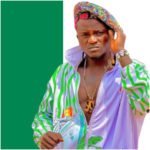
In the rare event that the FG decides to give us an entirely new national anthem in the future, Portable should write it. Before you roll your eyes, here’s why.
First, it’ll be easy to dance to
Since we’ve all agreed most Nigerians don’t care about lyrics, doesn’t it make sense to have a danceable anthem? We don’t know about you, but Omo Lalomi knows how to get people’s groove on.
And it’ll motivate you
The other half of Nigerians who pay attention to lyrics know that Portable really be spitting some aspire to maguire shit. I don’t know about you, but I’ll sing the shit out of “Who go help you no go stress you”.
Might scare the shit outta your opps
“Kala, Daju, Ma, Rerin Wuwa Ika” doesn’t sound like what’ll give your opps the balls to cross you. And to be frank, what’s a national anthem that cannot offer lirru protection?
Have you heard his voice?
Agreed it might not be the best thing after soft agege bread, but even though! The grating effect of the Portable+autotune combo is all you need to stay alert. Always stay guiding, yunno.
Nigeria will finally blow
As a country, I don’t think we’ve had our proper blow era. Afrobeats has done its part in putting us on the map, but we just might need that Portable-type “everywhereness” to get the full attention of the world.
Who knows? Maybe a Grammy nod
Never say never because if there’s one thing about Portable, he has shocked everybody with his wins post Zazu blowup.
We’re back to the basics with the new national anthem of Nigeria. On May 29, 2024, President Bola Ahmed Tinubu signed a law officially replacing “Arise, O Compatriots” with “Nigeria, We Hail Thee.” This marks the end of the anthem that had been in place since 1978, as Nigeria reverts to its first-ever national anthem after independence.
So, why was the Nigerian national anthem changed? And how do both anthems compare? Here’s everything you need to know about the new national anthem, its lyrics, history, and the controversy surrounding it.
Nigeria We Hail Thee – Full Lyrics of Nigeria’s New National Anthem
Want to learn the lyrics and melody? Listen to the new national anthem here:
Why did Nigeria change its National Anthem?
On May 29, 2024, Nigerians woke up to the news that the Nigerian government had replaced the national anthem — but not with an entirely new composition. Instead, the country reverted to its first national anthem, “Nigeria, We Hail Thee,” which was originally used from 1960 to 1978.
The lyrics of Nigeria’s first national anthem, “Nigeria, We Hail Thee,” were written by Lilian Jean Williams, a British woman, while the music was composed by another British national, Frances Benda.
But what prompted this decision? According to the government, the new (old) anthem “promotes national unity” and evokes stronger emotional connections with Nigerians.
However, it’s worth noting that the replaced anthem — “Arise, O Compatriots” — was composed entirely by Nigerians:
Lyrics by: John A. Ilechukwu, Eme Etim Akpan, Babatunde A. Ogunnaike, O Sota Omoigui, and P. O. Aderibigbe.
Music by: The Nigerian Police Band, directed by B. E. Odiasse.
How Nigerians are Reacting to the New National Anthem
The decision to change the anthem has sparked mixed reactions on social media, with many Nigerians questioning its impact on national unity.
For some, switching back to an old anthem written by British nationals does little to address Nigeria’s actual challenges. In contrast, others focused on how quickly the bill was passed — within just one week, in fact.
Here’s how it happened:
May 23: The House of Representatives debated and passed the bill.
May 27: The Senate approved it.
May 28: President Tinubu signed it into law.
Since then, Nigerians have continued to voiced their opinions on platforms like X (formerly Twitter):
I will not sing the Colonial Masters' "Nigeria we hail thee" anthem. Never! If indeed they want a national prayer to resonate, then the 2nd stanza, "oh God of creation" written by a Nigerian is appropriate. Timi Dakolo's song "Great Nation" could have been considered too. pic.twitter.com/LJQKzMrotV
“Nigeria, we hail thee” was written & composed by 2 white people belonging to the colonizer class.. “Arise of compatriots” was composed & written by 6 Nigerians from different tribes to foster strong national identity and inclusivity. What is the reason for reverting backwards? https://t.co/C6Sq5MPpGR
Since Nigeria has officially reverted to “Nigeria, We Hail Thee,” it’s worth learning about its creators.
Lilian Jean Williams (Lyricist)
Lilian Jean Williams was a British expatriate working in Nigeria’s Federal Ministry of Labour and Welfare before independence.
In 1959, the National Planning Committee for Independence launched a competition to select a national anthem for Nigeria’s independence in 1960, which drew entries from different countries such as Belguim, South Africa, the United Kingdom, and the United States of America. Williams entered the competition and won £100 for her lyrics, which she later donated to the Nigerian Red Cross.
Frances Benda (Composer)
After finalising the lyrics, another global competition was held to compose the anthem’s music. A total of 3,693 entries were submitted.
The winning composition came from Frances Benda, a British woman who turned out to be Mrs. Charles Kernot, a private music teacher and professional pianist from the Carol Hill School of Classical Ballet, London. She won £1,000 for her work.
New vs. Old: How Do the National Anthems Compare?
To properly understand the change, let’s look at the replaced anthem:
Old National Anthem: ‘Arise, O Compatriots’ (1978–2024)
Stanza I (1)
Arise, O compatriots,
Nigeria’s call obey
To serve our fatherland
With love and strength and faith
The labour of our heroes past,
Shall never be in vain
To serve with heart and might,
One nation bound in freedom, peace, and unity.
Stanza II (2)
O God of creation,
Direct our noble cause
Guide thou our leaders right
Help our youth the truth to know
In love and honesty to grow
And living just and true
Great lofty heights attain
To build a nation where peace and justice shall reign.
Key Differences Between ‘Nigeria, We Hail Thee’ and ‘Arise, O Compatriots’
1.Tone & Message
“Nigeria, We Hail Thee” focuses on nation-building, unity, and pride.
“Arise, O Compatriots” is a call to action, urging Nigerians to actively serve their country.
2. Patriotism vs. Optimism
“Arise, O Compatriots” emphasises patriotism and duty, reminding Nigerians to honour past heroes.
“Nigeria, We Hail Thee” takes a softer, optimistic tone, highlighting Nigeria’s potential.
3. Motherland vs. Fatherland
“Nigeria, We Hail Thee” refers to Nigeria as a “Motherland.”
“Arise, O Compatriots” refers to Nigeria as a “Fatherland.”
4. Composers & Writers
“Nigeria, We Hail Thee” was written and composed by British nationals.
“Arise, O Compatriots” was entirely written and composed by Nigerians.
Frequently Asked Questions about Nigeria’s National Anthem
Q: How many national anthems does Nigeria have? A: Nigeria has had two official national anthems since its independence in 1960. The first was “Nigeria, We Hail Thee” (1960–1978), and the second was “Arise, O Compatriots” (1978–2024). In 2024, the country reverted to the first anthem.
Q: What is the first national anthem of Nigeria? A: The first national anthem of Nigeria is “Nigeria, We Hail Thee.” It was adopted at independence in 1960 and used until 1978.
Q: What is the full version of Nigeria’s national anthem? A: The full version of the current national anthem is “Nigeria, We Hail Thee” with three stanzas.
If you’re a Nigerian reading this, then the National Anthem is not news to you. You must have probably heard it in school growing up, on television, or at public events.
But do you know who made it? Do you know about everyone involved?
Benedict Odiase
Odiase is widely credited for being “the man behind” Nigeria’s national anthem.
The anthem, “Arise, O Compatriots,” was originally written as a poem by five different writers, and it was Odiase who was tasked with putting the poem to music. He did this by creating a melody that would capture the patriotic and aspirational spirit of the poem.
Before we go into what makes this anthem unique, especially with the words reflected, there are four things you should know about the Odiase, the composer.
He was born duringthe colonial era
Odiase was born in Edo State during the British colonial era on August 25, 1934.
He was a police officer
Odiase served in the Nigeria Police Force (NPF) from 1954 to 1992 and was also the Music Director of the Nigerian Police Band and the Mid-West State Police Band.
He directed Nigeria’s current national anthem, “Arise, O Compatriots,” in 1978
In 1978, Nigeria’s former national anthem, “Nigeria We Hail Thee”, was changed to “Arise, O Compatriots,” under the military administration of General Olusegun Obasanjo. The former anthem was changed to promote national ownership, as the composer of the previous anthem was a British expatriate.
The lyrics of the anthem were taken from five of the best entries in a national contest.
The winners were P. O. Aderibigbe, John A. Ilechukwu, Dr. Sota Omoigui, Eme Etim Akpan, and B.A. Ogunnaike.
What Are the Details About These Men?
P. O. Aderibigbe was a Nigerian lawyer and poet. He was born in 1933 in Ibadan, Nigeria. He attended the University of Ibadan, where he studied law. After graduating, he worked as a lawyer in Lagos. He was also a member of the Nigerian National Anthem Committee, which was responsible for selecting the winning poem for the national anthem. Aderibigbe died in 2010.
John A. Ilechukwu was a Nigerian journalist and poet. He was born in 1937 in Nsukka, Nigeria. He attended the University of Ibadan, where he studied English. After graduating, he worked as a journalist for the Daily Times of Nigeria. He was also a member of the Nigerian National Anthem Committee. Ilechukwu died in 2012.
Dr. Sota Omoigui was a Nigerian physician and poet. He was born in 1936 in Benin City, Nigeria. He attended the University of Ibadan, where he studied medicine. After graduating, he worked as a physician in Lagos. He was also a member of the Nigerian National Anthem Committee. Omoigui died in 2017.
Eme Etim Akpan was a Nigerian lawyer and poet. He was born in 1938 in Calabar, Nigeria. He attended the University of Ibadan, where he studied law. After graduating, he worked as a lawyer in Lagos. He was also a member of the Nigerian National Anthem Committee. Akpan died in 2019.
B. A. Ogunnaike was a Nigerian engineer and poet. He was born in 1938 in Ibadan, Nigeria. He attended the University of Ibadan, where he studied engineering. After graduating, he worked as an engineer in Lagos. He was also a member of the Nigerian National Anthem Committee. Ogunnaike died in 2014.
Odiase, the composer, passed away in 2013, aged 78.
Before his death, Odiase was a national award winner. In 2001, he received the Order of the Niger Award for his composition of the National Anthem.
Odiase got the National Anthem copyrighted
Odiase still earns royalties from the National Anthem since he copyrighted it through the Musical Copyrights Society of Nigeria (MCSN).
It’s worth mentioning that his family previously filed a lawsuit against MTN Nigeria in October 2013, seeking N1.5 billion in damages for unauthorised use of the National Anthem as a ringback tone.
MTN, in response, attributed the mistake to their content providers and asserted that they should not be held responsible.
A Brief Rundown of What the National Anthem Means
Let’s start with the first four lines:
Military recruitment and patriotic values
Arise, O Compatriots,
Nigeria’s call obey,
To serve thy Fatherland,
With love and strength and faith
In the third line, “to serve thy fatherland” refers to Nigerian military recruitment. It means that Nigerians should be ready to defend the country when necessary.
The three principles of love, strength, and faith are the virtues every patriotic Nigerian must have for the country. Love for the fatherland, strength to make it past economic hard times, and faith that Nigeria can overcome every obstacle it faces.
The fight for independence and democracy
The labour of our heroes past,
shall never be in vain
To serve with heart and might,
One nation bound in freedom, peace and unity
“The labour of our heroes past” refers to the wars that our forefathers and national heroes fought for the nation.
These include the battles against British colonial masters and the fight for national independence and democracy with the likes of Sir Tafawa Balewa, Ahmadu Bello, MKO Abiola, etc.
The National Prayer
The second stanza of the National Anthem is often referred to as “The National Prayer”, as it contains prayers for the country. It reads:
Oh God of creation,
Direct our noble cause,
Guide thou our leaders right
Help our youth the truth to know,
In love and honesty to grow
And living just and true,
Great lofty heights attain,
To build a nation where peace and justice shall reign.
The first line of the anthem is suggestive of Nigeria’s religious sentiments. Christianity and Islam are the most dominant faiths in the country, with 50% of Nigeria’s population being Muslim and 40% being Christian.
Both share a common denominator in their belief in a supreme being, i.e., God.
The second, third, and fourth lines are a plea to God to help Nigeria with three things—direct the affairs of the nation, help our leaders make the right decisions, and give understanding to the youth.
The fifth and sixth lines are a continuation of the prayer to God, the future of the country should mature with love and honesty, guided by truth.
The last line is a call for national peace from conflicts and wars and a nation where legal justice is met in cases of wrongdoing.
Oh, look. That National anthem stanza you never bothered to learn has come back in the form of a fun quiz to bite you in the ass.
Apparently, the candidates were expected to recite the national anthem as part of the exercise but the funniest thing happened.
According to the amebo reported by Punch, some of them were unable to recite the national anthem.
In the report, the people at Punch said some of them were even chopping mouth when asked to recite the national pledge.
The funniest one was the candidate that first recited the old national anthem before he was eventually corrected. Maybe he forgot we’re in 2016 sha.
When people who are supposed to represent Nigeria can’t recite the National anthem and pledge properly.
But who are we to judge? We’re sure some of you have forgotten the national anthem and pledge.
But if you’re a bad guy like us, show yourself in the comment section and let us know if you can remember both of them.
First, it’s the 21st century
We have a lovely anthem, but please, it’s almost 50 years old. This is the 21st century; we need to keep up with the times. And frankly, an Afrobeats anthem is what the nation needs at this time.
Have you heard his voice?
His voice is so good, we need to immortalise it by using it to remake our anthem.
His lyrics are fire
With a little Afrobeats and Oxlade touch, you can put the national anthem to better use to ask your partner out. Imagine picking someone up with “My compatriots don dey rise for you”. You’ll get married that night.
You can show your patriotism in the club
Imagine your national anthem being such a bop that it can make the energy go up in the club. You’ll be singing “the labour of our heroes past” while getting turnt with a bottle of Azul in hand.
It might have a shot at a Grammy
Nigerian music is stealing awards everywhere. Who’s to say we won’t win a Grammy if Oxlade rewrites this anthem for us? Think about the bragging rights we’ll have.
Nigeria would probably make more money
Don’t you want Ku Lo Sa-level streams for Nigeria? Imagine all the streaming money that’ll roll into our economy once he rewrites the national anthem. Nigeria could the use extra revenue right now, and if it means it’ll have to have a national music career, why not?
He’s already repping Nigeria anyway
He showed up for a show in Sierra Leone, and the whole place erupted like he was the president. Give this man an ambassadorship already.