• “How do people even make this money?”  That’s a question you’ve probably asked yourself at least once. How do wealthy people think? What rules do they follow to build (and maintain) their wealth?

    We asked 10 Nigerians, each with a net worth above ₦5m, to share the one rule they swear by to stay on top of their money game. From savvy lifestyle choices to calculated risks, these high-flyers have cracked the code to success. 

    Rule #1: Understand how your money comes and goes

    For Korede* (31), having multiple sources of income and tracking how money enters your account is not enough; you also need to keep an eagle eye on what takes money out of your account.

    “It’s very important to know your numbers. I’m constantly tracking how I spend and looking out for what I call money holes — activities that consistently consume money but don’t bring in real benefit. It helps me to identify what takes the larger percentage of my money and see how I can spend less. 

    For instance, I used to rely heavily on food delivery apps. I thought I was saving time by outsourcing my meals, but I calculated my monthly food expense, and it was about ₦800k. For context, I earned ₦2.5m/month then. A whole 32% of my income was going to food delivery apps. 

    So, I deleted the apps and joined a meal service that cost only ₦300k. I still saved time, but I spent less and repurposed the money I saved to things that benefit me more.” 

    Rule #2: Live below your means

    It’s tempting to flaunt what you have and increase your expenses as your income increases. But if you ask Joan* (38), she’ll tell you to resist the urge to splurge.

    “I think it’s better to build wealth than display it. When I get a salary increase, I condition my mind to imagine I still earn my old salary for at least six months. So, I keep my expenses within the same income range as before and save or invest the extra. That way, I can make even more money (via interest and returns) on my income.

    A senior friend once told me, ‘If you keep upgrading your lifestyle as you earn, it’ll get to a point where money is never enough for you.’ I’ve found that to be true. Since I don’t feel pressured to maintain a lifestyle or look like I’ve arrived, I’ve been able to cut down unnecessary expenses and focus on building wealth for the future when I can’t work anymore.”

    Rule #3: Money should never be stagnant

    Saving is great, but there’s a thin line between saving and hoarding. Joseph* (33) thinks you may be doing yourself a disservice if all you do is keep money.

    “I believe your money should work for you, whether it’s making your life better or passively growing. I used to keep my money in the bank, afraid of touching it. However, I read finance books and learnt that moving away from a scarcity mindset is one of the best ways to recognise opportunities for wealth creation.

    Now, I have a rule against keeping money stagnant. If I’m not investing in a business or using digital investment channels for passive income, I’m saving it in a high-yield savings account and compounding interest. If I’m doing neither, I’m seeing how I can convert it to value for myself and my family because we also need to enjoy the money.”
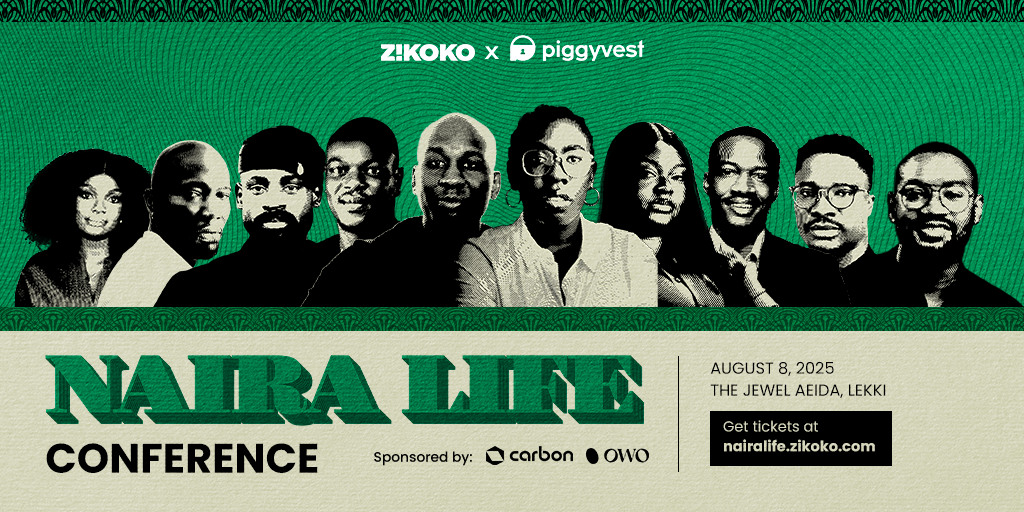

    Join 1,000+ Nigerians, finance experts and industry leaders at The Naira Life Conference by Zikoko for a day of real, raw conversations about money and financial freedom. Click here to buy a ticket and secure your spot at the money event of the year, where you’ll get the practical tools to 10x your income, network with the biggest players in your industry, and level up in your career and business.


    Rule #4: Have an emergency fund

    Lanre* (29) says you should think of your emergency fund as vex money in case life and the economy ever decide to move mad.

    “My emergency fund is separate from my regular savings and investment portfolio. It’s liquidity that can save me if anything happens; job loss, economic downturns, bad investments or any unforeseen circumstances. It’s the reserve that makes sure I don’t starve while I try to get back on my feet.”

    Rule #5: Use debt to your advantage

    Taking loans can feel like something only people struggling to survive resort to, but Osas* (36) insists that rich people have debts, too.

    “The key is to use debt to your advantage. Rather than borrowing to consume, borrow to build wealth by using the loan to invest or acquire assets that appreciate over time — even better if you can secure a low-interest loan. 

    Sometime last year, I borrowed about ₦3m to invest in commercial papers and some stocks. I repaid the loan with 12% interest but earned 38% interest on my investments. So, I made enough to repay the debt and still had extra without touching my own money.

    If I didn’t already have a car, I’d take a loan to buy it rather than save for it. Because I can be trying to save ₦15m for the car, but inflation has happened by the time I gather the money, and the car costs double. But if I’m just repaying the loan, it doesn’t matter if the car now costs more. I just pay what was agreed.”

    Rule #6: Build a system for wealth creation

    Bastard money hardly just falls on people; it’s often a gradual process. And for Fiyin* (44), it involves intentionally building a money system. 

    “I have a set percentage of my income that goes to my savings and investments; it’s non-negotiable, and I’ve done this for 15 years. I also have a financial advisor who helps me make the best investment choices and financial decisions. 

    I realised early that I wasn’t the best at handling money, so automating my savings helped me to keep money aside even when I wasn’t actively thinking about it. I also didn’t have much financial knowledge, and my advisor helped fill that gap. 

    This system works for me. Everyone should recognise what works for them to get the best results from their money.”

    Rule #7: Cultivate relationships with like-minded people

    Your circle influences your thinking and, according to Feyi* (30), even your financial status. 

    “My closest friends are very intentional about their finances. There’s no way my financial planning won’t improve when I’m always with people who constantly talk about promising stocks and investment opportunities. 

    The extent to which a person dreams or aspires depends on their exposure. If all you do is listen to someone who thinks the height of wealth creation is to own a house and a car, you’ll likely limit yourself to that, too.”

    Rule #8: Focus on your personal finance journey

    There’s no single path to building wealth. Banji* (36) has learned the importance of picking and choosing what financial advice and strategy to follow.

    “It’s easy to base your decisions on what’s trending at the moment. I once lost money in crypto because everyone was shouting about it, and I didn’t have proper knowledge. Now, everyone is shouting about Nigerian stocks. It’s best to cut through the noise and understand what works for you first before investing. 

    Take personal finance courses and speak to people with more knowledge than you. Most investors have emergency funds and safety nets in case their investment risks don’t pay off. Don’t go and take the same level of risk with your ₦50k salary and zero savings.”

    Rule #9: Always take informed risks

    The biggest financial rewards often come to those who take smart risks. While it is important to understand your risk tolerance, Judith* (30) says it’s impossible to grow wealth by avoiding risk entirely.

    “Building wealth isn’t just about making money; you aso have to multiply your money. And to do that, you will likely have to invest in risky things like stocks, real estate or even business. The key is to take informed risks. Learn as much as possible about what you put your money into. But always put your money out there.”

    Rule #10: Manage lifestyle creep

    Lifestyle creep is when your standard (and cost) of living increases as your income increases. Ope* (31) says you may not always be able to avoid lifestyle creep entirely, but you can manage it.

    “I think it’s inevitable that your lifestyle improves as you make money. To manage it, I make sure these lifestyle changes veer towards value and long-term benefits rather than just show-off. 

    I joined a couple of social clubs and moved to a better residential area to expand my network and meet people in the social classes I still aspire to reach. I work in real estate and have landed several projects based on this strategy alone.”


    *Names have been changed to protect the respondents’ identity.


    NEXT READ: I Made My First Big Paycheck at Uni. I Spent It All on Women and Got Into Debt

    Get More Zikoko Goodness in Your Mail

    Subscribe to our newsletters and never miss any of the action

    [ad]

  • I’ll just come out and say it: Nigerians have a numbers problem. At first, I thought it was just Old Nollywood and their love for name-dropping huge amounts of money like they were pricing pepper.

    But it’s more common now. One person said 65% of the married men in Lagos are in her DM, and another one said Nigerians spend $1 billion on betting platforms daily. The one that broke the camel’s back for me was when another person said BB Naija Sheggz’s house costs ₦600 billion. For God’s sake. 

    You see why this guide is important?

    First, let’s look at the difference between millions and billions

    It’s easy to point out that you need one thousand millions to make a billion, but the major problem is visualising it. 

    Let’s use time as an example. If someone dashes you ₦1 every second, it’ll take you over 30 years to make a billion naira. However, it’ll take you just about 11 days to make a million naira. Can you see both figures are not mates? 

    Let me blow your brain further, following the same time example, it’ll take you over 31 thousand years to make a trillion naira if you earn ₦1 every second.

    “Millionaire” and “Billionaire” aren’t synonyms 

    Bill Gates is worth around $100 billion. If he buys twenty Boeing 747 planes at $148 million each, he’ll still have over $97 billion as change. A millionaire worth $900 million can only buy the same plane six times before going broke.

    Twenty aeroplanes and Gates’ net worth didn’t even feel it. But someone said a house in Ikota is ₦600 billion — more than $700 million. Let’s be for real, please.

    One billion naira is not that easy to spend

    Even if you spend ₦1 million every month, it’ll take you about 83 years to run out of ₦1 billion. Now imagine ₦50 billion. Unless you’re a Nigerian politician, it’s extremely unlikely you’ll spend it all in a lifetime.

    You can never be a billionaire by saving

    It’s not like I’m swearing for you o, but how much do you want to save? Even if you save your entire salary every month, it’ll take an average Nigerian minimum wage earner centuries to reach a billion naira. 

    So, if a motivational speaker tells you, “Making your first billion is just determination and a thing of the mind,” feel free to throw hands.

    Consider returning to school

    If by now, I’ve not been able to convince you that a million naira isn’t even fit to kiss the feet of a billion naira, run your parents a refund of the school fees they spent on you and start taking maths class again.


    NEXT READ: What’s the Real Cost of Inflation? Five Nigerians Tell Us

    [ad][/ad]

  • For the average Nigerian, all they want to live is a soft life. 

    However, many obstacles, such as high foreign exchange, unemployment and taxation rates, are blocking them from becoming part of the ‘millionaire gang’. And the 2023 Africa Wealth Report by Henley and Partners confirms this.

    Below are a few noteworthy points from the report that we should care about:

    Nigeria is Africa’s third-largest market — with fewer millionaires

    According to the report, South Africa, Egypt, Nigeria, Kenya and Morocco make up Africa’s “Big 5” wealth markets, accounting for 56% of the continent’s high-net-worth individuals (millionaires) —this is measured in dollars and not local currency).

    But despite this, Nigeria seems to be churning out fewer millionaires. Nigeria only has 9,800 millionaires, and 30% have lost their status over a decade (2012-2023). 

    According to economists, this drop can be attributed to the depreciation of the naira against the dollar and poor foreign exchange policies in Nigeria.

    ‘Top 10 Wealthiest Countries’, Africa Wealth Report [Henley & Partners]

    RECOMMENDED: Nigeria’s Unemployment Jumps From 33.3 to 41% in Three Years

    Nigeria contributed to a 12% drop in Africa’s total millionaires 

    ‘Growth Trends On the Continent’, Africa Wealth Report [Henley & Partners]

    The report claims that the total high net worth individual numbers in Africa have fallen 12% over the past decade (2012 to 2022). The cause? Poor growth in the three largest African markets, South Africa, Egypt — and Nigeria.

    Lagos has been listed as Africa’s 4th wealthiest city – with 5400 millionaires

    ‘Africa’s Wealthiest Cities’, Africa Wealth Report [Henley & Partners]

    As the “economic hub” of West Africa, Lagos houses over half of Nigeria’s high net-worth individuals. These include 5,400 millionaires, 16 centi-millionaires, and three billionaires.

    It also listed major sectors in Lagos, including raw materials, oil and gas, transport and financial services.

    Lagos and the new Blue Rail transport system [The Guardian]

    What does this mean for the average Nigerian?

    As the rich are reducing and economies suffer, here’s how it affects you as a resident.

    There will be lesser job opportunities for the poor

    According to the Corporate Affairs Commission (CAC), 3.1 million registered companies have millionaires as their owners. These can easily translate to 3.1 million companies where you can find work instead of a government institution.

    If 30% of these millionaires lose status due to economic hardship, companies could take austerity measures by reducing the workforce or folding up and decreasing job opportunities.

    Reduction of foreign direct investment 

    According to a report on “The Determinants of Foreign Direct Investment in Nigeria”, the most common route for foreign direct investment is partnerships with private companies. Of course, millionaires own these companies.

    If you haven’t already guessed by now, fewer millionaires mean lesser foreign investment in Nigeria’s economy

    Sapa increases

    Let’s end this report with the most obvious point — the activities and investments of millionaires help economic growth and reduce poverty. If fewer millionaires exist, the well-being of Nigerians cannot survive purely on the government. And you know what that means.


    Be part of a community that talks and breathes politics for the Gen Zs and Millenials. Join the tribe here.

  • Every week, Zikoko seeks to understand how people move the Naira in and out of their lives. Some stories will be struggle-ish, others will be bougie. All the time, it’ll be revealing.

    Get an auto loan of up to N30 million to buy your dream car, at a reduced interest rate. Get started.


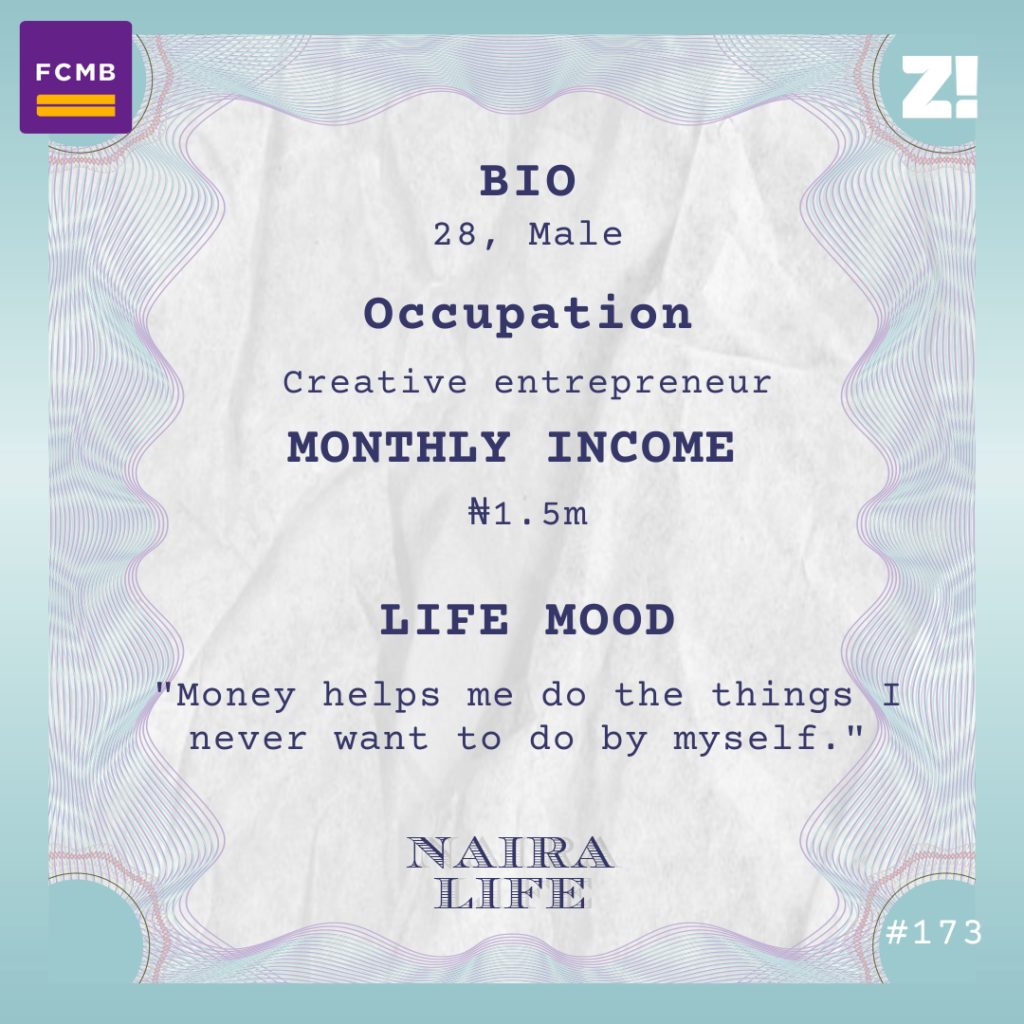
    When this week’s subject on Naira Life was 12, an uncle advised him to never do anything for free. Less than 10 years later, he made his first million. How did this creative build a stable business from scratch? 

    Tell me about your earliest memory of money.

    My dad ensured my siblings and I learned about computers because he knew the future was tech. He got us a computer when I was 7, and hired a computer teacher for home lessons. By the time I turned 12 in 2007, I was already helping adults set up emails and search for stuff on the internet. 

    One day, an uncle asked me to help him do something on his phone and asked how much I was charging. It was a strange question. Of course, I wasn’t going to charge him. When I told him this, he looked at me and said, “Is that how you’re going to become a millionaire?”

    That moment defined the way I saw work, and I’m grateful to him. 

    Did he pay you?

    ₦1,000. First money I ever made.

    From then, any time someone needed me to do anything on their computers, I charged them between ₦1k and ₦2k, and surprisingly, they paid. This continued for a couple of years until I got to senior secondary school. In SS 1, I was part of a dance group, and I made the music mixes we danced to myself. Whenever we went for a competition, people wanted to know where we got the music, and soon enough, I began charging ₦5k to make mixes for people. Again, because I was using my computer a lot, I’d learnt how to design. Whenever there were parties, I designed invitation cards and printed them with my dad’s printer. 

    By the time I was going to university, I’d made enough money to buy a ₦60k iPod Touch for myself. 

    Had you always been interested in doing business?

    My parents were business people, but they wanted us to have traditional jobs for stability. Me, I just wanted to do the things I enjoyed. It wasn’t really about business or money. 

    The major factor that guided my choice of university was that I wanted it to be a place where I could be by myself and improve on my skills without stress. So my parents put me in a private school.

    What skills were you looking to build?

    I liked films, so video editing was the next thing I thought to learn. By my second semester, I made a short film that went viral on campus, and I became popular. Next thing, people started reaching out to me to make videos for them. My first gig was to produce a game show for some campus organisation. It paid ₦35k. After that, I never stopped getting gigs. ₦100k here, ₦20k there, ₦50k here. School became secondary and my grades dipped terribly, but I didn’t care. 

    By my second year, my parents were so worried I wasn’t asking them for money anymore, that they told my cousins to start sending me money. 

    You didn’t tell them you were a business mogul?

    I didn’t want them to lecture me and say stuff like, “Face your studies for now. You can do business later”. I just kept it to myself. 

    Occasionally, companies outside school would notice me and reach out, and I’d make some nice ₦250k or ₦300k. 

    Were you doing all this on your own?

    Because I was making good money and getting more work, I decided to hire people outside school and put them on salaries. We’d find early-stage tech startups and reach out to them to make videos for them. Surprisingly, a lot of them agreed. 

    In my fourth year, we got a big client that paid ₦1m in cash. I remember just sitting and looking at the money, thinking, “Man, I’ve made it.”

    LMAO. What were you using the money you were making for?

    Apart from paying salaries, I bought gadgets like new phones and computers to help me work better. Also, my biggest motivation for making money is that money helps you do things you don’t want to do. For example, I hate cooking, so when I started making money, I bought food. Other things like paying for laundry also made my life easier. 

    I was having a conversation with someone recently who correctly said that when I was in school, I didn’t have to start a company. I could have been making good money as a freelancer without the stress of paying salaries and running a company. Now though, I don’t regret starting the company. It’s a legacy for me, and that legacy keeps growing bigger. 

    What happened after uni?

    I graduated in 2014. My convocation was on a Friday. By Monday, we’d found an office space, paid rent and resumed full-time by 9 a.m. That year was for a lot of learning. For example, we spent so much money trying to set the office up, we started going broke. So yeah, it’s never a good idea to spend everything your company has on office aesthetics. We also learnt that in the creative industry, invoicing a client doesn’t mean you have the money. Some big companies take months to pay and that can leave you in a bad place if you were relying on their money to pay salaries and survive. Thankfully, because we had a lot of clients, we were getting a good in-flow of money, so the worst thing that happened was a one-week salary delay. 

    For the first year, my salary was ₦500k once every three months and increased it to ₦1m every three months the next year. 

    I lived in the office space and didn’t go out a lot. However, based on how well the business did, I took bonuses at the end of each year. My first bonus was enough to buy me my first car, and that’s when my parents realised that they didn’t have to worry about me anymore.

    They were still worried at this time?

    Oh yeah. They kept sending me job opportunities and asking questions like, “Are you sure you can make a living out of this?”

    By the end of the second year, we moved to a more strategic location where we had to pay rent that was 5x what we were paying before. 

    When did you start getting a monthly salary? 

    After the second year when I started dating and having boyfriend responsibilities. The business was also doing much better and I needed a stable income, so I started earning a monthly income. 

    Is that what you earn right now? 

    Nah, I earn ₦1.5m a month, and my average end of year bonus is about ₦4m. 

    Omo. 

    I’m looking at more bigger picture stuff now. For example, I don’t want to collect a monthly salary from my company anymore. I just want to collect a lump sum at the end of each year, after we analyse our profits. The more money we make in a year, the more I’ll earn.

    Also, my goals for this year are to learn and invest in real estate. I know there’s money in it. 

    In a month, what do you spend your money on?

    Tell me one thing you want but can’t afford.

    If I say I want a brand new car, it might sound greedy because I already have a car. So I’m just going to say a nice house in one of the wealthy parts of my state.  

    Do you ever get asked to do stuff for free?

    Nobody asks us to do stuff for free, but there are people that expect us to deliver much more than they paid for. Early on, it was fine because we just wanted the big clients, but as time went on, we learned that not billing people properly can lead to see-finish. 

    Rate your financial happiness on a scale of 1-10.

    I’d put it at a 7. Like I said, money does things I wouldn’t necessarily do myself. Now, I have a chef and live a pretty comfortable life. I don’t even have to work so much anymore. I can walk into the office and find out we’ve been paid for a job I didn’t even know about. That’s pretty dope. Also, I can travel. I love travelling.


    Get an auto loan of up to N30 million to buy your dream car, at a reduced interest rate. Get started.

  • There are many reasons why you’re still not a millionaire, but this quiz will tell you if you will ever become a millionaire.

    Take the quiz to find out:

  • Every single year you’re chasing the bag, but where are the millions in your account? While we understand that  you deserve that baby boy/baby girl lifestyle on a yacht in Dubai, we’re pretty sure at least one of these eight things have hooked your millionaire lifestyle somewhere. 

    1. African Mothers

    If you said no every time your mother said, “Come now, let me keep it for you,” we could have been on the Forbes list. You may have chopped slap or ended up homeless, but at least you would have kept the money for yourself.

    2. Data and airtime

    Everyday 1k here 2k here. Just hold your calculator and add up everything you’ve spent this week alone on data or airtime, that’s where the millions have been hiding in your life.

    3. You missed the dip

    When your mates were investing in crypto you were there explaining how everything is a scam and how you don’t believe in free money. Well, it’s another day of hardwork o, where are the millions?

    4. Last borns

    All they know how to do is beg, blackmail, enjoy your hard earned money buying rubbish, while disrespecting us. These are the thieves in our lives and they need to be destroyed.

    5. You’ve refused to be a sugar baby

    You’re forming, “I can’t, I can’t.” My dear, that’s why your account can’t as well. Nobody can shame the shameless on these streets. Better come outside and collect this money with your full chest.

    6. Baba Dudu and Goody Goody

    You may have been competing with Dangote if you didn’t spend all the five-five naira you received on sweets as a child. 

    Its another day without the millions you deserve in your account and here are the ten reasons why. Tag someone that's on this table as well.

    7. Your father

    Where was he when his mates were chopping from the national cake? Just go and ask him, then fight for your inheritance.

    8. Your village people are alive and well

    May your destiny be released from the clutches of the people that have said no to the millions in your life. You can connect with Mummy G.O. for more results.

    9. No savings to your name

    Your response to everything is, “I only live once. if I perish, I perish.” I hope you can see the single digits in your bank account. My only advice is for you to buy those wooden kolos that only carpenters can open for you.

    10. Love

    Your millions have entered a well at this point, and I don’t know if we can find it again. If you’re not going to eat at one fancy restaurant, you’re out on the streets professing  love with gifts. I’m sure you’ve even booked your date for Valentine’s day. Continue.

  • For some people, urgent 2k is not enough. Sometimes, they need an urgent one million. Well, before they would tell you it was impossible, but nothing is impossible for Zikoko. Here are six ways to become a millionaire overnight.

    1) Dream

    How else will you become a millionaire overnight if you do not sleep? All you have to do is lay your head on your bed and dream of your millions. Once that is done, congratulations on being a millionaire.

    2) Write yourself a cheque

    If you do not have a cheque book, then go to your bank and request one. Then when that is done, write yourself a cheque for a few million. That is it. You are done. It does not matter if you do not have up to five thousand naira in your account, what matters is that you are owing yourself a few million naira, and that means you are a millionaire.

    3) Create your own currency

    As you wake up, just declare a new currency. It does not have to be valid and you might be the only person to hear about it till you die, but it is still millions. I do not remember saying you would be a millionaire in naira. All we did was promise to teach you how to be a millionaire overnight.

    4) Perform money ritual that pleases God

    The best thing about money rituals that please God is that because God is involved, it will work quicker. If you have never done money ritual that pleases God before, just know that one of the things involved is a God-fearing babalawo.

    5) Summon the Angels from Africa

    If you are in Africa then you have a stronger chance of the angels actually working for you. Call on them because the angels of Africa have a way of making the unexpected happen.

    6) Call on your ancestors

    The ancestors cannot just be drinking gin and eating kola nut for free. Put them to WORK. They are getting too comfortable, so threaten to cut off their gin supply for a week. They will give in to your demands to be a millionaire overnight or turn you into a goat. It is a gamble.

    For more on what is inside this life, please click here


  • Imagine you picked up your phone right now and saw a credit alert – 1 million naira. What will you do with it?

    We asked these 10 Nigerians what 1 million Naira will do in their lives right now and their answers were very interesting.

    “1 million naira would help me jumpstart a side hustle or get a car for uber or land for agriculture. Nobody would know I have the 1 million abi?” – Ayoola

    Because financial freedom is bae.

    “Hayyy. I’ll use it for rent and to get a Macbook. Oh and to fix my car too” – Folarin

    One million can help you fix up your life.

    “Omo nothing actually apart from saving for a new car” – Pepo

    How long do you want to be about that bus life?

    “Mennn…I will first of all go somewhere like Hard Rock and get drunk to calm my navs. Then I’ll buy car.” – Sade

    Because you just can’t come and die.

    “I’ll buy music equipment and become a DJ on weekends sha because I have a full time job please” – Bankole

    Just see the way DJ Cuppy is flourishing.

    “I’ll use it to pay for an MBA, straight up” – Biodun

    School fees is expensive please.

    “Travel as far as it’ll take me” – Toke

    Have you seen the price of tickets?

    “Ermm…not much, but it will be good cash to invest” – Dayo

    Shey Dangote started from somewhere too.

    “Bills, bills, bills” – Sudeen

    Can’t let Nigeria come and kill you.

    “Resign from my job first and foremost, then maybe invest some of it” – Eniola

    Who has time for a 9-5 when you are a millionaire.

    “I’ll use it to start processing relocation papers immediately” – Olanrewaju

    Canada loading.

    “Plenty! Where do I collect this money please?” – Tomiwa

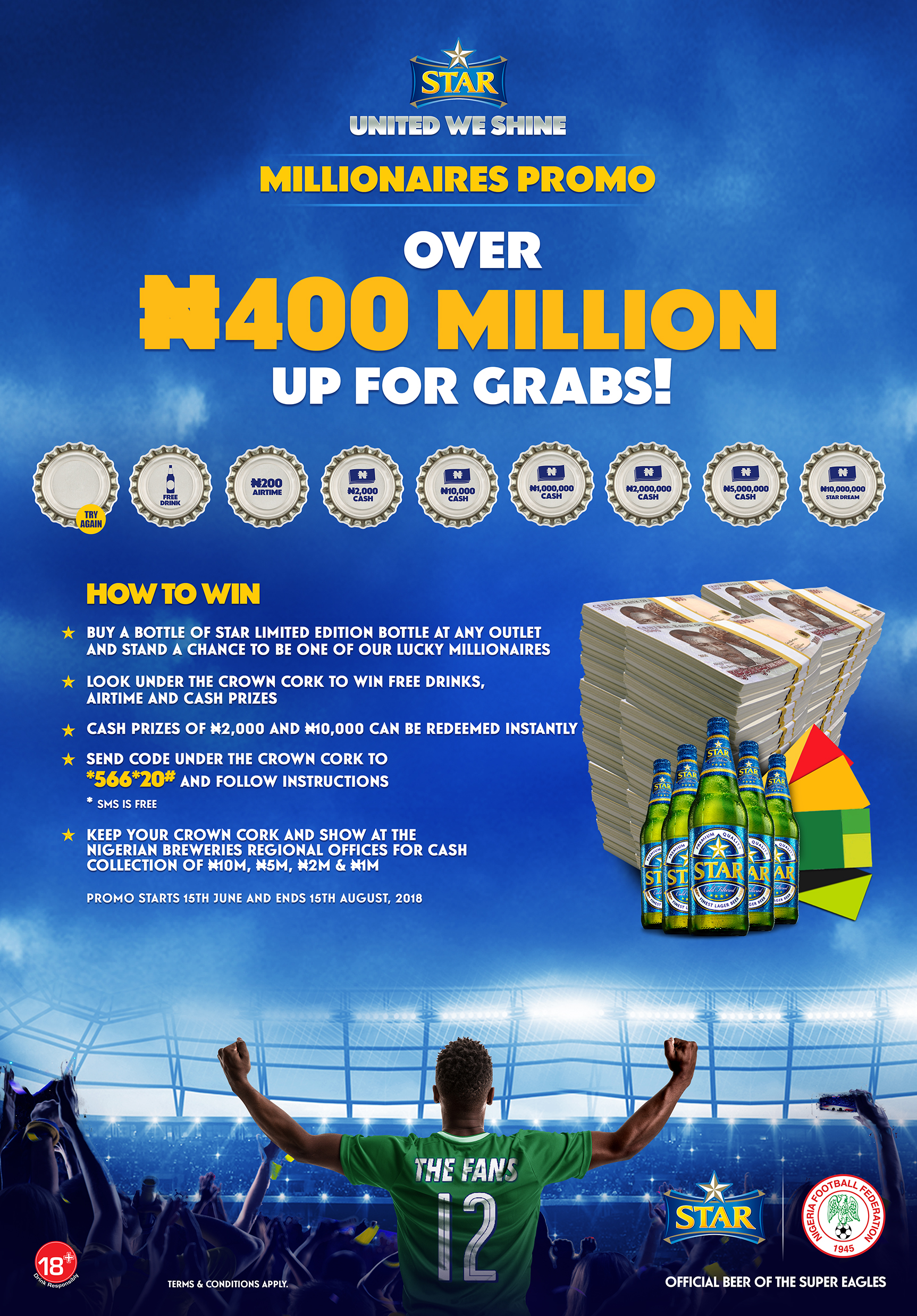
    Well, we have good news. STAR is sharing money and there is actually a way you can get this million or even millions by August.

    Go to your nearest bar or supermarket. Ask for STAR Lager Beer Limited Edition Bottle.

    Make sure it’s the Limited Edition Bottle.

    Open the bottle and hold on to the crown cork.

    You’ll see a code on the crown cork. Now dial *566*20# and enter the code you see. Follow the prompts until you redeem your prize.

    Just look at all these people that have already won their own one million.

    Do any of them have two heads? So go grab a bottle, and stand a chance to win.

    Don’t forget, you also stand a chance of winning thousands of naira in airtime.

    So whatever you do, don’t carry last.

    Destiny awaits, the question now is, are you ready?

    Don’t dull.