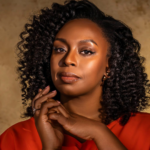
• There are only a handful of writers working today in the world who have attained celebrity status quite like Chimamanda Ngozi Adichie. Her TED talk, “We Should All Be Feminists” was sampled by Beyonce. Later, Dior printed it on T-shirts. She has graced the covers of magazines like Harper’s BAZAAR and Vogue. Tickets to see her deliver speeches sell out in seconds. On social media, her devotees proudly call themselves “The Daughters of Chimamanda.” Fans of her work almost held vigils outside bookstores anticipating her latest drop, Dream Count. 

    Odeluwa Abba!

    What has made her so popular among young women? I spoke with one such woman to try (because we can only try) to understand the gravitational pull she has on her fans.

    As told to Tomide by Mariam.

    Growing up, I always loved reading. One of the books that stuck with me as a child was Purple Hibiscus, Chimamanda’s debut novel. I was in SS2 when it was assigned in my literature class. At 14, I appreciated its storytelling and setting, but I didn’t fully grasp some of its themes. However, Aunty Ifeoma’s character stood out to me — a strong woman raising her children on her own. She was one of my earliest introductions to the idea that women could be independent and capable in a world that often insisted otherwise.

    As I grew older, I understood the book differently. Eugene wasn’t just a strict father; he was an abuser. It made me realise how men who are admired in public can be entirely different — and much darker — behind closed doors. But the real shift in my perspective came when I read Dear Ijeawele, Chimamanda’s book on raising feminist children. It resonated deeply with me because, even as a child, I questioned the way things were.

    Why were girls always the ones expected to cook, clean, and do most of the chores? These skills weren’t embedded in our DNA, so why were they treated as if they were? During Ramadan, I noticed how women were constantly occupied with cooking while men had the freedom to focus on prayer. I knew something about these gender roles wasn’t right, but Dear Ijeawele put words to the thoughts I had been carrying for so long. It was affirming to see someone write so passionately about these issues, making me feel seen and understood.

    That’s the power of Chimamanda’s writing — it reinforces the belief I’ve always had: girls should be raised to be their own people, not just groomed to become someone’s wife. Her books remind me that I’m not alone in these thoughts. They make me reflect: Are we the way we are because of how we were raised? What other norms have we accepted simply because society told us they were normal?

    Get More Zikoko Goodness in Your Mail

    Subscribe to our newsletters and never miss any of the action

    Her writing also challenges how we treat and address women. Why do we call women “Dr. Mrs.” instead of just “Dr.”? Why is a woman expected to change her surname after marriage? These seemingly small details carry deeper implications, and her work reaffirms that women can be loud, stubborn, and unapologetically themselves. And that’s more than okay.

    Every writer has their own way of telling stories, but Chimamanda’s writing stands out for its clarity and depth. Her storytelling is both poetic and powerful, making it easy for readers to connect with her words. There’s a profoundness in the way she crafts her characters and their experiences—raw, relatable, and deeply human.

    Whether it’s Kambili’s silent struggles in Purple Hibiscus or Ifemelu’s complex journey with race and identity in Americanah, Chimamanda’s characters feel real, their emotions tangible. Americanah is my favourite of her books because, in my opinion, it’s where she most deeply explores feminism and identity. Through Ifemelu’s experiences, she dissects the ways gender and race shape our lives, making the novel not just a story but a lens through which to view the world.

    In “We Should All Be Feminists” (which is also a book) she writes, “We teach girls to shrink themselves and make themselves smaller.” This powerful quote is one of the defining statements that cemented her voice and influence in both global and local cultural conversations.

    In the week leading up to the release of her new book, Dream Count, the excitement was everywhere. Book lovers, reading clubs, and literary circles buzzed with anticipation — Chimamanda Adichie was the name on everyone’s lips. It was a moment of unity, a celebration of her impact on literature and culture.

    Beyond her writing, her influence extends into real-life recognition. She made history as the first woman to receive a chieftaincy title in her hometown — a powerful testament to how her work and ideologies manifest beyond the page. Chimamanda is more than a writer; she is a symbol of possibility, a reminder that aspirations have no limits.

    It’s impossible to talk about great and influential Black, African, or Nigerian writers without mentioning her name. I love that her work is not just celebrated but deeply appreciated across the world.

    People won’t stop talking about Dream Count. Over the past few weeks, I’ve read every article I could find about it. Just like I binge-watched all of Chimamanda’s YouTube videos back in university, I found myself jumping from one article link to another. Book lovers attended her events, bought copies of the book, and even got her autograph. That’s influence. I wish I wasn’t in Nigeria — or at least, I wish I wasn’t a broke babe — because I would have been there, too.

    For me, Chimamanda and her books are the perfect conversation starters with fellow book lovers. Lately, I’ve even bonded with people over her recent Vogue interview

    In The Guardian article, I liked how she addressed some of the criticisms she has received, especially about Cancel Culture. She spoke about the importance of people being able to share their opinions and defend themselves. One of the points she made was about trans women and how, in her view, they don’t have the same lived experiences as cis women, particularly regarding safety and social conditioning. I understand where she’s coming from, but I also see how trans women begin to experience many of the same struggles that cis women face. It’s a complicated topic, and honestly, I’m still figuring out where I stand. It’s difficult to take a firm position without enough knowledge.

    But that’s the beauty of discussion — engaging, listening, and allowing conversations to shape and refine our opinions. If I could talk to Chimamanda, I’d tell her how important her books are, though I’m sure she’s heard that countless times. Still, I’d want her to know that her work has shaped so many young Nigerian feminists, including me. It’s astonishing to see how much she has done for women and people in general through her writing.

    We need to read, learn, and understand that there is no limit to what we can become. Society will always try to dictate who we should be, but we don’t have to conform. Women should have the same access and opportunities as men—in school, in workplaces, and in every part of life.


    Wait, babes. Tickets to the hottest women-only party are now available. Get your HERtitude tickets here.

    [ad][/ad]

  • Everyone is raving about Eloghosa Osunde’s Vagabonds! Looking at the lives of defiant characters navigating the streets of Lagos, Vagabonds! has everyone in a chokehold. But what do we do when we finish reading it? Well, if you loved Vagabonds! or just African literature in general, we’ve got some more great stuff for you to read.

    1. The Teller of Secrets by Bisi Adjapon

    In Bisi Adjapon’s debut novel, we embark on a journey of self-discovery and feminist awakening through the eyes of Esi, a Nigerian-Ghanaian girl who’s trying to figure her shit out amid the political chaos of 1960s Ghana. Narrated entirely from Esi’s point of view, we quickly begin to question the hypocrisy of the patriarchal society and the crazy demands placed on women of that time. 

    Why it slaps: Even though we argue about Jollof every three days, The Teller of Secrets shows that Nigerians and Ghanaians are more alike than we’d like to admit. The book also succeeds at weaving actual historical facts into the characters’ timeline. Love it!

    2. The Death of Vivek Oji by Akwaeke Emezi

    This book opens with the death of our title character, Vivek Orji after their mother discovers their lifeless body on her doorsteps. Throughout the book, we work our way through multiple narratives as we attempt to figure out not just how Vivek died, but who they were. 

    Why it slaps: The Death of Vivek Oji is a raw and audacious story that is told in a way that the characters feel like real people. It also explores themes of culture, identity, family and loss in a way that feels different, yet very familiar.

    3. Tomorrow Died Yesterday by Chimeka Garricks 

    Crude oil and friendship sit at the centre of Chimeka Garrik’s tragic debut novel Tomorrow Died Yesterday. Tracking the lives of four characters Doughboy, Amaibi, Kaniye and Tubo, we’re transported to the oil-rich Niger Delta circa 2004, as we dig deep into a tale of greed, corruption and a sprinkle of religion. 

    Why it slaps: Who doesn’t love a good thriller? The drama in this book is insane as we move from kidnappings to court proceedings to jails — omo, it’s a lot. 

    RECOMMENDED: These 7 African Books Need to Be Adapted Into Film ASAP

    4. Under the Udala Tree by Chinelo Okparanta 

    Set in 1968, just one year into the Biafran war, Chinelo Okparanta’s Under the Udala Tree explores love and how a chance encounter can change your life forever. The book follows the friendship between Ijeoma, a Christian Igbo girl, and Amina, a Muslim Hausa girl, and how this friendship evolves into a forbidden passion. 

    Why it slaps: Just like Chimamanda Ngozi-Adichie’s Half of a Yellow Sun, this book is another masterclass on how to creatively weave a war and love story into one that captures the readers and has them turning the pages in anticipation. 

    5. The Hairdresser of Harare by Tendai Huchu 

    What happens when two hairdressers in modern-day Zimbabwe cross the line between rivalry and friendship — and eventually romantic attraction? This book starts up as a classic love story but slowly delves into concepts surrounding otherness and acceptance. It’s a brilliant read and a deep dive into how people make things work in relationships these days. 

    Why it slaps: You almost don’t see the plot twist coming even though the signs have been there all along. It also explores something that seems to be a social media hot topic every week. Want to know what that is? Well, you have to read the book. 

    6. Love in Colour by Bolu Babalola 

    If you need ginger to hunt down the love of your life, read Love in Colour and watch the new season of Bridgerton. Bolu Babalola is a sucker for love and she tells her stories in such a vivid way that at the end, you’ll find yourself in her shoes. Capturing different love stories with different characters, Love in Colour is an exquisite retelling of black love for a new generation of readers. 

    Why it slaps: Who doesn’t want to read about love, especially when it centres black people like us? It just hits different. 

    7. Fimí Síle Forever by Nnnana Ikpo

    How do two twin brothers — bisexual, closeted and dreadlocked — navigate existing in Nigeria after the Same-Sex Marriage (Prohibition) Act becomes law?  Fimí Síle explores activism, love and the power of creating art. Nnnana Ikpo shines a light on remarkable lives affected by a senseless bill

    Why it slaps: The lives of Nigerian bisexual men and women rarely get a time in the spotlight which makes this story a rare find. It’s a delicious book that refused to back down from something most Nigerians would rather ignore than analyse. 

    ALSO READ: 8 Books by Nigerian Women Everyone Should Read in Women’s History Month

  • If you went to art class in secondary school, this will be a breeze for you. Can you get a perfect score on a quiz that tests your knowledge of alliterations, poetry and all that literature stuff?

    Try and see:

  • Can you prove that you are a creative? We’ve compiled some JSS3 Literature questions to help you do that. Score at least 8 to prove your point.

    [donation]

  • Imagine if autocorrect didn’t exist and you had to defend your English degree by spelling literature terms… Let’s see how well you would do by taking this quiz.

    FYI, this is not the time to befriend Google. Answer with your chest.

    QUIZ: How Well Do You Remember The Classic Novel, “Things Fall Apart”?

    Do you remember as much as you think you do about TFA? Quiz yourself here.

  • 1. The Trouble With Nigeria by Chinua Achebe

    Published in 1984, Chinua Achebe addressed the problems of Nigeria as a country and the challenges that are keeping the country from being as great as it can be. The book, though only 68 pages long, provides a clear analysis of why Nigeria is the shit show it is now. The following passage will explain better:

    ‘The trouble with Nigeria is simply and squarely a failure of leadership. There is nothing basically wrong with the Nigerian character. There is nothing wrong with the Nigerian land or climate or water or air or anything else. The Nigerian problem is the unwillingness or inability of its leaders to rise to the responsibility, to the challenge of personal example which are the hallmarks of true leadership.’

    That is all from page 1.

    With the chapter titles, Achebe lists out all the other problems that he had identified: Corruption, Social Injustice, Tribalism, False Image, Indiscipline etc.

    2. Soldiers of Fortune by Max Siolllun

    Published in 2013, this book tells the story of Nigeria’s political journey between the 1st of January 1984 and the 27th of August 1993.

    The book is an objective analysis of the major events of the Buhari and Babangida era, revealing the true stories behind controversies like the annulment of the June 12 elections, the assassination of Dele Giwa, the execution of Mamman Vatsa and the failed kidnapping of Umaru Dikko.

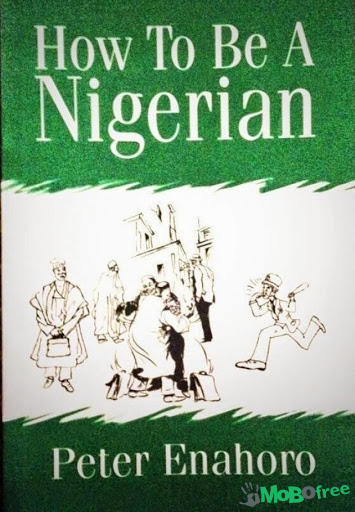
    3. How To Be A Nigerian by Anthony Enahoro

    Published in 1996, this book is described as a guide for both Nigerians and foreigners on the conduct, demeanor, carriage, actions and misbehavior of the average Nigerian adult male and female. The author does this by turning a funny eye on the people around him and makes the whole thing even more hilarious by adding anecdotes and cartoons.

    4. Oil, Politics and Violence by Max Siolllun

    Published in 2009, the author traces the details of hopes and ambition gone wrong in Nigeria. It tells the story of how the hopes of Nigeria becoming Africa’s super power were dashed after gaining it’s independence from Britain by a succession of military authoritarian governments and military coups which went on from 1966 to 1999. It also shows how the different factions of the military were able to hold on to power and resist international pressure by exploiting the country’s oil wealth and ethnic divisions to its advantage.

    5. Sozaboy by Ken Saro Wiwa

    Published in 1985, this book tells the story of a young and naive boy, Mene, who joins the military during the Civil War for every foolish reasons. He believes it will make him an adult, get him the girl of his dreams (Agnes) and also earn him the respect of everyone back home in his village.

    Not long after he joins, he realizes that he couldn’t have been more wrong.

    6. Why We Struck by Adewale Ademoyega

    Published in 1986, this book tells the story of the first military intervention in Nigerian politics in the form of the coup that took place on the 15th of January 1966.

    This book is a captivating account of the most historical events in Nigeria because it is was written by the the last surviving member of the trio that planned and executed the coup, Major Ademoyega.

    7. Sunset In Biafra by Elechi Amadi

    Published in 1973, the author, Elechi Amadi, tells the story of how he resigned from the Nigerian army before the civil war began because he opposed the Biafran cause but still ended up getting caught in the cross fire.

    8. A History Of Nigeria by Toyin Falola and Matthew Heaton

    Published in 2008, this book offers a unique portrayal of Nigerians as a resilient people living in a country with great but untapped potential. It explains Nigeria’s recent troubles by exploration of its colonial and pre-colonial past and also, its journey from Independence to statehood.

    9. Things Fall Apart by Chinua Achebe

    Published in 1958, the book follows the life and times of Okonkwo, an Igbo leader and local wrestling champion in the fictional Nigerian village of Umuofia. It also chronicles the effects of British colonialism and Christian missionaries on the Igbo community.

    10. Second Class Citizen by Buchi Emecheta

    Published in 1983, this novel tells the story Adah, a strong independent woman who struggles to overcome the strict tribal domination of women at the time and moves her family to London. Seeking a new and easy life for herself and her children, she encounters brutal racism and the harsh truths that come with being a new citizen in a foreign country.

    More Zikoko!

    10 Frustrating Things That Happen To Muslims During Ramadan