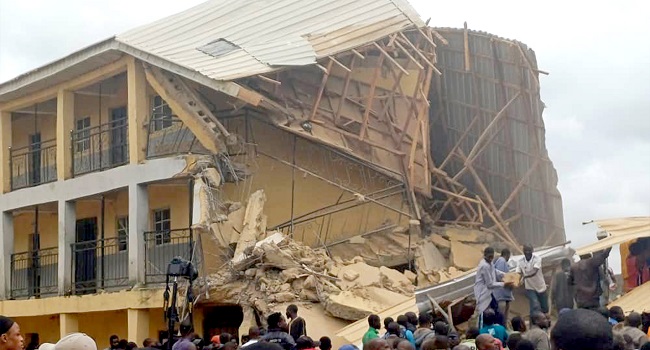
Around 8:30 am on Friday, July 12, activities at Saints Academy, Jos North, were disrupted after the school’s two-storey building caved in on students and teachers during class hours.
Plateau’s commissioner for information, Musa Ashoms, confirmed the building collapse and said 120 people were trapped under the rubble.
“The Plateau State Government has expressed deep sadness over the tragic incident at Saint Academy Jos, where a building collapsed resulting in casualties and injured students and teachers still being evacuated to different hospitals within Jos.”
Multiple videos and photos also surfaced on social media showing scenes from the crash site.
Building collapse on students at saint academy Jos RIP TO THOSE WHO LOST THERE LIFES pic.twitter.com/VwSFNI76yL
The Plateau government cited the school’s weak structure and close proximity to a riverbank as possible causes of its collapse.
Commissioner for Information Musa Ashoms stressed the need for schools in the state to adhere to safety standards and Executive Order 003, which the state governor signed in March 2024.
“The government emphasises the importance of adhering to safety standards, making Executive Order 003 sacrosanct. Schools with similar issues are urged to close down, enabling the Jos Metropolitan Development Board to prevent future incidents.”
The executive order regulates the construction of buildings in the state. It mandates that all building projects obtain necessary permits and comply with building codes and regulations.
Are there casualties?
According to the Plateau state government, 22 persons died from the collapse, while 132 persons were injured.
State Commissioner for Information, Musa Ashoms, disclosed this in a statement while giving an update about the incident on Friday evening.
“As of 6:00 pm, 154 people have been rescued from the debris. Sadly, 22 individuals have been confirmed deceased.”
Has there been any rescue operations?
In a post shared on Friday evening, the National Emergency Management Agency (NEMA) said that a search and rescue operation had commenced at the building collapse site. NEMA said over 40 persons trapped in the rubble were rescued and taken to the hospital, adding that two of the admitted individuals are in intensive care. The agency also confirmed the death of some students.
“Unfortunately, some students lost their lives, but the exact number of deaths is still being confirmed.”
NEMA added that it had concluded the operation and secured the crash site.
Governor Muftwang, President Tinubu Offer Condolences
Meanwhile, Plateau state governor, Caleb Manasseh Muftwang, sympathised with the families of students and teachers involved in the building collapse.
In a statement signed by his director of press affairs and public affairs, Gyang Bere, the governor expressed gratitude to the search and rescue team and members of the public who assisted in evacuating some of the surviving staff and students.
Governor Muftwang also directed NEMA and the Plateau State Emergency Management Agency to provide necessary support to the surviving victims of the building collapse.
Also sympathising with families of the victims, President Bola Tinubu, in a statement signed by his special adviser on media and publicity, Ajuri Ngelale, described the incident as a “huge loss to the nation”.
President Tinubu appreciated various emergency responders and citizens who were involved in the search, rescue, and resuscitation efforts.
“The President assures the people of Plateau State of his fervent support at this difficult time.”
[ad]
How are Nigerians reacting?
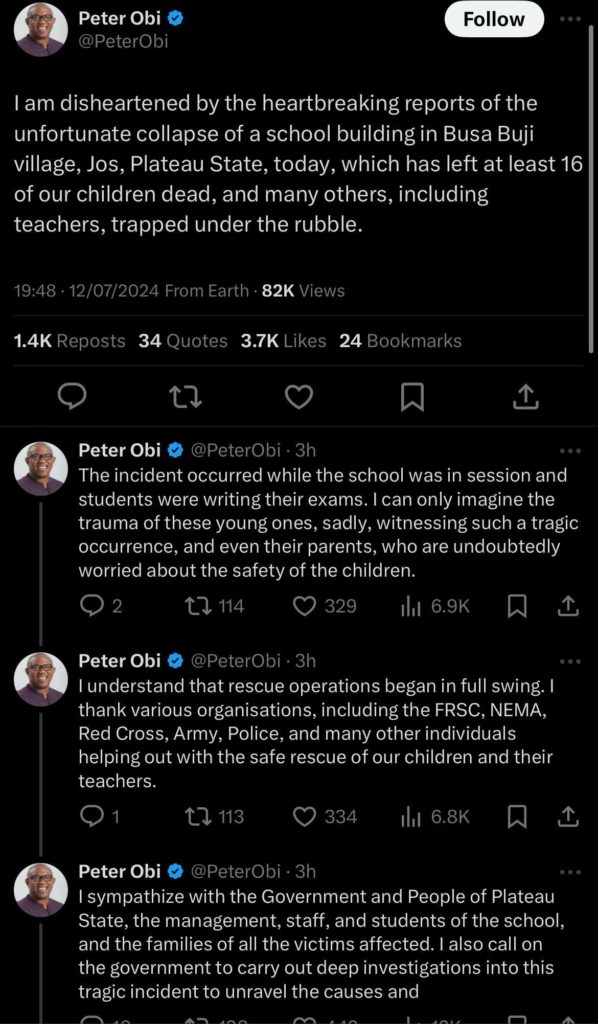
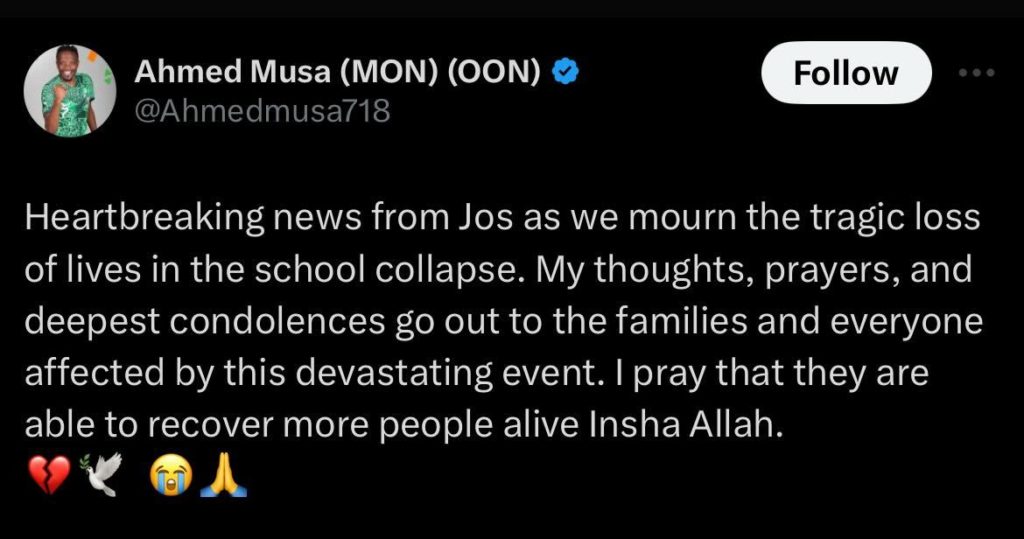
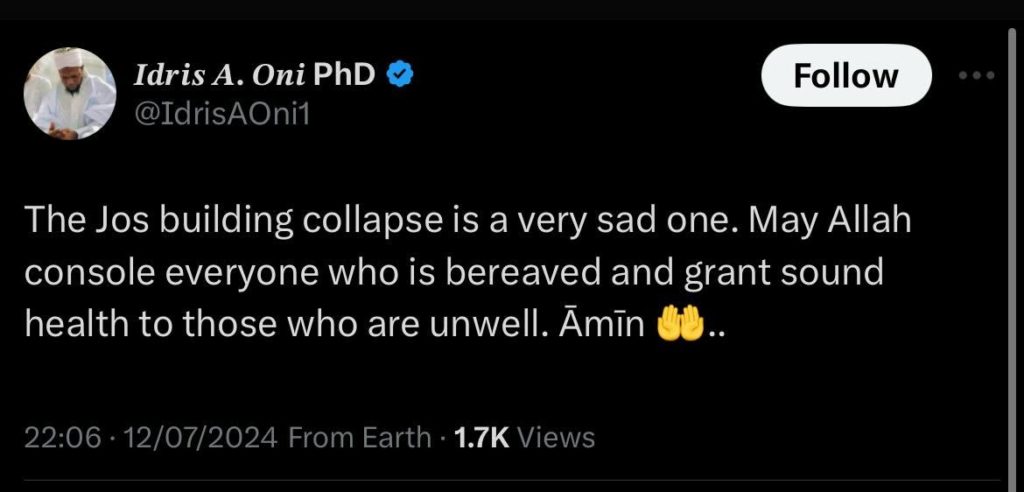
Nigerians have since taken to social media, commiserating with Plateau residents and calling for prayers.
What can you do to help?
While the state government is actively providing care for victims, you can lend a helping hand to support medical centres that have been overwhelmed.
There are calls for blood donors at the Bingham University Teaching Hospital and O.L.A Hospital.
This is a developing story.
Navigating life as a woman in the world today is interesting. From Nigeria to Timbuktu, it’ll amaze you how similar all our experiences are. Every Wednesday, women the world over will share their experiences on everything from sex to politics right here.This is Zikoko’s What She Said.
Today’s subject for #ZikokoWhatSheSaid is Michelle Nelson, a 25-year-old Nigerian woman. She talks about leaving Jos in 2012 after the religious riots started in 2001, and discovering versions of herself that make the woman she is today.
How old were you when you left Jos?
15. It’s a place with some of my fondest memories but was also the most scarring period of my life. Two years ago was the first time I could sleep well since we left Jos. I struggled with fear for so long.
I’m sorry you experienced that.
Thank you. Jos is something I’ve always wanted to talk about.
How about we start from the beginning?
Yes, please. My parents found love in Jos. My mum was 18 when they met. A year later, she had me, and three years later, my brother. We were a small family. We lived in Dogon Dutse, located in the northern part of Jos. Although most of my years in Dogon Dutse were during the crisis, my earlier memories were good. Life was easy there.
My mum was a full-time housewife, while my dad travelled for work all the time. We depended on just his salary because of how cheap things like food and rent were.
It sounds peaceful. Was it also fun?
My parents were quite strict, so I don’t remember having much “fun”. Plus I was too young to be going to parties if there were even any at the time. I didn’t stay long enough to explore what fun meant for a teenager in Jos.
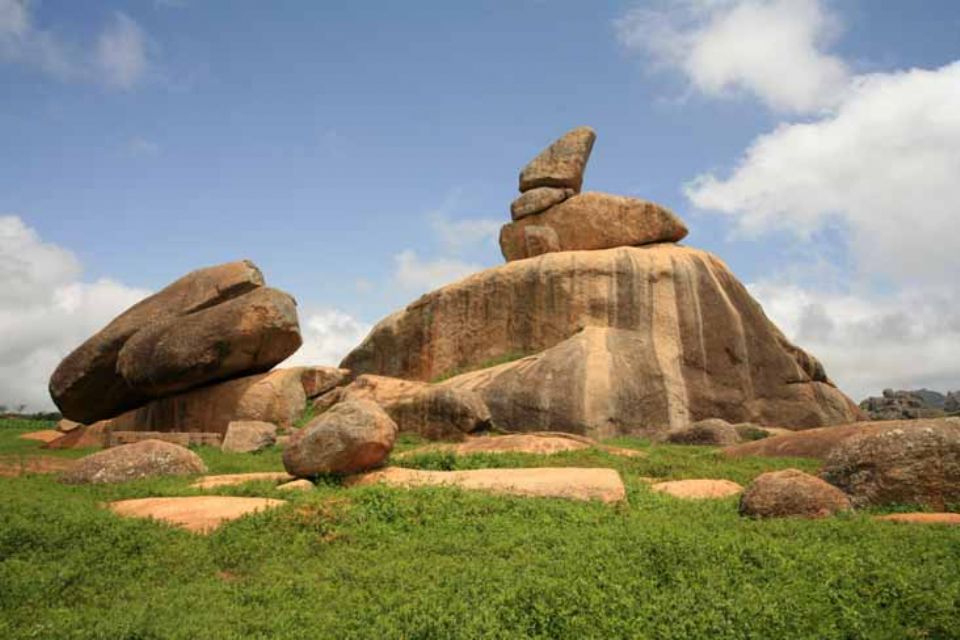
Fun for me was running outside to lick ice whenever it rained and throwing it at my friends. That’s not something I ever got to experience outside of Jos. Dogon Dutse is known as the rock valley, so we did a lot of rock climbing too. If there’s anything I really loved, it would be those moments with my friends. Once we left Jos, making new ones became difficult.
Why?
Well, I’m an introvert. But there was the part of trying to figure out who I was after I’d seen so much death.
Let’s talk about the riots.
I witnessed my first in primary school. I can’t remember my age, but I remember the scene. There’d been religious riots around Jos, and it got close to Dogon Dutse. Everyone was scared. My brother and I were at the front of our school waiting for my mum to pick us up. Before she came, I watched people cling to their kids and important documents as they ran for safety.
And your dad?
My dad worked with road safety and was posted to different parts of the country all the time. My mum had to be the strong one, but I could see the fear in her eyes, I could feel it.
After that, there were at least two or three more attacks. There were times we had to hide in the rocks around Dogon Dutse to feel safe. Falling asleep was impossible. About 11 years later, my dad finally asked us to relocate to Akwa Ibom. No one objected. I knew I’d miss my friends in Jos, but I also knew I wouldn’t survive another two or three years there. We had to go.
I’m really sorry. What was it like living somewhere new for the first time?
I still couldn’t sleep, but it was better than Jos. I still woke up in the middle of the night from nightmares.
Losing the familiarity of Jos also affected me. I had eight really tight friends back home, and it dawned on me that I might never see them again. Living miles away eventually took its toll on keeping in touch. Even the one person I thought would be in my life forever got married and moved on with her own life. I had to focus on my new life in Akwa Ibom.
Did you talk to your parents?
I tried once or twice to tell my mum, but she didn’t take it seriously. She felt I could easily get over it. Till now, she doesn’t acknowledge that it was a traumatic phase for me. It usually ended with a joke or two on how I exaggerated things. Maybe it’s a Nigerian parent thing.
As for my dad, we weren’t close enough for me to open up. And my brother was too little to understand how I felt about the nights we had to hide. So I was on my own. Now that I think about it, what I needed was therapy.
What did you get instead?
Church. Going to church helped when I couldn’t handle the emotions alone. I finally got used to the peace I felt in Akwa Ibom. I’d wake up scared, and my brain would remind me that I was safe.
Sweet. What was Akwa Ibom like?
Even though I felt like I had to start my life over again, the great part was experiencing the culture outside Jos. Like… the accent. It was very different from Jos. The people were also a lot more outspoken, and that’s not something you get in the north.
What I really experienced for the first time in Akwa Ibom was love. I went from being a naive girl into a full-blown young lady that knew what it was like to be in love. It’s also where I got my first heartbreak.
LOL. That’s what we call breakfast.
LOL. That breakfast was my first and last. Two years later, I went to uni in Delta. And that’s where I got my real culture shock.
My school was located in Warri, and the people were loud. And I mean very loud. In Akwa Ibom, I was mostly inside the house. Warri was the first place I experienced for myself because I lived on campus. So I got to move around town and saw a lot of the craziness.
Let me just point out that I’m from Delta sha.
LOL. Don’t be angry. Warri was a place you’d walk out and see a fight break out from nowhere. It was so different from Jos. Learning to speak pidgin English was the only way to blend. It made it easier to sync with the people there.
What did you discover once you connected with the people?
The extroverted version of myself. I was coming from my first heartbreak, so I wanted to have fun. I was hanging out with more people and partying. I think of it as my exploration phase.
Then I made a friend in 2018, and she took it up a notch. We’d go out clubbing back to back and drinking the night away. I grew tired of it by 2019. I think it had to do with finishing uni and realising there was a lot more to life than partying. The introvert in me was also tired.
After Delta, I retired the clubbing phase of my life.
So who were you after Warri?
A Lagos babe. Lol. Going back to Akwa-Ibom wasn’t an option for me. I was the first child, and I didn’t want to depend on my parents anymore. So when I finished my NYSC in Lagos, I decided to stay. I needed to figure shit out on my own.
Did you?
It’s been two years since I moved, and I’d say yes. I’ve gotten a job, and I earn enough to support myself. I even started sleeping better. There’s still a lot of work I need to do to fully support my family, but at least I’m on the journey.
What do you miss about Jos?
All the years I’d moved around, I never met people that lived through my reality in Dogon Dutse. I also didn’t meet people that stayed in my life while I moved between different phases. So I got used to being alone. I didn’t try to stay connected with my friends in Jos even though some of them tried.
But I’ll say this, I wish I tried harder. Last year, one of my Jos friends died. She’d been in Lagos, but we never spoke. I never even followed her back on Instagram. When my childhood friends organised a virtual memorial for her, our pictures seemed like a lifetime ago. I couldn’t picture us as the kids that snuck out of school. Too much time had passed, and I judged myself for allowing that gap.
I’m sorry. Did you try to stay in contact after that?
I try to follow people back on Instagram. LOL.
Let me be honest, I’m fine if I can’t build back the connections I lost. There are some things time can’t fix or change. I will try my best though.
And Jos? Would you ever go back?
Nah. I miss the memories there, but I’m happier with the version of myself I’ve discovered between Akwa Ibom, Warri and now, Lagos. I can’t imagine losing myself all over again. I’m only focused on getting to the point where I can live my life without fear.
I miss eating masa and suya though. It’s been way too long since I had some.
For more stories like this, check out our #WhatSheSaid and for more women like content, click here
If you grew up in Nigeria, you’ve probably heard about the series of crises in Jos. But before the crisis, what do the people who lived in Jos remember about growing up there?
Below, six Nigerians: Plangkat, aged 25, Chung, aged 35, Simi, aged 43, Tsusulo, aged 23, Zhamani, aged 28 and Chukwak, aged 21, share their nostalgic memories of growing up in J-town.
Plangkat: I was born in Dogon Dutse in Jos Central. Our compound had missionaries who planted a lot of trees. There were mangoes, cashew, tangerines, grapes, and avocados all lined up the compound. Fresh fruits and vegetables were never an issue.
Before my family had to leave, Jos was everything. I miss eating fluffy masa and suya, fried or boiled awara (tofu) and drinking kunu.
Chung: Ah yes, the serenity in Jos was unmatched before 2006. I grew up in a town called Bukuru. What I found most beautiful was how multiple tribes coexisted as a community. Even though our religions were different, there was no division. Everyone looked out for each other. One of my favourite memories is walking down to church with my friends every Sunday.
Simi: Do you remember Nzem Berom?
Chung: Nzem Berom is usually before or after Easter to welcome the rainy season in Jos. Then there’s Pusdung (Chala Day). People in the communities would dance and perform acrobatics while masquerades called Nwang roamed the streets. Every ethnic group had their own way of celebrating, but one common thing with the festivals were the flute dancers.
Simi: I don’t think you can talk about Nzem Berom and not mention food though. I tasted dog meat for the first time during one of the festivals.
Chung: There’d be pork and chicken too. And to add to Plangkat’s love for masa, I’d say tere (a dish that looks like maize porridge) did it for me — the garden egg, pepper and fresh hibiscus leaves. Nah, tere was delicious.
Sines [green caterpillars] is a snack I remember too. Once the rain starts and maize is planted, we’d wait for sines to latch on the leaves. Then they’re fried and doused in pepper — yum, tasty and medicinal.
Zhamani: Jos was definitely the place to be in the late 1990s. People came from all parts of the world to benefit from the tin and columbite mined in Jos then. I grew up with Yoruba, Igbo, Ijaw, Urhobo and Ibibio friends. I even had friends all the way from Sierra Leone and Europe.
Tsusulo: If we don’t talk about ice blocks, someone can fight us. LOL.
Zhamani: LOL. I totally agree. I remember moving to Jos as a kid, and the cold was shocking. Taking a bath was an extreme sport because, in less than five minutes, the water became ice-cold. So we’d have to bathe as quickly as possible.
Plangkat: Sometimes ice shards came with the cold rain. You could hear them hitting the rooftops. Oh, and the strawberries. How did I skip those? It was so cold that we could grow strawberries and grapes. I miss running around and eating strawberries with my friends.
I haven’t been able to connect with people like I did in Jos. As an introvert, making new friends has been difficult since the crisis. I’ve been struggling with the trauma of watching people in my community killed.
Zhamani: What I miss the most is football with my guys from the barracks. I remember playing for Bassa Local Government during the under-13 leagues at Rwang Pam stadium. I can still remember footballers from Mighty Jets and El-Kanemi — our local team — watching me play.
Chuhwak: Well, I grew up in Jos South and I remember braiding the grass around my house. That’s how I learnt to braid my hair. I miss the peace.
Chung: Me too. I wish I could eat bubal right now. Bubal is like the jollof rice of Jos — it’s for special occasions like weddings or Chala Day.
Tsusulo: You’ve talked about food like five times Chung.
Chung: Even though —
Chuhwak: LOL. I can’t deny that enjoying free food during Christmas and Sallah made sense. No one cared about the religious difference. I still live here but Christians are a lot more guarded these days.
Simi: I’d love to experience one more Nzem Berom festival. I really miss J-town.
Plangkat: Me too. But I’ll always cherish what we had before we had to leave everything behind.
In Nigeria, fruits and vegetables like oranges, carrots, mangoes, tangerines, etc., are commonplace. Many people, including Nigerians, don’t know that besides these staples, the country grows other uncommon fruits and vegetables that are often thought to be imported. Now that you know we have certain uncommon fruits and vegetables in Nigeria, here are some of them
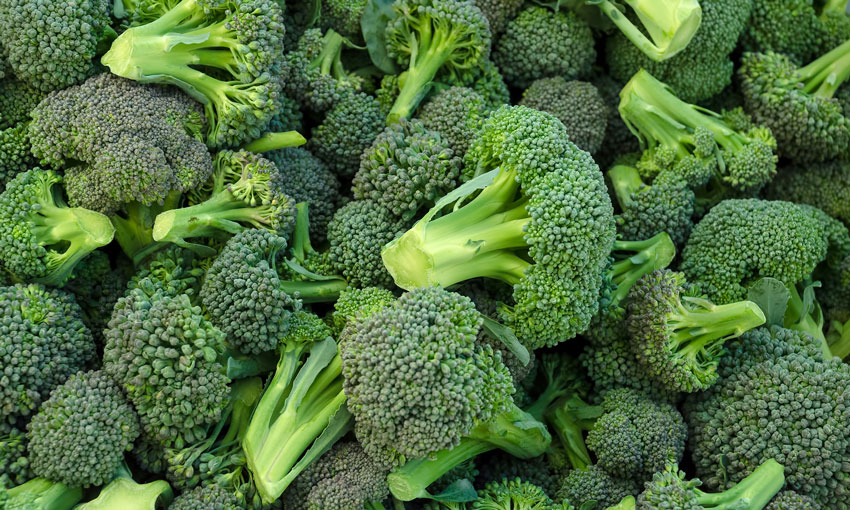
1. Broccoli
One can actually argue that Broccoli is grown exclusively in Plateau state and not in any other Nigerian state. The fruit market in Jos is all the more richer and diverse because of this and other exotic vegetables and fruits.
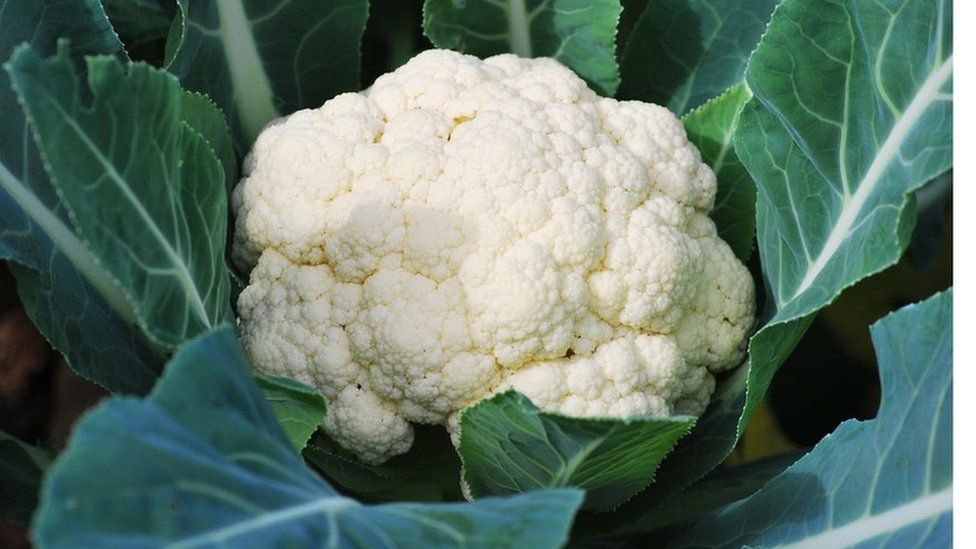
2. Cauliflower
Cauliflower is rich in vitamins and minerals, also very essential in detoxification, proper digestion, and helps fight cancer, inflammation and other heart conditions.
3. Beetroots.
Beetroot was first cultivated by the Romans. Today, the leading commercial producers include the USA, Russia, France, Poland and Germany. It can be roasted, blended into a soup, boiled, or consumed raw in salads. Studies claim that beetroot juice improves athletic performance, reduce blood pressure, and increase blood flow.
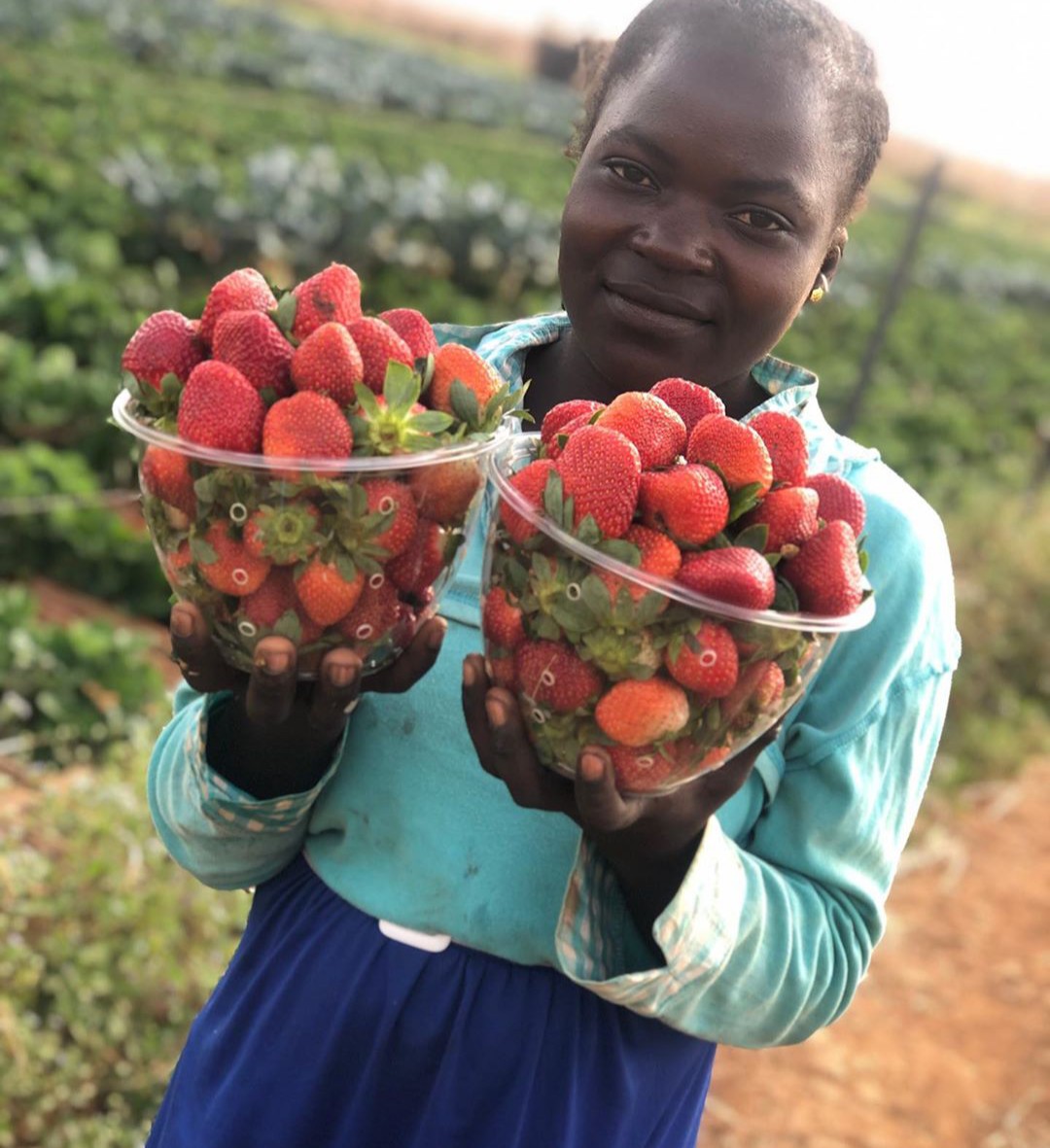
4. Strawberries
Strawberry is grown in large quantities in Jos and other areas of Plateau state. For anyone who has ever travelled from Abuja to Jos, the women hawking strawberry and other uncommon fruits and vegetables around Riyom local government area are not hard to miss.
Blueberries are low in calories but high in nutrients. Also used in fruit juices.
9. Tomatoes.
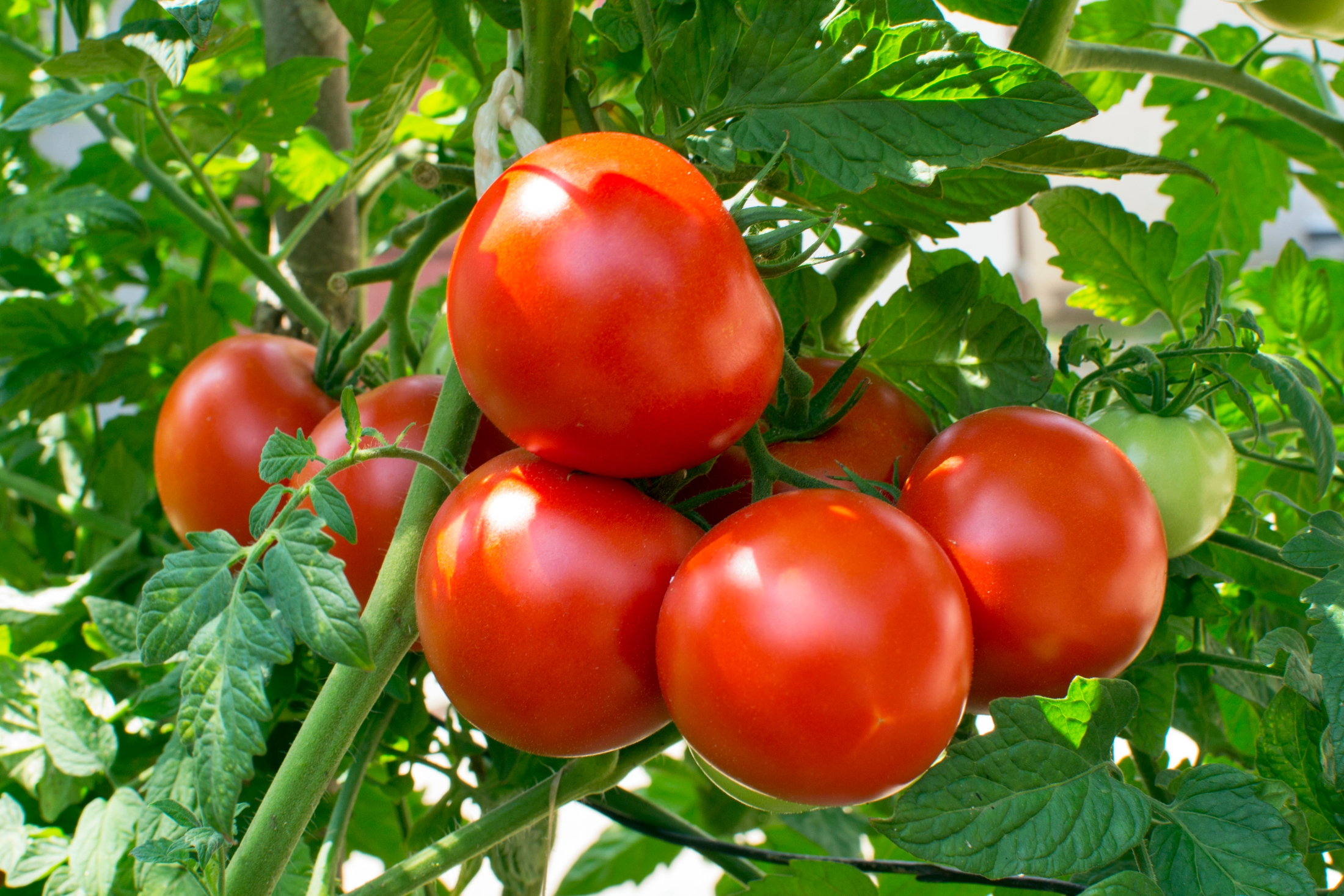
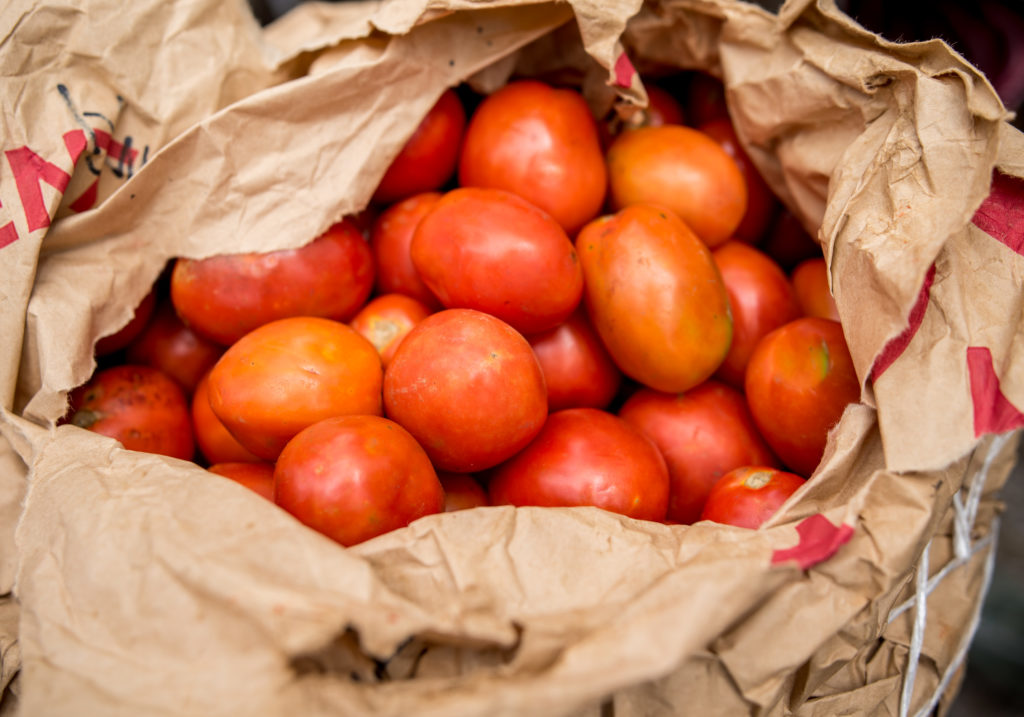
Of course, tomatoes are grown in many states across Nigeria. But the tomatoes in some states stand out for their excellent quality and flavour. That’s why the praise name “Tomato Jos” for example, is a thing.
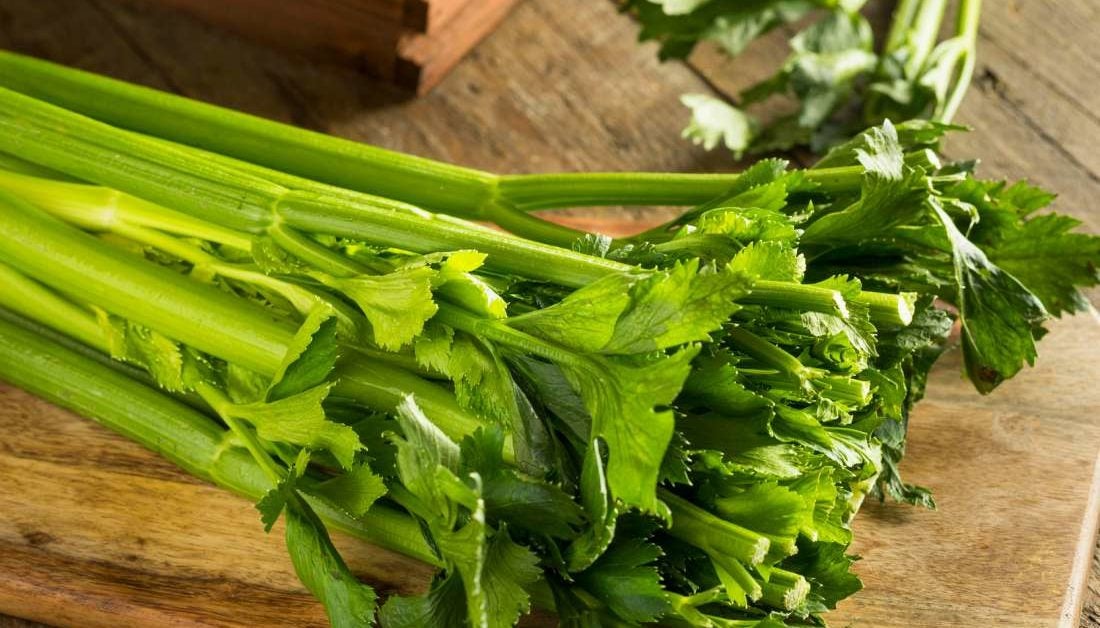
10. Celery.
This contains important antioxidants; it reduces inflammation, supports digestion, and is rich in vitamins and minerals.
11. Eggplants.
Eggplants are a source of vitamins and minerals. It helps in digestion, reduces the amount of cholesterol that the body absorbs and thus improves heart conditions. It also helps bones become stronger and increase bone density.
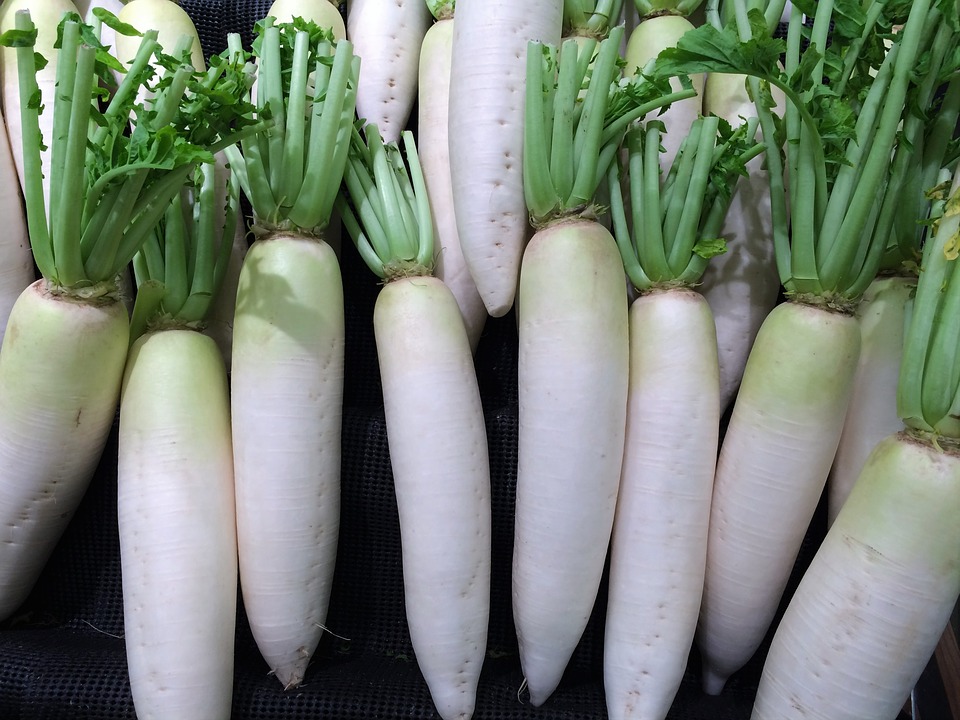
12. Radish
Radishes can be red, white, or purple. It has been said to aid digestion, fight fungus, prevent diabetes and improve skin condition.
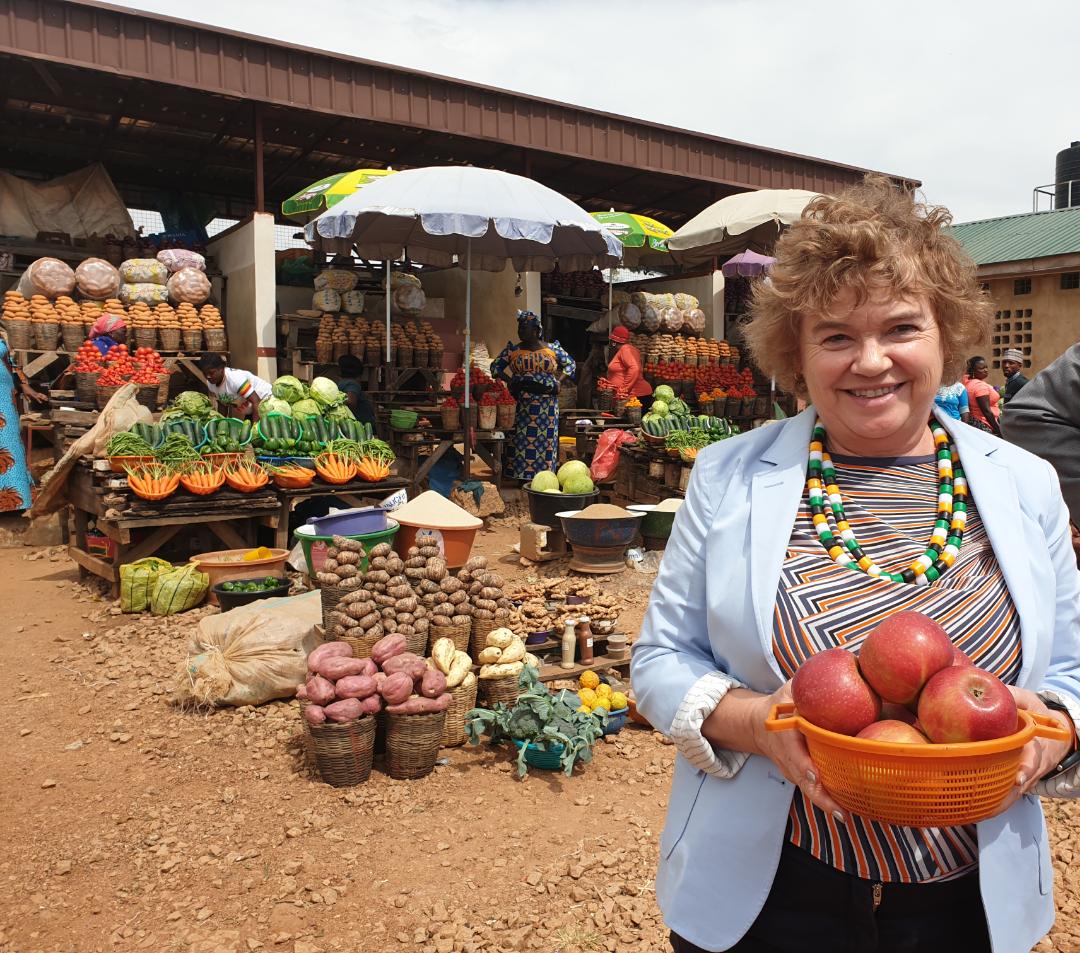
Here’s a picture of the British commissioner to Nigeria, Catriona Laing, shopping for fruits at the farmers market in Plateau.
Nigerians who live in Lagos often confuse living in Lagos as the entire Nigerian experience. But there are many, many great cities in Nigeria, and Jos is one of them.
We have been hearing so many great things about Jos, and we decided to curate some of them.
1. Peace of Mind
If you are tired of Lagos wahala, we hear that Jos is a good place to go and relas and be taken kiarof.
2. Cheap Food
The general consensus is that food is cheap in Jos.
3. High Level of Trust And Compassion
Jos is that place where you could go to the market, and be 20naira shy and tell the trader "ma, abeg my money no complete, e remain 20naira" and she'll say "no problem bring the money like that" Compassion has a mansion here
This particular thread on Twitter does a job of highlighting the high level of trust and compassion in Jos.
4. Cold Weather
Jos can get as low as 7 degrees, especially in the months between November and January. But if you’re Canada material and you don’t mind cold, then Jos is a perfect fit.
5. Sweet and Fresh Tomatoes
Heard of the common phrase “Tomato Jos”? Yes, tomatoes can be found aplenty in Jos, including the presence of other fruits and vegetables like apples, strawberries, carrots and peas.
6. Great Landscape
Jos is a city with one of the richest landscapes in Nigeria with the presence of many tabletop mountains and rock formations.
Everyone attests to the hospitable in Jos. You should stop by.
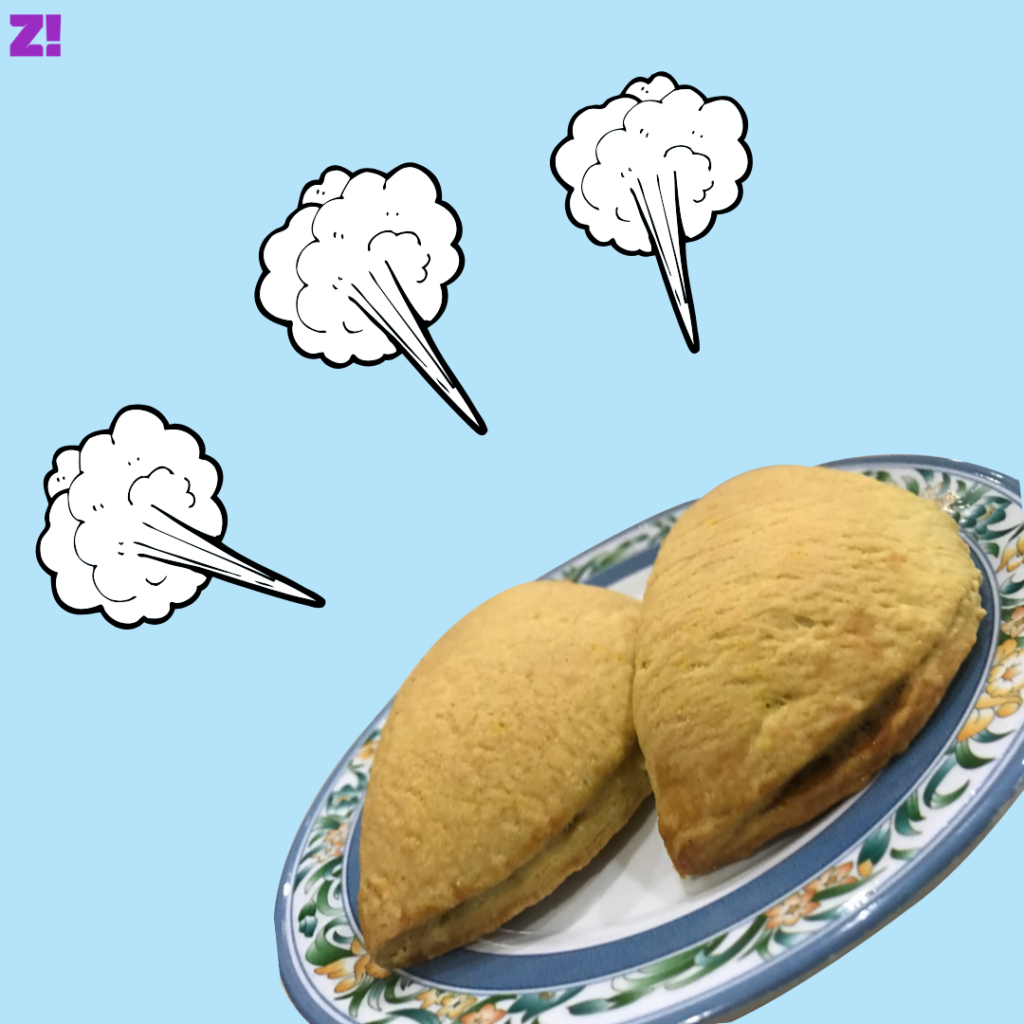
I’m not sure when exactly it happened but sometime within these last 5 years, the meat pie at Mr Bigg’s, which in my opinion was the best meat pie in Nigeria went to shit. I thought it was just at the branch at Gbagada where I used to live. Then I tried the one at the start of Bode Thomas which is now closed. And then the one in Ikeja City Mall, whose prices are higher than other Mr Bigg’s outlets for some reason I could go on and on but you get where this is going.
Anyone who points me in the direction of a Mr Bigg’s outlet whose meat pie still tastes the way it did 5 years ago gets to see me eat a hat.
As I mourned the death of Mr Bigg’s legendary meat pie something unbelievable happened. I came across a little cafe on the first day of a 5-day trip to Jos that arguably…scratch that, definitely was the best meat pie I had ever tasted. Including Mr Bigg’s in its prime.
I shared the good news with the friends I was travelling with – Omesham and Deyo who refused to believe me. Nowhere in Nigeria sold better meat pie than Mr Bigg’s in its prime. Given that one of them had been to nineteen out of our thirty-six states, I would have been inclined to believe. But I had seen the light and I remained adamant. I declared I would give each of them 5,000 naira each if they didn’t think the meat pie was the best they had ever tasted.
And so bright and early on the 2nd day of our trip we hurdled into a Keke and headed to the cafe. When we were 5 minutes away I began to doubt myself. ‘What if the chef messed it up today?’ ‘What if it wasn’t even that great and I was just really hungry?’ ‘What do I do if they don’t like it?’.
We get to the cafe and I offer to buy the meat pies. My first peace offering in case they didn’t like it, because I certainly didn’t have 5k to give out for no reason in the year of Buhari. Omesham takes a little nibble out of her own pie and says nothing. Deyo breaks it in half to inspect its contents before taking a bite. They are both quiet for a minute as they eat, then they Deyo breaks the silence. ‘It’s good but certainly not the best I’ve ever had’. I start to argue with her when Omesham interrupts us. ‘I really wanted you to be wrong, but you are right. It’s the best I’ve ever had’. I tell Deyo 2 out of 3 votes is all the proof I need.
Days later as we prepared to leave Jos, Deyo finally admitted she also thought the meat pie was the best she had ever had. She just couldn’t miss out on an opportunity to swindle me out of 5,000 naira.
For the rest of our stay, we showed up at that little cafe every day without fail. We’d grab breakfast in the morning before heading out to do touristy things. Stop by for lunch or dinner when we were done and head back to our hotel. We never ate at the hotel’s restaurant.
Here’s the thing about the cafe. It wasn’t just the meat pie that was perfect, everything was. In all my years of restaurant hopping, I had finally stumbled on a place with the perfect menu and it wasn’t in Lagos, the fine dining capital of Nigeria. And it wasn’t just because the most expensive thing on the menu was 2000 naira which was the cost of a whole pizza. They used fresh food to make absolutely everything. My biggest grouse with Lagos has always been all the frozen food being passed off as fresh I keep getting served in restaurants.
The owner, a small white woman who had relocated to Jos decades ago took pride in letting us know that everything on the menu was made from scratch. From some of the cheesiest lasagna I had ever had to pizza made on the thinnest most delicious crust.
For several months after my visit, I harboured fantasies about moving to Jos. Where I could eat at my little cafe every day, and buy fresh fruit juice at every corner.
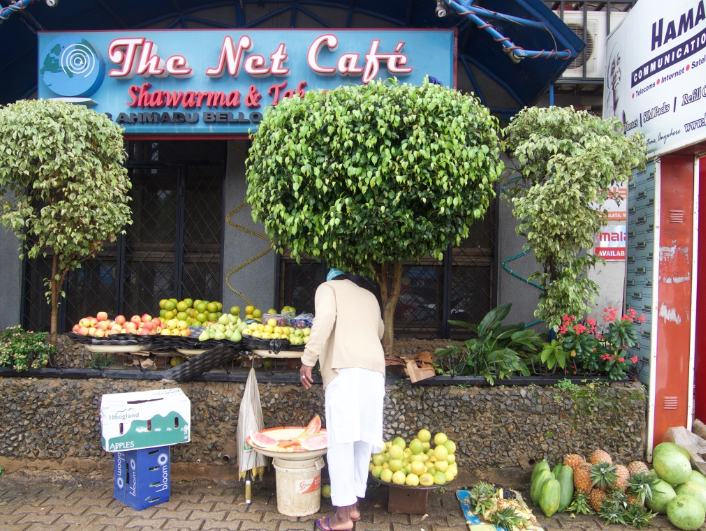
If you ever find yourself in Jos, stop by The Net Cafe, 25 Ahmadu Bello Way for the best meat pie in Nigeria.
Every week, Zikoko seeks to understand how people move the Naira in and out of their lives. Some stories will be struggle-ish, others will be bougie. All the time, it’ll be revealing.
This week’s story pulled off in collaboration with Payday Investor. Before you start to make plans about your next salary, click here.
When was the first time you made any money?
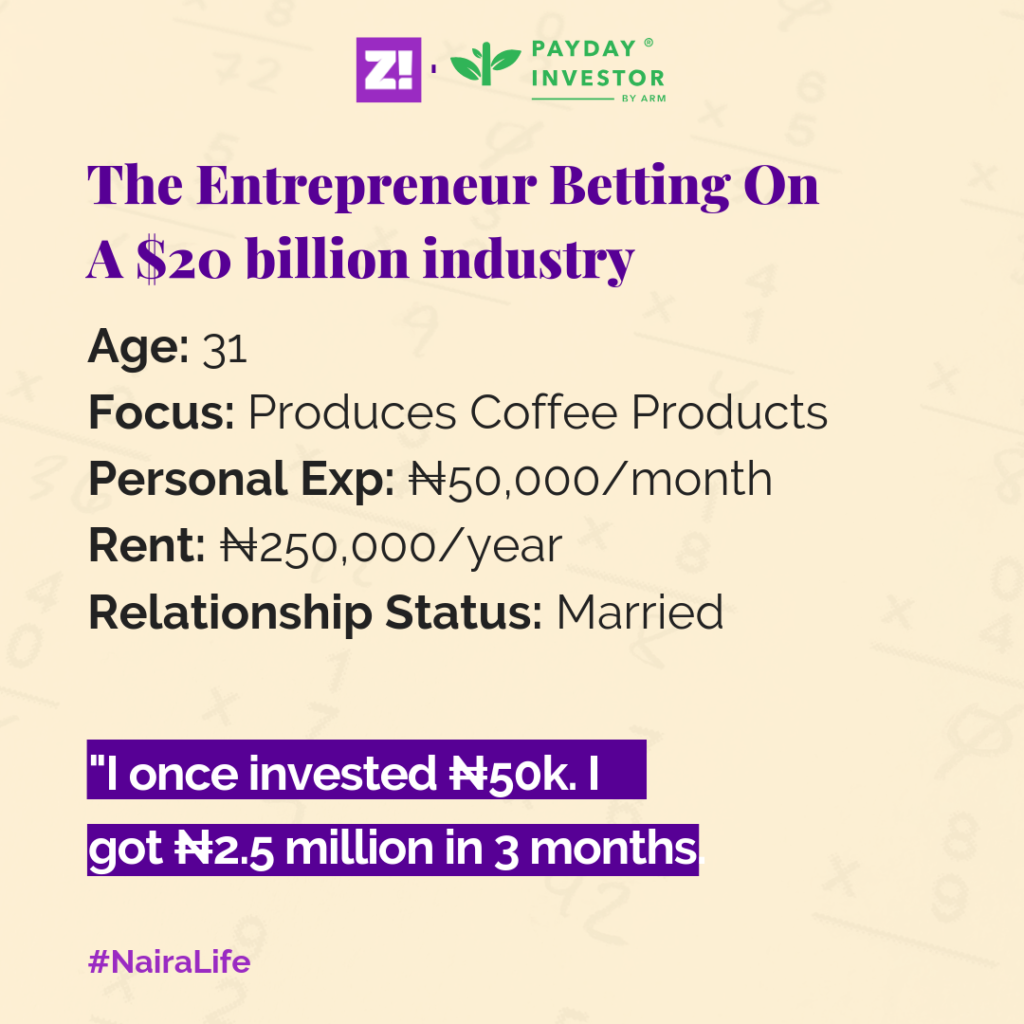
That’s an interesting question because I didn’t make money until I was in my final year at school. I had this friend that cared very little about money, and life, so he drank a lot. But he was a really great artist.
So I got the info that one government house where I had a friend was renovating, and somehow, I managed to make a case for an artist to come make murals across the government house.
On the other end of things, my dad gave me ₦50k to pay my school fees. And what did I do, I carried that money and used it to buy materials for my friend.
He went on to do the work. In three months, we got paid – ₦2.5 million.
₦50k to ₦2.5 million. That is quite the start.
I gave my guy one million. Paid my school fees. Then I spent about ₦800k on getting people to make noise about it – PR in some of the right places. That fetched us other gigs that brought in about ₦1.9 million.
Woah.
Some people at the Government house took an interest in me. The best thing about working with people in government is the access it gives you. Meanwhile, I started looking for what to do with all that money, so I invested some of it in stocks and acquired some land. Pushed that into Agric.
Sounds robust. What happened next?
I applied for YouWin in 2014 and got a grant of ₦6.5 million. It was actually a partner and me.
My partner was the admin and comms guy while I was away, and I was the technical guy.
How did the Fonio business go?
First of all, Fonio, or what we call Acha locally, is a kind of grain. It used to be really popular, but it didn’t get all the love that Sorghum, millet and co have gotten. What we wanted to do was experiment with Fonio in more consumer-friendly forms. We tried it in baking and different recipes. So we developed a packaged product.
Interesting
We got the money in tranches, and the first one was about ₦1.9 million. The first thing we bought was some equipment. There was a kind of dryer we wanted to buy, but it would have cost us about ₦1.5 million locally to bring it here. So I carried my mechanical engineering sense, and we fabricated locally. That cost ₦500k.
We didn’t want to wait for all the money, so we got started immediately. Took the rest of the money buying tons of Fonio from local women, dehull, wash and package.
The value we were trying to add was taking it quicker to consumption.
What’s the demand for Fonio?
It’s a resilient crop, and it requires no fertiliser. People use it for various things, like pudding, swallow, and even baking. People also tend to encourage it as a healthy alternative for diabetic people. But, Fonio doesn’t get as much love as you’d expect. It’s not so popular in Nigeria, so while we believed we had a great product, there was one problem – advocacy.
Now, to make a product popular, you need to make a lot of noise about it. When you make noise about it, your increase demand. But that costs a lot of money and resources.
What came next?
I started to experiment with other stuff and gently ease out of full management of Fonio. Somehow, I found my way back to an old obsession – Coffee.
I live in Jos, and because our climate is unique, coffee grows here. I had a coffee tree from about 15 years ago. I’d roast the beans for my dad, and he’d give feedback and I’d improve it.
In 2017, I decided to give it a shot. I actually tried to go at it from scratch – so I threw in one careless ₦5k.
Then I started going to people who had farms and buying berries from them. Buy, process, roast, sell. And slowly, it grew. By October, we’d done about 800k in revenue. The profit was just about 380-something-k.
The biggest struggle that year though, was that when I started buying coffee, a lot of them were bad. So I started researching more about how to properly treat coffee better, and transferring whatever I learned to farmers.
₦380k? I’m not sure that was enough to sustain you.
So, because I was researching more than most people, that also created another opportunity. I started consulting for other farmers, and someone even asked me to help him co-manage his plantation. It’s sitting on about 50 hectares of land.
I believe there’s a growing coffee culture in Nigeria, and I want to be a part of that. Especially because the coffee we brew is not only fresh – a lot of imported coffee is stale – and it’s homegrown.
If you ask me about numbers, I can assure you that I know very little about those things. My wife was the one managing my finances, while I just focused on making my roast better.
Ask my wife, please.
Fair enough.
Hello, your partner asked me to ask you about money, because he doesn’t seem to know much about it.
Hahaha. Very good. I actually started keeping records in July 2017, because there needed to be a system that showed progression and tracked growth or something. There was no evidence that there was growth, because we weren’t tracking anything. He’s passionate, but passion is not always enough to run a business. If you have passion but no skills, it dies.
Word.
In August 2017, it was ₦50k. These days, it can fetch many times that amount on very good months. In March, for example, we made up to ₦400k in profit.
That is interesting.
Yes, that’s more than the entire 2017 from selling coffee alone. We tend to re-invest a lot of it in materials, from the coffee beans to the packaging. Also, because you don’t harvest all year round, we invest in buying a large amount of coffee beans.
So, what’s the most important lesson as an entrepreneur?
First of all, hunger is super important. I think entrepreneurship forces you to improve, make things better, and do things differently.
It is also forcing me to work on my personal discipline; in finance, in relationships, and everything –
Her: – he still needs to hire someone to manage his books. I can no longer do it because my 9-5 job is taking my time. There needs to be someone to actually pay him a salary. That forces him to be more accountable.
How much salary do you think you’d earn as an entrepreneur in 5 years?
Him: Using today’s value, maybe ₦100k?
Her: Add more.
Him: Okay, ₦250k. I think what is most important for me is that we have a strong place in the new coffee culture in Nigeria in the next 5 years.
Entrepreneur or not, bills need to get paid. How’s that going?
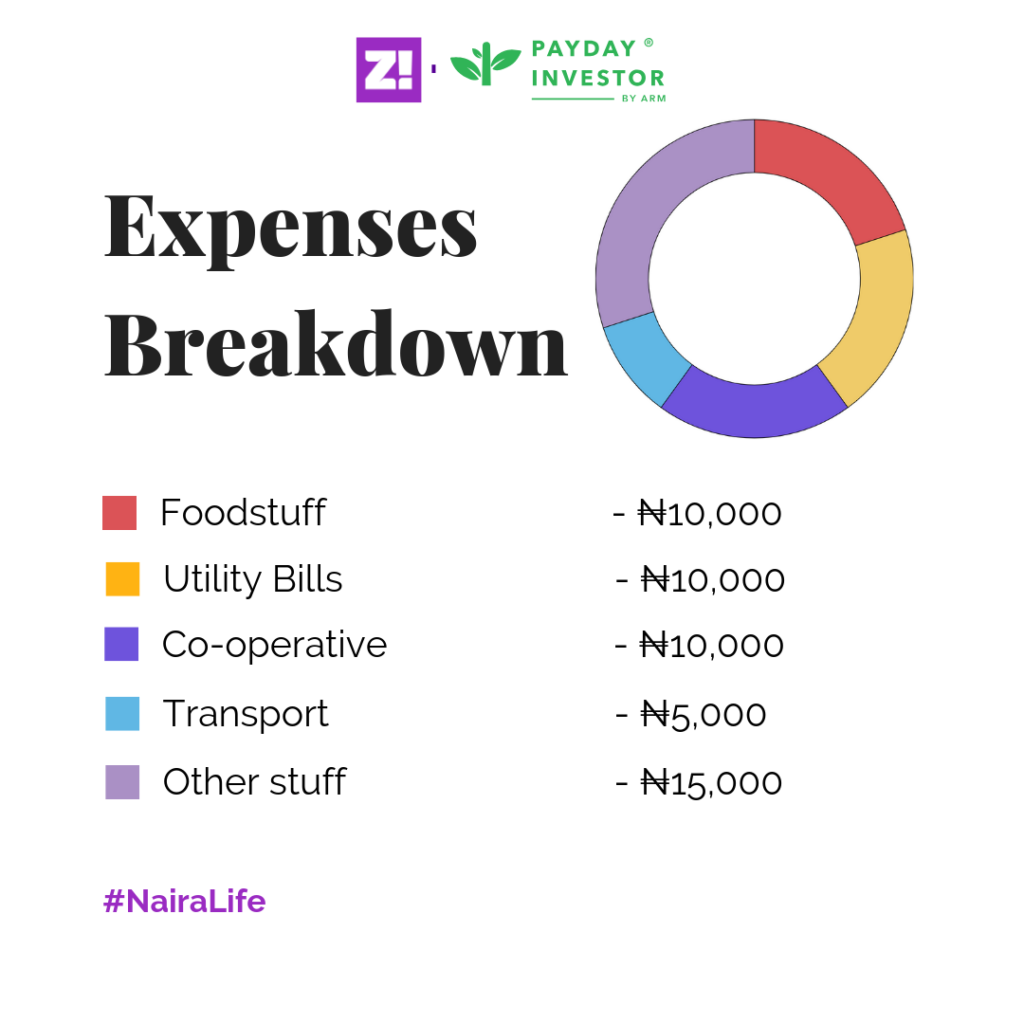
First of all, the most important one is rent, and ₦250k per year fetches us a really good 2-bedroom. I hardly go out much, except I have to go and get materials. That means I don’t spend a lot on transport. Last-last, ₦50k is enough for a good month in Jos.
Minus your business, what other investments do you have?
Her: Right now, we’re actually looking into doing mutual funds, my sister is a heavy investor in mutual funds. I’m considering it too though. Aside from that, I also invested in a farm with my parents. It’s about 9 hectares of Rice and Soya Beans.
When do you think you’ll retire?
Her: My husband said he wants to die at 85, so that he doesn’t turn to anybody’s problem. Hahaha.
Him: It’s too much?
Her: Too small. Anyway, you’ll be too troublesome then. Him: By 60, I’m done with work. Then I’ll be travelling, and having the time of my life.
What was the last thing you paid for that required serious planning?
A van – to be honest, it’s still in the works. My farm is quite far from the house, so buying a van will help me move produce fast.
What’s the most annoying thing you’ve paid for recently?
We paid for coffee, and they gave us bad coffee beans. We had to return it, and they didn’t pay back for up to a year. A loss.
Do you have an emergency plan for weird things like health emergencies?
Her: We were actually talking about that yesterday, I think we’re going to do it with one of these apps.
Happiness levels, 1-10.
Her: To be honest, we’ve not reached where we want to go.
Him: Yep. But I really don’t feel like I’m struggling, I even have room to give a lot. So, I’m really good.
Her: We need more sha.
This week’s story was made possible by Payday Investor. They want you investing as quickly as possible, with as little as the price of bottled water. Give it a shot. Download the app now.
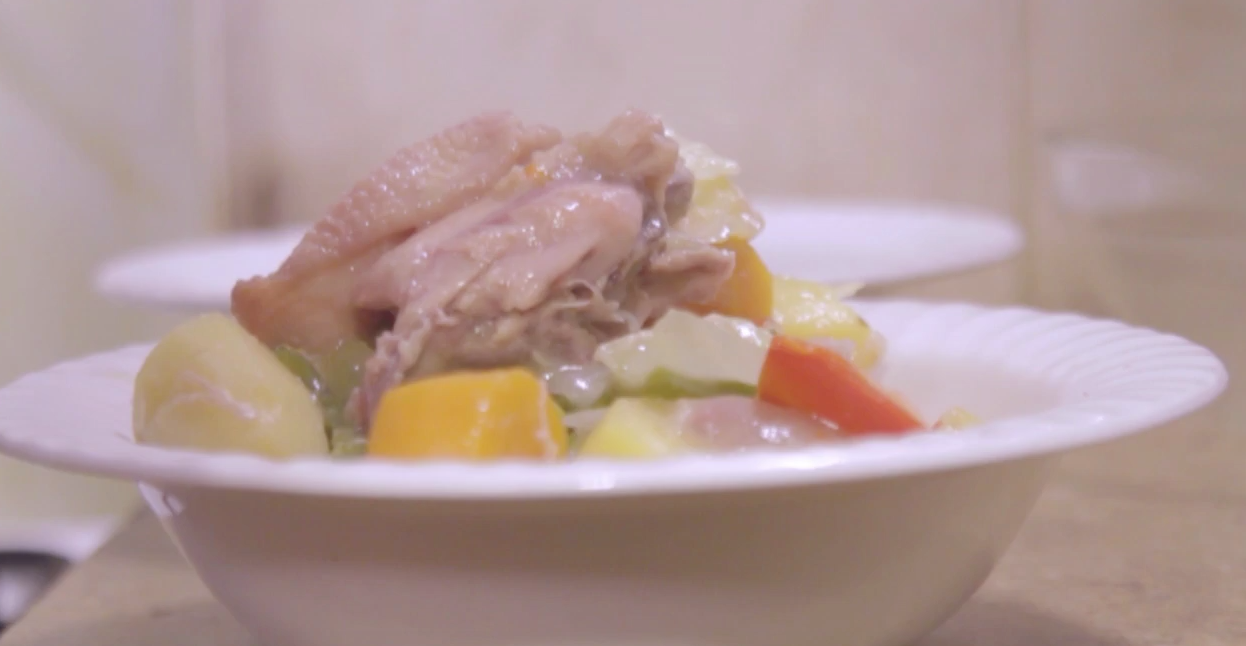
When it comes to adventures, food lovers have the most fun – they get to eat food from different places and manage to stay healthy while at it. This Irish potato pottage recipe, Gwote Dankali, from the breathtaking city of Jos is definitely one tasty journey foodies like us can’t wait to go on.
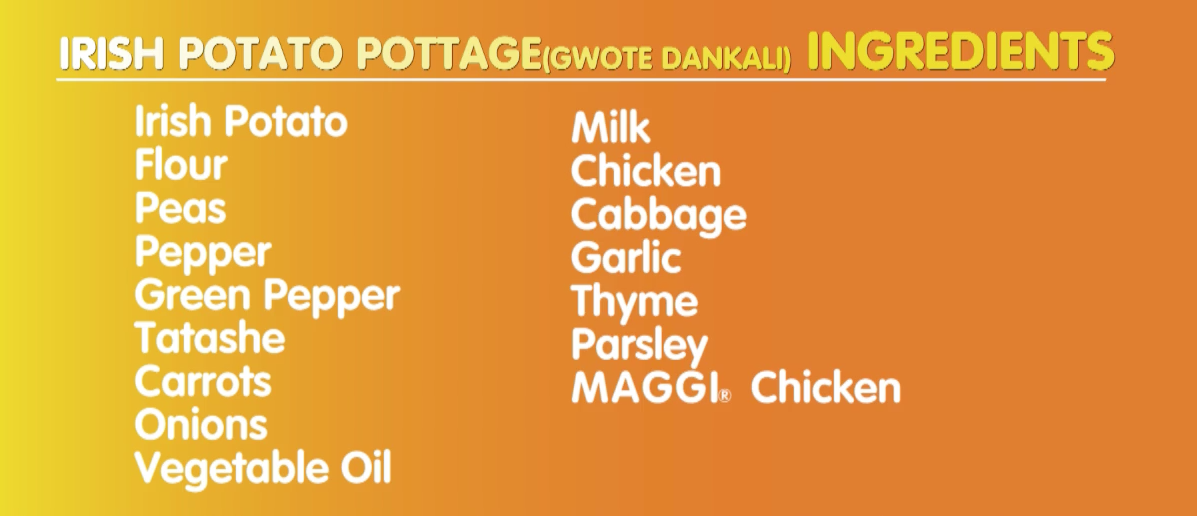
1. To cook this meal, you’ll need:
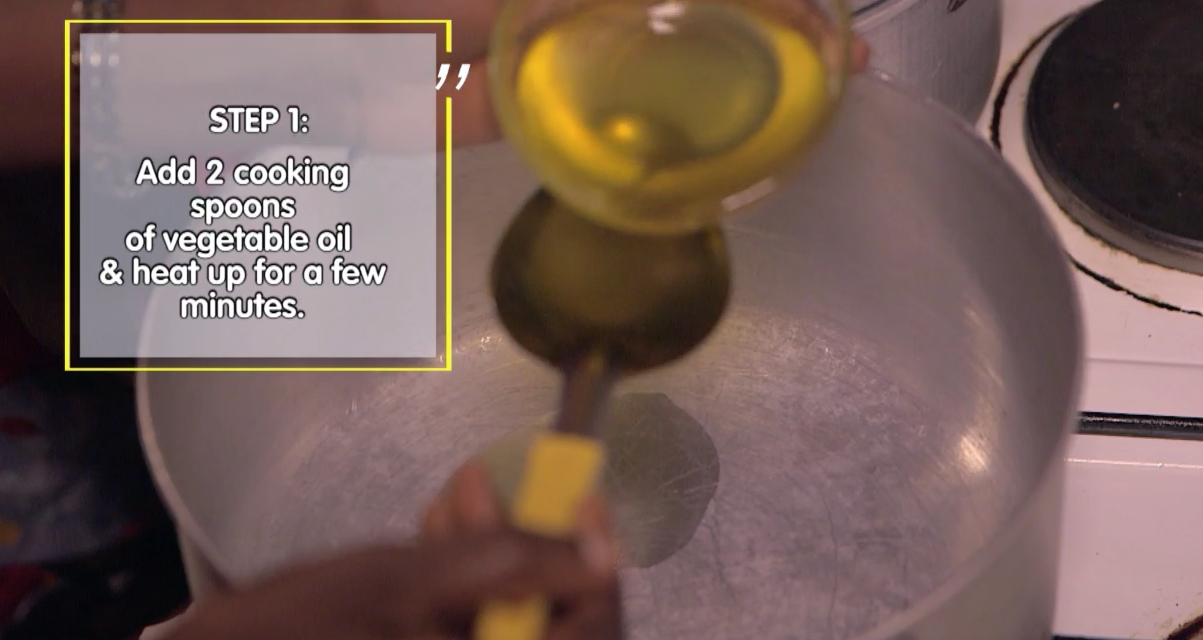
2. First, wash and chop all your vegetables before heating up two cooking spoons of vegetable oil in a pot for a few minutes.
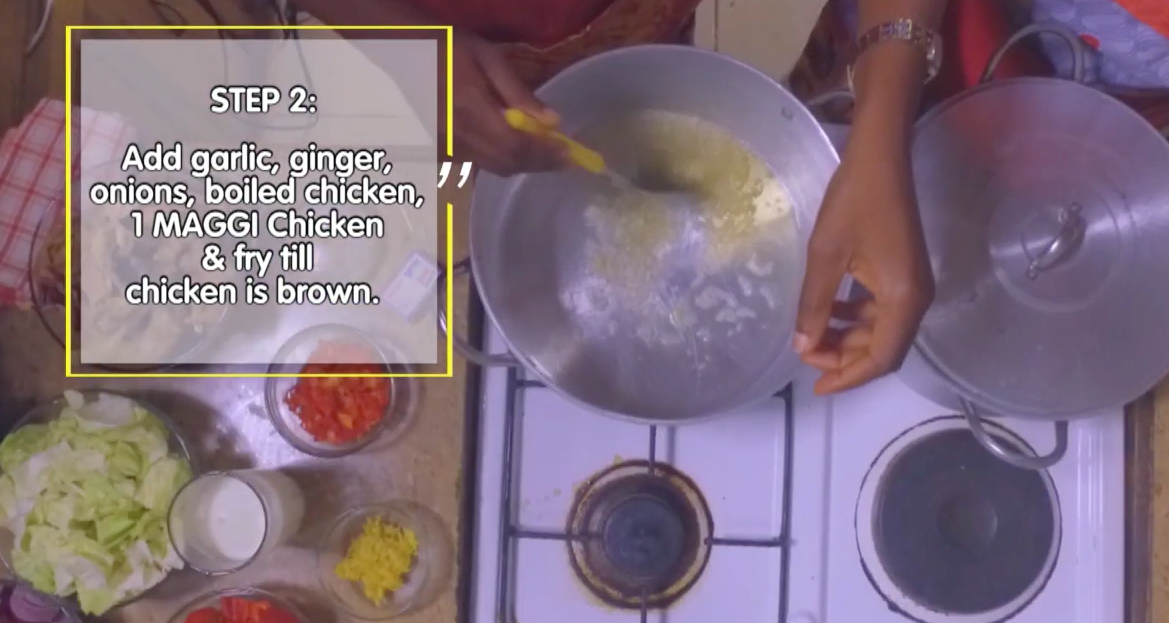
3. Add the ginger, garlic, onions and chicken, fry this until the chicken turns golden brown.
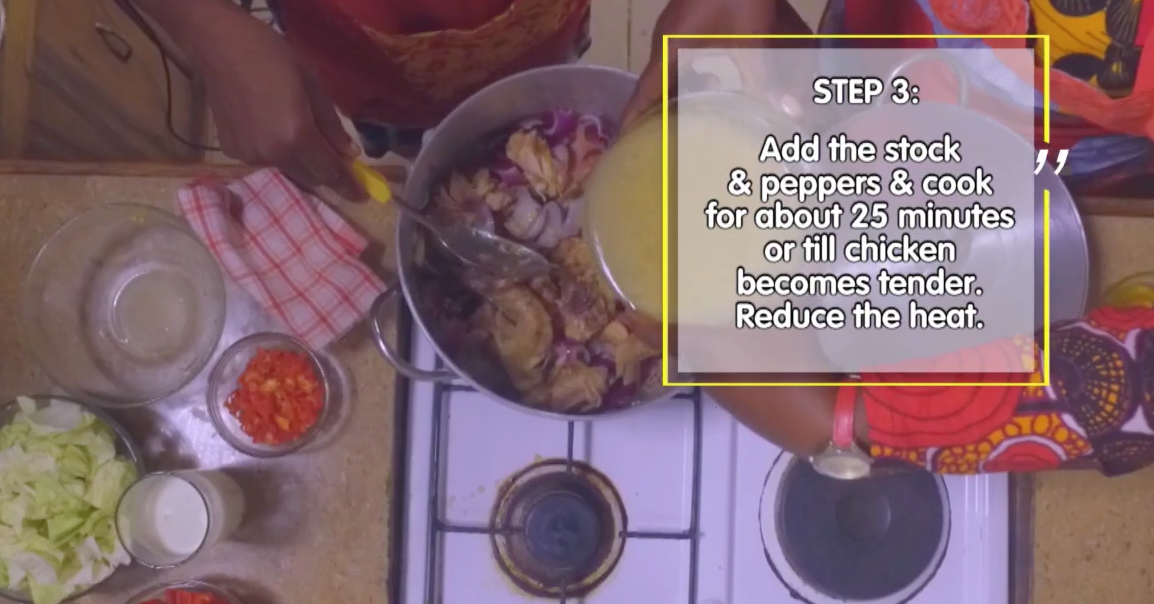
4. Next, add chicken stock and peppers – cook on low heat for 15 minutes until the chicken becomes tender.
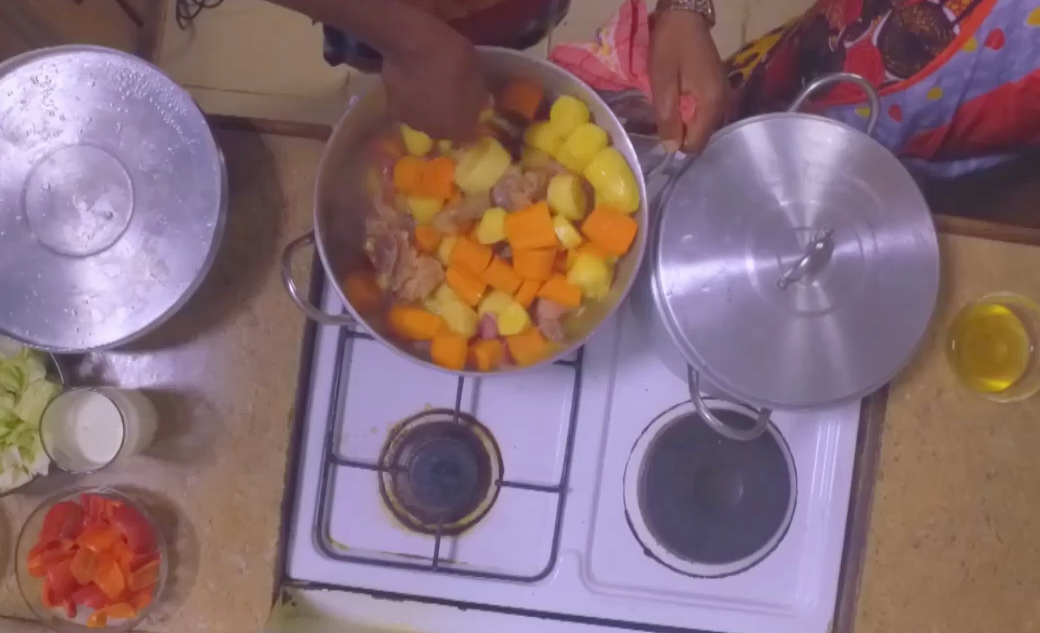
5. Next, add the potatoes and carrots, leave this to simmer for 20 minutes.
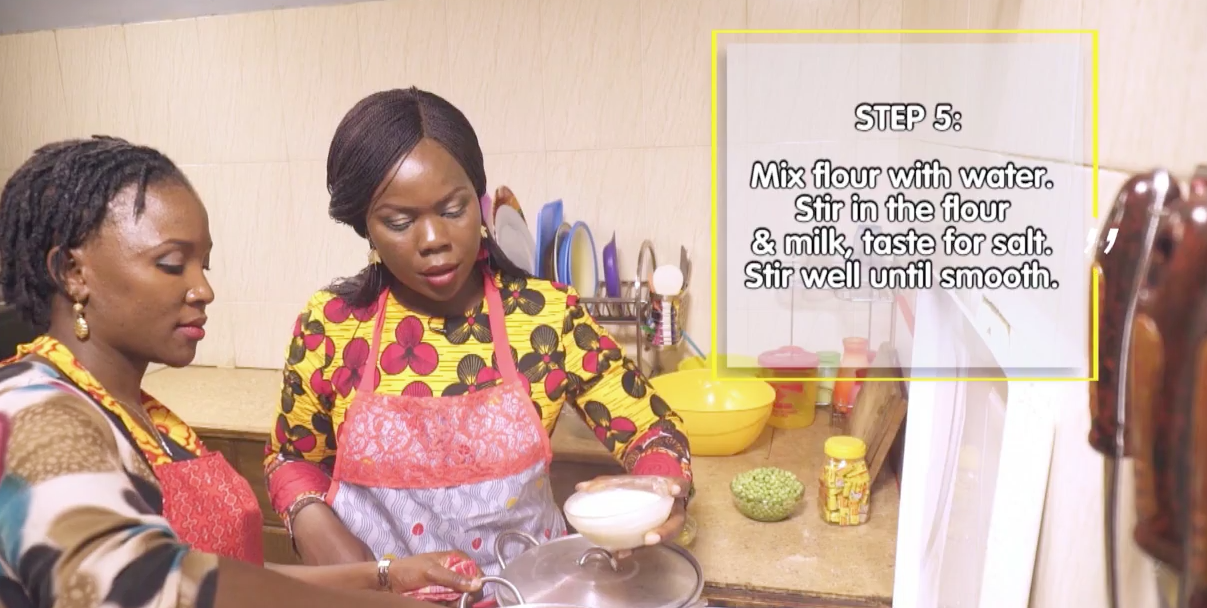
6. It’s time to add the flour and milk for that thick and creamy consistency.
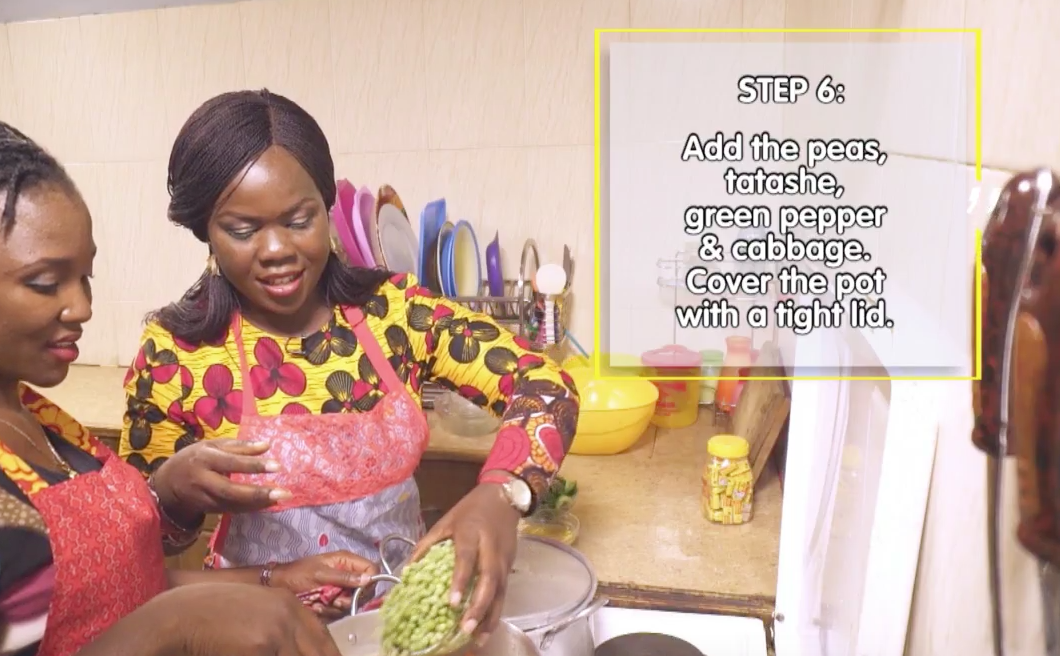
7. Finally, add the green peas and the rest of the vegetables to the pot, cover with a tight lid and cook for just 5 minutes.
8. At this point, your yummy Gwote Dankali is pipping hot and ready to eat!
Want to see exactly how this dish was made? Watch the recipe with exact measurements in the video below:
If you love Nigerian food, catch up with the latest episodes of Delicious Naija, from Maggi Nigeria.
Make sure to look out for the ‘Delicious Naija’ show at these times on your TV:7:30 pm, Friday on Arewa24,7:30 pm, Saturday on Africa Magic (Family),5 pm, Sunday on NTA, OR just watch it online right now!