We just premiered the first episode of Zikoko’s HER docu-series, featuring Ibukun “IBK” Akinola, the quietly powerful Payments Director at PiggyVest. If you need motivation or just want a quick glimpse of what it’s about before committing yourself to the episode, watch the trailer here.
To whet your appetite, here are a few things we found fascinating about the woman who’s earned the trust of millions of Nigerians, without ever needing the spotlight.
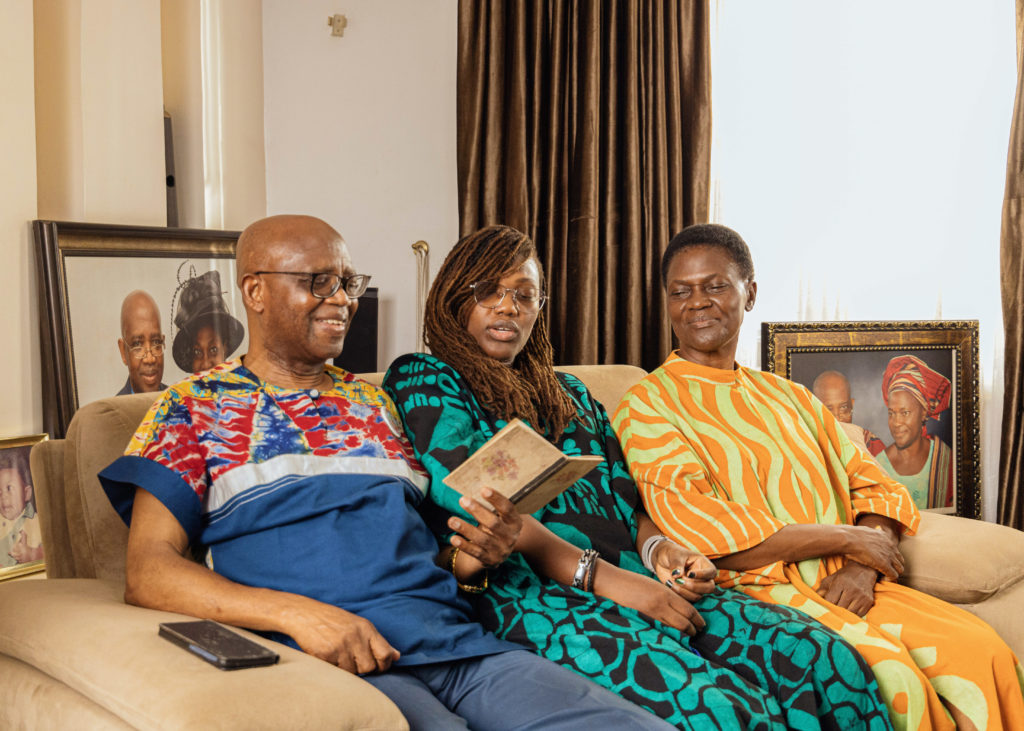
Ibukun Akinola and Her Parents
Ibukun’s people and money management skills are probably generational
Both her parents have backgrounds in finance, and she followed in their footsteps by studying Accounting at Covenant University (yes, she’s an Eagle). She topped that off with a Master’s degree in International Business from Coventry University.
PiggyTech, the money-moving machine, wasn’t her first start-up rodeo
After completing her Master’s degree in 2013, she moved back to Nigeria and started a few businesses with her brother, Ayo Akinola, and their friends, Somto Ifezue, Odunayo Eweniyi, and Joshua Chibueze. These brilliant minds went on to build platforms like PUSH CV and 500 Dishes. With the support of mentors like Olumide Soyombo, they kept pushing till they made it.
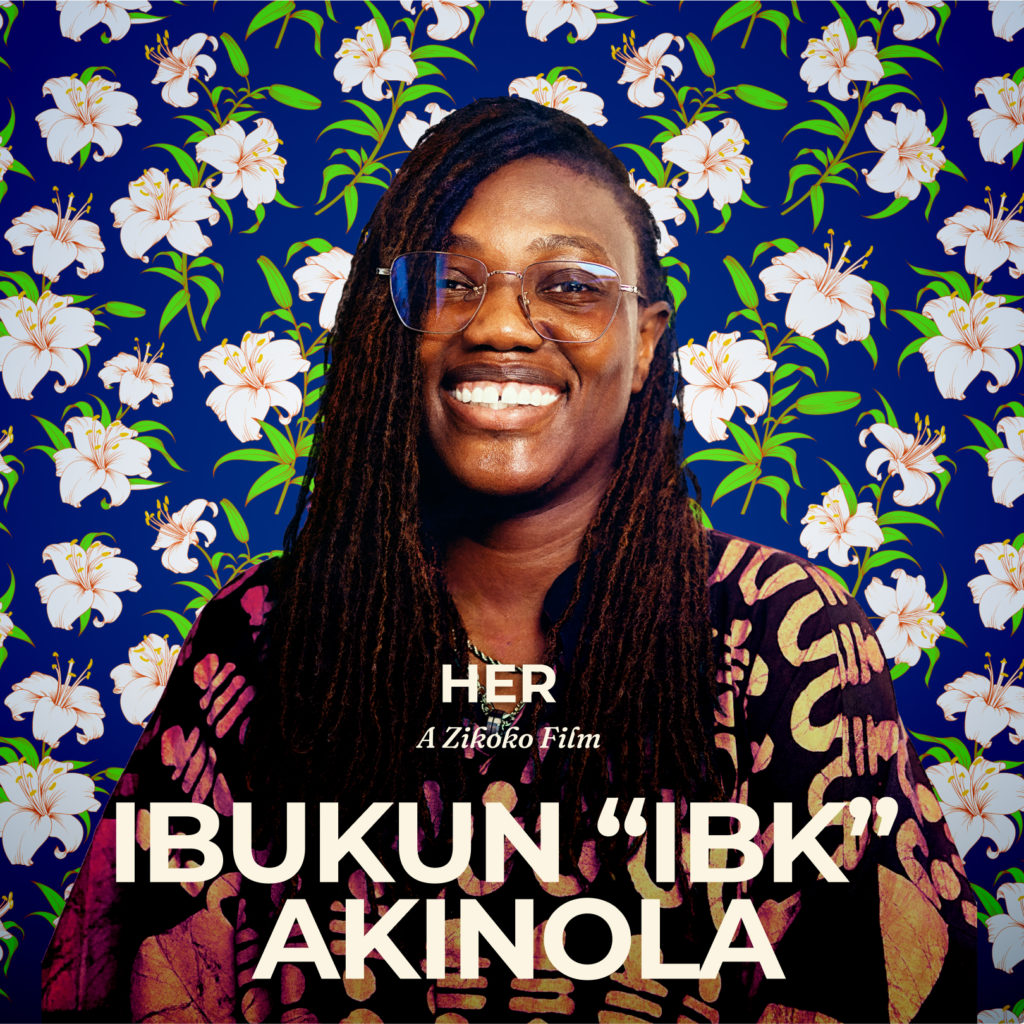
Ibukun ‘IBK’ Akinola
As PiggyVest’s Payments Director, Ibukun Akinola understands the weight of her responsibility and power
She describes herself as the person responsible for collecting your money and giving it back to you. She regularly speaks to about 700 processors to ensure Nigerians don’t take the company to the streets of Twitter. Beyond this, she’s incredibly proud of the milestones PiggyVest helps customers reach, and how it’s shaping Nigeria’s saving and spending culture on a larger scale.
Her friends describe her as “scarily intentional and fiercely loyal”
Ibukun says she’s one of the luckiest people alive, thanks to the community she’s built. To her friends and family: if you’re reading this and you haven’t watched the episode yet, know that Ibukun loves you very much and says she couldn’t do life without you.
Ibukun Akinola steadies herself by being on the move
Whether it’s tennis, running, or taking long walks, Ibukun processes life, work, friends, and family through these movements. They also act as moments of solitude for her, where she connects with herself and her faith. So, what’s next? For now, she’s focused on living in the moment and getting it right. What she’s most interested in is finding balance in the sweet middle of life. Whether it’s in her faith, her work, and her friendships. She’s searching for the sweet spot right in the middle, where everything just feels sweet.
Watch the full episode below and tell us something we haven’t already told you.
You heard it here first: Zikoko has a new documentary series coming out, and it’s called “HER“. The series shares its name with our women-focused vertical, HER, under which we have told all kinds of stories about women over the years.
This time, with the on-screen adaptation, we are bringing you some of the realest stories of incredible women in film format.
The series is produced and directed by award-winning storyteller Aisha Nana Salaudeen. Her approach to the project was to fish out women with strong stories of economic power who haven’t been very forward-facing. In other words, women doing important work whose impact isn’t necessarily loud.
One of the featured women is Ibukun ‘IBK’ Akinola, the Payments Director at PiggyVest. You know PiggyVest, but do you know the woman who makes sure the money moves? This series takes a deep dive into IBK’s life and process, as well as those of other women breaking barriers and inspiring young women and girls everywhere.
In this interview, Aisha tells us more about the documentary and the process behind bringing it to life.
What drew you to direct and produce the HER docuseries, and how did your personal journey shape the way you approached this project?
Working on this project for me was a no-brainer. I decided to work on it before knowing what it was about. Big Cabal Media is like family, and I love the work Zikoko does, so it was an automatic yes. When I got to know what the project was about, especially the central theme, Women Economic Power (WEP), I said, “These people are speaking my language.” I also thought about the impact it would have beyond Nigeria. These are issues women around the world can relate to, and I wanted to be part of telling the story.
This series explores women and their economic power. How did this theme resonate with you personally, and influence your storytelling choices?
My approach was to spotlight women who fit the theme but aren’t as forward-facing. So, women who are doing important work, but whose impact is not loud. For example, when people think of PiggyVest, no one really thinks about or knows IBK. But without her, everything will crash. For Tara, it was her resilience, the way she juggles many things at once. I wanted to show that hustle spirit Nigerian women are known for. Generally, I wanted a mix of women from different economic backgrounds. I identified something in each of them and moved with it. I’m glad the Zikoko team was happy with the choices.
What were some of the emotional or creative challenges you faced during production?
Everything about the project felt challenging. Every day on set, I’d ask myself what I was doing. At times, things got very emotional. While shooting Tara’s episode, for example, I saw how people related with her on different levels. She became emotional too. I think she felt overwhelmed and grateful for how far she’d come. The access she had given herself to power. It made her feel good, and that got to me.
What guided your decision in choosing the women spotlighted? Were there qualities or stories that stood out?
There were a number of common threads across these women’s lives, but the one that stood out the most was the need to find your path as a woman, especially towards financial independence. That’s my story, too. Because I’m a woman, I could connect the dots, feed into the nuances, and empathise with their experiences. Balancing each story could have been tricky because the women were so different, but I was intentional from the start. Anita also kept reminding me to stay on track. I also think it wouldn’t have been difficult to do this, like I said, a lot of women can relate to the central theme of WEP. A lot of women are seeking access to economic power, and on sexual reproductive health (SRH), women relate to things as common as periods.
Get More Zikoko Goodness in Your Mail
Subscribe to our newsletters and never miss any of the action
Did directing the series challenge or shift any unconscious beliefs or stereotypes you may have held?
I wouldn’t say I had any unconscious beliefs or stereotypes before directing the series. But the process helped reiterate certain things for me, like the need to be open-minded and the importance of women telling their stories. By open-minded, I mean understanding and accepting of the choices women make and the contexts they exist in. Because let’s be honest, we don’t always have that many options. The choices these women have made may not make sense to many of us, but they define their identities, and that should be okay.
In your view, how can storytelling like this help shift the narrative around women’s agency and power?
I always say storytelling will save the world, and this campaign is part of that. It shows different variations of what’s possible. You cannot be what you cannot see or imagine. Women need to see these stories so that they can imagine more for themselves. I love that the target audience is young girls who can draw inspiration from accomplished women, and who will receive proper SRH advice. I’m very happy with the work we’ve done.
Why do you think it’s important to tell stories like this, and what do you hope changes when we do?
Generally, I’m not asking for too much. I want women to stop being ashamed of these conversations. To question existing beliefs that don’t favour them and challenge the status quo. I want them to ask: “Why are we okay with not having access to power?”, “Why are we scared of making money and having access to power?”, “Why should we not speak about these things?” I want responses that are emotionally and intellectually stimulating. I hope girls see how these women attained economic power and feel motivated to climb the career ladder. I want to spark feminist conversations about early marriage, about things we usually avoid. I want men to watch it too. I want them to see that some episodes were directed by men and think, “Wow, men are supporting this campaign too?”.
Looking at your body of work, where does HER sit in your creative journey?
I’m proud of this project. I love the idea of what it can do. My goal is really to tell stories in as many formats as is humanly possible, and HER fits into that. I’m just happy for the opportunity to learn, relearn, and unlearn, especially with the brilliant people I worked with on this.