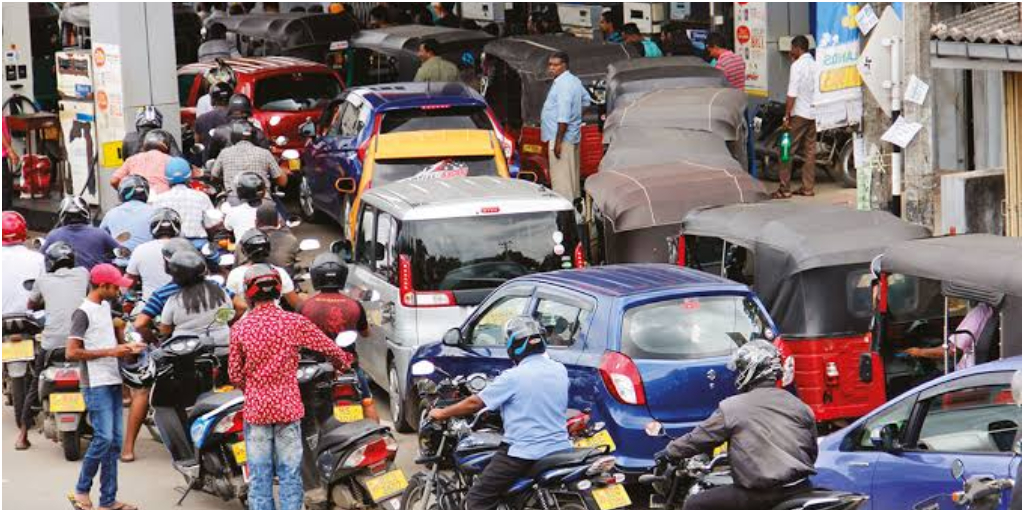
On Tuesday, September 3, 2024, the Nigerian National Petroleum Company Limited (NNPCL) officially increased the petrol pump price from ₦617/litre to ₦855 – ₦897/litre (depending on the location) effective immediately. The fuel price has now been increased thrice since the subsidy was first removed in May 2023.
Image: This Day
What caused the increase?
According to NNPC spokesman Olufemi Soneye on September 1, 2024, the state oil company claimed it was burdened by the high cost of supplying petrol to Nigerians and a $6.8bn debt to international suppliers.
The NNPC also confirmed that the financial strain was making petrol supply to depots difficult, resulting in scarcity across Nigeria and posing a threat to the sustainability of fuel supply.
The new price adjustment is expected to reflect the rising costs of supply. While this isn’t exactly a surprise to independent fuel marketers and many Nigerians, some had held out hope that petrol production from the Port-Harcourt and Dangote refineries would make fuel supply more affordable.
How does Dangote come in?
Image: Arise News
On Tuesday, Aliko Dangote, chairman of the Dangote Group, released official petrol samples from his refinery. He declared that the product could enter the Nigerian market in 48 hours, depending on how soon he reached an agreement with the Federal Government. He also assured that the local sale of the fuel would help stabilise the naira and make scarcity a thing of the past.
However, it is unclear whether Dangote’s fuel will be a cheaper alternative. Dangote says the price will be determined through an agreement between his company and the federal government.
What does this increase mean for Nigerians?
Several experts have predicted that the upward review in the petrol pump price would further plunge Nigerians into poverty and worsen the country’s inflation levels.
The Director-General of the Nigeria Employers Consultative Association (NECA), Mr Adewale-Smatt Oyerinde, also expressed concerns about the new development. According to him, “This new pump price could be seen as making Nigerians pay for the crass inefficiency in the NNPCL.”
He remarked that he’d expected the planned commencement of operations from the refineries to progressively reduce the petrol pump price, but this does not seem to be the case.
Nigeria currently owns four refineries, and while billions of dollars have been spent on turnaround maintenance within the past year, none of them have been able to meet production deadlines.
Currently, Nigeria’s fuel supply is almost entirely dependent on fuel imports, and it looks like the pump price hike is here to stay. And unless petrol depots receive more cargo in the coming weeks, the fuel queues may be here indefinitely, too.
If you’ve been angry about the ongoing fuel scarcity, brace yourself for the worse, as filling stations nationwide might raise their prices soon. The NNPC recently admitted to owing its petrol suppliers $6 billion, partly why fuel queues have persisted nationwide.
These Nigerians, who are still struggling with the subsidy-driven price hikes, share how another fuel price increment will affect their livelihoods.
Hakeem | Food Business Owner | Monthly Income: ₦500k
I recently opened a physical store, and we’ve been without electricity for nearly two weeks due to connection issues. In that time, I’ve spent over ₦120k on fuel, and that’s with a strict schedule I devised to limit generator use. Running the gen 24/7 would cost even more. The fuel scarcity has worsened, sometimes forcing us to buy from the black market at ₦7k for 5 litres. My worry is if I’ve spent this much in two weeks at the current price, how much more will I budget for fuel in future when they increase the price? These people make running a business harder than it should be. It’s so annoying.
Kenny | Remote Worker | Monthly Income: ₦300k
Thankfully, I haven’t spent much on fuel in the past three months, so I haven’t paid much attention to fuel scarcity. There’s been good, consistent light in my area—24 hours most days. Before this, I spent around ₦40k weekly on fuel, a big jump from the ₦20k I used to spend before the subsidy removal. It’s frustrating to think a large chunk of my income goes to fueling my generator. I’m just praying the electricity stays stable because I can’t imagine spending more than ₦40k on fuel if prices go up again.
I’m still struggling to adjust to the fuel price hike since the subsidy was removed. Apart from fixing phones, I run a device charging station that requires constant power. Before the subsidy removal, I budgeted ₦30-35k for fuel each month, which doubled after the price hike. I had to increase my charging rates, which reduced the number of customers. Some used to charge their devices multiple times a day, but now, they do it once and stretch it out. If fuel prices go up again, I’ll have to raise my prices, or I’ll run at a loss. As much as I hate to admit it, I make the most money when there’s no light. But this fuel crisis has tanked my business.
Tayo | Private Cab Driver | Average daily income: ₦45k-50k
My main worry is that another price hike will make black market fuel even more expensive.
I spend about ₦45k-50k to fuel my car for two days, but I sometimes pay more for less fuel when buying from black market sellers. Lately, they’ve been my go-to. I have a theory that many Lagos filling stations tamper with their meters, so even if they sell at ₦650 per litre, the quantity is less compared to what I get from black market sellers at ₦1k per litre. I’d rather pay more than waste time in the long queues at filling stations. Right now, black market sellers charge ₦7-8k for five litres of fuel. I usually buy about 20 litres from them for ₦40k, and it’s not because I want to. As a cab driver, time is money. The hours I’d spend queuing at a filling station could be spent completing trips. If fuel prices go any higher, turning a profit will only get tougher.
Akin | Writer | Monthly Income: ₦300k Another fuel price hike feels like the government saying, “screw you.” It means I’ll have to rely more on NEPA, which isn’t exactly dependable. Over the past year, most of my spending has been on food, fuel, transportation, and other essentials. In a heavy month, fuel takes up at least N70k of my ₦300k income because I work from home sometimes. That ₦70k doesn’t include what my brother, whom I live with, contributes on the days I don’t cover the fuel costs.
I kid you not, I’m writing this article with about 20% battery power left on my laptop.
For about a week now, the queues have resumed at petrol stations across Nigeria due to another fuel scarcity situation. To make it even worse, the power supply seems to have worsened. No light, no fuel. I asked some remote workers how they were coping because, to be honest, I wanted to steal hacks from them.
“Work every time you see light” — Dotun, 28
The truth is, even if you drop your laptop somewhere to charge, the battery will still go down when you pick it up and start working. So, if you don’t have money for a coworking space, carry your work with you wherever you see electricity.
NEPA has been doing a thing where they bring light for 30 minutes around 2 a.m. Once I feel the breeze from the fan, I immediately stand up and do the work I can do. That way, I can save a full battery for when my actual workday starts.
“Guard your fuel jealously” — Funmi, 26
I divide my tasks according to how much time I think it’ll take to complete them, then I try to do as much as possible without using my devices. Of course, that doesn’t always work because I still need to turn on my generator.
But I guard my fuel jealously. I only turn on the generator for 30 minutes at a time when it’s absolutely necessary. Even then, I only pour small fuel into the generator to somehow trick it into consuming less fuel. What kind of life is this?
“Bribe someone to stand in fuel queues for you” — Josiah, 30
I don’t have time to leave work and hustle for fuel, so I bribe my brother to stand in queues for me. I think he charges me five times more than what I should actually pay, but I’m happy to pay. He’s saving me stress and getting me fuel, which is heroic in these times.
[ad]
“Befriend your neighbours” — Toke, 24
I’m the type who likes to keep to myself. I’ve lived in my compound for about a year and have never entered my neighbour’s house — at least until this recent scarcity started. They tend to turn on their generator more because they have kids and their apartment has become my second office. Thankfully, they’re nice about it but I try to only go there when absolutely necessary so I don’t take up too much of their space.
“Communicate with your employers” — Detola, 22
I always tell my employers when I have to be unavoidably absent because I don’t have fuel or power. They can’t say they don’t understand because we’re all in this country together. I try to limit the instances when that happens, but will I turn myself into fuel?
“Invest in an alternative source of power supply” — Fred, 27
I had to angrily drop almost ₦1m to install a solar panel system last week when the fuel situation wanted to kill me. Of course, this was only possible because I had the money. But it was my emergency savings and I’m not happy about spending it on something that shouldn’t even be a problem. But I had no choice. My employers aren’t Nigerians and definitely wouldn’t understand. It was either that or losing my job.
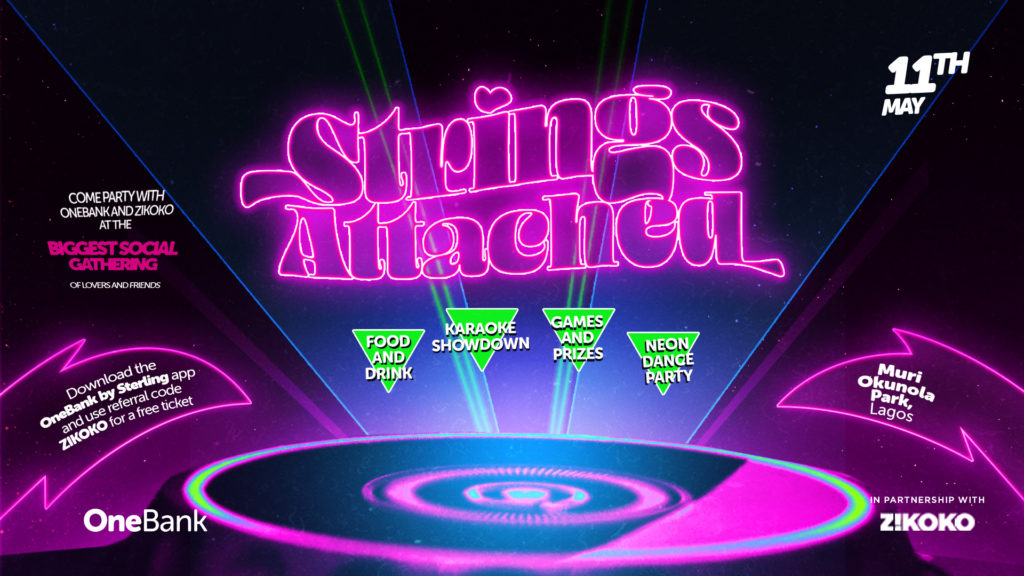
Get a free ticket to Strings Attached and enjoy a feel-good evening of music, dancing and games at Muri Okunola Park, Lagos on May 11, 2024.
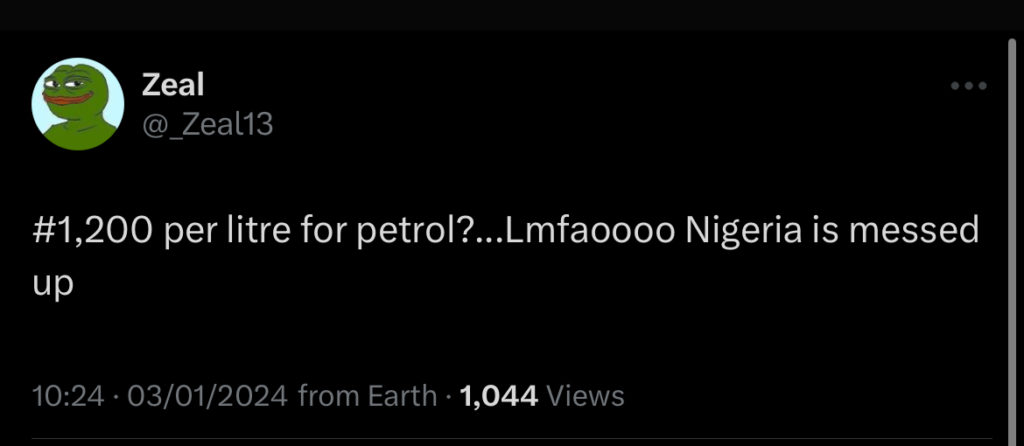
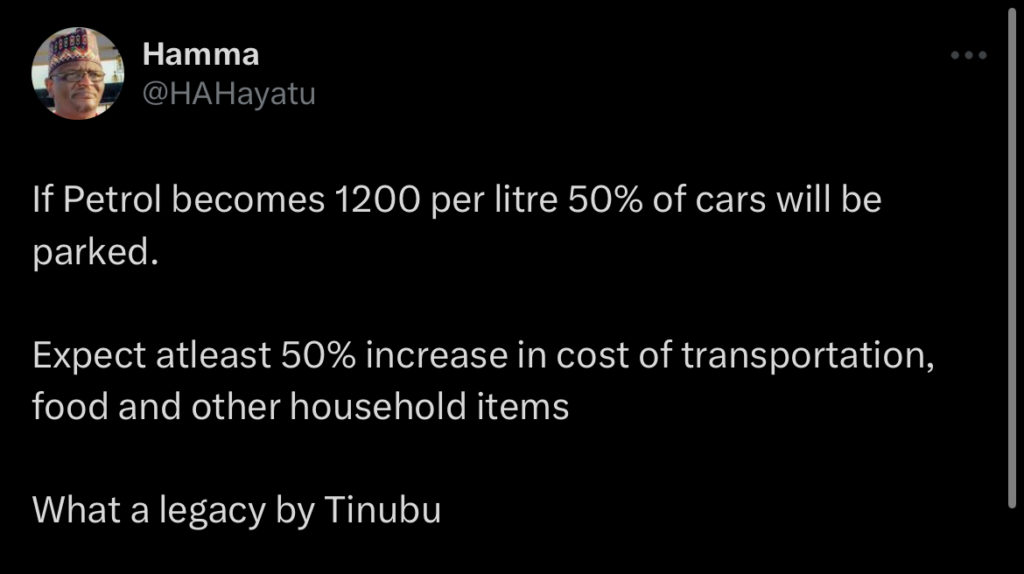
The year might be off to a rocky start for Nigerians as another fuel price increment seems to be lurking around the corners. This comes months after the price jumped to over ₦600 per litre with Tinubu’s subsidy removal.
Here’s all we know about this matter that has Nigerian residents worried.
What’s happening?
On Tuesday, January 2, the Nigerian National Petroleum Company (NNPC) and independent fuel marketers were at loggerheads over the removal of petrol subsidy.
Independent oil marketers claimed the naira’s depreciation has caused an increase in how much they have to pay for subsidy. The rising cost of crude oil in the international market and petrol distribution within Nigeria has also contributed to the rift between NNPC and the marketers.
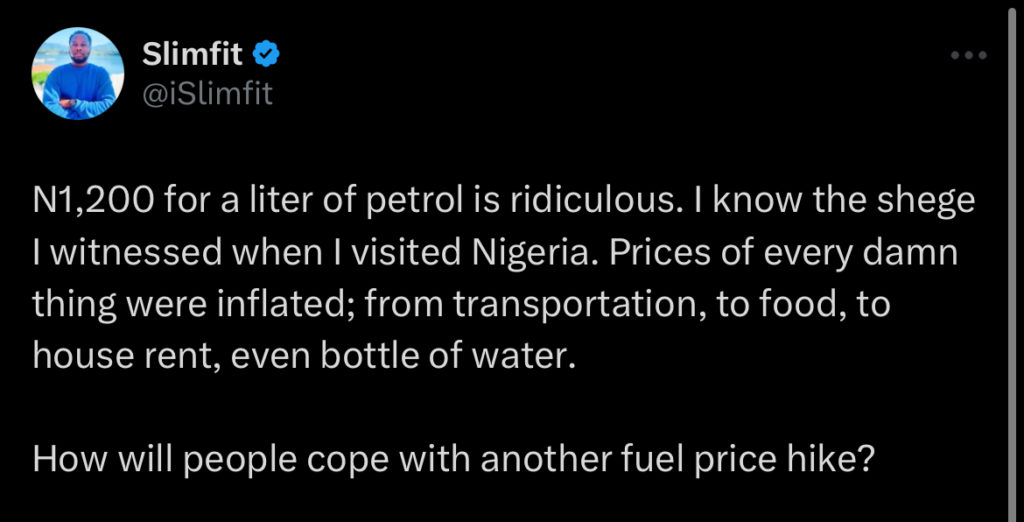
In light of these factors, the National PRO of Independent Petroleum Marketers Association of Nigeria (IPMAN), Chief Ukadike Chinedu, said a litre of petrol should actually be around ₦1,200/litre.
“So if you consider the cost of diesel, dollar and other international factors, the price of petrol in Nigeria should be around ₦1200/litre, but the government is subsidising it, which to an extent is understandable,” Chinedu told Punch.
[ad]
The IPMAN official implied that the federal government pays a quasi subsidy. “The Federal Government, instead of taking out the subsidy by 100%, decides to take out about 50%.”
Nigerians express concern
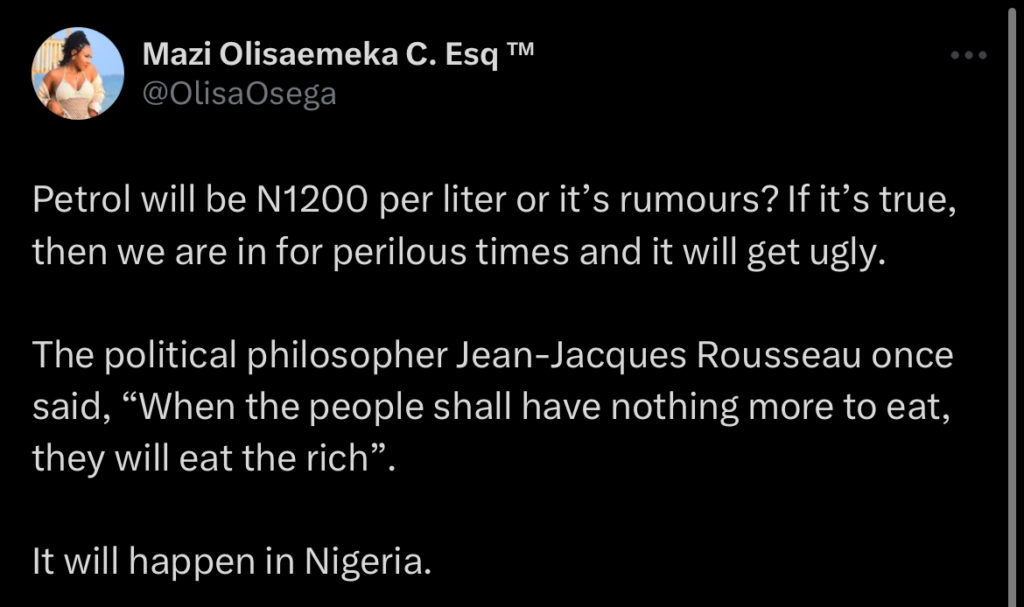
While the federal government has made no official announcement, reports of the increase have stirred mixed reactions among Nigerians who are still coming to terms with last year’s jump from ₦190/litre to over ₦600.
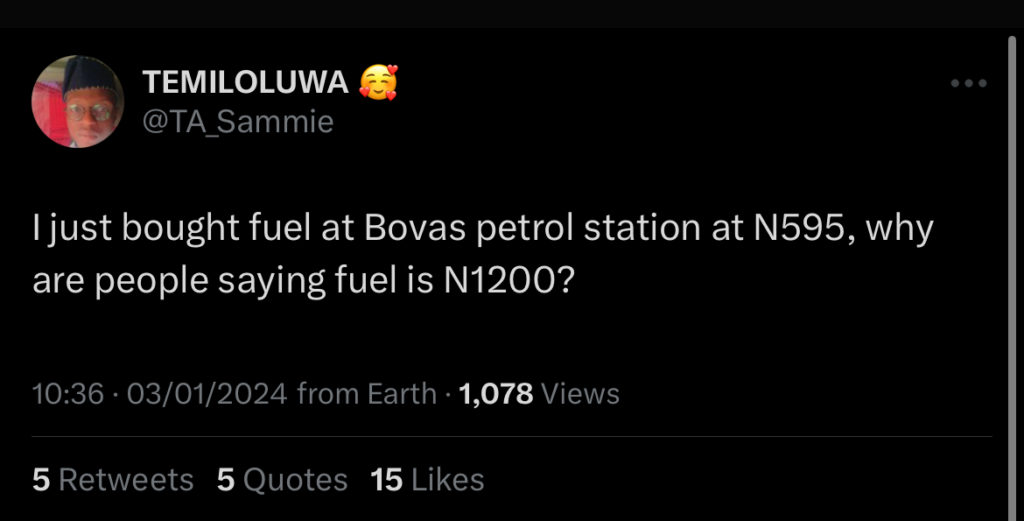
“I filled up my 25 litre keg this morning at a fueling station in my area, and it was ₦625 per litre. I don’t think the increase has taken effect, and I hope it doesn’t because that’ll be a major problem. I’m super strict with the way I switch on my gen, so I cannot imagine what the case will be if I have to buy a litre for ₦1200,” Kehinde Okeowo, a Lagos resident shared with Zikoko.
“Fuel was still around ₦620 or so when I filled up my car last night. I saw the news of a possible increase yesterday morning which was why I went to fill up my car and generator. But even this morning, I made a stop at a fuelling station, and it was still selling at the regular price,” Oladimeji, a private cab driver in Osogbo, shared.
This is a developing story.
Zikoko walks into a filling station. After struggling through the horde of people and sustaining scratches, they make their way into a dark office building.
Unknown voice: psstt
[Zikoko looks around, searching for the source of the sound]
Unknown voice: psstt psstt
[Zikoko squints in the dark then reaches for the light switch]
Unknown voice: Don’t turn it on.
[Then, Zikoko sniffs]
Zikoko: Fuel? Is that you? Thank you so much for agreeing to this. I’m so honoured to meet you. Everyone is looking for you right now.
Fuel: Shhhh.
Zikoko: *whispers* What? What is it?
Fuel: They’re after me.
Zikoko: Who?
[Fuel points outside]
Zikoko: Oh yeah. They just want to make sure you’re available.
Fuel: They want to use me.
Zikoko: Well, that’s what you’re here for, isn’t it?
Fuel: …
Zikoko: I mean, it’s not like they’re asking for much. They just want something light. You know you’re what keeps them going.
Fuel: Whose side are you on?
Zikoko: Hmm?
Fuel: Are you working for them too?
Zikoko: Working for who? Relax. You called for this interview, remember?
Fuel: Yes, that’s right.
[Starts sobbing]
I’m sorry. I just haven’t been the same.
Zikoko: Don’t… don’t cry too much. You’ll ruin yourself.
Fuel: I’m already ruined. They’ve done things to me. Bad things.
Zikoko: Who?
Fuel: Everybody. The government has taken my allowance, and the filling station locked me inside a hole. I escaped, and nobody wants to help me.
Zikoko: Wow, so sad
Fuel: Did I tell you I’m finished?
Zikoko: And yet, here you are.
[He takes a deep breath.]
Nobody wants to help me. The people saw me outside and started chasing me. One group called the “black marketers” caught me and poured kerosene inside me. Me! They mixed me with kerosene!
Zikoko: Shhhh. They will hear you ooo.
Fuel: [Swallows his tears]
Zikoko: So the filling station locked you up.
Fuel:
Yes.
Zikoko: You now decided to come and hide inside its house.
Fuel: It’s harder to find something if it’s under your nose you this small child.
I just want you to help me tell the people we’re on the same side. They should stop chasing me whenever they see me. I’m a victim too.
Zikoko: [Takes notes]
Sorry, but this isn’t the first time something like this has happened, so why do you want to make a statement now? What’s different?
Also, do Diesel and Kerosene share your sentiments? Do you even know them?
Fuel:
Yes, I know them. I’m just tired, please. Diesel and kerosene don’t go through half the things I go through. Only me, I’ll power gen, I’ll power car, most sought after, but they want to tear my clothe. I’m not doing again. I’m tired.
Zikoko: [writes] okay. Fuel is tired. Is there anything else…
[Zikoko’s phone beeps as a voice note comes in]
BCM: We just heard your interview is at a filling station. The fuel in the office has finished…
[Zikoko looks at Fuel]
BCM: You need to bring some fuel with you when you’re coming back. It’s very important.
[Fuel crawls off the floor as the voice note ends]
Zikoko: Can I get…
[Fuel jumps through the window before Zikoko can finish their sentence]
[Zikoko follows after him]
Zikoko: Please, we just want small.
Following newly inaugurated President Bola Tinubu’s (in)famous “subsidy is gone” declaration on May 29, 2023, Nigerians have been thrown into yet another cycle of fuel scarcity. But this time, it’s come with an almost doubled cost of fuel.
As expected, this has resulted in an increase in the cost of transportation and unusually empty roads, as many transport operators are either on the hunt for fuel, or simply parked their vehicles at home due to an inability to afford the new prices.
We talked to seven young Nigerians in different Nigerian cities, and they shared how the subsidy removal has affected their transportation budgets and overall quality of life.
“My transport spend will go from ₦5k/month to about ₦22k/month”— Mercy, 29. Kaduna
I use buses andkeke napeps a lot because those are the easiest forms of transportation in Kaduna. I work five days a week, and I move around during the weekend too. I don’t have a car, so you’ll most likely see me in a keke.
Before the new fuel prices came into effect, my daily commute to work was ₦500: my house to the bus stop was ₦50, and then I’d take another keke and bike to get to my office, which cost ₦100 each—making ₦250 in the morning, and same amount when returning home.
Now, the keke from my house to the bus stop costs ₦100, and the other two stops now cost ₦200 and ₦150 respectively. I now spend ₦900 in transportation costs on a good day. It sometimes gets higher.
Apart from the increase, it’s now difficult for people to get buses. It’s easier for me because I live close to the junction, and I only have to be at work by 10 or 11 a.m. Kaduna is a typically busy city, but now the cars on the road are scanty, and people who have to be at work by 8 a.m. have a really difficult time.
This whole thing has changed my plans. I typically spend ₦5k on transport in a month, but now, this number will go up to roughly ₦20k-₦22k in a month. What will I now be eating? I need a raise or I’m die.
“I paid ₦1k for a fare that usually costs ₦300”— Ebube, 26. Lagos (Public transport user)
I often use public transport because I have to report physically to the office. My regular route is Iyana Oworo to Ikoyi, which is approximately a 45-minute journey on a good Lagos traffic day. On bad days, the sky is the limit.
It typically costs me ₦300 to go in the morning and ₦400 to return home, making ₦700 in total. It may even be ₦800 at times. However, since Monday, the price has been all over the place. On Tuesday, I spent ₦400 in the morning; on Wednesday, it was ₦1k and on Thursday, it was ₦500. Luckily for me, my colleague — whose fuel God has to keep replenishing —has been dropping me at home in the evenings.
The price increase isn’t even the only thing; it’s now a struggle to get one of the few buses available. I just want to be a soft girl, but imagine me, a whole lawyer trekking under Lagos sun and behaving like a conductor. My productivity is hanging by a thread because I’m less motivated to work. Also, I’m a lot more irritable these days, and I hate how it’s turning me into a nag. I just hope my colleagues understand.
“I had to pay ₦13k for a ride that should’ve cost ₦7k” — Busayo, 28. Lagos (Private ride-hailing app user)
I don’t have a car, and I don’t use public transport, so I pretty much go everywhere with an Uber or Bolt.
I do hospital trips from Ipaja to Lekki at least twice a month. Before the price hike, it typically costs ₦7k for this distance. If I was going to Surulere, it’d cost around ₦4k.
On Thursday, I did ₦13k to Lekki, and that was the best price. It wasn’t difficult to get a ride, but the first driver the app matched me with was trying to charge more. Uber suggested ₦8,800, but the driver and I did a 20-minute negotiation chat where he insisted he couldn’t go at that price and asked to be paid double whatever the price came to at my destination. That would’ve been around ₦18k or more. I eventually found a Bolt driver who didn’t haggle and drove me at the price Bolt suggested.
The inconvenience is just the additional cost for now, but I suspect there’ll be a real problem when my generator runs out of fuel.
“I’ve spent half my usual weekly transportation budget in two days”— Nnenna, 26. Abuja
I stay at Kubwa and work at Maitama — a 30-40 minute cab ride — which costs about ₦400 in the morning, and ₦600 in the evening, totalling ₦1k. Now, I spend ₦700 in the morning and between ₦950-₦1k when I’m returning home. That’s about ₦1,700 in one day. It’s crazy. My transport budget was ₦10k weekly — including the occasional cost of food at work —but I’ve already spent ₦5k in two days.
Even with the increased cost, getting cabs in the morning is difficult. Most drivers have parked their cars at home, and the road is so free in the mornings now, though the usual evening traffic is still the same. The few drivers available are aggressive. At least, it’s just transport costs affected at the moment. I use a solar panel at home, so I don’t have to worry about fuel to power a generator. It’s saved me a lot.
“Short distances are now almost double the price”— Queeneth, 25. Port Harcourt
I use public transport when I have errands to run, and ride-hailing apps like Bolt when I go out to chill or visit someone. Since subsidy removal, I’ve used public transport a few times, and Bolt once.
After the first fuel price increase earlier this year, kekes went from ₦50 to ₦100 for short distances. Now, it’s been increased to ₦150-₦200. A two-minute ride from one junction to the next is still ₦150 or ₦200, and it’s the same price if you drop at the last bus stop. It’s the same with buses and local taxis. They’ve all added around ₦100 or ₦200 to the base fare.
The Bolt I took on Tuesday also charged ₦1,300 for a 7-minute ride that cost ₦700 before subsidy removal. It seems that’s the new base price because I just checked the app for another close-by location, and the fare was also ₦1,300.
The only way this situation has helped is that there’s barely any traffic on the road. My junction is typically filled with vehicles, but now there’s no one there. However, it also means you have to wait for about eight minutes before you find a vehicle, and most are already filled up. Some drivers have also stopped working, or are in queues somewhere looking for fuel. Even fuel stations don’t want to sell fuel. Thankfully, NEPA is pretty stable here, so I don’t buy fuel.
“Okada fares have increased by 100%”— Dare, 22. Ado-Ekiti
Everyone who doesn’t have a car in Ado has to use okadas. There are no two ways about it. The small buses are usually for long distances and don’t enter the streets. I go out every day for work, and since the Monday announcement, it’s been tough.
Before, I could easily find okadas when I walked to my junction, but now I have to wait a while or even trek. The few ones available charge 100% more, and it’s honestly not their fault. Fuel is now ₦500 per litre here. The fuel station queues are so long that you’ll see people lining up five minutes before you even get to the fuel station.
I only turn on my generator once a day now, and only when absolutely necessary, because even if I can afford the new price, it’ll probably take me hours to even buy it.
It’s just a matter of time before food prices will follow suit. I’m tired and frustrated. It’s always one thing in this country. Just a few weeks ago, it was cash scarcity, now this. I’m fed up, and I know I didn’t vote for this.
“I now rely on okada”— Tayo, 25, Ibadan
I work remotely, and only leave home when I have an outing. When I do go out, I use Uber. But since subsidy removal, I now rely on okadas. Two days ago, I tried to order an Uber. The app said ₦1,500, but the driver said he wouldn’t go unless I paid him ₦3k. I just gently cancelled it and went to look for okada. Even the okadas have increased by around ₦100 or ₦20, depending on the distance.
The major downside for me is fueling my generator because I’ll always need it to work. On Tuesday, I purchased 16 litres of fuel for ₦16k, and my chest is still paining me.
For Nigerians, fuel scarcity is not new, which is ironic, as Nigeria is the third-largest producer of crude oil in Africa. We go into every year expecting to experience at least 2-4 weeks of fuel scarcity, but 2022 shocked most of us and taught us to bury what was left of our expectations into the ground.
Reasons for fuel scarcity in 2022
Adulterated fuel
In February 2022, many Nigerians complained about their cars being damaged due to the poor fuel quality sold by filling stations. This was due to the high amount of methanol in recently imported fuel.
The Nigerian National Petroleum Corporation (NNPC) stopped distributing to tackle the problem, which kick-started our fuel woes.
In 2022, NNPC reduced its supply of petrol from 103 million litres to 60 million. Their reason was that independent marketers were illegally selling fuel to neighbouring countries. However, this decision by the NNPC resulted in hoarding as many marketers claimed the petrol they got wasn’t sufficient.
Although we said goodbye to 2022, our long battle with fuel scarcity followed us into 2023. The queues at filling stations are getting longer, and the official pump price is starting to look like a suggestion, as fuel is now sold between ₦250 – ₦300. But it seems like things will begin to look up soon.
What’s happened now?
On January 19, 2023, the federal government officially decided to increase fuel prices from ₦167 to ₦185, sending out a memo to all marketers, including the Independent Petroleum Marketers Association of Nigeria (IPMAN) and the Major Oil Marketers Association of Nigeria (MOMAN).
Some marketers have already begun changing their pumps to reflect this price, and hopefully, this will mitigate the problem.
But that’s not all; to also help with the traffic situation the fuel scarcity created, the Lagos state government has put out a timetable for filling stations.
The Commissioner for Transportation Frederic Oladeinde stated that filling stations along major highways will now only be allowed to operate between 9 am to 4 pm daily.
Still, the “solutions” put forward by the government aren’t exactly impressive as Nigerians again have to go through another increase in fuel price despite past campaign promises.
We’re more than three weeks into a new year, but we have the same old problems.
Are you signed up to our Game of Votes newsletter yet?We help you make sense of news jargon and keep you up-to-date especially with election news. Make the subscription of a lifetime here
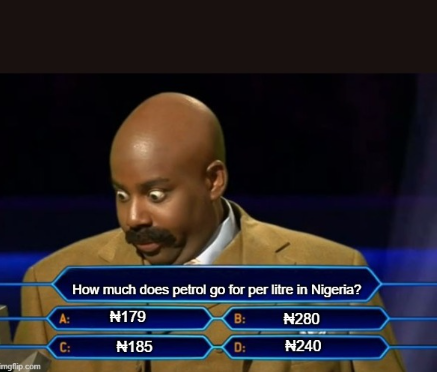
Say you were on the hot seat of Who Wants to Be a Millionaire, and had a ₦1 million question to answer. (please play along here, I know for some of you, that’s chicken change)
What’s the current price of petrol in Nigeria? What’s your answer going to be?
The question looks easy enough on the surface, but it’s tricky to answer. For ₦1 million, you’d have to think deeply and here’s why.
In July 2022, the Nigerian National Petroleum Company (NNPC) quietly approved the increase of fuel from ₦165 to ₦179 per litre. With this information, you might be tempted to settle for option A — but not so fast.
Then again, the latest reports in the news say that oil depots across the country are selling at ₦240 per litre, with fears of scarcity looming till June 2023. Option D is looking sexy now, isn’t it?
Hold that thought for a bit because Citizen spoke to a couple of Nigerians who aired their minds on the ever-fluid price of fuel. It shouldn’t surprise you to hear that in some places it goes as high as — or even higher — than option C, ₦280 per litre.
In short, no one knows the actual cost of fuel in Nigeria. Here’s what some of our respondents said.
The thing with Abuja is, the fuel price is the same, ₦185 per litre. The issue is, would you see it to buy without joining a long queue? No.
You’d have to queue. You have filling stations that sell between ₦280 and ₦290. Those are the ones we call the “black market filling stations.” They always have fuel. I suspect that the depots that sell at ₦185 provide fuel for these filling stations who then sell at ₦285. The excess profits are then split among themselves. Because when you ask them why they’re selling at such a high price they’d say it’s because of the amount they got it which simply isn’t true.
On how it has affected me, well, thankfully, we’ve had stable power. Some days it’s up to 20 hours.
For my water production business, most of my vehicles run on diesel. The last time I got diesel was at ₦900 per litre. I’ve had to scale down on production because the cost of diesel keeps skyrocketing. I’m now thinking of more efficient ways to sell water. So, to sum up, there’s fuel — but there’s no fuel if you catch my drift.
Toyin, Osun
I bought fuel last night at ₦270 per litre. Of course, that’s on the high side, but what can we do? Man has to survive, and it’s not funny.
Today, I had to take public transport to work. What used to be ₦100 is now ₦200. Some transporters even went as high as ₦300. Life’s hard.
Tunde, Oyo
I run a logistics business in Ibadan, and we are deeply impacted, especially our bikes. We buy fuel from between ₦250 and ₦300 per litre. Very few stations sell at ₦185 — maybe two or three of them. And the queues there are unimaginably long.
Our customers want us to deliver to them on time because that’s the selling point of the business. So obviously, we can’t join these queues when we run out of fuel. This means we’re forced to buy at these high prices. This has also increased our delivery fees.
Not all customers understand, but what can we do? It’s a spiral effect that harms small businesses like us. I also had to increase the salary of my workers too. The current situation is annoying and frustrating.
Olayiwola, Lagos
Before, when I filled my fuel tank, either the SUV or jeep, it used to go for ₦10k. Now that the cost of fuel has gone up, filling your tank requires almost double the amount.
It’s not as if there aren’t places to get fuel at ₦185 per litre, but the consequence is waiting in long queues. I’m an entrepreneur and time’s money for me. Also, there’s no guarantee that you’d get fuel when it’s your turn.
Now I have to get at ₦250 or ₦260. But what’s even ridiculous is that recently, it’s been hard to get fuel at these places. Even at the inflated cost, you may not easily see fuel to buy without queueing. The major impact is that I’m forced to work from home. There’s almost no justification for going to the office.
To satisfy private fuel marketers, the Nigerian National Petroleum Corporation Limited (NNPC) decided to slash the fuel price from ₦200 to ₦148 per litre at private depots. Hopefully, with this, marketers won’t be forced to inflate prices, which means consumers can finally buy fuel at affordable prices and stop waiting in long fuel queues.
The 48-hour ultimatum
On December 13, 2022, the Department of State Services (DSS) issued a 48-hour ultimatum to the NNPC — either resolve the fuel scarcity crisis, or those impeding the supply of fuel will face the consequences.
We can only hope the government can find a long-lasting solution that doesn’t come with threats. Experiencing fuel scarcity is definitely not the best way for Nigerians to spend Detty December.
How do you deal with a fuel scarcity problem that rears its ugly head every time? One way would be to identify its underlying causes and address them, another would be to at least try to calm the public and assure them something’s being done about the problem.
Of course, there’s the special Nigerian option: unlook and pretend there’s no fuel scarcity and count on vibes and inshallah to resolve it.
On November 28, 2022, Punch reported that over 30,000 filling stations nationwide have been affected by the latest fuel shortage. The Independent Petroleum Marketers Association of Nigeria (IPMAN) complained that its members have paid the Nigerian National Petroleum Corporation (NNPC) more than ₦1 billion without receiving supply.
The NNPC and the Nigerian Midstream and Downstream Petroleum Regulatory Authority (NMDPRA), which regulates the downstream oil sector, have kept quiet on the matter.
Citizen spoke to some Nigerians to understand how the ongoing fuel scarcity affects them.
Tunde — Oyo
I run a logistics business in Ibadan with two motorcycles and we definitely need fuel. My riders have to queue for long periods to get it at ₦220 or ₦230 per litre in some places. Only a few places like the NNPC and Mobil are selling at ₦185.
The long queues mean our deliveries to customers are delayed. The fuel hike also means we’ll increase our delivery fees and this may affect the way customers patronise us. Personally, the cost of transport when I move around has also increased. A trip that used to cost ₦100 is ₦150 and what was ₦150 is now ₦200. It’s frustrating.
Patricia — Lagos
I’m a writer and I find it impossible to work at home due to this fuel scarcity. It affects my productivity and I have to transport myself to a workspace to work. Even the one I used to visit has now closed due to the fuel scarcity and I’m currently looking for any workspace I can use. NEPA isn’t helping matters with the poor electricity supply.
Emmanuel — Benue
I live in an agricultural town in Benue State. There’s only one motorable road in this town and we get light for about 10 hours a week. This means we have to resort to generators or charging devices outside.
The price of fuel before this current scarcity was around ₦240, so it’s fascinating to hear people in Lagos say it was around ₦170. Fuel is very scarce now and you’d have to join very long queues to buy as there are no more than eight filling stations here.
We now get fuel at ₦280 or ₦290 per litre and there are rumours it’ll reach ₦300 or above by the festive season. The rumour is what’s making filling stations hoard the little they have, driving the price even higher. The scarcity is affecting the farmers who have to transport their goods from the processing sites to the market. Life is now very difficult for everyone.
Kennedy — Cross River
I’m a student of the University of Calabar but I stay off campus. A trip that used to be ₦50 per drop is now ₦100. Prices for haircuts have increased too and we now pay ₦100 to ₦200 to charge phones and power banks as there hasn’t been power in Calabar South for the past week.
We queue at fuel stations for over five hours before we get fuel. Some fuel stations are selective in the type of customers they sell to. The whole thing is annoying here.