• For years, Gabriella*(30) spent all her income providing for her family of eight. Things changed when she hit a rough patch in 2024, lost her life savings and had to move back home. 

    In this story, she shares how her family turned on her because of her reduced financial capability, which has taught her a valuable lesson.

    This is Gabriella’s story, as told to Boluwatife

    My family situation has always been somewhat unusual. 

    As a child, I grew up with my grandparents because my parents had separated. I only started living with my dad and his family when my mum passed away in 2007. Then, he lost his job in the civil service a few years later, which signalled the beginning of a financial struggle that lasted for years. 

    Things nosedived quickly, and even feeding became difficult. My dad’s job loss was due to some fraud allegations, so he spent all his time fighting to be reinstated into the civil service. When he wasn’t doing that, he took on menial jobs while my step-mum tried to foot the bills. 

    I would’ve been a secondary school dropout if not for relatives from my mum’s family who periodically stepped in to pay my fees. Their goodwill pushed me to the university in 2012, but I knew that was where it ended — I needed to find a way to fend for myself if I hoped to get a university education.

    I found a job marketing for a laundromat, but my ₦10k/month salary barely kept me afloat. During school holidays, I travelled to help my aunt with her boutique so she’d give me foodstuff and clothes when it was time to return to school.

    Somehow, I managed to pay myself through uni and NYSC. Then, in 2018, I returned home and took up a ₦22k/month receptionist job. That’s when my responsibilities started.

    My dad still hadn’t gotten a stable job, and the number of mouths to feed at home had increased. I have four siblings, and one of my sisters got pregnant and had a baby, so everyone had to support her. By “everyone”, I mean me. The whole house lived on my ₦22k salary. Tips usually brought the total figure to around ₦60k, almost all of which went into providing for the home.

    The only bill I didn’t pay was rent, and it was because we lived in our own house. Every other thing was on me. I even gave my step-mum my ATM card to withdraw money at will. My workplace didn’t allow staff to use phones at work, and I didn’t want to be unreachable if they needed to buy baby food.

    It’s not like I was excited to give all my money away. I felt drained, constantly telling myself I couldn’t afford anything because my family needed the money. I didn’t like being unable to move out or afford a master’s degree, but I had to consider my nephew. If I didn’t take care of the family, he’d starve. 

    However, I knew I had to move out if I hoped to reduce my responsibilities at home. So, I started deliberately keeping money aside for a new apartment. My tips grew my income over the years to an average of ₦100k/month, and I stopped depositing the full amount into my account. My stepmum still had the ATM card, so I ensured the account always had at least ₦50k.

    By 2022, I’d saved enough money to move out. Fortunately, my dad also got reinstated into the civil service that year, and things started looking up. I left the hotel and did a two-month stint as an executive assistant at an NGO for ₦30k/month before moving to a travel agency for ₦80k/month.

    My responsibilities at home reduced — I also collected my ATM card back — but my siblings still often called for money, and I always answered. By January 2024, I decided I was tired of working for people. Up until then, I’d always worked in toxic environments. I thought starting a business and being my own boss would be better.


    Join 1,000+ Nigerians, finance experts and industry leaders at The Naira Life Conference by Zikoko for a day of real, raw conversations about money and financial freedom. Click here to buy a ticket and secure your spot at the money event of the year, where you’ll get the practical tools to 10x your income, network with the biggest players in your industry, and level up in your career and business.


    I had ₦800k in savings, and I decided it was enough to move to Uyo and start an interior decoration business selling raffia mats and designs. The idea of moving states came from two reasons.

    First, I wanted to rebuild my life from somewhere new. Secondly, Uyo was better for my business. I could source raffia materials there at a cheaper price and maximise profits. I just needed to relocate, buy a few samples and post them on social media to get clients. It felt like a solid plan. 

    My sister stayed in Uyo, so she helped me get an apartment. I paid ₦250k for the rent and total package, and another ₦60k to move my things from our state to Uyo. The rest of the money was supposed to get basic furniture and start my business. But things didn’t exactly go as planned.

    First of all, the apartment was completely terrible. I didn’t see the house before paying; I only got pictures. It was also after the issues started that my sister said she hadn’t visited the house either. She just saw the pictures and told me to pay.

    It rained the first night I spent in the house, and the whole place leaked all night. The rain destroyed all my properties. When I tried to get a refund, it turned out that the previous tenant had inflated the rent by ₦100k and run away with the money. I tried every means to locate him, but he’s still at large. Even the ₦150k actual rent, I didn’t get back because the landlord claimed he didn’t do refunds and that he’d fix the roof. He never did.

    I spent about three months in that house, during which time I had to arrange my mattress in one corner because of the terrible leaks and wake up several times during the night to pack water to stop the room from flooding. 

    There was also no electricity in the whole area, and I had to spend ₦500 almost daily to charge my phone and power bank. The lack of sleep and stress soon began to tell on me, and I was constantly sick and spending all my money on medication. 

    I couldn’t even push the business because I was always tired and frustrated. My phone was also constantly low because of the power situation, and customers couldn’t reach me. 

    Ultimately, I lost motivation, packed my things and moved back to my dad’s house in September 2024. 

    I came back with zero naira to my name. Since then, I’ve been trying to get into remote work. I’ve taken a few courses and gotten a few remote customer service gigs, but income hasn’t been consistent. My finances aren’t how they used to be, and my family’s new behaviour is a constant reminder. 

    My dad’s finances are stable now, and while I’m glad no one has to depend on me anymore, I can’t help but notice my family treats me differently now that they don’t “need” me. The respect is gone.

    Besides my dad, everyone looks at me like someone who prefers to depend on them rather than go outside to work and make money. They don’t grasp the possibility of making money from home.

    Last month, I travelled to my sister’s school to check on her because she was ill. One night, she left her phone charging on the floor, and I accidentally came across some messages between her and my other sister in Uyo. 

    I couldn’t believe what I read. My sisters were discussing me and saying things like, “If she had a job she was doing, would she leave the house to come and look after you in school?” They said my mates were travelling out and having something stable in their lives, while I was comfortable sitting in my father’s house. 

    They also said I hadn’t done anything for them, forgetting that at some point, I literally carried the burden of the whole family. Despite my financial situation, I still sent them money sometimes, but I guess it stopped being enough. 

    I’m really pained by how my family turned on me so quickly, but it’s also fuelling my determination to get something stable again. I’m working hard to improve my skills and land well-paying remote jobs so I can afford to move out again — permanently, this time.

    I spent my 20s looking after family, and in just a few months of financial hardship, they turned their backs on me. I’m working towards improving my finances, and when that happens, I don’t intend to be responsible for anyone ever again. 

    I’ll never take on anyone’s bills anymore because ultimately, they’ll throw my help to my face if anything goes wrong and make it look like I never did anything. They’ve taught me a lesson, and it’s good I know where I stand now. My breadwinner days are over.


    *Name has been changed for the sake of anonymity.


    NEXT READ: My Family Resents Me for Becoming the Breadwinner After My Parents Retired

    Get More Zikoko Goodness in Your Mail

    Subscribe to our newsletters and never miss any of the action

    [ad]

  • The topic of how young Nigerians navigate romantic relationships with their earnings is a minefield of hot takes. In Love Currency, we get into what relationships across income brackets look like in different cities.


    How long have you been with your partner?

    We dated for a year and have been married for almost two years. So, we’ve been together for three years. 

    Where did you meet?

    We met at my former workplace. HR announced Greg as the new tech hire one day in November 2021. I didn’t pay much attention to him until January, when I needed to solve a tech request. I messaged him, and he told me he couldn’t do much because it was his last day. 

    I was shocked. When did he even join? I like gist, so I pushed him to share. We took the conversation off Slack and kept chatting after we finished doing office politics amebo. Two days later, he sweet-talked himself into a date. I don’t even know when he stole my heart. I just know we started dating in February. 

    See love o. But what was happening with Greg’s job situation?

    He left my former workplace because of some disagreements with the work contract. My bosses tried to get him to do far more than was agreed, and he wasn’t down for it. So, he quit. 

    He didn’t have another job lined up, but he often got freelance software development gigs through his network of colleagues. He relied on that, pending when he’d get a full-time role. Greg was technically unemployed when we started dating.

    Did this affect the new relationship?

    Not at all. Money, or the lack of it, has never been the most important thing in a relationship for me. I know it’s essential, but I like to look at other factors too. Greg is kind, loving and isn’t lazy. Despite being unemployed, he also wasn’t poor — the gigs helped. He didn’t get a full-time role until we were five months into the relationship. 

    Another thing that helped was how open we were about our finances and how we spent money. It helped manage expectations on both sides. I wasn’t expecting him to “give me the world” when he only had ₦50k in his account.

    One time in June 2022, he made ₦700k on a project and took me out to an upscale restaurant to celebrate. I remember this vividly because that’s when we started talking about marriage. To be honest, I think we both knew marriage was wishful thinking at the time. My salary was only ₦350k/month, and he didn’t have anything stable. We had nothing to plan a wedding and home with; we just knew we wanted to be together.

    The universe must’ve been listening because less than a month later, Greg landed a $4k/month contract job with a foreign company.

    Whoops!

    The new income gave us the confidence to plan for our future more intentionally. $4k at the time was about ₦2.5m, and Greg started saving ₦1.7m monthly as a safety net for our wedding and new apartment. We got married in February 2023 and moved into our current apartment. The rent itself is ₦1.8m/year, but agent fees and furnishing drove the cost up to ₦3m. Greg handled this.

    How about the wedding expenses? 

    Greg handled most of the wedding expenses, too — the hall, food, decorations, photography, videography, and security ran into ₦4m. I’d been saving too, so I assisted by paying for our outfits, accessories and my make-up. I think the whole thing cost me ₦1.2m. Nothing too serious.

    I got pregnant almost immediately and had to quit my job when my bosses became passive-aggressive. They kept implying I wouldn’t work as hard anymore and increased my tasks as if to prove that. I didn’t need that stress in my life, so I quit in September 2023. I had the baby in November. 

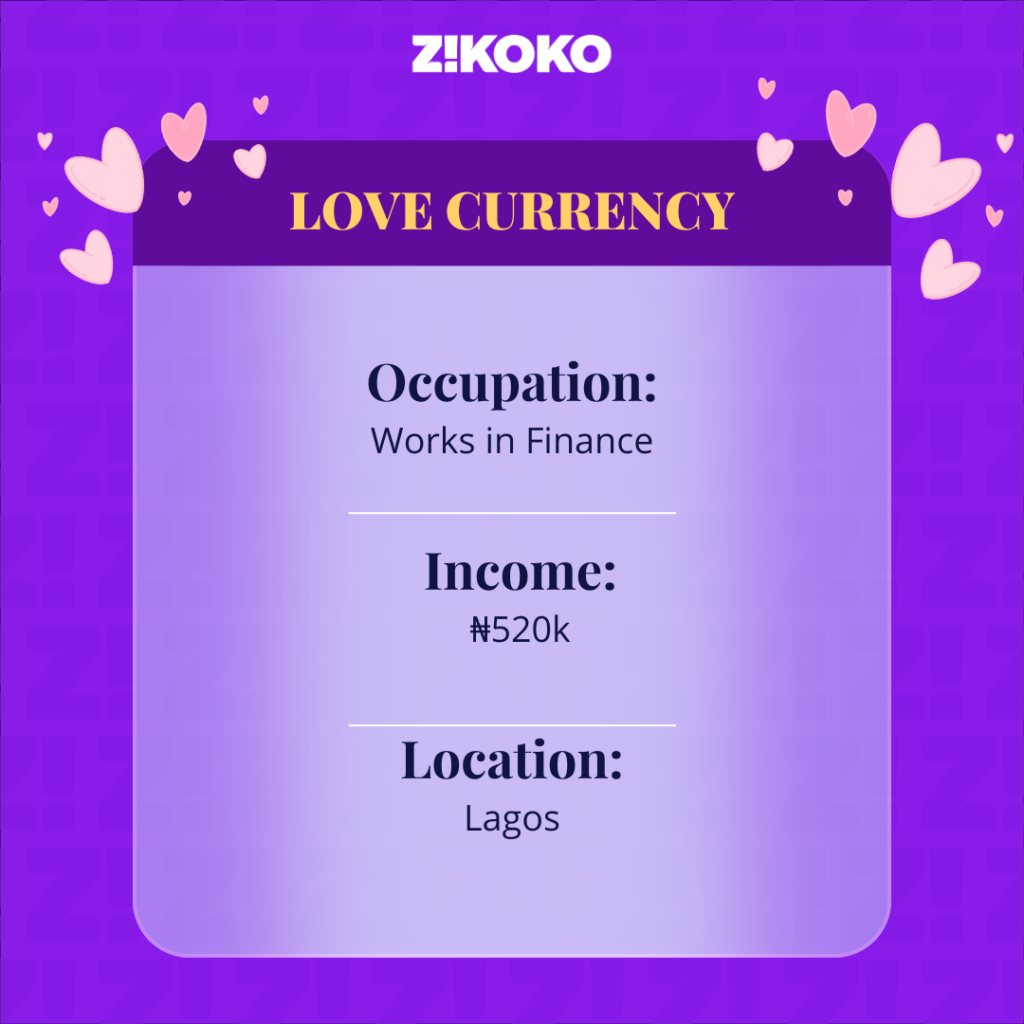
    I planned to wait for my baby to become at least seven months old before I started job-hunting again. However, Greg’s workplace ended his contract in March 2024, and I had to dust my CV. I found my current job within six weeks of searching, and I earn ₦520k/month. Greg has yet to find another full-time job.

    Get More Zikoko Goodness in Your Mail

    Subscribe to our newsletters and never miss any of the action

    Does this mean your home currently runs on a single income source?

    One stable income source. Greg has returned to freelancing, but the income isn’t steady. He can make $1k today and not make up to ₦300k for the next three months. We’ve had to tighten our belts and live as frugally as possible. But no matter how much we try to keep money, living in Lagos and the economy just force money out of our hands. We also have a baby to care for. 

    Sometimes, I think about feeding, electricity and transportation costs and my head just starts bringing out smoke. Imagine spending ₦120k on electricity every month because we’re on Band A, and it’s not like the light is 24/7 o! We still have to spend on fuel for the generator. I’m sorry I’m ranting; I don’t get to rant at home.

    Why can’t you rant at home?

    Greg feels bad whenever I complain about money. I might just be complaining about how an item has tripled in price, and he starts feeling guilty about not providing enough. I’ve told him countless times that I’m not faulting him for anything. But it doesn’t change anything.

    I understand him, though. It must feel emasculating that, no matter how he tries, his efforts don’t seem to match our needs. He has a provider mindset, and I don’t want him to feel worse than he already does. So, I keep my concerns with inflation to myself and just try to manage his emotions.

    I see. How do you both approach budgeting for home expenses?

    We have a joint account that we use to handle all our needs. We send a portion of our salaries there to pay our bills. At first, it was just Greg sending 70% of his income to the account. If the money finished before month’s end, I’d assist with any bill that needed to be paid. That rarely happened because Greg’s income was so high.

    But since he lost his job, I’ve been sending 70% of my income to the account. Then, I save the remaining 30%. Sometimes, I send the full 100% because of the high cost of living.

    Is there any left to plan for dates and stuff?

    We often plan indoor dates where we order in food, and the money for that usually comes from our joint account. Those dates happen at least once weekly, especially when I’m too tired to cook.

    We used to buy random gifts a lot before the job situation. I’d often come home to see a dress or pair of shoes that Greg ordered. I’d also buy him things I knew he’d like when I went out. But now, we’re just trying to survive. Hopefully, things will get much better soon, and we can resume. 

    Hopefully. Do you both have a safety net?

    We had an “untouchable” ₦2m emergency fund, but we had to touch it when rent was due last month. So, we’re trying to build another emergency fund. Greg and I have agreed that the next big payout he gets from a gig will go there. 

    What’s your ideal financial future as a couple?

    I just want us to earn enough to afford a little extra to set aside in real estate and stock investments. There’s only so much running around we can do to make money. I feel like the highest point in wealth building is to have a source of passive income, and we need investments for that.

    Interested in talking about how money moves in your relationship? If yes, click here.


    *Names have been changed for the sake of anonymity.


    NEXT READ: He’s Funding a Gambling Habit and Long-Distance Relationship With a ₦280k/Month Salary

    Join 1,000+ Nigerians, finance experts and industry leaders at The Naira Life Conference by Zikoko for a day of real, raw conversations about money and financial freedom. Click here to buy a ticket and secure your spot at the money event of the year, where you’ll get the practical tools to 10x your income, network with the biggest players in your industry, and level up in your career and business.

    [ad]

  • Ese* (26) has been responsible for 80% of her family of seven’s needs since her parents left the police force a year ago, and it hasn’t been a walk in the park.

    She talks about how her parents’ pension and gratuity payment delays have contributed to her family’s financial situation, sacrificing her needs and taking loans to meet demands at home, and how money has strained her relationship with her mum and sister.

    As told to Boluwatife

    Image: Canva AI

    I’m my parents’ second child, but I’ve supported them and my siblings financially since I started making some money.

    I graduated from the university in 2020 and almost immediately started working for an older coursemate who had a POS business. She had a chain of POS machines and didn’t trust her staff to transfer money to clients without diverting some of it, so my job was to do those transactions for ₦10k/month.

    From that ₦10k, I started contributing to sort home expenses. My parents were police officers who didn’t make much money — they each earned less than ₦150k/month — and had five children to feed. My elder sister wasn’t working, so I had to pick up small expenses like utility bills and gas. I even dropped half my salary once to buy my mum a birthday cake. Still, the financial load was bearable until my parents retired from the force.

    My dad retired first in May 2023. He retired as an Assistant Superintendent of Police (ASP) after 35 years of service. I didn’t imagine the lack of a salary would immediately worsen our financial situation. My dad said he was entitled to a cooperative association payout, gratuity, and monthly pension, so we all expected to get a tangible cash inflow soon. It didn’t exactly happen like that.

    First, my dad’s cooperative payout was only ₦600k. I expected it’d be more than that since it was supposed to be a portion of his salary for the whole 35 years he worked, but he may have withdrawn certain amounts at different times. 

    My dad decided to invest the payout in a fish farming business even though the family warned against it. Fish farming was a new business, and we weren’t sure there was enough capital. We suggested investing it in my mum’s small poultry business instead. 

    He refused, and as we predicted, the business folded up in six months. After building the pond, the remaining balance wasn’t enough to feed the fish regularly, and my dad ended up selling the fish at a loss.

    For the gratuity and pension, it’s been over a year, and we still don’t know when the government will process either. The gratuity is supposed to be a lump sum of ₦1m+. However, my dad knows police officers who retired a year before him and still don’t know when gratuity will come because of the unnecessary bureaucracy in the Nigerian system. 

    My mum also retired early this year and has joined the queue of expectant retirees. She’s expecting a bit more gratuity and pension because she retired as a Deputy Superintendent of Police (DSP), but as of right now, she and my dad are in the same shoes.

    With both my parents retired, I became the de facto breadwinner. Fortunately, I landed an account officer position at a bank in September 2023, and my ₦324k/month salary seemed more than enough to provide for my family.

    My first mistake was letting my family know how much I earn, though I don’t see how I’d have avoided that. My parents asked about my salary after I returned from training school, and I don’t lie, so I told them.

    Also, my local church is very small and almost entirely made up of my family. We have a tithe card system in the church, where members write the amount they pay as tithe. My family would’ve seen that my tithe had increased to ₦32k and would’ve easily added two and two together. 

    It’s not that I don’t want to help out. Earning more made it easy to fill the gaps my parents’ retirement caused, but the rising cost of everything due to inflation and increasing expectations at home have turned my salary into almost nothing. 

    By the time I remove ₦125k for ajo, sort out my lunch and transportation to work, food, utilities, school fees for my brother in secondary school and lend my parents money to do one thing or the other, I’m completely broke. I have to take quick loans from loan apps every other month to stay afloat.

    A few months ago, I had to take a ₦230k loan to support my brother through police training school. Then I took another ₦50k loan for my mum to feed her birds at the poultry and pay me back after she sold them off— she never paid me back. These loan deductions have brought my salary to about ₦250k/month, but I have no choice but to keep handling 80% of my family’s needs. 

    The other 20% is my undergraduate younger sister, who fends for herself in uni, and my elder sister, who works at a school now but hardly makes enough to transport herself to work, let alone contribute to the home.

    It’s exhausting being a breadwinner at 26. I’m constantly anxious about inflation and being unable to save for an emergency or even invest in property. I have about ₦300k saved up now, but it’s nowhere close to the ₦1m I need to buy land in my area or hold as emergency savings.

    I’m constantly worried that one health emergency will come and drain me financially. My dad is diabetic, and my health insurance only covers me. He has NHIS, but that doesn’t get him standard treatment. I need to find a way to get him regular care at a private facility. Anyone else in my family can suddenly fall ill too. What do I do then?

    The ajo I mentioned earlier was supposed to get me my own apartment, but since I can’t support two households, I used my share to update my work wardrobe, set money aside for my brother’s school fees and spent the rest on my family. 

    Aside from my concerns about savings and health, being breadwinner also means I constantly struggle with resentment toward and from my family. 

    My younger siblings don’t know how to manage with little, and they regularly ask for money. One could just go, “Can you give me ₦10k?” without giving reasons for why they need the money. Even me who’s making the money can’t make expenses like that.

    I also expect them to pick up small expenses like soap or gas, but everyone just keeps whatever money they get because they know I’ll handle everything. I resent that a lot. It’s like they think I have a magic tree where I just make money appear.

    On the other hand, I’m positive my mum and elder sister resent me because of this same breadwinner matter.

    My mum isn’t used to not having her own money, so she often lashes out because of frustration. When I have extra money, I try to give my parents around ₦10k – ₦20k just so they can hold it as pocket money, but it doesn’t always help with my mum.

    Whenever I complain about my siblings wasting food, my mum often throws shade. She says things like, “Some people complain too much just because they’re the ones who bought something.” Sometimes, she’s supportive, but most times, she’s annoyed with me. I never know what version of her to expect daily.

    For my elder sister, I think the resentment is because culture expects that everyone runs to the firstborn for financial help, and she feels bad that I’m the one in that “firstborn” position. Sometimes, she acts off towards me, and our relationship is often tense. Other times, she’s sympathetic and tells me she appreciates my sacrifices. Just like with my mum, I never know what to expect from my sister. 

    At least I don’t have to face that with my dad. He’s always appreciative and constantly praying for me.

    Still, I’m grateful that I can help my family. It’s difficult most of the time, but it’s my duty. My friends and colleagues assume I have no use for money because I live with my parents and get offended when I say I can’t join an asoebi wedding group or lend them money. How many people do I want to tell about my situation?

    I know things will get easier when my parents receive their gratuity and start receiving pensions. My mum would start a business again and no longer need to depend on me. If my siblings also get good jobs, they’ll be able to contribute to the living expenses. That hope is the one thing keeping me going right now.


    *Name has been changed for the sake of anonymity.

    NEXT READ: I Fear That My Husband Will Bankrupt Us One Day

    [ad]

  • Romoke* (32) has been her home’s primary breadwinner since she got married in 2018. At first, she didn’t think much of it, but over the years, she’s come to realise this dynamic isn’t normal. 

    She shares why she can’t leave and how she’s made it a priority to advise other women not to tow the same path.

    As told to Boluwatife

    Image by FreePik

    Love can push you to do foolish things. Now, when I get the opportunity to talk to single ladies about relationships, I tell them to shine their eyes. Love won’t feed you; is there money? But the truth is, I didn’t take to advice either.

    Let me tell you my story so you know what I mean. My mum was the sole breadwinner when I was growing up. My dad was what you’d call a sperm donor with audacity. He was a mechanic who hardly dropped money at home, but he’d come home at night to demand two pieces of meat in his food. My mum paid rent, school fees and bought clothes for all her four children with the money she made as a fabric trader. 

    My family’s dynamic didn’t seem strange to me. I never saw or heard my mum complain about providing for almost everything, including my dad’s demands. I grew up in a neighbourhood where most of the mothers had their shops and different hustles to take care of their children. This meant that I didn’t have anything else to compare my mum’s situation to. It was my normal.

    As a child, whenever I went to my mum to ask for money to buy something, she’d say, “When you start making money, you’ll know that they don’t just spend money anyhow”. It always confused me. I want to buy sweets, and you’re saying I’m spending money anyhow. It made me start dreaming of making my own money, so I wouldn’t have to answer to anyone. 

    Of course, I became entrepreneurial early. I’d take my elder sister’s pictures to my secondary school to show my seniors and charge them ₦30 for our home’s landline so they could speak with her. My sister and I used to share the money equally.

    There’s almost nothing I’ve not tried to make a business out of — selling recharge cards, writing notes for classmates in uni, braiding hair for my friends in the hostel and during NYSC camp and even selling baby clothes at a nearby primary health centre.

    It was during one of my many hustles that I met Dare*, the man who eventually became my husband. It was 2016, and I was selling male clothes and watches on Facebook and WhatsApp, in addition to my 9-5 as an admin officer.

    He was a friend on Facebook, but we never interacted before he slid into my DM to ask about a wristwatch I’d posted earlier that day. He wanted to buy it for someone but wanted it delivered to him first. That’s how we discovered that we lived in the same neighbourhood. We got talking and started dating after we met up at his church.

    There were warning signs. 

    Dare didn’t have a job. He spent all his time at church where he served — still does — as the choirmaster. He also went to sing at other churches, and they’d pay him an honorarium. He didn’t tell me how much, but I guessed it was enough to survive on. He also lived with his parents.

    We didn’t really talk about money. I didn’t care that he’d ask to borrow ₦10k on random occasions or that we hardly went out on dates. I didn’t depend on guys’ money in my previous relationships, so it wasn’t a big deal.

    When I asked Dare about the job thing, he said he was applying but hoping to get something that wouldn’t affect his gospel ministry. Just before we started making wedding plans in 2017, he got a job as a supermarket supervisor. He didn’t tell me his salary, and I didn’t ask. I didn’t think it was my place.

    After our parents agreed on a wedding date, we went to visit his pastor to inform him. The man called me aside and asked if I was sure I knew what I was doing. He said, “Dare doesn’t have a proper job. Why not wait a bit?”

    I defended my husband-to-be. Sure, I wanted him to get better than the supervisor job, but I was also selling clothes and making good money — at least ₦25k weekly. Together, we could pull resources and build a home. But Dare and I hadn’t actually clarified how money would work in our home. I was too in love to care. In my mind, we’d get married and live happily ever after.

    A few weeks after we got married in 2018, Dare quit his supervisor job. They’d refused to permit him to leave work for a week so he could travel to another state for a gospel ministration. So, he chose to leave.

    The same scenario played out a couple more times over the first two years of marriage. He’d get a job and then leave after a few months because he was either tired or felt like it interfered with his passion. Did I mention I paid the rent for the house we lived in? In fact, I paid for everything we needed daily. But I still thought I was being a virtuous wife and didn’t harass him to stick to a job. 

    In 2020, Dare said he wanted to start a business selling musical instruments. He knew I had almost ₦1m in savings and convinced me to give him because we could make double that. So, I gave him. He never started that business.

    We also had our first child around the time I gave him all my savings. I was so broke I couldn’t even buy clothes for my baby. After about six months, I began to ask him about the business. I mean, he’d taken all that money and wasn’t even telling me anything. That caused our biggest fight to date. It was like, how dare I have the audacity to question him? His parents came to settle the matter and I had to apologise to him.


    RELATED: 6 Women on the Burden of Being Breadwinners in Their Families


    I think it was then my eyes started to “clear”. Dare stopped trying to get jobs entirely and would just sit at home watching TV when he wasn’t singing at one church or the other. 

    I reported him to his pastor several times, and he’d call Dare — without telling him I’d talked — and ask him for updates about his job. Dare just gave excuses and the pastor would in turn tell me to be patient with him and pray. I’m sure the man was thinking, “Shebi I told you?”

    We had our second child in 2022, the year I finally admitted to myself that there was nothing normal about our marriage. I listen to sermons and see other couples in our church. The women aren’t the breadwinners. Dare has no intention of earning anything to provide for his family. He has never bought clothes for me and our children. I don’t know if he still gets honorariums from ministering at churches, but I don’t get anything. I still feed him.

    I’ve complained about him not dropping money several times, but it always turns into a huge fight, and I end up apologising. Church leaders can do nothing except advise me to be submissive. My pastor’s wife secretly advised me to save money in an account without my husband’s knowledge. 

    But how much can I save from a clothes business when I still handle all the bills? I can’t let my children starve, right? I’m honestly tired. I now avoid most of my friends at church because how many times will I say I can’t afford aso-ebi or monthly contributions that the married women in church do? Am I even married, in the real sense of the word?

    I feel like everyone in church knows our situation — the choirmaster who does nothing but sings while his wife feeds him — but none of them can call him out because they want to keep up the appearances of a godly home. But what kind of home is this?

    I didn’t know better when I was younger, but I do now. Even the Bible says the man should provide. I’m a woman, I shouldn’t be the breadwinner. But I can’t leave my marriage — that’s a sin. I can only pray that God will touch Dare’s heart and give him a job that allows him to take his place as the head of the house. 

    Until then, the most I can do is advise young single ladies. Love won’t feed you.

    *Names have been changed for anonymity.

    NEXT READ: I’m Tired of Men Wanting to Date Me Out of Pity


    [ad]