• Tell me how you came across these boys

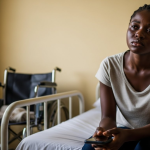
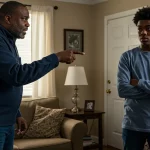
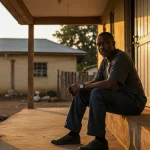
    This was back in 2017. My neighbour who lived in the building next to mine in Bodija Ibadan was having a terrible fight with her young nephews, Tolu and Abraham.  Around 9:00 pm, she threw them out of her house with their clothes and said she never wanted to see them again. They knocked on my door and asked to spend the night, which I was happy to allow.

    I spoke to them about what happened, and it seemed like a case of mistreatment and disregard. Their mother had passed earlier that year, and their father abandoned them, so they were forced to move in with their mother’s sister, who wasn’t interested in caring for them. She starved them and beat them whenever she had the chance.

    I asked if they had anywhere else to go, and they said no, so I offered to let them live with me. I have a husband who doesn’t make much and three children, so we couldn’t afford to send both of them to school along with our children, but they could have a place to sleep and eat without worrying. That’s how we came to live together.

    [ad][/ad]

    How did this living arrangement affect your family?

    My family wasn’t affected at all. I’ve had extended family members live with us before and we had no issues. It was the same with Tolu and Abraham. They became fast friends with my children, and we were one big family. People saw them as my sons, and I treated them that way. It was hard sometimes because you know how Nigeria is, but we made it work.

    Abraham was sharp as a tack, and he won a scholarship for a course at the University of Ibadan, which paid for 55% of his schooling fees. I was happy to cover the rest of it. Tolu wasn’t as good at school, but he was an apprentice at a barbershop in the neighbourhood. We lived without any major problems until 2021.


    What happened?

    Abraham was the oldest child in the house, so I started having more adult conversations with him. He knew when all the bills got paid and had access to the account we used to pay them. I also trusted him to hold the money I made supplying dry goods to restaurants as a side gig.

    In March 2021, I had gotten approval for a ₦5m bank loan, which  I was going to use to expand my supply business. I excitedly told Abraham about it and how I planned to make him the manager of the business since he was almost done with school. 

    We talked about the trajectory of the business and how we were going to use some of the profit to send Tolu to university. Everything was going well till I got a call from the bank in April.

    After going to the bank several times during the loan application process, I became familiar with a few of the workers. One of them called me and asked why I sent my son to withdraw all of the money I had loaned in cash. He didn’t say it like he suspected any foul play, he wanted to advise that we don’t withdraw all the money because of the danger of thieves who may waylay the boy on his way home.

    I said okay and thanked him. I said he shouldn’t let him withdraw it anymore, and he should tell Abraham to come back home. As soon as the call ended, I called Abraham and asked where he was. He lied and said he was at a supermarket.


    READ ALSO: Sunken Ships: My Sister Is My Biggest Opp, And I’m Cutting Her Off


    Ah.

    I became very suspicious. I went to their room and saw that all of Abraham and Tolu’s clothes, as well as Tolu himself, were gone. I asked one of my children about it, and he said that the boys had been talking about taking a trip to Ghana and had packed boxes earlier in the week. I immediately called the person from the bank and begged him to freeze the account till I got there.

    That was the best decision I could have made because this boy went to another branch and tried to withdraw the money again. I called him over fifty times, but he didn’t pick up. I was so angry. That was the last day I saw either of them.

    Did you ever find out why Abraham tried to steal your money?

    Sort of. A month later, Abraham called with a strange number. He said he wanted to thank me for letting them live with us, but I should have known that he’d want to start his own business and not be under anyone. I was taken aback and told him to never contact me or my family again.

    How did this experience make you feel?

    It was very painful. I really saw those boys as my children and I did what I thought was my best for them. I went through a period where I doubted if I treated them well, but I did what even their families were unwilling to do for them. I don’t think I deserved to be robbed. If he had come to me to ask for support for whatever plans he had, I would have gladly done what I could to get him on his feet.

    It has affected how much I trust people. I find that after my immediate family, I feel everyone is looking for an opportunity to steal from me or harm me. I dislike how paranoid I have become.

    Have you heard from them since then?

    Not directly, but I hear that Tolu is now a yahoo boy while Abraham has started a church on a hilltop in the inner city of Ibadan. I hear they still live together, so I wonder what sort of arrangement they have. I don’t really care, though; my focus now is my family and my supply business.


    If you enjoyed reading this, you’ll also enjoy: Sunken Ships: I Lived With My Best Friend’s Girlfriend, and It Was the Worst Decision Ever


  • Parenting is hard enough on its own, but when grief enters the picture, it becomes an entirely different journey, one filled with unexpected challenges and emotions many don’t openly discuss. We spoke to three Nigerians who’ve had to deal with this delicate balance, and here’s what they had to say.

    Tunde*

    How did you navigate the challenges of parenting while processing your own grief?

    I’ll admit it wasn’t easy. My mum passed just a month after my son was born, and I was stuck between the joy of becoming a dad and the devastation of losing the woman who raised me. The first thing I did was allow myself to feel everything. I cried, and I talked about my mum to anyone who would listen — my wife, my siblings, even my baby, who obviously didn’t understand. I made peace with the fact that I couldn’t pour into my son’s life if I didn’t address my own pain first. Therapy also helped me compartmentalise. Understanding that grief and joy could coexist in my life gave me the strength to move forward.

    Did the loss change how you raise your kids, or was it business as usual?

    My mum was a nurturer, always present and deeply involved in my life. Losing her made me realise how important it is to be fully there for my son. I’ve started journaling small moments with him, so he’ll have something to hold onto even if I’m not around someday. It also taught me to prioritise building a strong emotional connection. It’s the legacy I want to leave behind.

    How did you break the news to your kids about the loss, and how do you think it’s shaped them?

    My son is still a baby, so he doesn’t understand yet, but I talk about my mum all the time in little ways. I show him pictures and say, “That’s grandma. She would’ve loved you so much.” I think it’s important for him to know where he comes from, even if she’s not physically here. My wife and I plan to make sure he grows up with stories about her kindness and how much she meant to our family.

    What’s something that’s kept you sane while trying to be a good parent and handling your own grief?

    My faith. Whenever the grief feels overwhelming, I remind myself that God doesn’t give us more than we can handle. It’s also been helpful to lean on my wife; she’s been my rock through this. She reminds me to take things one day at a time, and knowing she’s in my corner makes all the difference.

    Amaka*

    How did you navigate the challenges of parenting while processing your own grief?

    For me, losing both parents felt like I’d lost my safety net. Suddenly, I was the grown-up everyone looked to for strength, including my teenage daughter, who was struggling to adjust. It was overwhelming. But I leaned into routines. It’s amazing how just having set times for meals, conversations, and activities gave us both a sense of stability. I also made sure to surround myself with support. My siblings and friends stepped up when I needed someone to take her for a day or help with chores so I could rest and process my emotions.

    Did the loss change how you raise your kids, or was it business as usual?

    My parents were traditionalists who believed children should be seen, not heard. But their passing made me realise how much I craved their validation growing up. It’s why I’ve consciously tried to be more open with my daughter. I want her to feel seen, heard, and loved, even when we’re not getting along. It’s also a way of healing some of the generational wounds I never addressed with my parents.

    How did you break the news to your kids about the loss, and how do you think it’s shaped them?

    My daughter was old enough to understand what was happening, and it hit her hard. She was close to my mum, who used to pick her up from school, and she struggled with her sudden absence. We had many honest conversations, often late at night when she couldn’t sleep. I told her it’s okay to feel sad and that grief is a process. At one point, we started a ‘memory jar’ challenge — we’d write down happy memories of my parents and read them whenever we missed them. It helped both of us heal.

    What’s the one thing that’s kept you sane while trying to be a good parent and handling your own grief?

    Two things: therapy and community. Therapy helped me unpack my feelings and learn healthy coping mechanisms, and my community — friends, siblings, even my church group — stepped in when I needed them most. They reminded me that I wasn’t alone and that it’s okay to ask for help.

    [ad]

    Dele*

    How did you navigate the challenges of parenting while processing your own grief?

    I’m still figuring it out, to be honest. Losing my mum while preparing to become a dad is like losing the guidebook for the journey I’m about to start. I’ve tried to channel my pain into action by reflecting on everything she taught me about resilience, kindness, and love. It’s not easy, though. I feel lost sometimes, but I remind myself that showing up for my child is the best way to honour her memory.

    Did the loss change how you raise your kids, or was it business as usual?

    My mum raised me as a single parent, so she was both my mum and dad. She didn’t have much, but she made sure I knew I was loved and capable of achieving anything. Now, as I prepare to become a dad, I want to replicate her ability to make a child feel secure, no matter the circumstances. Her passing has also taught me the importance of prioritising my health, something she neglected because she was always putting me first.

    How will you break the news to your kids about the loss, and how do you think it’ll shape them?

    My child isn’t here yet, but I’ve already been thinking about how to explain my mum’s absence when they start asking about her. I want them to know she was a remarkable woman; much of who I am comes from her. I also plan to create traditions honouring her memory, like cooking her favourite meals or visiting her grave as a family. It’s my way of keeping her spirit alive in our home.

    What’s the one thing that’s kept you sane while preparing to be a parent and handling your own grief?

    I find strength in remembering that my mum didn’t raise a quitter. She always found a way to keep going, no matter how tough things got. I’ve also started journaling my thoughts and feelings — it’s been a great outlet for processing my emotions. And, of course, my partner has been amazing. Knowing we’re in this together makes the journey feel less overwhelming.


    If you feel you might need support with grief or loss, please reach out to a self-help service provider like this one.

  • Kids are some of the most delightfully gullible people on the planet. And let’s be honest: Sometimes, parents have to get creative to enforce rules or get them to behave. The result? Some of the most unhinged fibs you’ll ever hear.

    We asked 12 young Nigerians to share the hilarious lies their parents told them growing up, and their responses are wild AF.

    [ad][/ad]

    Toni*


    My parents told me if a boy hugs you, you’ll get pregnant. Thank God for biology class.

    Danielle*


    If you sit on a man’s lap, you will get pregnant immediately… what a lieeee.

    Shola*


    My mom told me that if I swallowed chewing gum, my intestines were going to get glued together, and I’d have to get an injection at the hospital to fix it. I’m terrified of needles so I didn’t even question it until I got to secondary school.

    Raye*


    They told me if I ate a lot of beans, I’d grow taller, look at me now, five foot something.

    Dami*


    I’m left-handed. Growing up, kids at school would tease me for being ‘different.’ To make me feel better, my mum told me about great women who were also left-handed and asked me to tell the kids at school that being left-handed was an indicator of greatness.

    Years later, I found out most of those women weren’t left-handed, but the lie gave me the confidence to stop caring about the constant teasing.

    Joe*


    If a man walks across your legs, your children will look like him.

    Seye*

    My parents told me you’ll lose your voice if you spit on the ground and someone steps on it. They also said they’ll know if you touch their things, even if you arrange it perfectly.

    Dare*

    I heard that if a lizard’s fluid touches your skin, you’ll become epileptic. I avoided playing with lizards like a plague when I was younger.

    Simi*


    If you play with cockroaches, they can give you leprosy.

    Jacob*

    Once you finish your school, you will have all the time in the world to play.  I work 9-5 now, no time for play o

    Brenda*

    While trying to switch my dominant hand from left to  right, they told me if I ate with my left hand, Satan would touch my meat. I lived in terror till I was twelve.

    Aaron*

    I was a chronic food waster as a child, so my parents told me every time I wasted food, an angel got sick and died. Omo I dey finish my food since then o.

  • In Nigeria, hitting children isn’t just common; it’s practically a rite of passage. For many, it’s an unquestionable part of the “discipline package.” The reasoning? “Spare the rod and spoil the child”—a saying that Nigerian parents have embraced with pride. But let’s be real: has all the rod-sparing and rod wielding created a society of disciplined people? Hardly. Nigeria’s corruption, materialism, and general chaos suggest otherwise. Yet, there’s still a widespread belief that alternative parenting methods only breed disrespectful and unmotivated children. 

    In this article, we speak to three Nigerian mums raising disciplined children without lifting a hand. They share their experiences, challenges and wins, which all prove there’s more than one way to guide children toward the right behaviour.

    [ad][/ad]

    Gbemisoke Adekoya, licensed psychotherapist and child educator


    When did you decide not to hit your children?

    I wish I could say that I’ve always been a non-hitter, but that’s not true. I reflexively used my hand because that’s what I knew growing up. But a few years ago, I took a behavioural psychology class that introduced me to positive reinforcement for behaviour change. I was initially sceptical, but I tried it, and to my surprise, it worked. 

    As someone who loves sharing what I learn, I started telling other parents about how positive reinforcement works better than punishment in behaviour change.  It became my life’s work to teach others. 

    I genuinely believe parents use the tools they have, and you can’t criticize people for using the wrong tools when you haven’t offered them the right ones. That’s why the biggest part of my messaging is teaching people what’s possible and practical tools that they can use. I don’t just say, “Don’t hit your child” I’m teaching them what they can do instead. I speak about this at length and discuss these practical methods on my YouTube channel and in videos like these: I Can Discipline Without Hitting?

    What’s been the biggest challenge with this method?

    It takes time to work. Physical punishment is highly effective in reducing bad behaviour in the moment, but it doesn’t teach replacement behaviour. Discipline is not equal to beating. Real discipline requires time and self-reflection, and most people—including parents—struggle with both. For example, if your child flings their iPad in frustration because the Wi-Fi stopped working, the issue isn’t the iPad, it’s that they don’t know how to manage frustration. If you respond by slapping them, you’re showing that you also don’t know how to handle frustration.  

    The crux of the matter is staying patient while your lessons take time to stick. People who get beaten don’t notice but it prevents the brain from working properly. It impacts them negatively because they don’t have frameworks or tools for working through or thinking through complex things. The only tool they have is violence. 

    What’s your favourite experience with this method?

    The relationship I have with my children. Parenting is the most delightful job that I have, but it’s also the most stressful job.  If you don’t keep at it, your kids won’t be okay. My kids make good choices not because they fear me but because they’ve been taught to think things through. I’m preparing them for a world where I might not always be present, and that gives me peace.

    Sarah*
    When did you decide not to hit your children?

    Well,  it helps that I talk to my child like she has sense—because she does. She’s capable of knowing the difference between right and wrong, so the first thing I do when she’s acting out is to try and understand why. She’d never willingly upset me, so finding the root of the matter through discussion has always proved effective. For instance, beating her won’t help her get better grades if she’s failing her classes. She broke a plate, okay? Should she now die? I’ve broken phones and plates, too and nobody beat me. There has to be a cause or a reason, and so if we talk about it, we can get to the problem. 

    We have honest conversations about actions and consequences. For example, I tell her to brush her teeth twice a day not because “I said so” but to avoid cavities and bad breath. There’s a reason, and she understands it. I’ve never felt the urge to hit her, and I’ve been responsible for her for a couple of years now.

    What’s been the biggest challenge with this method?? 

    Regulating myself. I don’t raise my voice at her, no matter what. For me, that’s harder than trying not to hit her because sometimes I’m so angry that I just want to yell.  But I remind myself that I’m trying to do better, so I take deep breaths. When I feel too upset, I tell her I need a moment to cool off before we talk. Then, when I do, I explain the situation to her. But that initial anger that fills my veins? Jesus.

    What’s your favourite part of using this method?

    The bond we share as mother and child, and being able to have conversations about anything. . My baby is shy but it’s nice knowing she reports people to me and walks around with an air of “as long as I tell my mummy the truth, I’ll be fine”. I’m her biggest fan and number one supporter. The culture of us talking to each other makes me feel good. We’ve come a long way.

    Karo
    When did you decide not to hit your children?

    It was a gradual decision from  assessing the way I was raised,  to my interactions with people who advocate for hitting as a form of discipline. I concluded  there had to be another way. I had more  conversations with other parents  and by the time I had kids, I was committed to finding other ways to discipline them.

    What alternative methods do you use? 

    I shout sometimes. But we’ve also recently started using a rewards chart to give daily points for chores and behaviours we want to encourage. This way, we are actively working on good behaviours. We also give related consequences for actions. Often, she loses privileges. Sometimes, I just let her be and I try not to react to every single thing.  Kids are naturally curious. We continue to adjust as she gets older. 

    What has been your biggest challenge with this method? 

    Parenting is a challenge. It’s work, so it makes sense that it’s not always easy. I don’t think the challenges are method specific but you have to really engage to be able to discipline. You have to think of creative ways to correct behaviours. What no one tells you about attempting to raise children who are confident and not afraid to stand up for themselves in the world is that sometimes, they’ll stand up to you. 

    What is your favourite part of using these alternative methods? 

    I like the intentionality of it. I’m constantly reading up on things to get better at raising my child. It’s all about being conscious, communicating with my child and ensuring they understand rules, why those rules exist, and the benefits of doing the right thing. I want them to trust their instincts and consciously choose to do the right thing, no matter who is watching or not watching, for them to feel proud of their actions and make choices that they are proud of. They’ll often make mistakes or even deliberately choose to do the wrong thing. It’s my job to get them to understand why they’ve behaved that way and work with them to ensure they don’t repeat such behaviour because they are not their mistakes. It’s also a learning experience for me because I’m learning to interrogate my own feelings.

  • Nigerian TV families, both blood related or found family, are full of chaos, love, and unforgettable moments. From the no-nonsense antics of The Johnsons to the chaotic drama of My Flatmates, there’s a family for everyone. Take this quiz to find out where you truly belong.

    [ad][/ad]


  • Even though Emilokan and his cronies tried to stress Nigerians this year, it didn’t stop people from going all out for their loved ones in their moments of greatest need.

    From funding a sibling’s “japa” dreams to building a mansion for their parents, these people tell us the wildest things they did for their relatives this year.

    Tunde*

    My brother graduated top of his class in 2018, but nothing seemed to work for him after that. He tried everything—NYSC, job applications, side hustles—but it was like Nigeria had swallowed his potential. He became withdrawn, bitter, and honestly, it was scary to see him like that.

    This year, he finally opened up about wanting to leave the country. It wasn’t just a fleeting thought—it was his last shot at being happy. He’d researched and calculated the costs of studying in the UK, but it was way out of his reach. So, I offered to cover half of his expenses.

    Paying that money wasn’t easy. I had to dip into my savings and even take on a side hustle to compensate for it. But when he called me last month to say he’d landed a part-time job while acing his first semester, I knew I’d made the right decision. He sounds like the brother I remember—full of life and optimism. Helping him leave Nigeria is the wildest thing I’ve done for love, and I’d do it again in a heartbeat.

    Kunle*

    My parents have lived in that house for 25 years. It’s the only home my siblings and I know, but the flooding has gotten worse in the last couple of years. By July this year, it was unbearable—our compound was basically a swimming pool after every heavy rain.

    I’d been working on a mansion for them for three years, but with Nigeria’s economy, the costs kept spiralling out of control. Every bag of cement felt like a small fortune, and I considered halting construction entirely at one point. But seeing my parents wade through floodwater made me mad uncomfortable. I made it my mission to finish that house before December. I stopped hanging out with friends and redirected almost every kobo I earned into the project. Even my wife was worried I was overextending myself, but I was determined.

    Last week, I handed my parents the keys to their new home. Watching them walk through the house—especially my mum, who cried the entire time—was worth every naira spent. This December, we’ll celebrate in a dry, safe house, and I can’t think of a better way to show love.

    Toyosi*

    My sister was let go from her job earlier this year, and it was tough on her. She’d been the breadwinner for her two kids since her divorce, and suddenly, she was back to square one. She kept saying, “I don’t want to fail my children,” and it broke my heart.

    She’d always talked about starting a catering business but never had the funds. So, I sold my car to help her launch it. Let me tell you, that wasn’t an easy decision. That car was my baby—I’d saved for years to buy it. But I couldn’t watch her struggle when I had the means to help.

    Now, her business is thriving. She’s booked out every weekend this December, and her kids are doing great. I miss my car sometimes, but seeing her regain her confidence and joy makes it all worth it.

    Bayo*

    My mum fell ill in March, and the doctors said she needed surgery urgently. The cost was a lot—way beyond what my family could afford. I remember sitting outside the hospital, wondering what we would do. That night, I decided I wouldn’t let money be why we lost her. I already had a 9-to-5 job, but I took on a second job working night shifts at a warehouse. It was gruelling—I barely slept for three months, and there were days I thought I’d collapse from exhaustion.

    But we raised the money, and she had the surgery in June. Watching her recover has been one of the most rewarding experiences of my life. I wouldn’t wish those sleepless nights on anyone, but I’d do it all over again for her.

    [ad]

    Emeka*

    My grandma’s house in the village is a family treasure. It’s where we all gathered for Christmas growing up, but in recent years, it had started falling apart. The roof was leaking, the paint was peeling, and the floors were cracking. This year, I decided to renovate it. It wasn’t just about fixing the house—it was about preserving the memories and giving my grandma a place she could be proud of.

    I spent six months overseeing the project. It wasn’t easy, especially because I was juggling work and some personal projects. But when my grandma walked into the newly renovated house and said, “This feels like home again,” it made every headache worth it.

    Lola*

    My dad turned 70 this year, and we’d planned a big party for him. But a work emergency came up, and I couldn’t get time off. He was so understanding, but I could tell he was disappointed.

    On his birthday, I wrapped up work, got in my car, and drove through the night to my parents’ house. It was a seven-hour drive, and I was exhausted, but seeing the look on his face when I walked through the door made it all worth it.

    Joy*

    My cousin has sickle cell disease and lives alone. Earlier this year, she had a bad fall and fractured her leg. She called me in tears, saying she didn’t know how she’d manage her recovery by herself. I didn’t even think about it—I packed a bag and moved into her apartment to help.

    For three months, I was her caregiver. I cooked, cleaned, helped her move around, and even accompanied her to doctor’s appointments. Balancing that with my remote job wasn’t easy, but I couldn’t let her go through it alone.

    When her leg healed and I was packing up to leave, she hugged me, got emotional and said a heartfelt prayer. I don’t think she realises how much she’s done for me either.

    Binta*

    My sister was due in late October, and her husband had been posted out of Lagos for work. They thought he’d make it back in time, but her labour started early, and she was alone. When she called me, she panicked and asked if I could come. I rushed to the hospital and ended up staying with her through the entire process. I had zero experience with labour and delivery, but I held her hand, encouraged her, and stayed calm when she felt overwhelmed. When her baby finally arrived, the first thing she said to me was, “I couldn’t have done this without you.”

    I’ve never felt closer to her than I did that day. Being there for her in such an intimate moment was an experience I’ll never forget.

    Read this next: I’ve Not Spoken to My Sister in 8 Years, and I’m Not Sure We Ever Will

  • For Doyin*(25), peace of mind trumps closeness to her family. She talks about how her family’s overzealous religious beliefs made her superstitious and drove a permanent wedge in their relationship.

    As told to Betty:

    Source: Canva Dream Lab

    When I was six or seven years old, two cousins — a boy and a girl — from my father’s side of the family came to live with us. They were a bit older than me and my three siblings, and I thought they were cool. 

    My family was comfortable, so we could accommodate the additions. Don’t get me wrong—we weren’t wealthy, but we certainly weren’t poor. My father had a great job at a bottling plant, and my mum had a thriving store. We lived happily together with my cousins for a year. Then, everything changed.

    My mother,  a very spiritual woman, occasionally hosted clergymen for meals at our house. It was routine for a pastor or evangelist to drop by our house for lunch or dinner, so when this “Prophet” came through on a Sunday for lunch, I thought nothing of it. 

    After the meal, we all gathered in the living room for a short prayer before the Prophet left. This was also normal; the men of God who visited said a prayer before they left. The Prophet started to pray for each of us individually, placing his hands on our heads. 

    The prayer session was uneventful until he placed his hands on my cousin’s head to pray for her. She fell to the ground and started screaming that he was burning her ears. Her brother burst into tears and started writhing on the ground as well.

    My cousins said they were witches sent to kill my mother and stagnate my father. They said my father was cursed and bad things would start to happen to our family by the end of the year. The living room descended into chaos and prayers. 

    For one awful week, no one left the house. We all fasted and did a week-long deliverance service for my cousins. It was very surreal.

    On the last day, my parents gave my cousins some money and sent them back to my dad’s hometown. The Prophet prayed for our family one last time and left. That was the last time I ever saw him.

    This happened 20 years ago, but my family hasn’t really moved on. Three months after the event, my father lost his job. In the same year, my mother’s store burned down. For many years, we believed we were cursed. 

    I felt the toll, too; I started doing poorly in school, withdrew from friends and became very superstitious. I believed everyone had some evil spiritual agenda against me and my family.


    One day at school, which was getting harder to afford, a kind teacher called me aside to talk about my plummeting grades. I’d gone from being a really good student to a struggling student, and she didn’t understand why I was flunking.

    I tried to explain to her that I was cursed and there was no way for me to do well at school anymore. I’ll never forget her; she didn’t laugh at me or call me a liar. She prayed with me and told me that only I can give a curse power. She encouraged me to study with her during break times and free periods.

    I was very encouraged when my grades rose back up. I still believed in the power of the curse, but I didn’t feel powerless. I could work my way out, right?

    My parents didn’t think so. Things kept getting worse — For starters, we sold our house and returned to renting. My dad moved from pastor to pastor, church to church, in search of a miracle, spending a good chunk of his savings to pay for holy water.  

    If I needed a textbook at school but some evangelist had told my dad to bring the same amount for them to read psalms over some water, I knew that we were paying for the water. The curse had become a whole new and expensive family member in my house, and I started feeling resentful in my teens.

    Fast-forward to 2018. I was in 200L, studying for a law degree, and my relationship with my family really began to deteriorate. 

    Once, I went home, and as usual, a pastor was around to pray for some reason. We ate and during the following prayer session, he prayed for each member of the family. He stopped when he got to me and said that the Lord had revealed to him that I was a witch, the final stronghold of the curse in my family.

    I have a gold chain that my parents bought for me when I was a baby. It was one of the few things we didn’t sell when times were bad. He pointed to this chain and said it was the talisman I was using. According to him, I had to take it off before they could do a deliverance service to save us from the curse.

    I insisted I wasn’t a witch and refused to take the chain off. When I refused, the pastor tried to yank it off my neck, which escalated into a fight. 

    My parents believed me and gently ushered the pastor out, but I was angry that they didn’t throw him out as soon as he accused me. I told them this, and they argued that they had to honour the servants of God. 

    My parent’s blind belief in pastors whittled my own faith. I became concerned about the amount of influence that pastors and self-proclaimed prophets have on older Christians. Still, I couldn’t talk about it in my community or to my family because they felt these people were above censure.

    As a result, I stopped going to church and turned to YouTube for sermons. The only way to sanely practice my faith is to do it by myself for now, and my parents hate it. The witch allegations have not gone away completely since then; my less pious approach to Christianity makes my family think I might become a witch in some way or another.

    After finishing school, I moved out of the house and got a great job. I try to send money home to help out, but things are still tough, especially with the economic downturn. My mum tests me by offering me holy water to drink when I visit home, and I drink it every time because I have nothing to hide. More importantly, I don’t think it works.

    [ad]

    My dad and I are not on speaking terms anymore. When I moved out after school, I started sending my dad job applications so we could increase our family’s income but he’d take the applications to pastors to pray on it, and they would ask him for money to pray for his success. More often than not,  he didn’t have the money to pay the pastors, and he’d end up not applying for the job. 

    It’s crazy to me because my father is so talented; he doesn’t need a pastor to co-sign everything he does. I believe that you can fight against a curse with personal faith and hard work, not by waiting on a human for a miracle.

    My relationship with my family now is distant and transactional. I send money home when they need it—which is a lot, but I don’t mind. I miss the relationship I used to have with them, but I prefer the peace of mind that comes with hard work. I also like not looking over my shoulder for witches and witch allegations all the time. Most of all, I really love not feeling cursed.

    Next Read: A Fake Genotype Result Cost Me The Love Of My Life


    *Name has been changed for the sake of anonymity.


  • Imagine growing up with parents who wield “I’ll disown you” like a threat or having a father who looks you in the eyes and says, “I’m not your dad.” That’s the reality some Nigerians face. 

    In this article, three middle-aged Nigerians share the stories of how their parents disowned them, how the experience has shaped their own families, and what it means to break the cycle.

    Adeoyo*, 51

    What do you think led to your parents’ decision to disown you?

    “I’ll disown you” was a common threat my dad used on me and my two younger siblings. He set these strict, unrealistic expectations: we had to come first in school, be perfect at Sunday School, and avoid friendships with other neighbourhood kids.

    Growing up, I often wondered why my mum stayed with him—he was emotionally abusive, and his words were sharper than physical pain. Sometimes, I wish he’d just hit us instead of leaving us with those cutting words that still haunt me today.

    In my final year at uni, I got a call from my mum saying she’d left his house and that I shouldn’t return there after school. My dad took it as a betrayal, especially when we chose to stay with her. This time, he followed through on his ‘disownment’ threat. He died soon after I graduated, and we never had the chance to mend things.

    How has this experience shaped your view of family and belonging?

    It’s only made me appreciate the family I have with my mum and siblings. Leaving my dad brought us closer, and even though we struggled financially, we finally had peace and love in the home. I think we thrived better without his overbearing presence.

    What aspects of your life now would you have wanted your dad to see or understand?

    I would’ve liked him to see how well we turned out without him. All three of us now have our own families, and we’re nothing like him—we don’t use threats or manipulation to raise our kids.

    Do you think this experience has impacted your role as a parent?

    I don’t threaten my kids with things like, “I’ll disown you.” I’ve prioritised thinking carefully before correcting them to avoid saying things I’d regret. I’ve had slip-ups, but I’m intentional about doing right by them.

    [ad]


    Johnson*, 48

    What do you think led to your parents’ decision to disown you?

    I don’t think my dad needed much reason. My mum says he just left us a few months after I was born and never came back. She eventually heard he’d remarried, but he refused all family attempts to reconcile. Growing up, I only knew him from old photographs.

    In secondary school, a family friend convinced my mum to let me visit him. I wasn’t excited, but part of me wanted to see him. When I arrived, I met my stepmum and step-siblings. They were nice, but the atmosphere changed when he got home. My dad barely looked at me before saying, “Go back to your mother and tell her to show you your real father. I’m not him.”

    That was the last time I saw him. I think, deep down, I disowned him just as much as he disowned me that day.

    How has this experience shaped your view of family and belonging?

    This isn’t uncommon in our society. There are single parent stories everywhere and some of these children have grown up just right. My grandmother always told me, “Orphans survive with no parents; you’re lucky to have one who cares.” Now, when my daughter calls me “the best dad ever,” I know I’m doing something right.

    What aspects of your life now would you have wanted your dad to see?

    I’d only have wanted him to meet my kids. They ask about him sometimes, and I just say he’s passed. Luckily, they have their maternal grandfather, who loves them like his own.

    Do you think the experience has impacted your role as a parent?

    Oh, it has. Like I said, my daughter calls me the “best dad in the world,” and that’s all the reassurance I need to know that I’m getting something right with her.


    Toyin*, 42

    What do you think led to your parent’s decision to disown you?

    I didn’t invite my mum to my wedding.

    She was mostly in and out of my life as a child, so I spent most of my childhood with my grandmother, who, though well-meaning, was strict and difficult. By the time I got to uni, I’d adjusted to life without a present mother. But she’d always say, “I’m still your mother, whether you like it or not.” At one point, she joined a cult, which distanced her even more from the family.

    I didn’t want her at my wedding because she caused a scene at my graduation, and I worried she’d do the same on my big day. When she found out, she told people I was no longer her child. My grandmother tried to reconcile us, but my mum seems more invested in her cult now than in the family.

    How has this experience shaped your view of family and belonging?

    It’s shown me what I don’t want when creating my family. My mum failed to give me the gift of family, but I’m determined to give my kids what I didn’t have. With my husband and kids, I’ve found a true sense of belonging I’d always wanted.

    What aspects of your life now would you have wanted your mum to see?

    All of it.  Childhood was hard without her, and adulthood hasn’t been any easier without her guidance. It would’ve been nice to have her here.

    Do you think the experience has impacted your role as a parent?

    It definitely has. When I find myself struggling or on the edge, I pause and think, “Would I want my daughter going through what I did?” The answer’s always “no,” it keeps me grounded as a parent.

    Read this next: I’m Tightfisted, and It’s Ruining My Relationships


    Get more stories like this and the inside gist on all the fun things that happen at Zikoko straight to your inbox when you subscribe to the Zikoko Daily newsletter. Do it now!

  • As a child, Deji* watched friends and family turn his generous dad down when he fell on hard times. It changed the way he saw life.

    Now, at 32, he opens up about how he’s working to break free from a scarcity mentality and accept the idea of sharing his resources.

    As told to Adeyinka

    We weren’t the wealthiest family in our neighbourhood, but everyone knew us for my parents’ parties.

    Every little milestone was a reason to invite family and friends for a “small get-together.” Our neighbours could always count on us for at least one free meal every month.

    But, things took a turn after my dad lost his banking job in 2002. He was among the workers laid off when Savannah Bank lost its licence. Our finances took a serious hit. It all felt so sudden, that  I found myself wondering if my dad had even saved while he was employed. But I was too young to ask.

    The parties were the first thing to go, and the way we ate followed–. My brother and I had to share a single piece of meat, and a sachet of milk was suddenly considered too much for one person to use. The private secondary school my parents always wanted for us also became an impossibility because they could no longer afford it. My mum was a civil servant, but her income was nowhere near my dad’s former salary.

    Soon, the number of visitors to our house started to trickle down. Relatives who once showed up regularly for a good meal and a transport token stopped coming. Next, the non-stop phone calls my dad used to get reduced significantly.

    After struggling and failing to find another job, my dad decided to start a business. He needed financial assistance to bump up what he had saved but when he  called on friends and family who’d benefited from him to help out, they all  suddenly “had one project to finish” or said “things were too tough.” I watched his spirit break in real time as he tried to make excuses for people he’d once prioritised over his family.

    Seeing my dad go through that broke something in me.

    In boarding school, I earned the nickname “akagum”—a slang for stingy people. I was unrepentantly stingy. The thought of sharing anything I’d worked to get was unbearable. If I’d gone through trouble to earn something, I felt no one else deserved it. My logic was simple: “Why should anyone who didn’t struggle with me get to share in the rewards?”

    One time in SS2, I spent hours in a queue fetching water, only to have people who’d been lounging indoors all day ask me for some. I spat in the bucket and refused. They hurled insults at me nonstop, and I think I cried myself to sleep that night. I woke up the next day and carried on as usual; nothing changed.

    It wasn’t until university that I started to see the consequences of my actions. Uni was harder than secondary school, and I soon realised I couldn’t navigate it alone. There were so many confusing processes, and I found myself needing help from others, something I wasn’t so keen on. I didn’t want anyone to feel entitled to ask me for anything in return.

    [ad]

    It worked for a while—until it didn’t.

    As I started to form friendships, people got comfortable enough to ask me for things. You know, the sort of petty requests you’d ask of a friend, a course mate or a hostel mate. “Ade, can I borrow your course material?” or “What did you cook? Can I have some?” My default answer was always no. Sometimes, I’d reconsider, but I had to say no first; it somehow satisfied me.

    If my friends noticed this trait about me, they never called me out. Instead, they adjusted, and soon, I was the one getting a lot of “I don’t have” and “No.” At first, I didn’t mind. It meant I didn’t have to feel bad for turning them down.

    However, it took an incident during our final exams for them to finally confront me. A good friend, who was my seat partner, needed a pen. I had three spread out on my desk, but I didn’t respond when he called me. In my head, I thought, “What if my pen stops working next?” After the exam, my friends gave me a good tongue-lashing. I think we actually got into a heated exchange. I argued that the invigilator could have caught me if I had been seen talking. Before we parted ways, one of them said, “This attitude will drive people away from you,” and he was right.

    The real impact of those words hit me during NYSC. I’d just started dating my first girlfriend, who always bought me thoughtful gifts—shirts, colognes, food — despite our 28k allowance. Honestly, I wasn’t comfortable accepting them because I knew it meant reciprocating, which I wasn’t ready for. I couldn’t justify the expense, especially since I was saving for post-NYSC life.

    I was a good boyfriend in other ways, but it wasn’t enough for her. She frequently complained that I didn’t honour her love language of giving and receiving gifts, and I guess the last straw was when I refused to cover her friends’ meals at her birthday dinner, even though I could afford it.

    After we broke up, I didn’t date for about two years and was upfront with prospects. During the getting-to-know-each-other phase, I’d say point blank, “I’m not a cheerful giver,” and sure as hell, the budding romance would die a natural death. Although, there was one person who seemed okay with it until it became an issue. She came over after work one day, and I only made food for myself, knowing she hadn’t eaten. My excuse? She hadn’t told me she was coming. We went our separate ways some weeks later.

    My friends, they don’t even bother anymore. They’ve all marked me as the one friend who shows up empty-handed, who visits with no food of his own, and whose answer to requests is almost always no. I’ve lost some, and the ones who’ve stayed occasionally threaten to leave.

    Over the years, I’ve realised that this is a trauma response to watching my dad’s struggle. It’s made me live with a scarcity mentality that doesn’t let me enjoy my own resources. As much as I’m stingy with others, I also tend to deprive myself, even though I have a good income and a decent savings cushion.

    I’m working to get better. I’m teaching myself to say yes more often and be more generous. I’ll admit, Nigeria’s economic situation doesn’t make it easy—the word “no” still feels like it’s always on the tip of my tongue.

    Read this next: I Don’t Think My Siblings Like Me

  • Siblings are meant to be the closest people in your life, but what if you’re not lucky enough to have that? What if every attempt to build that bond falls flat?

    That’s Demilade’s* reality. He shares how years spent away at boarding school, the introduction of stepsiblings, and his mum’s attachment to him as the last born may have fractured his relationship with his brothers.

    As told to Adeyinka

    I’ve never related to people who call their siblings their best friends. With two older siblings and three steps, that’s never been my reality, and I’m not sure it ever will be.

    Watching the twins and siblings on the recent BBNaija season made me wish I had that sort of bond. The way they stood up for each other, completed each other’s sentences and had fun together always got me thinking about my situation.

    Our relationship wasn’t always this way— There was a time when “best friends” could have described our relationship. What went wrong? It’s hard to pin down, but I’ll try to explain.

    My dad married two wives. The first wife has four kids while my mum, the second, has three. Both wives get along well, probably because they live in different locations. My dad also found a way to manage his time between them so things were fine on that front.

    While the wives aren’t exactly best friends, they are cordial. My dad tried to get them closer but eventually accepted that things wouldn’t be as perfect as he wanted. However, he insisted we, the children, spend time together. He didn’t want the divide between the wives to affect us. He’s always going on and on about when they, the parents, are no longer here, we’d only have each other left.

    Growing up, we spent holidays between both households. But I spent less time at my stepmother’s place. My mum was very attached to me as a child. Some say it’s because I’m the last born, and I’ve come to accept that because no other reason makes sense. She would let my older siblings go, but I always stayed back with her. At first, I felt like I was missing out—my siblings would return with stories of all the exciting things they got up to with our stepsiblings—but over time, I realised I enjoyed my time with my mum. My siblings realised it too and didn’t bother to ask if I was visiting our steps’ because they always knew what my response would be. 

    [ad]

    My dad didn’t like this. He and my mum argued a lot because he felt she was isolating me and making me soft by spending so much time with her. 

    As a way to get back at my mum, and maybe teach me a lesson, he sent me to boarding school, even though all my siblings, including my stepsiblings, attended day school. It caused a major fight between my parents, but my dad didn’t budge.

    If spending time with my mum drove me away from my siblings, boarding school only made things worse. Whenever I came home, I always felt like a stranger. Because my siblings were older and in the university, there were long stretches where we didn’t see each other. The only time we were all together was mostly during public holidays, but even then, my brothers preferred spending time with our stepsiblings at the first wife’s house.

    By the time I finished secondary school, I had become sort of grown into my own person, thanks to my boarding school experience. So, it didn’t bother me much that my siblings weren’t around because I’d gotten used to absence. 

    My parents never addressed this, and I suspect my mum wasn’t keen on the idea of spending so much time with my stepsiblings anyway, so she was more than fine having me stay back.

    I gained admission in 2012 and the university only strained the relationship with my siblings further. I rarely saw them, except for uniform holidays.

    During the ASUU strike that rocked 2013—probably one of the longest stretches we spent together—I began to wonder if we were really related. 

    Our interactions were cordial, but they just always felt so distant. I could have sworn I had friends in school who would have easily passed as my siblings if we ran along with the lie. 

    They’d give short responses whenever I tried to engage them and they didn’t really seem interested in any goings-on in my life. 

    At some point, I thought maybe it was the age gap since my eldest sibling is four years older than me and the immediate is three years older, but then I saw how they interacted with my stepsiblings, who are closer in age to me, and realised it wasn’t about the age. They just didn’t like me.

    After we all returned to school when the strike was called off, I made up my mind to let things be. My mum didn’t have a great relationship with her own siblings, so I chalked it up to a family pattern.

    Fast forward to present day, things still haven’t improved. In fact, they’ve probably gotten worse now that we’re full grown adults who feel like we’ve got our individual lives to care about. 

    But still, it’s hurtful to that I have siblings, yet I always feel so alone. On several occasions, I’ve seen my siblings and stepsiblings hang out on social media, and I’ll wonder, “When did this happen? Why wasn’t I included?” Although, I’ll admit that I hardly feel the need to ask– It’s sort of like lobbying to be included where you aren’t wanted. 

    My mum has tried to step in. She’s had talks with my brothers, stressing the need to strengthen our bond first before bringing in our stepsiblings but they don’t see her point. They always say, “As long as we share the same dad, we’re all one,” so my mum tries not to push too hard.

    I’m grateful for friends who’ve become like family, but I still think about the situation with my siblings a lot. I worry about what will happen when our parents are no longer here. Will I be the sibling who’s cast aside by the rest of the family? Will my kids have cousins they can spend time with? 

    I’ve tried talking to my siblings, but I’m not sure it’s helped. We’ll get along for a while after our conversations, but then everything returns to the way it was. 

    I’ve heard these things take time, so I’ll keep trying.

    Read this next: 5 Nigerians on The Lover “Who Got Away”