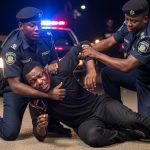
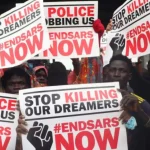
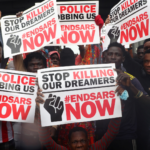
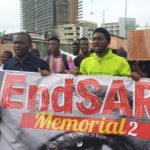
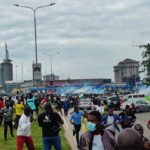
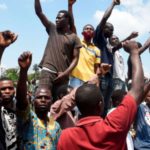
• In October 2020, Nigerian youths took to the streets to demand an end to Police brutality perpetrated by the now-defunct Special Anti-Robbery Squad (SARS) of the Nigeria Police Force.

    Though the protests ended tragically, they also led to the abolishment of SARS. Five years after these events, we asked Nigerians if they feel safer. Their answers? Chilling stories of Police brutality they were only lucky to get out of.

    “I initially thought they were thieves”—Ade*, 27

    Ade negotiated for his life in the middle of nowhere.

    “I have had a lot of experiences with the police, but there’s a particular one that scared me the most. Ironically, it happened the year after the EnsdSARS protests.

    One night, at about 11;30pm, in my apartment at school, I saw eight men with guns outside my window. I initially thought they were thieves because they were not in their unifroms. They began banging on our door, demanding that we let them in. My flatmate went  to open the door and as he did that, I heard a gun cock, and the voices of the men shouting at us to lie on the floor.

    At this point, we still didn’t know they were the police, so we told them that we were students and didn’t have any valuables for them to rob. It was then they revealed that they were the police and were looking for cultists.

    We begged them and told them that we were not cultists but even pastors. They didn’t believe us. The officers looked at my flatmate said it it’s impossible for him to be a Patsor. Almost immediately,we were handcuffed, put in a vehicle, and driven towards their station at 12 midnight.

    Thankfully, their car broke down, and we had the chance to talk and negotiate with them. After a while, they believed that we were indeed pastors and not cultists but we still had to settle them;My flatmate and me sent them ₦20,000 before they let us go. 

    I do not feel safer even after EndSARS. Every time I see the police, my heart skips a beat even though I do not engage in any fraudulent activities. It’s just scary when I see them.”

    [newsletter type=z-daily]

    “They drove us to a secluded place”—Bayo* (Mid 20s)

    Just as they did before the 2020 protests, Bayo attests to continued profiling by the Nigeria Police

    “I’ve been harassed by the police three different times, but the worst one happened in Abuja in 2024. I was on my way to a restaurant when some officers blocked my car, took over the vehicle, and drove us to a secluded spot.

    They said I looked like one of their suspects and insisted I follow them to the station. I refused, and things immediately got scary. One of them threatened to hit me with the butt of his gun and throw me in the boot.

    We argued for a while until I called my boss, who spoke to them. That was the only reason they eventually let me go. Even then, they still collected money from me to “fuel” their car.

    The most recent harassment happened just last month, in September. Once they see my dreads, it’s like an automatic stop; eight times out of ten, they’ll flag the car because of me. Now, I make sure to always carry my ID with me, even if I’m just stepping out to buy something down the street.”

    “Nobody knew where I was for a bit and it would have remained that way”—Chima*,mid 30s

    Chima played by the rules but was still assaulted in the most ironical of places.

    “Before EndSARS, the stories I had heard about the police always guided my behavior towards them. My parents also always told me to do whatever the Police say if I ever encountered them; ‘don’t shout, don’t resist, just do whatever they ask,’ they said.

    I followed the instructions, but still suffered violence from them. In 2021, while I covered the EndSars memorial protest at Lekki Tollgate, the Police stopped me and asked for my ID card.

    The ID card was in my bag, so I reached in to bring it out, but they immediately stopped me and bundled me into the black maria.

    Nobody knew where I was for a bit, and it would have remained that way if it weren’t for the influence of some government officials who got me released.

    I suffered PTSD from that event, so now I heavily avoid anything that involves the police now.

    Do I feel safer and respected? Not entirely, and this is because we still hear stories of Police brutality till today.

    I just tell everyone around me to always respect the police. I do not feel safer. I know the police would act when they need to act, but in everyday life, I am not sure. I see them, and I have PTSD, but I am wiser in how I deal with them now.”

    “They threatened to waste my life”—Demola*, 28

    Demola’s experience is still so fresh, he does not see an end to Police brutality in Nigeria.

    “I was never harassed by the Police but all of that changed after I got a car.

    One Sunday afternoon in 2024, I was stopped by the Police as I drove home from church.They asked to search my car and I let them. Then they demanded to see my ID. I didn’t have a physical one with me, but I had a digital copy on my phone, so I tried to show it to them. I held up my phone and asked  them to look at it without taking it from me, but they didn’t listen.

    Things instantly became dangerous; they forcefully took my phone and threatened to waste my life right there, saying nothing would happen and no one would save me. At that point, I just had to cooperate. I ended up giving them money just so they’d let me go.

    Honestly, I don’t see police harassment ending anytime soon.”

    “They threatened to waste our lives”—Dele* 28

    Dele’s experience has scarred him so much he refused to go out at night.

    “After a long night of partying, I was tipsy, so my friend who hadn’t had a drop, drove me home at about 3 am.

    On the way, we were stopped by the police. They asked for the usual car papers, and IDs so we showed it to them. I do not know if we would have been let go then but when they saw that I was slightly not myself, they immediately assumed I either had narcotics or drugs with me.

    They forced us out of the car thorougly searched the car. We tried to explain to them that I had a few drinks in my system, not narcotics, but they did not believe us. They insisted that I was a yahoo boy that sold drugs and my friend was covering for me. They searched the whole car and our belongings and found nothing. The energy shifted to a really serious one and they threatened to either take us to their station or waste out lives there. 

    We frantically pleaded with them, and they demanded we pay them money. After a lot of negotiations, they collected ₦300,000 from us that morning.”
    Now, I am wary about going out at night. I avoid the police almost all the time. I do not want to have anything to do with them.


    Before you go, please take this 10-minute survey to help us understand how you and other young people feel about the 2027 general elections.

    [ad]
  • The Nigerian Police Force has a long history of abuse and extortion. Random searches, unwarranted detentions, and the targeting of young people for extortion led to the nationwide #EndSARS protests in 2020. Years later, little has changed and police reform remains an unfulfilled promise.

    Ayo* was having a nice afternoon nap in his hostel when he was rudely awakened with a gun to his face. His day was about to get much worse in ways that have left him still holding a grudge against the Nigerian Police.

    This is Ayo’s story as told to Franklyn

    Anywhere they are hating on the Nigerian Police is my kind of space. I have plenty of reasons for how I feel about that organisation; too many unpleasant run-ins to count. But one I will never forget happened during my university days in Ilorin.

    It was one of those lazy afternoons that make a midday nap really slap. The guys from the room next door had come over to mine to gist and play video games. Usually, I would have joined in the banter, but that nap was calling my name.

    Since they were in my room, theirs was empty. I left them with my roommate and went to their room instead. From there, their noise became a soft hum that lulled me to sleep. I cannot say how long I was out, maybe an hour, before I sensed the door open.

    I cracked my eyes just a little, and the first thing I saw was the sneakers. My gaze travelled up from the shoes to the worn jeans, and then I was staring down a dark tunnel with no light at the end. I was looking straight into the barrel of an AK-47.

    If I had even thought for a moment that they were armed robbers, it vanished quickly. I knew that look too well—the black shirts, jeans, sneakers, sometimes a face cap. It was the Nigerian Police.

    I found myself wondering, as I often do, why our thugs-in-uniform carry assault rifles like they are in a warzone. But that was not the time for such thoughts. The gun in my face had jolted me awake, and I sat up quickly.

    “What is happening here?” I asked, rubbing my eyes.

    “We are here for you people!” one of them barked.

    ***

    Get More Zikoko Goodness in Your Mail

    Subscribe to our newsletters and never miss any of the action

    I lived in a private hostel off campus with a bunch of other guys. One of them, who had moved out a few months earlier, had a run-in with the police. They searched his phone and found something incriminating.

    This was 2018, when Internet fraud was booming and the police were cashing out too, extorting guys through random searches and phone checks. Even those of us just minding our business were caught in the mess.

    They arrested him and asked him to take them to his place. For reasons best known to him, he brought them to our hostel instead of wherever he was actually staying. That was how I ended up being woken up with a gun in my face.

    ***

    The guys in my room must have heard the commotion and bolted. That was the standard reaction. In Ilorin, as a young man in 2018, you see the police, you run. If they had not caught me asleep, I would have run too.

    My roommate was not fast enough.

    They saw him leaving and called him back. He lied, saying he lived in a different room and was heading there. I do not know if they did not believe him or just felt lucky to have caught someone, since the others had escaped.

    The officers held both of us and began searching our room. They tore it apart, flipping everything, throwing clothes off hangers. They did not find anything incriminating, but they did find our IDs, which exposed my roommate’s lie.

    So much of that day is burned into my memory, but the worst part is a sound I still remember too clearly after all this time. The whole hostel heard the slap one of the officers landed on my roommate’s face. More slaps followed as they started to drag him away.

    I am a big, tall guy, and I have noticed that it brings a sort of respect. People listen when I speak. I naturally fall into a big brother role with my friends. So I stepped in.

    I told the officers he had done nothing wrong. They had not found anything on him. Lying about his room was not enough reason for this kind of treatment.

    I said, “You are not taking him anywhere.”

    Omo, it was like play. Before I knew it, they carried the two of us.

    ***

    They dragged us downstairs to their vehicle. It was not even the usual Hilux pickup truck. They had come in a taxi. I still remember its distinct yellow and green paint job. I was still trying to figure out how we would all fit when one of them opened the boot.

    They shoved my roommate in first. Then me. Like I said, I am a big guy, so the boot would not close with us inside. They kept trying to force it shut, but it was not working. Then one officer stepped up and slapped me across the face.

    As I recoiled in pain, my body bent just enough for them to slam the boot shut, pinning me in the most uncomfortable position. Then they started driving.

    I do not know how long we were in there. I tried to memorise the turns, listened to the sounds outside, anything to figure out where we were going.

    When the car stopped and they let us out, I was not surprised that we were not at a police station. Nothing about this had felt official. We were at a really big tree, and from the way they immediately made themselves comfortable, I could tell it was their usual hangout spot.

    It was then that the negotiations began.

    ***

    They told us we had to go if we wanted to be set free. After some haggling, we settled on ₦15,000. Of course, we did not have the cash, so it was agreed that I would go and get it while my roommate stayed behind.

    One of the officers flagged down a motorcycle for me. It took me to the nearest ATM, where I withdrew the money. I returned and gave the officers the money.

    As we left, they shouted warnings after us. “If we come una side next time find anything for una hand, na serious trouble!”

    I still think about the madness of that day. How I just wanted a nap, only to be woken up with a gun in my face, shoved into a car boot, slapped and extorted. I knew from the start they were not armed robbers, but looking back, I ask myself if there’s any real difference. Armed men woke me up, assaulted me and took my money.

    As long as I am alive, the Nigerian Police will always have at least one hater. God will actually punish them on my behalf.


    Share your story with us here if you’ve ever had a moment where Nigeria’s systems made life harder or unexpectedly easier. We want to hear about your personal experiences that reflect how politics or public systems affect daily life in Nigeria. We’d love to hear from you!


    Click here to see what other people are saying about this article on Instagram

    [ad]

  • The Nigerian experience is physical, emotional, and sometimes international. No one knows it better than our features on #TheAbroadLife, a series where we detail and explore Nigerian experiences while living abroad. 


    Ben (33) decided to leave Nigeria permanently after experiencing the #EndSARS protests, but the country and its problems haven’t left him alone. In this week’s Abroad Life, he shares how he’s starting life over as a newly married man in the UK.

    When did you move out of Nigeria, and where do you currently live?

    We moved from Nigeria in November 2023 and currently live in the UK.

     What motivated your decision to move?

    Honestly, everything about Nigeria made us consider leaving. I had spent my entire life there, and after some experiences, I realized I didn’t see a future that aligned with the life I wanted. It wasn’t a career move because I was doing well in Nigeria. I was a finance manager in a multinational company, and my wife was also thriving in her field.

    I was deeply involved in the EndSARS protests and the elections, which made me lose hope in the country’s direction. I couldn’t envision a future in Nigeria where I could live and raise a family the way I wanted.

    You mentioned having a good job and a comfortable life in Nigeria. What did that life look like?

    Life in Nigeria was comfortable to an extent. We lived in a rented apartment, had two cars, and had enough savings. I could afford my basic needs and some luxuries, but we still had limits.

    For example, international vacations weren’t easy to afford consistently, and despite earning well, my lifestyle wasn’t on the same level as that of my counterparts in other countries. The cost of living was high, and keeping up with inflation was always a struggle. Even though I wasn’t suffering, I wasn’t enjoying life the way I wanted. So when my wife got recruited by one of the Big Four firms in the UK, we knew we had to move.

    [newsletter]

    How different is your life in the UK compared to Nigeria?

    The quality of life has improved significantly. One major difference is the convenience of basic things. In Nigeria, I spent hours in traffic, queued for fuel, and dealt with power outages, but now, I don’t worry about those things. My commute to work is a two-minute walk instead of the usual five hours in Lagos traffic.

    The extra time has allowed me to focus on myself. I go to the gym, cook more, learn new skills, and even learn new languages. In Nigeria, I was constantly in survival mode, always chasing money because of how fast expenses were growing. Here, financial stability is more predictable. For example, my budget from 2024 to 2025 increased by less than 5%, something that’s now impossible in Nigeria.

    Travelling is also easier. I visited a friend abroad, and the cost of my trip was cheaper than what my sister spent flying from Lagos to Abuja at the same time. That accessibility is life-changing.

    Overall, life is less stressful, and my mental well-being has improved. Ironically, the only time I feel real stress now is when I read Nigerian news and get frustrated about how things are still going wrong.

    Lmao, sorry. How’s married life going?

    We moved about one or two months after getting married. The months leading up to our relocation were spent focused on visa applications and settling logistics, so we didn’t have much time to fully experience married life before leaving Nigeria.

    Since moving, we’ve had more time together, which has been great for our marriage. In Nigeria, my job had long hours, so I didn’t get to spend as much time with my wife except on weekends, but here, we get to do things like walk to work together, have lunch together, and just generally spend more time with each other. 

    Thankfully, we have similar views on money, which has also made handling our finances much easier here. It’s not that we have a lot of money, but we plan and manage it well as a couple. That financial understanding has been a big advantage.

    Did having a partner make the japa move easier for you?

    Everyone’s journey is different. Some people migrate alone and have their partners join later, while others find partners after relocating.

    Moving with my wife made the transition much easier. Coming from Nigeria, where we had lived all our lives, adjusting to a new country was a huge learning curve. If I had moved alone, I think I would have struggled more. Having someone to share both the good and tough moments with made a big difference.

    Also, we moved right before winter, and adjusting to five or six months of cold was hard. I can’t imagine going through that alone. So, if someone is already in a committed relationship, I’d strongly recommend moving together, not just for the sake of migration, but if the relationship is already serious, just do it. 

    Is there anything you miss about Nigeria?

    Definitely the food.  There is no African restaurant where we live. At one point, my wife and I had to travel to London just to eat Nigerian food. It’s an adjustment not having access to familiar meals. Entertainment is also another thing I miss. In Nigeria, Friday nights meant stopping at a lounge, eating grilled fish, and enjoying music. Here, we struggle to find places that match that vibe. It took time to find new ways to have fun. I also miss having family around.

    On a scale of one to ten, how happy are you in the UK?

    Ten. Life is beautiful here.


    Do you want to share your Abroad Life story? Please reach out to me here. For new episodes of Abroad Life, check in every Friday at 12 PM (WAT). 

    [ad]
  • If you were already an adult with a phone as of October 2020, you might find most of this article triggering.

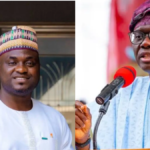
    On Sunday, November 24, an official of the Lagos State government said something so incriminating, that Nigerians are calling on law enforcement agencies to investigate him– Wale Ajetunmobi, Senior Special Assistant on Print Media to the Lagos State governor, made a post on X, saying that the government “hunted down and executed” many of the people who burnt down a TV station in Lagos during the EndSars protests of 2020.

    Photo credit: Premium Times

    Ajetunmobi’s X post, now deleted, seemed to suggest that the government had engaged in extrajudicial killings, so this sparked a lot of outrage on the social media platform.

    When asked by another X user to clarify what he meant, Ajetunmobi denied any connotation of extrajudicial killing.

    “Lol. You want to create a narrative in your head. What is extrajudicial killing here? Some of the people were chased by soldiers, and an exchange of fire occurred. Then, arsonists were overpowered and killed in the process. Others ran away. Is that extrajudicial killing to you?” he tweeted in reply to the person questioning him.

    The outrage continued, as many people on X viewed his reply as an attempt to save face. On Tuesday, November 26, two days after Ajetunmobi’s controversial statement, Lagos State Governor Babajide Sanwo Olu said he was suspending the media aide for his tweet which, according to him, was inaccurate.

    The statement announcing his suspension was published on the Lagos State government’s official website. It said: “Mr Ajetunmobi’s suspension comes on the heels of the misrepresentation of facts on his personal “X” account on a past incident.”

    “The Governor wishes to state categorically that his administration frowns at any form of extra-judicial punishment and will not be a part of any such action. That is not who we are. That is not our way.”

    Why should Ajetunmobi be investigated for his statement?

    There are a couple of reasons, but one stands out as the biggest elephant in the room– the allegations previously denied by the government.

    In October 2020, youths across Nigeria took to the streets to protest police brutality perpetrated by the notorious Special Anti-Robbery Squad (SARS) unit of the Nigerian Police Force. While the demonstrations went on simultaneously across the country, the tempo was especially high in Lagos, which was the centre of the protests.

    On the night of October 20, 2020, after failing to shut down the protest through a curfew, the government deployed soldiers to the Lekki tollgate, where hundreds of unarmed protesters were gathered. What followed was extrajudicial killing of many, which the military has repeatedly denied.

    The Television Continental (TVC) station, which Ajetunmobi referenced in his tweet, was burned down by unknown persons summarily referred to as “hoodlums” on October 21, 2020, barely a day after the government had denied the extrajudicial killing of citizens at the Lekki Tollgate, despite overwhelming evidence indicating it did.

    Ajetunmobi’s claim that many people were  “hunted down and executed” in a gruesome manner paints an ugly picture and raises new questions about the events of October 2020 that cannot be answered by his suspension.

    Following his tweet, past eyewitness accounts and reports by investigative journalists saying that the Nigerian military executed citizens connected to the protests have surfaced again, and they might not be put to rest by a temporary suspension or sack, considering he’s a government official.

    The EndSars protest holds a lot of meaning to Nigerian youths however, the Lekki massacre holds an even deeper meaning for them. For many, the mindless killing of young people meant there was nothing more to fight for, and this pushed them to leave the country. This sentiment is reflected in the high rate of migration from the country, post EndSars. For instance, a 2022 survey by the African Polling Institute showed that 70% of Nigerians between the ages of 18 and 35 would leave the country if they could. This huge leap from the 39% result from a similar survey in 2019, across all age groups summarises the feelings of the youth.

  • Martha Sambe was in pain.

    She had anticipated a peaceful protest where the Nigerian government would address police brutality. Instead, she found herself in an Abuja hospital, receiving stitches after police officers inflicted a severe head injury during the #ENDSARS protests.

    “It’s hard to accept that in the fight for justice and safety from police brutality, I was brutalized by the police,” Martha said.

    It was October 2020, and Martha, an Abuja-based writer, joined the nationwide #ENDSARS protests with hundreds of other young Nigerians. The movement rose in response to widespread bribery, extortion, harassment, and extrajudicial killings by the Nigerian police, especially by the now-disbanded rogue unit, the Special Anti-Robbery Squad (SARS).

    Martha hadn’t foreseen the intense resistance she would encounter. But she and countless other Nigerians faced violence from security operatives. Throughout the protests, participants were beaten, detained without cause, tear-gassed, and, tragically, some were killed.

    “With how the protests were handled, the Nigerian government showed it has no problem killing its citizens just to subdue the rest. It’s shameful,” she noted.

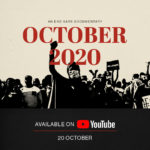
    Martha’s experience and those of many others affected by police brutality and the #ENDSARS protests of 2020 are the focus of the newly released documentary, “October 2020.”

    The documentary by the Tiger Eye Foundation, a media nonprofit championing investigative journalism, looks into the events and aftermath of the 2020 #ENDSARS protests. It captures the movement’s enduring impact on Nigeria and the wider world three years later. 

    “October 2020” is produced and directed by multimedia journalist, Aisha Salaudeen and narrated by reporter, Abisola Alawode. It features activists, experts, and young protesters like Martha, all touched by police brutality and the #ENDSARS movement.

    According to Tiger Eye Foundation, the aim of the documentary is not just to record history, but to ensure the lessons from ENDSARS pave the way for a brighter future for the country.

    Documentary link: https://www.youtube.com/watch?v=d9tKlPTo9UU

  • On October 9, 2023, a Lagos State High Court sentenced Nigerian police officer, Drambi Vandi, to death after he was found guilty of fatally shooting Lagos-based lawyer, Bolanle Raheem.

    Vandi shot Raheem, an expectant mother, on Christmas Day in 2022 in Ajah, Lagos state. While this sentence offers respite and some level of justice to the victim’s loved ones, the country is still riddled with pockets of police misconduct and brutality against citizens.

    #ENDSARS: A Timeline of Events That Shaped October 2020

    Source: Maritime First Newspaper

    In commemoration of the third-year anniversary of the #ENDSARS protest, we’ve compiled a timeline of notable dates and events that defined October 2020.

    But first, what were the five-point demands of the Nigerian youths who stormed the streets in unity to demand an end to police brutality?

    #ENDSARS Five-Points Demand

    • End SARS
    • Compensations for victims of police brutality
    • Investigation of police misconduct and prosecution of the indicted
    • Release of arrested protesters
    • Increase in the salaries of police officers

    A timeline of events that shaped October 2020

    October 3, 2020

    A video surfaced on social media showing the moment SARS in officers Ughelli, Delta State, assaulted a Nigerian man. The clip sparked public outrage and escalated into widespread protest in the state.

    October 4, 2020

    Then Minister of State for Labour, Festus Keyamo, in an X post claimed the young man in the viral video from Ughelli, Delta State was alive. He claimed he spoke with the victim’s brother, Ochuko.

    October 6, 2020

    The protest continued in Delta State with youths blocking off major roads and ultimately driving heated conversations on X.

     [ad]

    October 8, 2020

    Demonstration kicks off across major cities in Nigeria. Young people, including celebrities, in Lagos converge at the Lagos State House of Assembly complex to protest against police brutality. Many spent the night there.

    October 9, 2020

    Police forcefully disperse peaceful protesters at the police headquarters in Abuja. Meanwhile, members of the Lagos State House of Assembly addressed protesters.

    October 10, 2020

    Protests continue across the country. The situation takes a heated turn after police officers in Ogbomosho, in a bid to disperse peaceful protesters, shot Jimoh Isiaq.

    October 11, 2020

    #ENDSARS: A Timeline of Events That Shaped October 2020

    Source: Signal

    IGP, Mohammed Adamu, announced the dissolution of the SARS unit. However, demonstrations continued across the country, with three more protesters shot dead in Ogbomosho.

    October 12, 2020

    Ebonyi youth joined the ENDSARS protest while Governor Nyesom Wike of Rivers State banned protests in the state. Meanwhile, stray bullets from the police killed a bystander in Lagos.

    October 13, 2020

    Source: Premium Times

    Protesters defy Governor Nyesom Wike’s order and trooped out to protest. The governor of Lagos State, Babajide Sanwo Olu, met President Muhammadu Buhari to discuss the protests and demands.

    October 13, 2020

    The FG announces the establishment of the Special Weapons and Tactics (SWAT) team to replace the disbanded SARS unit. Governor Sanwo-Olu announced a ₦200 million fund for victims of police brutality.

    October 14, 2020

    #ENDSARS: A Timeline of Events That Shaped October 2020

    Source: Rex Features

    Nigerians in Belgium, the U.K., and the U.S. joined the #ENDSARS protest. Meanwhile, pro-SARS individuals attacked protesters and burnt vehicles in Lagos and Abuja.

    October 15, 2020

    FCT minister, Muhammad Bello, banned protests in the capital city. International hacking group, Anonymous, infiltrated the Nigerian police website.

    October 16, 2020

    X created a special emoji to show solidarity with the #ENDSARS movement. Meanwhile, Muslim faithfuls in Lagos held the Friday jummah prayer on protest grounds.

    October 17, 2020

    Two protesters died in Osun after hoodlums hijacked the peaceful protest in the state.

    October 18, 2020

    The National Examination Council (NECO) postponed its examination for the year.

    October 19, 2020

    Hoodlums attacked the Benin Correctional Centre to free some inmates in one of the cells. The Nigerian Correctional Service (NCoS) condemned #ENDSARS protesters for non-peaceful and destructive actions.

    October 20, 2020

    #ENDSARS: A Timeline of Events That Shaped October 2020

    Governor Sanwo announced a state-wide curfew late evening in Lagos, but some protesters remained at the Lekki Toll Gate area. Later, soldiers deployed to the Lekki Tollgate area opened fire on protesters. Gory videos and images of blood-stained Nigerian flags flooded social media.

    Notable events post #ENDSARS protest

    October 19, 2021

    Source: The Nation

    Lagos State Judiciary Panel of Inquiry concludes its findings into alleged shootings that took place on October 20, 2020, at the Lekki Tollgate. The panel awarded a total of ₦410.2 million to over 70 petitioners as compensation.

    October 20, 2021

    Police in Lagos and Ogun insist that there should be no street protests in commemoration of one year anniversary of #ENDSARS protest.

    November 15, 2021

    Governor Sanwo-Olu sets up a four-member committee for white paper reports on the reports submitted by the Judicial Panel of Inquiry on Restitution for victims of SARS-related abuses and other matters.

    October 20, 2022

    #ENDSARS: A Timeline of Events That Shaped October 2020

    Police fire teargas at peaceful protesters who converged at the Lekki Toll Gate to mark the second anniversary of the #ENDSARS protest in Lagos.

    You’ll have your fill of grilled, peppered or fried meat and many more at Zikoko’s meat festival on November 11. Have you bought your Burning Ram ticket? You can do that real quick here.

  • Serah Ibrahim, a self-acclaimed human rights frontier, shared an official document online from the Lagos State Public Procurement Agency on the morning of July 23, 2023. Ibrahim was the first social media user to make the document public. Many people, including news platforms, demanded answers and criticised the government.

    What was the document about?

    Dated July 19, 2023, the document revealed the approval of N61.2 million. This was for a mass burial for 103 victims of the #EndSARS massacre of October 20, 2020. Onafowote Idowu, the agency’s Director-General, signed the letter and addressed it to the Ministry of Health.

    An excerpt from the letter reads, “Following review of your request and based on the information provided therein, the agency has ‘No Objection’ to award the contract to MESSRS. TOS FUNERALS LIMITED at a total cost of N61,285,000 only for the mass burial for the 103, the year 2020 EndSARS victims.”

    What was Lagos State’s response?

    For the Lagos State Government, their reaction was to “set the record straight.” According to the Permanent Secretary of the Lagos State Ministry of Health, Olusegun Ogboye, the 103 bodies in question were not from the Lekki Toll Gate. 

    They were retrieved from various parts of the state, such as Fagba, Ketu, Ikorodu, Orile, Ajegunle, Abule-Egba, Ikeja, Ojota, Ekoro, Ogba, Isolo, and Ajah. The government says that some were even retrieved from a jailbreak at Ikoyi Prison.

    Ogboye also mentioned in the statement that the Lagos State chief pathologist was legally summoned to produce the full records of unclaimed bodies in the Lagos State Central Mortuary. This was immediately after the tragic incident of October 20, 2020.

    He also confirmed that relatives of the lost or dead victims were advised to contact the Department of Pathology and Forensic Science at the Lagos State University Teaching Hospital (LASUTH). However, “nobody responded to claim any of the bodies.”

    “After almost three years, the bodies remain unclaimed, adding to the congestion of the morgues. This spurred the need to decongest the morgues. This procedure follows very careful medical and legal guidelines if a relative may still turn up to claim a lost relative years after the incident,” he explained.

    What were citizens’ reactions?

    We can use two words to describe citizens’ reactions: outrage and dismay. This was because the state government had initially denied that there was “no casualty” recorded during the #EndSARs protest, particularly with the event that led to “Lekki Massacre”. Till today, the government has not been able to share a clear statement on what actually happened the night of October 20, 2020. 

    With this, Nigerians are reacting to the news of the mass burial and the government’s statement. 


    Here’s more on what’s stirring the reactions:

    In November 2021, the Lagos State Government released a White Paper on the report by the EndSARS panel. This panel investigated the events of the Lekki Toll Gate incident of October 20, 2020.

    According to this report, armed soldiers trying to scatter protesters away from the grounds killed nine people at the toll gate. 

    But Governor Babajide Sanwo-Olu dismissed the report as “assumptions and speculations.” 

    Human rights organisations like Amnesty International and CNN International, which carried out independent investigations into the event, continue to stand by their reports that protesters were shot at. 

    Their claim also carries weight, as many Nigerians watched Obianuju Udeh (aka DJ Switch) livestream and heard gunfire while protesters at the scene waved their flags in the air and sang the national anthem. 

  • Two years ago, on October 20, 2020, security forces marched to the Lekki Toll Gate in Lagos and shot unarmed Nigerian youths protesting against police brutality. No one has been held accountable for the tragedy the government insists didn’t happen.

    Did EndSARS Help Police Reform? We Asked 5 Nigerians

    That night continues to be the defining moment of a movement young Nigerians remain proud of. But there are still questions about if it was worth the sacrifice and if it changed anything. 

    We spoke to Nigerians who’ve been vocal about the movement for their thoughts.

    Obianuju Iloanya — social justice campaigner

    “Being a survivor of police brutality, I can assure you nothing has changed for most families — and I’m in contact with most of them. It’s still business as usual. We went to the judicial panels, but some states didn’t even release their reports. 

    They say they disbanded SARS, but what happened to the people working under SARS? Were there psychological evaluations for them or were they just added back to the Force? I don’t think there’ve been any marked changes within the Police Force or the government.

    Is it that the Nigerian Police is unchangeable and cannot be reformed? Is it the leadership or the junior officers not getting the memo from the top? We need the police to be overhauled, and maybe we do need community policing. We need the police to be responsive.”

    Olubiyi “Oli Ekun” Tobiloba — actor, influencer

    “The EndSARS protest was successful, but not all the way. When everybody came out, it was more like, “We really have to come out for this, and they have to hear our voice”. Unfortunately, the protest was disrupted by the massacre in Lekki

    The protest wasn’t fruitless because they know what we can do now. As a result of our actions, police officials are more responsive to complaints from the public. I’ve seen them bring rogue officers to book and show them to the public. That wasn’t happening before. 

    But more can be done. I’d love to be able to dial an emergency number to report crimes in progress. And officers should be paid well.”

    Eromosele “Eromz” Adene — activist

    “One can’t ignore that the police force have put a lot of PROs online just to show people, “We’re here, and you can talk to us.” To an extent, police issues are easier to deal with because a lot of people who would naturally message me, or other civilian activists, now message these PROs. From the feedback we get, most of them have their issues resolved. The PROs’ numbers are also out there online, and you can call them at any time of the day. 

    Has the harassment reduced or stopped? I’d say, for me, it’s reduced because of fear on the side of the police that the youths may organise a bigger EndSARS, not because they really want to. The police still physically abuse many people. I still get complaints about harassment and extortion by the police. It may not be of the same magnitude as before the protest, but it’s still there.

    EndSARS didn’t need to happen for the police to stop killing people — it’s basic empathy and respect for human lives. There are so many things the government can do to reform the police. Once you pay well, half of the issues will go. You don’t pay them well, their houses are nothing to write home about, their kids go to subpar schools and they’re not even on scholarships. These guys have to feed. It’s not hard to pay them well and stop stealing their money.

    Generally, EndSARS was more than successful, and we’ll continue to benefit from it. If you check the attitude of the youths, it was the first time we came together, putting everything aside, to make demands for better leadership. EndSARS was a catalyst for a lot of things.”

    Rinu Oduala — activist and social justice advocate

    “After the Nigerian government dissolved SARS in October 2020, the Police Force continued to extort and brutalise innocent citizens. The reports of the judicial panels have not met expectations.

    Police reform should be about building trust between the police and citizens. We’re supposed to have the NPF working with technology and social media. I’ve seen a lot of PROs of state commands on social media, but it looks as if their only function is to launder the image of the police force without actually treating the main causes of why they’re there — to make sure citizens regain trust in the Police Force.

    The biggest stumbling block to police reform is political will. The Nigerian state isn’t interested in police reform. The police as an institution in Nigeria currently serves the interest of politicians. Why end police brutality if the police are being used to oppress the citizenry? Like Mr Femi Falana (SAN) says, Nigeria has some of the best laws in the whole world, but there’s no implementation. There have been recommendations, reports, committees and panels, but the Nigerian government isn’t interested in them.

    What citizens can do is keep using their voices to ask for accountability. As long as the criminals in uniform don’t stop killing us, we need to keep voicing out. There has to be more citizen action.

    The EndSARS movement is a success because it’s still alive in our hearts. One of its successes is it unified Nigerians across platforms — we all called for an end to police brutality together. It showed that we could put aside our differences to come together for a common goal.”

    Ajibola Grey — influencer

    “We had many unspoken goals for EndSARS. We didn’t get to achieve all of them, but the world heard us. We fought, shook the government and passed our message. To an extent, police brutality has reduced. Even in cases where there’s police harassment, the institution swings into action very fast to attend to the situation. We’re now aware of our rights and what’s going on in the country.

    But police reform will never be enough until every single policeman in this country respects the rights of citizens. People are more scared of policemen than of thieves.

    We need an entire re-orientation of the Police Force. We can’t deny these people need to be taken care of — they’re badly paid and don’t live in good conditions. A hungry man can do almost anything — the government needs to stop making these people suffer because their job is risky.”

  • It seems as though peaceful protesters can never catch a break in Nigeria, as police brutality reared its ugly head again during the EndSARS memorial procession at the Lekki Toll Gate in Lagos State on October 20, 2022. 

    [Image source: PUNCH Newspapers]

    Nigerian celebrities, Folarin Falana, aka Falz, and Adebowale Adedayo, aka, Mr Marcaroni, led the protest in honour of young Nigerians killed by security forces at the toll gate on October 20, 2020. 

    Police officers interrupted the procession to request that protesters remove a coffin, which was a symbolic reference to the 2020 victims. The protesters refused and the police started to shoot tear gas canisters. 

    [Image source: PUNCH Newspapers]

    [Image source: Punch Newspapers]

    A journalist who works for Arise TV, Oba Adeoye, was also allegedly harassed.

  • 36 years ago, on October 19, 1986, a messenger delivered a mail package to a residence in Ikeja, Lagos State. The guard at the gate passed the parcel to Billy Giwa who then passed it on to the recipient named on the package, Dele Giwa, a journalist and co-founder of Newswatch. 

    When Dele Giwa opened the package, it exploded and he died shortly after.

    [Image source: Guardian]

    Giwa’s unfortunate assassination — still unresolved — has become a rallying point for press freedom in Nigeria, but we first have to understand his impact.

    Who was Dele Giwa?

    Dele Giwa was born in Ile-Ife, Osun State, on March 16, 1947. He earned an English degree at Brooklyn College in 1977 and a Master’s in Public Communication from Fordham University. In 1980, Giwa joined ‘The Sunday Concord’.

    [Image source: Biographical Legacy and Research Foundation]

    Giwa was imprisoned for two weeks in 1983 for his work as the editor of ‘The Sunday Concord’ newspaper. In 1984, with other journalists interested in pursuing a high standard of journalism in Nigeria, he founded ‘Newswatch’ and became the magazine’s first editor-in-chief. The magazine redefined investigative journalism in Nigeria and grew to have a circulation of around 50,000 readers.

    By 1986, ‘Newswatch’ had begun criticising the military administration of General Ibrahim Babangida. When Dele Giwa was assassinated on October 19, 1986, he had just recently written an article on the second-tier foreign exchange market (SFEM), a Central Bank of Nigeria (CBN) policy introduced at the time. In the piece, Giwa said if SFEM failed, the people would stone “their leaders in the streets.” Two days before his assassination, he was questioned by officials of the State Security Services (SSS) on the article, and he replied by saying that nothing about his article was offensive. The rest, they say, is history.

     What’s the state of press freedom in Nigeria after 36 years?

    It’s sad to note that not much has changed about press freedom in Nigeria since  Giwa’s death. In 2021, the Nigerian Union of Journalists (NUJ) reported that at least 120 journalists had been detained in the country and that many others had fled abroad to avoid harassment, threats, and death. 

    The events that played out during the EndSARS protests of 2020 showed how much behind Nigeria is still suffering from a lack of press freedom.

    [Image source: Stephen Tayo]

    On October 24, 2020, police officers shot Pelumi Onifade, a 20-year-old journalist, while he was covering a protest. Despite wearing a professional jacket, the officials arrested the injured journalist and he died in custody. 

    Ope Adetayo, a journalist who covered the 2021 EndSARS memorial for Al Jazeera, told The Republic of the threats he continued to face days after the event. Adetayo’s report claimed that many young Nigerians were still subjected to police brutality despite the 2020 #EndSARS protests and that the protesters’ demands for reforms had not been met.

    After publishing the story, the journalist received his first hate mail from an unknown sender who copied several editors of Al Jazeera and warned him against painting Nigeria in a bad light. Although he ignored the email, Adetayo said he was scared and spent time after “constantly looking over his shoulders.”

    Nigeria ranked 129 out of 180 countries in the 2022 World Press Freedom Index compiled by Reporters Without Borders (RSF), a decline from 120 and 115 in 2021 and 2020 respectively. RSF also named Nigeria one of “West Africa’s most dangerous and difficult” countries for journalists to work in. 

    Predictably, the Nigerian government publicly criticised this index, claiming that the Nigerian press is both empowered and free. This is a claim that many journalists in Nigeria have disputed, pointing to several recent examples of the government attempting to clamp down on the media and press.

    [Image source: Daily Post Nigeria]

    Is there light at the end of the tunnel?

    The key to enjoying full press freedom in Nigeria is a government that’s not tyrannical and a press that’ll fight for its rights. Nigeria needs more policies that would protect journalists from harassment in their line of duty. 

    As the Vice President of the Nigerian Union of Journalists (NUJ), Ronke Samo, rightly said “While we urge our colleagues to be discreet and professional in performing their duties so as to avoid possible pitfalls and banana peels, we equally urge the state to urgently formulate policies and put in place frameworks that would protect the press from this emerging threat from advancement in digital technology. This should be done in a most patriotic manner because of the fact that a truly free press will bring progress, fairness, justice, and true freedom to our society.”