• On October 3, 2025, US Senator Ted Cruz made a post on X (formerly Twitter), claiming that Nigerian officials are helping with the “mass murder of Christians by Islamist jihadists.”

    Since then, people have been arguing about whether there is actually a religious genocide happening in Nigeria.

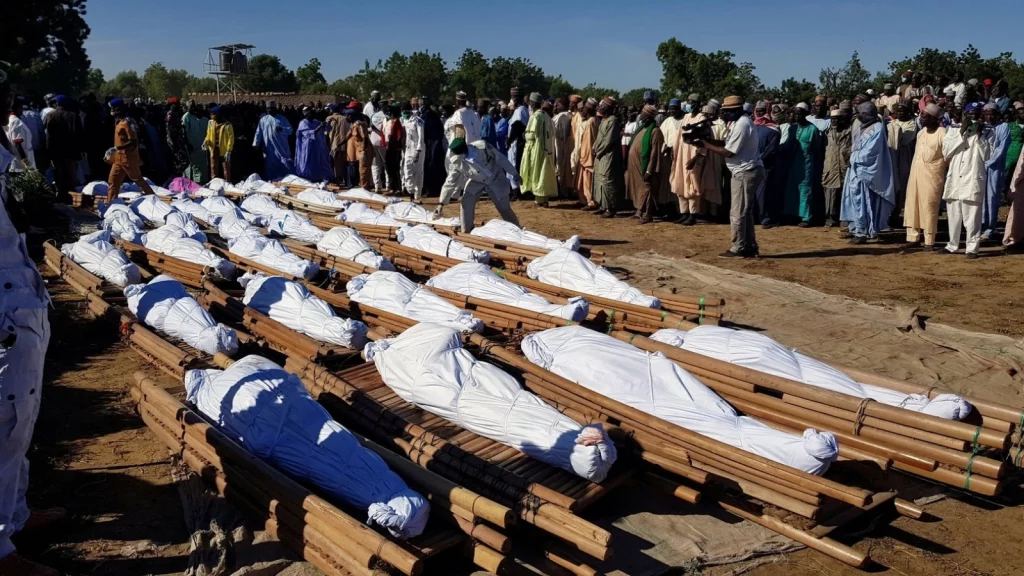
    To be fair, Nigeria has been dealing with terrorism in the North for decades. Thousands of lives have been lost, and millions of people have been displaced. Then there is the farmer-herder conflict, especially in the North Central (Middle Belt) region, which keeps tearing communities apart.

    But what is really behind these conflicts? And do they actually prove that Christians are being specifically targeted?
    A history of violence

    The religious terrorism of terror groups in Nigeria’s North is a complicated issue with deep historical roots. Analysts trace it back to unresolved resentments from the carving up of territory and the work of British missionaries during the colonial era.

    Since then, different groups have popped up preaching an extreme form of Islam that rejects all Western influence. These groups are usually started and led by charismatic men with deeply conservative religious views.

    There was Muhammad Marwa’s Maitatsine in the 1970s, then Mohammed Yusuf’s Boko Haram, which has evolved, splintered and had different leaders over time.

    These leaders might genuinely believe in their doctrine, and many of their followers do too. But to really understand the nature of the violence in Nigeria, you have to look at how these groups recruit.

    Get More Zikoko Goodness in Your Mail

    Subscribe to our newsletters and never miss any of the action

    The root of all evil

    In the 1970s, Marwa recruited most of his followers from poor members of the Kano population, especially the Almajirai. He drew them in by calling out the hypocrisy and flashy lifestyles of rich Northerners, who he said had been corrupted by Western influence. He tapped into a very real resentment that comes from wealth disparity.

    Almajiranci is a system of Islamic education in which children, usually from poor families, leave their families to study with an Islamic teacher. They survive on alms earned through begging.

    Years after Marwa led his followers in the Kano Riot of 1980, which killed over 4,000 people, including himself, Mohammed Yusuf showed up with a similar tactic.

    Yusuf opened a school in his hometown in Yobe state, where poor families enrolled their children. This became a recruiting ground for Boko Haram members from the impoverished and alienated Northern population. He established micro-financing programs to loan small amounts of money to individuals, which created a large following of loyal youths for him.

    It is the same pattern we are seeing now with the terror group known as Lukarawas, which burst onto the scene in early 2025, offering ₦1 million to new recruits as part of their recruitment drive.

    This trend has played out in other parts of the country. The South has seen violence from armed groups in the Niger Delta, and the East from secessionists. Both are driven by feelings of economic and political dissatisfaction. People feel the government is not looking out for them, so they lash out.

    Nigeria is a very poor country with a shocking wealth disparity. The poor are facing actual starvation, while the rich are loud and proud with their wealth. That is always a recipe for unrest.

    Drought and a rain of bullets

    Truthfully, the violence has been creeping further south for a while now. And as it moves from the majority-Muslim populations of the North to the majority-Christian populations in the South, it is getting a lot more coverage, with some communities alleging ethnic targeting. But the violence has more to do with climate change than religion or ethnicity.

    The nomadic herdsmen of the Fulani ethnic group are being pushed further south by changing climate conditions. This has led to more clashes with the farming communities in those regions. The easy access to weapons—thanks to the terrorist conflict in the North and Nigeria’s loose borders—makes these clashes deadlier.

    Niger, Benue, Plateau, and recently Edo state have been major flashpoints. But farmer-herder clashes have also been reported as far south as Enugu, Delta and Bayelsa.

    Sadly, the cycle of violence has gone on for so long that it has taken on a more bigoted tone. An “us versus them” mindset. You can see this in the recent burning of a group of Hausa travellers by youths in Edo State.

    But we must not lose sight of the real reasons behind these conflicts: scarce land resources made even scarcer by rapid climate change.

    Cho cho cho! Ted, show working

    After his initial post on October 3, Senator Ted Cruz made another post on October 7, claiming that 50,000 Christians had been killed since 2009. He did not provide any source for these numbers.

    The numbers of casualties from the violence vary with sources with different sources claiming vastly different numbers. Also, there is an unfortunate trend in media coverage, especially in the west, is the underreporting of Muslim victimisation.

    A 2020 Oxford Journal of Communication study which analysed Western media coverage of Boko Haram attacks in Nigeria found that Muslim victims received significantly less coverage than Christian victims.

    Still, a 2014 African Studies Centre report estimated that two out of every three Nigerians who died in the conflict with Boko Haram were Muslim.

    In 2021, the United Nations Development Programme (UNDP) reported that 35,000 people had been directly killed by terrorist activity in the North East (specifically Borno, Adamawa and Yobe), all Muslim dominated areas.

    The report estimated there were around 315,000 more deaths due to indirect factors such as lack of food and other resources caused by the conflict. So, a total count of around 350,000 deaths due to the conflict between 2009 and 2020.

    The report also projected that by 2025, the death toll would have risen to around 48,000 direct deaths and 674,000 indirect deaths.

    We are all targets

    An important point about the Boko Haram insurgency that is often left out of media reporting is the deliberate targeting of Muslims. So let us talk about the concept of takfir.

    Takfir is the excommunication or declaring of a Muslim as an apostate, which is punishable by death.

    The concept is used by Islamic terrorist groups as justification not just to discount the deaths of Muslims due to their actions, but also as justification for specifically targeting them. Boko Haram is a takfiri jihadist movement.

    Abubakar Shekau, the leader of the group from 2009 until his death in 2021, was quoted as saying, “Even if a woman is praying and fasting, once she engages in democracy, I can capture her in a battle.”

    Any Muslim who is not an active member of the group is considered an “apostate”, and for members of the group, it is not just acceptable to kill them, it is a duty.

    No matter your religion, to fanatic terrorists, we are all targets.

    Why now?

    They say not to look a gift horse in the mouth, but we are not sure that saying makes sense here. In this situation, it is very important to ask, “Why now?” Why the sudden interest from the US government at this particular time? And why is it coming from the right wing of American politics?

    Senator Ted Cruz’s first post on the issue came on October 3, 2025, just a little over a week after Vice President Kashim Shettima told the UN General Assembly that Nigeria supports a two-state solution in the Israel-Palestine conflict.

    It is easy to see how pro-Israel voices might try to stoke Islamophobic sentiments in Nigeria to distract us from rightly empathising with the majority muslim population of Palestine. 

    Senator Ted Cruz is a fierce supporter of Israel’s interests. He receives campaign funding from the American Israel Public Affairs Committee (AIPAC), a pro-Israel political lobby organisation.

    It looks like this particular gift horse has Israel lobby money in its mouth.

    All I want to say is…

    The reason we are so tempted to quote the King of Pop himself is because the attitudes towards insecurity in Nigeria give us very little hope that this new concern is coming from a good place.

    In 2014, the US refused to help Nigeria fight Boko Haram, citing human rights violations by the Nigerian military. Then, on October 26, 2020, a US citizen was kidnapped at the border with Niger and held in Sokoto State. Five days later, US special forces rescued him with zero casualties.

    So we have to ask: why has a country with the ability to carry out such a successful mission on Nigerian soil not offered more help earlier in the conflict?

    In an X post, Cruz claimed to know the masterminds of the so-called Christian genocide. He wrote, “The United States knows who those people are, and I intend to hold them accountable.”

    Again, we ask, “Why now?” How long has the US known the masterminds behind Nigeria’s violence? And why is it only after Nigeria has spoken against US and Israeli interests that Senator Cruz has decided to act?

    In the words of Michael Jackson: “They do not really care about us.”

    Following Ted Cruz’s lead, United States House of Congress member Riley Moore has called on the US government to sanction Nigeria over what he called “systematic persecution and slaughter of Christians.”

    He asked for Nigeria to be declared a Country of Particular Concern (CPC) so the US can stop all sales of weapons and technical support to Nigeria. The irony of criticising the Nigerian government’s inability to protect its citizens by taking away even more of that ability.

    The Nigerian military is not doing enough, but surely, when we take away their guns, they will finally defeat the militants.

    We are not pawns

    Nigerians must not allow themselves to be used as pawns in the US propaganda war. To these US politicians—who are far removed from the conflicts they stir up, whether in Gaza or Maiduguri—it might all feel like a game. But it is not a game to us, the people who live through the violence and its effects.

    The stakes are too high for us to be dragged into a simplistic and bigoted version of a very complex issue. The genocide of Christians that Ted Cruz and his people talk about simply does not exist. The numbers do not support it. Saying otherwise ignores the countless Muslim lives that have also been lost.

    What is true is that Nigerians, Muslims and Christians included, are being killed and displaced in huge numbers. And that is a problem that deserves our full attention until it is solved. But it can only be solved by working together, not by tearing ourselves apart along religious or ethnic lines.

    How do we fix it?

    A United States Institute of Peace report from 2014, “Why Do Youth Join Boko Haram?” listed the causes of the insurgency as “poverty, unemployment, illiteracy, and weak family structures.”

    To weaken these armed groups, it recommended that the Nigerian government “strengthen education, job training, and job creation programmes; design robust programmes to aid destitute children; promote peace education; and embark on an anti-corruption campaign.”

    The report concluded that fixing these issues would greatly reduce the strength of the insurgency or even wipe it out completely.

    As a people, we need to come together and choose leaders who understand these problems and know how to solve them. That means getting involved in politics and using our democratic tools. Get your PVCs and vote!

    What you can do right now is not let yourself be used to spread harmful propaganda. Do not share or repost those narratives on any platform. Instead, post messages that unite us, and share well-researched data, facts and figures that expose the lies.

    Most importantly, we need to realise that our solutions are here, at home. The US is not coming to rescue us. We have to save ourselves.


    Talk to us hereIf you have had any experience when Nigeria’s systems made life harder or unexpectedly easier, we want to hear about it.


    Click here to see what other people are saying about this article on Instagram

    [ad]

  • Love Life is a Zikoko weekly series about love, relationships, situationships, entanglements and everything in between.

    The subjects of this week’s Love Life, Musa* (61) and Abike* (52), are pastors who’ve been married for 24 years. They discuss being drawn to each other because of their service to the church and how he proposed before they even started dating. 

    How did you two meet?

    Abike: We met in church. I joined in 1993, and he joined two years later. 

    Musa: She was a choir mistress at the time. I joined as a Sunday school teacher and interpreter for the church founder. We were both evangelists and were often paired for evangelical missions. 

    She was still a student when I joined, but I was done with school. Her school was in a different state, so we only saw each other when she came back for long holidays. 

    What made you decide to start dating? 

    Musa:  When I realised I was drawn to her, I decided to ask our pastor and his wife to join us in prayer. We didn’t start dating until I got the go-ahead from our pastor.

    We’ve been taught that when you pray for a life partner, God gives you a reading or shows you the person. You don’t meet the person directly. There’s a Yoruba adage that says, “What an elder sees while seated, the young ones cannot see even if they climbed a two-storey building”.

    After the prayer, the pastor and his wife told me I could propose to her. When I did, she asked for some time to pray about it. 

    Abike: Although I was done with school, I was worried about our financial situation because the money we were earning wasn’t a lot. But when I prayed about it, God led me to Psalm 37:19, and I got my confirmation. 

    Musa: A couple of weeks later, I asked her if she’s made a decision, she told me yes. 

    RELATED: Love Life: I Went to Her House Every Day for a Whole Year

    So you proposed marriage from the jump? 

    Musa: Yes. After I proposed, we dated for over a year before we got married in 1999. We were both very advanced in age. She was 29, and I was 37, so there was no need to waste time. Plus, we’re both committed to the work of God. I knew I couldn’t pursue anything with someone who isn’t as dedicated to God’s work as I am. 

    Our spiritual life was the major factor that really drew us together. The combined love for things of the kingdom was too strong to ignore. 

    Abike: He handled the things of God with a certain passion that really made me interested in him. 

    Musa: Our spiritual parents had a hand in our relationship from the very beginning. Even our brothers and sisters in the church didn’t object to the union. Our biological parents were also in support of us coming together as husband and wife. I honestly believe we are divine partners. That she is the will of the Lord in my life. 

    Abike: I think so too because there’s a certain peace that comes with him.  Not to say we never had issues, but when we did, we prayed on any and every mountain. 

    What kind of issues? 

    Musa: First, the money we were earning at our respective jobs wasn’t a lot, but we thank God for small provisions like bonuses and salary increases. 

    Abike: Another of such issues is that I’m not a very easy person to control. You can’t just tell me to sit there and obey without trying to convince me. Sometimes, he’d make a decision without discussing it with me and expect me to just go ahead with it. That’s not how I work. Now, he knows better than to just impose decisions on me. He’s also more gentle than me. When he’s annoyed, he may not say anything, but me? You’ll see it all over my face. 

    As time went on, we began to understand each other better. Now, if there are any issues, we settle them before we go to bed. If we can’t, we talk about it during our morning devotion.  

    RELATED: Love Life: We Didn’t Need Phones, We Had Love

    And you’ve been doing this for 24 years? 

    Musa: Yes, we have, and it’s all been by the grace of God. God is the answer to every loving and peaceful home. Except the Lord builds the house, the labourers work in vain. The secret to being able to last this long in marital bliss is God. 

    Abike: There’s also the love we have for one another. It allows us to be patient and persevere. 

    On a scale of 1-10, how will you rate your love life? 

    Musa: An 8 because I believe we’ve just started. As long as we live it, it’ll continue to grow more and increase on a daily basis till eternity. 
    Abike: I agree. Every day, it keeps getting better by His grace.

    RELATED: Love Life: We Found Out We Have Chemistry in a Chemistry Lab

  • We’ve advised you so many times to stop sinning. But since you won’t listen just take this quiz so you can find out where you’ll be when the rapture comes.

  • There’s a balancing act that’s necessary in the politics of a country as diverse as Nigeria. It’s the reason behind written codes like the federal character principle in the constitution and unwritten codes like the controversial zoning of political offices. Many Nigerians agree that balance is important to satisfy as many groups as possible.

    But Bola Tinubu isn’t many Nigerians — he’s even shipping a Muslim-Muslim ticket for the 2023 presidential election. The All Progressives Congress (APC) candidate caused a stir when he announced former Borno State governor, Kashim Shettima, as his running mate. 

    Controversy over Tinubu's catholic bishops

    A presidential ticket in Nigeria should typically have one northerner and one southerner filling the slots for president and vice president. It also helps that one of them is Christian and the other one is Muslim — sorry to the traditionalists and atheists who have zero representation in these permutations.

    Tinubu’s departure from this balanced convention has earned him heat from Christian organisations, the opposition and even members of his own party. But because he still needs balance in public perception of his ambition, he’s shopping for prominent Christian support. There was even a made-up story of endorsement from big hitters like Pastor Enoch Adeboye that was later debunked. 

    But what happens when you can’t secure the Christian endorsement you desperately need to boost your chances? Well, you get as creative and dramatic as possible.

    Tinubu’s Red Wedding

    When Tinubu officially unveiled Shettima as his running mate at a ceremony on July 20th, 2022, red flags went up all over the place.

    Controversy over Tinubu's catholic bishops

    Some of the invited guests at the ceremony immediately drew attention for wearing outfits that suggested they were Catholic bishops. Their presence immediately sent up red flags online as it was considered an endorsement of Tinubu’s controversial ticket.

    The only problem was no one seemed to recognise them as Christian leaders of any sort. Nigerians were naturally curious about where they came from.

    The improper manner some of the “bishops” were dressed suggested they’d only been Catholic bishops for like 30 minutes. It almost felt like they arrived at the venue in their everyday clothes and changed into their wrongly-themed and badly-fit Catholic outfits at the venue.

    Journalists at the event were eager to interview them but the “bishops” weren’t feeling very chatty. They maintained a wall of silence and kept waving off invasive questions like, “May we meet you?”, “What’s your name?” and “What’s the name of your church?”

    Catholic bishops didn't talk to press

    The only person on the team that agreed to speak to a journalist identified himself as Prince. He also introduced himself as the president of the “Muslim and Christian Love Foundation” — which isn’t suspicious at all. 

    Did the church say Amen?

    The Catholic Church immediately announced that it didn’t send any representatives to the event. The church described the “bishops” that showed up there as “imposters” based on the way they dressed and conducted themselves. 

    The Christian Association of Nigeria (CAN) also described the “bishops” as hired mechanics who were given clerical garments. CAN official, Rev. Joseph John Hayab, said it best when he described the whole situation as “another Nollywood movie”. 

    It didn’t help their case that some of the “bishops” were caught on video changing into regular clothes after the show was over.

    Who are these people?

    The Tinubu campaign has assured everyone that the “bishops” at the event aren’t mechanics or yam sellers as everyone suspects. According to the campaign team, the “bishops” are just not big names in Christian circles yet.

    Since he’s struggled to secure the endorsement of A-list clergymen not named Tunde Bakare, Nigerians are supposed to believe Tinubu went to scrap the bottom of the pot for upcoming bishops.

    As it stands, no one can positively identify many of these “bishops”. But we found Prince and can confirm he’s sha a pastor of a church somewhere in Abuja:

    Controversy over Tinubu's catholic bishops

    But he’s also an APC party man:

    The bishop episode has further stoked anger about Tinubu’s disrespect for Nigeria’s huge Christian community. His campaign may be able put the scandal to rest by producing a list of names of the “bishops” and the addresses of their churches. But we continue to wait.

    Or, since Shettima himself gave a special shoutout to the “30 bishops” during his speech, maybe he can help with that list.


    ALSO READ: The 2023 Presidential Campaign Promises We Already Find Laughable


  • How much do you actually read your Bible? We’ll catch you here:

  • This week’s What She Said is Koromone Koroye, a 30-year-old Nigerian woman. She talks about attending Pentecostal churches when growing up because of her radical, religious father; her experiences with Nigerian Christian communities and her relationship with God.

    You have the floor.

    In my first phase of spirituality, my relationship with church was connected to my parents. My mum was a Christian, but my dad wasn’t interested. Then later, he became a Christian, and we moved from Household of God to Mountain of Fire and Miracle Ministries (MFM) — both pentecostal churches. When you are a Nigerian child and your parents are Christians, you go to church until you’re at the age where they can’t control you anymore.

    Why did your dad become a Christian?

    He had a radical experience. I was still a baby, but my mum told me the story. He was sick, hospitalised and not getting better. At that time he worked at Citibank, and two of his colleagues who were pastors prayed for him. Then my dad had a vision where he saw someone dressed in white robes performing surgery on him. When he woke up from the vision, he got better. 

    Any idea why they moved to MFM?

    I think, after his healing experience, my dad was like, “Oh my goodness. I need a church that can match my level of radicalness.” Whatever he saw at MFM spoke to this want. 

    He also told the pastors who prayed for him about his experience. And I think people who heard the testimony told him he had to take God seriously so he wouldn’t fall into the Devil’s trap again.

    There wasn’t anything wrong with that, but it went a bit far. My siblings and I thought there was something off about the church. Once we grew older, we had questions about some practices. Like, why were there so many church programmes and fasting programmes?

    Were there particular ways these practices affected you?

    One time, we had to fast. We would start fasting at 6 a.m. and break at 6 p.m. — we were kids going to school. On the last day of the fast, which was Friday, we had to do a dry fast from the day before to break Friday afternoon at church.

    Before they let us break our fast, we did this crazy prayer. They passed around black nylon bags and were like, “We’re going to pray now. You’re going to start coughing everything out.”

    Coughing what?

    I don’t know. All around me, kids were just coughing. My siblings and I held our nylon bags, confused. We were the only ones not coughing, and we didn’t want them to think we were possessed. So we joined them.

    We also had a lot of routines. Every first Saturday of the month, we’d go to Prayer City of Ibadan expressway to pray for three, four hours while fasting. Imagine being a child growing up in this environment where every first Saturday, you had to do this awful trip to go pray prayers you don’t even connect with. And if you didn’t pray, they’d ask you what was wrong with you.

    What changed?

    Just before I went to college, at 15, my older brother rebelled. He decided he wasn’t going to our parents’ church anymore. He discovered “This Present House”, a church at the end of Freedom Way in Lekki, and took us there. A lot of us were young. We would sit in a circle and the young pastor would talk to us about real stuff and ask us questions. I loved it, but I still came home to super religious parents, so stuff he said about God was not connecting. I thought, “Where is the fire prayer?”

    This disconnect continued until I got into college in the US. There, I stopped going to church. I believed in God, but not that Jesus was the Lord and Saviour. Sometimes I’d find myself talking to God about stupid things I did.

    When I was done with school and started working, I moved to an area that was a black community, and I was introduced to the Baptist church. In Baptist churches, there’s a lot of clapping and dancing — it was so pentecostal but in a different way. There, I realised there is something called the Holy Spirit. These guys would know things about you and pray over you concerning those things and I’d be like, whoa, what’s this?

    My experience there led me to do some research. As I read the Bible, my relationship with God grew. Nobody “led” me to Christ. I just found myself being like, “This makes sense and I think I learnt it wrong for a long time.”

    What She Said

    Did this change when you moved back to Nigeria?

    When I moved back to Nigeria, I decided to visit This Present House. This time, they now had a church for millennials and Gen Zs called The Waterbrook Church (TWB). My first Sunday there, I was like, “Oh my God, this is where I belong.” It was like a grown-up version of what we had before. I fell in love with the church, the people, and I threw myself in. I would attend services and prayer meetings. At some point, even my parents noticed.

    TWB introduced me to Christian communities and how good they could be when done right. Unfortunately, they didn’t train us well enough. They made people pastors before they were ready, and as a result, things got corrupt — ego and competition to be better than other churches got in the way. It stopped being about fellowship and became about how many people can come. So I slowly began to detach.

    I’d space out during meetings. I lost that love I had. A lot of things happened afterwards, inappropriate relationships, drama… It was crazy.

    That sounds messy.

    It was. And then my dad passed.

    Then I realised that the whole “community” they talked about wasn’t real because out of about 20 to 30 people I used to pray with, only one person regularly checked up on me.

    That’s awful.

    I’d never forget: my dad passed on a Sunday morning at 1 a.m. I sent a text to three of my pastors. I went to church, people sent in condolences, and after that day, I didn’t see them again. So many hurtful things happened after my dad died and I was looking to my church community to hold me up and they did not. Between 2017 and 2019, I lost my love for life. 

    I’m sorry.

    It was really crazy. Because my first contact with Jesus Christ was through people, I disconnected when they failed me.

    And then what changed?

    In 2020, I saw this sponsored post on Instagram about an 8-week intensive discipleship course on operating with the gift of the spirit. I was interested. When I saw eight weeks, I was like, “Yes, I love a challenge.”

    When I signed up, I told God, “If this doesn’t work, I am not interested in church again.” I would be fine with just reading my Bible and praying. On the first day, the teacher said “I’m not here to pastor or baby you. Take this course as you would a school course.” He asked why we signed up, and I told them I was there because I was bored with the routine. I thought there was more to God and Nigerian Christians were not going about it the right way. I told them I was reading the Bible and not seeing the actions being replicated by Christians. And if the class didn’t work, I would tell them bye-bye. They laughed.

    Subscribe to our HER newsletter for more stories about African women and how they navigate life.

    The first week, we read three books, answered questions and did a treasure hunt. A treasure hunt meant we prayed to receive clues of words of knowledge, which are pieces of information that you know about someone that you would not have known if they didn’t tell you. I was like, not bad.

    By the third week, I was like, “Yo, things are happening.” I was seeing, hearing things. People were calling me saying, “Oh my goodness, you’re so prophetic. You said this thing and it was true.” The course was so intense. We were reading these referred books, practising what we read, having meetings during the week and praying a lot.

    In this phase of my spirituality, I saw God as God the Father, the Son and the Holy Spirit. This was before the pandemic, so we would go out, pray and lay hands on people, do assignments, then meet on Saturdays for four, five hours, crazy. The best part was I was surrounded by people who were as radical as I was — but not MFM kind of radical — it was pure love for God; we did not like church. But this changed for me.

    The course ended in March 2020, and a month after, the dean reached out to me about a fellowship he was part of. He asked if I wanted to join and I did. Slowly, I got invested. They had this prayer call at 3 a.m., and the day I joined, the call lasted four hours. Halfway through May, they introduced a prayer watch that included meeting four times a day. Because I’m a writer, I was assigned as a scribe. My job was pretty much taking down minutes as prayer points, prayer requests, etc.

    Because I volunteered to do this, people started paying attention to me — they would even ask for my opinion of stuff. Before I knew it, I was part of the community. In the beginning, I was like, “I don’t trust you guys. I don’t know yall o.” But they were relentless.

    Now, I’m in this place where I’m a part of a community. I still don’t go to church, but my relationship with God is special. I guard it jealously; I do not allow people taint my understanding of God.

    Sweet. I’m curious about how your parents’ relationship with Christianity metamorphosed alongside yours.

    Something interesting happened with my dad. Three years before he passed, we noticed he became lax with church services. Some Sundays, I’d be off to church and he just be in the living room. It was so weird, but we ignored it.

    At some point, he stopped completely. No more prayers; not even at home. I found out later he had given a lot of money to the parish for some building to be done. Since he worked in banking, they also needed his financial advice and he supplied this. But when he needed help with some prayers, they turned him down rudely. He was very hurt by that because he had given his time and finance to the church.

    My mum kept going, but after my dad died, she went back to Household of God. Her reason was that the following year when we wanted to do an anniversary service of his death at the church — which my father also helped build — they said no. They refused because we didn’t “remember them” after the funeral. That was the last straw for my mum; she was tired of religious protocol and probably wanted her freedom to worship God without rules and rigid doctrine.

    For more stories like this, check out our #WhatSheSaid and for more women like content, click here

  • If you grew up in a Christian home, you know some songs by default. We made this quiz to test how many Nigerian praise and worship songs you could still remember.

    11 Quizzes That’ll Separate The Ajepakos From The Ajebutters

    Are you an ajepako or an ajebutter? Take these quizzes.

  • If you grew up Christian in Nigeria, then you definitely have memories of children’s church. From the snacks that were always guaranteed to having to wait for your parents to pick you, this post will take you right back to those simpler times.

    1. How you dress for church when your mother picks out your clothes:

    Chai! See my life.

    2. When your parents drop you and you see your noise-making squad.

    YESSS!!!

    3. That newcomer that doesn’t want to leave their parents and come to children’s church:

    See this one.

    4. When you finally graduate from the first bible to the second bible:

    As a big boy.

    5. When you use your offering money to buy ice-cream from that seller at the gate.

    God, forgive me oh.

    6. You and the rest of the children’s choir, singing in adult church like:

    They will sha clap for us.

    7. When you’re the first child to read the scripture during ‘draw your sword’.

    WINNING!

    8. Testimony time in children’s church be like:

    What else na?

    9. When all the children have to stay in the adult’s church for a special service.

    NOOO!!!

    10. The children’s church choreography starter pack:

    Still don’t know what the gloves were for.

    11. When your teacher picks you to recite the memory verse for the day.

    Hay God!

    12. When you see them bringing out biscuits and capri-sonne after service.

    The best.

    13. When you’re already too old but you don’t want to leave children’s church.

    I’m not ready, biko.

    14. You, when children’s church closes service before adult’s church.

    You people should share the grace na.

    15. When your friends have gone and you’re still waiting for your parents to come and pick you.

    You know your parents are greeting the whole church.

  • 1. How your parents come to wake you up in the morning:

    You people should chill, biko.

    2. When you open your eyes and it’s still pitch black outside.

    Hay God! What time is it?

    3. When your whole family is waiting for you to lead opening prayer.

    Why me na?

    4. When your mother decides to lead praise & worship, so you know you will clap tire.

    Get ready for at least 10 songs.

    5. You, trying your best to not fall asleep.

    The struggle is real.

    6. When your mother starts using what you did during the week to preach.

    Sub me jeje.

    7. Your father, when he hears you and your siblings gisting.

    We are sorry, sir.

    8. When your parents turn the devotion into a full-blown Sunday service.

    Kai!

    9. Your parents, when they catch you dozing off:

    You are now possessed, abi?

    10. When the devotion was meant to last 30 minutes and 1 hour has already passed.

    Somebody save me.

    11. When the person that is meant to lead closing prayer starts off with another song.

    How is it doing you?

    12. When your mother still prays right after you just lead closing prayers.

    Ah! You don’t trust my own prayer to reach God?

    13. When you think it’s over, then this song restarts it.

  • 1. When you finally agree to follow your friend to their church and you’re enjoying the service.

    YES LORD!

    2. Then you now hear “if you’re worshiping with us for the first-time…”

    Hay God!

    3. How your friend looks at you when you refuse to raise your hand:

    Will you get up, my friend.

    4. When you finally stand up and the whole church turns to look at you like:

    Fresh meat.

    5. You, when they start singing “you are welcome in the name of the Lord…”

    Well, this is awkward.

    6. How all the old church aunties stand up to come and welcome you:

    By force touching and hugging.

    7. When they tell you to pack your bible and move to the front of the church.

    Chai! What is it?

    8. When they give you first-timers card to fill and you see space for phone number.

    You will now be sending me text up and down like MTN.

    9. You, waiting for the whole service to just do and finish:

    JUST END.

    10. When the service ends and you hear “all the first-timers please wait behind.”

    Has it not finished?

    11. When you’re expecting jollof rice but they give you CD of the pastor’s message.

    Is this the refreshment?

    12. You, when the welcoming unit asks “can we visit you sometime?”

    Is it like that they used to visit?

    13. When they start telling you about all their mid-week services.

    It’s not me and you people oh.

    14. When you’re leaving and they ask “will we be seeing you again?”

    If the spirit leads, my brother.