• On the morning of December 22, 2023, Wizkid released a short EP titled S2 (Soundman Vol. 2), a follow-up to Soundman Vol. 1. Two days earlier, on Instagram, he posted an album artwork out of the blues, with the caption “See you on Friday”, throwing fans into a frenzy. 

    S2 is his first release since More Love, Less Ego in 2022. Coming in the Christmas season, just like Soundman Vol. 1 which dropped suddenly on December 6, 2019, Big Wiz has given us four new songs to rinse and repeat as we face a new year head on.

    S2 takes on Amapiano while flexing Wizzy’s usual Afrobeats and Dancehall sound, achieving a balance between the low and mid tempo Made In Lagos and the thematic cohesion of More Love, Less Ego.

    On the rhythmic rush of slapping log drums and meshed shakers of Ololufe, Wizkid confesses love to his interest. What’s spellbinding is the gentle delivery and verse exchange between Wiz and Wande Coal, which we haven’t got enough of since their collab on For You off Superstar (2010). The P.Priime-produced jam is a modern love story that somehow emphasises on sexual pleasure. It has all the recipes to be great but sounds more in-the-moment than intentional.

    Diamond is an assortment of self-reflection, hedonism, smug brags and luxury that rubs in the face. Wizkid likens his tribulations and ensuing superstar lifestyle to his diamond accessories and the pressure they undergo. Life can be fleeting, but Wizkid has seen better days, and he remarks about that with, “Diamond no dey force himself to shine.” 

    All in all, Diamond takes a familiar Wizzy approach with a relatable story and production handled by P.Priime and Bigfish. It calls for slow dancing and glasses of wine.

    Energy plays next. Wizkid, in a superchilled mood, throws woman-worship into his verses, recognising in the hook that he has good and bad days like everyone else. But he keeps himself together with his vices: smoke and sexcapades. He runs through the song smoothly like a butter knife. Wizkid’s romance, soft-life formula and sexy melody never fail — they yield a bop in this song.

    S2 closes out with its best track, IDK, featuring Zlatan. TheElements’ production is lush, gets the head nodding and creates an aura of celebration. Big Wiz calls for a good time as a choir subtly backs him up. 

    Zlatan performs the second verse, the highlight of the EP. Zlatan raps about the luxury lifestyle, fair-weathered women and hustle, with a sprinkle of his animated ad lib and choral backup too. Afrobeats’ poster boy for hustle culture is a worthy guest artist. Wizkid’s writing on the other hand isn’t remarkable, but he continues to prove himself a melody molder.

    S2 is experimental and feels like a prelude to what Wizkid has cued up for his next project. He’s featured on Rexxie’s Abracadabra, Metro Boomin’s SPIDERMAN: ACROSS THE SPIDER-VERSE, Wande Coal’s Ebelebe and Don Toliver’s Slow Motion all year without a solo release.

    Wiz has also been on the road for most of the year. He took his music across international stages like Afronation Miami (May), The Other Stage at Glastonbury (June) and Rolling Loud Germany in July — the same month he filled the Tottenham Hotspur stadium in England. 

    Meanwhile, it’s been a bittersweet year for Wizkid. His mum passed away in August 2023. And his “More Love, Less Ego” Europe tour which was scheduled for October has been postponed till further notice.

    Despite that, on December 11, Wizkid posted about a ₦100 million giveaway on his IG story. Later that day, he appeared in Surulere, Lagos, and gave back to children in his community. 

    The same giving spirit has brought us S2. In 12 minutes, the four songs on the extended play cater to the majority of Wizkid’s fanbase. Diamonds is for dancehall lovers. Energy and IDK are for OG Afrobeats fans, and his Amapiano fans have a winner in Ololufe

    Overall, S2 is a decent project that offers a good time. Wizkid likes music, and he’s having fun with it.

  • It’s been almost three years since Nigerian singer and record producer, Augustine Miles Kelechukwu, FKA Tekno, tried to recapture the essence of “old romance” on his 2020 debut full-length release, Old Romance. The album came with a cover art that creatively alluded to Adam and Eve, but the music failed to express the classic love experience it was packaged to.

    The audience he was romancing gave his first album a cold reception, so it seems Tekno went back to the drawing board, took some time to rediscover his essence, before forging ahead again to produce another body of work.

    Tekno has kept a mostly low profile, releasing a slew of singles, features and his JINJA EP, but on September 1, 2023, he returned with his sophomore album, The More The Better. With production services from June Nawakii (Twice Shy and Flashing Lights), Taylor Ross and Tuzi (The More The Better, Regina and Can’t Chase. Fiokee produced King of Pop with DJ Coublon; the co-producer with Selebobo and Tekno on Lokation. Egar Boi made Peppermint, Permit and Borrow. Insane Chips is the guy who patterns Peace of Mind and Pocket beats. Ace producer Kriz Beats made Play

    Album art (Spotify)

    Once we clicked the play button, the unexpected sample of a classic song instantly grabbed our attention. On the opening track, Twice Shy, British singer-songwriter Dido’s vocals on Thank You spins on a piano chord, meshing into soft jagala drums and 808 bass with lyrics about triumphing over trials and tribulations. Famous for his love songs, has Tekno found a new direction to relaunch himself? After an unsuccessful debut that almost turned him into a has-been, Tekno preaches about staying positive and focused on all the hard work he puts into creating his art.

    Tekno borrows a line from African China’s Mr. President, with “Food no dey, water no dey”, but unlike the socio-politically conscious song, Twice Shy is the song of reassurance Nigerians need today. Inspired by the saying, “Once bitten, twice shy”, Tekno subtly suggests that his listeners mindfully focus on self instead of calling on and waiting for the Mr. Presidents who’ve neglected the masses since African China spoke up in 2000.

    Listen keenly and you’ll appreciate the effort that must’ve been put into scribing well-thought lines. Tekno has greatly improved himself. He gets into a feel-good groove on the titular track, The More The Better. Enjoyment is part and parcel of Nigerian culture. This is what Tekno melodiously articulates in simple rhymes on Tuzi’s mid-tempo afrobeats production with guitar chords that speak in highlife. Despite life’s challenges, man will still seek pleasure.

    Tekno’s voice has changed a bit since he suffered acid reflux and had surgery in 2019, but he pushed through that to produce soothing vocals with a laid-back delivery that runs throughout the album. 

    Cutting through, Flashing Lights, a slowed-down dancehall with resounding synths and harmonic background vocals, Tekno delivers one of the real jams on the album. It’s like an afrobeats version of singing-in-the-rain r&b — the type of song that makes you close your eyes to listen and then passionately praise your love interest while longing for physical intimacy.

    On Peppermint, we jump into the unique, party starter sound and style of Alhaji Tekno — pop-esque, fast-paced, slapping drums and repetitive lyrics. It’ll bang extra hard if he gets in African Chris Brown mode and performs a choreography whenever he decides to shoot the music video. 

    The Tekno party carries on into King of Pop, a musical breed of makossa and afrobeats. Hyped AF, Tekno gets the dance floor busy with his bright energy, owambe piano keys, body-jerking percussion, Fiokee’s guitar, a sample of Fela’s Shakara and adlibs reminiscent of Awilo Logomba. King of Pop is Tekno’s subtle reminder that he’s the best at making party jams when he wants to. This one is for a local setting like a bar with dull, multicoloured lights.

    Tekno tunes down the party to reflect on his Peace of Mind on the sixth track. Through emotive songwriting, he vaguely recounts his humble beginning and sings about patience, blessings and contentment. Generic as the lyrics may be, Tekno shows faith in this new body of work, he’s ready to seize the moment it’ll create for him and you can’t tell him shit. His delivery blends with the to-match afrobeats production from Insane Chips.

    Lokation has quelled log-drums and sparse guitar strings all over it, providing a lush medium for Tekno to ask about the whereabouts of a romance partner, as he shalayes about the love that’s got him hooked. He boasts that only kayamata can make him love like that. That can’t be healthy.

    In Pocket, Tekno slips back into party mode to spread his motivational message of enjoyment, positive vibes and financial freedom with fast tempo, infectious drum patterns and his usual playful interjections. Permit employs thumping log-drums, fiddling guitar strings and simple drumlines. He swings between flattery and committing to spending all his money on his love interest — all the afrobeats lamba. 

    On Borrow, Tekno switches up his vibe and delivery and enters a fresh zone within the confines of african percussion instruments. Tekno spices things up with a backup choir in the chorus, chanting “Borrow borrow”. With the basicest of lyrics, the song further preaches that personal contentment is key for happiness.

    On Regina, Tekno brings down the tempo again with konto drums and lush guitar touches to lay bare his romantic feelings, singing lines like “You be original, no substandard”. Biting off his early reggae-dancehall influence, Tekno spits it into the second verse, complemented by our emo boy, CKay — the only feature on the album — who says, “I like you way too much / E be like my brain dey touch.” Please, is this what love makes people feel?

    “Na play-play, na play-play, na play-play, we take reach where we dey,” is the leading statement on Play, before Tekno sings about all the nights he tearfully sought the face of God in prayers to make an evident success out of a bleak beginning. Throwing all his gratitude to sky daddy, a children’s choir aids his thanksgiving, but the best thing about this song is its introspection and subtle political statement.

    Tekno observes that everyone’s nonchalance has pushed Nigeria to its current sorry state. He takes from 2Face’s For Instance and African China’s Mr. President once more, while maintaining a mix that’ll slap as a political rally jam and a special number at church events.

    The album closes out with Can’t Chase in which he confesses that he’s too lazy to go through a talking stage or apply pressure to win the love of his life — an emotional song about having no emotions. It’s sweet and toxic, clearly his perspective on relationships. It’s whispering red flags as Tekno Miles melodiously rocks Tuzi’s afrobashment (AKA afroswing) instrumental.

    The More The Better is a thoroughly enjoyable album overall, an applaudable improvement from his last work. The brilliant sequence makes it a no-skip project for us. Doubling down on a refined version of his signature style, Tekno spices up the current afrobeats soundscape with a sprinkle of classic songs from Dido and Africa’s Fela, Awilo Logomba and African China. We only hope Tekno gives the album the proper marketing and promotion it deserves.

    According to popular belief, sophomore albums are cursed, but The More The Better breaks the jinx to become Tekno’s best body of work so far. Even the album art, which features a three-headed Tekno, symbolises the transcendental spirit of expanding beyond one’s personal limits, an idea that shines through this album and cements Tekno as a returning Afrobeats champion.

    Zikoko’s Burning Ram meat festival is coming soon. We can’t promise to bring Tekno, but you’ll stand a chance to win a live ram if you attend. Stay tuned.

  • Davido is an indisputable force when it comes to Nigerian music today. Since making a major splash in 2011 with the explosive Naeto C-assisted hit, Back When, he has cemented himself as a universal leader of new school Afrobeats, paving the way for a new generation, all while churning out back-to-back hits. 

    His last album, the 2020 closer, A Better Time, was responsible for the protest anthem, Fem, club bangers like The Best with Mayourkun and La La with Ckay, and international collaborations with Nas, Nicki Minaj and Lil Baby. His guest features have also made songs like Adekunle Gold’s High and Young Jonn’s Dada bigger hits than they would’ve been without him. 

    With over ten years in the game and multiple hits to his name, it’s still shocking that Davido has released only three albums: 2012’s Omo Baba Olowo: The Genesis; 2019’s A Good Time; and A Better Time. But to be fair, it’s not that shocking, because Nigerian artists avoid albums like a biblical plague. 

    Following the massive success of Wizkid’s 2011 debut album, Superstar, 2012 was immediately set aside as the year for another hotly anticipated debut, this time, Davido’s. The anticipation was warranted, though. At the time, Davido had already put out Back When, taken over clubs with Dami Duro and killed his guest feature on Saucekid’s Carolina

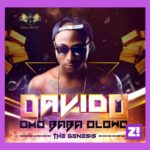
    Playing into the image the public had given him (and, to be fair, his reality), Davido named his 17-track debut album, Omo Baba Olowo: The Genesis, which means, “The child of a wealthy father.” But fans were less than thrilled with this mid body of work when the album eventually dropped. 

    RECOMMENDED: Which Nigerian Music Producer-Turned-Singer Surprised You the Most?

    To mark the album’s 10th anniversary this week, I’ve decided to revisit Davido’s musical firstborn to figure out what worked, what flopped and how it foretold the type of musician Davido is today. 

    The Breakdown

    If there’s one thing we know now, Davido is not one to back down from a fight or downplay his worth. The opening track and one of the album’s best songs, All Of You, finds him with the biggest shoulder pads you can find, singing about how he’s the best in the game. A bold statement for a 19-year-old dropping his first album. 

    For an album about being born into wealth, lyrics like “Back when I was broke yo” sound pretentious AF when Davido sings them on Back When. This doesn’t mean the song doesn’t slap, though, because it does. The first sign of a crack in the album comes up on New Skul Tinz with B-Red and Sina Rambo. Here, we find Davido and his crew trying and failing woefully to convince us they’re the next big thing. 

    The next five songs — except for EkuroVideo, Down, No Visa with Sina Rambo and Enter The Centre with B-Red, can only be described as noise with a sprinkle of Davido’s vocals (if we can call it that). These roughly-produced songs drown out his voice and show one of his biggest flaws at the time, weak songwriting.

    Ekuro is, however, a big moment for Davido to shine as he holds his own, singing about love — the song lowkey feels like the less than perfect older sibling to songs like Jowo, 1 Milli and Assurance

    With Davido currently standing as one of the kings of features, it’s surprising to see his album had five features from outside his label: Back When with Naeto C, Dollars In The Bank with Kay Switch, Feel Alright with Ice Prince, For You with 2Baba and Bless Me with May D. Feel Alright, Back When and Bless Me are tolerable, Dollars In The Bank fall flat because of its weak production, while For You fails to hit the mark for a song that has Davido and 2Baba. 

    Davido tries to hit high notes on Sade, but there’s only so much autotune can do. Thankfully, his vocals on songs like Stand Strong work as evidence that in this life, you have to try and try until you succeed. The album is rounded up with the twerk anthem Gbon Gbon, where Davido exchanges actual lyrics for an unknown language (or maybe it’s just gibberish). 

    Final Thoughts

    Debut albums are either the best or worst projects on an artist’s discography. Thankfully, for Davido, it’s the latter. Omo Baba Olowo: The Genesis was wild back then, and going back ten years later doesn’t make it any better. One thing it does, though, is show us just how much Davido has grown as an artist and collaborator. A feat not many of his colleagues can boast of. 

    To get the hit-making Davido we have today, we needed to experience the cringe Davido we had on this album. I’m grateful for that because it’s all about the journey in the end, and Davido’s has been nothing short of remarkable. 

    ALSO READ: Want to Feel Old? These Nigerian Albums Are Turning 10 in 2022


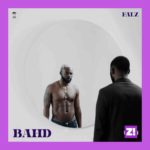
  • The last time Falz dropped an album, we hadn’t experienced a panini or the life-changing #EndSARS protests. It was 2019, Miss ‘Rona was still preparing for her tour, and all was relatively alright with the world. Back with a six-pack, Falz is ready to make a surprising statement with his new album, Bahd

    Considering 2019’s Moral Instruction and the significant role Falz played during the protests, you’d immediately think Bahd would be drenched in social justice anthems. Choosing the soft life instead, this album finds Falz in his most chill era yet, avoiding stress and being a baby boy. While we’re here for his obvious sonic growth and much-needed dive into escapism, we’re not sure everything slaps. 

    The Breakdown

    Bahd opens with the smooth and simple Another Me. Carried by a super seductive bass guitar, we’re also introduced to Falz doing his best Don Toliver impersonation (spoiler alert: it works). Another Me kicks things off early on, on a positive note, managing to blend both the nostalgia of 90s baby-making R&B and the mumble rap that kids on TikTok fuck with these days. Listening to the past and the future in one song is always welcome experience.

    Falz does well to deploy some of the album’s best tracks to the front in a five-song stretch. Another me is followed by All Night, the album’s first potential radio hit and a romantic bop that needs its video like yesterday. Tiwa Savage lends her in-demand vocals to Beautiful Sunflower, the album’s third track and first collaboration. It’s a cute song, but there isn’t a lot of meat on the track, which is slightly disappointing considering what both stars are capable of. 

    RECOMMENDED: Do Nigerian Music Albums Need to Be Cohesive?

    Parampe is the second standout track on the album and an obvious nod to the work of the Kutis, but without the gragra of a certain African Giant. It borrows from these icons without drowning out Falz’ identity in the process. Knee Down marks the first collaboration to make a statement, with Chike deep in his Nollywood “I will die for you” lover boy bag on the track’s chorus.

    These songs are unfortunately followed by the uninteresting Pull Up, which sounds like a 2017 Runtown or Mr. Eazi bonus track, and Gentleman, where Falz frustratingly does his best to make a song out of every rhyming word in the dictionary.  

    Highlife brothers, The Cavemen, help Falz find his groove again on Woman, before we’re introduced to Tender Love, which packs a tender punch. The last three songs are features, with Timaya and new Mavin signee Boy Spice making an appearance on the Duktor Sett-produced, Inside — a highlife “let’s groove” banger that works on it’s own, but fails to tie in with the overall production vibe of the album. 

    L.A.X and BNXN round up the album with Roger Milla and Ice Cream respectively. Roger Milla feels like an album filler, and for someone who’s last album had just nine tracks, this feels unnecessary.  BNXN continues his winning streak with the infectious line, “I scream, you scream, we scream for ice cream.”  What do you all know about being a lyricist? 

    Our Verdict

    Falz has built a reputation for making digestible rap with a pendulum that’s swung between conscious and overly playful. But with Bahd, we see the rapper leave both identities behind for something more laidback. He’s not out to make a major statement with this album, but we can’t complain. Not all the songs on Bahd are winners, but the ones that hit? They really hit.

    Highs: Another Me, All Night, Parampe, Knee Down, Woman, Inside and Ice Cream

    Lows: Pull Up, Gentleman and Roger Milla

    We don’t know: Beautiful Sunflower and Tender Love

    ALSO READ: Forget the Music, Why Is Everyone Still Obsessed With Naira Marley?

  • It’s been seven years since Davido dropped his debut album, Omo Baba Olowo, and a lot has changed for him since then. Not only has he found love and immense global success, but he’s also much more musically adept, and all that is clear on his sophomore album, A Good Time

    On the 17-track LP, Davido reaffirms that his boundless charisma is still his strongest asset. “I’m a shooting star in a blockbuster”, the afropop heavyweight declares on the strong album opener, “Intro”, and it’s an apt description for one of the genre’s brightest frontmen.

    Like the title suggests, the album is a feel-good release, designed to go down with very little effort. Davido doesn’t tackle any weighty themes, choosing, instead, to sing about the joys of being in love, with the most affecting of these tracks being the refreshingly calm “Get To You”.

    As for the featured acts, almost everyone delivers. Summer Walker, r&b’s newest treasure, steals the show on “D&G”; Naira Marley switches up his flow to interesting effect on the sultry “Sweet In The Middle”; and Dremo bodies Gunna and A Boogie Wit Da Hoodie on the delightful “Big Picture”.

    Speaking about the album, Davido said:

    A Good Time reflects on the ability to trust the timing of your life, enjoying the best moments & persevering through the worst ones.”

    Davido has always been a hitmaker at his core, and as expected, the album has a ton of tracks that would make easy hits if released as singles. Overall, A Good Time is a solid effort, brimming with infectious melodies and some much-needed positivity.

    Listen to A Good Time below:

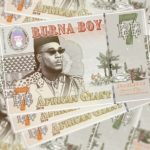
  • Burna Boy’s follow-up to his 2018 career-defining album “Outside” has arrived, four months after “Steel and Copper“, an intermediate release that placed his year in context. Just so you’re certain how significant his 7th body of work is, the album’s press release alludes to the belief that 7 is the number of perfection, “an auspicious sign from our gods that one is on the right life path.”

    Burna would be justified in thinking so. In the last 18 months, the 28-year old who opened his debut album, “L.I.F.E” by implying that his path was predesigned has put together the run to support those claims. When, days before his album’s release, Burna performed on Jimmy Kimmel’s show — a high profile set that many compared to Majek Fashek’s 1992 appearance on the David Letterman show —  it seemed like a logical next step, not the rare exotic showcase that African music is often presented as.

    For the first time in a decade, fans are acknowledging that Afropop’s long-standing duopoly, Wizkid and Davido has a third entrant. The truth is that the duopoly no longer exists.

    His response to the Coachella 2019 promotional fliers may have shot the ‘African Giant’ tag into infamy, but the multiple themes that dominate the album date further back to his earliest mixtape, “Burn Notice”.

    Burna Boy’s Coachella set also set off an inevitable conversation on how much African music needs the US market. If he felt any pressure to address those concerns, there is no evidence here.

    https://www.youtube.com/watch?v=BuMM9vv4Gt0

    “African Giant” sounds like an assertion of Burna’s belief in himself, the era that birthed his multiple tastes of the Nigerian experience, the cultures he has come to cross-pollinate and the continent he speaks for.

    Much of that is down to Burna’s own primary inspirations. Damini Ogulu has, in the last few months, given a contemporary twist to Fela’s militant afrobeat on three singles, “Ja Ara E“, “Anybody” and “Gbona“. The album’s title track follows the trend, but more so in theme than tone. “Tell them Africa don tire,” is an apt summation of the collective mood among the continent’s youth.

    Like Fela, Burna presents himself as a messiah – “so here comes the African Giant,” – even if he knows it will take more to save us. It closes with a sample of an Igbo folk song with lyrics, “Obudu Obelugo jim jim” that translate into: “The country is shaking.” This theme of Africa’s struggle, liberty and pride is strong through the album. 

    Wetin Man Go Do“, one of the album’s more sombre cuts, shrouds the perpetuity of the average Nigerian’s struggles for necessities in folksy guitars and Fela Kuti’s call-and-response delivery. “Dangote“, titled after Nigeria’s richest man, is a reminder that the paper chase never ends — something a large number of his listeners relate to in more survivalist terms. “Collateral Damage” sits on a jaunty beat that Burna uses to evoke a charged Fela Kuti and blatantly state several Nigerian truths. “My country problem pass Jesus” is a sharp comment in a society where religion has never delivered returns on the people’s devotion. 

    “Another Story”, one of the album’s best tracks, samples the opening words of Jide Olanrewaju’s acclaimed documentary “A History of Nigeria“. (The excerpt, which describes how the Royal Niger Company traded the area now known as Nigeria, has inspired a wave of interest so strong that many fans are now revisiting “Royal Niger Company” by rapper Jesse Jagz.) Buoyed by a stellar, descriptive verse by Ghanaian rapper, M.anifest, Burna interpolates other conscious songs: 2baba’s “E Be Like Say” and Original Stereoman’s street-pop hit, “E Dey Pain Me” to paint what is, in essence, an updated version of the same reality.

    Burna Boy’s 2018 album was described as a ‘fine lesson in mixing genres without making mud’, “African Giant” sums up what it means to be a Nigerian born in the 1990s, raised on different continents in the digital 2000s, and representing Africa in a globalised 2019. 

    These multiple perspectives (on life, culture and music) come across in the variety of sounds he manages to compress into one cohesive body of work. He’s schooled in the electronically-produced bashment and garage sounds of the UK, but Burna’s as comfortable on the live instruments of Ghanaian highlife and Afrobeat.

    It’s hard to remember the man who was first introduced to fanatics as a reggae hyphenate. On “African Giant”, Burna seems intent on further obscuring the lines between Afropop and the form of global pop music that has incorporated African melodies. If in doubt, listen to anything from Ed Sheeran’s “No. 6 Collaborations” EP to Beyonce’s “Lion King: The Gift”.

    Compared to the high-octane, genre-bending scale of “Outside”, “African Giant” may, at first listen, sound like a deliberately simple take on Afro-fusion. The latter is more atmospheric than its predecessor, and will sound more accessible to first-time Burna Boy listeners. That’s because Burna’s influences are more coherent and smoothened. There is little of the purposeful watering-down that other contemporary afropop ambassadors believe to be necessary. 

    He is as confident painting vivid love scenes in pidgin alongside UK R&B sweetheart, Jorja Smith on “Gum Body” as he is trading boastful bars on a menacing beat with Zlatan Ibile on “Killin Dem“. 

    On “Omo“, Burna goes back in time to give us a taste of the melodies that made “Smooth Sailing” a cult favorite, then introduces “Secret”, a futuristic reggae/R&B hybrid featuring Serani and Jeremih that asks lovers for utmost discretion.

    This Side“, his collaboration with YG is an unusual gem that sits smack between Lagos and the West Coast that the US rapper wears on his sleeve.

    Much of the album’s cohesion is courtesy of the featured artists – a motley crew ranging from a breakout Nigerian rapper to semi-retired world music icons. There are the men and women behind the scenes as well – Burna personally hailed the work of UMPG A&R, Sureeta Nayyar – and perhaps, most importantly, the producers. Hours before the album’s release, he also did a Twitter roll-call of the beatmakers who contributed – Nigerian producers, TMXO, GMK, Chopstix, BenJamz, Kel-P, Kleb Beatz as well as DJDS, Levi Lennox, Skrillex, Dre Skull and Supreme Young Stars.

    Thematic albums work best when the soundscape is crafted by one or a few producers. Burna himself has done this before; 2013’s “L.I.F.E” was helmed by producer Leriq to great effect. Here, the list is longer. But much credit should go to Kel-P, who is credited on 10 songs and has found a sweet spot between Burna’s various inclinations.

    Not all the collaborations stick. A Future & Burna Boy collab should be flames on paper, but when restricted to an afro-Carribean beat, the two don’t strike up synergy on “Show And Tell“.

    More than anything, “African Giant” is a triumph of self. In the days preceding its release, the “Outsiders” as Burna’s fans are known, made references to the early days of his career; days when everyone supposedly knew he would be this big, even if Burna also doubled as his own biggest problem.

    Perhaps there is something to be said here about fans and our entitlement to artists and their growth. Not many expected that the hyper-masculine singer who made an album wondering aloud about his place in the world could find himself enough to define a path for the next wave of Nigerian musicians.

    In the years since he had his concert cancelled over a court case, Burna Boy has opened up layers within his art that provide context for his person. On “African Giant”, he is at many times sensual (“Pull Up”,”Gum Body”), celebratory (“Omo”, “Anybody”), ponderous (“African Giant”, “Wetin Man Go Do”), introspective (“Destiny”) and militant (“Spiritual”, “Different”).

    The album hit its climax at two points. “Pull Up”, the album’s sixth single is followed by a supernal skit by Blaq Ryno that sounds more like panegyrics than a sketch. What follows is “Destiny”, an autobiographical song that could well be an update of “Where I Come From”. 

    Feel good, I ain’t gonna lie… They can take everything I have, but they can’t touch my destiny“, he sings. He’s come a long way from the days spent “standing on the corridors, dodging feds and the coroners.”

    For all of his troubles, it’s the first time Burna admitted he’s impressed at how his story’s unfolding. It’s a sharp shift from the fears of failure he expressed in the past, and provides fitting context for “Different“, the album’s most glorious moment. 

    Introduced with a brooding beat, Burna taps two heavyweights, Damian Marley and Angelique Kidjo for a song that is bound to make award nominations lists. “Different” is just that… different. In many ways, it also suggests Burna’s ascension into a class of greats. The PH-born singer reaches astonishing new heights trading monologues with Damian Marley on inequality and the confrontational prophets that these times require. 

    Four years ago, invoking Burna Boy in the same sentence as Damian Marley & Angelique Kidjo, or worse, as a socially-conscious freedom fighter would have been seen as hasty or disingenuous. Since he propelled himself to the forefront of conversations about Afropop’s global push, however, his belligerence has been translated into the form of hostile indifference it takes to absolve African music of the biases it encounters.

    The other crescendo comes at the end of the album. On “Spiritual”, Burna Boy takes on a simple Nigerian pop beat to address that transition. “When you start, them go yinmu” is a line that reiterates the bad press he got in his first few years, but Burna suggests that he’s lined up for a more special purpose than tabloid gossip and click-bait. 

    As the closing voice on the album, Bose Ogulu’s monologue portrays “African Giant” as a potential watershed moment in Africa’s music and culture. 

    The black world erupted in pride when Burna Boy’s mother/manager, first said “…the message from Burna I believe would be that every black person should please remember that you were African before anything else” as she received his 2019 BET Best International Act nod on his behalf .

    The “Afrobeats to the world” narrative is built on the belief that the world must accept African culture, first for commercial success, but mostly as some sort of validation. “African Giant” comes at a time when it’s never been better to be African. Numerous black artists are accepting their African roots, and re-establishing their ties to the motherland.

    Although he is often depicted as Nigeria’s best chance of ‘crossing over’, particularly in the US, Burna Boy has defined a different path for himself on “African Giant”. It is a statement-of-intent; that global appeal can be achieved without sacrificing the influences and experiences that make Africans and our culture distinct.

    In a world where movements of the oppressed clamour for validation to varying levels of success, Burna’s symbolic 7th body of work speaks to a continent’s place in the world – it is a thesis on why African pride should be our starting point.