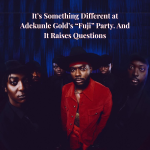
• Two years after Tequila Ever After, Adekunle Gold returns with his sixth album. Titled FUJI, it is his first release in full embrace of Fuji, a genre of Yoruba music birthed in the late 1960s, which he reveals is what he’s “meant to do.” It’s the first album he’s drawing attention to his royal heritage of the Kosoko kingdom.

    He digs into his family history. In homage to his forebearers, he returns to the palace and bows to pay respect to his king, the custodian of his ancestry. The throne accepts him like a true prince. Drummers with quick hands and tongues for chants and eulogy put him in a groove with their rhythms. All these are documented as part of the album rollout.

    Two minutes and twenty-four seconds short of a forty-minute listening time, this 15-track-long album opens impressively. It begins with a sample from Sakara musician Lefty Salami’s Oloye Eko album, which honours King Kosoko from the 1950s. The sample rings out: “Omo Oba ki jagun bi eru…T’Oba Oluwa lase”—meaning “a prince doesn’t fight wars like slaves…the will of God, the Supreme King, is final.” Then it fades into Adekunle Gold switching flows and singing of his transition from nothing to great. A peasant-prince now wines and dines with elites. A small fry now disturbs the deep blue sea. Hence, his new sobriquet “Big Fish” is also the title of the opening track.


    Subscribe to Zikoko Pop newsletter, The Feed, for the most important pop culture news


    He has wanted these moments all his life: magazine covers draped in gold, front row seats at international fashion shows. Although his politics have never been a public discourse, it tickles the ears to hear him sing specifically that he has never collected “Bourdillion (Tinubu’s) money.” He made his bones without a handout from any politician. His success did that for him. In realisation of that, and that success attracts success and so does influence, he emphatically rebukes, “I don’t wanna go, I don’t wanna go / I don’t wanna go back to poverty.” It’s money in Adekunle’s line of sight. And there’s no better way to keep cash flow than to innovate or creatively captivate what’s currently popular.

    Fuji has always influenced contemporary Nigerian music, dating back to LKT, and has had a particularly significant impact in the last four years. It’s the tail of 2025, and Adekunle Gold joins a growing roster of artists hybridising the culture and sound. Though his songwriting and sound gestures to a fusion of Afropop, Tungba, R&B and Amapiano, not Fuji in a purist’s approach or the neo-Fuji that’s common with the likes of LKT, Dekunle Fuji, Small Doctor, Olamide, Reminisce, Asake and Seyi Vibez. The look he presents, as seen on his curtain-call album art, is urban and gives no specific nod to Fuji. But a man can style himself as he likes, though on a closer look, it’s a vestige of his Mexican misadventure.

    “Don Corleone” is the second track, featuring shimming and repetitive ad-libs, as well as backup vocals from his wife, Simi. Like every non-Sicilian artist who has referenced Don Vito Corleone to project their strict and ruthless-when-necessary side in their music, Adekunle Gold likens himself to Mario Puzo’s classic The Godfather character. But don’t fret — AG Baby, as fondly called, still wants you to dance…though only if you’re a spender.


    READ NEXT: The 10 Greatest Fuji Music Albums of All Time


    With a tweak that encourages diligence and patience, “Bobo” continues his narrative that you’re noticed only if you’re rich, with features that carry emo-pop and street-pop sensibilities from Lojay and Shoday. “Coco Money” follows and plainly advises to stay out of his sight if money isn’t involved. 

    Now, love is in the air. “Believe”, the track that follows, is a serenade of a promising love, much like Bill Withers and Grover Washington Jr.’s “Just The Two of Us” (1980) — the song it samples. Here, he’s a young lover trying to keep his love youthful. Next, on “My Love Is The Same,” themes of family and sacrifice roll into a moment of fatherhood with his daughter, Adejare. He apologises for not being around to spend time together as much as he’d have loved to.

    The music switches back to prospective love in the 6lack-featured “Love Is An Action”, a title that reiterates the message of the sampled song, “What You Won’t Do For Love” (1978) by Bobby Caldwell.

    With the dots of American samples and Hollywood references on the album, followed by “Many People”, a Tungba-pop track that directly borrows from veteran Tungba-Gospel artist Yinka Ayefele’s song of the same title, the Fuji is yet to kick in. “Attack” with TkayMaidza, Cruel Santino, Mavo, the new generation lamba maestro, launches straight to a neon-light party where girls bring their friends to mingle. If anything, this song gives the youngsters more visibility than it reinvents Adekunle Gold.

    “Only God Can Save Me”, featuring Davido, finds rhythm in Amapiano and throws the two married singers into a confession and temptation with infidelity.

    Ten tracks in, it’s clear that the signalled Fuji is largely missing from the album’s sound, neither in the sample nor in the choice of featured artists. Instead, it vaguely hangs in his voice, tickling mostly the delivery of his choruses.

    Adekunle Gold says the album’s title carries a deeper meaning. “Fuji is bigger than music. It is Lagos, it’s street royalty, it’s our story, our hustle, our heritage turned global.” All these are valid, except for limiting Fuji to Lagos, but his album is nothing like the music and culture. It only pays tribute to the genre in name, not in approach, style, or sonic appeal. Presenting a certain thing and offering something entirely different is a spineless appropriation.

    This creates a fascinating cultural conundrum, especially now that African music genres move so fluidly around the world. If the name Fuji is used willfully, without an accurate context, won’t that enable listeners outside the culture to incorrectly assume the music is something else, rather than the existing, better-known Fuji genre?

    It’s noble that he’s shining a light on his inspirations. He even brought out Fuji music legends like Saheed Osupa, Taiye Currency, and Obesere at the Mainland Block Party, which he headlined in Lagos on October 5, 2025. But, interestingly, Fuji is only in his rollout, not in the music.

    Siriku “Barrister” Ayinde, the progenitor of Fuji music, blended Were, Sakara, Juju, Apala, Aro, Gudugudu and possibly  Highlife to create the sound. If this is the route Adekunle Gold is taking with Pop, R&B, Tungba and Amapiano, perhaps he should call it something different.


    Get More Zikoko Goodness in Your Mail

    Subscribe to our newsletters and never miss any of the action


    Anyway, the Afropop grooves on, but the eleventh track, “Lailo”, isn’t spectacular. It’s a reiteration of every saccharine lyric about love that you’ve heard from Adekunle since his magnum opus Afropop Vol. 1. On the soul-stirring “Simile”, which he wrote in 2019 after his father’s demise, he searches for an anchor to rest on, unwilling to be swept away by life’s fleeting tides. On this track, he brings back his band, 79th Element, and grabs assistance from Soweto Gospel Choir.

    In less than six minutes before he takes the final bow and drops the curtain on the album, “I’m Not Done”, with American pianist Robert Glasper touches on tenacity and longevity. “Obimo” ends the album. You can call it a bonus track.

    FUJI has been lauded by many as his best since Afropop Vol. 1, if not the top contender. But here’s an irony worth considering, as writer Ojo O observed in a recent Substack discussion: nothing on this Fuji-themed album is a strong option if brought next to Dammy Krane’s “Faleela”, or Seyi Vibez’s “Fuji Interlude”, or Falz’s “No Less.” Adekunle Gold did not refine the Juju-Tungba sound that came to him instinctively before grafting to a global sound. The result is a loss of musical grounding. He no longer has a centre to perform from with conviction, and his global experiments haven’t been as creatively rewarding as he often claims.

    Afropop Vol. 1 is a critical success because he took time to bring the listeners into his pop world-building. Ten singles in, and the audience was aware he was making a switch from the folksy sound.

    Post-Afropop, he began moving very fast, and the audience began to take the backseat. Adekunle Gold doesn’t give listeners enough time to love what he’s become before he splits himself into another thing.

    But maybe winning takes care of everything.

    Don’t get me wrong: six studio albums into a decade-long mainstream career is a serious discipline that deserves applause and more. And there’s no doubt that this is an enjoyable project that outranks many so far this year, in terms of quality and its flamboyant rollout. But FUJI, just like his last two albums, forces the audience to accept a new idea without proper preparation, and lacks the authenticity that allows them to bond with the artist and the body of work.

    However, this is the new Adekunle. He’s not a Fuji artist, just a man, or a prince if you’d like, who has loved Fuji since juvenile — and is interpreting it the best way he can.

    Score: 6.5

    Editor’s note (October 10, 2025): Editor’s note: A previous version of this story included phrasing similar to a Substack comment by Ojo O. The piece has been updated to include proper credit. We remain committed to maintaining accurate attributions in our documentation.


    ALSO READ: What Happens When the Most Avid Fuji Fans Come Out to Play?


    [ad][/ad]

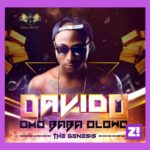
  • In December 2024, Davido announced 5IVE, his fifth studio album. First slated for release in March 2025, then postponed to April, the period between the first announcement and eventual release saw him pull off one of the most impressive album rollouts in Afrobeats history.

    5IVE album art.

    From receiving a handwritten letter directly from the global head of Martell, to partnering with PlayStation, to appearing on popular American radio shows like The Breakfast Club, and even popping up in a recent episode of I Said What I Said podcast, he took the album and its stories everywhere. At a time when his peers chose social media rants and taunts, punching down at their most accessible Nigerian audiences, Davido shunned drama and rage-baiting for positive fan engagement and town hall-style discussions.

    Given the immense success of his time-themed trilogy of albums, it wasn’t clear what direction this new album would take. But 5IVE screams, ‘new phase.’

    We can now let go of the side-eyes toward the vague and sometimes incoherent definitions he gave during the album’s promotional run.

    Numbers go beyond counting time, money and the days of our lives. In numerology, five represents freedom — a desire to explore, to embrace the unknown, and to experience life in new ways.

    Nigerian poet Alhanislam opens the album by articulating its core ambition. Though Davido’s attempts at explaining 5IVE did make it sound like it could have also been called An Album About Nothing, her spoken word intro clearly breaks his message into five parts: life, music, family, freedom, and legacy.

    Though performed in English, the spoken word intro evokes the feeling of African praise singing. The type that’s rendered like panegyrics to make the head swell. This traditional touch seeps into the album art, too. Davido stands among four colourful masquerades in the middle of nowhere. While he hasn’t explained the image, it hints at ancestral reverence, maybe even the suggestion that he’s an extension of a collective spirit. 

    Following Alhanislam’s reckoning intro, the album holds up a mirror to Davido’s current state of mind. He’s confident, assured and triumphant.  From the defeat of Goliath reference in “Anything” to his cup that runneth over in “Be There Still,” OBO leans into the biblical symbolism of his namesake — sprinkling allusions to David’s legend across the 17-track album (all his albums have 17 tracks).

    Get More Zikoko Goodness in Your Mail

    Subscribe to our newsletters and never miss any of the action

    Sonically, the album leans heavily into fast-paced Afrobeats, Amapiano and house music, sometimes all at once. In the past two years, this kind of sonic fusion has defined the Afrobeats landscape. It’s a sound Davido first attempted on 2014’s  “Tchelete” featuring South Africa’s Mafikizolo. It resurfaces in “Be There Still”, which kicks off a streak of woman-inspired tracks. 

    His intentions seem genuine — the production supports his desire to be seen as a better partner — but the language of love and romance here feels flat.  At times, he sounds indistinguishable from a Twitter crypto bro who only has money to impress. His expressions lack depth, and it doesn’t help that his songwriters either phoned it in or sat this one out.

    “CFMF (Can’t Feel My Face)”, “Offa Me” featuring Victoria Monét and “R&B” featuring Shenseea and 450 offer mildly satisfying love-drunk night jams.

    “10 Kilo” is delightful. The “Orobo, ten kilo” line blares with so much passion that it may otherwise suggest it as a personal kink turned into a song. Think the orobo-loving Davido in the “Dodo” music video. But more importantly, it’s a nod to the African beauty standards now widely replicated globally (hello, BBLs). It echoes Sound Sultan’s “Orobo”, a classic that celebrates plus-sized women. Long-time Afrobeats listeners will catch the homage.

    “Don’t Know” and “Awuke” with YG Marley are groove-chaser-meets-love songs. Let’s keep it real: the rhythms are more likely to woo a love interest than the bland lyrics. Afrobeats has long prioritised tempo and melody over emotional resonance — a tradeoff that’s good for replay value but not always for connection. And here, it often feels like we’re listening to a man who loves women but struggles to say anything meaningful about them beyond cheesy catchphrases and quirky, street-generated one-liners. At 30+, shouldn’t there be more to say? 

    Even his nuptial tales would sound more heartfelt. He has been trying to put himself in a better light, purging himself of youthful exuberance, getting married, and even unashamedly dropping a disclaimer about completely shunning infidelity during an interview at The Breakfast Club. But while the interview seemed earnest, the music doesn’t quite follow through.  Everything still screams “finding love in the club.” Davido often frames relationships as transactional — luxury in exchange for affection — and nothing in the music convincingly challenges that.

    That said, the production value stays high. Shizzi, Loudaa, Dayo Grey, Blaisebeatz, Jon P, Tempoe, Ucee and others deliver a seamless listening experience. The music picks up halfway through the album, and the energy never dips. 

    Featured artists on 5IVE.

    “Holy Water” shines with the assistance of Musa Keys and Victony. “Nuttin Dey” finds him cocky and unbothered. “Titanium” with Chris Brown finds the frequent collaborators celebrating growth. Davido attempts to lay down his burdens on “Lately” — the song bites off the intro of Asake’s “Dull”, but it doesn’t inspire its wistfulness. The last three tracks, “Funds”, “Lover Boy” and “With You” tie things together nicely. The pace never lags. It’s groove after groove. After all, why not dance like David did? 

    Davido, much like his biblical namesake, is a king who loves music, God and himself. When he’s not these things, he has no new songs — his psalms, if you’d like — to write. This album is his hymnal — expressing a range of emotions, predictable but sincere, reflecting where he is in life. Although it falls short of Alhanislam’s prophecies and has overall average writing, its melodies and choruses are memorable. It’s packed with sleeper jams, and it may take listeners a while to warm up to some of the tracks.

    All in all, 5IVE comes with no drama. It centres on Davido and his resilience, one that must be applauded, in an industry where he has scaled the “rich boy” agenda, survived scandals, faced trolls, and has been ridiculed by both fans and colleagues. This is a celebration of that, a pickup where his Timeless album left off. 5IVE is far from his best output, but it’s a decent effort and a solid foundation for what’s to come. 

    Score: 6/10.


    ALSO READ: With “Morayo”, Wizkid Has Produced His Most Afrobeats Work Yet

    [ad][/ad]

  • The Nigerian entertainment industry luminaries who attended Wizkid’s mother’s burial in October 2023 reinforced a reality obvious to even the most casual observers: He’s what he called himself on his 2011 debut album, “a superstar.”

    After enticing the audience with the genre-bending EP S2 last December, the 34-year-old singer promised to immortalise his mother with a follow-up album, Morayo, his mother’s name, which means “I found joy.”

    A year later, Wizkid delivered his sixth studio album, which has 16 tracks. P2J produced fourteen tracks, and P.Priime and DAMEDAME* produced the other two. Wasiu K1 Ayinde’s performance at Wiz’s mum’s burial kicks off the album on the track “Troubled Mind.” It vibrates with gangan and djembe. 

    For those who aren’t in tune with Yoruba culture, the album might come off as less of an introspection on his mother’s life and the bond that they shared and more of his usual commentary on lust and life in the fast lane. But among Yorubas, death is a time for huge celebration if the deceased was elderly. This is his current state of mind: the existential crisis of how he can make merry in the face of deferred mourning.

    Late Morayo Balogun (Wizkid’s mum)

    Morayo is upbeat, party-ready, less experimental and influenced by 2010 Afrobeat sounds. “Karamo” and “Kese” celebrate the rich spenders, igbeaux smokers and the gorgeous women who can twist and turn. They’re turn-up, feel-good jams, filled with the familiar hallmarks of Afrobeats music—percussion, up-tempo melodies and surface lyricism—that disagree with Wizkid’s infamous statement that he isn’t an Afrobeats artist last year.

    In these songs, Wizkid leans into the escapist ethos of Afrobeats. Afrobeats as a genre is a distraction that eases the troubled mind. Whether you’ve lost a loved one or lost your job, with Afrobeats, you must retire to your lounge, set eyes on a love interest, smoke something and dance. 

    The album continues with “Bad Girl,” featuring Asake. In this their second collaboration, the duo shouts out Monaco and Caribbean babes. The song, sounding more like an Asake record, shows that they share a chemistry that burns beyond their shared love for cannabis. 

    Morayo gets laid-back and breezy in “Time,” as Wizkid continues his romantic yearning with assistance from Alté music savants Tay Iwar and AYLØ. Their collaborative effort strengthens Wizkid’s branch into the alternative music scene. He still holds tight to his obsession for his lover, the music crossbreeds R&B on “Pieces of My Heart” featuring Brent Faiyaz and dancehall on “Break Me Down.”

    “Bend” calls for dancing; throw your hands in the air, feel good. “A Million Blessings” plays next and adjusts the pace. It’s not too fast to make your dance rump up dust, and it’s not too slow either. The themes and talking points of the songs hardly shift from loving up, taking the lead, flying out baddies, cloud nine trips, staying young, fresh, and living like a superstar.

    France’s Tiakola makes an impressive guest appearance in “Après Minuit”—not Wiz’s first rodeo with French artists. Remember MHD’s “Bella”? Wiz’s continuous exploration into American R&B manifests in “Bad For You” with Jazmine Sullivan. 

    “Soji” and “Slow” featuring Anaïs Cardot further express love and bedroom rompers. 

    Late into the album, “Don’t Care” provides a pompous and confident Wizkid—he proudly looks back at his longevity. He’s reminded again that his spot isn’t really up for taking. He’s carefree. 

    He’s introspective on “Lose” and “Pray.” The closing track particularly pours a relief on the troubled mind that opens this album. He finds succour in his music, his vices and his faith. He also has the assurance that his late mum prays for him from above—nothing screams, “She remembers me,” than this.

    If we take out the grief and memorial factor of the album, the end result is a close perfection of his recent projects: SoundMan Vol. 1, Made in Lagos, and More Love Less Ego. Morayo gleams with joy. There are romantic yearnings and sexual innuendos here and there. There are more sweet hooks and lyrics rooted in marijuana smoke, hustle and ballers yarns, smug brags, and experimental Afrobeats production. Though the music gets monotonous, it isn’t complicated.

    He didn’t need to mention his mother or make the song titles morose, but there are hints of intense sadness and his voice baked with grief. Wizkid focuses on his job, leaves almost no chances for vulnerability for the audience—his ego and masculinity won’t let him. He tries not to trip while he continues to step in the shoes of a man who wears his heart on his sleeve. Invoking Morayo, Wizkid celebrates the dead, offers an update on the life of an Afrobeats superstar, as he searches for his next guidance after his matriarch’s demise.

    NEXT READ: “I See Us as Mercenaries”—Inside the Mind of a Wizkid Fan

    [ad][/ad]

  • Lagos has trust issues. Think turbulent dating scene, suspicious love affairs, wild sex life and fair-weathered friendship. Think sin city. Every expressed reservation is met with retorts like “Èkó ná n pebí” meaning “This is Lagos.” That leaves you with disgust or speeds you up to get with the programme.

    To know Lagos is to be a vigilant crab or a blood-thirsty shark in its Atlantic world. To know Lagos is to be on the lookout like charlatans are out to get that your minimum wage. To know Lagos is to play for keeps upon finding out there are no real lovers in the skreets. To know this city is to love and hate it. To know Lagos better is to listen to the sons of the soil. 

    These Lagos love stories are told by Lasgidi chroniclers Show Dem Camp (SDC) on their new album, “No Love In Lagos”, a collaborative effort with the magic-fingers guitarist Nsikak David and the urban highlife duo The Cavemen.

    SDC (Tec and Ghost) is the guide with engaging rap verses about the city, its street OT, socio-politics, lifestyle, love life, naira life, cruise, the madness and the chaos. They fuse all these into lush, enjoyable soundtracks of smooth highlife, sexy Afrobeats that are perfect for a boujee Kegite gyration setting. Nsikak David isn’t new in their midst. He has been both a session man at their recordings and a side man at their concerts. The inclusion of The Cavemen is an expected extension of their symphony. They’re all complimentary, with the lively production of Spax, SDC’s go-to producer. This line-up is a fantasy of the SDC and The Cavemen fans come true.

    The album starts with the ethereal tone-marking Intro musing about loving who or what isn’t loving back. Then the advice you didn’t ask for hits you on No Love In Lagos, the groovy titular and lead single. It bursts in with a melodious cautionary statement that instinctively tells the listener or whoever thinks of finding love in Lagos to use their “upstairs” and “shine” their eyes. In the first verse, Tec’s raps continues the spoken word from the intro, centering unrequited love. Trust is all he asks for, though he’s not raising his expectations. The Cavemen continues to warn, “Dem no dey love for Lagos” in the chorus. Ghost, the cat with the baritone, comes in unavailable for emotional love but readily available for physical love, curiously called love-making, either as main partner or paramour. However, his perspective rests on the following: “Choose who dey choose you, don’t be the victim of a scammer.”

    Johni warns to remain vigilant about the superficial nature of love and relationships (romantic, friendship, work or business). It urges to avoid see-finish or the tag of “Johni Just Comer (JJC)”, AKA an amateur. Tec and Ghost’s verses touch on hunger games, the rat race and the allure of the outsiders, leaving many angles to consider when choosing lovers, friends and partners.

    The urbane poor voice of Lagos comes out to play in the chorus of the Why. The Cavemen sings about undesirable elements that won’t let them enjoy themselves in peace. Beyond the surface, it speaks of the powerful oppressing the poor. A perfect imagery of this chorus would be holding someone’s neck while they’re trying to eat. The “E le, le, le, le, e le, le o” exclamation of Benjamin amplifies the cry and helplessness of the poor and oppressed and marks their resilience: “You can’t take my joy, oh, oh.” Tec and Ghost ponder the ruthless nature of the city while maintaining faith in a higher power and guidance.

    If you’re secular, you might say Fall is serendipity and reflection, others might call it miraculous intervention and gratitude. The rappers look back at humble points in their lives, their maturity, willpower and growth. Buga with Tim Lyre swaggers is in for faaji; it’s a good time. Tim Lyre’s juju-inflected chorus is an untarnished response to bad-belle. Though the Economic and Financial Crimes Commission (EFCC) is on alert for currency mutilation money-spraying, imagine a performance of this song as cash flies and pours on the performing artists. OMFTR continues to flex on haters. It’s a bouncy, slow-tempo record. It features Obongjayar, who reiterates The Cavemen’s take and the song’s message to prove doubters wrongs and surpass expectations.

    On Blessings, Tec prays for humility and bigs up his crew. Moelogo ushers us into a divine mood, throwing up prayers to remain on top in life. Ghost proudly reflects on their music journey, from being an African premier rap group to building an annual music festival and touring the world with the music. Then, he prays for an impactful lyricism and legacy. Because when it’s all said and done, SDC is now more about legacy than prosperity.

    The movement isn’t stopping. It forges ahead into the future, no matter the roadblock. This is what Train symbolises. Nigerian-English singer Ruti questions the cost of staying where purpose no longer serves while looking to find a way out. Tec remains watchful, eyes open for the snakes. He stays guided by the central theme, “No Love In Lagos,” focusing on his journey and development. The thirty-two-minute duration of the album comes to an end after Sudden Day. It emphasises SDC’s rise to legends and reinforces its stamp in the Nigerian music industry. It’s a befitting curtain call.

    “No Love In Lagos” continues Show Dem Camp’s winning streak as conceptual album artists and storytellers majoring in Nigerian stories. Their penchant for cultivating a distinct hip-hop, jazz, and highlife sound that holds time, events, and history in capsule has afforded their music to touch listeners intimately. The involvement of Nsikak David and The Cavemen enhances its vibrancy and nudges the sound forward, providing the album’s ambience in an attractive way that makes the average listener care for it. Although it sounds more like a Show Dem Camp album with assistance from others, it’s incomplete, sonically, without their contributions.

    “No Love In Lagos” is a common statement that beware naive lovers and friends to avoid dependent trust in Lagosians. It’s not a collective description of everyone, Lagos is just a tough place that suffers one for dependency, sluggishness, redundancy and ignorance. The rap verses are open enough to provide layers of experiences and lessons. The album’s sonic is appealing. It’s a soundtrack to any chore, activity or time of the day. “No Love In Lagos” is a well-crafted, digestible project that serves their dedicated fanbases more, and it’s one of the best releases of 2024 so far.

    Bang bang!

  • Every meeting place has a designated name. Where smokers and mostly closet drug-addled folks freely indulge in Southwest Nigeria is called Lungu. Another interpretation of Lungu is ghetto. It could also signify a corner, a personal space, a comfort zone, or a place of abode.

    This “razz Lungu” word has now found its way into pop culture and urban vocabulary and can be open to broader contexts. Your office space is your lungu. Your favourite hangout spot, your precious kitchen. This will be the Asake effect. “Lungu” is the adjective in his new album title. It modifies the noun Asake. It’s where the Nigerian singer finds a sense of belonging, his loyalty to his proletariat beginning, if not a specific nod to his Lagos Island origin. “Lungu Boy” is his third studio album, a speculated trilogy, just released after his modern classics, “Mr Money With the Vibes” (2022) and “Work of Art” (2023).

    Start opens the album. Forty seconds after the sample of Asa’s Eye Adaba, a morning reverie, Asake sets the album tone. He’s a party rider. He sings, “Mr. Money killing show / Anywhere I enter, it’s a big intro.” After the mellow post-Work-of-Art singles, Happiness and Only Me, nothing screams “We’re so back!” more than those opening lines. He pleads positivity, and disregards distractions. “Me I wan free mind, make I no yarn too much / Elevate my mind, make I not talk too much.” 

    Mr. Money Sound (MMS) comes in next. Reflection is written all over this. This therapeutic type of production requires acknowledging a higher power, going down memory lane, waxing philosophical about vanity, or getting deep into the pain points of desiderium, as Wizkid’s verse expresses. One hears this type of performance from Wiz and wonders, “This guy talks?” It builds an expectation that he likely has more to say on his forthcoming album than recycled smug brags, canal tales and frolicking gists of his lovers’ musings.

    The party finally picks up on Mood. It’s groovy, though not necessarily happy; it’s a mix of moods. Optimism is almost dimmed, and Asake contemplates with a resigned attitude. The fleeting emotions he sings about here is a universal phenomenon; it’s happening in every life. This song makes thoughts sober rather than turnt on a tipsy or drunk night. One may feel aligning chakras and white light on the forehead in more profound listening. The angelic “Oh, oh, oh, ohhh” between his verses shifts the song from a groove towards the realm of meditation. Asake repeats his first verse in the second but in broken Spanish. It’s hard to tell why he subjects us to español. Perhaps he’s learning a new language and testing his proficiency, or it’s the influence of Los Angeles living since his blow-up. Or maybe it’s an expansion move into Southern America, which makes sense considering the Bolero-styled bridge performed by French-Gabonese singer Anäis Cardot on the following track, My Heart. According to Asake, the song describes the kind of woman he wants. The song lyrics and love interest’s name, Marissa, further confirm his interest in the Latino experience, specifically a babe.

    Adding that up with his global breakthrough in the music space, Worldwide takes the follow-up spot. In a larger context, Asake wants to be more than a guy from Africa. The tempo almost dragged until he gets Active with US rapper Travis Scott on a funky urban-fuji inflected with log-drums and a sample of Jazzman Olofin and Adewale Ayuba’s Raise the Roof. They’re hyperactive, junking on adrenaline. This song’s the album’s zinger!

    Suru, the next song (meaning “Patience”), is admonishing, almost like Asake’s looking out for impatient people. The chorus bites Musiliu Ishola’s Ise Oluwa Ko Seni Toye. It features Stormzy, a UK rapper, to say that good comes to those who wait.

    Asake picked up a new hobby turned lifestyle this year. It’s skating. The outdoor sport that was once a rebellious underground subculture and became popular through the likes of Pharrell Williams (Skateboard P), Lil Wayne and Lupe Fiasco is very mainstream now. However, it’s a developing culture in Nigeria. Not to be classist, but a younger Asake who possibly made a fun ride from a motorcycle tyre and a stick would likely look at the version with a skateboard with yearning and envy. As regular as skateboarding may be, it’s a boujee sport for those with nothing to think about other than survival. This song is about the joy of finding fun (again) in adulthood. Also, it’s interesting that a Nigerian artist sings about a fun activity that isn’t a vice.

    Magicsticks, his go-to producer over the last two albums, finally sticks one production to us with Wave featuring Central Cee from the UK. It’s the twin to Active with Travis Scott, although it might as well be a Central Cee record. Far from peer pressure and insecurity cop-out, Mentally relates to nightlife spenders and hustle savviness impacted by street smart. He makes enough cash to disregard a lame. Uhh Yeahh comes up in the middle of a rave and possesses the party energy — Fuji, EDM and Jersey club music have become one spirit. This song gets the dancefloor going in the drench of sweat and deafening subwoofers. The beat is so hypnotic that Asake gets lost in the sauce. It’s a reminder that Sarz isn’t your mate. [ad][/ad]

    As a Nigerian, one word at the tip of one’s tongue from birth is I Swear. The slang means “I’m dead serious”, and it needs no serious conversation to slip in. Here, the listener moves to Asake’s message of self-importance and love for luxury. At this point, this album has become a slow burner. Three songs to the finish, totalled at 48 minutes, “Lungu Boy” feels longer than his previous 30-minute-long albums that play incredibly fast and beg for a repeat.

    Ligali is a term popularised by Fuji musician Pasuma Alabi over two decades ago. More than a reference to coitus stimulation, “ligali” encourages dancing and gyration. Asake continues to be influenced by Fuji music, a constant sonic element in his upbringing. Brazilian singer LUDMILLA joins Asake on Whine that melds Afrobeats groove and ragga-dancehall to advance Mr. Money’s quest into the Afro-Latin music market. He closes out with a live-performance version of Fuji Vibe, a long-time recorded song he played as an interlude during one of his shows. Its opening beat breaks share similarities to Olamide’s Wo, including their hyper-fast BPM. The thumps of gangan and omele drums, jazziness of modern drum set and trumpet, instrumental renditions of Adewale Ayuba’s Ijo Fuji, and Asake’s breakout single Mr Money, send the crowd into an àríyá (party) frenzy. Then it slowly descends into a Mara music vibe, carrying Gen-Z of the inner cities. This song will be as hard as any entry at the famous Oluyole West NG Carnival in Ibadan. Fuji Vibe will go down as one of the fans’ favourites.

    With P.Priime credited as producer on the first four songs (Start, MMS, Mood, My Heart) and three others (Suru, Skating, I Swear), it now goes without saying who the producer of the year is. Sarz, P.Priime’s sensei, did the production on Worldwide, Active, Mentally, Uhh Yeahh, Ligali. The three remaining production credits go to Haitian producer SAK-PASE on Whine, Magicsticks on Wave, alongside Asake and The Compozers on Fuji Vibe. The album’s production value is elite.

    Conclusion

    “Lungu Boy” is the repeat of stories he’s already told, laden on experimental Afropop, neo-fuji and urban-tungba. Rather than an autobiographical audio entry, this album is a party drilled in heavy, uptempo, ADHD-induced sounds, rigorous jolts, and dance moves. Although Asake remembers God and that he’s a vanity slave, there’s little reflection in the body of work, not what the title and portrait album art suggest. The music is hot on gaiety, ballers’ night out, house parties, counting cash and spending it on baddies with chop-life agendas. One wonders if these women are aware that he’s convinced that one drunk man is more intelligent than three women

    Asake’s performance seems more relaxed, but the music is still shindig and restless.

    Compared to his debut album “Mr. Money With the Vibes (MMWTV)”, “Lungu Boy” is a slow-burner, just as his second album “Work of Art”. The difference is the latest album misses the preciseness of his self-written debut, and lacks the focus of the sophomore, his best. Perhaps the exclusion of Olamide, his label boss, in its songwriting is glaring. Or maybe this is a pushed work that fulfills and ends his YBNL contractual obligations. “Lungu Boy” seems to miss its intended message. It gives little to the ghetto kids. Nothing more than weak songwriting, surface music and steeze.

    Considering the album hype and Asake’s reputation as a hit-making machine, the listeners’ conversation would be torn into an emphatic “Asake delivered” and a puzzled “What’s this?” Lungu Boy is an unsuccessful experiment, a 7/10 at best. It doesn’t feel like a convincing trifecta—at least not yet.

    This is a premature evaluation anyways.

    People will still dance to his music.


    Speaking of Experimental Albums, We Reviewed Rema’s “HEIS” too.

  • It’s been seven months since the O2 Arena filled with 20,000 music lovers for Rema’s Ravage Uprising concert. The consensus about that show is that the 24-year-old Benin-born singer is celebrating Benin heritage. Take his replica of the 1897 Benin sacking, like Queen Idia’s ivory mask, into account. The fact that the show happened nine miles from the British Museum displaying the stolen Queen Idia’s ivory mask and a note that Ravage Uprising was Rema’s only show in the coloniser’s UK in 2023, it’s not hard to agree with. 

    Critics have written adulations. Rema has thrown himself into the narrative. He’s tweeted about reshaping the Benin culture and a song titled BENIN BOYS with Shallipopi, another Benin boy. Rema adorned bats, a popular symbolism attached to Benin, into his jewellery collection and new album art. He’s claiming his birthplace with his full chest. However, the importance of symbolism might have been exaggerated. Bats don’t fly around the whole of Edo, and neither are they depicted in Benin guilds. Perhaps he should have spared a thought for leopards depicted in Benin guilds. 

    Rather than a connection to the centuries past, Rema’s inspired by Benin City’s urban life and culture (which has adopted bats into its identity). That narrative only teases listeners into the geographic-fluid afro-pop pits of his sophomore album, “HEIS”. He’s not playing it safe. This isn’t “Rave & Roses”. In comparison, his first album’s the rose, and this new one’s the rave. To appreciate “HEIS”, the search for homecoming aspirations and deeper music is seriously not advised. “HEIS” is pacy, head-back-leg breaking, and ridiculously amplified. It’s the complete form of what Ginger Me, Won Da Mo, Hov and the “RAVAGE” EP have shown. “HEIS” is the wildly experimental Rema.

    MARCH AM is a colloquial phrase for “doing the work and crushing it.” The corporate world will translate that to meeting KPIs. In Rema’s case, he’s a young overachiever. While one simmers in celebrating that, one observes his new linguistic approach, which is all over the album. He uses English, Pidgin English, Edo and Yorùbá in cruder tones. A marker of every man’s voice. American rapper Mick Jenkins said, “Deep conversations about language, which one [do] you speak?” Remaspeak is street-fluent and internet lingo rich.

    He rides the party into AZAMAN, originally an Edo slang term for someone who provides bank details for G-boys to pick funds. In this song, it translates to the popular Nigerian term for a “rich spender”. In a praise-singing mode, Rema hails Nigeria’s wealthiest men, including his state governor, Benin royal throne, and Don Jazzy. Rema sure knows how to pick his patrons. Interestingly, there’s no mention of his Jefe, DPrince, who discovered him.

    This praise-singing doesn’t sidestep Rema’s noteworthy consumption of X (Twitter) lingos. “No go hustle, dey talk for TL / Follow me run, you go tear ACL” is a banger boy material.

    Twitter might have been a bit of this album’s inspiration. From “No go hustle, dey Twitter dey zozo” on the opening track to “Monday morning, talking about me while I’m making money” on HEHEHE, the playful third track, that observation lurks. He clap-backs at his trolls and critics; this psychologically marks a reflexive response likely provoked by internet pressure and stan wars. It’s not crystal clear to him yet that the ascension to the Big 4 breeds contempt.

    On YAYO, he bites Asake’s style and comfortably holds the form. This is a jam; Mr. Sungba will be pleased. BENIN BOYS with Shallipopi follows in quick verse exchanges. The most notable thing about this song is the repetitive “See money, see am, see, see, see money o” chorus, subtle Edo music influence, and Shallipopi being the first Nigerian feature on any of Rema’s songs.

    Surprisingly, Bini’s heritage isn’t expressed on HEIS, the album track. The word is the Greek for “number one.” On it, Rema sings he’s THE guy. The chorus is rhetoric in Swahili, asking who’s the baddest. Who’s uplifting and hot and globetrotting? Who’s the shit and champion? Is it you? Rema’s confidence is stunning; he generates closing lines like “When I talk “Another banger,” you better believe am.”

    It’s not hard to miss P.Priime’s tag, which runs through six songs on this eleven-track album. This is evidence of their developing chemistry since their back-to-back collaboration on the “RAVAGE” EP. Rema’s go-to producer, London, takes the backseat on this album ride, credited on only three songs. According to metadata, this album’s also the first time Rema has deeply involved himself in the production of his music. Other co-producers are Altims, Daytrip, Producer X, Cubeatz, Deats, Klimperboy and Alex Lustig. [ad][/ad]

    Rema’s clearly synced with what’s vibrating in the ghettos and inner cities. Mara sound manifests in OZEBA, an Edo word for “entering trouble”. “Mara” is an informal term for madness. In music, it’s a homegrown sound that drives listeners wild. It’s high-speed and energetic. Picture a street carnival buzzing with DJ YK Mule’s mixes, dancers in ripped jeans, joggers, oversized round necks and sweaters, cross bags, sandals, designer slides, flipping white handkerchiefs in the air while thick Indian hemp joints burn on the other hands. OZEBA is trenches music brought to the global mainstream. The only thing missing is God Over Everything’s hypeman touch.

    From this song till the album ends, Rema retains the disruptive energy of Daddy Showkey—the new age composition of Olamide Baddo’s lamba. WAR MACHINE is an adrenaline pumper; it gives the thrills of street racing. Rema might have also been a new-age pop version of Obesere on EGUNGUN. He keeps on rocking on VILLAIN — repeating everything earlier said on the album, from accomplishments to soft-landing baddies, rocking designers and lavishing. His confidence leaps higher here; he desires babes built like the Afrobeats’ Queen Idia, Tiwa Savage.

    Decrescendo hits on the closing track, NOW I KNOW. The rave has come to an end, and others have left. His trauma and loneliness are all that’s left. This song’s a fine moment of clarity on the album, and one wishes it had more of it. 

    In 28 minutes, Rema sets a party for loud decibel suckers. It’s very experimental music, while someone like Ayra, his label mate, has a clear-sounding sophomore. Bold of him. It’s also a statement that Rema has a freer handle on his career. He notes on NOW I KNOW: “I dey move like Messi when he dey for Barcelo[na].” That’s one way of saying he’s unfuckwithable.

    While it’s true Rema’s music is becoming uncontrollably uncouth, his music has never been suburban. He’s only talented and cool enough for the butte and pako. He’s called the “Prince of Afrobeats”, which makes sense. But what Rema and the other top three, the kings of Afrobeats, have in common is the love for the Black app. Rema should grow thick skin!

    Closer listening reveals “HEIS” more native allegiance than a musical revolution orchestrated by the Mid-Western Nigeria’s tapestry. Another evidence of this is Shallipopi’s widely critiqued sophomore. What these two album releases heralded by the Benin/Edo fixation represent and share in common are apprehensive party music and cruise talks.

    Is a Benin renaissance happening? Is “HEIS” a special nod to Benin? Is the album by Rema’s hedonism, inspired by his critics or his desire to shift mainstream focus from Amapiano to Afropop? Maybe, maybe not.

    You have to agree, though, that Rema has given Benin as a whole more points than his Governor Obaseki.


    While We Talk About this Rema Hot Moment, These Are All the Times He Has Showed the World He’s Really HIM

  • Thanks to the baddies movement and Simi’s “Lost and Found”, the vacancy for a new Afropop girl-next-door is temporarily closed. Since the “Ojagu” days, Simi owned that bubbly space that Nigerians kink for its humble and friendly traits. Now, her OG artist and motherhood statuses outclass that. Simi said her new album “Lost and Found” is a tribute to things we continue to find and rediscover. The cover of her sixth album interprets that premise with a fantasia of Simi opening a rediscovered magical treasure chest, reclaiming her chemistry with music, melody and love stories.

    The party starts in earnest with a reflective performance of the album’s title track. Lost and Found is a sobering, honest ballad that corresponds with the confessions of a regular Christian repentant. “Who am I not to count my blessings one by one, by one, by one? / And I’ll learn my lessons ‘cause I was lost, and now I’m found,” Simi sings. “Who knows freedom like someone who was once a slave?” Simi has some ruminative rhetoric to launch at herself and us. “Grateful for wisdom when I remember my foolish ways,” she continues to sing. “Na person wey fall go fit to rise.”

    She’s known for producing and mixing her songs and featuring one or two collaborations on her previous projects. But she brought more hands on deck this time, from the Afropop-centric melodies of rising producer LOUDAA, who produced nine tracks on the album, to the sultry r&b of Estarlik Big Fish to FUNWON’s juju-inflected r&b. Their well-tempered productions maintain the consistent laid-back tempo associated with Simi’s music. The sound direction explores nothing unfamiliar; only a songwriter of Simi’s skills, scope and indigenous interpretations would dare walk aboard it, with familiar experiences, and strut away.

    This is Simi’s rejuvenation from the absence her music created during the two years she was away, primarily catering to motherhood. If we’re talking cheesy, funny, real lover girl content and currency, Simi has r&b relevancy on “Lost and Found” although it may not resonate much beyond core listeners. On Know You II, she relishes and recreates extends the magic handed in Know You, her first collaboration with Ladipoe. This magic is nowhere as spellbinding as the refreshing, for-the-new-skool jam with Lojay on Miracle Worker.

    The naughty girl-next-door Simi plays on Gimme Something and All I Want. Without losing sight of romance, the music gets more playful on One of One. Romance Therapy is an appreciation of a (finally) understanding lover. Borrow Me Your Body with Falz should’ve made it to the archives. It’s a leveller in comparison to the “Chemistry” they created. The bad-girl tactic assisted by Tiwa Savage on Men Are Crazy hits the goal on social listening and patriarchal capitalisation. It’s not a bad song, but it’s the type to get skips. [ad][/ad]

    Words of affirmation are prevalent in Simi’s songs. She needs assurance on RnB Luv and its screams for a seductive Seyi Shay verse. Woman to Woman is a beautifully orchestrated salute to the women folk. The album’s zinger comes in the form of Alafia with Bella Shmurda. “Baby, ma j’oju mi o, baby ma j’oju o / Ma je kaye riwa / Oun a ni lan na ni / Baby, ma j’oju mi o, baby ma j’oju o / Funmi lalaafia, funmi lalaafia o.” Simi asks for lifelong commitment and peace, not emotional hurt, betrayal or messy drama. It catches Simi in her most honest form. Bella Shmurda’s tenor rings through the song with a romantic Afrobeats glossary.

    Messiah is an exciting collaboration between Simi and Asa, who has inspired the former since she was a youngin. The song’s a mellow rejection of the weighty burdens of others, a bob-and-weave track. It’s every man for himself. Call it selfish, but no one gives others what they need for themselves. Jowo featuring Ebenezer Obey could have been another beautiful track if it worked with the original material or takes a bite of the guitar instead of recording the Juju legend’s vocal decline.

    From self-searching to lifelong commitment and feisty Men Are Crazy, Simi explores different versions of herself. Although it feels like a reinvention, the girl-next-door narrative remains and has yet to age well in her biography. It makes the music feel like she’s comfortable with the victories delivered in the past. “Lost and Found” is reminiscent of her previous works, “Simisola” (2017) and “Omo Champagne Volume 1” (2019).

    “Lost and Found” is a dizzying package of unfiltered love confessions and unapologetic romanticism, young-wifey melodies, subtle girl-next-door vibes, Owambe special numbers, and comeback attempts: Simi gives no power to let consumerism dictate her music choices. She finds comfort in her strength again, then makes another good album out of her rediscovery.

  • On her debut album, “Born in the Wild,” Tems pays tribute to herself and to her previous state of being. “Wild” suggests a Wild Wild West, perhaps an interpretation of Nigeria, rarely a place for dreamers. But Tems made it out. This album is her musings and good time draped in warm guitar strings, energetic summer vibes, hopeless romantic lyrics, and some busy music.

    Tems opens the album with the titular folk ballad Born In the Wild. Coming from a place where showing emotions is usually and unfortunately taken for weakness, she peels back on the trauma endured.

    Crazy and wild things may happen, but Tems sees them through to the end. On Special Baby (Interlude), her mum encourages her to continue to find succour in the strength of her name, Temilade (the crown is mine). I hear a mother’s prayer manifestation and moral support. You hear a reiteration of the Temilade Interlude from her 2020 EP, “For Broken Ears.” 

    The actualisation of one’s dreams and the juicy fast life of celebrity birthed one of Biggie Smalls’ most iconic lines, “It was all a dream.” A sentiment Tems shares about fulfilment on Burning. It soon flips into a brood about human inescapable suffering that’s susceptible to all regardless of fame and wealth. She choruses “Guess we are all burning,” interpretable to “Me sef I be human being o” in simpler language. Tems’ at her best here. I guess uncomplicated, ambivalent subject matters can be blissful and sufferable feelings are convertible to ethereal.

    The music gets busy on the next three tracks. The bounce is as alive as her confidence on Wickedest. But the Magic System’s 1er Gaou sample fails to magnify the song. Perhaps that’s owed to the jumble recapture of the Makossa spirit and its tale of betrayal and ironies of success for a bouncy, braggart bop.

    Her complete reimagining of Seyi Sodimu’s Love Me Jeje follows before Get It Right (featuring Asake) cues in. They’re party-ready. An adventurous Tems invites Asake into the familiar territory of Fuji-Amapiano-pop.

    On Ready, Tems continues her search for higher frequency like a fiend relentlessly finds their high. “No fear in my mind, it’s a new story” and “All grass does is grow, don’t you think so?” are her declarations that she won’t hide anymore. In one word, her new story is “fearless”. She’s a bad girl in need of a badass partner — the persona she embodies in Gangsta, which interpolates Diana King’s L-L-Lies. But in Unfortunate, one can learn from Tems that to be gangsta isn’t throwing fits up and down; it’s detaching from situations where other parties can’t be trusted. She congratulates herself for avoiding an unfortunate issue; that’s gangsta enough.

    But this gangsta soon surrenders at the helm of love matters. Boy O Boy puts Tems through a scorned love for a despised lover. Forever burns with the same attitude but funkier. It makes juice out of the ex’s desperation. On Free Fall, Tems finds love again. But one can tell it’s just a forlorn hope robbing her heart. J. Cole’s verse, cute though not striking, doubles down that love experiences calm as much storm.

    It gets clinical on the next interlude, Voices in My Head, as Tec — Show Dem Camp member and one of Tems’ managers — offers knowledge about experience, truth, love and motivation as tools to move through life.

    The celebration continues on Turn Me Up and T-Unit, which puts Tems in her rap bag and gives a specific nod to 50 Cent’s Candy Shop. Me & U plays next and throws Tems in an upbeat soliloquy about finding faith, the god of self and connecting to the higher being. But looking back at when we first heard this as the lead single in October 2023, it’s more comfortable as an album track than the perfect album taster. 

    The vibe extends to You In My Face, which speaks to her inner child, a song to go to when everything’s falling apart. The album wraps up in optimism with the closing track. Even when the ship batters, the anchor can still hold. That’s the message Hold On holds onto. It’s giving modern-day negro spiritual with hip-hop and calypso twists.

    As tone-setting conversations about Tems’ musical style continue, more critics agree that she’s excused herself from Afrobeats for a larger U.S. audience. But this is an effect of sticking every Nigerian contemporary singer to Afropop, a genre, as opposed to Afrobeats, an umbrella for popular music and culture out of Nigeria.

    Released a week apart from Ayra Starr’s applauded sophomore release, “Born In the Wild” may be another cautious win for Afrobeats. It’s vintage R&B and neo-soul adorned in an African night of merriment. It’s enjoyable, and so is its mix. Its production, done majorly by Tems and GuiltyBeatz, is endurable. The lyricism is one-dimensional. 

    Without the snappy production, it sounds more like a genius’s ramblings, hard to listen to. This is nothing more writers in the room can’t solve. Due to its non-conformity to the Nigerian mainstream sound, the music is understandably unfamiliar — a dilemma homegrown listeners may struggle with. It sounds like a Siamese twin EPs, yoked by Tems’ high-pitched soprano. It can do without some tracks.

    Is “Born in the Wild” a flawless album?

    A flawless album is loosely defined as a body of work of a captivating and geographic cocktail of shape-shifting songs. By this definition, the answer to Tems’ preoccupation about her debut is in the affirmative: No, it’s not a flawless album. But perfection is subject to different ears. 

    If this is Tems’ music aftermath coming on top of personal woes, it’s an acceptable offering. She made it through the wild, and this is her post-trauma self-celebration.

    Tems Is the Leading Vibe, and We Ranked 8 of Her Best Features

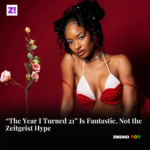
  • Ayra Starr turned 21 in 2023. But like stars, her reflection is in retrospect. Hence, her second album, “The Year I Turned 21” (TYIT21), appears a year later, aligning perfectly with her birthday. In notice of this, her age-themed albums draw a specific parallel to the British music icon Adele. One can argue that Ayra Starr’s music and sonic concerns are different, but the universality of the experience of marking youth and independence is intact.

    Age 21 was also a year of many firsts for Ayra. She came into 2023 with Sability and ended the year with appearances on two American movie soundtrack albums (Creed 3 and SPIDER-MAN: ACROSS THE SPIDER-VERSE) and a posthumous album of the legendary Bob Marley. She went on her first world tour. She was named Amazon’s Breakthrough Artist of 2023. She climbed the O2 stage for the first time at Rema’s “Ravage Uprising” show. A title doesn’t get more specific. “The Year I Turned 21” is a more profound title than a chronological buildup on her “19 & Dangerous” debut.

    Now enjoying some career moments that surpass most of her predecessors’, conversations about Ayra’s music shift her to a trajectory that may transcend her into Afropop’s matriarch. Alongside Tems, she’s the anointed leader of the new uprising of female Afropop singers. These favourable speculations are fever pitches as her quick conferment majorly rests on the merits and success of her sophomore album.

    The music is saying…

    “I learned to be gangster, way from these dark times,” Ayra shares in Birds Sing of Money, opener of “TYIT21.” She spends the rest of the album owning that fearless identity, finding and defining what it means for her to be 21. How does she separate a fugazi from true love, independent versus dependent? Does she want to express freedom or curb enthusiasm, be a baby or face adulthood, keep her guard up or be a goofy youth, be a people-pleaser or live carefree, workaholism or chill and enjoy the fruits of labour?

    Ayra’s music blends styles — afrobeats, hip-hop, pop, R&B, ragga, dancehall, house, amapiano, indie folk — to probe her conflicting feelings. She plasters them all against the backdrop of her career, expanding celebrity and blooming 20s. Her lyrics can be saccharine, but don’t get to a conventional bore. 

    With numerous global achievements just four years into her music career, Ayra has built her universe so high that the chant on Birds Song of Money ceremoniously likens her to the stars that light up the night. Forty seconds into the song, whose also uneasy but organised violin, heavy hip-hop drums, breezy strings, chiming chords, and reggae undertones thump with a threatening assertiveness, yet it’s also calm and composed, one marvels at the pure sonic mastery. Fantastic production by London and Marvey Again.

    Her melodies are flexible, as is the boomeranging flow she spins on the P2J-produced Goodbye (Warm Up), featuring Asake. Ayra shows a toxic partner the door out, while Asake plays the heartbroken, self-righteous partner who lowkey won’t let go. His verse’s almost introspective that it convinces chronic gossip blog readers that it’s likely his response to his recently broken relationship. Ayra and Asake share chemistry, but this song’s strangely a mellow track hatched for the TikTok girlies and intimate parties like aprtment life where she previewed the song in April.

    The already-released Commas sports an upbeat composition, interestingly just a tone and pitch away from Tekno’s Peace of Mind. Exchange ataraxis for financial merit, and you have a testament to Ayra’s increasing multiple-stream incomes and quality mindset. Commas has joyful production and melodies, though those overshadow its simplistic message that charges listeners to fight dirty for their dreams if they have to. All there is to know about the commitment to excellence is in her lines: “Dreams come true, if na fight / Fight the fight, make you no go tire / Fire dey go.” Perhaps it’s why it took fifteen versions and three producers (Ragee, London and AOD) to get the officially released Commas, according to her revelation during a recent sit-down with Billboard.

    “Commitment to excellence” is a watchword she carries to her interviews these days. An evidence of that is her passage into the global music scene that fully unlocked after her appearance at the 66th Grammy Awards, where she was an inaugural nominee for the Best African Music Performance category. Put that moment into a lyrics generator, and Drake’s “Started from the bottom, now here we here” will pop up. She was excited to be there. So were the Western press and industry players warmed up to the new African music star girl. But frankly, her trajectory to own a seat among existing envelope-pushers like Tiwa Savage, Yemi Alade, and Simi has taken shape since her savvy, critically acclaimed 2022 “19 & Dangerous” debut album. It has a few national hits that pushed her over to international eyesight.

    In Woman Commando, featuring Anitta (Brazil) and Coco Jones (U.S.), Ayra brags about flexing her squad and carrying everyone along, sounding confident and pleased as the production reverberates Ragee’s bass-heavy house instrumental. It’s a straight jam.

    The album’s upbeat energy descends as Ayra segues into a lover’s mood. She flirts in Control, which interpolates Shakira’s Hips Don’t Lie, and she’s tipsy and ebullient on a potential one-night stand. She opens herself up to emotional attachment, but it soon gets tiring on the Lagos Love Story that sounds like a love song that’s trying too hard. It’s mechanical and an unnecessary segue into the lively Rhythm & Blues (produced by Sparrq). [ad][/ad]

    On 21, the album’s theme song, the weight of emotional distress, adulthood, self-reliance, boundaries and (it goes without saying) enjoying the fruits of her hard work weighs on her. It’s a niggle of new baggage, not a pity cry. When Ayra’s on an R&B production, her command of her emotions grip. It’s no surprise she’s convinced she writes better sad songs. This production by Fwdslxsh, KillSept and Mike Hector is a convincing ambience. Hopefully, an R&B album is in her future.

    It gets fragile on Last Heartbreak Song. Ayra throws away a one-sided love while American brittle-baritone vocalist Giveon chides himself for letting a real love slip away. This song dates back to the “19 & Dangerous” recording session with Loudaa, but is there a heartbreak song that retains the prospect of intimacy? It’s the Last Heartbeat Song.

    Still laid-back, Mystro takes on the next production. Bad Vibez featuring Seyi Vibez slides us back to Afropop. It’s bouncing over a plush R&B ballad to ward off negative energy, likely the internet moralists that police her short skirts and experimental fashion. It’s an exciting collaboration that elitist listeners would enjoy if they were open-minded to the magic of street-pop. To close out the song, she rhymes that she’s still eating off her last hit. It makes an arguable case for the boldest line in Afrobeats in recent times since Asake’s “I know I just blow, but I know my set.”

    The songs hop from youthful exuberance to love matters and mental well-being. As Ayra presents herself as a success model, she also grounds herself in her reality as a curious adolescent who knows she has time to learn from more mistakes and has her whole life ahead of her. 

    Orun is a cry to the heavens. It’s as evocative about personal longings and celebrity pressure as it’s declarative about forging ahead, past mistakes, and regrets. It’s a confessional, mezzo-forte track that draws hips into a slow whine. 

    Jazzy’s Song (cooked by PPriime) comes next, and it’s a turn-up song that unexpectedly samples Wande Coal’s You Bad and alludes to it as Don Jazzy’s likely favourite song rather than a tribute to her jolly label boss and influential music producer. Indeed, it’s a hit but feels out of place between two mid-tempo, emotionally charged tracks. This arrangement hardly lets listeners fully unpack and tie up emotions. It throws the listener in the middle of mood swings.

    She trusts Johnny Drill to soundtrack the following 1942. It’s a delicate cut that expresses Ayra’s and her brother Milar’s fear of losing everything they’ve worked hard for. Their duality picks up here: the despair of loss drowns them in a pool of liquor, but they still hold to their faith like an anchor.

    The closing track is a letter to her late dad, hoping she’s making him proud. Ayra’s mum’s voice starts the song by encouraging Ayra to live a full life. Her siblings also recount their ages and strides. One can hear the pain and pride in their voices, the kind that desperately hopes that their departed one sees what they’re making out of themselves. The song, produced by Remdolla, echoes out with a proud statement from Ayra’s mum that translates to the track’s title: The Kids Are Alright

    Conclusion

    The bonus song, Santa, thematically has no place on this album. It’s just an expansion and numbers strategy that’ll drive up streams and cement Ayra as the first female Nigerian artist to hit 20 million monthly listeners on Spotify. Get your money, girl!

    Looking outside in, being young and successful is one of the coolest things one can be, but it can also be an overwhelming position. Aside from squaring with life and the natural struggle to maintain success, being a female recording and performing artist means working multiple times harder and smarter than the other gender. If this is the evolution of the girl superstar who was once 19 and dangerous, it’s partially true. Most of her story thrives in gaiety, youthful innocence, vulnerability and self-affirmation.

    With 15 songs, “TYIT21” arrives as a lengthy, nuanced moment Ayra’s having with herself. Rather than a conceptual and narrative album, it’s a string of songs linked by recurring themes: heartbreak and love, happiness and melancholy, openness and boundaries, self-promise and tributes. This is the music you get when endeavouring to memento vivere because personal moments are fleeting, fond memories become distant, and emotions get unhealthily managed. This is the music that makes Ayra feel 21. It’s tough to say the same for the listeners, though.

    Compared with her coming-of-age “19 and Dangerous”, “The Year I Turned 21” is her most poignant and impressive work — an album of the year contender. Throughout the album, Ayra stays the dominant voice, in control. Its writing is sustainable, production is high-value, and there’s no Americanisation of the features. It’s just real and bad Afrobeats music. Although the arrangement could have been smoother, not moving tempo to tempo without consistently keeping the listener grounded.

    “TYIT21” would garner facile praise and embrace, considering its Zeitgeist hype, convincing rollout, major anticipation, and the currently uninspiring music year. But it’d need time to find its place as that crowning sophomore. This is subjectively a premature evaluation anyway.

    According to Polish poet Stanislaw Jerzy Lec, youth is the gift of nature; age is a work of art. Hopefully, Ayra Starr continues to stay alive to her feelings, with more virtuosos to craft them into songs at every juncture of her life.

    If You’re Trying to Get Into Arya’s Music, We Asked Chat GPT to Rank Some of Her Biggest Songs For You

  • There are icons in every field. For football, we have Lionel Messi. When we speak of meals, nothing is touching yam. When it comes to music, there is no other diva as iconic as Madame Beyoncé Giselle Knowles-Carter. This woman has consistently put out amazing music for over two decades, and the best of her work yet is Act II: Cowboy Carter.

    Highly controversial, heavily resisted, constantly understated yet undeniably innovative is who Beyoncé is. And if you’re not tuned in to Cowboy Carter yet, here are five reasons you should rinse your ears and get into the album.

    Cowboy Carter saved country music

    Your faves can attest to this. For such a long time, although the CMA and the larger part of White America disagree, country music has been gated. Artists of colour were rarely given the spotlight and had to settle for being sidelined. This racial bias was very evident at the CMAs where Beyoncé and Dixie Chicks had an unwelcoming experience during and after their performance of Daddy Lessons. The crowd visibly did not approve of Beyoncé singing country and although the performance was the most watched that year, the CMA took it off their platforms. While this moment birthed Cowboy Carter and we are grateful, it also means hundreds of black artists get this treatment regularly. The bias was very evident upon the release of Texas Hold’em and 16 Carriages which features a heavy country production, yodelling and an undeniable country twang. For such releases that were pure country, a lot of negative uproar still surfaced.

    However, since the release of the full-length album, the whole world is now listening to a new side of country music and black artists are basking in the spotlight. Black country artists like Linda Martell, Shaboozey, Willie Jones, Tanner Adell, Brittney Spencer, Rhiannon Giddens and Willie Nelson got to be a part of such a revolutionary move. That’s icon shit!

    [ad]

    Cowboy Carter made an artistic statement

    You can find country pop, bluegrass, country RnB, Country Hip/Hop, Opera, Latin and Flamenco all in one album. If that isn’t peak artistry, then I don’t know what is. We know Beyoncé already said it was going to be a “Beyoncé” album and not just country, but no one was ready for that. She managed to blend so many genres, techniques and layers of history and yet it is undeniably country. From Blackbird, Jolene, Spaghetti, Tyrant, Daughter, Just For Fun down to Riverdance. The whole album is just full of wonderful twists and turns.

    Cowboy Carter changed history

    If I asked you how it feels to be the first black woman to top the country charts, you would have no idea, but Beyoncé does. Not only has Cowboy Carter charted in countries across the world, but it also helped the featured artists secure their first chartings and massive increases in their streaming. We call it the Yonce effect. The album also became the most streamed album on Spotify within just a day of its release. Who runs the world? Beyoncé does. 

    The Production is tea

    The way Amen and American Requiem flow into each other is just ridiculous. Then let’s talk about the harmonies, cadences and adlibs. Beyoncé pulled out her full range. The vocals are so tightly locked and on point. You get to feel everything in it. Especially on Spaghetti where Shaboozey sang like it was his last song. Somehow the artist collaborations, writers, producers and even the horse used in her cover art were intentional and purposeful. All to showcase country music’s black roots. 

    Cowboy Carter saved Fashion 

    Let’s be for real: Beyoncé ate with the cowboy looks. She served cunt. From the hats to the jeans, to the platinum hair, down to the leather and iron buckle. Every look was giving slayonce. No other artist could eat like that. With Renaissance, it was a silver/chrome movement, and with cowboy Carter, everyone is getting their hats and boots ready. Who knows? Maybe the tour will be held in the stables? We can’t put anything past Beyoncé.

    Cowboy Carter is a wormhole

    The album is woven in such a way that each song tells a story that leads into the other, and you won’t want to miss out on one part of the story. It has 27 tracks, and if you start at the top, somehow, you’ll end up at the bottom. Cowboy Carter truly is Beyoncé’s best work, and that’s a lot considering she has Renaissance, Lemonade, 4, Beyoncé and Dangerously in Love as parts of her catalogue. With Cowboy Carter, Beyoncé has shown us once again, what it means to reinvent oneself and remain Queen of Music. 

    To catch up with other artists like Zoro, click here.