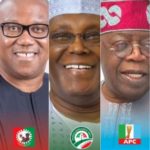
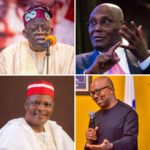
The Nigerian Bar Association (NBA) invited six of Nigeria’s 17 candidates that’ll contest in the 2023 presidential election to its annual conference on August 22nd, 2022.
The candidates used the platform to toast Nigerians and sell themselves as the best things since agege bread.
We learnt some new things about them at the conference.
Tinubu is a busy man
Let’s immediately get it out of the way that the candidate of the All Progressives’ Congress (APC), Bola Tinubu, didn’t attend the conference even though it took place only a few minutes from his house.
Maybe he was too busy drawing up his strategy for the millions of youths he plans to draft into his agbado army, or maybe he’s just a late-blooming introvert too shy to show his face in public.
Tinubu sent his running mate, Ibrahim Shettima, to the conference instead and we have to talk about him…
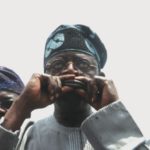
Shettima needs a stylist
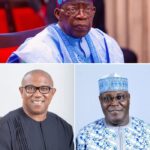
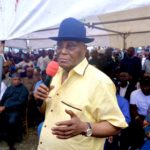
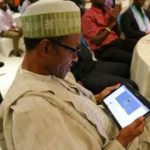
Shettima showed up to the NBA conference looking like this:
And the only plausible explanation is that he’s a victim of “What I Ordered vs What I Got.” It’s also possible that Tinubu only told him about the conference last minute, so he only got the chance to hurriedly dress himself at the car park. Either way, we (don’t) sympathise.
Dumebi Kachikwu isn’t a one-minute man
The most basic lesson even a primary school student learns is to always listen to instructions. But the candidate of the African Democratic Congress (ADC), Dumebi Kachikwu, is a man that likes to assert himself.
When the MC asked him to give his closing remarks in one minute or less, he protested that it wasn’t enough. The instruction was for him to talk about what he’d do for Nigerians as president, but he kept talking off the script so much that the MC cut him off and moved on to the next candidate.
Atiku wants to make Nigeria… great again?
In his address at the conference, the candidate of the People’s Democratic Party (PDP), Atiku Abubakar, advocated for a Nigeria where everyone has a sense of belonging and there’s unity and we’re all singing kumbaya around a fire.
And, according to him, that only ever happened when the government of Olusegun Obasanjo assumed power in 1999. Conveniently, Atiku was his vice president at the time and he thinks Nigerians need to bring back that “experience” in 2023 to rescue the country. According to him, to escape the trenches, we must go back to move forward.
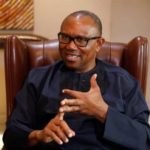
Peter Obi wants to flip a switch
In his address, the candidate of the Labour Party (LP), Peter Obi, was unforgiving in his assessment of Nigeria as a failed country. And his fix is that Nigeria must make the transition from an insecure country to a secure one, from a disunited country to a united country, from a lawless country to a country of law and order and from a corrupt country to a transparent country.
Obi didn’t clearly outline how he’ll make this happen, so the only assumption is that there’s a switch somewhere waiting to be flipped.
Tinubu wants to recreate the Lagos experience for Nigeria
As Tinubu’s representative at the conference, Shettima proudly announced to everyone that the APC candidate will recreate the Lagos experience for Nigeria. But what’s the Lagos experience? The fourth-largest economy in Africa? Or the home of life-threatening annual floods and an agbero culture that’s become a trademark? Is the Lagos experience a blessing or a threat?
Shettima also promised that a Tinubu presidency will address “ecology” and we’re not sure if that’s a synonym for “unemployment” or the name of a vegetable.
The MC gave Kachikwu a second chance to sell himself after his initial stumble and his proposal is to introduce a patriot bill that makes everyone equal.
To make Nigerian leaders care about real issues, he plans to force them to use the same public amenities the average Nigerians use. For instance, his patriot bill forces public officers to travel only by road except in case of emergencies.
His theory is simple: The people who have the power to make Nigeria work would do everything possible to make it happen if it directly affects them and their families.
Adewole Adebayo knows where the money is buried
There’s an unending debate about whether Nigeria is a rich country or in the chokehold of sapa. But the candidate of the Social Democratic Party (SDP), Adewole Adebayo, believes Nigerian politicians are lying when they say there’s no money on ground. That means our money will grow like grass if he wins?
Also, Adebayo’s strategy to win the election is appealing to Nigerians to change the people they usually vote for. We wonder where we’ve heard that change thing before.
With the 2023 elections drawing closer, I wonder what it was like to live in a time without democracy. In this article, a police officer who lived through the first military coup in 1966 shares the moments that led up to joining the force at 18 and the moment that reminded him there was more to life after 35 years of service.
The life of an Igbo police officer in the ‘90s, as told to Ortega
Life before the first military coup in 1966
I was a restless child born in 1937. I grew up as the only son of my father, and his brothers expected me to take up his role as our village’s chief priest. But my father wanted something more for me. He wanted me to go to school and live outside the cage tradition had built for our lineage as its custodians.
My father was convinced living together would make it easier for my uncles to persuade me. So he kept me away for as long as he could. When I was five years old, I had to live with different people in my village and depend on them to put me through school. They called me Nwali, son of the soil. It meant I belonged to everyone in my village but to no one at the same time. The villagers were in charge of taking care of me while my father kept my uncles at bay. Their generosity got me a secondary school education. But that was as far as I could go with the resources they had.
“They called me Nwali, son of the soil”
Everyone expected me to become a teacher, but I found the role quite stuffy and boring. I spent the two years after secondary school working odd jobs instead. I tapped palm trees and helped families build houses — I did anything I could get my hands on. I saw my father once in a while, but he expected me to figure things out on my own.
At 17, I decided to leave my village in Delta for Benin. My cousin promised to teach me to drive and offered me work as one of his cab boys. The first three months were okay, but I couldn’t bear the long hours of driving just to have my cousin take most of the profit I made. I couldn’t tell him that because I had to be grateful to him for trying to help.
After another three months of yelling for passengers under the hot sun, I decided to take a break and go back to Delta. That’s when I found a bit of luck in my life.
On my way to the park, I met a friend who was coming in from Delta. We exchanged pleasantries and I explained why I was heading home. His response to my complaints of driving taxis for hours under the sun was an odd demand for me to follow him on an errand in Benin. He offered to cover the two pence it would cost to get a bus back to my village, so I decided to go with him. There was nothing to lose.
The errand turned out to be recruitment at the police college for new constables in 1955. Of course, I was surprised my friend wasn’t just upfront about it, but I was more interested in how to get in as well. So while he queued up, I rode a bicycle back home to get my documents. Hundreds of people were in the queue when I got back. Every young man wanted a chance to wear fancy uniforms and work with white men. I just needed money.
“I refused to learn Yoruba. I felt it was easier to handle thieves that pleaded for mercy if I didn’t hear anything after e jo”
When it finally got to my turn, the constable took one look at my file and asked me to leave. Apparently, 18 was too young to serve. But then, luck was on my side. One of the senior officers asked him to consider me because I looked strong. And that’s how I got into the ranks.
There were only four police colleges in Nigeria at the time. Benin was just a point of recruitment, so I was moved to the one in Kaduna for a while before I was relocated with other southern officers to Lagos in 1956. I can’t remember how much I earned, but we were paid in pounds until 1973 when naira notes were introduced. What I loved about my job was the respect it gave me. No matter the rank, there was some kind of honour you felt putting on a police uniform in the ‘60s. There was also a lot more investment in the force. I attended the Police Colleges in Paris and Britain for short courses, and in a year, I rose to the rank of cadet.
I worked in Lagos until 1959. A senior officer decided it was best to experience other parts of the west. And in 1959, the country was still at a point when a mid-western Igbo (Igbos from the Bendel region) man transferred to Lagos or Abeokuta wasn’t odd. Nobody cared where I was from or that I refused to learn Yoruba. I felt it was easier to handle thieves who pleaded for mercy if I didn’t hear anything after “E jo”. I didn’t believe Yoruba people were open to learning my dialect. But it didn’t matter. No one bothered too deeply.
Abeokuta was a lot calmer than Lagos. I was stationed there to monitor the railway stations. We derailed passengers coming in from the north and monitored the day-to-day running. But after two years, I got bored. I liked the rush of Lagos more, where things like welcoming renowned leaders happened. For instance, in 1956, I got to see the Israeli prime minister, David Ben-Gurion.
“It wasn’t until the first military coup in 1966 things changed. The attack happened the day I got married in the village.”
Working at the police station in Lagos let me meet people from different works of life. And that made my work interesting. Like the time I met a gambler who was brought in from Obalende back in 1956. He was charged as a thief, but he didn’t seem like one to me. I was in charge of the evidence desk, so I could probe a bit more when criminals came in.
When we spoke, he mentioned that he ran away from home and was trying to win bets to make more money. But the men who arrested him didn’t believe it. He confessed to stealing clothes the morning of his arrest, but that was it. For some reason, he seemed genuine, and I believed his story. I spoke to my colleagues and we got him off on a two-week sentence rather than a year for petty theft. Those were the moments that made me feel like my job mattered; even the bible says blessed are the peacemakers.
The year everything changed
It wasn’t until the first military coup in January 1966 that things slowly began to change. The attack happened the day I got married in the village. For the most part, civilians were safe. But because the attack was by southern soldiers, Chukwuma Kaduna Nzeogwu and Emmanuel Ifeajuna, it looked like the Igbos were trying to disrupt peace. I knew better than to share my thoughts with colleagues; people were upset.
I was moved to Lagos to serve later that year. They began to look at me as a police officer who was Igbo rather than just a police officer.
As a corporal and the only breadwinner of my home, I knew better than to get involved in the messiness of politics. My main priority was keeping my family safe while my wife was expecting our first child.
The second attempt at taking over the government took away the last shred of peace. It was in August 1966, and officers called it the revenge coup. Unlike the first coup, which was handled mainly by southern officers, this operation seemed like retaliation from northerners because it was led by Lt. Colonel Murtala Muhammed.
Unlike the first, this takeover was successful, and for the first time, we lived under military rule. It was a very difficult time depending on your tribe. For me, it suddenly meant something to be an Igbo man serving with the Lagos police force. Some superior officers checked our badges and their countenance changed when they found out I was from the south. But I wasn’t going to buckle under the sudden pressure.
“When we lost the war in 1970, Nigeria went into a long period of discrimination”
Back home, people were being slaughtered. Trains were loaded with dead bodies in the east, and when Lieutenant Colonel Ojukwu decided to push back in 1967, so did the ruling officers. It was a bloodbath, and I still don’t know how Lagos maintained some sense of sanity. Still, by 1968, I had to send my family back to Delta state from Lagos.
I’d become a sergeant by the end of 1966, and it was business as usual at the force, which meant always being away from home. But I’d had my second daughter and wasn’t comfortable with working all the time when things were so unsafe. I also couldn’t get any of my wife’s sisters to travel from Delta to Lagos because of their safety.
It was better to take my wife and kids to Delta dressed in my police uniform, which was the only thing keeping me from being harassed or outrightly killed. It was a hard decision, but keeping them away was for the best. Our village didn’t experience the attacks going on in the eastern towns.
Between 1967 and 1970, Nigeria was at war with itself. But I didn’t have the time to process what it meant at 30 years old. I had to focus on my task of training police officers, assisting to keep some level of sanity in Lagos.
When we lost the war in 1970, Nigeria went into a long period of discrimination. Rising to the top of the force suddenly became difficult. I should’ve officially been promoted to sergeant, but the results for the exams I took weren’t released until after a year. Most people had theirs a few weeks after the exams. That’s when I knew a lot was about to change for me.
By 1975, I’d made a life for myself in the Ikeja barracks. My marriage was what you’d call successful because my wife and I had five children at that point. What hadn’t been so successful was my ability to support my family on my salary. I was earning less than ₦20k as a sergeant, and a family of seven wasn’t exactly cheap. But I wasn’t the only one experiencing the economic challenge.
“When my friend, a fellow officer, died from high blood pressure, I realised there was more to life than chasing ranks”
Leaving behind the police force
With the political instability, getting goods was hard and prices went up. I could get Omo for less than ₦5 before the coup, but after, we were spending almost ₦20 per sachet. Rice was also a luxury because importing was difficult. My wife eventually had to open a store to sell drinks so she didn’t have to depend on my salary for foodstuff. But I didn’t care about the money. I wouldn’t have enjoyed any other job as much.
As the years went by, I began to feel like my work as an officer didn’t matter. My family joined me in Lagos again in 1971. The Civil War was over, and I missed seeing my family. I’d had my second child in 1968, and we only saw a few times a year because of the state of things. So I brought them to join me at my flat in Ikeja barracks.
I spent years leading up to the final coup in 1975 as a sergeant. I was in the office with a few personnel who talked about setting a village close to mine on fire. I’m sure they didn’t have a clue where I was from. But that’s how ruined we were as a country after 1965. At least, the failed 1966 coup was just a power struggle, but the rest were about personal dislikes amongst ourselves.
As long as the ruling party preferred a certain ethnic group over mine, even as an Assistant Commissioner of Police (ACP) in 1983, I dealt with unwarranted questioning and didn’t get the recognition I deserved. But I was convinced I needed to rise the ranks to be a commissioner because it would make a difference.
Then one of my friends, a fellow officer, died from high blood pressure, and I realised there was a lot more to life than chasing ranks. I was earning around ₦80k as an ACP in 1986. I decided to start putting money aside to build a home for my family in Delta. As the only son, my father left over 500 hectares of land to me. That was enough for a farm and properties to rent out over time.
“I don’t regret my time on the police force”
Major General Babangida was still in power and the force was dominated by western and northern men. I could count the officers in my rank who were from the south on one hand. But I didn’t have the time to feel bitter. I put in my notice for retirement in 1989 and was approved for pension within six months. I left in 1990 at 53 without looking back.
It’s been 32 years since and my monthly pension hasn’t changed. Less than ₦80k per month is all I’ve gotten since 1990 while my retired colleagues from the army receive a minimum of ₦150k per month. I was one step away from the highest rank in the force, but I can’t get decent money for 35 years of work. That’s the biggest pain for me. It shows policemen aren’t as valued as we were in 1955.
But I don’t regret my time there. I’d do it all over again if I could because being on the police force gave me some of my greatest memories. Being an officer was a time I got to see the real side of human nature because of the amount of history I saw unfold. And now that I spend most of my time alone, it’s nice to remember what life was like when I was a young man.
Now that we know what life was like for a Nigerian police officer in the ‘60s, imagine what would’ve happened if Abacha Never Died.
An election campaign rally isn’t any different from, say, a cocktail party where one person is trying to woo another person they’re trying to end up in bed with.
The seeker (politician) hopes to get lucky with quippy icebreakers and cheesy one-liners that’ll convince the target (voters) that they’re the best thing that’s happened to Nigeria since Abacha’s death.
Since the goal of the game is to get in bed with the other party, promises are bound to be overabundant in this conversation. Some of these promises are reasonable, of course, but some promises make you cringe so hard and laugh out loud at the same time.
Here’s a compilation of some of the 2023 presidential election campaign promises that already look sus to us:
Al-Mustapha wants to live in Sambisa Forest
A man capable of staring Boko Haram into submission
General Sani Abacha’s former hitman security aide, Hamza Al-Mustapha, is one of the candidates trying to move into Aso Rock in 2023. But he doesn’t plan to stay in the building much.
To defeat terrorists, Al-Mustapha has promised to live inside Sambisa Forest where Boko Haram fighters have waged a war against Nigerian citizens for over 13 years. He sha won’t live there 24/7, just on weekends and holidays.
The most laughable thing about Al-Mustapha’s promise is that the year is no longer 2014. The dynamic of insecurity in Nigeria has evolved past Sambisa Forest as a nerve centre. Someone needs to catch up with the times.
Sowore wants to convert Aso Rock into a hospital
At this point, Aso Rock has to observe 40 days of fasting and prayer because two candidates don’t have much love for it. Like Al-Mustapha, Omoyele Sowore of the African Action Congress (AAC) is also not too keen on staying at the presidential residence if he wins the 2023 election.
Sowore said at a campaign event the Aso Rock Villa is too big for any one person to live in and plans to convert it into a hospital for ordinary Nigerians.
While we wouldn’t scoff at campaign promises that promote healthcare, Sowore’s plan just comes off as a frivolous one primarily designed to make people cheer and nothing more. So, ha ha ha.
Dumebi Kachikwu wants to become president so he can make every political office holder in Nigeria face the same limitations as the average Nigerian. His plan as president is to launch a National Patriot Act that levels the playing field for everyone.
In his own words, “It’s a bill that would ensure that public servants cannot use the privileges they cannot provide for the common man.”
A President Kachikwu administration would block politicians from using private or foreign medical services or even generators or boreholes in their homes. He also plans to block them from sponsoring private or foreign education for their children.
It’s the kind of campaign promise that’s bound to prompt cheers at rallies but is useless in practice as we already found out with the failure of the bill to block politicians’ children from schooling abroad.
Adebayo wants to create 30 million jobs
The provision of jobs is one of the most common campaign promises politicians make anywhere in the world. Jobs are kind of important and promising to provide them for people is an easy way to get the crowd going at rallies.
However, there’s moderation to everything, but moderation isn’t a word in the vocabulary of Adewale Adebayo, the candidate of the Social Democratic Party (SDP).
If elected president, he’s promised to provide 30 million jobs for Nigerians, but he’s been vague on the how he’s going to do it.
Tinubu wants millions of youths in the Armed Forces
Speaking of unemployment, Bola Tinubu’s master plan to solve that is to simply recruit millions of youths into the Armed Forces. He believes he’s killing two birds with one stone as this also supposedly takes care of insecurity. And because he’s a multitasker, he can extend the bag to agriculture by feeding these young recruits cassava, corn and yam every day. Where’s the balanced diet?
The 2023 presidential election won’t happen for another eight months, but the ball’s already rolling. Parties have picked their presidential candidates and candidates have picked their running mates, even if some of them are placeholders. All those things are important, but the centrepiece that validates an electoral process is the voter: you.
There are currently two types of voters: those that have a difficult time picking their preferred presidential candidate and those that already daydream about the kind of life Nigerians will have when their preferred presidential candidate wins. If you’ve already decided, how can you turn that daydream into a reality by getting your candidate elected? Well, there are some helpful tips.
Adopt a catchy group name
A rapidly-emerging trend of Nigerian election years is group names for supporters of presidential candidates; this year hasn’t been an exception. Buharists had their time in the sun and the Atikulated and Kwankwasiyya have been around for some time. These days, there’s a rising wave of Obidients and a colony of the BATified.
Sure, it scores cool points online to have a rad group name to identify with, but that’s the least of the things you have to do to get your presidential candidate into office. So what do you do?
Donate to their campaign
Yes.
Just like cocaine addiction, election campaigns cost money. The spending limit of a presidential campaign was recently raised from ₦1 billion to ₦5 billion. And unless your candidate is secretly a drug dealer or Ponzi scheme merchant, there’s no way they can shoulder that financial burden alone. They need all the extra ₦1k and ₦2k that you can afford to support their ministry. Keep in mind, though, that it’s against the law to donate more than ₦50 million — just in case your money grows like grass.
Advertise your support
More than cash donations, you can also provide material support to contribute to your favourite candidate’s success. It can be as basic as changing your social media display pictures, sharing campaign posts created by your candidate and attending their rallies and campaign events.
There’s no better way to help your candidate’s ministry than to evangelise their selling points to everyone you can find: your neighbour, your seatmate inside the public bus, the people at your favourite salon and even the person that aired your WhatsApp message three years ago. Just like a movie you enjoy, your candidate can gain more appeal through the sheer power of word-of-mouth.
Organise
You don’t have to act alone in pushing your favourite candidate’s ministry. It’s almost impossible, even. You can always find political action groups online and offline and connect with them to push your candidate.
Volunteer
You can also volunteer to directly work for your candidate’s campaign in an official capacity. You can help the campaign to fundraise or engage in voter outreach, education and registration drive ahead of the election. Your candidate needs as many people as possible to reach out to every potential voter and secure their votes.
Have your PVC to vote, duh
The highest form of devotion to your candidate’s success is to vote for them at the polls. It’s hard to do that if you don’t have your permanent voters card (PVC). It helps that you changed your social media display picture for your candidate, but voting for them at the polls is what has the biggest impact on getting them across the finish line. That’s the only way your candidate’s journey can end in praise.
It’s still eight months to the 2023 general elections but a lot of Nigerian voters are starting to pick their corners. Young Nigerians online are already tagging themselves “Obidients,” “Atikulated” or “Batified” as hip-sounding in-group names for the candidates they want to elect as the next president of Nigeria.
The noise surrounding the election has been so overwhelmingly one-sided that it’s easy to forget the presidential election is only one of the elections taking place next year.
Yes, there are other elections to keep an eye on, so let’s take a look at them.
Presidential election
The president is the chief executive officer of the country and you don’t even need more than a secondary school certificate to become one.
This position is the only one that every eligible Nigerian anywhere in the country can vote for. So it’s no surprise that it’s the position that gets the most attention. The next presidential election will take place on February 25th, 2023.
Governors are CEOs too, only at the state level. They have the administrative power to run their states. Governors also have the power to make appointments to the state judiciary and other regulatory bodies in the state.
They can do gun poses too.
In 2023, governorship elections won’t hold in eight of Nigeria’s 36 states. Anambra, Bayelsa, Edo, Ekiti, Imo, Kogi, Ondo and Osun all have their governorship elections out of sync with the general elections. This disruption was caused by court judgments that nullified the election of their governors at different times in the past.
The governorship elections of the remaining 28 states will take place on March 11th, 2023.
National Assembly elections
The National Assembly consists of the Senate, which is the upper chamber, and the House of Representatives, which is the lower chamber. Nigeria has a total of 109 senators and 360 members in the House of Reps. This means Nigerian voters have the chance to elect 469 federal lawmakers to represent their interests. Each representative will be elected by voters in their constituencies.
Making laws is the most prominent power of lawmakers in the National Assembly. The laws they make, with the assent of the president, have great effects over the lives of Nigerians. The National Assembly also has approval powers over money decisions like budgeting and loans. This is why it’s important for voters to be mindful of the representatives they’re sending to the National Assembly.
The National Assembly elections will take place alongside the presidential election on February 25th, 2023.
State House of Assembly elections
The lawmakers in a State House of Assembly perform the same functions as the National Assembly lawmakers. The only difference is that they do it at the state level and work with state governors. They’re involved in the national lawmaking process if the National Assembly wants to do something as major as a constitutional review such as restructuring the country or granting more constitutional rights to women. Federal lawmakers need the approval of two-thirds of the 36 state houses of assembly across Nigeria to do these things. This makes them just as vital to Nigeria’s progress or stagnation.
Constitutionally, a House of Assembly has at least 24 members and a maximum of 40, depending on the size of the state. Unlike the governorship elections, the election of state lawmakers takes place at the same time every four years. This means all 36 states of the federation will conduct House of Assembly elections on March 11th, 2023, even in the seven states where the governorship elections are off-cycle.
Which election is more important?
Every election is always regarded as the one that either makes or breaks a country. The 2023 presidential election has predictably started to carry the same heavy cross too. And while it’s important that Nigerians elect the right president for the country, it’s equally important that they pay just as much attention to all the other offices.
The president may hold tremendous power, but decisions made at state levels tend to have a more immediate impact on the well-being of citizens. For example, state governments are responsible for issues like secondary healthcare and, by extension, primary healthcare which is the responsibility of the local governments. Services like this are pivotal for Nigerians.
Every level of government is responsible for the progress of Nigeria. So it’s important to elect the right candidates and not get carried away with just the presidential election.
Everybody and their grandmother wanted to get on the ballot to be elected Nigeria’s next president in the 2023 presidential election. But now that the dust has settled on primary elections conducted by political parties, that list has significantly reduced to only a handful of candidates.
The pre-season competition is over, and here are the candidates that will appear on the ballot for Nigerians to vote for in 2023.
Christopher Imumolen — Accord (A)
Christopher Imumolen is the presidential candidate of Accord. He won the party’s ticket unopposed and is 39 years old.
Hamza Al-Mustapha — Action Alliance (AA)
Hamza Al-Mustapha, a former security aide to the late General Sani Abacha, is the presidential candidate of Action Alliance (AA). He was the candidate of the Peoples Party of Nigeria (PPN) in the 2019 presidential election but scored less than 5,000 votes. He’s 61 years old.
Omoyele Sowore — African Action Congress (AAC)
Omoyele Sowore was elected the African Action Congress (AAC) presidential candidate at the party’s national convention on June 9th 2022. Sowore was also the party’s candidate for the 2019 presidential election but only recorded less than 34,000 votes. He’s 51 years old.
Dumebi Kachikwu — African Democratic Congress (ADC)
Dumebi Kachikwu beat 11 other aspirants to snatch the presidential ticket of the African Democratic Congress (ADC). He’s the founder of Roots Television and the brother of a former Minister of State for Petroleum Resources, Ibe Kachikwu. He’s 48 years old.
Yabaji Sani — Action Democratic Party (ADP)
Yabaji Sani is the national chairman of the Action Democratic Party (ADP) and will also represent the party on the ballot for the 2023 presidential election. He was the party’s presidential candidate in 2019 and scored nearly 55,000 votes. He’s 64 years old.
Bola Tinubu — All Progressives Congress (APC)
Bola Tinubu beat a dozen other aspirants to the highly-coveted presidential ticket of the All Progressives Congress (APC). He’s a former senator and Lagos State governor. He’s 70 years old.
Peter Umeadi — All Progressives Grand Alliance (APGA)
Peter Umeadi is a former Chief Judge of Anambra State who’ll represent the All Progressives Grand Alliance (APGA) on the ballot for the 2023 presidential election. He won the ticket unopposed.
Yusuf Dantalle — Allied Peoples Movement (APM)
Yusuf Dantalle is the flagbearer of the Allied Peoples Movement (APM) for the 2023 presidential election. He’s also the party’s national chairman and was elected unopposed. He was a losing candidate in the 2019 Kogi State governorship election. He’s 50 years old.
Peter Obi, a former Anambra State governor, is the flagbearer for Labour Party (LP) for 2023. He was a vice presidential candidate of the Peoples Democratic Party (PDP) in the 2019 presidential election. He’s 60 years old.
Okwudili Mwa-Anyajike — National Rescue Movement (NRM)
Okwudili Mwa-Anyajike beat eight others to the presidential ticket of the National Rescue Movement (NRM).
Rabiu Kwankwaso — New Nigerian Peoples Party (NNPP)
Like Obi, Rabiu Kwankwaso also left the PDP in pursuit of his presidential ambition. He eventually won the ticket of the New Nigerian Peoples Party (NNPP). A former Kano State governor, he also served as a minister and senator in the past. While he failed to get on the presidential ballot in 2015 and 2019, he’s trying again in 2022. He’s 65 years old.
Atiku Abubakar — Peoples Democratic Party (PDP)
Atiku Abubakar is one of the favourites to win the 2023 presidential election after winning the PDP ticket. The former vice president was also the party’s candidate in the 2019 presidential election but finished second. The 2023 election is his third time on the presidential ballot and sixth attempt overall since he first contested in 1993. He’s 75 years old.
Kola Abiola beat three other aspirants to become the flagbearer of the Peoples Redemption Party (PRP). He’s the son of the late MKO Abiola (who was adjudged to have won the 1993 presidential election that was annulled by the military government of Ibrahim Babangida). He’s 59 years old.
Adewole Adebayo — Social Democratic Party (SDP)
Adewole Adebayo is the presidential candidate of the Social Democratic Party (SDP). The 54-year-old is a lawyer and founder of KAFTAN Television.
Malik Addo-Ibrahim — Young Progressives Party (YPP)
The presidential candidate of the Young Progressives Party (YPP), Malik Addo-Ibrahim, is a civil rights activist and founder of the Reset Nigeria Initiative. He’s the son of the Ohinoyi of Ebira Land in Kogi State.
Dan Nwanyanwu — Zenith Labour Party (ZLP)
Dan Nwanyanwu is another national chairman that’ll be representing his party as a candidate for the 2023 presidential election. He’s promised to unite Nigerians in three months if elected president.
We had to stay up all night to watch 22 presidential aspirants speak and then wait for over 2,000 delegates to vote using paper like it was 1980. But the All Progressives Congress’ (APC) national convention has finally ended after three days.
If you took a shot each time an aspirant mentioned Buhari’s name during their pitch to delegates, you’d be blind drunk before the first 10 of them had spoken. Actually, you’d have liver damage if you took those shots during Ikeobasi Mokelu’s speech alone. Most of the aspirants were neck-deep in Buhari’s rectal sanctum, so it’s understandable the president’s face looked like this for most of the night.
Everybody hates bulk SMS
When he climbed the podium for his final address to delegates, Pastor Tunde Bakare switched on his best Martin Luther King impression to toast them. But while his opponents were sending credit alerts in dollars to these delegates, he announced that he sent bulk SMS to them instead.
No one was surprised he got zero votes, but he got some online love for remembering the victims of the massacre in Ondo State.
Ben Ayade is basically Shakespeare
The bar is underground, but Senator Professor Ben Ayade, the governor of Cross River State — as he loves to be called — is easily the Shakespeare of his generation. In his speech to delegates, he talked about the “concept of Afghanistanism” and how he intends to fight insecurity with “satellite videography”. We don’t know what any of those things mean, but they were provocative and got the people going. It was giving a secondary school debate.
When he climbed the podium to address delegates, not a lot of people knew who Tein Jack-Rich was. By the time he was done, we discovered his mother’s natural brilliance brought all the boys to the yard, three different men promised her marriage, impregnated her and all abandoned her. Then, a man who would later become his father, who retired early from the Army because of a bullet wound, rescued her from the streets, but also left her eventually because, well, everyone leaves. Jack-Rich was also in primary school till he was 15 years old before he moved to the city and then became a rich man.
All of this could have been a Twitter thread or a smashing Asaba Nollywood hit, but Mr Jack-Rich paid ₦100 million to tell it to delegates who said, “Touching story, but you no do transfer.”
Senate President Ahmad Lawan’s pitch for the presidency was that developed countries usually elect senators as presidents. He pointed to Joe Biden and Barack Obama as shining examples of senators who became presidents. The only thing he forgot was that he’s not Joe Biden, and no one thinks about Nigeria at the mention of “developed countries”.
Osinbajo wants to send black people to the moon or something
Vice President Yemi Osinbajo is proof that you can get away with anything as long as you have a sweet mouth. When he shared his vision with delegates at the convention, you’d be forgiven for forgetting — for a moment — that he’s been part of the current government for the past seven years. One of the highlights of his address was sharing his vision that Nigeria could become the first country to send a team of black astronauts to space by 2040. We don’t want to be accused of being small-minded so we won’t laugh at that vision. But hopefully, we can hack 24/7 power supply first so that our ship doesn’t get stuck in Mercury retrograde.
Nigeria remains motherless
Other than calling delegates “Naijas”, Uju Ohanenye stood out at the APC convention as the only woman in the race. “Mama don come on board. Everything go better,” she said with the air of someone addressing their starving children at the dinner table. She said she only joined the race because Nigeria needs a mother, but then stepped down for… Tinubu just moments later. The search for Nigeria’s mother continues.
We can’t trust anything Onu says
Remember how Buhari’s campaign team promised to make ₦1 the same as $1 only to deny it after winning the election? We didn’t think anyone would make that mistake ever again, but the former Minister of Science and Technology, Ogbonnaya Onu, took a step further: he promised to make the naira even stronger than the dollar. This is the same man who promised to localise the production of pencils and failed to deliver that after seven years. We believe him as much as we believe in the government’s poverty alleviation schemes.
Tinubu wants to carry Nigeria’s problems — even though his hands can barely hold anything
Tinubu’s ideal candidate for Nigeria’s next president is someone who’s willing to carry Nigeria’s many problems on their head. And, of course, he nominated himself to be that person, even though his hands were shaking like a mini Tiger generator for the herculean task of flipping the page of his written speech. He won APC’s presidential ticket at the end of the convention and we frankly don’t know what to learn from that other than when it’s your turn, it’s your turn. Good luck to everyone involved.
Insanity is doing the same thing repeatedly and expecting different results, but Atiku Abubakar definitely doesn’t play by the rules of random online quotes. The former vice president is the candidate of the Peoples Democratic Party (PDP) for the 2023 presidential election, but it’s not his first time. In fact, it’s his sixth time trying to become Nigeria’s Number One Citizen.
How did he fare the first five times? Let’s take a trip down memory lane.
1993
The first time Atiku ran for the presidency, bootcut jeans were the pinnacle of fashion. The man’s been trying to be president longer than Fireboy DML has been alive.
Atiku contested in the primary election of the Social Democratic Party (SDP) for the 1993 presidential election and finished third behind MKO Abiola and Baba Gana Kingibe in the first round of voting. He dropped out of the run-off election after making a deal to become Abiola’s running mate, but Abiola picked Kingibe after winning the ticket. It was Atiku’s first presidential breakfast, but it wasn’t his last.
2007
After two terms as a vice president, Atiku was ready to step into the big shoes of the presidency. His only problem at the time was President Olusegun Obasanjo. The two had a power struggle for years and accused each other of stealing from Nigeria’s treasury.
The conflict between the two forced Atiku out of the PDP to the Action Congress (AC) of Bola Tinubu in 2006. The AC practically gifted him the party’s presidential ticket with no contest, and it was his first time on the ballot, but the Independent National Electoral Commission (INEC) disqualified him over corruption allegations. Atiku fought this exclusion, and the Supreme Court cleared him to participate just days before the election.
That whiff of court victory didn’t follow Atiku into the presidential election. He finished third with 2.6 million votes behind the winner, Umaru Musa Yar’Adua, who finished with 24.6 million votes and second-placed Muhammadu Buhari with 6.6 million votes.
Atiku returned to the PDP like the prodigal son in 2009 and was gearing to go after the presidency again. This time, his main stumbling block was Goodluck Jonathan who had taken over as president following Yar’Adua’s death in 2010. The third time wasn’t the charm for Atiku, as he finished second to Jonathan in the PDP’s primary election and never made it to the ballot. Many feared that it would be the end of Atiku’s run at the top job. If only they knew.
2015
Atiku was near-certain that he wouldn’t be able to beat Jonathan to the ticket a second time, so he journeyed out of the PDP again. He complained that the party couldn’t be redeemed and joined the All Progressives Congress (APC). According to him, he was putting “Nigeria’s interests” first, but you could bet that was a synonym for “my presidential ambition”.
For the 2015 presidential election, Atiku contested for the ticket of the APC where he lost again to an old foe, Buhari. Once again, Atiku didn’t make it to the ballot, and that meant only one thing:
2019
If reading this article this far has taught you anything, it’s that Atiku cannot stay in one place, and he runs for the presidency every chance he gets. In 2017, he left the APC to return, once again, to the PDP. He finally won the party’s presidential ticket for the first time and was on the ballot as the biggest challenger to his old nemesis, President Buhari. Atiku won 11.3 million votes, his highest ever, but it was 3.8 million less than he needed to beat Buhari, who won again in what was the final contest between the two.
Atiku wants the presidency, no doubt, and has been accused of being too desperate for it. But the real question is does the presidency want him? That’s an answer to look forward to in February 2023.
If history has taught us only one thing about Nigerian politics, it’s that we can always expect to be entertained. Even when the public officials are robbing the country blind or banning things for no sensible reason, there’s always something entertaining we can use as a coping mechanism.
The Peoples Democratic Party (PDP) became the first major party to elect its candidate for the 2023 presidential election. It’s a pivotal event that many Nigerians have been looking forward to for weeks because of its significance to next year’s contest. The PDP national convention has come and gone, and we learnt a few lessons.
Atiku won’t rest
Let’s start with the biggest winner. Former Vice President, Atiku Abubakar, won the PDP’s ticket at the national convention that took place between May 28th and May 29th 2022. His win makes him a motivational speaker’s wet dream because he still won’t stop aspiring for Nigeria’s highest office 30 years after his first try.
He’s been a presidential aspirant/candidate or vice-presidential candidate in elections in 1993, 1999, 2003, 2007, 2011, 2015, and 2019. We bet he mumbles, “Desire, aspire, perspire, inspire but don’t expire,” before he sleeps and when he wakes.
Breakfast goes around
Atiku defeated a dozen other aspirants, but the biggest loser is Rivers State governor, Nyesom Wike, the man who finished second behind him. The governor had by far been the loudest of the party’s aspirants and taken potshots at everyone else. He built his campaign solely on the claim that he’s the only one capable of winning the presidency back for the party.
Hard to argue against a guy who does this
When aspirants battled for the PDP’s ticket for the 2019 presidential election, Wike heavily backed Tambuwal against Atiku who eventually won the ticket. Fast-forward to 2022 when Wike could have done with some reciprocal support, Tambuwal dropped out of the race and announced his support for Atiku instead. It was a turning point of the contest, and it’s not a secret that Wike is salty about how it all went down.
Fayose is obsessed with Buhari
Look, we get it. Buhari doesn’t have many fans in the opposition party, but can someone please tell Mr Ayo Fayose that the president won’t be on the ballot next year? While giving his final address to delegates, the former Ekiti State governor kept praising himself as a man with a track record of defeating incumbents. He specifically asked delegates to make him the party’s candidate so he can defeat Buhari who it turns out won’t be contesting at all in 2023. No wonder he got zero votes by the time the convention was over.
Tari Diana Oliver was the only female aspirant in the race for the PDP ticket. And since Nigerians have never elected a female president, it was no surprise that her pitch to delegates was to make history and make her the first.
“I’m standing here as Esther in the hands of Mordecai. It’s in your hands to vote for me and make history,” she said in a passionate appeal to delegates before voting commenced. Her message got through to only one delegate that voted for her, but at least that’s one more than the zero votes that aspirants like Fayose and Dele Momodu got.
Death to zoning
Much has been made about if Nigeria’s next president should come from the north or south. The Southern Governors’ Forum (SGF) even threatened that whichever party elects a northerner will lose at the polls. It’s an issue that threatened to tear the PDP apart until the party decided to play it safe and make the contest open to whoever can spend the most money win.
Many Nigerians have kicked against the idea of a northerner, like Atiku, replacing another northerner (Buhari) after eight years, but that’s a real possibility now. Because it’s not a properly documented arrangement, it was only a matter of time before zoning met its end at the presidential level. The lesson here is to document everything.
EFCC is always watching
A lot has been made about how presidential primaries can become a money-making venture for delegates that elect the candidates. Delegates use the opportunity to cash out and take dollars from every aspirant willing to part with their money in exchange for votes. It was no surprise then that agents of the Economic and Financial Crimes Commission (EFCC) were seen sniffing around at the PDP’s convention.
No one (that we know of) was arrested, but the message is clear that the eagle is always watching, even if only for the camera.
APC boxed into a tight corner
The PDP and the All Progressives Congress (APC) have been playing a game of cat and mouse trying to see the candidate that the other one elects for the 2023 presidential election. With Atiku’s victory, the APC has one week to think long and hard about who they have in their lineup of aspirants to battle against an election veteran who clocked over 12 million votes in the 2019 election.
Contrary to Fayose’s crank theory, Buhari won’t be on the ballot, so the APC needs someone that can battle for the huge voting figures from the north. While that may automatically mean electing a northern candidate, good luck explaining that to southerners in the party who have been expecting the ticket to be zoned to the south. We can think of one southerner in particular who wants to be rewarded with a lifetime ambition. Should be fun when the convention happens between June 6th and June 8th 2022.
The 2023 general elections are starting to reach the stage where the political heavyweights will be separated from the pretenders, with political parties electing their candidates in primary elections nationwide.
The presidential ticket is without a doubt the biggest prize, and political parties have to elect their candidates by June 3rd 2022.
How the presidential candidates are decided
There are three ways political parties nominate candidates: direct, indirect or by consensus.
Direct primaries allow all card-carrying members of a party to vote for the candidate in an election. It’s like an in-house version of the general elections. But this process is rarely used by political parties in Nigeria.
The consensus process involves the party adopting a candidate without an actual election. This candidate is anointed above others eyeing the ticket, but the other aspirants must sign a written consent and endorse the candidate.
Unlike direct primaries, indirect primaries don’t allow every card-carrying member of a party to vote. Instead, that task falls to a group known as delegates.
Who are these delegates?
In the Nigerian political system, there are two types of delegates: ad hoc delegates and statutory delegates.
Statutory delegates are usually party members who are current or former occupants of elective legislative and executive positions, as well as political appointees and certain elected officials of the party. These delegates are very powerful, but they were — apparently — mistakenly left out of the drafting of the new Electoral Amendment Act signed in 2022.
Lawmakers have sent an amendment bill to President Buhari to correct this, but he hasn’t signed it yet. As it stands, statutory delegates won’t be involved in the 2023 process.
And now to the main star of the show, the ad hoc delegates.
Ad hoc delegates are those that are elected at the local government level of a party to, for example, vote for a presidential candidate at a national convention. Think of it like if each household elected a representative to help them vote on election day.
These delegates are elected at congresses organised by the party. Each party is free to define the rules for the number of delegates that can vote for its candidates. For example, the All Progressives Congress (APC) elects three delegates from each of Nigeria’s 774 local government areas as well as six area councils of the Federal Capital Territory (FCT). This leaves the party with 2,340 delegates to elect its presidential candidate.
The 2022 Electoral Act has crowned ad hoc delegates as the stars of the 2023 general elections.
What’s a delegate worth?
The conversation around delegates usually revolves around how much money they can finesse out of aspirants trying to curry their favour to win tickets. They’re right in the middle of the dollar rain that descends on the political scene when it’s election time.
It’s not so far-fetched to see why this is so. Delegates are the kingmakers in Nigeria. Their real worth is that they’re really the ones who’ll determine Nigeria’s next president before millions of Nigerians can even vote in 2023.
So, if you know anyone that is a delegate, hail them properly. All power belongs to them…for now.