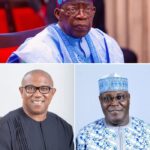
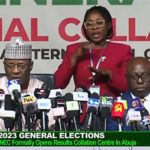
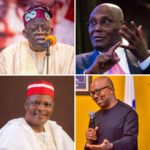
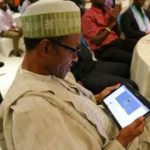
• One thousand and one things are happening with a presidential election, especially one as chaotic as Nigeria’s 2023 race.

    Peter Obi Wants Your Shishi, and Other Campaign Lessons from Last Week

    These are the highlights of the 2023 presidential election campaigns in the past week.

    Obi won’t give shishi but he needs a lot of it

    The Peter Obi presidential campaign uncovered a deep dark secret last week that stunned everyone across Nigeria: presidential campaigns cost money. Who saw that one coming? Before you know it, someone would tell us Abacha was a thief.

    Peter Obi Wants Your Shishi, and Other Campaign Lessons from Last Week

    “He was only saving Nigeria’s money for future use”

    The national chairman of the Labour Party (LP), Julius Abure, opened the door to a dash of public ridicule when he appealed for donations to the party’s campaign for the 2023 presidential election. Crowdfunding for presidential elections isn’t an entirely new concept, but it was a bit comical coming from a campaign that has made penny-pinching a trademark.

    Nigeria’s electoral laws set a limit of ₦5 billion to run a presidential campaign. How much of that can the Peter Obi campaign raise?

    Tinubu finally wins something, but there’s a twist

    The presidential candidate of the All Progressives Congress (APC), Bola Tinubu, has survived a lot of things in his campaign — there was that pee thing, the constant questions about his health and his many gaffes.

    But his campaign has been turning a good corner in the past couple of weeks, and he crowned that last week with an endorsement by Fitch Ratings which projected victory for him in 2023.

    Peter Obi Wants Your Shishi, and Other Campaign Lessons from Last Week

    Peter Obi has won three major polls released in the past couple of months, but the Fitch report predicted a strong Tinubu victory — an outcome that validates his entitled campaign to succeed Buhari.

    But while the report may be good news for Tinubu, it’s not such a great one for Nigerians as Fitch also projected his victory will lead to social instability in Nigeria.

    Atiku’s American wonder

    Atiku has to tick three things on his checklist whenever he runs for president — prove he’s not a northern extremist, beg Obasanjo to take back the stealing allegations and take a trip to the United States.

    Last week, the former vice president packed his campaign team and flew to the U.S. to once again prove that he can waltz into the country where his critics say he’s wanted for corruption. He did a lot of standing around and taking fly jpegs in America and nobody saw him in handcuffs.

    Peter Obi Wants Your Shishi, and Other Campaign Lessons from Last Week

    Roc Boys no drip pass this one

    If the presidential election was a game of stunts, Atiku won last week hands down and should be crowned president as soon as he returns to Nigeria. But if he hopes to have a victorious campaign, there’s one more thing on his checklist he has to resolve and the name is Nyesom Wike.

    Kwankwaso has a miracle up his sleeves

    Does anyone still remember Rabiu Kwankwaso is in the presidential race? The former Kano State governor was primed as the dark horse candidate to challenge the APC and PDP in 2023. But even though he’s been dislodged from public consciousness by Obi’s rise and is now only rated fourth in a three-horse race, Kwankwaso isn’t giving up without a fight. 

    The former governor is still rallying his impressive crowd of Kwankwasiyya supporters with their famous red caps and posting photos of large rally crowds on his Twitter. 

    Peter Obi Wants Your Shishi, and Other Campaign Lessons from Last Week

    But does anyone trust it’ll translate into a win for the candidate of the New Nigeria People’s Party (NNPP)? A chieftain of his party, Buba Galadima, seems to think he’ll perform the miracle of the five loaves of bread and two fish by sweeping over “50-something million votes” in the north while nicking more votes in the southern region.

    If Galadima has seen the state of voter turnout in Nigerian elections, then he’d know he’s building castles in the air, but he’s no stranger to that.

    Imumolen is a local champion

    At 39, Christopher Imumolen of the Accord Party (AP) is the youngest presidential candidate in the race for the 2023 presidential election, and he won’t let you forget it. He’s made many claims about being the “authentic youth” option and wants young Nigerians — the most populated voting group — to elect him to make a statement

    Imumolen’s campaign got some kick last week when he commenced a tour of Nigeria’s West African neighbours to… campaign for president of Nigeria. 

    Christopher Imumolen started his tour in Togo with plans to also touch down in Benin Republic, Ghana and Liberia. Even though he refused to be drawn into a debate on why other candidates are doing diaspora outreach in exotic places in Europe and North America, Imumolen seemed to suggest his own West African tour had more substance. We can’t begrudge a man his days of local outreach.

    Sowore is pocket-watching

    Peter Obi Wants Your Shishi, and Other Campaign Lessons from Last Week

    Remember how the law says it should cost a maximum of ₦5 billion to run a Nigerian presidential campaign? Well, it’s kind of an open secret that Nigerian politicians spend more than the limit and they get away with it because authorities don’t enforce election finance laws. The candidate of the African Action Congress (AAC), Omoyele Sowore, wants that to change for 2023 to create a level playing field.

    Which is why you have laws and a referee like INEC

    You can understand why this is coming from a candidate who could only raise a grand total of ₦‎1‎57.9 million for his 2019 campaign. But Nigeria does need to get serious with enforcing laws to make sure everyone is playing by the books. Why have laws if you won’t enforce them? Is this a third-world country?

    ALSO READ: Village People Stopped These Nigerians from Becoming President

  • Atiku Abubakar, the presidential candidate of the People’s Democratic Party (PDP), officially flagged off his campaign early in October 2022. He has since hopped across the country for his unifier mission

    But what exactly has he been up to? 

    How has his campaign fared so far?

    Well, the answer depends on who you ask. His fans have called his style of campaign unique and focused. His haters think he’s in last position in a three-horse race for the crown. But this is a former vice president of Nigeria we’re talking about and a massive crowd of supporters turned up for the flag-off of his campaign.

    The biggest problem for Atiku’s campaign is he has enemies from within trying to pour sand in his garri.

    On October 25, 2022, the governor of Benue State, Samuel Ortom, his fellow party member, publicly withdrew his support for Atiku for “dishonoring him” and working against the interests of his state. This withdrawal is connected to Atiku’s messy feud with Nyesom Wike, the governor of Rivers State. 

    Wike is yet to forgive Atiku’s transgressions since he lost the party’s ticket to him. So, it’s no surprise that every day is WW III with those two.

    On his most recent campaign stop in Edo State, Atiku said his number one priority, if elected president, would be Nigeria’s unity. But it’s difficult to overlook the irony that he can’t unite his own party.

    Where was Atiku last seen?

    On October 25, 2022, Atiku visited residents of Bayelsa State affected by the floods that have devastated many parts of Nigeria. The candidate didn’t just show up with love and light, but also some cash — he donated ₦55 million towards the welfare of the victims.

    Call him Mr Owonikoko

    Atiku blamed climate change for the floods which have killed over 600 Nigerians in 2022. He called on the government to set up a relief fund to assist the victims who have lost their homes and sources of livelihood. 

    So where next for the unifier?

    According to his campaign timetable, Atiku is expected to address the Commonwealth of Nations in the United Kingdom on October 27, 2022. He would then move his presidential campaign to Ekiti State on November 1, and neighbouring Ondo State on November 2. 

    The candidate’s expected to tour the remaining states in Nigeria before the presidential election holds on February 25, 2023. For his sake, we hope he manages to put his home in order or there may be some serious consequences.

  • This is Zikoko Citizen’s Game of Votes weekly dispatch that helps you dig into all the good, bad, and extremely bizarre stuff happening in Nigeria and why they’re important to you.

    Subscribe now to get the newsletter in your email inbox at 8 am every Friday instead of three days later. Don’t be LASTMA.

    It's Raining Nigerian Doctors in the UK

    If you’re feeling mischievous and throw a stone into a United Kingdom hospital, there are good odds it’ll land on a Nigerian-trained doctor who’ll scream, “Wetin be that?” 

    Seven years ago when Buhari became president, only 233 Nigerian-trained doctors moved to the UK. But that’s only 33 more than the 200 Nigerian doctors who moved to the UK in September 2022 alone.

    If you had to guess how many Nigerian-trained doctors have relocated to the United Kingdom the entire year, what would your number be? According to the UK’s General Medical Council, the number of fleeing doctors between January and September is 1,307.

    It's Raining Nigerian Doctors in the UK

    And there are more doctors waiting on the queue to get out of the country [Image source: Zikoko Memes]

    For a country that already has a shortage of doctors in the health sector, losing even one doctor to other countries is a concern. To lose 1,307 professionals in just nine months is a tragedy. According to research by BMJ Global Health, low and middle-income countries lose $15.86 billion annually when locally-trained doctors migrate to high-income countries. The greatest total costs are incurred by India, Pakistan, South Africa and, of course, Nigeria ($3.1 billion).

    The unchecked loss of highly-qualified doctors to new dispensations poses a threat to Nigeria’s already troubled health sector. Not only is it a loss of human capital with economic consequences, but can be a matter of life and death for Nigerians that need quality care.

    It's Raining Nigerian Doctors in the UK

    [Image source: Zikoko Memes]

    Nigerian doctors, like other Nigerians surfing the japa wave, are fleeing poor working and living conditions in pursuit of better opportunities abroad, and you have to wonder when the Nigerian government will tackle the exodus with ideas more sophisticated than just simply chaining them to hospital beds.

    What else happened this week?

    The 2023 presidential election is finally gaining life

    The top three candidates for the 2023 presidential election finally breathed some life into their campaigns two weeks too late. On September 28, 2022, the Independent National Electoral Commission (INEC) officially opened the floor for candidates to start campaigning, but all three have been sluggish with kicking things off. 

    What changed this week?

    The candidate of the Labour Party (LP), Peter Obi, announced a presidential campaign council comprising 1,234 (seriously, this number isn’t a joke) members. Former presidential spokesperson and Obi’s current ride-or-die, Doyin Okupe, is the campaign’s director-general. Okupe boasted Obi already has a minimum of 15 million votes waiting for him at the polls, as long as INEC doesn’t do anyhow. 

    Notably, Obi skipped the committee’s unveiling ceremony for a speaking engagement at the ICAN 52nd Annual Accountants Conference. But with how low the standards have got, you’re just thankful he wasn’t off somewhere in London secretly treating an undisclosed illness.

    The candidate of the Peoples Democratic Party (PDP), Atiku Abubakar, officially flagged off his campaign and promised Nigerians would never again suffer from hunger and insecurity.

    It's Raining Nigerian Doctors in the UK

    [Image source: Zikoko Memes]

    But his campaign is still haunted by the ghost of Rivers State governor, Nyesom Wike, who predictably didn’t show up at the campaign launch, putting a question mark on Atiku’s high regard for himself as a unifier. In fact, days later, the party postponed two campaign outings in two states reportedly to give the candidate more time to patch things with Wike.

    The candidate of the All Progressives Congress (APC), Bola Tinubu, also oversaw the launch of the party’s Women Presidential Campaign Committee. He charged his campaigners to preach his gospel and politely tell people that want his party out of government to shut their dirty mouths. It’s a great way to endear yourself to undecided voters if the goal is to lose the election.

    Question of the week

    What should the Nigerian government be doing about the ongoing flooding crisis that it isn’t already doing?

    Click here to tweet your answer to @ZikokoCitizen on Twitter.

    Ehen, one more thing…

    The governor of Rivers State, Nyesom Wike, appointed over 28,000 officials for political units this week. When you get over the taxpayer cost of these appointments, you have to wonder if the governor is preparing for an imminent war the rest of us don’t know about.

  • There are certain traits voters look out for in a potential president: a strong vision for the future, the ability to get things done, some swag, and effective communication skills. 

    On top of all that, it’s also crucial that a potential president isn’t so much of an introvert to the point of shying away from engaging the people whose votes he needs to get into office.

    Bola Tinubu Is Too Shy to Share His Plans With Nigerians

    Nigerians already have experience with shy presidents who don’t engage enough with the public —  one of them is still sitting in Aso Rock Villa communicating with press statements and pre-recorded video broadcasts. 

    To avoid history repeating itself, Nigerians must start to question the dodging pattern of the All Progressives Congress (APC) candidate, Bola Tinubu. 

    Bola Tinubu Is Too Shy to Share His Plans With Nigerians

    Here’s a quick rundown of his public engagement record since he won his party’s ticket.

    NBA conference

    The annual conference of the Nigerian Bar Association (NBA) was the first public gathering of presidential candidates after political parties concluded their primary elections in June. 

    The NBA offered its platform to six candidates, including Tinubu, to address Nigerians on their big plans. Everyone showed up, except Tinubu who sent his running mate, Kashim Shettima, to represent him. Shettima himself raised some eyebrows for showing up like this:

    Bola Tinubu Is Too Shy to Share His Plans With Nigerians

    Shettima further goofed by implying he would be in charge of the armed forces as the vice president. Tinubu’s failure to attend the conference predictably caused some backlash and possibly even made it more likely he’ll miss future public gatherings with his opponents. 

    Peace Accord

    The National Peace Committee (NPC) invited all the presidential candidates to sign a peace accord in Abuja on September 29th, 2022. As you can already guess, Tinubu failed to show up there. He sent his running mate one more time to represent him. Shettima’s fashion didn’t ruffle any feathers this time around.

    Bola Tinubu Is Too Shy to Share His Plans With Nigerians

    Tinubu missed the signing because he was away in the United Kingdom “resting”. This rest period stretched into two weeks and prompted rumours that he was sick and receiving medical treatment.

    To keep everyone’s mouth shut, he released a short video of himself riding a gym bicycle:

    Back to Nigeria

    After his gym bicycle stunt met widespread mockery online, Tinubu made what we imagine he considers a triumphant return to the country, fully energised to start his campaign. 

    Bola Tinubu Is Too Shy to Share His Plans With Nigerians

    He thinks he’s James Bond

    When he launched the APC’s Women Presidential Campaign Council in Abuja, he said whoever’s demanding a change of party at the national level should keep their dirty mouths shut. 

    Finally, the presidential candidate was well and truly ready to kick things off and engage with Nigerians, right?

    ICAN conference

    On October 12th, 2022, presidential candidates appeared at the 52nd Annual Accountants’ Conference of the Institute of Chartered Accountants of Nigeria (ICAN) in their third public gathering since August. Guess who didn’t show up again? Bola Ahmed Tinubu.

    Bola Tinubu Is Too Shy to Share His Plans With Nigerians

    He didn’t even send Shettima to represent him this time. A moderator of the event mentioned that Tinubu’s team promised he’d be at the event before it ended, but he never showed up.

    What’s Bola Tinibu hiding?

    Out of three high-profile public engagements Tinubu has been invited to share his plans with Nigerians, he’s not shown up once. He’s also the only one of the three yet to sit down for a TV interview, whether live or pre-recorded. And he also doesn’t have a campaign manifesto for a comprehensive discussion of his plans. 

    Bola Tinubu Is Too Shy to Share His Plans With Nigerians

    Tinubu’s pattern of behaviour has raised concerns that he also won’t turn up for the presidential debate when it’s time for that. We’d hate to speculate the reasons for his dodgy behaviour but it should worry voters.

    Tinubu’s claim to Nigeria’s Iron Throne is that it’s his turn to become president but every time he gets a chance to make his point, he turns up missing. It’s up to Nigerians to decide in 2023 if they want to reward that kind of behaviour.

  • On January 15th, 2022, a former governor of Anambra State, Peter Obi, praised the Super Eagles of Nigeria on his Twitter account. He got hundreds of responses but most of them weren’t talking about his original message about the national football team. 

    How Peter Obi Accidentally Built an Obidient Force

    Many of the Nigerians in his comment section were begging him to run for president. One of the replies under that tweet was so threatening that Obi had to respond directly. The Twitter user threatened legal action against the former Anambra State governor if he failed to throw his hat into the ring for the 2023 presidential election. In response, Obi said, “Give me some time.”

    How Peter Obi Accidentally Built an Obidient Force

    10 months later, Obi dumped one party for another, dodged a tricky crisis that could have sunk his ambition and powered his status from underdog to frontrunner candidate fueled by the passion of Nigerian youths. But his story didn’t start 10 months ago.

    In the beginning…

    In 2003, four years after Nigeria returned to the loving arms of democracy, billionaire businessman, Peter Obi, contested for the seat of Anambra State governor. The Independent Electoral National Commission (INEC) declared Chris Ngige the winner of that election but Obi disagreed with the result and started a legal battle that lasted three years. 

    In 2006, the court ruled that Obi was the winner of the election. It was the first time a court decided the winner of a governorship election in Nigeria. Obi assumed office in March 2006 but in less than a year, Anambra State lawmakers impeached him (in November 2006) over alleged corruption. Obi claimed it was a witch-hunt because he refused to inflate the state’s annual budget. He went back to court again and won; the impeachment was overturned and he made a triumphant return in February 2007.

    When it was time for another governorship election in 2007, Obi wasn’t on the ballot because he believed he was entitled to four full years in office as governor. Andy Uba won the 2007 election, and Obi had to vacate the Government House in May 2007. But he ran straight to his babalawo, the Supreme Court. 

    How Peter Obi Accidentally Built an Obidient Force

    The court agreed that Obi deserved his four-year term and nullified Anambra’s 2007 governorship election to return him to office to complete his first term. This victory became the precedent for other governors who would go on to win their mandates in court and is the reason why a total of eight states now have off-cycle elections. Obi won a second term in office in 2010 and remained the governor of Anambra State till 2014.

    How Peter Obi Accidentally Built an Obidient Force

    Transmission

    In 2014, Obi did what all Nigerian politicians do in their lifetime: he switched parties. He had spent his eight years as Anambra State governor as a member of the All Progressives Grand Alliance (APGA). But just months after he left the Government House, he dumped the party for the Peoples Democratic Party (PDP) which was in control of the Federal Government at the time.

    Five years later, Obi found himself on the PDP’s presidential ticket as the running mate to former vice president, Atiku Abubakar, for the 2019 general elections. 

    How Peter Obi Accidentally Built an Obidient Force

    Even though they lost the election, Obi was one of the stand-out characters from the campaign trail. His vibrant spirit, track record as governor and obsession with statistics imported from China were some of the 2019 election campaign highlights. It was his first true introduction to the national spotlight — the moment he unwittingly sowed the seeds of the Obidient movement.

    The rise of Obidience

    How Peter Obi Accidentally Built an Obidient Force

    By the beginning of 2022, the 2023 presidential election was already shaping up as the usual two-horse race between the PDP and the All Progressives Congress (APC). And in those two parties, Bola Tinubu and Atiku Abubakar were already being primed to lead their tickets. But both men, veteran politicians from all the way back in the 90s, had an image problem that made them hard to swallow, especially for young voters. 

    As an alternative, the Nigerian youth looked across the landscape for who had more palatable appeal. Their eyes fell on Obi. That’s why hundreds of young Nigerians hounded him to run for president in response to that January tweet where he was talking about football.

    Two weeks later, Obi tweeted that he would “step into the field” if the PDP zoned the presidential ticket to the south. But when it was clear the party would renege on the gentleman zoning agreement, and Atiku remained the favourite to win the party’s ticket, Obi’s growing supporter base started prompting him to leave the party and join another one that would put him on the ballot. 

    This move would be tricky because only the APC and the PDP command political “structures” strong enough to win national elections. But as his chances of clinching the PDP ticket dwindled, Obi took the plunge and joined the Labour Party (LP).

    Obi’s move enjoyed widespread support among the demographic of young Nigerians disillusioned with the establishment, and they vowed to carry his campaign on their heads. And as the support base swelled, they needed a name. They became Obidients.

    What’s the appeal of Peter Obi?

    Every Nigerian election has a candidate billed as the “messiah” to lead Nigerians out of the wilderness to the Promised Land. Even though Obidients have stopped short of using that tag, Peter Obi represents the wealth of option Nigerians don’t usually get in presidential elections. He’s distinguished himself, with his much-talked-about humility, financial prudence, and a certain kind of sophistication that’s become a rarity in Nigerian elections.

    Since winning LP’s presidential ticket, Obi’s campaign has been fueled chiefly by supporters with a deep sense of commitment to his ministry and the hope that he represents. In response to criticism that he has no political structure to win a national election, Obidients have rolled up their sleeves and got down to work. They’ve moved what was once derided as a social media campaign to the grassroots to win more voters to the Obidient movement.

    The result of the work is starting to show in opinion polls that have boosted confidence about Peter Obi’s chances. According to three prominent polls, including one by Bloomberg, Obi is ahead of his two main rivals and is primed to win the election next year.

    One of Peter Obi’s most prominent narratives is that he’s a political “outsider” even though he’s an establishment politician who’s broken bread with the same political class Nigerian youths are desperate to retire. But the candidate has had to fight for a political career that his supporters feel makes him different.

    To end up inside Aso Rock Villa, he’ll need his Obidient force to pull off the impossible and spit in the face of an unyielding status quo.

    How Peter Obi Accidentally Built an Obidient Force

    ALSO READ: One of These 18 Candidates Is Nigeria’s Next President

  • Running to become the president of a country like Nigeria isn’t a joke — just ask Buhari who tried for 13 years before he won or the man who’s been contesting for 30 years without success.

    2023 elections: What to expect from candidates

    Four months from today, Nigerians will vote for a new president. But before that decision is made, voters will have to deal with seeing these types of candidates during the campaigns for the 2023 elections. 

    The motivational speaker

    2023 elections: What to expect from candidates

    An orator and a master of wordplay who can make even Martin Luther King sweat. This type of candidate claims they grew up with no shoes and sold firewood to spirits in the jungle just so they could feed their family. They’re only in the race to do spoken word poetry and not much else.

    The frontrunner

    2023 elections: What to expect from candidates

    This character is considered a real contestant for the seat. They’re typically a “former something” which is how you know they’ve been around the seat of power before and the presidency is their final infinity stone. If they’re not the candidate of one of the major parties, they have a personal political profile big enough to make them a key player in the contest. Candidates like this hog the news headlines with campaign promises voters know they won’t fulfill.

    The placeholder

    This one is only in the race so that they can drop out and endorse a frontrunner weeks before the election. Their candidacy is actually a ploy to get a political appointment.

    The youngster

    2023 elections: What to expect from candidates

    This candidate’s only selling point is they’re the youngest in the race and two plus two equals Bitcoin. There’s no campaign structure and no well-outlined plans to deserve being elected; only the audacious arrogance of youth.

    The bambiala hustler

    2023 elections: What to expect from candidates

    You can be forgiven for thinking this candidate is the CEO of an NGO because all they do during the campaign is beg the public for donations, but you never see them do any actual campaigning with it.

    The technocrat

    This one wants to play politics and win political office without being called a politician. Their entire campaign strategy rests on making voters believe they read one random unknown book that’ll help them fix all of Nigeria’s problems in six months.

    The chosen one

    2023 elections: What to expect from candidates

    This candidate tells anyone who cares to listen that they’re only contesting because God took time out of His busy schedule to appear to them in their dream to inform them they’ll be Nigeria’s next president.

    The other chosen one

    Even though one candidate already said God personally chose them to be president, this other candidate tells the exact same story. Now, you have to wonder if one or both are lying, or if Nigeria is about to have two serving presidents.

    2023 elections: What to expect from candidates

    The one who’ll win less than 1,000 votes

    2023 elections: What to expect from candidates

    This candidate is on the ballot to make up the numbers. Their party really just needed anyone to appear on the ballot to keep up appearances. At least three people in their family won’t even vote for them on election day.

    The social media candidate

    You only see this candidate’s campaign on social media or in a couple of TV and radio interviews, but you’ll never catch them on the streets or at rallies with actual voters. That’s because running for president is only a side gig and they still have to focus on their daily hustle for urgent ₦2k.

    The stat-padder

    2023 elections: What to expect from candidates

    This candidate is the backbencher of presidential candidates. They’re only in the race so they can put “former presidential candidate” on their CV and brag about it at cocktail parties. They don’t run an actual campaign, rather they remain as invisible as possible. The only reason anyone knows them is they’re on INEC’s list of candidates.

    The comedic relief 

    2023 elections: What to expect from candidates

    This candidate provides comedy content for voters to let off steam in the thick of campaigns. They can be anybody from the frontrunner, youngster or the one that’ll end up with votes less than the number of people at a regular Lagos owambe.

  • It takes a village to pull off an election. No Nigerian election is complete without the candidates pulling antics, boring campaign rallies, cringey skits and dance videos, exaggerated campaign promises, and banners like this:

    Why We Must Not Allow Bullying to Become the Norm for Elections

    But more than anything, an election needs voters. In fact, the legitimacy of an election is often defined by how many people turn out to vote. These voters are the people who fuel an election campaign after buying into the vision of their preferred candidate and spreading their gospel everywhere they go. 

    But just like with anything that happens where two or more are gathered in service of anything, there are bound to be… issues.

    The problem with Nigeria’s 2023 elections campaign

    As with any sort of competition, with elections, it’s never enough to say pounded yam is your favourite swallow. It’s equally as important to outline and, with the aid of diagrams, prove that your opponent’s semo is manufactured inside Lucifer’s latrine. The goal of putting on that pressure is to get them — and other undecided people — to ditch semo and join hands with you to crown pounded yam as the king of swallow that it is.

    Why We Must Not Allow Bullying to Become the Norm for Elections

    Your choice is elite and any other choice is a counterfeit

    Over the course of the campaigns for the 2023 presidential election, this culture of putting down the other camp has oftentimes crossed six lanes into harassment. The most recent episode involved Nollywood actress, Joke Silva, who openly declared her support for the presidential candidate of the All Progressives Congress (APC), Bola Tinubu. The wave of online harassment that followed her declaration forced her to disable comments on her Instagram page. And she’s only one of many that have been targeted for online harassment over their choice of candidate.

    More than once, the presidential candidate of the Labour Party (LP), Peter Obi, has cautioned his supporters to be of good conduct. His repeated calls for restraint were fueled by the sometimes problematic online attacks against other candidates and their supporters.

    But at the same time, other camps have also targeted Obi’s supporters and mislabeled them as terrorists using his campaign to further their supposed anti-government agenda. His supporters have also faced real-world violence while trying to boost support for him in the streets. In August 2022, thugs in Lagos State rough-handled a physically-challenged Obi supporter who proudly displayed his support on his wheelchair.

    A couple of supporters flying his flag also suffered violence after a campaign rally in Lagos State on October 1, 2022.

    https://twitter.com/ObiFlagboy/status/1576597581014003713?s=20&t=ayIuLt0wlxtUiemGiKwsPw

    The many incidents of online harassment and offline violence currently brewing aren’t new in Nigeria. And while opposing camps keep arguing over which one is more damaging to Nigeria’s democratic process, there’s a more important question to answer.

    Where’s the voter’s right to choose?

    The real beauty of democracy is the right it bestows on every eligible person to choose who they want to represent their interests in government. And while this right is protected by the nation’s relevant laws, it’s not completely divorced from the freedom of speech of others to criticise it. But this freedom also has certain limits, and to go beyond them is considered harmful.

    Why We Must Not Allow Bullying to Become the Norm for Elections

    Nigeria’s 2023 presidential election is deeply personal to the more than 90 million people registered to vote. Nigerians have been dragged through too many traumatic events over the past seven years. It’d be foolish not to carefully consider the nation’s next leadership choice as critical to its survival. But it’s still important to always know where the big red line is.

    Why We Must Not Allow Bullying to Become the Norm for Elections

    An election isn’t determined by who screams the loudest obscenities online but by the people that show up to vote at the polls. If you want to make sure your pounded yam becomes the king of swallow, the best strategy is to find like-minded people like yourself who love pounded yam or are at least open-minded enough to listen to your pitch. Raining fire and brimstone on semo lovers or, even worse, fufu lovers, isn’t likely to get them to turn their back on their favourite food.

    Why We Must Not Allow Bullying to Become the Norm for Elections

    It’s important that when the 2023 presidential election is over, there’s enough of a relationship to mend for everyone to work together for the country’s future, regardless of who wins. The 2023 election is a battle for Nigeria’s soul and it’s essential that participants don’t lose their own way in the pursuit of moulding a better country.

    ALSO READ: One of These 18 Candidates Is Nigeria’s Next President

  • On September 29th, 2022, candidates for the 2023 presidential election gathered at a glossy ceremony in Abuja to sign a peace accord. 

    …in their Sunday best

    This ceremony is like two lovers having a blood covenant, except there’s no blood involved here and the candidates aren’t really in love with one another. So, what’s this ritual about and why do they commit to it?

    A brief backstory

    It’s easy to forget these days, but Nigerian elections used to be very violent. Post-election violence used to be as inevitable as Buhari flying to London every year.

    …as long as he’s not the one getting the debit alert

    For example, the post-election violence of 2011 resulted in the death of more than 800 people after supporters of Muhammadu Buhari, who lost the election, protested that it was rigged. The protests degenerated into ethnoreligious riots in northern states where rioters murdered hundreds of people. 

    Critics partly blamed Buhari for the escalation of the violence due to his strong position that the southern Christian winner of the election, Goodluck Jonathan, rigged it. And he didn’t learn his lesson because, in 2012, Buhari went ahead to say, “The dog and the baboon would all be soaked in blood” if the 2015 election was rigged too.

    Rhetorics like Buhari’s and the general climate of careless conduct by Nigerian politicians formed the building blocks of the National Sensitisaton Workshop on Non-Violence in 2015.

    The first peace accord

    Ahead of the 2015 general elections, the worried Goodluck Jonathan administration initiated a series of conversations with political stakeholders on peace-building. The goal was to ensure political actors embraced a more civil approach during campaigns for office.

    At the National Sensitisaton Workshop on Non-Violence on January 14th 2015, presidential candidates, including Buhari, and their political parties signed a peace accord to behave themselves on the campaign trail. The main promises in the pact were to run issue-based campaigns and not engage in ethnoreligious provocations that could lead to violence. A new ritual was born.

    They even got Kofi Annan to attend this thing

    Section 3 of the peace accord recommended the creation of a National Peace Committee (NPC) to guarantee the constant promotion of peace. Funded by the United Nations’ Development Programme (UNDP), the NPC launched soon after, on January 25th 2015, and former military head of state, General Abdulsalami Abubakar appointed as its head.

    This is what the first peace accord looked like.

    2019 presidential candidates signed a similar pact, and 2023 candidates have now done the same. But we noticed a couple of notable things from this year’s ceremony.

    Tinubu is missing in action

    Since political parties elected their candidates in June, there have been two public events where the major candidates have crossed paths — the Nigerian Bar Association (NBA) conference in August and the latest signing of the peace accord. The candidate of the All Progressives Congress (APC), Bola Tinubu, has ghosted both events and sent his vice presidential candidate, Kashim Shettima, instead.

    Nigeria is only just about to be rid of one absentee president but a frontrunner to replace him is already showing signs of following in his footsteps. At least Buhari waited to get into the office before ghosting everyone. Tinubu is already running his campaign remotely and giving fuel to the beer parlour gist that his running mate is the one actually running for president.

    Sowore isn’t a man of peace

    The 2023 election is Omoyele Sowore’s second attempt contesting for the seat at Aso Rock Villa, but he’s acquired a reputation for being a troublemaker. He didn’t disappoint at the signing of the accord. 

    Sowore already mentioned in interviews that he wouldn’t allow organisers to treat him like a second-class candidate and he almost caused a stir when he wasn’t allowed to sit in the front row with the most prominent candidates. He also got in a brief war of words with former Abacha henchman, Hamza Al-Mustapha, who’s also running for president.

    Sowore went on to sign the peace accord, but we all know what he really is.

    Is the peace accord good for Nigeria?

    Nigerian elections used to be more violent than they currently are, and politicians were more reckless. Coincidence or not, that recklessness has become more restrained since candidates and parties started signing the NPC’s peace accord in 2015.

    “I promise not to call BAT a Yoruba masquerade.”

    Signing the peace accord may not completely eliminate the recklessness and violence still gripping Nigerian elections, but the NPC’s effort to establish a reasonable level of civility can’t be said to be a complete waste of time.

    The 2023 presidential candidates will sign a second peace accord close to the elections. This second accord is more tailored towards candidates promising to accept the result of a free, fair and credible election. 

    Hopefully, Tinubu has someone to alert him so he can put it on his calendar. He can’t say it’s his turn to be president and not turn up at these things.

    ALSO READ: One of These 18 Candidates Is Nigeria’s Next President

  • With five months left before Nigerians elect a new president, the Independent National Electoral Commission (INEC) has released the final list of candidates for the 2023 presidential election.

    More than 90 million Nigerians are registered to vote

    What you should know

    1. All 18 political parties in Nigeria have candidates on the ballot.
    2. There’s only one female candidate and no female running mate.
    3. The youngest presidential candidate is 38 years old. 
    4. The oldest presidential candidate is 75 years old.

    Who are the 2023 presidential candidates?

    …and who are their running mates?

    Christopher Imumolen, 38 — Accord (A)

    Education: Bachelor of Engineering

    Vice Presidential Candidate: Bello Bala Maru, 59.

    Princess Chichi Ojei, 44 — Allied Peoples Movement (APM)

    Education: American International School, Lagos

    Vice Presidential Candidate: Ibrahim Mohammed, 47

    Sunday Adenuga, 48 — Boot Party (BP)

    Education: FSLC, SSCE, Master of Science

    Vice Presidential Candidate: Mustapha Usman Turaki, 36

    Dumebi Kachikwu, 48 — African Democratic Congress (ADC)

    Education: FSLC, WAEC

    Vice Presidential Candidate: Ahmed Buhari, 40

    Nnadi Charles Osita, 49 – Action Peoples Party (APP)

    Education: FSLC, SSCE

    Vice Presidential Candidate: Hamisu Isah, 45

    Adewole Adebayo, 50 — Social Democratic Party (SDP)

    Education: FSLC, SSCE, LLB

    Vice Presidential Candidate: Buhari Yusuf, 50

    Omoyele Sowore, 51 — African Action Congress (AAC)

    Education: FSLC, WAEC, MSc

    Vice Presidential Candidate: Magashi Haruna Garba, 45

    Osakwe Felix Johnson, 57 — National Rescue Movement (NRM)

    Education: FSLC, NABTEB, B.A, MSc

    Vice Presidential Candidate: Kyabo Yahaya Muhammad, 72

    Malik Addo-Ibrahim, 58 — Young Progressives Party (YPP)

    Education: BSc in Economics

    Vice Presidential Candidate: Enyinna Michael Kasarachi, 44

    Kola Abiola, 60 — Peoples Redemption Party (PRP)

    Education: FSLC, WAEC, BSc, MBA, MSc

    Vice Presidential Candidate: Zego Haro Haruna, 49

    Peter Obi, 61 — Labour Party (LP)

    Education: FSLC, WASC/GCE

    Vice Presidential Candidate: Yusuf Datti Baba-Ahmed, 53

    Hamza Al-Mustapha, 62 — Action Alliance (AA)

    Education: First School Leaving Certificate (FSLC), WAEC

    Vice Presidential Candidate: Johnson Emmanuel Chukwuma, 45

    Dan Nwanyanwu, 62 — Zenith Labour Party (ZLP)

    Education: WASC, LLB

    Vice Presidential Candidate: Abubakar Jibrin Ibrahim, 55

    Rabiu Kwankwaso, 66 — New Nigerian Peoples Party (NNPP)

    Education: FSLC, OND, HND, Post-graduate diploma, MSc, PhD

    Vice Presidential Candidate: Isaac Idahosa, 57

    Peter Umeadi, 67 — All Progressives Grand Alliance (APGA)

    Education: Bachelor of Law (LLB)

    Vice Presidential Candidate: Mohammed Abdullahi Koli, 65

    Yabagi Sani, 68 — Action Democratic Party (ADP)

    Education: FSLC, Secondary School Certificate, BSc

    Vice Presidential Candidate: Udo Okey Okoro, 50

    Bola Tinubu, 70 — All Progressives Congress (APC)

    Education: BSc Business and Administration

    Vice Presidential Candidate: Kashim Shettima, 55

    Atiku Abubakar, 75 — Peoples Democratic Party (PDP)

    Education: GCE, MSc

    Vice Presidential Candidate: Ifeanyi Okowa, 63

    May the best man or woman win.

    ALSO READ: The Most Dramatic Moments of the 2023 Election Campaign… So Far

  • Valentine is coming; where’s ya candidate?

    “About a month ago, I liked your pictures” are the lyrics to a song that’s always on the lips of Nigerians every February. But in 2023, that song won’t enjoy its usual annual fame, as Nigerians will be too busy getting ready to vote for their next president on February 25th 2023.

    It’s almost eight years since the tenure of the current administration began and the stakes have never been higher. The battle is on for who’ll become the next Nigerian president

    Twitter and 2023 Presidential Election

    …and there’s a long queue of candidates

    Every political party is trying to win the hearts of Nigerians and the action is happening everywhere, including on Twitter where political seduction is in full swing. 

    Twitter and 2023 Presidential Election

    As politicians seek to dominate Twitter for the purpose of election, there’s a question that’s become prominent: Is Twitter sentiment influential enough to determine the outcome of the 2023 election?

    But before I attempt to answer the question, an important announcement: this is a non-partisan piece. This piece doesn’t endorse or discredit any candidate. You have your choice to make. Vote wisely.

    What are the numbers saying?

    Let’s start with a statistical dive into the previous elections. After our dive, we’ll analyse and draw some sensible conclusions. I’m not your STS101 lecturer so I won’t be boring, I promise.

    I tried to get INEC’s data from the past elections and it wasn’t a very friendly process. I couldn’t find all I needed concerning the previous elections, but let’s work with the little I found.

    First, what do we know?

    Let’s start with the number of voters.

    At the end of the 2019 elections, INEC declared a total number of 84 million voters. You can verify this on INEC’s home page.

    Twitter and 2023 Presidential Election

    INEC’s homepage

    Interestingly, INEC’s post-election report in 2019 indicated that only 36% of those 84 million registered voters turned up to vote on election day. You can access INEC’s summary of 2019’s election here.

    Twitter and 2023 Presidential Election

    INEC’s 2019 election result summary

    In the above image, there is a “percentage turnout” at the bottom. This turnout represents the number of people among the registered voters who voted on election day. For example, if Country A has 100 registered voters and 50 people go out to vote on election day, it means the percentage turnout of voters is 50%. 

    The percentage turnout for the 2019 general election reflected a prevailing culture of “chilling at home” on election day among Nigerians who are registered to vote.

    I know what you’re thinking: “But there’ll be more voters for this election.” Of course, there’ll be more voters. The question is how many new voters?

    First, we’ll try to compare the average increase in registered voters every four years, then see what increase we’re working with for 2023.

    Unfortunately, I could only obtain useful data for the 2015 and 2019 elections. Every other data source for the previous election wasn’t directly attributed to INEC, so I decided to leave them out. Let’s look at the 2015 election data obtained from INEC’s report. This data is available for public viewing here.

    Twitter and 2023 Presidential Election

    INEC’s 2015 election result summary

    In 2015, 47% of the registered voters showed up for the election but the percentage turnout in 2019 was just 36%. This means that the percentage turnout rate fell by 11% between 2015 and 2019.  In four years, more people decided to abstain from voting on election day.

    What are we expecting on 2023?

    According to INEC reports, the total number of registered voters increased from 67 million in 2015 to 84 million in 2019. This means the number of registered voters grew by 17 million between 2015 and 2019, a whopping 25% growth rate.

    The voters’ registration exercise for the 2023 election ended on July 31st, 2022 and the following day, INEC reported approximately 12.2 million newly-registered voters. 

    Twitter and 2023 Presidential Election

    INEC will still verify the new accounts, which means the tally will still likely drop by one or two million, but as it stands Nigeria has 96.2 million voters registered for the 2023 elections. 

    Working with that figure, the question is will they all vote on election day?

    ALSO READ: What We Learned From the PVC Registration Drive Now That It’s Over

    We’re getting somewhere

    From the last two elections, the voter percentage turnout didn’t reach the 50% margin. If that trend is anything to go by, it probably won’t reach 50% in 2023 too.

    But let’s get optimistic and assume all the clamour for greater political participation pays off and more people are ready to exercise their franchise in 2023. If we assume a 50% voter turnout, it means we’re expecting 48.1 million voters on election day. That’s significantly more than the number of voters we’ve seen in the past two elections.

    Twitter and the power within

    The EndSARS protest in 2020 proved beyond doubt that Twitter has a significant influence in Nigeria. The movement started a Twitter trend and permeated global conscience and Nigerians took to the streets to demand change. 

    But we still have to determine if Twitter is influential enough to swing the outcome of the 2023 election.

    Nigeria’s 2023 elections mean a lot to over 200 million citizens, but only an estimated 96.2 million of them have the power to vote. The data raises a question — how many of these registered voters are on the bird app?

    How many registered voters are on Twitter?

    We need to first figure out the question of how many of our expected 48.1 million voters are on Twitter. This isn’t an easy question to answer, but we can do some guesswork.

    Is there a probability that a Twitter user who’ll vote on election day won’t engage with a tweet on a political subject?

    How many retweets and likes can we find on these political tweets? How many tweets do we find under the hottest trends? 10k, 70k, 150k, 300k?

    500k?

    I checked the tweets of all the major presidential candidates and I found that, compared to the others, one of them had an overwhelming edge in popularity on the app. He had more likes and positive comments. So, I just decided to stick with that candidate. I checked through his tweets — all of his tweets, actually, because they were less than 500 in total. His most engaging tweet posted on June 7th, 2022 has 102k likes. 

    Let’s cook further

    I checked the number of Twitter followers of the three major presidential candidates. I  have a “no-name” policy so I’ll refer to them as Candidates A, B and C. At the time of putting this together, the total number of followers these candidates have are 1.3 million, 1.9 million and 4.4 million respectively.

    The reality is that all their followers are not Nigerians. Also, not all their followers own a Permanent Voter’s Card (PVC). It’s also very common for one person to own up to four Twitter accounts and follow the same person on these four accounts. And of course, we also know that buying followers is a possibility.

    Let’s make an “unrealistic” assumption and use the candidate with the highest number of Twitter followers to drive home the point.

    If we place the candidate’s 4.4 million side-by-side with our expected 48.1 million voters, it’s not up to 10%. But are there even 4.4 million Nigerians on Twitter?

    In July 2021, The Cable concluded that the number of Nigeria’s Twitter users is around three million. That publication, heavily referencing a report from Africa Check, estimated the number of Twitter users in Nigeria to be less than 3.4 million.

    Twitter and 2023 Presidential Election

    Recent data from Statista highlighted 20 countries with the highest number of Twitter users and Nigeria didn’t make the list. Cuba is currently at the bottom of Statista’s top 20 list with 4.3 million active Twitter users. This means that countries not on that list don’t have up to 4.3 million Twitter users. 

    If Nigeria’s active Twitter users are not up to 4.3 million, then, how many of these “less than 4.3 million” users are registered voters for the 2023 presidential election?

    The plot thickens…

    Twitter can try, but if statistics and numbers mean anything, Twitter alone can’t do too much. If the previous statement is true, then Twitter can’t be described as a major influence on the 2023 elections.

    Of course, Twitter has a soft influence that can snowball into an outsized movement as we saw with EndSARS, but its population alone can’t swing a national election going by just the numbers. The perspective this offers is that the influence battle can start from Twitter but it needs to move offline where the larger populations of voters exist.

    I don’t know who will sit in Aso Rock in 2023 and I choose not to make predictions. But I’m sure of one thing: the presidential election will be filled with unexpected twists, turns and roundabouts. May Nigeria win.

    Twitter and 2023 Presidential Election

    ALSO READ: How to Help Your Presidential Candidate Win Elections in Nigeria


    ‘Leke Olushuyi is an audience-oriented writer. He’s an accountant by day and a writer by night. Leke prides himself in providing content and finance-related services for businesses. He can be found on Twitter @LekeOlushuyi.