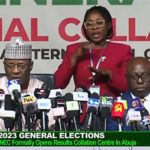
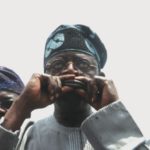
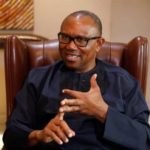
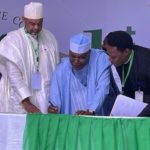
• On March 1, 2023, the Independent Nigeria Electoral Commission (INEC) announced the results of the keenly-contested February 25 presidential election, declaring Bola Ahmed Tinubu as the new Nigerian President. Subsequently, he was sworn in as President on May 29, 2023.

    But this didn’t mark the end of the election process. 

    What happened?

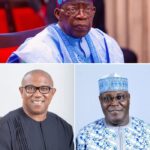
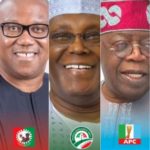
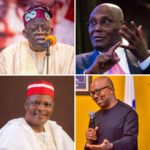
    Nigerian elections are usually fierce contests, but no election since the country’s return to democracy in 1999 was as close as the 2023 cycle. Three favourites emerged in the months leading to the polls: Peter Obi of the Labour Party, Atiku Abubakar of the People’s Democratic Party and eventual winner, Bola Ahmed Tinubu of the APC. 

    While Tinubu’s 8,794 726 votes were enough to be victorious at the polls, it was the smallest win margin by any Nigerian President since 1999. Atiku Abubakar and Peter Obi followed relatively closely at 6,984 520 and 6,101 533 votes, respectively. 

    This wasn’t the most significant bone of contention, though. The election was also allegedly marred by violence, voter intimidation, harassment and other irregularities, begging one question: Can the legitimacy of the results be trusted?

    Following INEC’s declaration, various calls emerged to invalidate the results, accusing the electoral body of multiple electoral irregularities. Since May 2023, three political parties — Labour Party (LP), People’s Democratic Party (PDP) and Allied People’s Movement (APM) — have contested the INEC results that declared Tinubu president, basically telling the tribunal to evict Tinubu from Aso Rock. 

    Here’s what to know about the petitions

    On March 21, 2023, four presidential candidates from four political parties lodged different suits with the election tribunal, seeking to nullify the results. 

    Labour Party (LP)

    The party believes the new President and vice were not qualified to contest the election, referencing Tinubu’s alleged involvement in narcotics and his running mate, Shettima’s nomination, while being the Borno Central constituency’s senatorial candidate. Also, President Tinubu didn’t get 25% of the votes in the FCT, which according to the Labour Party, should have stopped INEC from declaring him the election winner. 

    The petition prays the tribunal to order a return to the polls where Tinubu and Shetimma will not participate. 

    People’s Democratic Party (PDP)

    PDP’s petition also asked the tribunal to dismiss the results of the presidential elections. They argue the invalidity of the results based on electoral irregularities during the process. 

    Allied People’s Movement (APM)

    The petition noted that Shettima’s double nomination is against the provisions of the Nigerian constitution and electoral act.

    Action Alliance (AA)

    The party asked the tribunal to annul the election results because its candidate, Hamza Al-Mustapha, wasn’t allowed to contest by INEC.

    AA subsequently withdrew its petition. 

    What will the tribunal ruling mean?

    The tribunal announced it’ll deliver its ruling in Abuja on September 6, 2023. One of two things will happen: uphold the election results and confirm Tinubu as President, or cancel the election and order a rerun. 

    If the former happens, the petitioners can seek out the Supreme Court and appeal the judgement. According to the law, an appeal should be concluded within 60 days from the date of the tribunal judgement.

    Whatever the Supreme Court decides is the final judgement. There is no other place to go from there. 

    Highlights From the Presidential Election Petition Tribunal Judgement

    Allied Peoples Movement (APM)

    Petition: The party noted that Tinubu’s running mate, Kashim Shettima, was a senatorial candidate at the time of his nomination, which, according to the provisions of the Nigerian Constitution and Electoral Act, is a case of double nomination.

    The party asked the tribunal to void all the votes scored by the APC and announce PDP’s Atiku as the authentic winner of the election.

    Judgement: Justice Haruna Tsammani cited the petition as “incompetent” and noted that the issues raised were pre-election matters outside the tribunal’s ruling. The election petition tribunal dismissed the APM’s case, noting that the party had no legal standing to file the motion.

    Labour Party (LP)

    Petition: The party’s candidate, Mr Peter Obi, sought to have Tinubu disqualified on the basis of an alleged pre-existing drug case in the U.S., making him unqualified to contest for the election. 

    The petition challenged his vice, Kashim Shettima’s nomination while being the Borno Central constituency’s senatorial candidate.

    The petition also noted that Tinubu failed to secure 25% of votes in the FCT, so he shouldn’t have been declared the winner.

    Judgement: Justice Abba-Bello Mohammed read the court’s judgement, throwing out Peter Obi’s petition to disqualify Tinubu based on a U.S. drug case. According to the court, the U.S. court fine, which led to a civil forfeiture of $460k, did not disqualify Tinubu from running for president of Nigeria.

    The tribunal has also held that President Bola Tinubu and Vice President Kashim Shettima were qualified to have contested the last presidential election.

    Peter Obi’s motion to cancel the election result based on manual transmission has also been dismissed. According to the tribunal, INEC can transmit election results how they see fit.

     Obi’s last two motions to cancel the election results on allegations of overvoting and corrupt practices and the failure of Tinubu to secure 25% of votes in the FCT have also been dismissed by the tribunal.

    All of Peter Obi’s motions have been dismissed in favour of Tinubu.

    People’s Democratic Party (PDP)

    Petition: The party sought the tribunal to dismiss the election results based on electoral irregularities, as well as allegations of Tinubu’s dual citizenship.

    Judgement: Justice Boloukuoromo Ugo read the court’s judgement, throwing out all the motions filed in favour of Tinubu.

    The tribunal made a unanimous decision

    All five judge-members of the presidential election tribunal have unanimously affirmed Bola Tinubu as Nigeria’s validly-elected president. Justice Haruna Tsammani, in the lead judgement, held that none of the three petitioners was able to prove their allegations as contained in the petitions. They claimed the petitioners failed to provide credible evidence.

    According to Justice Mistura Bolaji-Yusuf, “It is clear from the outset that the petitioners were engaging in wild goose chase and an inquisitorial adventure.”

    Most of the exhibits and testimonies tendered by the petitioners were rejected based on “procedural blunders” and “technicalities”. The entire judgement ran for over 12 hours.

    Is this the end of the road for the petitioners?

    Far from it. The petitioners have the opportunity to file an appeal to the Supreme Court within 14 days to counter the tribunal’s judgement. It’ll likely be a long road ahead.

    [ad][/ad]

  • Three days after the 2023 presidential elections, Nigerians all over the world  are holding their breath and clinging to the edge of their seats as they await the long overdue results. 

    Here’s all that has happened: 

    Contrary to what we thought, election results were uploaded manually

    One of the measures put in place by the Independent Electoral Commission to ensure a smooth electoral process was the electronic transmission of results. But the spokesperson for INEC, Festus Okoye, released a report saying results from polling units would be electronically transmitted to IReV, but collations would be manual.

    Also read: Can Nigerians Trust BVAS for the 2023 Elections? 


    Disparities between figures Nigerians recorded at their PUs and INEC’s 

    A lot of heat has come upon INEC for releasing falsified results. A spokesperson for the Obi-Datti presidential campaign council claimed that the presidential result from Ekiti state had been uploaded on February 20, five days before the elections. 

    But we fact-checked this, and our checks revealed the screenshot, which was trending on social media, was in fact fake.

    Petition for the INEC’s Chairperson visa to be revoked 

    In the spirit of holding leaders accountable for their actions, Nigerians are dragging Mahmood Yakubu by his metaphorical shirt, and asking the UK, USA and Canada to revoke his visa for rigging Nigeria’s presidential election in favour of APC. The petition currently has over 285,600 signatories.

    Rumours of a runoff election to determine the president 

    For a candidate to be declared President, they must have 25% of votes in 2/3rd of all the states, including the FCT, and also the highest number of votes. From the election polls, we’ve seen the four contending parties show strength in their different regions.

    Banky W lost the Senatorial seat in Eti-Osa 

    Businessman and investor Thaddeus Attah, contesting under Labour Party, beat renowned singer and actor Bankole Wellington who contested under the People’s Democratic Party. Against speculations that he only won because of his party, some people have claimed he was absent from the TL because he was busy campaigning street-to-street. 

    Related: Who is Thaddeus Attah? The Man Who Beat Banky W in Eti-Osa 


    The European Union has dropped their two-cents

    On February 27, 2023, the EU released an official statement saying that while the Nigeria presidential elections had gone on as planned, the lack of transparency and operational failures challenged the citizen’s right to vote. So even though our electoral commission failed to address the numerous allegations of violence and vote buying, the EU acknowledges this was far from a free and fair election. 

    Lagos state alleged dinner party  

    An invitation card began circulating the media in the earlier hours of Tuesday, February 28. And the event was allegedly between the executive governor of Lagos state, Mr Babajide Sanwo-Olu and the Igbo captains of industry, such as the Executive Chairman of Chisco group of companies, Chief Dr Chidi Anyaegbu and the Chairman/CEO of Air Peace, Mr Allen Onyema. 

    But the media aides of the Governor have since come on their platform to tag the flyer as fake news. 


    Get all the latest updates on the 2023 Presidential elections in one place.

  • Civic responsibility is not cosplay. When your brand claims to be politically conscious, you should show up when it counts.

    As millions of Nigerians gathered at the polls to decide the country’s fate during the 2023 presidential elections, some singers who’ve built their identities around fixing Nigeria were nowhere to be found. It’s one thing to sing about the struggles Nigerians go through. It’s another thing to actually do something about it, especially when that thing is voting — or encouraging others to.

    Following the events of 2020 — the year we protested for our lives while some people in government hoarded Indomeeen meant for COVID-19 palliatives — I wasn’t surprised when, as early as 6 a.m., most Nigerians were already at their polling units ready to exercise their civic duty and protect their mandate. One of those early birds was Nollywood actress, Omoni Oboli. 

    Omoni Oboli at her polling unit on the morning of the elections

    Not too long after Omoni’s post on social media, Nollywood started showing up en masse with posts from actors like Jemima Osunde, Chioma Chukwuka-Akpotha, Kate Henshaw, Rita Dominic, Toyin Abraham, Stan Nze, Adesua Etomi and Adunni Ade. These actors didn’t just show us they were voting, they also provided situation reports on their various polling units, encouraging their over 40 million combined followers to go out and vote. 

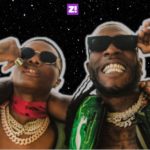
    But while Chioma Chukwuka was getting attacked by thugs trying to snatch ballot boxes and Omoni Oboli camped at her polling unit till 6 a.m. the next day, our self-proclaimed African Giant, Burna Boy, was nowhere to be found. And our best export since crude oil, Wizkid? Well, Machalla was in Ghana, attending the funeral of a music producer’s mum, which might be good enough reason to not be in the country, but to not talk about the election? 

    It’s easy to dismiss Burna Boy and Wizkid’s absence from the polls; they’re just two votes out of 93.4 million registered voters. But then there’s the question of their reach. These two men have a larger social audience than most Nollywood stars who showed up at the elections and talked about it combined.

    RECOMMENDED: Just Imagine These Nigerian Celebrities As Nigeria’s President

    Leading up to the 2023 elections, some of these actors and musicians like Falz, Davido, Ladipoe, M.I and Zlatan spoke about PVC collection, urging their fans to equip themselves with the only permissible weapon for the elections. Meanwhile, Burna and Wizkid refused to disrupt their perfectly curated social feeds with election information. 

    https://twitter.com/zikokomag/status/1629459099120279554?s=20

    Other singers like Tiwa Savage, Don Jazzy and Rema were also quiet (Tiwa put up a post after voting had officially wrapped up wishing Nigeria a peaceful election). These musicians aren’t known to be silent on social issues. After all, Burna called out Coachella, and Wizkid also attacked Reekado Banks for attempting to promote music during #EndSars, all on Blue Ivy’s internet. So why keep quiet now? 

    Imagine Wizkid not showing up after this:

    Singling out Wizkid and Burna Boy is intentional, and their selection runs deeper than surface-level social media reach. Wizkid’s first international claim to fame and one of his biggest hits to date isn’t Essence; it’s Ojuelegba. The 2014 semi-autobiographical hit narrated Wizkid’s journey from shopping demos to becoming one of the biggest stars of his generation.

    Ojuelegba wasn’t just Wizkid’s story; the song presented a certain level of hope that if this random guy could hustle his way out, then maybe it’s possible for the rest of us too. 

    Similarly, Burna Boy’s transition from “underrated” to international superstardom came in 2018  with a little song called Ye. Sampling Fela’s 1977 classic, Sorrow Tears and Blood, Ye positioned Burna as the voice of the people, a narrative he’s continued to push internationally from African Giant to Love, Damini

    These two, more Burna than Wizkid, have each benefited from posturing as messengers of the Nigerian experience — good and bad. So you can’t blame the people for expecting them to show up somehow when the going gets really tough. 

    In a very on-brand move, Wizkid has remained silent in the face of the warranted social media drag. Meanwhile, Burna has decided to be defensive and condescending — something we’ve gotten accustomed to. 

    RECOMMENDED: 9 Old Songs About Nigeria that Prove that Nothing Has Changed

    Although I don’t have hard evidence to prove that celebrities showing up at the polls can influence voter turnout in Nigeria, it’s not far-fetched to imagine many people would’ve pulled up to the Ojuelegba polling unit in Lagos if they thought there was a slight chance their fave would be there. 

    Research shows a direct relationship between celebrities encouraging people to vote and actual voter turnout in countries like America. In 2018, vote.org recorded 65,000 new registered voters after Taylor Swift endorsed a political candidate and asked her fans to vote. The same organisation recorded a 1500% increase in voter engagement after a similar Kylie Jenner post in 2020. So even though Nigeria and most other African countries don’t record data like this, celebrity culture can influence voting culture. 

    That being said, going out to vote is a civic duty, and the decision shouldn’t be forced. But we should look at the bigger picture.

    Music has held Nigerians together generation after generation, reflecting our collective struggles and hopes for the future. It was music Fela used to hold the military accountable during his time, and it was music that fueled the #EndSARS protests

    As Afrobeats dominates the “world” it’s been trying to reach for years, our faves must remember where the sound came from. There’ll be no “Afrobeats to the world” if Nigeria goes to shit. And when you claim to be about civic responsibility, you should show up when it counts.

    Check here for live updates on the ongoing presidential and legislative elections. 

    ALSO READ: Understanding the Trending Celebrity to Politician Pipeline in Nigeria

  • One of the greatest feelings for Nigerian politicians is knowing they have people who are in love with them enough to do anything for them. 

    Nigerian politicians enjoy a lot of public goodwill

    And love makes you do strange things, but some people on this list like to overdo things. We need them to think more before they act.

    Showing your naked bum bum to the internet

    Nothing prepares you for logging onto social media and seeing the bare asscrack of someone’s grandfather at the beach calling on God to help his candidate win. Yet, Nigerian actor, Ebun Oloyede, didn’t consider this when he subjected millions of Nigerians to a video clip of himself completely naked, with a back view no one asked for or deserved.

    We’re pretty sure Oloyede hasn’t dedicated this much to a film role before, so why do it for politics? Let this be the last time, sir.

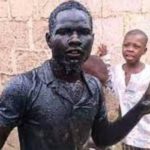
    Drinking gutter water

    For most people, voting for a candidate who goes on to win an election is always a cause for celebration. Most normal people would put an extra piece of meat on their rice or go out for a few bottles of beer with friends. But for Aliyu Muhammad Sani of Bauchi State, Buhari’s re-election victory in 2019 was his excuse to take a full dive into a rubbish-filled gutter. 

    Nigerian politicians enjoy a lot of public goodwill

    [The Guardian]

    Sani had promised to swim inside a gutter and drink drainage water if Buhari won, but maybe this is the one time it was okay to act like a Nigerian politician and not go through with a promise. To clarify, swimming in a gutter of rubbish is bad for your health and for our eyes.

    Trekking interstate

    Nigerian voters have upheld a tradition of doing interstate treks as a declaration of love for their favourite candidates so much that it’s got weird. The most infamous of the trekkers is Suleiman Hashimu who walked 750 kilometres in 18 days from Lagos to Abuja to celebrate Buhari’s 2015 victory. Buhari rewarded him with a handshake and eight years of whatever Nigeria currently is.

    Nigerian politicians enjoy a lot of public goodwill

    Dahiru Buba, another infamous Buhari trekker, who made a trip from Gombe to Abuja with his legs in 2015 needed financial help in 2020 to treat limb pains that developed after his unnecessary walk. 

    You’d think these consequences would dissuade future trekkers, but some supporters are already trekking from state to state for 2023 presidential candidates.

    Fighting your friends for politicians

    The trend of severing ties with longtime associates over support for politicians has grown over the past eight years as online political discourse has become more toxic. 

    Nigerian politicians enjoy a lot of public goodwill

    The big attraction of democracy is it allows everyone to responsibly table their points of view without fear of bad blood, but that isn’t always the case between supporters in different camps. 

    What’s worse about this hostile trend is the politicians they’re fighting these battles for are publicly friends when elections are over and don’t care about your private relationships. Yet, there you are, cutting off your own friends.

    Nigerian politicians enjoy a lot of public goodwill

    Election violence

    Electoral violence is a feature as old as Nigerian politics itself, and it’s just sad that the pawns of the game are yet to realise they mean nothing in the grand scheme of things. People who’ll be abandoned to their fates after elections are the ones physically manipulating the process for unqualified people to march into office. 

    Nigerian politicians enjoy a lot of public goodwill

    The trend of electoral violence has tipped downward over the past few election cycles, but those who haven’t got the message must realise they’re running a fool’s errand.

    Stuff on Buhari: The President’s Weirdest Decisions We Thought Were April Fool’s Day Jokes But Weren’t

  • This is Zikoko Citizen’s Game of Votes weekly dispatch that helps you dig into all the good, bad, and extremely bizarre stuff happening in Nigeria and why they’re important to you.

    Subscribe now to get the newsletter in your email inbox at 8 am every Friday instead of three days later. Don’t be LASTMA.

    It must not be easy to be Bola Ahmed Tinubu in 2022. When he won his presidential ticket in June, he signed up for a world of public scrutiny so intense it can power Nigeria’s erratic national grid. 

    Journalists, political rivals and even random 12-year-olds with an internet connection have poked and prodded into his life.

    Will the Real Bola Tinubu Please Stand Up?

    [Zikoko Memes]

    This isn’t a bad thing — the scrutiny is necessary for anyone auditioning for Nigeria’s highest political office. It’s not when you’ve already elected someone into office you want to find out they’re medically unfit, love eating semo or used to sell drugs.

    In Tinubu’s case, he’s made the job pretty easy for his haters by running a campaign so chaotic in its messaging and frightening in its prospects. Even before he won the ticket, he pissed everyone off with his infamous “emi lokan” rant and his unending stream of public slips of the tongue has made him a fertile target for online ridicule. But one of the candidate’s biggest burdens is his unresolved shady past threatening to blow up his campaign.

    Will the Real Bola Tinubu Please Stand Up?

    [Zikoko Memes]

    This week, a former Cross River State governor, Donald Duke, complained that the Tinubu campaign has been using a picture of him as a young boy to represent the former Lagos State governor. The controversial documentary about the life and times of Tinubu first aired in June and implied the dashing young boy was a younger version of the candidate who says he’s now 70.

    Will the Real Bola Tinubu Please Stand Up?

    We need the wisdom of King Solomon to settle this one

    This would be considered an honest mistake for any other candidate. But for Tinubu, it’s just the latest issue to cast uncertainty over his real identity, especially with the many hazy details about his past.

    Tinubu has had many allegations thrown his way, from his dodgy academic credentials to his unclear employment records and even his political legacy. It’s an absolute miracle his campaign is still standing largely unharmed, but is there a point where his nine lives run out?

    What else happened this week?

    Make Air Travel Great Again (MATGA)

    [ThisDay]

    Using Nigerian airlines comes with some pretty heavy baggage, starting from when you arrive at the airports. If it’s not the bambiala officials, it’s the annoying queues, the announcer’s confusing accent, overpriced food, and security officials touching you anyhow in the name of inspection.

    It’s a very long list of discomforting issues, but all of these don’t even compare to the moment you find out your flight is delayed or, even worse, cancelled. It’s a vicious cycle of feeling you’re on your own and not getting your money’s worth.

    If you’re one of the Nigerians worried about not getting quality service from the aviation industry, worry not because the House of Representatives is stepping in to save everyone. House member, Simon Karu (Gombe – APC), raised a motion this week for an investigation into the violation of the rights of passengers in Nigeria.

    The goal of the investigation is to improve the system to provide quality air travel services in the country. This means airline operators will stop shortchanging their customers and provide them with due compensation when they mess up.

    [Zikoko Meme]

    Hopefully, this new energy for the industry can cause a chain reaction that’d remove the bambiala officials, the annoying queues and the customer service agents walking around with the attitude of an irritated porcupine.

    Oh, look, a flying pig.

    Have you seen this video?

    Question of the week

    On a scale of “Over my dead body” to “I’d like to sleep with them under my pillow”, what are your thoughts on the new naira banknotes?

    Click here to tweet your answer to @ZikokoCitizen on Twitter.

    Ehen, one more thing…

    The Inspector-General of Police, Usman Baba, complained this week that police officers don’t have any human rights activists to advocate for them when members of the public violate their rights. Has he met Nigerian police officers before?

  • In the past, Nigerian politicians used to get away with selling voters pipe dreams and empty promises. But the campaigns for the 2023 elections have shown us Nigerians are no longer gullible and are willing to ask questions. This is why Bola Tinubu, the presidential candidate of the All Progressives’ Congress (APC), is again under public fire.

    What has he done now?

    On November 22, 2022, at the inauguration of the first drilling of crude oil in Bauchi State, Tinubu made some promises. But the one that’s got everyone talking is his promise to recharge the Lake Chad. Supporters of rival candidates have ridiculed his plan on social media, but there are important things you should know about the Lake Chad before you take up arms.

    What makes the Lake Chad special? 

    The Lake Chad, once called the epitome of productivity, was one of Africa’s largest freshwater bodies and the world’s sixth-largest inland water body. In the 1960s, it used to have an area of 25,000 square kilometres with about 135 species of fish. Nigeria shares the Lake Chad with Cameroon, Chad and Niger. 

    How important is the Lake Chad to Nigeria?

    Because of how large and rich the water body was, the lake provided a means of livelihood and food for about 30 million people who lived around it. Unfortunately, the water levels began to shrink, and today, it’s reduced by over 95%. The effect of this change has been devastating. 

    Hmmm, how?

    Loss of livelihoods

    The lake provided a source of income for people who depended on farming, fishing and cattle herding. But with the water source almost gone, herders battled daily loss of livestock, and farmers and fishermen found it virtually impossible to work.

    Insecurity

    The loss of income in the areas around the lake pushed many people into a life of crime. Cattle rustling, banditry, and farmer-herdsmen clashes have become the order of the day. About two million people have been displaced from their homes, and over five million people suffer and die from malnutrition. 

    How would Tinubu’s plan help the Lake Chad?

    Recharging the Lake Chad means refilling the water body by building dams and canals to pump water from the Congo River. This proposed solution is estimated to cost around $50 billion.

    The blowback over Tinubu’s promise shouldn’t be that recharging the lake is unnecessary, it should be about if he, or whoever becomes president, can address the problem once in office.

  • Unless you’ve been living under a rock, you’d know that the 2023 presidential election is on course to be the tightest race in recent history. Forget the bluster from partisan supporters, no one knows for sure which way it’ll swing.

    At The Candidates town hall series, which we’ve been covering, the presidential candidate of the New Nigeria Peoples Party (NNPP), Rabiu Kwankwaso, on November 19, 2022, said he’s not a spoiler in the presidential race. 

    To substantiate his point, he mentioned a report by the Independent National Electoral Commission (INEC) that disclosed that it was printing 187 million ballot papers — twice the number of 93.5 million eligible voters, as it anticipated that the election might go into a runoff. 

    With this background, we’ve decided to break down what a runoff election entails, and what it could mean for voters.

    What is a runoff?

    A runoff describes a voting system that selects a winner after two rounds of voting. It happens when no candidate is able to meet the requirements needed to be president at the first round of balloting. The idea behind it is to ensure that whoever is elected president gets broad acceptance from across the country.

    What laws guide the conduct of a runoff in Nigeria?

    INEC is empowered by the Electoral Act 2022 (as amended) to conduct runoff elections in Nigeria. Section 134 of the Nigerian Constitution explains the conditions for this to occur. 

    To be elected as president, “A candidate for an election to the office of President shall be deemed to have been duly elected where, there being more than two candidates for the election –

    (a) he has the highest number of votes cast at the election;

    and

    (b) he has not less than one-quarter of the votes cast at the election of at least two-thirds of all the states in the Federation and the Federal Capital Territory (FCT), Abuja.”

    The summary of the above is that a candidate needs to get a simple majority of votes, and 25% of votes in 24 states to become president. When this doesn’t happen, we go into a runoff.

    ALSO READ: Do Opinion Polls Matter in Nigerian Presidential Elections?

    Who qualifies for a runoff?

    Section 134, subsection 3 defines who qualifies as, “(a) the candidate who scored the highest number of votes at any election held in accordance with the said subsection (2) of this section; and

    (b) one among the remaining candidates who has a majority of votes in the highest number of states, so however that where there are more than one candidate with majority of votes in the highest number of states, the candidate among them with the highest total of votes cast at the election shall be the second candidate for the election.”

    The summary here is that two candidates will go into the runoff. One is the candidate with the highest number of votes in the first round. The other candidate is the person among the rest that wins the most states. If more than one candidate in this group has won an equal number of states, then the tiebreaker is the candidate who won more votes.

    Could the 2023 election go into a runoff?

    There’s a possibility that a runoff might happen given the respective strengths of the four leading candidates. Different election polls have shown that they all possess strong support bases. INEC spokesman, Festus Okoye, said printing extra ballots has been a tradition of the commission since 1999.

    How soon after the main election can we expect a runoff?

    The Electoral Act gives INEC a maximum of 21 days to conduct a runoff. The timing is not unusual. INEC has said it’s a logistical nightmare printing another 93.5 million ballots within three weeks, hence the proactive move.

    What could it mean for voters?

    If you’re unlucky and one of your faves doesn’t make it to the next round, you may find yourself having to vote for a “lesser of two evils”. This often means that the candidates who scale through will do some serious mobilisation and have to reach out to fringe voters to gain their support. 

    Overall, this is very good for democracy. It leads to robust coalitions and helps keep candidates on their toes. For Nigeria with a history of poor leadership, a runoff, even though expensive, might be a small price to pay for good governance.

    ALSO READ: It’s 100 Days Until the 2023 Elections. What Has Happened?

  • Today, November 16, 2022, makes it exactly 100 days till the general elections scheduled for February 25, 2023. A lot has happened since campaigns officially kicked off on September 28, 2022. 

    Here are some interesting things that have happened so far, and what you can expect in the coming days.

    PDP flags off campaign with Obi chants

    Despite the many internal squabbles happening in the People’s Democratic Party (PDP), the party’s campaign took off in Uyo on October 10, 2022 and there were reports of a massive crowd. However, the standout moment came when PDP supporters were singing Obi kerenke chants at the rally. A truly forgettable moment for PDP’s Atiku Abubakar.

    Labour Party kicks off campaign with low turnout

    It was the turn of the Labour Party (LP) to kick-start its campaign which it did on October 29, 2022, in Nasarawa state. While the PDP had Obi supporters turn out in good numbers at its rally a few days earlier, they somehow managed to hide their faces where they were truly needed.

    Doyin Okupe, an LP spokesperson, said the state government employed tactics designed to frustrate its supporters, including scheduling an environmental sanitation on that day to limit movement. 

    He claimed that this was the first time in seven years that the state was doing such a thing, reducing its available supporters by 90 percent. Looks like there’s enough breakfast to go around.

    APC gets a hostile reception

    APC kicked off its campaign on November 15, 2022, in Plateau state. While other interesting things took place, there was also the unfortunate matter of boos and stones being reportedly hurled during the campaign.

    To be fair though, the APC in 2015 asked us to stone them if they fail to perform. So there’s that.

    What can we expect in the next 100 days?

    Things are bound to get very exciting. Expect funny soundbites, epic fails, more gaffes and mudslinging. 

    Meanwhile, the Independent National Electoral Commission (INEC) has said that while all that is happening in the background, it remains loyal to Nigerians. Already it has published its voter register online for Nigerians to make claims and objections. You can head over here to learn more.

     ALSO READ: Embarrassing Moments from 2023 Presidential Candidates so Far

  • MKO Abiola died 24 years ago, but he’ll always be remembered as Nigeria’s president that never was. Even though he was the winner of the 1993 presidential election, his village people — General Ibrahim Babangida and General Sani Abacha — denied him his mandate.

    Abiola’s presidential campaign is still mostly remembered for the tragedy that it was, but one of the other most memorable things from that period is his campaign ad which promised hope for Nigerians. In the video, the main character — let’s call him Polycarp — complained about the most frustrating things for him as a Nigerian in 1993.

    MKO Abiola's 1993 Campaign Video Is Still Valid in 2022

    Meet Polycarp: he believed in1993 Nigeria was one election away from becoming a paradise

    With the 2023 elections just around the corner, it’s only fitting to check in on Polycarp’s list of complaints to see how much things have changed — or not — in 30 years. 

    If Polycarp was angry about 1993 Nigeria and jumped inside a time machine to 2022 Nigeria, what would he meet?

    No work

    MKO Abiola's 1993 Campaign Video Is Still Valid in 2022

    Polycarp’s time machine may want to skip 2022 Nigeria if it’s gainful employment he’s seeking because we have some very bad news for him. Nigeria’s 2020 unemployment report pegged the unemployment rate at 33% which is the highest it’s ever been. Polycarp would still be unemployed and broke in 2022, and desperate enough to start selling affiliate marketing courses on Facebook.

    No food

    Like everything in Nigeria these days, the prices of food items aren’t obeying the laws of gravity. The National Bureau of Statistics reported that food inflation rose to 23.34% in September 2022 which is the highest it’s risen in more than 15 years. 

    Even worse, nearly 20 million Nigerians are potential victims of famine, according to the United Nations’ Food and Agriculture Organisation (FAO). What this means is that 10% of Nigerians face hunger of Biblical proportions. For context, that’s the combined population of Eritrea, Namibia, Gambia, Botswana, Gabon, Lesotho, and Guinea-Bissau at risk of hunger inside just one country.

    No house

    If Polycarp was complaining about housing issues in 1993 when you could probably rent or buy a home with money saved under your bed, then he probably wants to skip to 2072 Nigeria or something. Because in 2022, Nigeria has a housing deficit of about 28 million units and even the homeowners are being forced out of their houses by seasonal floods and terrorism.

    No light

    MKO Abiola's 1993 Campaign Video Is Still Valid in 2022

    Nigeria’s national electricity grid is more well-known than the governor of Jigawa State — and the fact you just tried and failed to remember his name proves my point. But the national grid isn’t known because it’s the eighth wonder of the world or sponsors Twitter giveaways. It’s always on everyone’s lips because of how frequently it collapses, leaving Nigerians in darkness. Whatever jungle Polycarp thought Nigeria was in in 1993, the country is still in the Dark Ages.

    Expensive transport fares

    MKO Abiola's 1993 Campaign Video Is Still Valid in 2022

    One of Polycarp’s most prominent complaints was the transport fare eating into his daily ₦2k, and we have news for him from the future. Just over the past year alone, the average bus fare within Nigerian cities rose from ₦435.36 in September 2021 to ₦615.69 in September 2022. The recurring fuel scarcities don’t help matters and the situation is likely to worsen with the proposed removal of fuel subsidies in 2023.

    Out-of-school children

    When Polycarp complained about school being a headache, the campaign ad showed a dozen shirtless little children roaming the streets. In 2022, that demographic has ballooned into a population of 20 million out-of-school children forced out of the classroom by government neglect, poverty and insecurity. The government keeps paying lip service to the problem and even 2023 presidential candidates are still talking about setting up committees to tackle it.

    Hospitals aren’t working

    MKO Abiola's 1993 Campaign Video Is Still Valid in 2022

    Nigerian doctors are some of the most prominent groups participating in the japa wave and even the president of the country travels to London every three market days to take paracetamol because the health sector isn’t where it needs to be. Not much has changed between 1993 and 2022. 

    MKO Abiola's 1993 Campaign Video Is Still Valid in 2022

    Polycarp was dealing with “so so palava” in 1993, but Nigerians are dealing with real shege in 2022. The unfortunate lesson here is 2023 presidential candidates are still using the same issues to campaign nearly 30 years after they already reached a critical point.

    Whatever choice Nigerians make in 2023 will determine whether things improve or we have to walk the wilderness for another 30 years. Polycarp may want to skip even further into the future.

    ALSO READ: This Nigerian Wants to Vote in 2023 but He Won’t Leave Germany

  • On October 27, 2022, Fitch Solutions, a subsidiary of international credit rating agency, Fitch Ratings, released a Country Risk and Industry Research report that projected 2023 presidential election victory for Bola Ahmed Tinubu (BAT) of the All Progressives Congress (APC).

    As you can be sure, supporters of the BAT received this report with uncontrolled joy. For them it was an affirmation of what they already knew, that it was his turn.

    Predictably, the Peoples Democratic Party (PDP) and Labour Party (LP) have rejected the report as unrealistic. But this isn’t the first time a report or poll has called the result of the 2023 election. In September 2022, a poll commissioned by ANAP foundation projected LP’s Peter Obi as the winner of the election.

    The trend of different polls projecting different winners has led to broader questions about if they really matter. Just as we recently looked into whether endorsements have any effect on election outcomes, we will dive into whether opinion polls matter in the context of Nigerian presidential elections. 

    Why are polls conducted?

    Despite the common trope that Nigerian politicians don’t care about the masses, they actually care about what they think when it’s time for elections. It’s only when they’re in office they can start unlooking us, just like Buhari has made abundantly clear.

    Politicians conduct opinion polls to gauge public support. This also helps them identify the leading issues that drive campaigns. They’re also a standard in robust democracies like the United States and are a hallmark of a free society.

    Opinion polls can have usefulness even outside elections, like in determining approval ratings which show how well or badly the public responds to a political figure. For example in the lead-up to the 2015 elections, Goodluck Jonathan’s approval rating dropped by 5% which ultimately affected his chances.

    We know polls are a big deal in first-world democracies like the United States, but how reliable is polling  for Nigerian elections?

    How effective was polling in Nigeria in 2011?

    In February 2011, the ANAP Foundation, a non-profit organisation, commissioned the polling agency, NOI polls, to conduct a face-to-face presidential poll nationwide. The report showed that 93% of people knew Goodluck Jonathan was running for president, 73% knew Muhammadu Buhari was running and 48% knew that Nuhu Ribadu was running. 53% of those surveyed believed Jonathan would win. 

    The result of the election followed the exact order of the poll — Jonathan won and Buhari and Ribadu finished second and third respectively. 

    How effective was polling in Nigeria in 2015?

    NOI Polls conducted another survey for the 2015 presidential election and concluded it was too close to call.  Buhari topped that poll with 32% of respondents handing him victory, slightly ahead of Jonathan with 30%. The agency had also reported that Jonathan’s approval rating fell to 55% in January 2015.

    Just like the polls results showed, Buhari won the election and became the first opposition candidate to unseat an incumbent Nigerian president. 

    How effective was polling in Nigeria in 2019?

    In February 2019, NOI polls projected a second term victory for Buhari. He won the poll with roughly 33% of votes, while Atiku ended up with 25% with the population of undecided voters as high as 38%. While Buhari was expected to win, the poll noted that the margin of undecided voters could swing results in Atiku’s favour.

    The results of the 2019 election largely aligned with the poll, with voter apathy playing a huge part in Buhari’s re-election. Only about 35% of voters took part, the lowest in Nigeria since 1999.

    How effective will polling be in 2023?

    If the history of polling in Nigeria is anything to go by, pollsters can be quite reliable. Part of their efficiency also comes from timing — all the polls were conducted very close to the elections. That should probably tell you all you need to know about all the polling reports flying about almost four months to D-Day. 

    Ultimately, while party supporters may feel relaxed about polls that predict victories for their candidates now, there’s still lots of time for the wind to change before February 2023. 

    ALSO READ: One of These 18 Candidates Is Nigeria’s Next President