While most Big Brother Naija alumni pivoted to entertainment, Topher Bassey took a different route. The 25-year-old, who gained recognition on BBNaija Season 9, saw his post-show spotlight as a springboard for his true obsession: building brands that last.
“I think I’m a workaholic,” Topher says with an easy laugh. “I sleep thinking about work. I wake up thinking about work.”
It’s hard to doubt him once he starts talking about his multi-hyphenate life: creative director, designer, entrepreneur, consultant and how he’s turned fame into a functional ecosystem of business.
From Code to Campaigns: The Making of a Creative
Topher’s story starts at university. A computer science student with a sharp eye for style and a knack for driving buzz, he quickly realised that coding wasn’t where his passion lay. “If I were going to be a software engineer, it’d just be for the money,” he says. “But what’s life without purpose?”
While still an undergraduate, Topher Bassey began channelling his love for fashion into something more structured. Guided by his sister’s partner, who introduced him to the fashion business, he started selling pieces for him and learning the ropes. “He showed me how a fashion business works and encouraged me to turn my personal style into a venture,” Topher recalls. What began as a side hustle on campus, sharing his style and selling pieces, gradually evolved into Debonair Republic, a brand specialising in modern suits and statement pieces, with tailors, stylists, and photographers in his employ.
After graduating in 2022, Topher took a job as a PR consultant as his first real 9-to-5 experience. Before that, he’d interned at companies like HP and Topshot Media, experiences he credits with building his discipline and professionalism. “Those years taught me how to manage people, handle presentations, and think strategically,” he recalls. But while he was learning corporate order, his mind was already sketching out brand blueprints.
Building Before the Breakthrough
By the time he entered the Big Brother house in 2024, Topher already had a functioning fashion brand and a plan. “I knew I wanted to be a thought-leader in the fashion and design space,” he says. “The show was a platform, not the goal.”
He used the spotlight strategically when it came. Rather than chasing endorsement deals or acting roles, he doubled down on business. The show’s popularity gave Debonair Republic new visibility and reach, setting the stage for his next chapter, Creations by Topher, a design agency specialising in merchandise and branding, with a growing footprint in sports and gaming communities. Built on the design skills he honed during his university days, the agency reflects his ability to blend creativity with strategy.
At the same time, he continued to provide PR consulting on a larger scale, collaborating with brands to scale their presence and expand their reach through creative direction and storytelling.
Creations by Topher: Where Design Meets Culture
He calls ‘Creations by Topher’ “a dynamic and innovative design agency crafting high-quality, engaging merchandise that resonates with fan communities.” The company’s ethos is simple: it’s not just about putting logos on T-shirts, but turning brand stories into culture.
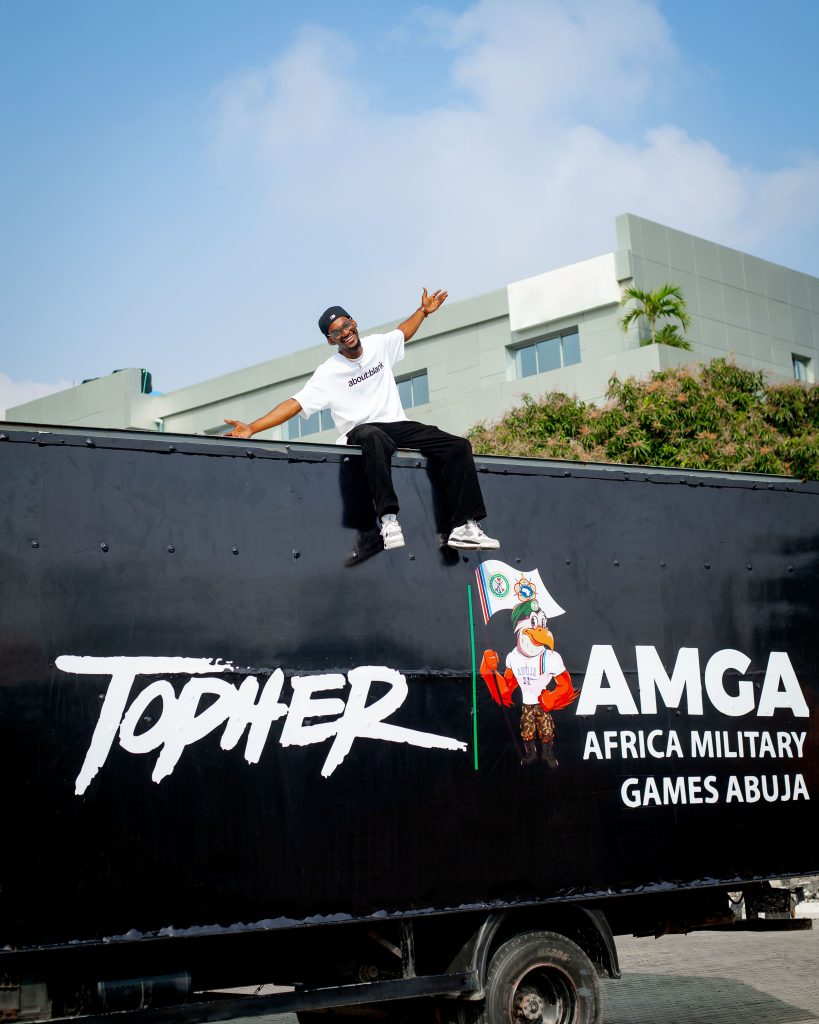
That mindset caught attention fast. Within a year, Creations by Topher landed contracts with the African Military Games (AMGA), the Nigerian Football Federation as AFCON’s official merchandise designer, Ughelli Rovers FC, and Mazerance, an Australian gaming company.
“The AMGA project opened every other door,” Topher says. “After that, almost every merch design job we’ve done traced back to that work.”
Today, his agency runs with a small but efficient team of five to ten: illustrators, marketers, and social media leads, while he functions as “the creative engine behind it all.”
The Republic Expands
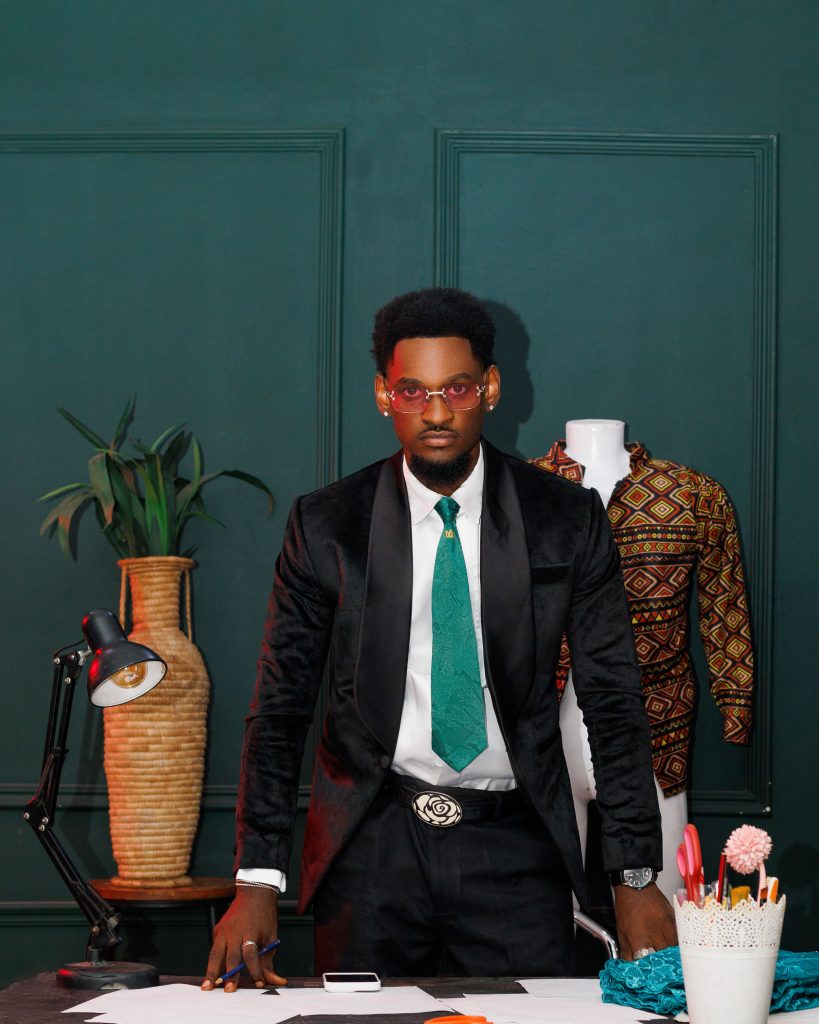
Meanwhile, Debonair Republic has evolved into a full-scale fashion house. It now employs eight to ten tailors, a production head, social media and sales leads, and a creative team for photography and video.
The brand’s storytelling-driven collections: “For Everyone” and “Sarang” (meaning love in Korean), explore identity, belonging, and emotion through clothing. “I like to create pieces that connect with people,” Topher says. “Every drop has to tell a story.”
Their reach is now global, serving clients in Nigeria, the UK, the US, and Canada, particularly international students who want Nigerian-made suits abroad. “We’ve bridged the gap,” he says proudly. “African designers can compete globally.”
When asked about scale, he’s candid: “We’ve serviced 500 to 1,000 customers since last year,” he says. But, he’s more reserved about how that volume translates to revenue, choosing to keep the figures private. Still, he admits the growth has far exceeded his expectations, raking in nearly five times what he imagined when he left the Big Brother house.
When Fame Meets Function
If there’s one thing Topher doesn’t shy away from, it’s giving Big Brother Naija its credit. “That platform opened doors that would’ve taken me five years and ₦200 million in marketing budgets,” he says. “It expanded my market beyond Nigeria; now we ship to Ghana, Zambia, South Africa, and other countries, all thanks to the show’s dominance across Africa.”
Still, he insists the show didn’t change his direction, only his speed. “I was already doing the work,” he says. “The visibility just multiplied it.”
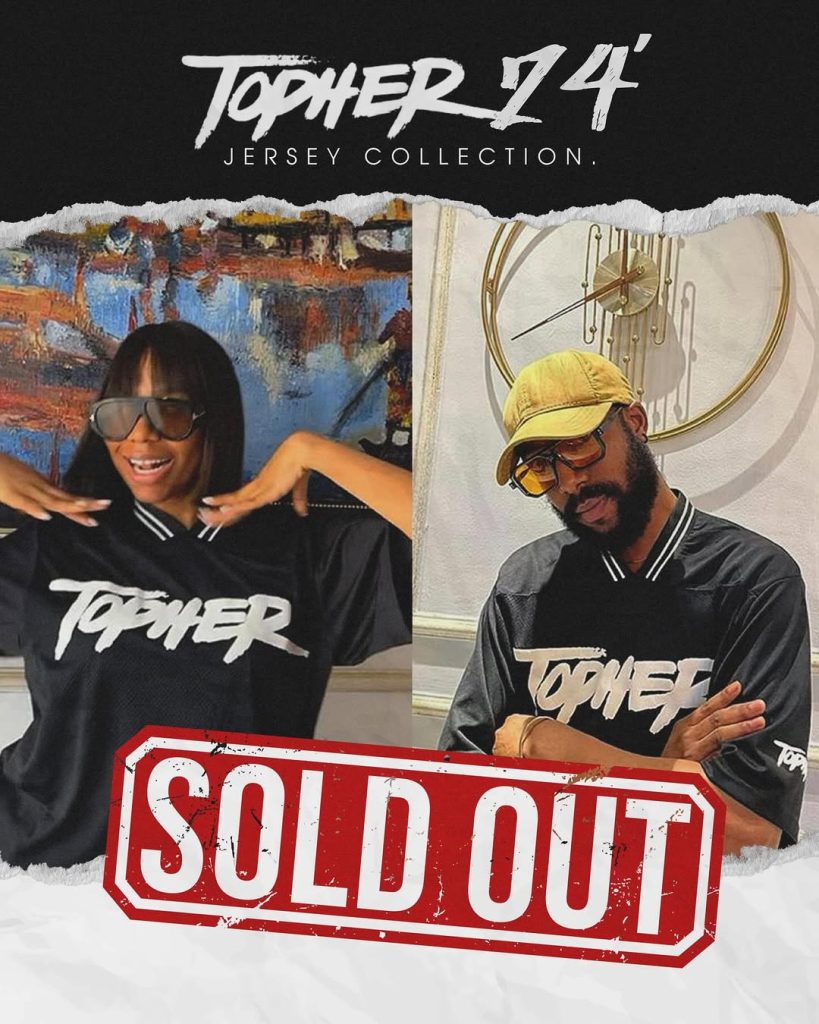
That visibility has also powered his community of fans, the “Guardians”, who consistently buy his releases. “We rolled out one merch drop after the show, and over 100 pieces sold out in under eight hours,” he recalls, “That showed me the community is real.”
Balancing Ambition and Reality
Running multiple businesses hasn’t come without cost. “It’s not glamorous,” he admits. “There are months when sales are slow, but salaries still have to go out.” When Creations by Topher, Debonair Republic, and his PR work all peak at once, “it gets overwhelming.”
But he’s grateful for stability. “None of my staff have left since we started,” he says. “It means something’s working.”
When asked how he measures success, Topher pauses for a moment. “It’s not just numbers,” he says. “Its impact. When I see a jersey or a suit and think, ‘We created that story,’ that’s success.”
What’s Next for Topher Bassey
A year after leaving the BBN house, Topher’s focus has shifted to scale. He’s now eyeing global collaborations: sportswear, luxury branding, international fashion showcases.
“It would be nice to consult for Chanel or direct for Louis Vuitton while my brands still stand strong,” he says with a grin. His motivation, he adds, is a mix of restlessness, addiction to change and fear of regret. “I hate doing the same thing twice. And I never want to look back and think I should’ve stayed in tech.”
Legacy Over Limelight
In a post-reality-TV world where fame fades fast, Topher Bassey is building something that would outlive the spotlight.
Through his design agency and fashion label, he’s doing just that. Each project, from sports merchandise to tailored suits, is another step toward creating a brand that’s known for its value.
“I wasn’t trying to chase the spotlight after the show or get into entertainment,” he says. “I just wanted to build something that would last longer than attention.”
And if his trajectory so far is any proof, he’s already doing just that.