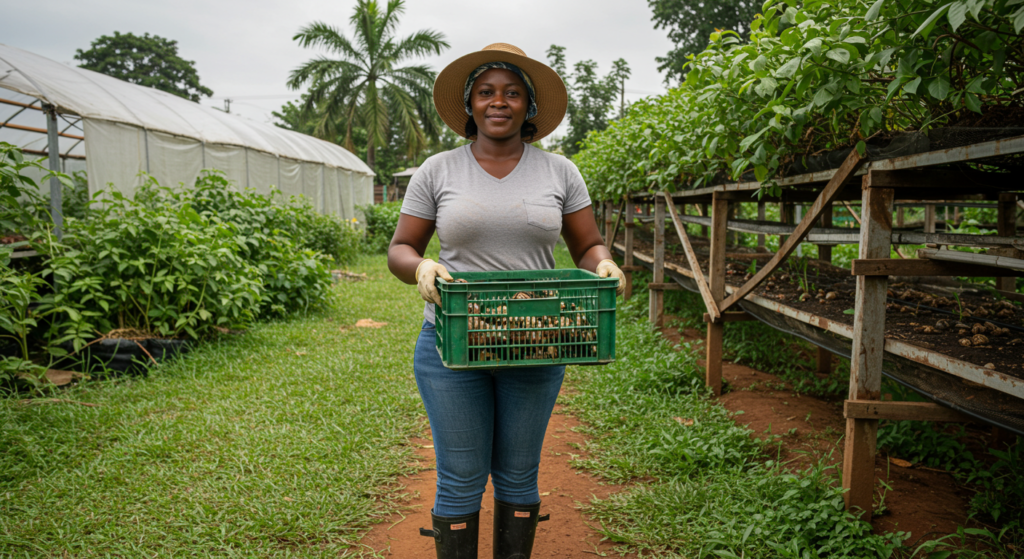
When Ọmọlará*, 35, first tried snail farming in 2016, everything went wrong. She had no roadmap, her snails died, and she ran out of savings. But she stayed on, learning from mentors, farming in her backyard, and documenting everything online until people started paying attention.
Today, her farm processes up to 2,000 snails monthly, serves clients across Nigeria and the diaspora and generates up to ₦100 million in yearly revenue.
As told to Aisha Bello
I run one of Nigeria’s fastest-growing snail-farming businesses. But I didn’t start with a grand vision nine years ago. I just needed something to keep me busy while waiting for NYSC.
Growing up, snail hunting was just something we did for fun. After it rained, my friends and I would run into uncompleted buildings with empty buckets, looking for snails. Older boys in the area even paid us a few naira to hunt for them. I never thought I could turn that childhood pastime into a multimillion-naira business.
But in 2016, fresh out of university and stuck at home for a year due to a missing exam script, I attended a youth seminar at church. A speaker listed small business ideas under ₦100k — zobo making, beadwork, and soap making. Then he mentioned snail farming. That one caught my attention immediately. My mind went back to those rainy days as a child. I was curious, excited even. It lit something up in me.
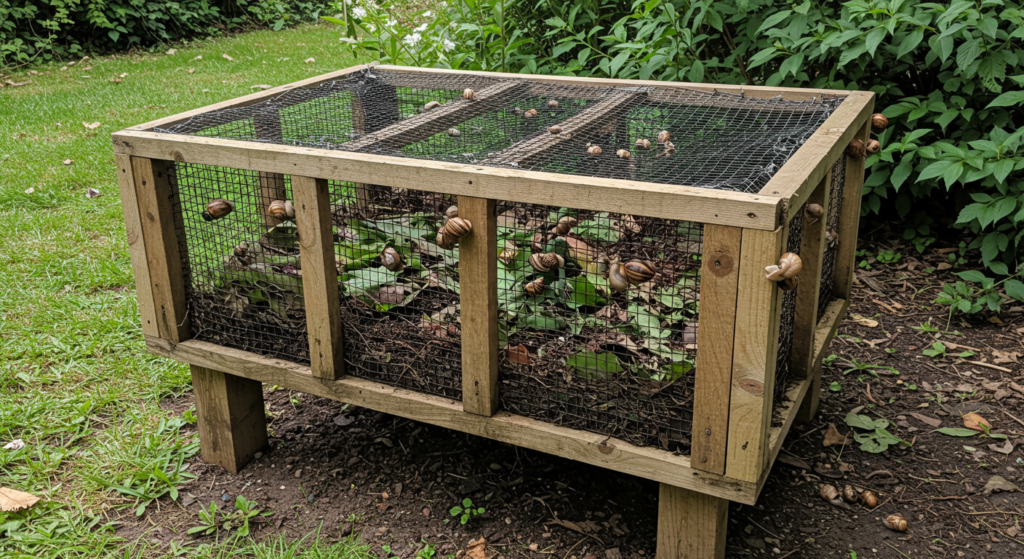
After the session, I approached him, and he linked me with a snail farmer in Akure. I started my first snail farm behind my student apartment with ₦30,000. This covered 30 snails at ₦450 each, a basic hutch box, some training materials, and their initial feed.
I didn’t know it then, but I was stumbling into the business that would define my life.
My First Attempt Failed, But I Couldn’t Let It Go
I didn’t know what I was doing. I went for NYSC in 2017 and returned in 2018 to find most of my snails had died from neglect. I had just a few left. I had been running the farm blindly, with no fundamental understanding of incubation, feeding cycles or how to prevent mortality. Dead snails can’t be sold; once they go bad, they’re worthless.
But I couldn’t shake the feeling that this business had potential. I held on to the surviving snails and their eggs, cared for them through the rest of 2018, and eventually found a bulk buyer.
That year, I sold 50 snails to a small chops vendor for ₦1,000 each. That ₦50k confirmed two things: people would actually pay good money for snails, and if I positioned myself well, the market would come.
How I Turned a Failing Hobby into a Scalable Business
After that first sale, I went all in. I took branding and business classes, networked with other agripreneurs, and trained with a prominent snail farmer who had overcome every hurdle I faced. I learned from him, implemented his strategies, and finally started seeing results.
I began sharing my farming journey on social media to document my progress. To my surprise, people were genuinely interested. They wanted to know how I was doing it, what mistakes I was making, and how to get started.
2019-2020: Building the Foundation That Changed Everything
My early setup was primitive — wooden hutch boxes arranged in square formations. But as I gained knowledge and confidence, I knew it was time to scale properly.
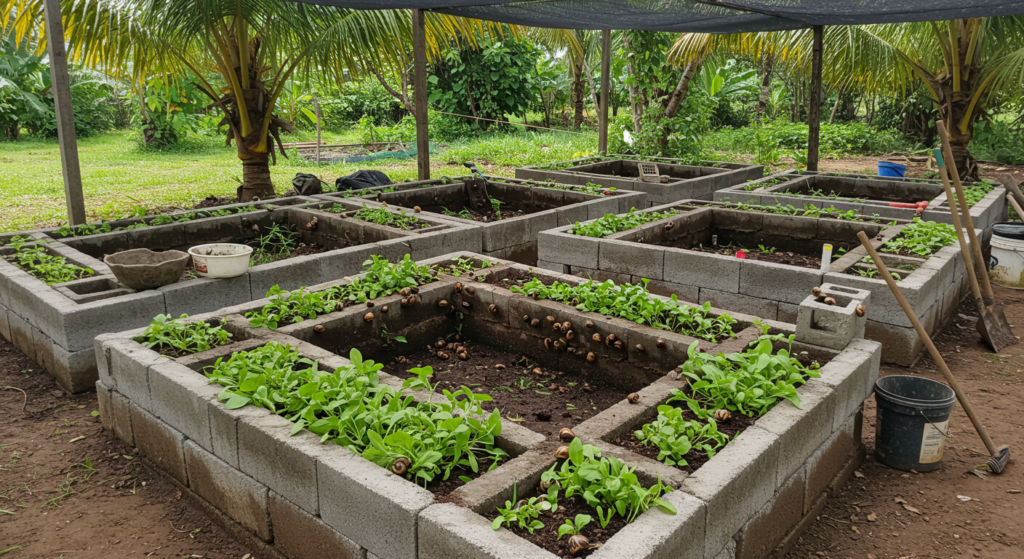
In 2019, my husband and I used a plot of land behind our house to build a trench system using concrete blocks — a more durable and efficient snailery structure. The construction alone cost about ₦1.5 million, and we spent another ₦1 million stocking the farm with quality breeding snails.
The funding came from multiple sources: my savings from my 9-to-5 job and support from my husband. I also received grants: ₦1 million from an SME organisation and another ₦1 million grant from a philanthropist.
We had stocked 2,000 breeding snails across different sizes, some selling for ₦600, others for ₦1,000, ₦1,500, and ₦2,500 depending on their size and age.
Here’s where snail farming gets interesting: those 2,000 breeding snails produced about 12,000 offspring. Even with a 10% mortality rate, I had roughly 10,000 snails to sell at various stages of growth.
The beauty of snail farming is that you don’t have to wait for every snail to reach full maturity, which can take 18 to 24 months. Instead, we raise them in batches and sell them at different stages: growers, point-of-lay, breeders, and jumbos. This model allows us to keep cash flowing consistently.
On good months, I earned up to ₦1 million; on average months, around ₦700k–₦800k; and even during slow periods, revenue rarely dipped below ₦500k. By the end of 2019, my annual revenue had crossed ₦10 million. But that was gross revenue, not profit.
After accounting for key expenses, including staff salaries, operational costs, and feeding (which can cost up to ₦450,000 monthly on large farms), my net profit averaged around ₦3 million. Still, it was the year that proved my business model was viable.
Then, by 2020, COVID-19 had forced everyone online, and my social media pages blew up.
I had been posting educational content, feeding videos, behind-the-scenes clips of our snails laying eggs, and updates on snail growth. The visibility translated to bulk orders, followers who trusted my process, and people ready to pay for snails and knowledge.
2022: The Breakthrough Year
The real explosion happened in 2022. COVID-19 accelerated my social media presence, and I strategically diversified my revenue streams. I introduced online coaching, physical training, and paid consultations.
Monthly revenue became more consistent. This was the turning point, and I consistently earned ₦1–2 million monthly from snail sales alone. For the first time, I could pay myself a proper salary and have enough to reinvest in the business.
By the end of 2022, the business generated over ₦50 million in annual revenue. The key was building multiple complementary income streams and leveraging a network approach to supply.
This is what I mean: My farm couldn’t meet all the demand, especially as my social media following grew and bulk orders increased. So, I began to buy back snails from students I had trained, colleagues in the industry, and even my mentor to fulfil large orders.

2023-2024: Scaling to ₦100 Million
In 2023, our annual revenue crossed ₦80 million. By the end of 2024, we had hit nearly ₦100 million in total sales. A major driver of this growth was visibility. Today, I have over 100,000 followers across all my social media platforms. That audience has allowed me to diversify my income and build a sustainable business model with multiple revenue streams:
- Direct snail sales: We sell 1,500–2,000 snails monthly, with prices ranging from ₦1,600 for breeders to ₦3,600 for jumbo snails. On average, monthly sales bring in ₦2 million; during peak seasons, revenue can reach as high as ₦6 million.
- Training and consultancy: We offer webinars, on-site training, and paid one-on-one consultations. Online training costs ₦50,000, physical sessions go for ₦150,000, and consultations cost up to ₦150,000. A single webinar can generate ₦1–₦1.5 million in revenue.
- Farm setup and construction: We also build snail farms for clients. In 2024, we constructed a full farm setup for a client worth ₦7.5 million.
- Shell recycling: We crush, and process discarded snail shells into powdered calcium, which we sell to other snail farmers as a natural supplement to strengthen shells, boost egg-laying, and improve hatch rates. It’s an overlooked but valuable income stream.
- Off-take from trained farmers: When demand exceeds what our farm can produce, we buy back snails from our students, colleagues, and mentors. This allows us to meet bulk orders without overstocking while helping others earn.
- Investor partnerships: As the business gained traction, long-time followers and supporters began offering to invest. In 2022, I formalised a debt funding model where individuals could fund specific expansion efforts like stocking or infrastructure in exchange for a fixed return on investment (ROI). Depending on the duration, investors earn 20% or 25% ROI, with their capital repaid at the end of the agreed term, usually at year-end.
Together, these efforts helped us scale from ₦50 million in 2022 to ₦80 million in 2023 and just under ₦100 million in 2024.
2025: The Greenhouse Revolution
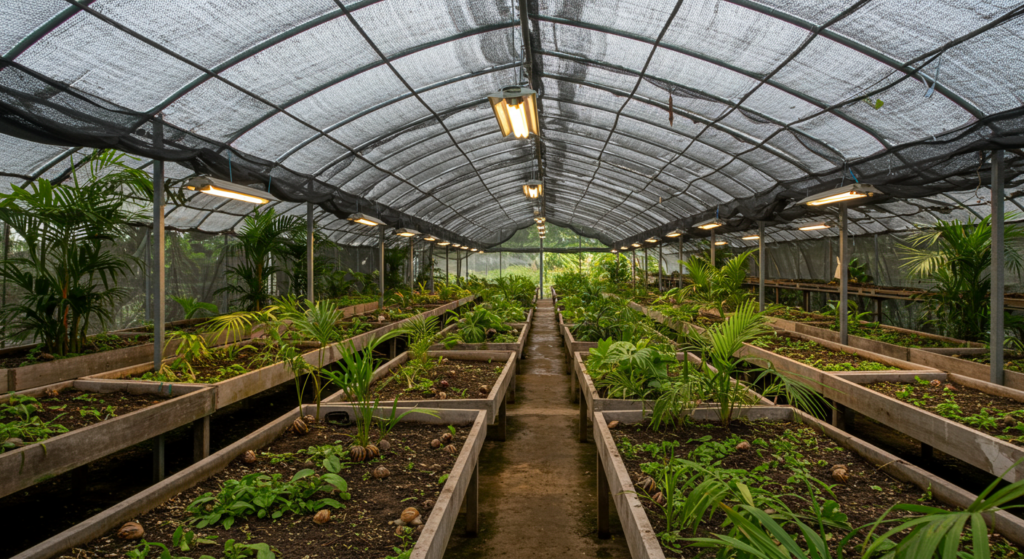
After deducting all expenses in 2024, the business retained a modest profit, part of which I reinvested into our most ambitious expansion yet: a fully netted, climate-controlled greenhouse system that cost ₦7 million. This cutting-edge structure now operates alongside our original concrete block trench system.
The greenhouse allows us to rear snails more efficiently, with lower mortality rates and reduced feeding costs. It’s designed to produce up to 30,000 snails every 18–24 months, significantly increasing our output and improving our margins.
The Vision Forward
Our goal is aggressive expansion: produce more snails, create more jobs, and build a sustainable agricultural enterprise that can compete globally. For young people considering agriculture, understand this: farming isn’t just about planting or rearing. It’s about building systems, creating value chains, and solving problems profitably.
The patterns of snail farming never change: rearing, feeding, incubating, managing mortality, and selling. But the business model around these fundamentals can be infinitely creative. Success comes from treating agriculture as a serious business, not a side hustle.
This journey has taught me that in agriculture, knowledge is money, persistence pays dividends, and social media can transform traditional farming into a modern, scalable business.
Names* have been changed for anonymity.
Zikoko’s first-ever money event is happening this August! Join us at the Naira Life Conference on August 8th — a one-day event where successful business owners will share the honest, hard-earned strategies that helped them scale, stay afloat, and thrive in this economy. Secure your seat here.

Join 1,000+ Nigerians, finance experts and industry leaders at The Naira Life Conference by Zikoko for a day of real, raw conversations about money and financial freedom. Click here to buy a ticket and secure your spot at the money event of the year, where you’ll get the practical tools to 10x your income, network with the biggest players in your industry, and level up in your career and business.