On July 9, 2025, GTCO, Nigeria’s largest bank by market value, became the first Nigerian banking group to list its shares on the London Stock Exchange (LSE). It’s the third Nigerian company to do so, after Airtel Africa and Seplat.
Within days of the announcement, the stock, which began trading in London at $2.46, closed at $2.96. At the same time, its Nigerian share price climbed from ₦93 at the end of June to an all-time high of ₦102 as of July 12, an 8.6% jump in under two weeks.
But why does it matter, and what should you take away from it? Here’s a breakdown.
What’s Going On?
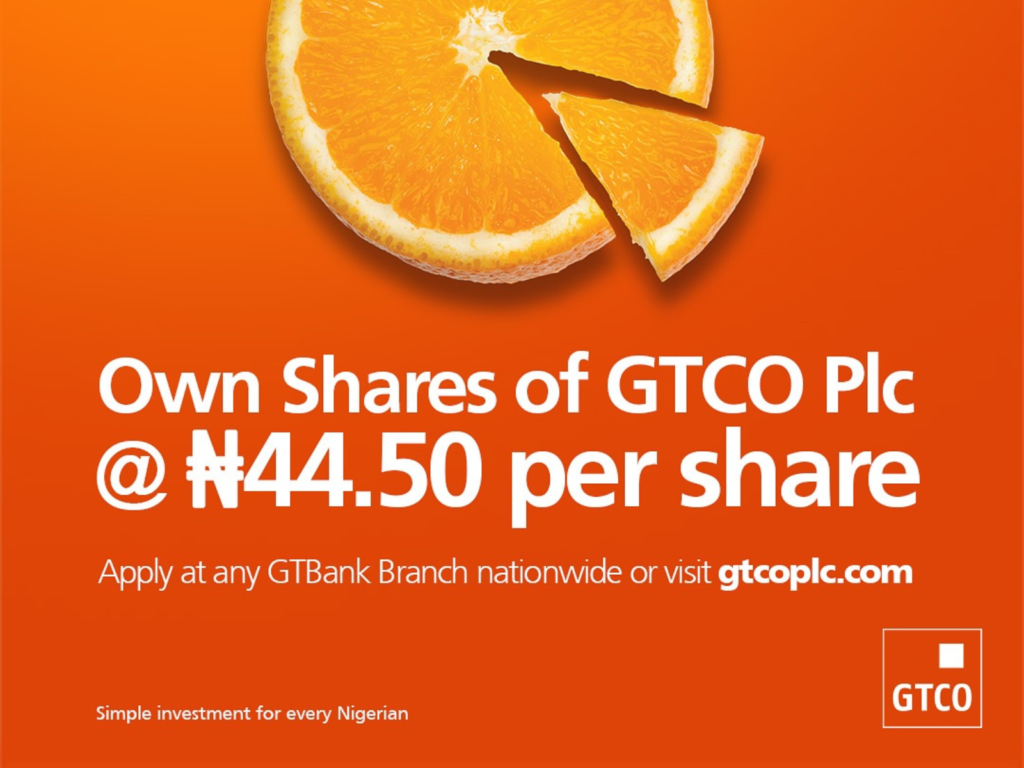
Picture this: It’s July 2024. You’re a regular Nigerian with an eye for opportunity. You put ₦500,000 in GTCO shares at ₦44.50 each. Fast forward to July 2025: the share price shot up to ₦102. Suddenly, GTCO became the first Nigerian bank to enter the global stage by listing on the London Stock Exchange.
If you own GTCO on the Nigerian Exchange (NGX), your shares still hold the same value. What’s new is that foreign investors can now buy into the same GTCO through the London Stock Exchange and invest in dollars. It’s just a new way for more money to flow in.
Think of it like this: GTCO just opened a second shop. They’ve been selling their shares in Nigeria for years, but now they’re also selling them in London. This puts them in front of global investors with deeper pockets and stronger currencies.
Why GTCO Took Its Shares to London
Here’s where it gets interesting.
GTCO didn’t list in London just for prestige; they had a ₦500 billion problem to solve. In March 2024, the Central Bank of Nigeria dropped a bombshell: commercial banks with international licences, like GTCO, now need a minimum of ₦500 billion in capital to operate, up from ₦50 billion. That’s a ten-fold increase, with a March 2026 deadline.
GTCO responded with a smart two-phase strategy. First, it raised ₦209 billion from Nigerian investors, including thousands of everyday retail shareholders. The offer closed in August 2024, and the successful raise was announced in January 2025. Then came the July London listing, which brought in an additional $105 million (over ₦150 billion) from foreign institutional investors.
What stands out is that GTCO protected Nigerian retail investors from being sidelined. Despite raising new foreign capital, the ownership of everyday Nigerian shareholders stayed intact. In many cases, deals like this shrink local investors’ stake.
For example, when Seplat was listed on both the Nigerian and London Stock Exchanges in 2014, it issued millions of new shares to attract foreign capital. This move diluted its largest shareholder and reduced the ownership stake of existing investors across the board.
GTCO, however, structured its raise to avoid that.
As GTCO’s Group CEO Segun Agbaje explained, “We have over 50% of our shareholder base in retail, and we didn’t want to dilute them. So, we raised as much as we could locally, ₦209 billion, and then came to the international market for the delta.”
Financial market analyst, Olumide Adesina, says: “GTCO tapped into international liquidity and a wider investor base but also gave retail Nigerian investors a chance to partake in the capital raise.”
What This Means for Your Wallet
GTCO’s stock price has grown all year, from ₦57 in January 2025 to ₦93 by late June. And after announcing its London listing, the price jumped to ₦102, a nearly 9% gain in a week.
This is a notable sign of how momentum around international listings can move the market.
But more importantly, it shows what’s possible when retail investors get in early and hold.
Retail investor, Compounding Naira (on Twitter) bought GTCO shares during the 2024 public offering at ₦44.50 per share.
“I bought 17,000 shares through the GTBank app in August 2024. The total cost came to ₦756,500. I didn’t have to pay any fees, which was great,” he says.
In June 2025, he received a dividend of ₦7.03 per share, ₦119,500 for all his shares. After withholding tax, ₦107,550 was credited to his account. At current prices, those same 17,000 shares would cost more than ₦1.6 million, over double his entry cost.
“I’m still holding and plan to hold forever, just collecting my periodic dividend payments,” Akin says.
His experience isn’t unusual, but it shows how patient, long-term investing in companies making strategic moves can lead to solid returns, even in a volatile economy.
Beyond individual gains, the London listing signals something deeper for Nigerian investors.“The bank is positioning itself for global relevance, which could translate to stronger governance, transparency, and long-term growth,” financial advocate Oyinkansola Badejo explains.
“In a market where foreign exchange volatility and political uncertainty often shake investor confidence, a stronger GTCO globally could mean a more resilient one at home. GTCO recently became the first Nigerian banking stock to cross the ₦100 per share mark on the NGX.” She says. Although the price has since dipped to around ₦95 as of this writing, the move still reflects strong investor interest and optimism about its future.
The Dividend Promise
GTCO has set new ambitious targets after the London listing: a 15% dividend yield, up from the current 8.5%, and 25% return on equity, up from around 20%.
A 15% dividend yield means that for every ₦100 you invest in the company’s shares, you’d earn ₦15 each year just from dividends. It shows how much cash the company is paying back to investors compared to the share price, and 15% is considered very high, even among Nigeria’s top dividend-paying banks.
For context, UBA delivered the highest average dividend yield of 13.12% over the past five years, followed by Zenith (11.80%), GTCO (11.61%), and Access (7.97%). United Capital Plc topped the charts in the broader financial services sector with a five-year average of 13.68%, while most tier-2 (mid-sized) banks offered significantly lower yields.
A 25% return on equity means that for every ₦100 the company’s shareholders invested, the company made a profit of ₦25. It measures how well the company is using shareholders’ money to generate profit.
Let’s make that real: If you currently hold ₦500,000 worth of GTCO shares and they deliver on the 15% dividend promise, you’ll get about ₦75,000 in dividend payouts per year without buying any extra shares.
What About Other Nigerian Companies on the London Stock Exchange?
Let’s look at the track record:
Airtel Africa (Listed in London, 2019)
- London performance: 80pence (£0.80) to 186pence (£1.80) per share in 6 years.
- Nigerian performance: ₦363 to ₦2,310.50 per share in 6 years.
Seplat Energy (Listed in London, 2014)
- London performance: 210pence (£2.10) to 224pence (£2.24) per share in 11 years
- Nigerian performance: ₦576 to ₦5,450 per share in 11 years.
The pattern is clear: despite modest performances abroad, both companies delivered more substantial returns for Nigerian investors. This shows that international exposure enhances local value.

Join 1,000+ Nigerians, finance experts and industry leaders at The Naira Life Conference by Zikoko for a day of real, raw conversations about money and financial freedom. Click here to buy a ticket and secure your spot at the money event of the year, where you’ll get the practical tools to 10x your income, network with the biggest players in your industry, and level up in your career and business.
Why This Matters to You as a Nigerian Investor
1. You can now track GTCO’s global value.
GTCO’s London listing opens it to more foreign institutional investors. This often improves liquidity, transparency, and valuation, which are good signs for long-term investors.
2. You could benefit without doing anything extra.
If you already own GTCO shares on the Nigerian Exchange, you’re automatically exposed to the same company that global investors are now watching. That attention alone can boost share demand and price, as we saw with Airtel Africa and Seplat over time.
3. Global standards, local benefits.
London Stock Exchange companies must meet stricter governance and transparency standards. This means better corporate behaviour, more reliable reporting, and increased investor confidence.
What’s the Risk?
Global listings don’t always translate to better outcomes. GTCO still earns most of its revenue in naira and lends in a volatile economic environment. You’re not buying a UK company but a Nigerian bank trading abroad.
Also, as with Airtel Africa’s shaky debut in 2019 (LSE shares dropped by 16% on day one), international investors can be sceptical, especially about emerging market risks. The company will need to deliver results to maintain interest consistently.
The Bigger Picture
GTCO already has subsidiaries in 10 countries, and the LSE listing helps it attract a deeper capital pool, improve brand trust abroad, and possibly lower future borrowing costs. But fundamentally, the stock’s performance will depend on how well GTCO runs its business, not just the listing hype.
This move is both a vote of confidence and a subtle critique. It shows that Nigerian companies can meet global standards and attract international capital.
As Olumide Adesina puts it: “The listing definitely boosts the optics and enhances the credibility of the Nigerian industrial economy as businesses listed on the London stock exchange adhere and comply with regulatory standards at an international level.”
But it also highlights the limitations of our local capital markets: the narrow investor base, currency volatility, and limited participation, which make foreign listings a more attractive, and sometimes necessary, path for companies looking to raise large sums and access deeper pools of investors.
So, What Should You Do?
If you own GTCO, don’t panic or rush to buy more. A dual listing isn’t a guaranteed win or loss. But it’s a moment to pay closer attention. Ask:
- How will expanding into international markets change GTCO’s growth trajectory?
- With about ₦150 billion still left to raise to meet CBN’s recapitalisation deadline, where will the rest come from, and at what cost?
- Will this London listing open doors to even more global capital, or was it just a one-time boost?
- What does the next year look like for GTCO in Nigeria’s volatile capital market?
As Oyinkansola Badejo puts it, “This isn’t a vanity listing, it’s a door to global capital.”
So far, GTCO has raised over ₦360bn across its domestic and international offers. To close the remaining gap to ₦500bn, Badejo expects a mix of retained earnings, asset sales, or another institutional public offer, possibly by Q1 2026.
But beyond fundraising, she says the LSE listing gives GTCO visibility and credibility with international investors. “If the bank maintains strong earnings, manages governance well, and Nigeria’s macro outlook improves, it could attract sustained foreign capital. However, investor confidence still depends on follow-through and overall performance.”
GTCO’s international footprint across Africa and now the UK also helps hedge against naira volatility and tap into new, foreign-currency revenue streams.
For Nigerian investors, Badejo highlights a few key things to watch:
- How GTCO allocates and manages the capital it’s raising.
- Whether the London listing sustains global investor interest.
- If GTCO attracts new strategic partnerships or fresh capital inflows.
“If GTCO crosses the ₦500bn line smoothly,” Badejo adds, “it’ll reaffirm its position as one of Nigeria’s most forward-looking and financially sound banks.”
The Bottom Line
GTCO’s London listing signals that Nigerian companies can play on the global stage, and you, as a local investor, can come along for the ride. If GTCO performs well, the biggest winners might be the Nigerians who held on. Still, no investment is risk-free. The key is to understand what you’re buying, why you’re buying it, and how it fits into your overall financial goals.
Editor’s Note: All figures and performance data mentioned reflect information available as of July 2025. Always do your own research and consider your personal risk tolerance before making any investment decisions.