At 24, Jemima* is learning what it means to build a life on her own terms. She walked away from the corporate path many dream of, opting instead to invest in her craft that once felt small. Two years later, her designs command six-figure payments and a growing client base that proves she made the right call.
As told to Aisha Bello
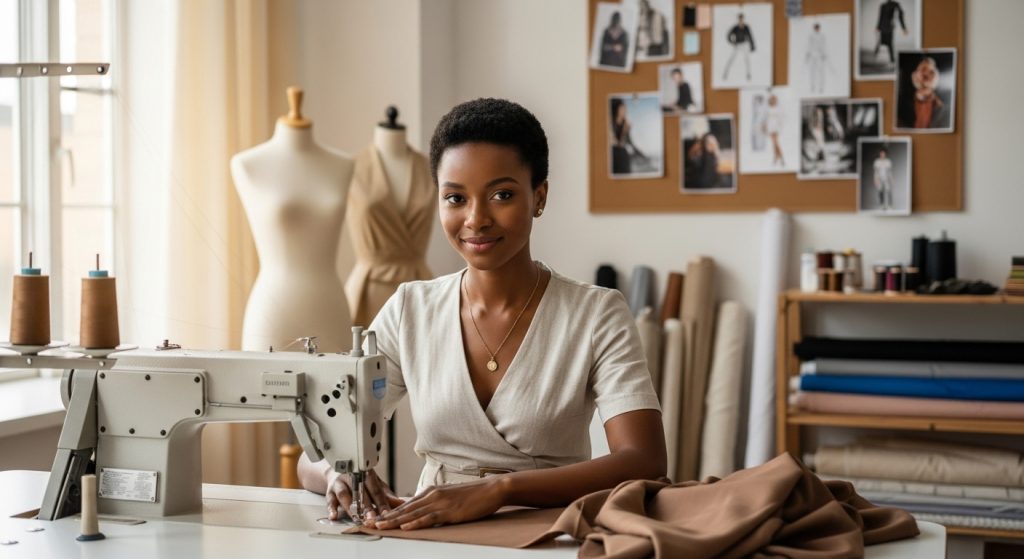
I made my first significant fashion income in July 2023. For a moment, I did nothing but stare at the ₦300,000 credit alert. I’d just finished clearing my sewing table, and the air in the studio was still thick with steam from the pressing iron.
The money wasn’t for a client order; it was for a practice corset dress I’d made for my final project in fashion school. A woman had seen the photo online and insisted on paying for it. The image was still open on my laptop: the model standing tall, the corset hugging her frame like a statement: structured, bold, unapologetic.
That moment unlocked something in me. It was the first time I realised my craft could pay me like a real job, maybe even more.
When I think back to how I got where I am today, I keep circling back to that first corset payment, especially when I think of it in the context of my internship in 2022.
The Corporate Dream
I was in my penultimate year at university, and the internship was meant to be a door into the real world. I got the placement in a traditional corporate organisation, marked by high ceilings, carpeted hallways, faint smell of air freshener and caution. I was enthusiastic enough to be naive. My tasks were mainly fetching files, taking meeting minutes, making coffee rounds, running photocopies, or doing “support” for projects I never saw to completion. I was not paid. I was doing what a dozen other interns had always done, free labour under the guise of experience.
One afternoon, while delivering copies to a senior manager, I overheard a conversation in the corridor. Two senior colleagues were talking numbers: salaries, promotions, and the reality of compensation in the sector. The highest-paid professional in our department earned about ₦500,000 a month, they said. Entry-level staff typically received around ₦80,000. The words landed on me like weights. The years of service, small raises, and endless bargaining for increments barely added up as I did the math quietly in my head. I could not see myself folding into that pattern or imagine the work required to get there matching the life I wanted.
I watched time get siphoned into things that did not feed me. The internship taught me, bluntly and finally, that a path could be respectable and still not be mine.

I left with a decision: I would skip the 9–5 after university and bet on something that felt true to who I was.
When I thought of what could replace that life, only one thing tugged at me. I had no plan, only a tendency: a slight, steady pull toward fashion.
I liked how fabric could say something without a single word. A seam could teach you about proportion and patience, a stitch about consistency, and a pattern about seeing beauty in repetition. I had never been formally trained, and I knew people in my community typically learned tailoring on the job, under someone else’s hand, and a lifetime of observation punctuated by correction. This method is honest and effective, but I wanted structure, and I wanted to learn fast.
»More: How Ore Akinde Turned Crochet into a Multi-Million Naira Fashion Business
Six Months in Fashion School
In 2023, during my final year at the university, I enrolled in a six-month intensive programme at a fashion school in town. My brother paid the ₦250,000 fee. The school had a structured curriculum carved into proficiency levels. We sat exams to move from one stage to the next. We studied pattern drafting from the ground up, design theory, and the architecture of garments. We practised draping on live models and dress forms. We learned the tactile language of different fabrics: how chiffon behaves like water, how brocade holds a memory of itself, how aso-oke wants to stand upright. We were schooled in industrial machine operation and hand finishing, in the economics of materials, calculating markups, and pricing labour so you do not undercut yourself. Every week felt like a measured step forward.
Classes were three times a week, but the learning seeped into everything else. I measured seams in my sleep; I traced patterns on the back of my lecture notes; I learned to read fabric stores the way other people read newspapers. Some exams humbled me, and some fittings delighted me. There were evenings when my fingers were raw from pins, and the smell of starch sat like a promise on my hands. By the time the course ended in July 2023, I had a portfolio and a strong confidence in what my hands could create.
My final project was a bridal aso-oke corset attire. I wanted it to be both a nod to tradition and a small act of rebellion — structured at the waist, generous at the skirt, with hand-beaded details that refused haste. I fitted and re-fitted the model, smoothed seams until the light hit them the way I wanted. When my coach called it the best in the class, I felt something loosen in my chest. Approval, yes.
We had models wear my bridal dress for a photoshoot, and the school posted the photographs on its Instagram page. The post moved faster than we expected: people shared it, praised the craftsmanship, and asked about the price.
Then someone reached out to the school, requesting the exact attire. I followed my coach’s pricing guide and listed it at ₦300,000. When the buyer made the payment, the alert on my phone felt like the sound of a door opening, quiet, but unmistakably life-altering.
More orders followed quickly — brides, asoebi coordinators, people looking for something rooted in home but stitched with precision.
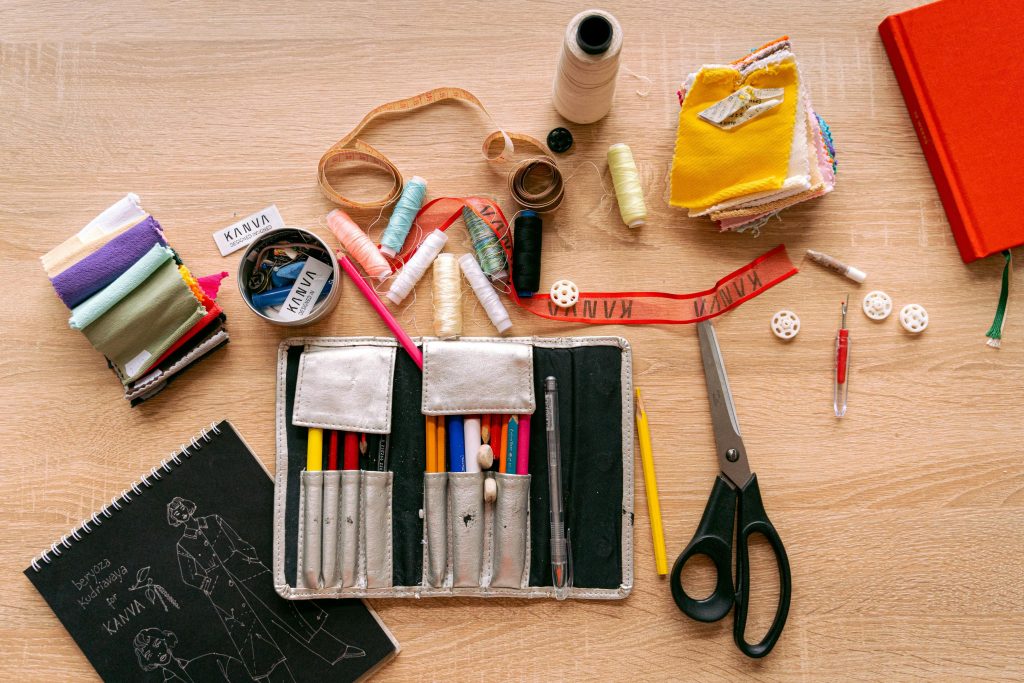
After I graduated from university in early 2024, I set up a small studio in my rented apartment. I invested my earnings in branding, quality photography, and hiring models for lookbooks. I also shadowed my coach for months, absorbing more than sewing techniques: client expectations, production timelines, supplier negotiations, and the discipline of treating craft as business.
After a while, I chose to specialise. I had tried corporate wear and occasional event pieces, but the weddings doubled my revenue, so I leaned into that. I refined my offers, tightened delivery schedules, and started targeting diaspora clients who wanted authentic African artistry delivered with consistent quality.
The numbers that follow skyrocketed. So far, in 2025, I have completed more than twenty custom bridal attires. My standard price for bespoke pieces is around ₦600,000 ($400 / £300). On average, I now make at least ₦1 million a month.
»More: I Built a Multi-Million Naira Food Business. Now Everyone Thinks It’s Their Money Too
Business Mentorship
Mentorship from one of the city’s leading fashion houses accelerated my growth. It gave me a clear standard to measure myself against and taught me how to position my work in a crowded market. I learned which compromises were costly and how to defend my value when it came to price negotiations.
There are moments, late at night when the machines are off and the apartment is quiet, when I wonder if I did the right thing. The 9–5 path still feels seductive to many: steady, predictable, legible.
I have plans that do not require abandoning what I have built. I will do my NYSC when I’m ready. I am also considering a master’s degree at some point, possibly abroad. But wherever I go, I will carry my craft with me. There is a hunger for African design in the diaspora across weddings and cultural celebrations; diasporic communities are hungry for authenticity, and I have learned how to meet that hunger with quality and consistency.
If someone asked me if I’d recommend skipping the 9–5 to bet on a craft, I would answer with nuance. It is not a romantic leap; it is painstaking work. It requires learning, mentorship, accounting, and the humility to accept that skill alone is not a business.
You must learn to translate labour into price, and passion into a product people can trust. You must study your market and be patient enough to build credibility one client at a time.
I left a path that could have been respectable and chose instead to invest in a skill that once felt small. I then watched it grow into a livelihood by deliberate, often tedious effort. I am still building. There are days of doubt and days of triumph, fittings that collapse into frustration and others that end in tears of gratitude. But this path feels like mine, and that, more than anything else, makes it worth it.