Every week, Zikoko spotlights the unfiltered stories of women navigating life, love, identity and everything in between.
What She Said will give women the mic to speak freely, honestly and openly, without shame, about sex, politics, family, survival, and everything else life throws our way.
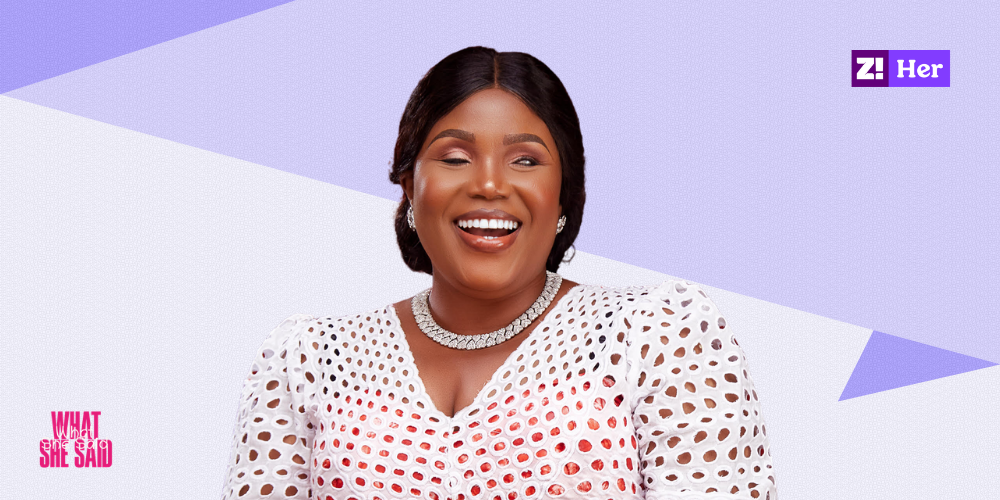
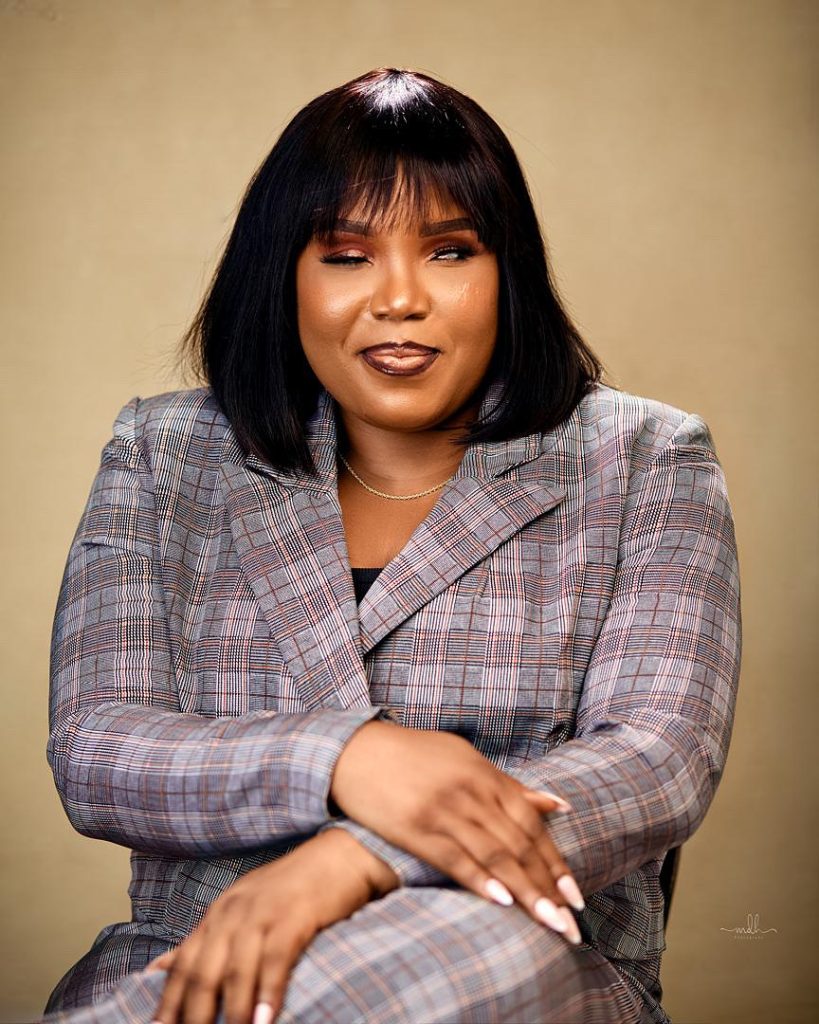
The subject of today’s #WhatSheSaid is Ejiro Sharon Okotie, a 42-year-old Gender, Disability and Social Inclusion expert, trained counsellor, founder of Hope Inspired Foundation for Women and Youth with Disabilities, and author of Beyond the Darkness: A Journey from Loss to Purpose. She talks about going blind due to meningitis at 11 years old, the family that refused to give up on her, and why she is living proof that disability is not a death sentence.
Can you tell me about yourself and the family you grew up in?
My name is Ejiro Sharon Okotie. I’m 42, from Okpara Island in Delta State, and I currently split my time between Lagos and Abuja. I’m a development professional specialising in Gender, Disability and Social Inclusion; a trained counsellor running my own private practice, LRS Therapy Hub; founder and Executive Director of Hope Inspired Foundation for Women and Youth with Disabilities; a published researcher; and now an author. I am also a woman with a disability; I became permanently blind in both eyes at 11. I am a happy soul who loves the soft life, gospel music, laughter, love and humanity.
I am a twin, the second twin they call Kehinde in Yoruba, and I have an older sister. So that’s three girls from my mother, Elder Caroline Amujiane, who is the most selfless human being I have ever known. Though my mother found herself in a polygamous marriage that eventually ended in divorce, this means I have other half-sisters and brothers I do not really know from my father. My mother had my twin and me as a single parent because she divorced my father before we were born. We grew up with only her our entire lives.
As a child, I was very reserved, quiet and gentle. My twin was fiercer and more stubborn, and she would fight for me in primary school. The first six years of my twin’s and my life, we stayed with our maternal grandmother in Sapele, Delta State, because my Mum had moved to Kaduna in Northern Nigeria in search of better opportunities with her eldest sister, Mummy Rebecca. Eventually, she brought us back to Kaduna with her, and after about a year, she also brought in our oldest sister, Joy, who had been living with our father. My twin would also fight our older sister and fight my battles, too. I was just noticeably quiet, but over time, with different experiences, I became more outspoken and learned how to fight for myself. Because at some point, my mum’s younger sister took my twin to live with her family in Maiduguri, and she didn’t return until we were 18, like 10 years later.
What are your earliest memories before losing your sight?
Running errands for my mum. She was in the sanitation department at our church, and when she couldn’t get there on time, she would send me to sweep, mop the floor and clean the seats. She also used to send me to the market with a written list and money for food items. As small as I was, I already knew how to price things, collect change, and then I would use whatever was left of my transport fare to buy every sweet thing in that market and trek home with everything balanced on my head.
I was a lively, active child. I had church friends, and we played ten-ten and suwe together. We didn’t have luxury, but I never felt like I lacked anything. Life felt very full.
Can you walk me through how you lost your sight at 11?
It was 1995. My mum had decided to put my older sister and me in boarding school that September. My sister went to Federal Government College, Kuje in Abuja, and I got admission into Christ Ambassador College in Sabo, Kaduna. I stayed only three months, September to December, before I started feeling sick.
Within a few days, it had gotten so bad that I couldn’t walk. I was too weak. They sent for my mum, and she had to carry me because I couldn’t manage on my own. She took me first to my aunt’s family hospital, but the admission fee was two thousand naira, and she didn’t have it. So she took me to another private hospital near where she worked. I was admitted, treated for malaria and typhoid, and kept for five days.
On the fifth day, I woke up to full darkness.
I couldn’t see anything. When I told my mum, she went to get the doctor, and they found a thick, dark, reddish coating over both my eyeballs. They said this was not what they had been treating and immediately referred us to the National Eye Hospital. By the next morning, my joints had started swelling. The eye doctors there told my mum something bigger was happening inside my body and referred us to Ahmadu Bello University Teaching Hospital. That is where they took a sample of my spinal fluid and found the Cerebrospinal Meningitis. But the damage to my eyes had already been done.
I spent six weeks in that hospital. Over 154 injections, including two directly into my eyes. And at the end of it all, the doctor at Guinness Eye Hospital told my mum plainly: “Your daughter will never see again. I advise you to get her into a blind school so she can continue with her life.”
That was how our journey into blindness began.
I immediately decided I wasn’t going to let it break me. Or maybe my infant mind just couldn’t fully grasp what I had lost. Either way, I started pretending it wasn’t affecting me as much as it was, because I could see how the news was destroying my mum.
I remember asking her then, “Mummy, whose report will you believe? I choose to believe the report of the Lord!”
I was forming strong for her. And somehow that helped both of us.
What was the hardest part of adjusting?
Returning to church. My friends were young, and they just didn’t understand what had happened. We would go to our usual playground, and once everyone was done playing, they would forget that I was now blind and run off, leaving me behind. I would just sit there crying, waiting for my mum to start looking for me and send someone to come and get me. The same thing happened at my aunt’s house. My cousins and their friends would run off to play, and nobody thought to take me along. I remember sitting in my aunt’s kitchen on one of those days, feeling terrible about being left behind.
But this didn’t last long. A few months later, we moved from Kaduna back to Sapele in Delta State, and the change of environment made things much easier. These new people only knew this version of me, and they engaged with me as such from the very beginning. Moving to Delta was advantageous because it led me to experience empathy. My grandma’s neighbours showed me kindness; they always wanted to help in any way and at every chance they got. So I really did not feel different.
My grandma also often spoke about my future whenever her friends or others came to greet her, and the topic came up. “So what will happen to her now that she is blind?” My grandma would say, “God that created her will see to it that she becomes something in life. God will not leave her.”
I remember two distinct incidents. The first: a drunkard from the neighbourhood came to my grandma with a proposition. I was sitting in the living room that day. He walked in, greeted my grandma, and began speaking to her in Itsekiri. I understood because I grew up with my grandma. He told her that he had heard she had a blind child and had come to ask if she would be willing to give him as a wife. At least he would feed me and take that burden from her, and I could bear children for him. I remember how furious my grandmother was. She walked him out of the house and asked him never to return, shouting after him, “Did I tell you I cannot feed my granddaughter?” And in that moment, she said, “This my granddaughter, go be a big woman for life.”
The second incident was a young boy from the compound who used to come to our house to play with me. My grandmother’s rule was that I must never enter any neighbour’s house, as there was a possibility they would take advantage and try to rape me since I would not see them close the door, take off their clothes or do something they shouldn’t. So anyone who wanted to play with me had to come to our house, where she could keep her eyes on them. This young boy’s visits had become too frequent for my grandma, and after a while, I noticed he was no longer coming. When I eventually ran into him and asked why, he told me my grandma had told him to get his eyes off me, that she had noticed the way he was looking at me, that I was not his spec, that “it’s an Engineer her granddaughter will marry and not a meat seller like him.” I was shocked and apologised on my grandma’s behalf, saying I didn’t know this had happened. I think people around us just took their cue from my family and treated me accordingly. Everyone was hopeful about what I would become. So though adjusting was difficult, at least I had my family.
How else did your family carry you through all of this?
I always say I am one of the most blessed individuals on the planet when it comes to family. I jokingly tell my cousins that the man who marries me will have a lot of people to pay bride price to because I am a living example of what it means to say it takes a village to raise a child.
Starting with my mother. Her sacrifices for me are immeasurable. When I was at UNIBEN, she would come to school on weekends just to help me dictate my notes so I could braille them, or to help me record textbooks onto tape. She gave everything she had.
My older sister Joy taught me how to carry myself as a woman, even with blindness. Around the time I was 21 or 23, she sat me down and said, “Ejiro, as a woman, you must be known for something. Pick something about yourself and focus on it, your skin, your hair, your dressing, or a combination.” Because of Sister Joy, I take very good care of my appearance.
And my twin sister, Sherida. I call her my Angel because that is the only word that comes close to describing what she means to me. At one point, we were literally living each other’s lives. Her classes were in the mornings and mine in the evenings, and she didn’t want to leave me home alone, so we just went everywhere together. Her classes, my classes, all of it. Until she was travelling to Lagos to help fix my laptop for me, and got into an accident that broke her hand and kept her home for over a month of her final year. That season was one of the hardest of our lives, but it was also when I found my independence. Before that accident, my twin did everything for me.
What was it like going back to school after the doctors confirmed you would never regain your sight?
One of my mum’s greatest worries was education. Our family holds it very dear. The first person she spoke to when she visited a blind school in Kaduna was a blind teacher there, who told her, “Don’t waste time looking for a miracle. Let her continue her life. God can do it while she’s rebuilding her life.”
So my mum found Pacelli School for the Blind in Surulere and registered me in 1997. The principal, Rev. Sister Justina Obiangulu, created a special rehabilitation class just for me so I could learn Braille and typewriting without having to go back to primary school. My teacher was Mr Tunde Mohammed, Uncle Tunde, as I called him. He was also blind, and he was so patient with me. He taught me braille, how to type, how to walk independently, how to find things when they fell to the floor, and the doggedness that life required.
I used to cry constantly because I was desperate to get back to where I had left off, and braille felt like my only way there. Whenever the contractions weren’t coming to me, I would break down, and Uncle Tunde would say, “Ejiro, be patient with yourself; you will get it.” And one day, Sister Justina found me crying in the corridor, held me to herself and said, “Ejiro, always remember that whenever a door closes, God opens a window somewhere.”
Those words carried me for years.
I spent eight months at Pacelli. By July 1998, I had fully learned Braille and typing. By October 1998, I had gained admission into Queen’s College to JSS2, exactly where I had left off. I didn’t repeat a single class.
How did you manage through university without the resources available to you today?
Queen’s College was manageable because the school had always had blind students and had basic provisions in place. Resource teachers, extra time for exams, and brailed scripts. I was also lucky that older blind students passed their Braille notes down to me, so I had two classes’ worth of notes ahead of me at all times.
University was a completely different battle. At UNIBEN, I was the first blind student in my department for the International Studies and Diplomacy diploma. I had to go around and introduce myself to every lecturer at the start of the term. I had no screen reader then, just a braille machine and a manual typewriter. With a typewriter, if you make a mistake, you cannot go back and correct it. I had to memorise each exam question, arrange my full answer in my head, and then begin typing, because once you started, you carried on no matter what.
Despite all that, I completed my two-year diploma with Distinction, then gained direct entry to the 200-level and finished with a Second Class Upper in International Studies and Diplomacy.
By the time I was doing my first master’s at UNILAG, I had learned to use a computer with the JAWS screen reader software and everything transformed. I could scan notes, get soft copies of textbooks, search the internet, type and correct mistakes, and print my exam scripts. What had been grinding and exhausting became something I could actually navigate with confidence.
That was the first of three master’s degrees. Public and International Affairs from UNILAG, Development Studies from the Institute of Development Studies at the University of Sussex on a Chevening Scholarship, where I graduated with a Distinction, and Marriage and Family Therapy from Triune Biblical University in the US, alongside other certifications and short courses.
Even with those provisions in place, were there moments when you felt excluded because of your disability?
Sure, there are several moments when one is excluded, deliberately or unintentionally, due to ignorance. Often, when people see me, because my disability is visible, people are quick to begin putting me in different CANNOT boxes. “Oh, she cannot do X, cannot do Y,” but they never think about what I CAN do. It’s sometimes from ignorance. But I have felt that way at work, at events, and even at church.
Was there ever a time you wanted to give up? What kept you going?
I do not think giving up was ever an option for me. Do I have low moments where I feel overwhelmed? Yes. But giving up, no! I love life too much. My mantra is that there is always a way out. Whenever I have cried, maybe slept a lot, or just engaged in the things I use to cope, I start thinking about the different possible solutions or ways out. I always believe that too many people have invested in my life at different points for me to just give up. Plus, God has surrounded me with great people; I always say I have the gift of people, and I do not take it for granted. During low moments, I always have someone to call, and often I get the right prayer or just the direction to move forward.
My mother is one of my biggest motivations to keep pushing in life. Whenever I think about everything she has done and been through, I always want her to look at me and be glad that her sacrifice was worth it. And it paid off after all! My purpose and all the destinies I now know are tied to mine, which is also what propels me to keep moving. When I think about all the hurdles I have surmounted in life and tell myself, if I lived through that, then I’ll survive this. What does not kill you makes you stronger. The difficulties I have faced at different stages of my life have made me stronger and often served as preparation for the next hurdle. I also thank God for the gift of salvation; I am a believer, and the word of God is where I draw the most strength. There is always the right word tailored for that particular situation, and the Holy Spirit is right there encouraging me, directing me to scriptures, or simply leading me to a story on YouTube or a WhatsApp status that answers the situation. God is my foundation and remains the rock that keeps me standing in any storm or blow that life may deal me.
What She Said: The Clinic Paid More For My Eggs Because I’m Light-Skinned
Looking back now, what do you wish people had understood about you during those years?
I wish people understood that the loss of a part of a person is not a death sentence. You do not have to write people off because they acquired or were born with an impairment. We are unique, and people live differently. Disability is just one of the diversities of life, and the fact that I am blind doesn’t mean I’m no longer a human being. I have breath in my nostrils, and like everyone else, I have desires; to be somebody in life, to marry, to love and be loved, to have my own children and my home, to have my money, and to have a voice that should be heard in society. I’m just like everyone else, a human being with dreams, hopes, aspirations and everything else that keeps and drives any human being.
I mean, look at me now. I became the founder of Hope Inspired Foundation for Women and Youth with Disabilities, a Lead Counsellor, Gender and Inclusion Specialist, Chevening Scholar, Mandela Washington Fellow and author.
Walk us through your journey to each of these milestones. Which achievement feels the most meaningful to you, and why?
My mum has a common expression: “Life is in phases and men are in sizes.” One phase of my life opened me up to the next, and like an onion, I have just continued to peel back old skin, diving into opportunities by seizing them and sometimes by just showing up, speaking up, or asking a question.
In October 2011, I began my NYSC, and six months in, someone told me about a job opening at the Nigeria Association of the Blind for an HIV project for blind adolescents. In camp, I had joined the UNICEF Peer Educator Trainer programme on preventing HIV/AIDS and Sexual Reproductive Health for adolescents, and I was the only blind person there. As we did the training, I kept thinking to myself: as important as this information is, how come none of these programmes targeted people like me? In addition to my CDS at a secondary school near my house, I started visiting two blind schools: the School for the Blind Vocational Training Centre in Cappa, Oshodi, and the School for the Blind Nigeria Farm Craft Centre at Isere Olofin, Igando.
When I heard about the opening at NAB, where the African Union for the Blind was coming to implement a project, I applied as a fresh corps member. Long story short, I was employed as a Project Coordinator. The project was implemented across three south-western states, Lagos, Ogun and Oyo, and at the end of the first year, it was extended to the remaining three, Osun, Ondo and Ekiti. Over the two years of the project, I trained 50 blind youths as peer educators, and we reached over 4,000 blind adolescents and youths with information and HIV testing across the six states.
But as I moved from state to state, I noticed a troubling trend. The male peer educators were adventurous, outspoken and daring, while the female blind peer educators were often passive, wanting to stay in the background, sometimes too afraid to speak. I remember one lady from Oyo who was so frightened, so I went to her, and she told me her spoken English wasn’t good enough. I encouraged her to speak in Yoruba, noting that there would be people in the room who needed the information in Yoruba and that she was the one who could give it to them. She came forward and delivered beautifully.
This discovery really bothered me. I began asking questions: Why are girls with disabilities so passive? The answer was always the same: low self-esteem. So I decided to do something about it. As UNICEF peer educators, a key part of our curriculum was building life skills, such as self-esteem, assertiveness, confidence-building, negotiation and refusal skills. I started at my alma mater, Queen’s College, got approval from the school authorities, and began coaching the blind students there. After some time, I spoke with my mentor about my vision, and he advised me to build a proper structure to track progress and impact. I got into a conversation with a classmate while doing my master’s at UNILAG. She told me about her lawyer who helped register her organisation. I approached him, and in 2015, I officially registered the Hope Inspired Foundation for Women and Youth (HIFWYD). After eight years, in 2023, we metamorphosed into a full Organisation of Persons with Disabilities, promoting and protecting the rights of women and youth with disabilities through policy advocacy, programme implementation and self-actualisation efforts. Over the last eleven years, we have supported over 22,000 women and youth, building their capacity as self-advocates for rights and inclusion across education, economic empowerment, and leadership.
Establishing HIFWYD has been my most meaningful achievement because it embodies the core of my purpose: to inspire others to succeed. Seeing our beneficiaries speak up for themselves and their rights, pursue their goals and dreams, and aspire to be more is more rewarding than anything else in this world. I remember in the early days of HIFWYD, before we began attracting grants, I would use all the salary I made from my nine-to-five to implement our small projects, the InspireLife project, our annual Girls’ Camp in December, and how rewarding it was to see students in QC stepping into leadership opportunities in school, handling peer pressure efficiently, speaking confidently and boldly for themselves; young women with disabilities becoming more aware of their bodies, their sexuality, their sexual rights, able to make informed choices; women with disabilities now leading policy advocacy for the enactment of disability law in Ebonyi. HIFWYD stands as the bedrock on which everything I have done is built.
That’s truly amazing. How did the Mandela Washington Fellowship happen?
I first applied in 2014 but was rejected. In my mind, I said, “No be people like me them dey find,” but I was wrong. When it opened again in 2015, my lecturer called me and encouraged me to apply again. This time, I was more intentional. I downloaded the form, but because I didn’t have full faith in what I had, I submitted it at eleven-something pm on the night of the deadline. To my greatest shock, I got an email inviting me to an interview.
At the interview, when they asked why I should be selected, I said, “If you don’t believe in your own dream and cannot invest in it, why should you expect someone else to invest in it? I don’t have many resources, but from what I have, I have started to address the challenges I observed in my peers, one life at a time, slow but surely.” I remember the coordinator, Rodah, as I later found out her name was, repeating those lines back to me, and I knew I had struck a chord. Still, I did not believe I was what they were looking for.
On a certain day in March, my twin Sherida called to say she had received a congratulations email from something called IREX. She said it seemed those people had taken me. I ran to check my email, and there it was. Not only had I been selected for the seven-week Fellowship at Arizona State University, but I had also been accepted for the six-week Professional Development Experience, an internship with a US-based organisation. I was going to be in the US for thirteen weeks.
My cohort included 25 Fellows from 20 Sub-Saharan African countries. We all prepared presentations for the Ignite Talk to be delivered at the Presidential Summit in Washington DC, and the cohort voted for the best one to represent ASU. Everyone voted for mine. Our coordinator, Dana, said my presentation always moved her to tears because of its content and the passion with which I delivered it. That was how I represented Arizona State University in Washington DC. I also shook hands with President Barack Obama at the Presidential Summit. I presented at the Sixth Africa Forum in Uganda, attended a Disability Rights Monitoring training in Pretoria, South Africa, and received a scholarship to a rehabilitation conference in Edinburgh.
In that same period, I won two grants totalling $14,000 for Hope Inspired, which dramatically scaled our work. Over 7,000 applications in Nigeria, only 40 Fellows selected. Across Africa, over 50,000 applications, only 500 Fellows. I was among the 40 from Nigeria and the 500 from Africa. From that point on, I stopped doubting what I can do.
Let’s get into you becoming a Chevening Scholar.
I applied once and was rejected. Same feeling as before: no be person like me them dey find. But my colleague Michael, who had gotten in on his own application, kept pushing me to try again and offered to help review my essays. I applied a second time, got invited for an interview, and when I arrived, it felt like a walk in the park. That year, I had been so intentional that sourcing and applying for scholarships had practically become my full-time work. I applied for the Australia-Africa Award, Chevening, and the IDS Scholarship, among others, and received two scholarships at once: Chevening and the Australia-Africa Award. I chose Chevening and IDS because at the time, IDS had been ranked first globally in Development Studies for six consecutive years. If someone was paying the bills, why not choose the best?
IDS challenged everything about me. I was intimidated daily, surrounded by brilliant professionals from all over the world. I doubted myself, my knowledge, everything. But I was being stretched. I heard that only one Nigerian had ever graduated from IDS with a Distinction, and I said quietly to myself, if one person made it, I would be the next.
At the end of my programme, I received a Distinction in my dissertation and an overall Distinction. I was one of five Nigerians to graduate with a Distinction from IDS in 2020.
And you also became a counsellor and an author. How did both of those happen?
Both came from the same season of deep intentionality. In 2024, as I planned my 40th birthday, I took March to pray and reflect seriously on what the next decade should look like. Then in May, a cousin called, and we spoke for two hours. At the end of that call, he was lighter and clearer. After I hung up, a thought came to me: why are you not doing this as a profession?
Counselling. It felt surprising and completely obvious at the same time. My older sister had told me when I was thirteen to open a problem clinic. From as far back as I could remember, I had always had the right words for people. The next day, I found a training institute, enrolled, and by December 2025, I had completed a master’s in Marriage and Family Therapy and set up LRS Therapy Hub.
The book came from the same season. Having lived with blindness for thirty-one years and gone through a particularly difficult stretch in 2025, something in me said it was time to put it all down. In April 2025, I was featured on the podcast Through It All by Dr Kola Alexandra Olugbodi, and for the first time, I narrated my full story out loud. Something moved inside me. I started writing.
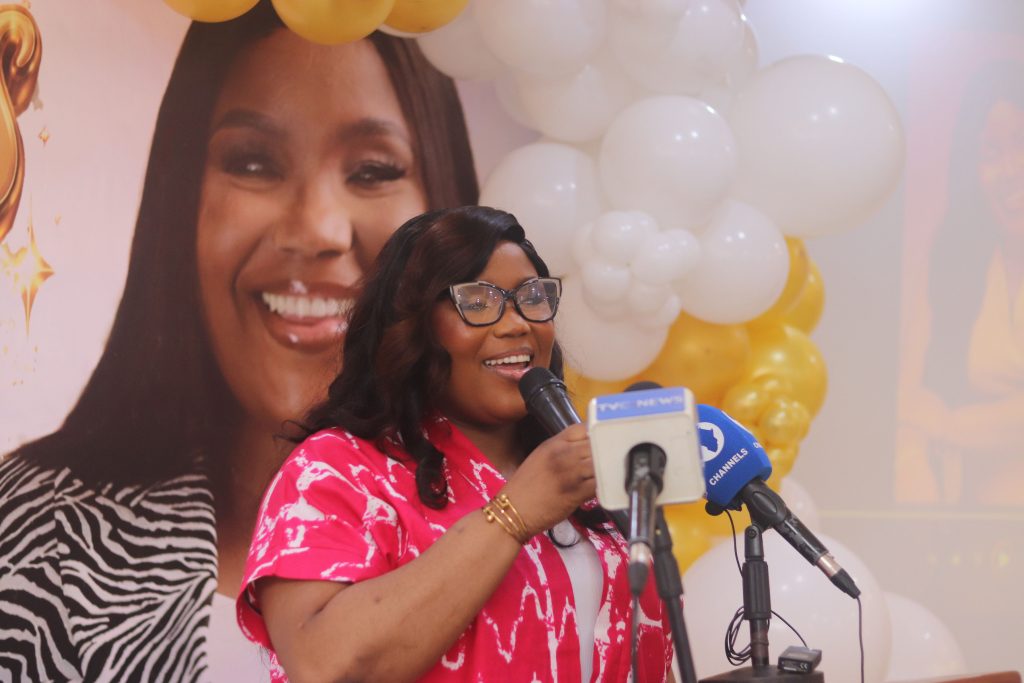
Eight months later, on my birthday, 21 April 2026, Beyond the Darkness: A Journey from Loss to Purpose was in my hands as a hard copy. I launched it with my friends and loved ones on that same day.
If you’d like to be my next subject on #WhatSheSaid, fill this form.
What is the book about, and what do you want people to take from it?
It is a memoir. My life from age eleven, losing my sight to Cerebrospinal Meningitis, through every phase that followed, the lessons, the storms, the wins. But I didn’t want it to be only about disability. I wanted people to see the endless possibilities the human spirit carries.
What drove me most was wanting to honour my mother. When a disability occurs, everyone focuses on the child’s needs. But the day I lost my sight, my mother also lost something. She lost her hope for my future, asking God what would become of me and whether I would ever live a normal life. She revealed later how she lost parts of herself, her own dreams, her own life, just to be there for me emotionally, spiritually and physically. Those sacrifices go unnoticed. Beyond the Darkness is for her and for every parent, sibling and caregiver who has ever done the same in silence.
The key message is this: we all go through darkness. Mine was the loss of physical sight. Yours may be the loss of a loved one, a job, an addiction, or a dream. But in every darkness there is a hidden light waiting to be found. The darkness is not the end. It is the shadow that leads you to your inner light. Do not wait for the light. Shine, and light will find you.
You can get the book here on Selar or Amazon (Print or Kindle).
What are the biggest misconceptions people still have about blind women?
The CANNOT box. Before asking a single question, people assume I cannot cook, care for a home, or raise children. Someone I knew from university had secretly been considering marrying me years before I knew anything about it. Years later, he came to visit me in Lagos and sat watching as I made eba from scratch, warmed soup and dished out his food. The next day I came back, peeled a yam, cooked it and fried eggs. After eating, he told me about the secret intentions he had once had and how he had talked himself out of it because he didn’t think he could afford all the help I would need to function as his wife.
I simply said: “Your loss.”
The second misconception is that I should not have preferences or standards, that I should be grateful for any attention and not exercise any judgment about what I want. A man from my church once told me that what I needed was just a husband. When he eventually asked me out, and I said no, he was genuinely shocked. Then came the insults. “Too proud. What do you think you are?”
I have a spec. I am educated, beautiful, bold and a Jesus baby. You think I don’t know I deserve the best, and that I have worked far too hard on myself to settle for someone I don’t want?
The third misconception is that confidence in a blind woman reads as pride. Because many women with disabilities struggle with low self-esteem and stay quiet and in the background, when you show up blind and bold and with a voice, people read it as arrogance. It is not. It is just a woman who knows what she carries.
What do you wish people would stop doing, even with good intentions?
Moving my things without telling me. When friends visit and rearrange my space in the name of helping, they complicate my life. I already have a full mental map of where everything is. When you move something, and you’re no longer around, I spend time searching for it, which leaves me frustrated and sometimes unable to function. If you must move something, tell me the new location.
The other thing is speaking to my assistant instead of speaking to me directly. When people meet me with someone helping me, they will ask my assistant what my name is, what I would like, and how I should be guided. Speak to me. I am right there. I have a voice and all the information about myself.
If you meet a person with a disability and you’re unsure what to do, there are only two questions you need to ask: “How would you like me to help you?” and “What do you need?” Ask those, and you will always have a great start.
What would you say to parents who have just found out their child has a disability?
First, I want them to process what has happened, not only to the child but to themselves and to the family. Because it is not only the child who has lost something. Then I want them to know there is hope. The journey may be tough, but with the right support and information, you can begin to take action early, and that matters enormously.
Give your child independence. From early on, begin teaching them to do things for themselves, with you guiding them along the way. Over-protecting them and doing everything for them is a disservice to their long-term life. Set structures in place for them to thrive, and then let them learn, make mistakes and grow.
And do not lose yourself in the process. Process your own emotions. Build with your child, but do not leave yourself behind. You deserve to live, too.
If you could speak to the 11-year-old girl who had just woken up in the dark, what would you say to her?
I would tell her everything is possible. Dreams come true; you just have to keep holding on to them and keep moving through every difficulty.
I would tell her the storms will come, but those storms will make her stronger, and in her growth, her wings carry opportunities for others to fly. Under her shade, others will find comfort from the scorching sun of life.
I would tell her that life is beautiful and worth living. So live your best.
And I would tell her this: you may have lost your physical sight, but the sight within is stronger than any external light outside. Do not wait for light. Shine, and light will find you.
The Naira Life Conference is returning on August 22, 2026, in Lagos! Come learn from finance experts and industry leaders and join unfiltered conversations about building wealth and diversifying your income stream in a country like Nigeria. Real stories, expert advice you can actually use, and a community ready to build wealth together. Secure your spot here.