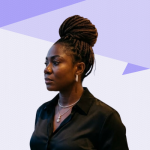
Every week, Zikoko spotlights the unfiltered stories of women navigating life, love, identity and everything in between.
What She Said will give women the mic to speak freely, honestly and openly, without shame, about sex, politics, family, survival, and everything else life throws our way.
The subject of today’s #WhatSheSaid is Énàre Abang Gideon, a growth strategist and founder in her twenties, originally from Cross River State, Nigeria, now based in Luxembourg. She talks about selling everything she owned to chase a visa-sponsored job in Estonia, surviving three rejections in Egypt with an empty wallet, and how the worst period of her life became the foundation of everything she has built.

Can you tell me about yourself?
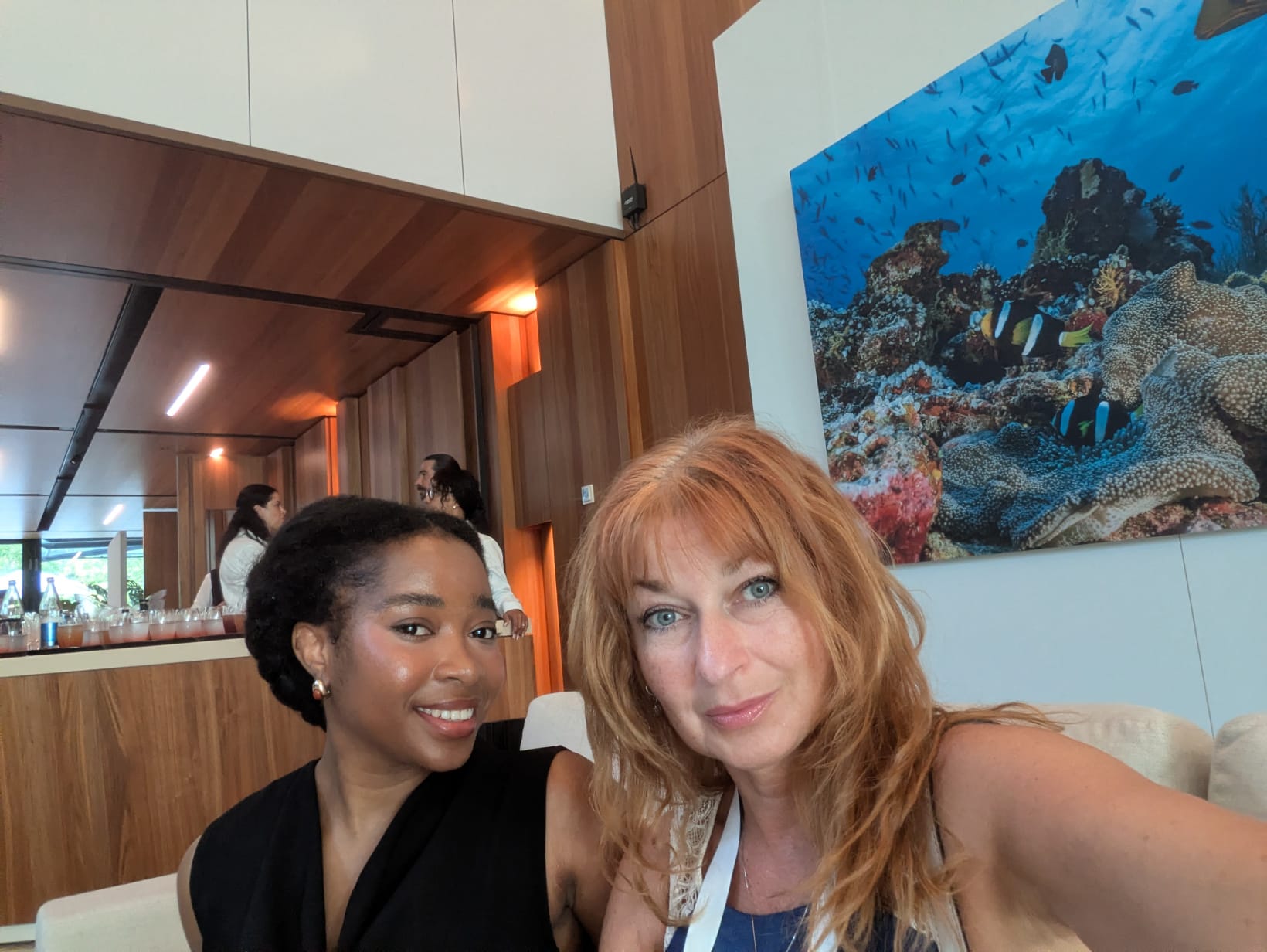
My name is Énàre Abang Gideon. I am from Cross River State, Nigeria, and I am currently based in Luxembourg. I am a growth strategist and the founder of InstaGo Travels, a global travel agency providing tailored mobility solutions, and Giena Consulting Group, a business development and marketing firm. I also founded a rapidly growing community for women founders in Luxembourg, dedicated to empowering and connecting ambitious women worldwide.
Can you tell me about the family you grew up in? What kind of child were you?
I grew up in a household where both my parents were educated, yet they placed an immense value on hard work. Some of my earliest memories involve planting cocoa seedlings on my father’s farm, where I was always eager to take on more seeds, not just for the work itself, but because I saw it as a path to earning enough to buy my own treats. That early exposure to industry and the desire to build my own capital shaped me into a curious, driven child, always looking for the next challenge or opportunity to create something of my own.
What did success look like to you growing up? Did you always imagine you would build a life outside Nigeria?
Growing up, success was about independence and the ability to build from the ground up. I did not necessarily have a fixed vision of leaving, but I always possessed an expansive view of what was possible, knowing I wanted to operate on a global stage even if the path was not yet written.
What was your life like before everything changed?
I had just completed my National Service in Abuja and was deeply involved in community services while learning about finance and investment in the stock market. I enrolled in an academy that shaped my mindset on success and the financial markets. I was browsing the internet one day when I received a job opportunity notification in Estonia. I applied, went through three interview rounds, and they gave me the offer. There was, however, one huge problem: I had to apply for the visa from Egypt, as there is no Estonian embassy in Nigeria.
What exactly was the opportunity?
It was a role as a business support associate with a fintech company in Estonia. The interview sessions were held over Zoom, and I got to ask questions and clarify my doubts with all the hiring managers. After the interview rounds, I was offered the position, and I believed it was worth the risk because I saw it as the beginning of a new chapter and the answer to my desire for a life that felt big enough for everything I carried inside me.
So you decided to travel to Egypt for the Visa. What did that decision to go all in actually look like?
I was convinced that I was meant for more than the life I was living. I had received confirmation from people who had already arrived in Estonia that the contracts and paperwork were legitimate, so I decided to move everything at once to avoid making the trip twice and to minimise the financial risk of multiple international journeys. I believed in that opportunity with everything in me because it was the proof I needed that my potential was not limited by my environment.
What did moving everything at once actually mean? What did you have to let go of?
I let go of my apartment and sold all my properties, including downsizing from my two-bedroom apartment in Kubwa to a self-contained apartment a month before my trip. Saying goodbye to my life also meant saying goodbye to my pet. The closest company I had then was my cat, whom I gave away to the Uber driver who took me to the airport. It was very painful, but it had to happen. I was mentally done with my life in Nigeria and was looking forward to a fresh start.
How did your family react when they found out?
My family was excited for me because they have always wanted the best for me. There was some scepticism until they saw proof of others who had successfully received the visa, which is natural, but as I have always been someone who follows a conviction once I am sure of it, they were not surprised at all.
What was life like in Egypt while you waited?
Egypt was intended to be a brief stop, so initially it was fun and less heavy. When you are living in a new country as a tourist with a timeline, things feel different. But it soon became a space of waiting, torture, and eventually, a profound curriculum. My expectations were high, and I spent that period in a state of bracing for the future. My life in Egypt was sustained only by the grace of God. My visa application was rejected 3 times, but people kept showing up for me in ways that defied logic.
The first wait was short and less painful, and I was less anxious because I was almost 100% certain of approval. But the second and third waits tested me in more ways than I could have imagined. It forced me to stop seeing myself as a victim and start seeing myself as a strategist navigating life. Because that period contained so many lessons I could never fit into a single interview, I am currently writing a book about that journey, with an expected release next year.
Tell me about receiving the first rejection. What did that moment feel like?
That morning, I was excited and just a little anxious. I was looking forward to my next flight out of Egypt, but could not see what lay ahead. Upon arriving at the embassy, I saw many people who had already been rejected, as well as others whose visas had been approved. I was hoping to be among the latter, but I had no idea that I was holding a rejection letter until I opened it. Looking at that paper for the first time was heavy and sobering. It was one of the most confusing and loneliest moments of my life.
What She Said: I Lost My Sight at 11 and Refused to Lose Anything Else
What made you decide to apply again?
After the first rejection, the company itself was confused. They had seen many other candidates receive approvals, so they reached out and strongly encouraged me to apply again. That external validation gave me the glimmer of hope I desperately needed, but ultimately, I kept going because the “why” behind my journey remained true. Even when the evidence was thin, I clung to the belief that it would work out. At the time, I seemed to forget that we make plans and God laughs, and God must have laughed quite hard at my plans, because clearly that specific path was not mine to follow. I simply needed the lessons that period of waiting contained, and I was not finished learning them yet.
By the third rejection, what was going through your mind?
That moment made me question my judgment and my direction. I had to face the difficult truth that my savings were entirely finished, and I had no backup plan before leaving Nigeria, so going back home would mean hitting rock bottom all over again. By the third rejection, I reached a profound self-realisation about life’s survival limit. I knew I had to act immediately, so I began job hunting in Egypt.
A Good Samaritan I met at an African restaurant eventually referred me to a job as an animator at a resort in Sharm el-Sheikh. Working long, gruelling hours, dealing with frustrated guests while carrying the heavy mental weight of my own failed relocation was intensely humbling. It stripped away every ounce of ego I had left, but it provided the bridge I needed to sustain myself until I could finally return to Nigeria.
When you got back to your hotel room after each rejection, what was actually happening inside you?
When I got back to my hotel room from the embassy, sitting there with an empty wallet and a rejected stamp was the moment I genuinely asked God what he was doing with my life. I cried my eyes out and prayed more times than I can remember, asking for a miracle. Eventually, I learned to treat those doubts as temporary visitors rather than permanent residents.
What did coming home feel like after all of that?
It was a humbling return, but I realised that I was not the same woman who had left. I discovered that even without resources, I was still standing and formidable. It was a hard and heavy experience, and because I could not explain to everyone what had happened, only a few close friends even knew I was back. I refused to let the setback define me, so I applied for an MBA upon my return and secured a visa to study in Paris a few months later. It was not easy, but I am deeply grateful to my family, who never gave up on me.
Financially, emotionally and mentally, what did starting over actually look like?
It looked like extreme discipline and the realisation that I could not do it alone. I had to move past the pride of being the one who figures it out and learn to accept help when it is offered. I was drained and wanted it to end. I spent most of my time at a friend’s place until I was stable enough to stand on my own feet. I learned the necessary survival skills to move forward, and when my flight out of Nigeria finally left, I was determined to make it, and I never looked back.
At what point did you decide that the rejection would not be the end of your story?
The moment I realised that my ability to build and my mental grit were not tied to a visa or a geographical location. I decided that if I could build a business once, I could build it again and again.
How did InstaGo Travels come to life?
InstaGo was born from the intersection of my personal experience navigating complex travel systems and the academic rigour of my MBA programme. During my time in Egypt, the travel agent who planned my trip showed no sympathy, support or transparency, which became incredibly draining. Once I returned to Nigeria, friends and contacts began asking for my support with their own trips. When we were tasked with a mini-project in business school, I chose to develop a concept to solve the very problems I had faced. InstaGo became that project, and I eventually brought it to life outside the classroom because I realised there was a better, more sustainable way to serve travellers. I have trained my team to treat every client’s application as a strategic project because I know they are really buying their future in a new environment, not just a service.
How has the journey with InstaGo been?
It feels surreal, especially when I recall where and how InstaGo started. It was not a smooth path, but I am grateful for the vision. It feels like a blessing to give back in a way that makes people feel seen, heard and supported.
You also founded The Fem Founders. Where did that come from?
I wanted to create the space I needed when I was starting out, to surround myself with women who are building and pushing boundaries. Most of the women in our community are expats and career-driven professionals looking to navigate life or business in a new environment, and my goal is to ensure that no female founder feels she has to face that loneliness alone. The growth has been beyond what I imagined. In just two months, we have welcomed over 200 members from around the world. I believe that when you pool collective intelligence, you reduce the time it takes for every woman in the room to reach her goal.
If you’d like to be my next subject on #WhatSheSaid, fill this form.
Looking back, do you think you would have built the life you have today if that visa had been approved the first time?
No. Never. I believe the rejection timeline was the best professional development I ever had, and I never looked at life the same way again.
What is the biggest lesson rejection has taught you?
Rejection has taught me countless times that a NO from a system is not a NO to your potential. It is simply an invitation to innovate. If you can survive the process of building from nothing, you can lead in any market or environment.
What do people misunderstand about starting over from scratch?
People think you lose your progress, but you do not. You lose your things, but you keep your experience, your network and your capacity to solve problems, which is the only real currency you ever need in life.
If another woman is reading this while navigating a major setback, what would you want her to know?
I want her to know that this, too, shall pass. Giving up should never be an option, and asking for help when you need it is not a sign of weakness. It is actually the first step toward understanding the true power of community. While you are in the thick of it, never give up and do not stop praying, because I truly believe God has a better plan for you than what you can see right now.
What are you most proud of, not because the world celebrates it, but because you know what it cost you?
I am most proud of my mental agility. I honestly did not think I had it in me until life showed me that I did. You never really know how strong you are until the only choice you have left is to survive, and in that space, you realise you are far more capable than you ever imagined.
When people remember your story years from now, what do you hope they remember most?
I stood in the middle of my own fire and built a path out of it despite the challenges life threw at me. I hope my story serves as a reminder to everyone, especially women, that if I could do it, so can they.
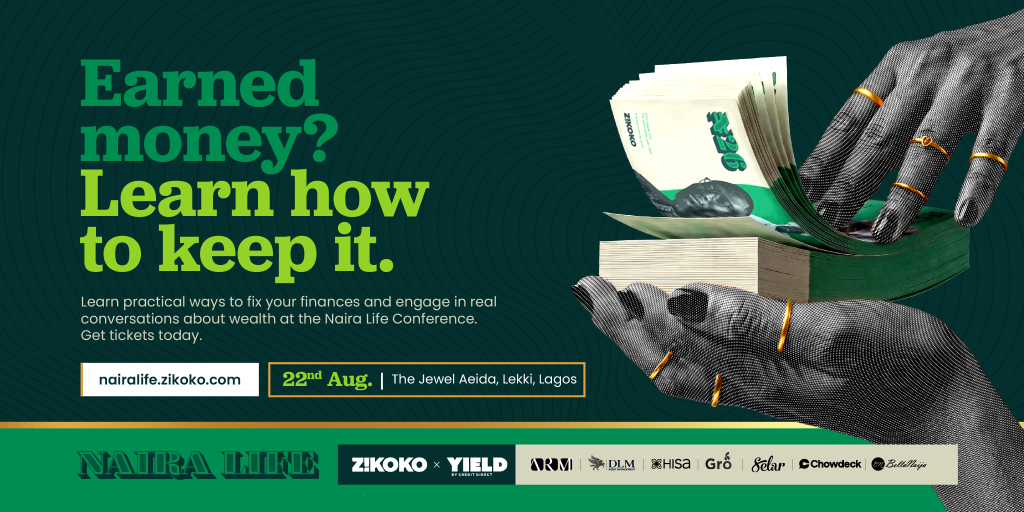
The Naira Life Conference is returning on August 22, 2026, in Lagos! Come learn from finance experts and industry leaders and join unfiltered conversations about building wealth and diversifying your income stream in a country like Nigeria. Real stories, expert advice you can actually use, and a community ready to build wealth together. Secure your spot here.