On Sunday, October 25 2026, Dayo Israel, the All Progressives Congress (APC) national youth leader, posted a video showing off about seven brand-new Toyota Prado Sport Utility Vehicles (SUVs). He said the cars were for selected youth leaders who would help mobilise voters ahead of the 2027 general elections. He also thanked First Lady Oluremi Tinubu for her continued support for the youth structure.
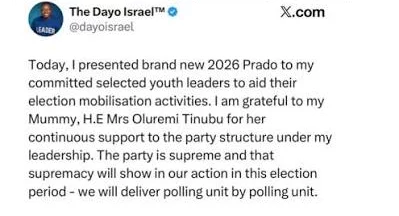
The post went viral, reactions poured in, and the video eventually disappeared from his page. But the First Lady later confirmed that she had donated the vehicles to the APC youth wing for grassroots mobilisation.
Fair enough. The general elections are less than three months away, and political parties need people to move around. But seven shiny SUVs are an expensive way to tell people to go and mobilise.
There are better things to do with that money
CFAO Mobility, Toyota’s official distributor in Nigeria, lists the Prado Adventure at about ₦160 million and the Premium version at ₦190 million. Depending on the model, seven of them could cost between ₦1.12 billion and ₦1.33 billion.
That is a lot of money to put on four wheels. So, what else could a sum in that neighbourhood do?
- Renovate and equip up to 14 primary health centres
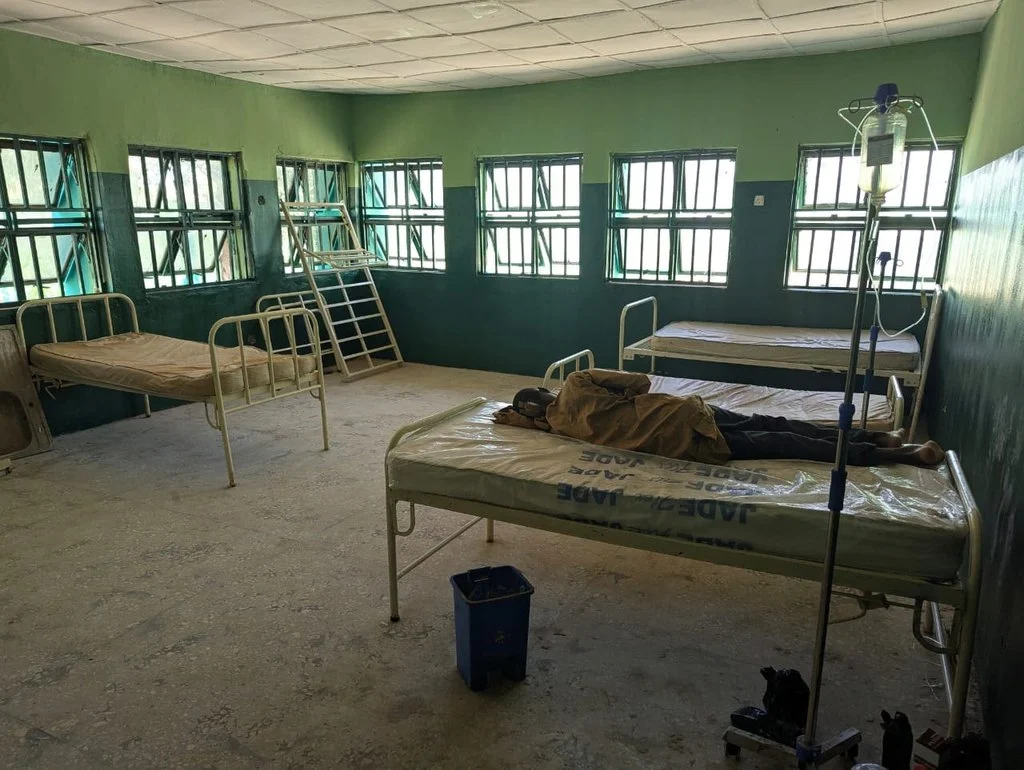
For many Nigerians, going to a primary health centre (PHC) can feel like travelling to a place that exists mainly on paper. Some lack basic equipment, others struggle with staffing, and many communities still have to look elsewhere for care.
On August 3 2026, The PUNCH reported that 6,516 primary health centres across the country remained non-functional, citing data from the National Primary Health Care Development Agency.
A Trust Radio analysis of the 2025 budget found PHC renovation and equipment projects costing between ₦75 million and ₦150 million. Some projects were budgeted at ₦90 million in Kaduna State and ₦125 million in Ekiti State.
At those rates, the estimated cost of the seven Prados could renovate and equip about seven to 14 primary health centres.
That is seven to 14 more places where pregnant women could seek care, parents could take sick children, and residents could get basic medical attention without having to travel miles in search of help.
- Pay nearly 1,200 teachers for a year
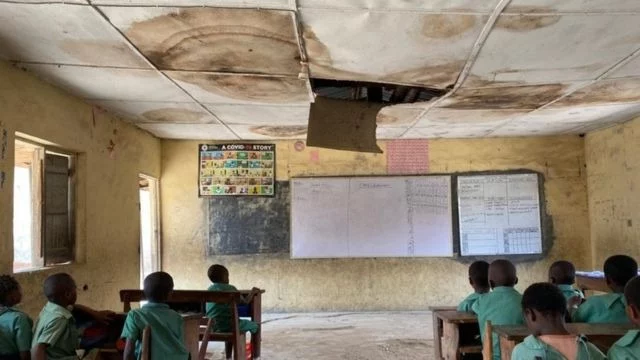
A classroom can have desks, a chalkboard and a school bell that rings with great enthusiasm. Without a teacher, however, it is mostly a room full of children waiting for something to happen.
In August 2026, the Federal Ministry of Education’s Digital Nigeria Education Management Information System showed that Nigeria is facing a severe teacher shortage, with 31,827,244 learners relying on 592,077 teachers, translating to an average learner-teacher ratio of 53.8 to one. Nigeria’s public schools need teachers, and the money attached to seven luxury SUVs could help put more of them in classrooms.
Zamfara State’s Ministry of Education has a costed teacher recruitment plan that puts the annual cost of a basic education teacher in 2026 at ₦936,000, including salary, housing and allowances.
Using that figure, ₦1.12 billion could cover the annual costs of about 1,196 teachers. Even at the lower end of the Prado estimate, that is a small army of teachers. At the upper end, the money could stretch further.
Imagine nearly 1,200 teachers spending a school year teaching children to read, write, solve maths problems and, hopefully, stop believing that every difficult question in an exam is a personal attack.
- Build or rehabilitate about 2.7 kilometres
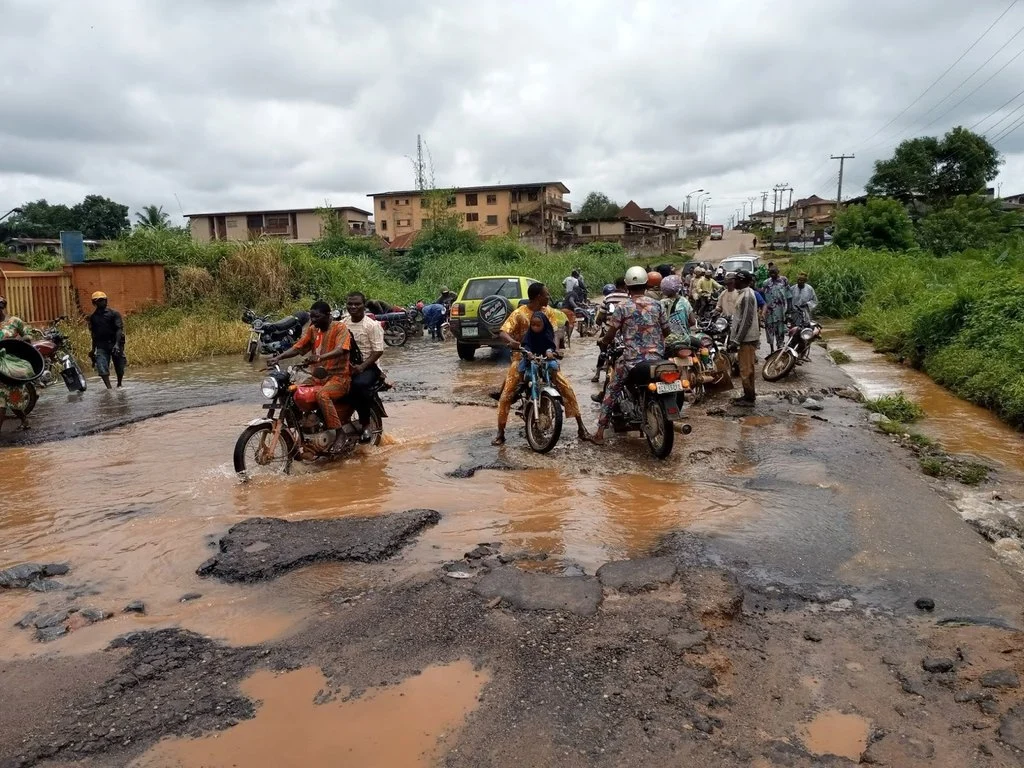
Anyone who has spent 40 minutes navigating a road that looks like a war zone would understand what it means to have a smooth ride.
In July 2025, Osun State awarded a ₦5.7 billion contract for a 13.785-kilometre section of the Osogbo–Iwo road project. That works out at roughly ₦414 million per kilometre.
Using that project’s average cost, ₦1.12 billion could cover approximately 2.7 kilometres of road construction or rehabilitation.
That means smoother trips to work, easier access to markets, and fewer journeys where passengers silently pray for their car’s suspension. For traders and farmers, better roads can also make moving goods around less expensive and less stressful.
2.7 kilometres might not sound like much until you are the person who uses that stretch every day.
- Build up to 40 classrooms
A school needs more than a signboard and a bell to educate children. It needs actual classrooms where pupils can learn without squeezing into overcrowded spaces or dilapidated buildings.
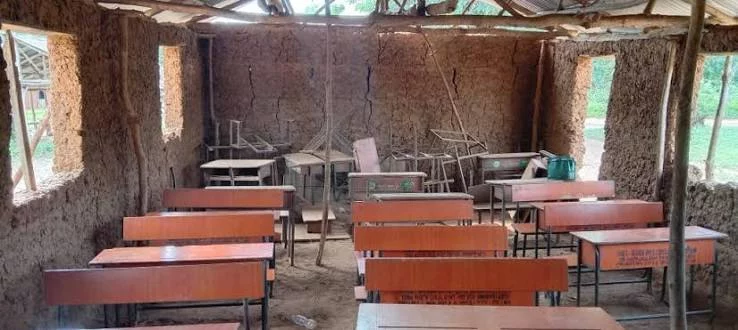
A Trust Radio analysis of the 2025 federal budget found that ₦650 million was budgeted for 10 blocks of two modern classrooms each in Nasarawa State. The project included offices, storage, furniture and solar-powered installations, putting the cost at ₦65 million per block.
Using that budget estimate, ₦1.12 billion–₦1.33 billion could fund 34–40 classrooms across 17–20 blocks.
That means more pupils could have a proper place to learn, with furniture and basic facilities, instead of treating a crowded classroom like a musical show or local football viewing centre.
- About nine ambulances for Nigerians
On October 23 2025, the Federal Capital Territory Administration (FCTA) approved ₦1.74 billion for 12 Toyota Hiace high-roof ambulances to improve emergency response. That works out to roughly ₦145 million per ambulance.
At that rate, the estimated ₦1.12 billion–₦1.33 billion for seven Prado SUVs could buy about 7–9 ambulances.
That is more vehicles to rush pregnant women to hospitals, transport accident victims and get medical help to people who cannot afford to wait for an ambulance that may never come.
- Up to 25 police vehicles
In September 2026, the Sokoto State Government approved ₦1.592 billion for 30 Toyota Hilux vehicles to strengthen security operations. That works out at about ₦53.1 million per vehicle.
Using that procurement rate, the estimated cost of seven Prado SUVs could buy about 21–25 Toyota Hilux vehicles for security operations.
That is more vehicles for officers to respond to distress calls, patrol communities, and reach crime scenes. Because criminals do not exactly send calendar invites before showing up, a functional patrol vehicle can make a difference.
The Big Daily is your weekday shortcut to the biggest news shaping Nigeria. We cut through the noise, connect the dots, and explain why the news actually matters, all in one quick read.
- Feed about 14,800 pupils for a school year
In September 2025, the Federal Government announced plans to expand its National Home-Grown School Feeding Programme, with meals estimated to cost between ₦500 and ₦1,000 per child daily. The programme aims to tackle hunger and encourage school attendance among children. Nairametrics reported the figures.
Assuming 180 school days in a year, the estimated cost of seven Prados could provide daily meals for about 6,200–14,800 pupils for an entire school year.
That is thousands of children who could spend less time trying to learn on an empty stomach and more time concentrating on their lessons. For some families, it could also mean one less meal to worry about paying for every school day.
Seven Prados or a lot of public services?
Political parties have the right to choose how to equip their campaign teams. But when the donor is the First Lady, the wife of a sitting president, the price tag raises questions about where the money is coming from and how these priorities are being set.
That amount also offers a glimpse of what a billion naira can achieve when it is spent on things people rely on every day. And would it not be a better campaign strategy if the money were spent on the general public?
In June 2026, Oluremi Tinubu said she had donated ₦2 billion towards tuberculosis interventions, ₦1 billion for breast cancer and ₦500 million to tackle malnutrition. Around the same time, she told Nigerians that starting businesses such as frying akara, roasting corn and making kuli-kuli did not require much money, adding that her initiative gave grants rather than loans.
The remarks drew criticism from Nigerians who felt that small-scale trading was being presented as an answer to economic hardship on a scale that required much more.
Now, the First Lady has confirmed donating Prado SUVs to the APC youth wing for grassroots mobilisation ahead of the 2027 elections.
A Prado can carry a party organiser from one community to another, but a functioning health centre can care for an entire community. A teacher can help hundreds of children learn, while a decent road can make life easier for everyone who uses it, including the people driving those SUVs.
The vehicles are meant to help the APC reach voters in 2027. But Nigerians who need a clinic, a teacher or a road are also waiting for leaders to show up for them.