When insecurity gets bad enough, the Nigerian government pulls a familiar card. Lawmakers meet, security chiefs arrive, experts dust off their presentations, and everyone gathers to discuss how to make the country safer.
There are speeches, communiqués, recommendations, and photographs of important people sitting around important tables. Then Nigerians return to worrying about kidnappers on the highway, bandits in their communities and whether it is safe to travel home for Christmas.
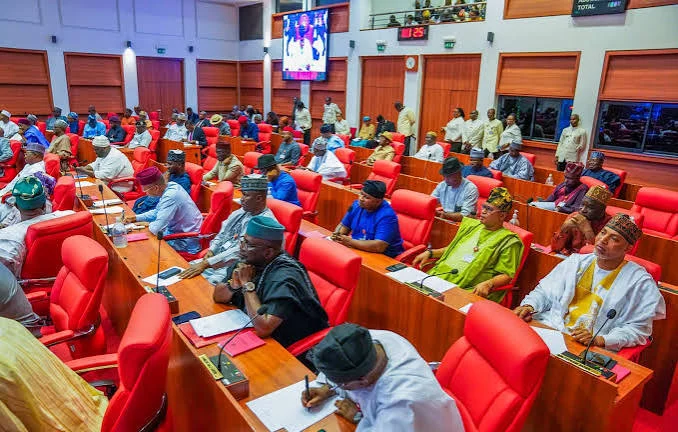
The Senate was preparing for another round of this exercise on October 12-13, 2026. The planned two-day national security summit was expected to bring lawmakers, security agencies and other stakeholders together to discuss ways to strengthen the country’s security architecture.
However, on October 6, Senate Leader Opeyemi Bamidele announced that the event had been postponed indefinitely following the fatal Nigerian Air Force aircraft crash in Ondo State.
The decision was taken to honour the 25 officers and crew members who died in the crash on Monday, October 5, 2026.
The postponement is understandable given the circumstances. However, security summits like this have always attracted criticism regardless. On May 14 2025, when the Senate was preparing for its summit, security experts and stakeholders questioned the need for another meeting when previous gatherings had produced recommendations that were yet to be fully implemented.
They argued that lawmakers should review the old reports and demand answers from the relevant agencies instead of organising another conference.
Meanwhile, this pushback from the experts came three days after the Islamic State of West African Province (ISWAP) attacked a military formation in Borno State two days prior, on Monday, May 12, 2025. According to reports, at least four soldiers died while more than 20 were unaccounted for.
Summits here and there
Nigeria has spent years discussing how to tackle insecurity. The country has also produced plenty of reports on what should change. Yet the same concerns keep returning to the national agenda, from kidnapping and banditry to insurgency, attacks on rural communities and the safety of farmers.
There is no single, official calendar of national security summits that makes it easy to count every meeting. Different administrations and institutions have convened security conferences, stakeholder dialogues and regional summits, each with its own focus. A meeting organised by the Senate is not necessarily the same as one organised by the House of Representatives, the National Economic Council or a regional governors’ forum.
Still, the history is long enough to show that Nigeria has repeatedly brought decision-makers together to discuss security.
In 2012, the Seventh Senate held a National Conference on Security and Peace. On August 17 2017, the National Economic Council convened a security summit involving federal and state leaders. The following year on February 8 and 13, the Senate had a two-day National Security Summit in Abuja after a series of deadly attacks, including the killings of 73 people in Benue State on January 11 2018. The meeting brought lawmakers, security chiefs and other stakeholders together to discuss the country’s security challenges.
On May 24 2021, the House of Representatives held another Special Summit on National Security. Its recommendations were submitted to President Muhammadu Buhari in July that year. The House said the report contained seven recommendations requiring legislative action and 19 for the executive to implement.
At the state and sub-regional levels, governments have also convened security summits to tackle challenges specific to their areas. From August 9 to 11, 2022, Gombe State convened its first Peace and Security Summit, bringing together community leaders and other stakeholders to discuss the state’s security challenges.
A year later, on September 28 and 29, 2023, the South-East Governors’ Forum organised an Economic and Security Summit in Owerri, where regional leaders discussed the need for unity and coordinated action. Then, in June 2024, the North-West Governors’ Forum and the United Nations Development Programme (UNDP) convened another summit in Katsina, focusing on regional cooperation against banditry, terrorism and communal conflict.
The 2026 Senate summit would have added another entry to that record. It was planned amid continuing concerns about attacks, abductions and insecurity in several parts of the country.
These meetings have not all been identical, and it would be inaccurate to treat every security conference as a failed attempt to solve the same problem. Some produced legislation, while others focused on particular conflicts or aspects of security policy. But the repeated return to national security summits makes it reasonable to examine what happens after the delegates leave.
The Big Daily is your weekday shortcut to the biggest news shaping Nigeria. We cut through the noise, connect the dots, and explain why the news actually matters, all in one quick read.
Some recommendations have been on paper.
The 2018 Senate summit produced 20 recommendations. Among other things, the proposals called for better coordination between security agencies, greater use of technology in security operations and reduced dependence on imported security equipment. These were practical concerns about how the country’s security institutions work together and what they need to operate effectively.
Three years later, the 2021 House of Representatives’ summit proposed an even wider set of executive actions. The recommendations included enhanced training for police mobile units, better cooperation between police and forest guards, improved intelligence-sharing, early-warning systems and surveillance technology on major highways and in public places. The House also recommended local security committees across the country’s 774 local government areas.
Other proposals called for stronger criminal databases, improved police equipment, action against the illegal flow of arms and measures to address unemployment and other socioeconomic conditions associated with insecurity.
There is a lot to examine in those recommendations. Some require legislation and funding; others depend on coordination between agencies or decisions by the executive. Several could be tracked through public records, including budgets, procurement documents, legislation and reports from the relevant institutions.
For instance, a recommendation to improve surveillance on highways could be assessed by asking which projects were funded, where the equipment was installed, which agencies operate it and whether the government publishes information about its use. A proposal for local security committees could be checked against records showing which local governments established them and what resources they received.
However, on May 14, 2025, security analysts and stakeholders, citing a 2023 study by the Centre for Democracy and Development, stated that only 15% of policy recommendations from legislative-led security conferences since 2011 had been implemented. The report said the remainder had been ignored, poorly coordinated with the executive or overtaken by events.
Another summit needs more than a communiqué
Security policy is complicated. Recommendations that sound straightforward in a conference hall can require years of funding, coordination, recruitment, training and changes to the law. The security situation also changes, and a proposal made in 2018 may need to be revised to respond to new threats or technology.
A useful first step would be for the National Assembly to publish a consolidated register of previous security summit recommendations. Each item could identify the responsible institution, the required action, the estimated cost where applicable, the deadline and the current status. Where a proposal has been implemented, the government could provide evidence. Where it has stalled, the responsible agency could explain why and state what happens next.
Lawmakers could then use committee hearings and budget scrutiny to track the outstanding items. Security agencies could be asked to provide progress reports, while the public could follow the parts that do not involve genuinely sensitive operational information. This would allow Nigerians to distinguish between proposals that have been completed, those still in progress and those that never moved beyond the report.
Without those records, another communiqué risks becoming one more document Nigerians hear about and rarely see reflected in their daily lives.