• Nigeria is a country with a rich history and culture, but it is also a country with many challenges. 

    There have been conversations about the kind of Nigeria Nigerians want. We once believed in Vision 2020—the once-upon-a-time “strategic” deadline for Nigeria to be one of the 20 largest economies in the world. Where in the world are we now? 

    While Nigeria is the largest economy in Africa by GDP, we are in the 30th position among the 2023 largest economies in the world. We failed to meet the vision set for 2020. Critics continue to argue that one of the reasons Vision 2020 failed is that the target was way too ambitious, considering the country’s acute developmental challenges and huge dependency on oil. 

    On May 3, 2023, we also had former President Muhammadu Buhari launch a new national development plan, the Nigeria Agenda 2050, looking ahead to creating over 150 million jobs by 2050. Critics have also pointed out that this agenda lacks a proper action strategy. 

    While the government is working more on improving the state of the economy, there’s a popular desire beyond that—economics and finances—for everyday people. It’s multi-layered. 

    Some Nigerians dream of a Nigeria where everyone has equal opportunity, regardless of background. They want a country where hard work and determination are rewarded and where everyone has the chance to succeed.

    Others dream of a Nigeria that is more independent and self-sufficient. They want a country that is not reliant on foreign aid and that can stand on its own two feet.

    Of course, there is no single answer to the question of what kind of Nigeria Nigerians want. But the comments of some Nigerians (Bimbo, Laolu, Bridget, and Favour), shared with Zikoko Citizen, provide a glimpse into Nigerians’ hopes and aspirations for their country.

    A Nigeria that is independent and self-sufficient

    “I want a Nigeria that is independent. A Nigeria that people from all over come to for vacation. In the medical community, a Nigeria where people are referred to our hospitals worldwide because we are the best.” — Bimbo

    Bimbo’s comments reflect the desires of people with access to healthcare services. Nigeria’s healthcare system is truly not applaudable and needs urgent attention. The issue of Brain Drain is a concern as many healthcare professionals seek greener pastures in other countries. As for the major health facilities, it’s not world-class for anyone to seek treatment in Nigeria, which could also help generate revenue.

    A Nigeria where the son of nobody can become somebody

    “When I dream of the Nigeria I want, I want a country where the child of a nobody can become somebody through sheer tenacity, hard work, and just a lick of luck. A place where good government policies favour industry and there are job opportunities for everyone everywhere, regardless of educational backgrounds.” — Laolu

    Laolu’s comment about good government policies favouring industry reflects the desire of many Nigerians for a more prosperous and self-sufficient country. They believe Nigeria has the potential to be a major economic power but needs to make some fundamental changes to achieve its full potential.

    A Nigeria that is more tolerant and accepting of diversity

    “I want a Nigeria that’s way less religious.” — Bridget

    Bridget’s comment about a less religious Nigeria reflects some Nigerians’ desire for a more secular society. They believe Nigeria’s religious diversity should be celebrated and that no one religion should influence the government or the people in making decisions that will impact everyone.

    Download the Citizen Election Report: Navigating Nigeria’s Political Journey

    A Nigeria where the Law is the Law

    “When I think about what a better Nigeria would look like for me, I think of a Nigeria where there is truly the rule of law, where people and the government are held accountable for their actions. I would like to see a Nigeria with a better economy, where workers are properly compensated and can afford to live debt free.” — Favour

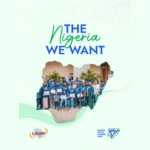
    Our partner, LEAP Africa, has also unveiled “The Nigeria We Want” Report, highlighting feedback from young people across the six geo-political zones for a prosperous federal nation where everyone in every generation is secure, free, happy, and dignified. 

    Through its youth engagement, advocacy, and grant-giving programme, the Nigeria Youth Futures Fund, they’ve disbursed grants totalling $400,000 to 130 individuals and organisations, comprising action grants, development grants, and individual grants that are designed to support initiatives in the civic participation space. Download the report here. 

    The Nigeria of Nigerians’ dreams is a country where everyone has equal opportunity, where hard work is rewarded, where people of all faiths and sexual orientations can live together in peace, and where tranquilly is essential. It is a country where the potential of its people can be fully realised and where Nigeria can take its rightful place as a leading nation in the world.

    Do dreams like this come true?

    Only time will tell if dreams like these come true. But one thing is for sure: Nigerians, especially young people, are determined to make their dreams a reality. They are resilient people with a strong sense of hope who will not give up until they have achieved their goals.

  • In Nigeria, the youth have persistently worked to get into power and make their voices heard despite being accused of being inexperienced.

    At Zikoko Citizen, we celebrate the contributions of the Nigerian youth in shaping the country’s fourth republic and look ahead to the potential they hold for the future.

    With the 2023 elections, we saw how social media became a primary news source and a platform for young Nigerians to participate in political conversations. This transformation has significantly impacted their news consumption and engagement, providing them with a wider perspective and influencing their political perceptions. In our WhatsApp community during and after the election, they remained actively involved and well-informed about current events. While many of them supported Peter Obi, who did not win the election, with Tinubu declared the winner amidst contested circumstances, they remain undeterred. They believe that despite the lessons learned, there are still many victories to be achieved.

    One defining moment showcasing Nigerian youth’s power was the #ENDSARS protests in October 2020. Young Nigerians took to the streets to demand an end to police brutality and systemic injustice. While concrete police reforms may not have been immediately achieved, the protests ignited a spark of political awakening among the youth. The energy and passion displayed during this movement spilled over into the 2023 elections.

    Many new voters were young people, with students comprising 40% of this group. It demonstrated that the youth have recognised their voting power and are actively participating in shaping the country’s political landscape.

    How can you seize the future?
    Beyond the electoral process, young Nigerians must recognise that they have the potential to take charge of the country’s affairs. As older generations of politicians and ex-military figures prepare to depart from the political arena, a generational gap emerges, creating an opportunity for young people to step forward and lead. 

    Historical examples like Anthony Enahoro (37), Kaduna Nzeogwu (29), Yakubu Gowon (32), and Ojukwu (33), who made significant impacts at a young age, should serve as inspiration. You have to come to the realisation and believe that age is not a barrier to effecting change.

    One of the ways to fuel this change is by downloading the Citizen Election Report. This will serve as a guide to empower you on Nigeria’s political journey.

    This comprehensive report delves into Nigeria’s political history, providing insights into the fourth republic and the influential role played by youth. It offers analysis, historical context, and practical guidance for active participation in shaping Nigeria’s future.

    By downloading the Citizen Election Report, young Nigerians gain access to a wealth of knowledge and understanding. It equips them to make informed decisions, engage in meaningful political discourse, and contribute to the transformation of their country.

    As we celebrate every young Nigerian, we are confident that this resource will prepare you for the challenges and opportunities that lie ahead.

    Also, join us for our Twitter Space at 6 p.m. on Tuesday, July 11th, 2023. The movement doesn’t end after elections; we must stay engaged with the political system and be part of the change. Download the Citizen Election Report today. 

  • Guess what? Nigeria has passed its Data Protection Act after almost 20 years of waiting! This new law is a big deal because it’ll bring some order to Nigeria’s messy data protection rules, and there are hopes that it’ll generate over 16 billion naira for Nigeria in the data business

    It’s an upgrade from the Nigeria Data Protection Regulation (NDPR) from four years ago, but this time, it’s got all the cool stuff that was missing before, like fairness, transparency, and accountability.

    Big English. But what does this mean for you?

    The Act protects your privacy and your child’s (if you have one). It says that companies have to check your age and let you know when they’re collecting your data, especially if they do it in sneaky ways. Plus, it gives you a bunch of rights over your data, like the power to say “no” to companies using it for things you don’t want.

    This could mean you are not getting random SMS or emails from people you didn’t permit to reach you.

    Oh, and remember the Nigeria Data Protection Bureau? If you don’t, they’re like the Police of data protection, ensuring everyone follows the law.

    Well, there was some drama about whether it was legit or not. But no worries; the Act has now made it all official and legal, so no more questioning its authority.

    Now, for this law to actually work, Citizen reached out to Data Protection experts Victoria Oloni and Ridwan Oloyede on what the Nigeria Data Protection Commission (NDPC) must do to step up and take meaningful action. These are their top 10 recommendations:

    1. Clear things up: The NDPC should explain how the old NDPR fits into the new Act. They need to guide businesses on what they’re supposed to do during the transition. Like, what audits do they need? And which countries are okay with data transfers? Just spell it out so nobody gets confused.
    2. Make it simple: The Commission should release a regulation explaining all the Act’s complicated parts. People need clear instructions on how to follow the law, especially when sending data outside of Nigeria. And they better not take forever to do it because we need those rules ASAP!
    3. Give us tips: The NDPC should write guidelines on different topics covered by the Act. Like, how do you do a data protection impact assessment? What about privacy at work or using “fancy” technology like AI? They must cover all the important stuff so everybody knows how to play by the rules.
    4. Help us help ourselves: The Commission should create self-assessment tools that allow companies and stakeholders to check if they are following the Act’s specifications. It’s like a checklist to see if they’re doing things right. It’s a win-win because companies can fix their mistakes, and the Commission can focus on the real troublemakers.
    5. FAQs for the win: Since there will be many questions during this transition, the NDPC should make an FAQ document. Just a simple list of answers to common questions so we can all get the basics without having to call them every five minutes.
    6. Get the dream team: The Commission should hire and train many smart people with various skills. They need tech-savvy folks who understand things like cybersecurity and AI. It can’t just be a bunch of lawyers in suits. We need a diverse team that knows what’s up in the digital world.
    7. Be open and honest: The NDPC should be transparent about investigating and making decisions. We want to know what’s happening and how they handle complaints. They could even set up a system where we can track our complaints and see what’s happening. That would be awesome!
    8. Let’s all talk: The Commission should involve everybody in the process, even those who disagree with them. They should listen to different perspectives and not just do their own thing. Civil society, academics, and experts should all have a say because we’re all in this together.
    9. Global Gang: The NDPC should team up with other countries and international organisations to boost Nigeria’s data protection game. They should join cool groups like the Global Privacy Assembly and learn from other African data protection authorities. We want Nigeria to be a global player in this stuff!
    10. Research is key: The Commission should support research on data protection. They should work with universities and private organisations to stay ahead of the game. They need to understand new technologies and their impact on us to make smart decisions and not be clueless.

    So, there you have it! The NDPC has a lot on their plate, but Nigeria’s data protection game will be on fire if they get these things right. Let’s hope they make it happen and protect our privacy like champs!

  • In the not-so-distant past, Nigerians relied heavily on radio, TV, and newspapers to stay informed about politics. 

    Debates happened primarily at newspaper stands. These debates, specifically during elections, are always intense, with voters rooting for their candidates. 

    However, with the advent of the internet and the surge in social media usage, the media landscape in Nigeria has undergone a transformative shift. 

    Today, we can all agree, to some extent, that Nigerian voters are more connected and informed than ever before. But along with this increased connectivity comes the challenge of combating fake news and propaganda that threatens the integrity of the electoral process.

    Social media has transformed how Nigerians consume news, granting instant access to information and real-time updates. It has become the primary news source, allowing citizens to engage in political conversations and access diverse perspectives, including those of political influencers. However, this influence raises concerns about biased information and misinformation.

    But as young people, we must learn to use social media for our own good. For example, The Occupy Nigeria and #EndSARS protests showed us the power of social media to mobilise citizens and have since been instrumental in raising awareness about politics and government policies. This is also the core of our work here at Citizen, to help you easily understand politics, policy, and governance—and take action!

    Admittedly, social media’s impact is not without challenges, as the spread of misinformation witnessed during the 2023 general elections weakened the integrity of the electoral process. With technological innovations and advancements in the use of artificial intelligence, the fight to stop “fake news” peddling is up for a new level of challenge—and we can see it already. On social media, the battle is not over.

    We can also see how social media remains a vital tool for candidates and voters, enabling connections, mobilisation, and informed decision-making. It also empowers stakeholders like us to educate voters, address concerns, and ensure election transparency in every way possible. 

    Download the Citizen Election Report: Navigating Nigeria’s Political Journey

    The Citizen Election Report is your go-to guide for navigating the complex landscape of Nigerian politics, with cool insights into our country’s political history, the intricacies of its democratic process, and the challenges posed by fake news. The report offers a nuanced understanding of Nigeria’s Fourth Republic and the influential figures who shaped its political scene.

    By downloading the Citizen Election Report, you can access in-depth analysis to stay informed and make informed decisions. The report highlights the importance of media literacy and critical thinking in the digital age, equipping readers with the tools to identify fake news and propaganda.

    Also, Read: New Phase, Who This? The Nigerian Television Authority (NTA) Resurgence

    As Nigeria moves forward from the 2023 election, combating misinformation, promoting media literacy, and utilising resources like the Citizen Election Report will be crucial for safeguarding the integrity of elections and ensuring an informed electorate. 

    By harnessing the power of social media responsibly, Nigerians, specifically young people, can shape their political future and build a stronger democracy for all.

  • Founded in 1977, Nigerian Television Authority (NTA)’s slogan is “You Can’t Beat the Reach.” But NTA has been failing to beat its reach.

    With President Tinubu’s new administration, NTA is experiencing a surprising revival in many people’s eyes. Notably, there has been a remarkable increase in its social media activity, establishing it as a trusted source for current government activities. 

    In a significant move as well, NTA recently joined other international media outlets in Saudi Arabia for the annual briefing of the minister for media ahead of the commencement of the 2023 Hajj rituals. NTA was the only Nigerian media platform present at the briefing. 

    Reclaiming its position as the government’s “mouthpiece,” NTA’s newfound activeness and engagement on social media in sharing updates, announcements, and breaking news have impressed many Nigerians. Some view NTA’s resurgence as a source of inspiration, believing that if NTA can “rise again”, dormant aspects of their lives can also experience a renaissance. 

    What did NTA look like before now?

    During the early years of Nigeria’s democracy, NTA was respectable. Back then, in the absence of social media, tuning in to NTA’s network news at 9 p.m. was the primary way for Nigerians to stay informed.

    NTA’s news presenters, like Eugenia Abu, Ronke Ayuba, Abike Dabiri, and Cyril Stober, became household names and gained popularity among viewers. 

    Cyril Stober on live television, NTA

    Melony Ishola, a TV producer and presenter who has worked in the past with NTA as a freelancer, says, “The important thing is that at the time, when NTA existed before we had the digital media space, NTA monopolised the market. NTA was about the biggest and only, except, of course, AIT and a few others here and there, regionally and locally in states, were able to pull their weights, but as far as national media is concerned, it’s almost always been the Nigerian Television Authority.”

    NTA has a network of over 100 stations across Nigeria, with its headquarters in Abuja. Among its branches, NTA International serves as the international station. NTA has expanded its reach in the digital age by introducing eight additional digital channels: NTA News24, NTA Sports, NTA Entertainment, NTA Knowledge, NTA Hausa, NTA Yoruba, NTA Igbo, and NTA Parliament. These digital channels enable NTA to cater to a wider audience beyond traditional terrestrial broadcasting.

    Ishola considers this new digital revolution for NTA an opportunity to compete with emerging and innovative broadcast platforms like Arise TV and Channels, which have ears and eyes for the younger population of Nigerians whose major access to information exists on the internet, specifically social media. 

    Emeka Mba, former Director General of Nigeria’s National Broadcasting Commission, told Citizen that NTA initially lost relevance and market share because the government news network “lost its voice and became even more entrenched as a government mouthpiece rather than a public broadcaster.” He added that “its programming content became less relevant to the growing demographic of younger viewers.”

    The “mouthpiece” is poorly funded 

    Both Ishola and Mba agree that one key reason we are seeing NTA active and creating new content formats or styles like a documentary on Nigeria’s political evolution and Tinubu’s rise to power is because the current administration understands the importance of media and the power of narratives and is positioning NTA as an authoritative source of information. Also notably, on May 20, 2023, NTA announced that it had won the Africa Union of Broadcasting’s Best Television Documentary Award.

    With all these developments, Mba sees it as “a very wise strategic move to ensure ownership of narratives and, even more importantly, in the age of so much noise and clutter on social media,” to create a one-stop shop for disseminating approved government information.

    Ishola also shares, “You will realise that NTA is poorly managed and poorly funded. And one of the biggest reasons for poor production, poor outputs, and poor perception would be that they were poorly funded.”

    However, according to Ishola, one of the “major minuses” of NTA would be its role in shaping the perception of citizens about the government. In the last few decades, she says, “There has been an issue of whether or not we could trust their news, but with the fact that they have access to privileged information and whatnot, it means that most of the news we’re going to be hearing from them will be real and true.” Adding further, “We can now begin to debate the motive. And you know how it’s reported, especially if we think it’s more patronising than upholding the tenets and principles of journalism.”

    Download the Citizen Election Report: Navigating Nigeria’s Political Journey

    While some people continue to praise NTA for its information dissemination as Nigeria began to shape its democracy and the government’s strategic role in enthroning democracy in Nigeria through the NTA, Mba says he can’t “justifiably” agree. “However, if we were to be charitable, during the [Olusegun Obasanjo] years of 1999 to 2007, NTA played a more active role in pushing government narratives than any other administration afterwards,” he shares with Citizen.

    Is Tinubu the Tsunami? 

    Mba, who had served for two and a half years as the DG/CEO of Nigeria’s broadcasting regulator, told us that “at the start of every new administration, it is the norm to see officials scurrying hurriedly to serve and please the incoming government as a sign of loyalty and lobby to keep their jobs or get better appointments.” 

    With Tinubu winning a controversial election and being lauded by some for waking NTA from the dead, and all agencies trying to impress and contribute to the new government’s vision, Mba says, “This is expected. Nothing new.”

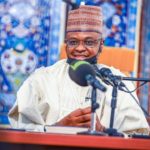
    NTA’s visible accomplishments shouldn’t be solely attributed to Tinubu; credit should also be given to the current NTA Director-General, Salihu Abdulhamid Dembos, who assumed office in 2022. We should consider that Dembos has maintained a reputation that has mostly not been tarnished alongside that of the previous administration, and this has contributed to NTA’s recent spotlight.

    Salihu Abdulhamid Dembos, current DG, NTA

    On the other hand, many Nigerian media platforms and news producers hold reservations against Tinubu. During his presidential campaign, he criticised them, ignored media invitations and debates, and opted for interviews on international platforms. However, some believe that Tinubu now sees NTA as a new communication channel and recognises the importance of utilising authoritative government channels, despite owning his own media businesses.

    Discussing Tinubu’s relationship with the media, Mba, who now runs Afia TV, an indigenous TV channel, states, “If anything, his investment in media such as TVC and the Nation newspaper, as well as the indirect support/influence of many media organisations in Nigeria, doesn’t suggest a man who has disdain for local media.” He believes that Tinubu understands the power of the media and expects him to utilise local channels more effectively in shaping positive narratives for his administration and political agenda.

    While providing insights into the future of NTA, Mba forecasts, “Beyond the expected knee-jerk reactions from NTA towards any new incoming administration, if nothing is done to reposition NTA and structurally and appropriately redefine its role, the organisation would fall back to its [former] position,” adding strongly, “NTA would become even less relevant to the majority of the Nigerian audience and simply become a press release agency!” 

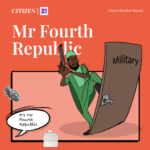
  • Why waste time revealing the answer to a question when a greater curiosity is waiting to be explored? A few of the many questions that often arise, especially among young people trying to understand Nigeria’s politics, are: What is Nigeria’s Fourth Republic? Who is Mr Fourth Republic?

    With the release of the Citizen Election Report, the query delves into the heart of the country’s democratic journey. Before you move on, are you ready to learn about the identity of the influential figure(s) who played a pivotal role in shaping Nigeria’s political scene during the Fourth Republic?

    Get to know the man!

    “Mr Fourth Republic” refers to former President Olusegun Obasanjo. Nigeria’s fourth democratic republic began in 1999, and Obasanjo served as President of Nigeria from 1999 to 2007 and was the first civilian president after several years of military rule.

    During his tenure, Obasanjo implemented various reforms to promote democracy, promote economic development, and tackle corruption. He oversaw the establishment of institutions like the Economic and Financial Crimes Commission (EFCC), aimed at combating corruption, and the Independent National Electoral Commission (INEC), meant to ensure free and fair elections.

    Obasanjo’s presidency marked a pivotal period in Nigeria’s democratic journey, and his influence extended beyond his time in office. His role in leading Nigeria during the Fourth Republic earned him the moniker “Mr Fourth Republic” due to his enduring impact on the country’s political landscape and his contributions to shaping Nigeria’s democracy.

    Nigeria’s troubled history 

    Ethnic tensions, corruption, military rule, and economic downturns are just a few of the difficulties plaguing Nigeria throughout its troubled history. Amidst this backdrop, Nigeria’s elections’ significance cannot be overstated. The country has witnessed numerous troubled elections, each leaving its mark on the nation’s political fabric.

    Since gaining independence in 1960, Nigeria has transitioned through four republics. The Fourth Republic began in 1999 and is an ongoing democratic era where citizens elect their leaders. However, it is important to note that the Third Republic, which ran from 1992 to 1993, was short-lived due to political crises surrounding the annulment of Chief MKO Abiola’s presidential election victory.

    Following the turbulent period under military rule, the Fourth Republic emerged, bringing forth a new wave of political parties and figures. The People’s Democratic Party (PDP), founded by prominent individuals who stood against the Abacha regime, won the 1999 presidential election with Olusegun Obasanjo as its candidate. The Alliance for Democracy (AD) also emerged as a formidable opposition party during this time.

    As the Fourth Republic unfolded, Nigeria experienced several elections, shaping the political landscape and the nation’s perception of its leaders. The presence of ex-military men like Muhammadu Buhari (2015–2023) in politics raised questions about the true nature of civilian governance. However, with each election cycle, the number of ex-military contestants decreased, hinting at a potential shift in the future political landscape of Nigeria.

    Join us as we explore Nigeria’s democratic journey, learn more about the mysteries of Nigeria’s “Mr Fourth Republic,” and delve into the pages of the Citizen election report, your go-to guide that provides cool insights into Nigeria’s political history and the intricacies of its democratic process.

    Download the Citizen Election Report: Navigating Nigeria’s Political Journey

  • If you closely followed the 2023 Nigerian election, you may have noticed Uju Ken-Ohanenye, the only female presidential aspirant from the All Progressives Congress (APC). Despite ultimately stepping down for Bola Ahmed Tinubu at the party’s primary election convention, Ken-Ohanenye’s campaign centred around a compelling message: Nigeria needs a mother to lead the nation. 

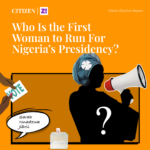
    Nigeria’s political scene has witnessed numerous significant milestones throughout its history. One such landmark moment was the emergence of Sarah Nnadzwa Jibril as the first woman to run for the presidency of Nigeria in 1992. Her courageous foray into the male-dominated political arena marked a crucial step towards gender inclusivity. It paved the way for future generations of women like Ken-Ohanneye in Nigerian politics. 

    Sarah Nnadzwa Jibril’s exceptional accomplishments shed light on an overlooked aspect of Nigeria’s political history and landscape, underscoring the need for improved discourse around our historical narratives.

    To gain a comprehensive understanding of Nigeria’s really cool and interesting political journey like this, every citizen should explore the Citizen Election Report.

    Sarah Nnadzwa Jibril’s Trailblazing Candidature

    Sarah Nnadzwa Jibril, a formidable force in Nigerian politics, etched her name in history by becoming the first woman to contest the Nigerian presidency. Her political journey began in 1992, when she ran as a candidate for the Social Democratic Party (SDP). With her vision, determination, and passion for social justice, she captured the attention of the Nigerian electorate and inspired women across the nation. Despite the challenges and gender biases she encountered, Jibril fearlessly pressed forward, determined to break down barriers and create opportunities for women in Nigerian politics.

    In 1998, Jibril again joined the People’s Democratic Party (PDP) and vied for the presidency. Her candidature is one visible way women have challenged societal norms and expectations. While she may not have secured the presidency, her groundbreaking campaign left an indelible mark on Nigeria’s political landscape. 

    Jibril’s trailblazing efforts have paved the way for subsequent generations of women who have attempted to become the country’s president. 

    Hopefully, Nigeria’s highest political officeholder will be a woman one day.

    Exploring Nigeria’s Political Journey

    To gain a comprehensive understanding of Nigeria’s political history and the strides made towards a more inclusive democracy, the Citizen Election Report is an essential resource. This comprehensive guide provides a thorough analysis of Nigeria’s political scene from 1999 to the present, delving into key events, electoral reforms, and the evolving political landscape. By reading this report, citizens can gain valuable insights into the challenges faced, the progress made, and the vision for Nigeria’s political future.

    Download the Citizen Election Report: Navigating Nigeria’s Political Journey

    By understanding Nigeria’s political journey and the contributions of trailblazers like Sarah Nnadzwa Jibril, citizens can actively participate in shaping the country’s democratic landscape. The Citizen Election Report is a vital tool for empowering citizens, especially young Nigerians, to engage in informed discussions and make well-informed decisions regarding Nigeria’s political scene.

  • Hey there, young Nigerians! We’ve got some fantastic news for you. Zikoko Citizen is thrilled to announce the upcoming launch of our highly anticipated Citizen Election Report. Building off our 2023 general election coverage, we have much in stock for you. 

    With this report, get ready to dive into a captivating journey through Nigeria’s political history and gain a deeper understanding of our democratic process.

    The Citizen Election Report is not your typical boring academic paper. We are making it immersive, engaging, and interactive. 

    Launching Soon

    Mark your calendars! The Citizen Election Report will be launched on Friday, June 16. We can’t wait for you to explore the captivating chapters that will guide you through Nigeria’s fourth republic elections and their potential for national change. We no dey disappoint. 

    Trust us to give you the best meats and serve you the best stews. We’ve been cooking this right for you.

    Stay Tuned and Get Involved

    The Citizen Election Report is just around the corner, and we can’t wait to share it with you. Keep an eye on our website and social media channels for more updates and sneak peeks leading up to the launch.

    Remember, your voice matters, and your participation in Nigeria’s democratic process is crucial. Let’s come together, make a difference, and believe in the power of our democracy.

    Please share this far and wide. Speak of our name everywhere. Anticipate and sell this hot bread with us. 

  • What age were you when you started secondary school? If you were younger than 11 years old, you might be one of the last of your kind.

    The federal government wants to stop underage children from writing the National Common Entrance Examination (NCEE) for admission into secondary schools across Nigeria. 

    Naturally, not everyone is aligned.

    The Case for Age Restrictions

    David Adejo, the permanent secretary of the Federal Ministry of Education, said students need to reach an appropriate age before taking the NCEE. While monitoring the conduct of the 2023 NCEE, he expressed his concern upon seeing three nine-year-olds sitting for the exam, stating, “We are teaching the children the wrong values.” 

    Adejo argues that education extends beyond passing exams; it involves teaching, learning, and character formation. By restricting admission to students at least 12 years old, the government aims to ensure that students possess the cognitive and emotional readiness necessary to navigate the challenges of secondary education effectively.

    Some supporters agree with Adejo. Wemimo, who entered secondary school at 9 and started university at 15, shares his experience of feeling out of place and “inexperienced.” 

    Wemimo believes young students face risks because they may be more vulnerable to negative influences and lack the maturity to make informed decisions. 

    On social media, proponents of age restrictions point out that an undue emphasis on ticking boxes and acquiring certificates at a young age may detract from the holistic development of children. 

    If you no tell us, how we go know? Tell us here.

    Considering Job Opportunities

    While the government’s decision prioritises the well-being of young learners, concerns dey regarding their future job prospects. 

    Funmi, who attended a federal unity college and got in at 11 years old, says age restriction in federal schools has always been a thing, even though on rare occasions she had younger classmates, and that she feels the reason age restriction exists is that “things were slower, but now, everything is evolving so fast.” 

    She says, “These kids [at the moment] even appear bigger than their ages; they learn so fast. We all learn differently. Kids of 5 are doing well in Mathematics, English Language and have coordinated tenses, so bringing it to 9 years for a well-developed child isn’t so bad so long the child isn’t deliberately rushed to suit whatever purpose.”

    The possibility of being highly employable at a young age influences Funmi’s concern. “I intend to make my kids have a faster education cos early education is more advantageous.” She said, “They could deviate into other things quite early in life too. I had classmates of younger ages, and I’m sure they appreciate their early education.”

    However, Funmi says that to address this issue, employers should recognise the value of graduate trainee programmes and offer opportunities for young professionals to gain practical experience. And they should stop requesting unrealistic work experience. “They’d just get people to lie and claim what they’re not for employment reasons, and such people could be less productive,” she added.

    Funmi believes employers should make room for graduate trainees starting at 20, acknowledging that even if the government disapproves of below-age-11 admissions to government-owned secondary schools, private schools are readily available to cater to them.

    Finding a Balance

    The federal government’s decision to enforce age restrictions in the NCEE might reflect its commitment to the well-being and development of young learners. However, striking a balance between readiness and opportunities is crucial in crafting an educational system that fosters holistic growth, offers relevant opportunities, and equips students for success.

    It is also essential to consider the challenges that lie ahead in public tertiary institutions, such as ASUU strikes, poor educational processes, and actions that frustrate students and prevent them from completing their education on time. In contrast with other parts of the world where there are records of young people achieving incredible academic feats at the tertiary level, many Nigerians will continue to share the feeling that “Nigeria no dey ever rate young talent”, as a social media user puts it, as having “archaic” norms. 

    Looking ahead, policymakers, educators, employers, and parents must strive to reach a consensus on an inclusive, progressive, and effective educational framework. By considering the diverse perspectives and experiences of individuals who have gone through the system, Nigeria can shape its education system to nurture young talent while addressing the challenges and opportunities of the modern world.

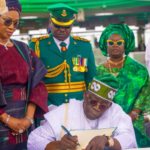
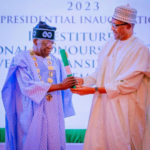
  • On May 29, 2023, Bola Ahmed Tinubu, former governor of Lagos State, becomes President of the Federal Republic of Nigeria. He also assumes the title of Commander-in-Chief of Nigeria’s Armed Forces. 

    At 10:28 a.m. and 10:38 a.m., Tinubu and his deputy, Kashim Shettima, took the oath of office to serve Nigeria. Nigeria’s Chief Justice, Olukayode Ariwoola, administered the oath of office.

    In his inaugural speech, Tinubu expressed his love for the nation and his faith in its people. He emphasises the need to march beyond the challenges and work towards a better society. Tinubu acknowledges the peaceful transition of power and praises his predecessor, President Muhammadu Buhari. He asserts Nigeria’s strength and resilience, declaring Nigeria the “champion of the Black race.”

    Citizen watched closely as the 16th President of Nigeria gave his speech. The swearing-in ceremony took place in Eagle Square, Abuja. The new administration spoke about hitting the ground running and improving the country’s state of affairs and economy. Here are ten quotes to highlight for you to pay attention to.

    Highlights

    1. “Security shall be the top priority of our administration because neither prosperity nor justice can prevail amidst insecurity and violence.”
    2. “We shall remodel our economy to bring about growth and development through job creation, food security, and an end to extreme poverty.”
    3. “Our government shall review all their complaints about multiple taxations and various anti-investment inhibitions. We shall ensure that investors and foreign businesses repatriate their hard-earned dividends and profits.”
    4. “My administration must create meaningful opportunities for our youth. We shall honour our campaign commitment of one million new jobs in the digital economy.”
    5. “Our government also shall work with the National Assembly to fashion an omnibus Jobs and Prosperity bill. This bill will give our administration the policy space to embark on labour-intensive infrastructural improvements, encourage light industry, and improve social services for the poor, elderly, and vulnerable.”
    6. “Rural incomes shall be secured by commodity exchange boards guaranteeing minimal prices for certain crops and animal products. A nationwide programme for storage and other facilities to reduce spoilage and waste will be undertaken.”
    7. “We shall continue the efforts of the Buhari administration on infrastructure. Progress toward national networks of roads, rail, and ports shall get priority attention.”
    8. “We commend the decision of the outgoing administration in phasing out the petrol subsidy regime, which has increasingly favoured the rich more than the poor. Subsidy can no longer justify its ever-increasing costs in the wake of drying resources. We shall instead re-channel the funds into better investment in public infrastructure, education, healthcare, and jobs that will materially improve the lives of millions.”
    9. “The Central Bank must work towards a unified exchange rate. This will direct funds away from arbitrage into meaningful investment in the plant, equipment, and jobs that power the real economy.”
    10. “We shall work with ECOWAS, the AU, and willing partners in the international community to end extant conflicts and to resolve new ones.”

    Read also: It Is Finally Jagaban’s Turn

    Tinubu tasked citizens of Nigeria to join him in making the country a perfect nation and democracy, where “the Nigerian ideal becomes and forever remains the Nigerian reality.” 

    To wrap up his speech, Tinubu declared, “My name is Bola Ahmed Tinubu, and I am the President of the Federal Republic of Nigeria.”