• Most jobs usually have a condition that binds an employee to be on their best behaviour or risk termination of employment. No one wants to hire a chef who stinks up the kitchen or a driver who drinks on the job.

    Unless you have a car you can afford to lose to gravity

    This social contract about red flags isn’t any different for politicians who want to occupy influential positions that determine the state of their societies. But Nigerian politicians are clearly not subjected to any known laws of nature because they’ve got away with things that would make other regular people lose their jobs.

    The people on this list are top of the class.

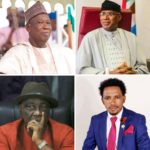
    Elisha Abbo

    These Nigerian Politicians Got Away With Murder... Sort Of

    He thinks he’s him. He thinks he’s James Bond

    You’d think one of the most enduring qualities of a public official would be their temperament and strong willpower not to commit crimes. But Senator Elisha Abbo didn’t consult that handbook when he savagely attacked a woman inside a sex toy shop in Abuja. 

    Just a few weeks after he was sworn in as the youngest senator of Nigeria’s 9th Assembly in 2019, a leaked video of the attack turned the lawmaker into online sensation. Abbo repeatedly slapped the woman because she supported the shop owner whom the lawmaker had accused of insulting him. Even worse, he instructed police officers to arrest her while vowing to deal with her.

    The incident sparked a tsunami of outrage that resulted in a Senate investigation, a criminal case and a civil lawsuit. The Federal Capital Territory (FCT) High Court ordered the senator to pay his victim, Osimibibra Warmate, ₦50 million as compensation, but he beat the criminal case and the Senate investigation died a shameful, quiet death. 

    The senator even comically won a “Beacon of Hope” award and an “ICON at Democracy” award months after the assault. He’s contesting for a second term as senator in 2023.

    Ovie Omo-Agege

    These Nigerian Politicians Got Away With Murder... Sort Of

    If you don’t know what a mace is, just think of it as the Bible of a legislative chamber in Nigeria. It’s the most sacred object of authority that gives legitimacy to the business of the people that make laws ruining running our lives as Nigerians. But on April 18, 2018, some thugs invaded the upper legislative chamber where senators meet and stole their mace. If you’re wondering how thugs invaded a well-fortified building crawling with security agents, it’s because they entered the chamber with Senator Ovie Omo-Agege who had been suspended by the chamber for misconduct.

    The police arrested and questioned Omo-Agege but he maintained his innocence. The mace was later found abandoned by the roadside but no one else was ever arrested. The case ended up as another mysterious one for our police officers to never bother about solving.

    Now, no one is allowed to call Omo-Agege a mace thief, so we’re definitely not calling him a mace thief. 

    We’re just pointing out that the thieves followed him into the chamber to grab the mace and take it out for lunch. This would be a career-ending scandal for a politician in saner climes — if they don’t end up in jail first. But, like a phoenix, Omo-Agege rose from the ashes of the controversy and won his re-election as a senator. His colleagues were so impressed by his panache that they even elected him the deputy senate president in 2019.

    Omo-Agege is now a strong contender to win the 2023 election to become Delta State’s next governor. Who said stealing the mace doesn’t pay?

    Abdullahi Ganduje

    These Nigerian Politicians Got Away With Murder... Sort Of

    He’s got hands that love to receive

    What do you get a man who has everything and is sitting in a prime position to corner public funds? The answer to that question can change from person to person, but we know how the governor of Kano State, Abdullahi Ganduje, likes it.

    These Nigerian Politicians Got Away With Murder... Sort Of

    The answer is dollars

    In October 2018, the Daily Nigerian published a series of scandalous videos that caught Gandollar Ganduje taking wads of American dollars from someone and sticking them into his clothes. The collection was payment he took from a contractor — allegedly o — to approve contracts for a project. Basically, he was getting paid dollars on the side to motivate him to do his day job. Some people would call it bribery, and many people called it that.

    “It’s only a crime if you get caught, right?”

    The videos raised a stink and Nigerians called for the governor’s impeachment and prosecution, but Ganduje used his good friends in the Kano State House of Assembly to block all that nonsense blowback and kept his job. 

    The governor went even further to win re-election one year later and was cheeky enough to make anti-corruption policies to stop public officials from becoming like him abusing their power.

    Abba Moro

    These Nigerian Politicians Got Away With Murder... Sort Of

    In 2014, the Nigeria Immigration Service (NIS) needed to fill 4,556 vacant positions and made a public call for recruitment. 675,675 young Nigerians applied across the country and even paid a controversial ₦1,000 access fee. Things started to go sideways when over 500,000 shortlisted applicants were instructed to go to designated centres for further assessment. 

    The volume of applicants that showed up caused overcrowding issues which escalated and left at least 15 people dead in the ensuing chaos in Abuja, Edo, Niger and Rivers.

    The chief architect of the recruitment exercise was Abba Moro who was the Minister of Interior at the time. Moro’s initial reaction to the tragedy was to blame the victims for their impatience — he’s a Nigerian politician after all. It took the minister more than a week to even acknowledge some responsibility. He also blamed Drexel Tech Nigeria Limited, the firm hired to run the exercise, for the disorganisation and illegal fees paid by the applicants, but a Senate investigation discovered he made the unilateral decision to hire the consultant.

    Abba Moro never lost his job over the scandal, and even beat a criminal case that convicted another official, Anastasia Daniel-Nwobia, who was the Permanent Secretary of the ministry, for awarding the contract to the firm. 

    While the case dragged in court for years, Abba Moro contested and won a senate seat in 2019, and is contesting for a second term in 2023.

    ALSO READ: What We’ll Miss About These Outgoing Nigerian Governors

  • One of the greatest feelings for Nigerian politicians is knowing they have people who are in love with them enough to do anything for them. 

    Nigerian politicians enjoy a lot of public goodwill

    And love makes you do strange things, but some people on this list like to overdo things. We need them to think more before they act.

    Showing your naked bum bum to the internet

    Nothing prepares you for logging onto social media and seeing the bare asscrack of someone’s grandfather at the beach calling on God to help his candidate win. Yet, Nigerian actor, Ebun Oloyede, didn’t consider this when he subjected millions of Nigerians to a video clip of himself completely naked, with a back view no one asked for or deserved.

    We’re pretty sure Oloyede hasn’t dedicated this much to a film role before, so why do it for politics? Let this be the last time, sir.

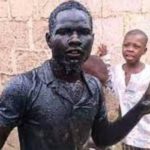
    Drinking gutter water

    For most people, voting for a candidate who goes on to win an election is always a cause for celebration. Most normal people would put an extra piece of meat on their rice or go out for a few bottles of beer with friends. But for Aliyu Muhammad Sani of Bauchi State, Buhari’s re-election victory in 2019 was his excuse to take a full dive into a rubbish-filled gutter. 

    Nigerian politicians enjoy a lot of public goodwill

    [The Guardian]

    Sani had promised to swim inside a gutter and drink drainage water if Buhari won, but maybe this is the one time it was okay to act like a Nigerian politician and not go through with a promise. To clarify, swimming in a gutter of rubbish is bad for your health and for our eyes.

    Trekking interstate

    Nigerian voters have upheld a tradition of doing interstate treks as a declaration of love for their favourite candidates so much that it’s got weird. The most infamous of the trekkers is Suleiman Hashimu who walked 750 kilometres in 18 days from Lagos to Abuja to celebrate Buhari’s 2015 victory. Buhari rewarded him with a handshake and eight years of whatever Nigeria currently is.

    Nigerian politicians enjoy a lot of public goodwill

    Dahiru Buba, another infamous Buhari trekker, who made a trip from Gombe to Abuja with his legs in 2015 needed financial help in 2020 to treat limb pains that developed after his unnecessary walk. 

    You’d think these consequences would dissuade future trekkers, but some supporters are already trekking from state to state for 2023 presidential candidates.

    Fighting your friends for politicians

    The trend of severing ties with longtime associates over support for politicians has grown over the past eight years as online political discourse has become more toxic. 

    Nigerian politicians enjoy a lot of public goodwill

    The big attraction of democracy is it allows everyone to responsibly table their points of view without fear of bad blood, but that isn’t always the case between supporters in different camps. 

    What’s worse about this hostile trend is the politicians they’re fighting these battles for are publicly friends when elections are over and don’t care about your private relationships. Yet, there you are, cutting off your own friends.

    Nigerian politicians enjoy a lot of public goodwill

    Election violence

    Electoral violence is a feature as old as Nigerian politics itself, and it’s just sad that the pawns of the game are yet to realise they mean nothing in the grand scheme of things. People who’ll be abandoned to their fates after elections are the ones physically manipulating the process for unqualified people to march into office. 

    Nigerian politicians enjoy a lot of public goodwill

    The trend of electoral violence has tipped downward over the past few election cycles, but those who haven’t got the message must realise they’re running a fool’s errand.

    Stuff on Buhari: The President’s Weirdest Decisions We Thought Were April Fool’s Day Jokes But Weren’t

  • It’s great that executive offices in Nigeria have constitutional term limits because we know our politicians would rather die there if we allowed them.

    On May 29, 2023, 17 Nigerian states will get brand new governors because their current ones can’t continue after serving two terms.

    What will anyone remember about them?

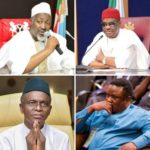
    Okezie Ikpeazu — Abia State

    17 Nigerian governors will leave office in 2023

    “Don’t rush me. I’ll leave with style.”

    We hope he finds some time to pay the workers he owes over one year’s salaries and benefits before he leaves office.

    Udom Gabriel Emmanuel — Akwa Ibom State

    17 Nigerian governors will leave office in 2023

    The tailor who delivered his suits definitely ate for eight years straight.

    Samuel Ortom — Benue State

    17 Nigerian governors will leave office in 2023

    He’ll finally have something else to do besides picking fights with Buhari every three market days.

    Ben Ayade — Cross River State

    We’ll miss his public tears and weird budget titles.

    Ifeanyi Okowa — Delta State

    This man could end up in Aso Rock Villa next May, so we prefer not to speak.

    Dave Umahi — Ebonyi State

    17 Nigerian governors will leave office in 2023

    After missing out on the presidential ticket this year, Umahi is one of at least eight current governors trying to become senators next year. The workers he failed to pay for over six months should have something to say about that.

    Ifeanyi Ugwuanyi — Enugu State

    17 Nigerian governors will leave office in 2023

    We don’t know what he did in eight years, but it’s provocative enough that he plans to continue in the Senate if he wins the election next year.

    Mohammed Badaru Abubakar — Jigawa State

    He’s known as “Baba Mai Calculator” for some reason and has won a ton of awards for being a decent governor, but if he was walking down the street, would you recognise this man?

    Nasir El-Rufai — Kaduna State

    17 Nigerian governors will leave office in 2023

    His retirement plan is unclear, but we hope he has one that keeps him far away from posting his wild takes on Twitter.

    Umar Ganduje — Kano State

    17 Nigerian governors will leave office in 2023

    Remember how your school teachers said actions have consequences, but this man won a second term despite a clear-cut bribery scandal? Your teachers lied.

    Aminu Bello Masari — Katsina State

    He’s the governor of Buhari’s home state and loves negotiating with bandits even when they keep fooling him. We hope he doesn’t plan to be in any advisory role in the future.

    Abubakar Atiku Bagudu — Kebbi State

    17 Nigerian governors will leave office in 2023

    We’ll always remember him as the man who helped General Sani Abacha steal billions of our money and got away with it. Who said crime doesn’t pay?

    Abubakar Sani Bello — Niger State

    Bello doesn’t understand the concept of a break. He’s one of our group of eight outgoing governors trying to retire to the Senate in 2023.

    Simon Lalong — Plateau State

    Lalong is also on a quest to keep sucking on Nigeria’s titties treasury with a run for the Senate, so we’ll probably be seeing him around when he leaves the Plateau State Government House.

    Nyesom Wike — Rivers State

    17 Nigerian governors will leave office in 2023

    The entertainment value he’s provided in 2022 alone, especially with his music band, makes Wike a great loss to the public service. But it’s also impossible to forget some of his unhinged dictatorial actions, so goodbye to that man.

    Aminu Tambuwal — Sokoto State

    17 Nigerian governors will leave office in 2023

    Tambuwal can finally find time to focus on his ambition to become Nigeria’s president after failing two times. Buhari tried four times before he got the seat and Atiku Abubakar is on his sixth campaign. Never give up, T.

    Darius Ishaku — Taraba State

    17 Nigerian governors will leave office in 2023

    Another outgoing governor trying to jump into the Senate next year. How boring. How predictable.

    ALSO READ: The Class of 2015 Governors Who Want to Retire As Senators

  • This is Zikoko Citizen’s Game of Votes weekly dispatch that helps you dig into all the good, bad, and extremely bizarre stuff happening in Nigeria and why they’re important to you.

    Subscribe now to get the newsletter in your email inbox at 8 am every Friday instead of three days later. Don’t be LASTMA.

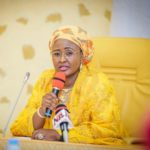
    We Need to Talk About Aisha Buhari

    If Aisha Buhari was a fruit, she’d be a strawberry — wonderful aesthetics on the outside, but you’re not always quite sure what you’ll get when you dig your teeth in. 

    As Nigeria’s first lady since 2015, she’s had a reign no one would be able to accurately describe as uneventful.

    We Need to Talk About Aisha Buhari

    Aisha Buhari’s first true moment in the spotlight came in 2016 when she criticised her husband’s running of the Nigerian government. In response, while standing next to Angela Merkel, one of the world’s most powerful women, Buhari said his wife belonged in the kitchen and the bedroom. 

    The episode painted the president as an ancestor from a forgotten ancient past and endeared many people to his wife — the public figure unafraid to speak truth to power in service of the people. But the first lady’s character development arc since that episode is the stuff of an Oscar-worthy film.

    In 2018, many Nigerians had questions when Aisha Buhari accused her aide of collecting ₦‎2.5 billion cash gifts on her behalf only to keep the loot for himself. Even her occasional anti-government rants started to look suspicious when some of them appeared to be fuelled by her frustrations about her brother’s political issues with her husband’s ruling party. And how can we forget the video clip of her fight with her in-laws in 2019, and another off-camera fight with another in-law that led to gunshots inside Aso Rock?

    We Need to Talk About Aisha Buhari

    The year is 2022, and Aisha Buhari’s capacity for attracting ugly news headlines is stronger than our national grid’s willpower. The first lady became a dinner table subject this week when she allegedly ordered the arrest of a university student, Aminu Muhammed, who used Twitter to call her a fat freeloader feeding on Nigeria’s wealth. I’m paraphrasing here.

    The first lady’s action proved counterproductive because now the internet is littered with a multitude of mean-spirited jokes at her expense. This barbaric overextension of state powers to deal with a personal slight that’s a civil case of alleged defamation is the kind of thing that tells you Nigerian politicians don’t exactly understand the times they live in. Have you met the internet, bro?

    We Need to Talk About Aisha Buhari

    What else happened this week?

    Protect INEC at all costs

    As the gatekeeper of what we call democracy in Nigeria, the success or failure of the Independent National Electoral Commission (INEC) is tied directly to the country’s future. So, seeing another INEC office go up in flames this week was a dreadful sight. The latest attack in Ebonyi is the fifth on an INEC local government area office in the past four months.

    Attacks on INEC facilities have become a trend in Nigeria and are designed to either damage the agency’s capacity to conduct elections or scare even more voters away from exercising their voting rights due to the threats of violence. 

    Election candidates may want to use their voices more to ensure this doesn’t become a more common sight.

    Have you seen this video?

    Question of the week

    Fuel scarcity was back in full force again this week. How have you been navigating the latest crisis?

    Click here to tweet your answer to @ZikokoCitizen on Twitter.

    Ehen, one more thing…

    Three Nigerian men caused an international incident when officials found them hiding on the rudder of a ship that travelled for 11 days from Nigeria to Spain.

    The country is hard, but things can always get worse if you don’t seek greener pastures with a clear plan.

  • Only five years after he burst onto the Nigerian political scene as the senator who could outdance P Square in public, Ademola Jackson Adeleke is now the governor of Osun State. The former senator assumed office on November 27, 2022, and immediately showed everyone he’s not just a dancer but also a fighter.

    How Osun State Became the State of Osun

    Right from his inauguration speech, Adeleke started handing out orders on issues he considered so pressing he couldn’t wait to check out his new office first. He froze appointments his predecessor, Gboyega Oyetola, made since the July 2022 election, sacked 12k workers and suspended state electoral officials.

    But a major decision the new governor has made that’s getting some pushback is to change the state’s official name from “the State of Osun” to “Osun State”, as it was formerly known. State lawmakers have told him it’s not something he can do with a mere executive order, and it seems a battle line has been drawn. 

    But what’s the difference between “Osun State” and “the State of Osun”, and why’s it such a contentious issue? Prepare yourself for a bumpy story that leaves logic standing on its head and reason crying in a corner.

    A trip to 2011

    Before Adeleke and Oyetola, Rauf Aregbesola was Osun State’s governor.

    How Osun State Became the State of Osun

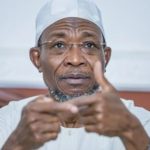
    This guy is Nigeria’s current Minister of Interior

    It’s difficult to track exactly when it happened, but sometime in 2011, only one year into his administration, Aregbesola woke up and realised he needed to make some noticeable changes to the state. Any Nigerian governor worth his salt would create a white elephant project, commission a few useless boreholes, and maybe, owe workers six months’ salary or even get a face tattoo. But Aregbesola was no ordinary governor, so he did none of those ordinary things.

    How Osun State Became the State of Osun

    The former governor didn’t like the sound of OVO “Osun State”, so he directed that it would henceforth be known as “the State of Osun”. And that was the beginning of a controversy still plaguing the state 11 years later.

    Why did he do it, man?

    Naturally, not many people were fans of Aregbesola turning the state’s official name into his plaything, and they made their feelings known. You’d be forgiven for assuming he ordered the name change while tripping on glue he accidentally sniffed, but he really had well-thought-out reasons for his decision.

    When backed into a corner to explain during an interview in April 2012, Aregbesola listed a few reasons we’ll quickly run through.

    The Nigerian constitution doesn’t care

    Aregbesola said he could do whatever he wanted because the 1999 constitution only lists the 36 states without any guideline on if the “state” should come before or after the name. We checked the constitution, and he’s… correct.

    “Logic of syntax”

    Aregbesola isn’t a professor of English, but he thinks “the State of Osun” is more logical syntactically than “Osun State”. 

    In his words, “If the Federal Government is the Federal Government of Nigeria in the constitution, the only reasonable way to call the state is the State Government of Osun. There’s no other correct way.”

    “See your mates”

    If you’re still not convinced he’s the smart one in this story, Aregbesola said all the nations of the world who have states “as the basis of administrative governance” use the “State of” format. He said he simply followed international conventions, implying everyone else in Nigeria was acting like local league.

    How Osun State Became the State of Osun

    He’s a man of culture

    If you thought this has gone for far too long, then you don’t know Aregbesola, because he has more ground to cover. He said “the State of Osun” is a better fit for a Yoruba translation of the name, which is “Ipinle Osun”, as against “Osun State” which would make the direct translation “Osun Ipinle”. We’re convinced he doesn’t know how translations work, but he said it’s only natural for him to change the state’s name simply due to “cultural basis”.

    How Osun State Became the State of Osun

    Remember that this man is our current Minister of Interior

    What does the law say about all this?

    In 2017, an Osun State High Court ruled Aregbesola’s change of name to be “illegal, null and void”. Using three words to say basically the same thing is the best way to make sure the point sinks in, but you’ve never met Aregbesola. 

    Until he left office in 2018, Aregbesola maintained the State of Osun name change, while his government appealed the judgement. In November 2018, he handed over the baton to Oyetola, his chief of staff, who had little reason to reverse the name change. And even though Oyetola eventually had beef with Aregbesola and undid many of his other head-scratching policies, the name change remained during his four years in office. 

    But there’s a new sherriff in town, and Michael Jackson Adeleke wants a return to the old ways.

    When will the State of Osun become Osun State again?

    Alongside the name issue, Adeleke also used his executive order to undo Aregbesola’s creation of a state anthem, crest, flag and change of the state’s motto. But the State House of Assembly has made it clear none of those changes will happen via executive order because they were created by laws of parliament.

    If Adeleke wants to win this battle, he’d have to toast opposition lawmakers to reverse the law. But if that fails, he could always challenge them to a dance battle.

    ALSO READ: Adeleke Has Done These Things In Two Days As Osun Governor

  • This is Zikoko Citizen’s Game of Votes weekly dispatch that helps you dig into all the good, bad, and extremely bizarre stuff happening in Nigeria and why they’re important to you.

    Subscribe now to get the newsletter in your email inbox at 8 am every Friday instead of three days later. Don’t be LASTMA.

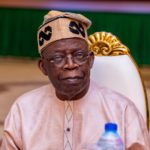
    It must not be easy to be Bola Ahmed Tinubu in 2022. When he won his presidential ticket in June, he signed up for a world of public scrutiny so intense it can power Nigeria’s erratic national grid. 

    Journalists, political rivals and even random 12-year-olds with an internet connection have poked and prodded into his life.

    Will the Real Bola Tinubu Please Stand Up?

    [Zikoko Memes]

    This isn’t a bad thing — the scrutiny is necessary for anyone auditioning for Nigeria’s highest political office. It’s not when you’ve already elected someone into office you want to find out they’re medically unfit, love eating semo or used to sell drugs.

    In Tinubu’s case, he’s made the job pretty easy for his haters by running a campaign so chaotic in its messaging and frightening in its prospects. Even before he won the ticket, he pissed everyone off with his infamous “emi lokan” rant and his unending stream of public slips of the tongue has made him a fertile target for online ridicule. But one of the candidate’s biggest burdens is his unresolved shady past threatening to blow up his campaign.

    Will the Real Bola Tinubu Please Stand Up?

    [Zikoko Memes]

    This week, a former Cross River State governor, Donald Duke, complained that the Tinubu campaign has been using a picture of him as a young boy to represent the former Lagos State governor. The controversial documentary about the life and times of Tinubu first aired in June and implied the dashing young boy was a younger version of the candidate who says he’s now 70.

    Will the Real Bola Tinubu Please Stand Up?

    We need the wisdom of King Solomon to settle this one

    This would be considered an honest mistake for any other candidate. But for Tinubu, it’s just the latest issue to cast uncertainty over his real identity, especially with the many hazy details about his past.

    Tinubu has had many allegations thrown his way, from his dodgy academic credentials to his unclear employment records and even his political legacy. It’s an absolute miracle his campaign is still standing largely unharmed, but is there a point where his nine lives run out?

    What else happened this week?

    Make Air Travel Great Again (MATGA)

    [ThisDay]

    Using Nigerian airlines comes with some pretty heavy baggage, starting from when you arrive at the airports. If it’s not the bambiala officials, it’s the annoying queues, the announcer’s confusing accent, overpriced food, and security officials touching you anyhow in the name of inspection.

    It’s a very long list of discomforting issues, but all of these don’t even compare to the moment you find out your flight is delayed or, even worse, cancelled. It’s a vicious cycle of feeling you’re on your own and not getting your money’s worth.

    If you’re one of the Nigerians worried about not getting quality service from the aviation industry, worry not because the House of Representatives is stepping in to save everyone. House member, Simon Karu (Gombe – APC), raised a motion this week for an investigation into the violation of the rights of passengers in Nigeria.

    The goal of the investigation is to improve the system to provide quality air travel services in the country. This means airline operators will stop shortchanging their customers and provide them with due compensation when they mess up.

    [Zikoko Meme]

    Hopefully, this new energy for the industry can cause a chain reaction that’d remove the bambiala officials, the annoying queues and the customer service agents walking around with the attitude of an irritated porcupine.

    Oh, look, a flying pig.

    Have you seen this video?

    Question of the week

    On a scale of “Over my dead body” to “I’d like to sleep with them under my pillow”, what are your thoughts on the new naira banknotes?

    Click here to tweet your answer to @ZikokoCitizen on Twitter.

    Ehen, one more thing…

    The Inspector-General of Police, Usman Baba, complained this week that police officers don’t have any human rights activists to advocate for them when members of the public violate their rights. Has he met Nigerian police officers before?

  • President Buhari and Godwin Emefiele of the Central Bank of Nigeria (CBN) are pretty set in their decision to apply makeup to naira banknotes for the first time in 20 years.

    Even though the Minister of Finance, Zainab Ahmed, has called it a bad idea, the new banknotes will enter circulation on December 15, 2022. Buhari launched the new Snapchat filter designs on November 23, 2022, and the CBN has even started a countdown to when the old naira notes will stop being valid in 2023.

    These Famous Nigerian Faces Belong on Your Naira Banknotes

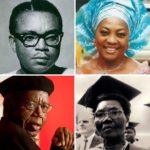
    We know the redesign of the ₦‎200, ₦500 and ₦‎1,000 banknotes doesn’t involve changing the faces on them. But if it did, these famous deceased Nigerians have credible claims.

    Funmilayo Ransome-Kuti

    These Famous Nigerian Faces Belong on Your Naira Banknotes

    She’s most popularly remembered as the first Nigerian woman to drive a car, but Funmilayo Ransome-Kuti was more than that. She wasn’t called the Lioness of Lisabi for no reason as she pioneered many groups that championed women’s rights. She founded a political party and was the first woman appointed to the Western House of Chiefs.

    Shehu Shagari

    These Famous Nigerian Faces Belong on Your Naira Banknotes

    No single elected Nigerian president is on any of the naira banknotes, and Shagari can be the first as he’s the country’s first elected president. 

    Gambo Sawaba

    These Famous Nigerian Faces Belong on Your Naira Banknotes

    Sawaba has been regarded as the most jailed Nigerian female politician due to her resilient activism. She campaigned against child marriage, unfair labour practices, and championed women’s rights. For her troubles, she was publicly flogged, had her hair shaved with a broken bottle and was imprisoned 16 times. If anyone has a claim to belonging on a naira banknote, Sawaba shouldn’t even need to raise her hands.

    Anthony Enahoro

    As one of Nigeria’s pro-democracy activists, Enahoro was the first to move the motion for the country’s independence in 1953. It’s why he’s regarded as the “Father of Nigerian Independence”. What more do you need to do to get your face on a naira banknote?

    Gani Fawehinmi

    These Famous Nigerian Faces Belong on Your Naira Banknotes

    Gani Fawehinmi was a human and civil rights lawyer known for his vibrant activism for the underprivileged. He gained local and international recognition for his work but also suffered persecution by the government.

    Margaret Ekpo

    These Famous Nigerian Faces Belong on Your Naira Banknotes

    Like Sawaba and Ransome-Kuti, Ekpo was a rights activist and social mobiliser who created political pressure groups to fight for the interests of Nigerian women.

    Taslim Olawale Elias

    These Famous Nigerian Faces Belong on Your Naira Banknotes

    He already has the face of someone disappointed in the naira’s value

    Elias was Nigeria’s first post-independence Minister of Justice and Attorney-General of the Federation. He went on to serve as the Chief Justice of Nigeria (CJN) and president of the International Court of Justice (ICJ). He also received 17 honorary doctorate degrees from various universities around the world.

    Ameyo Adadevoh

    If not for the intervention of Dr Ameyo Adadevoh, Nigeria’s ebola crisis of 2014 would’ve been worse than the eventual 20 confirmed cases and eight deaths, including her own. She made the ultimate sacrifice to protect millions from a similar fate. What more do you need to have your face on a naira banknote? 

    Ken Saro-Wiwa

    These Famous Nigerian Faces Belong on Your Naira Banknotes

    The brutal General Sani Abacha regime killed Ken Saro-Wiwa and eight other activists in 1995, for their agitation against the environmental damage caused by crude oil extraction in Ogoniland. No compensation will restore his life, but his face on a naira banknote will immortalise him and the issues he fought.

    Dora Akunyili

    These Famous Nigerian Faces Belong on Your Naira Banknotes

    Dora Akunyili watched her sister die as a result of complications from taking fake medicine and made it her life’s mission to ensure it didn’t happen to anyone else. As the head of the National Agency for Food and Drug Administration and Control (NAFDAC), Akunyili fought powerful drug counterfeiters to keep millions of Nigerians from falling victim.

    Chinua Achebe

    The story of African literature would be incomplete without the contribution and impact of Chinua Achebe. Things Fall Apart is the most widely studied, translated and read African novel.

    Fela Anikulapo-Kuti

    These Famous Nigerian Faces Belong on Your Naira Banknotes

    He’d probably roll in his grave if his face appears on a naira banknote considering many of the issues he sang about still exist decades after his death. Even his arch-nemesis, Buhari, is currently president. But much of his life and music was devoted to activism to make the country better, so he has a valid claim.

  • This is Zikoko Citizen’s Game of Votes weekly dispatch that helps you dig into all the good, bad, and extremely bizarre stuff happening in Nigeria and why they’re important to you.

    Subscribe now to get the newsletter in your email inbox at 8 am every Friday instead of three days later. Don’t be LASTMA.

    The Devil Works Hard but Social Media Regulation Works Harder

    I have a riddle for you: If a tree falls in the middle of the forest but there’s no one to tweet about it, did it really happen? If your answer was yes, then you don’t spend nearly enough time on social media — in which case, get a life, okay? If your answer was no, then social media means a lot to you and you probably want to sit down for this next part.

    On September 26, 2022, two very important people signed a document called the “Code Of Practice For Interactive Computer Service Platforms/Internet Intermediaries”. The document’s title is deliberately boring and isn’t more appropriately named “Social Media Regulation Stuff” because that would get your attention and rightfully alarm you.

    The Devil Works Hard but Social Media Regulation Works Harder

    [Zikoko Memes]

    One of the two people who signed the code was the Minister of Communications and Digital Economy, Isa Pantami. You may remember him as the high-ranking government official who kept his job even when everyone found out he openly supported terrorists when he was a naive 34-year-old boy.

    The other signee was Kashifu Inuwa Abdullahi, the director general of the National Information Technology Development Agency (NITDA). There’s no evidence yet that he’s a terrorist sympathiser.

    NITDA first floated a draft of the code back in June. And when everyone raised eyebrows about some of the shady stuff sprinkled all over it, the government said, “Hey, it’s just a draft, okay? We can dialogue and iron things out before it becomes law. Purr?” Well, the code is now law but little changed from what was initially drafted. So, what happened?

    The Devil Works Hard but Social Media Regulation Works Harder

    [Zikoko Memes]

    It’s impossible to pick apart everything in the NITDA code, but the most worrying part is the burden it places on social media platforms to regulate content that “compromises the security or undermines the unity, or sovereignty of Nigeria or promotes the act of terrorism”. It also affects content that “instigates public disorder or interferes with an ongoing investigation”.

    While both these things sound like decent propositions on paper, Nigerian legislation is where all good intentions go to die. The potential for the misapplication of these clauses is worrying especially since #EndSARS showed us how easy it is for the Nigerian government to brand anything as terrorism. 

    Can it be considered an incitement of public disorder if you call the president a fool or Lai Mohammed a liar? Does investigative journalism interfere with an ongoing investigation and run foul of this code? It’s a window too dangerous to just leave open.

    The Devil Works Hard but Social Media Regulation Works Harder

    [Zikoko Memes]

    The code isn’t all evil and establishes laws that protect the interests of Nigerians in an increasingly volatile online jungle. But it also helps the Nigerian government sneak social media regulation through the backdoor after failing to get it through the National Assembly. It smells.

    What else happened this week?

    Election campaign funds don’t fall from heaven

    [EFCC]

    One of the most closely-guarded secrets in Nigeria — other than Buhari’s skincare routine — is how Nigerian politicians actually fund their election campaigns. This week, we found out one of the ways to run it is through 419. Allegedly.

    On October 30, 2022, the Economic and Financial Crimes Commission (EFCC) arrested one Ismaila Yusuf Atumeyi with ₦326 million and $140,500 cash in Abuja. His name may not ring a bell now, but he could become a household name if he wins a seat in the Kogi State House of Assembly in 2023 as a candidate of the New Nigeria People’s Party (NNPP).

    The EFCC is accusing Atumeyi’s suspected cyber fraud ring of hacking a commercial bank and carrying out a ₦1.4 billion heist that would make Lawrence Anini jealous. The ring laundered the loot through bureau de change (BDC) operators and bought some high-end cars. What’s to stop Atumeyi from using the proceeds to buy overpriced nomination forms for political office or run his campaign?

    This guy is too camera-shy for a Nigerian politician [EFCC]

    Transparency in Nigeria’s election campaign financing is quite rubbish and even the Independent National Electoral Commission (INEC) is tired of trying to enforce campaign finance laws. Without presuming his guilt, cases like Atumeyi’s reinforce why we should take transparency in campaign financing more seriously and clean up the system.

    Should we start suspecting politicians who don’t beg the public for campaign funds? Because there’s sapa outside so where’s everyone seeing money to run campaigns running into billions of naira?

    Have you seen this video?

    Question of the week

    If Meffy put you in charge of redesigning the naira banknotes to launch in December, what would you change?

    Click here to tweet your answer to @ZikokoCitizen on Twitter.

    Ehen, one more thing…

    Buhari once again flew to London this week to play ludo with his doctors and free himself from the shackles of pretending to be a president for two weeks.

    He won in life, but 200 million Nigerians are paying for it.

  • Nigerian politicians are one of two things: comic book villains who do nothing for their people or natural-born comedians who are bad at politics but have rich entertainment value. It’s rare to be both, but Governor Ben Ayade of Cross River State is one of those special characters.

    We Rated Ben Ayade's Ridiculous Budget Names

    He’s either five minutes away from crying or breaking into a dance

    Since he became governor in 2015, Ayade’s most defining legacy is turning budget presentations into spectacles because of how ridiculously he names them every year. Following the recent presentation of his last budget as governor, it’s only fitting to rate how we feel about all eight of the names he gave his budgets.

    Budget of Deep Vision — 4/10

    We Rated Ben Ayade's Ridiculous Budget Names

    Ayade presented his first budget in 2016 and you could tell he wasn’t yet sure whether to show everyone his weird ways. So, he played it safe and ended up with a name even an amateur motivational speaker would give some colour.

    Budget of Infinite Transposition — 6/10

    We Rated Ben Ayade's Ridiculous Budget Names

    By 2017, Ayade had developed the confidence to be more experimental. So he transposed into an infinite lovable circus clown who gave the budgets more aesthetics than substance. Things only got weirder from then on.

    Budget of Kinetic Crystallisation — 8/10

    Before he fell for the temptation of politics, Ayade was already a professor of science, and this 2018 budget name feels like he forgot for a minute he’s no longer inside the lecture theatre. The people of Cross River asked for a budget to make their lives better and he gave them a science buzzword.

    Budget of Qabalistic Densification — 9/10

    We Rated Ben Ayade's Ridiculous Budget Names

    This 2019 budget sounds like the theme for a party of ritualists on a full moon night when Mercury is in Obalende. It’s also not a coincidence this was the year COVID rose from the pits of hell and started showing the world shege. Governor Ayade, what did you do!

    Budget of Olimpotic Meristemasis — 11/10

    We Rated Ben Ayade's Ridiculous Budget Names

    It’s difficult to explain but this 2020 budget name is Ayade’s magnum opus in the same way the Mona Lisa is the toast of the art world. There’s something about the melody of “Olimpotic Meristemasis” that oozes the eliteness of pounded yam mixed with the audacity of egusi soup. 

    We Rated Ben Ayade's Ridiculous Budget Names

    Ayade’s rent was due when he made this poetic beauty and this is why he’ll be remembered as one of the greatest to walk the hall of Nigerian politics. Sike.

    ALSO READ: Just Imagine if Your Favorite Nigerian Politicians Were Musicians

    Budget of Blush and Bliss — 6/10

    We Rated Ben Ayade's Ridiculous Budget Names

    If you ever wanted to create a make-up brand and are struggling with a business name, Ayade helped out with this 2021 budget name. But it’s a lame follow-up to “Olimpotic Meristemasis”. It sounds like something he heard teenagers say during a school visit to the Government House. The only saving grace here is the alliteration, else this would have been a 4/10. We expect better, Mr Governor.

    Budget of Conjugated Agglutination — 9/10

    There’s something deliberately wicked about this budget name that it feels like a Harry Potter spell. “Conjugated agglutination” sounds like a curse you scream at the driver who cut you off in traffic, your internet service provider, or your boss who set up a one-hour meeting for what could have been an email.

    Budget of Quantum Infinitum — 7/10

    Let’s just say we expected more from Ayade’s final budget. “Quantum Infinitum” sounds like something a cartoon character would scream right before they fart, because the writers have no respect for the little children watching. 

    Ayade could have raided Patrick Obahiagbon’s word bank and given us tastier names like, “Budget of Veritable Bugaboo,” “Budget of Ossifying Proclivities,” “Budget of Veritable Verification of the Verity,” “Budget of Metagrabolised Melancholia,” “Budget of Modus Vivendi,” or “Budget of Hierophantic Candour”. 

    We Rated Ben Ayade's Ridiculous Budget Names

    Hopefully, the next Cross River State governor is taking notes?

    No one really knows Ayade’s motivation for these budget names, but they were provocative and entertaining and offered hope in a gloomy world. Thank you for your service, Sir Ayade.

    We Rated Ben Ayade's Ridiculous Budget Names

    ALSO READ: MKO Abiola’s 1993 Campaign Video Is Still Valid in 2022

  • MKO Abiola died 24 years ago, but he’ll always be remembered as Nigeria’s president that never was. Even though he was the winner of the 1993 presidential election, his village people — General Ibrahim Babangida and General Sani Abacha — denied him his mandate.

    Abiola’s presidential campaign is still mostly remembered for the tragedy that it was, but one of the other most memorable things from that period is his campaign ad which promised hope for Nigerians. In the video, the main character — let’s call him Polycarp — complained about the most frustrating things for him as a Nigerian in 1993.

    MKO Abiola's 1993 Campaign Video Is Still Valid in 2022

    Meet Polycarp: he believed in1993 Nigeria was one election away from becoming a paradise

    With the 2023 elections just around the corner, it’s only fitting to check in on Polycarp’s list of complaints to see how much things have changed — or not — in 30 years. 

    If Polycarp was angry about 1993 Nigeria and jumped inside a time machine to 2022 Nigeria, what would he meet?

    No work

    MKO Abiola's 1993 Campaign Video Is Still Valid in 2022

    Polycarp’s time machine may want to skip 2022 Nigeria if it’s gainful employment he’s seeking because we have some very bad news for him. Nigeria’s 2020 unemployment report pegged the unemployment rate at 33% which is the highest it’s ever been. Polycarp would still be unemployed and broke in 2022, and desperate enough to start selling affiliate marketing courses on Facebook.

    No food

    Like everything in Nigeria these days, the prices of food items aren’t obeying the laws of gravity. The National Bureau of Statistics reported that food inflation rose to 23.34% in September 2022 which is the highest it’s risen in more than 15 years. 

    Even worse, nearly 20 million Nigerians are potential victims of famine, according to the United Nations’ Food and Agriculture Organisation (FAO). What this means is that 10% of Nigerians face hunger of Biblical proportions. For context, that’s the combined population of Eritrea, Namibia, Gambia, Botswana, Gabon, Lesotho, and Guinea-Bissau at risk of hunger inside just one country.

    No house

    If Polycarp was complaining about housing issues in 1993 when you could probably rent or buy a home with money saved under your bed, then he probably wants to skip to 2072 Nigeria or something. Because in 2022, Nigeria has a housing deficit of about 28 million units and even the homeowners are being forced out of their houses by seasonal floods and terrorism.

    No light

    MKO Abiola's 1993 Campaign Video Is Still Valid in 2022

    Nigeria’s national electricity grid is more well-known than the governor of Jigawa State — and the fact you just tried and failed to remember his name proves my point. But the national grid isn’t known because it’s the eighth wonder of the world or sponsors Twitter giveaways. It’s always on everyone’s lips because of how frequently it collapses, leaving Nigerians in darkness. Whatever jungle Polycarp thought Nigeria was in in 1993, the country is still in the Dark Ages.

    Expensive transport fares

    MKO Abiola's 1993 Campaign Video Is Still Valid in 2022

    One of Polycarp’s most prominent complaints was the transport fare eating into his daily ₦2k, and we have news for him from the future. Just over the past year alone, the average bus fare within Nigerian cities rose from ₦435.36 in September 2021 to ₦615.69 in September 2022. The recurring fuel scarcities don’t help matters and the situation is likely to worsen with the proposed removal of fuel subsidies in 2023.

    Out-of-school children

    When Polycarp complained about school being a headache, the campaign ad showed a dozen shirtless little children roaming the streets. In 2022, that demographic has ballooned into a population of 20 million out-of-school children forced out of the classroom by government neglect, poverty and insecurity. The government keeps paying lip service to the problem and even 2023 presidential candidates are still talking about setting up committees to tackle it.

    Hospitals aren’t working

    MKO Abiola's 1993 Campaign Video Is Still Valid in 2022

    Nigerian doctors are some of the most prominent groups participating in the japa wave and even the president of the country travels to London every three market days to take paracetamol because the health sector isn’t where it needs to be. Not much has changed between 1993 and 2022. 

    MKO Abiola's 1993 Campaign Video Is Still Valid in 2022

    Polycarp was dealing with “so so palava” in 1993, but Nigerians are dealing with real shege in 2022. The unfortunate lesson here is 2023 presidential candidates are still using the same issues to campaign nearly 30 years after they already reached a critical point.

    Whatever choice Nigerians make in 2023 will determine whether things improve or we have to walk the wilderness for another 30 years. Polycarp may want to skip even further into the future.

    ALSO READ: This Nigerian Wants to Vote in 2023 but He Won’t Leave Germany