• Source: Barny

    Funke Akindele’s latest production, A Tribe Called Judah (ATCJ), is Nollywood’s highest-grossing film of all time, but it’s also earned applause for its home-hitting storytelling and excellent cinematography. Its filmmaker and cinematographer, Barnabas Emordi, AKA Barny Blockbuster, is known for his camera work on other acclaimed productions like Ada Omo Daddy (2023), The Ghost and the Tout Too (2021) and Elevator Baby (2019).

    In a chat with Zikoko, Barny shares his experience on the set of ATCJ, the importance of visual styles in film and his personal challenges in Nollywood.

    How did you join the A Tribe Called Judah crew?

    Barny: Aunty Funke (Funke Akindele) and film director, Adeoluwa Owu, brought me in during the script development in April 2023 before we went into preparation for shooting. When I read the script’s first draft, I saw the possibility of a big picture. This film has all the right attributes that drive the Nigerian audience to the cinema, like family and love. I and the entire team believed it would be a banger, but it exceeded expectations. 

    What intrigued you about the story?

    Barny: Family. I think stories that pull families together are my speciality. In Elevator Baby, Day of Destiny and MTV Shuga Naija 5, the characters are uniquely complicated. A clear example is Pere Judah in A Tribe Called Judah. He’s one of his mum’s favourites, but he’s influenced by the environment he grew up in, his family and various complexities that have made him unique. He can still be called a good person who makes the ultimate sacrifice by stealing to save his mum’s life.

    Many moving parts in the characters’ lives make them endearing to the audience, even if they aren’t perfect. That’s the beauty of humans — recognising our differences and coming together as a family or country to battle against whatever the world brings us. No matter how different the troublesome sons in A Tribe Called Judah are, there’s one consistent thing about them: they genuinely love each other, and they love their mother. They’re also united as a family, which is the core of the entire film.

    What’s your favourite thing about the film?

    Barny: I enjoyed being on set; it was beautiful to watch Funke Akindele at work. The details and intensity she puts into her work are motivating. I loved that and the dedication of the crew too. I had the tools I needed — I could bring out my visual style and execute properly.

    How would you explain “visual style”?

    Barny: Visual style is the element that builds the world in a film. Stories are different, and so are their visual styles. Visual style elevates the storytelling and the audience’s emotional attachment to the character. If all the elements and subtle techniques come together right, I’ve done my part as a cinematographer.

    For A Tribe Called Judah, we aimed for realism. The visual style was to capture the essence of family, love and sacrifice. We employed lighting techniques that felt natural for various scenes. We used different cameras, like Arri Alexa 35 and Canon Sumire Primes, to make the audience emotionally attach to the Judah family.

    What draws you to familial stories?

    Barny: I genuinely love family. My family is fantastic; they love, support and care about every aspect of my life. They are my biggest supporters. I’ve also made incredible friends who are now family. They love wholeheartedly. I love films that preach family values, love, togetherness and sacrifice. Also, we practise communal living in Nigeria, and the family unit is the most important social institution in the world.

    How do you balance creative independence with working with others?

    Barny: The most important thing is understanding the overall vision for a project and knowing you’re a vital tool in bringing that vision to life. Filmmaking is a collaborative process. I know my work, but I fully understand that I’m a part of the team. This makes it easier to collaborate with other individuals.

    As Barny Blockbuster, what would you say makes a blockbuster?

    Barny: In the Nigerian context, a blockbuster is a film that makes over ₦100 million at the box office. It comes with joy that I’ve done this with Elevator Baby and Ada Omo Daddy, and now, A Tribe of Judah.

    Image source: Barny

    What was life like for you before Nollywood?

    Barny: I was in school. I graduated from Delta State University with a degree in Mathematics in 2015. Before NYSC, I wanted to get busy with something meaningful. I reached out to my friend, Gbenga Gomez, a cinematographer and steady-cam operator who was already in the industry at that time, to let me follow him around and help with anything on set. During that period, I fell deeply in love with filmmaking. 

    Some people have deep meanings behind their love of filmmaking. For me, I’ve always loved watching movies, Nigerian or foreign. From the VHS to the DVD era, I watched all I could get my hands on. But the stronger pull was the money I thought I could make. My early days as an assistant on movie sets gave me a tangible amount of money that kept me going. I felt that if I worked hard and stayed committed to the art, it would lead me to success in the future. That motivation deepened my love for filmmaking.

    What’s the first film you made?

    Barny: It was with my friends. We used to do random jobs on film sets and put money together to make short films in our neighbourhood. It contributed significantly to our learning process, and we could trust each other to become better filmmakers and storytellers. But my first feature film as a camera operator is Elevator Baby.

    Source: @barnyee

    Which of your films was hard to make?

    Barny: Man, every film is hard to make in Nigeria. Ask other Nollywood filmmakers, and they’ll tell you the same thing. Something always comes up, like disturbances from touts, inadequate daylight to film and low budget. Budget is the biggest issue; a budget needs to be in place right from the film development stage. When the audience complains about weak plot in Nollywood movies, I think about this.

    Imagine there’s no money to pay story developers. When they should be in the writing room for months, they can end up spending only a week in the writing room. That’s a problem. An inadequate budget will make a production that should take months to wrap up in weeks. 

    But the beauty of these problems is that we explore all our resources and creativity to deliver an excellent production. Nollywood still competes internationally; our stories are screened at international festivals and receive notable awards. Prominent brands are coming to Nigeria to collaborate with us because our genuine love for the art is evident to them.

    Do these brands come with bigger budgets that have improved production quality?

    Barny: The bigger brands are playing their role. Production quality has improved massively over the past few years, and money has been an important factor. Our scripts and productions are getting bigger. I’m genuinely excited about the next few years in Nollywood because there’s a certain level of excellence that’s notable. We’re already working on amazing stories that’ll excite the audience and strengthen the industry. It can only get better.

    What’s a good budget for a movie?

    Barny: It largely depends on the scale of the film you’re trying to make. Averagely ₦100-200 million for a mid-size film in Nigeria. It can go up to a million-dollar budget for a film like The Black Book. Budgets are determined by so many factors. It’s always tricky to call a number because you’ll need to factor in marketing and so many other aspects.

    Are there emerging trends in cinematography you’re excited to explore?

    Barny: I’ve been quite excited about the new sets of Arri lighting technology recently introduced to the market. It would help us to expand our lighting arsenal, expose us to various effects that’ll influence and stylise the way we approach lighting design in Nollywood. It’s pretty easy to operate as well, has the best colour rendering index (CRI), large range of lights, minimal power for maximum output and efficiency. It’s an outstanding development.

    What challenges do you face in your work?

    Barny: My biggest challenge is finding time to schedule all the projects I’ve set out to work on to avoid clashes. There’s always little time between finishing up a project, sitting down to study a new script, breaking it down in your head, and then, having a conversation with the producers or directors of the film to understand their vision. Filmmaking takes time, and one needs to prep and put things together so that execution can be great. That’s my primary challenge at the moment.

    Seems like you’re suffering from success

    Barny: I can’t complain. When things are like this, it also speaks to my efficiency and capacity to do great work, and that makes me bankable. Producers trust me to use their money well and deliver, and I have to live up to their expectation.

    Does the volume of your output bother you?

    Barny: I freelance, and that makes me open to working with all the biggest production companies in Nigeria. If one is consistent with executing big projects at high levels, it’ll attract more clients to you. That’s been my case, and so far, I like it.

    What’s the difference between working freelance or non-freelance as a cinematographer?

    Barny: If I wasn’t working freelance, I’d be stuck working with one production company for the duration I signed in a contract. Production companies may not produce more than one or two films in a year due to development and preparation time. Freelancing lets me take on as many jobs as possible. It gives me the freedom to execute projects that align with what I’m trying to achieve in the industry.


    Hey you. Yes, you. Before you leave, help us to answer these 6 Questions We Have About A Tribe Called Judah?

  • On January 12, 2023, Ajuri Ngalale, Tinubu’s Special Adviser on Media and Publicity, announced the appointment of 11 new directors for the Federal Ministry of Art, Culture and the Creative Economy (FMACCE). These are their names and new roles.

    Tola Akerele — Director-General, National Theatre

    Tola Akerele has built successful businesses that have contributed to contemporary African art. She founded Bogobiri House, an Afrocentric and artistic hotel with an art gallery, restaurant and bar. Alongside being the curator at Soto Gallery, Tola also owns an interior design studio called iDesign by Tola Akelere. With a solid resume in arts, culture and creativity, it’s not hard to see why the direction of the national theatre has been entrusted with her.

    Image source: Businessday NG

    Husseini Shaibu — Director-General, National Films and Censors Board

    The new director of the National Films and Censors Board is Husseini Shaibu, the deputy national director of the National Troupe of Nigeria, an editor at The Guardian newspaper and a film critic. He’s also been a member of the jury board of the Africa Movie Academy Awards (AMAA) and the Nigerian Oscar Selection Committee. 

    Image source: Starconnect Media

    Obi Asika — Director-General, National Council for Arts and Culture

    Anyone who’s familiar with the Nigerian music industry must know Obi Asika is a major contributor to the sector. Not only did his Storm Records platform OG Afrobeats artists like Sasha P, Naeto C, Jazzman Olofin and Yung 6ix, becoming one of Nigeria’s biggest labels to date, but Obi’s ten-episode Afrobeats documentary, Journey of the Beats (2022) on Showmax, also visualised the genre’s history and global movement. He served as a Senior Special Assistant to former President Goodluck Jonathan and was once part of the African Advisory Committee of the Smithsonian’s National Museum of African Art in the U.S.

    Image source: TheWill Downtown

    Aisha Adamu Augie — Director-General, Centre for Black and African Arts and Culture

    Aisha Adamu Augie is an Abuja-based award-winning photographer, filmmaker and mixed media artist. She won the Sisterhood Award for Photographer of the Year and the British Council’s “Through My Eyes” competition in 2014. The same year, Aisha hosted “Alternative Evil”, her first solo photography exhibition. When she’s not hosting the podcast, “I Love Your Work with Aisha Augie”, she’s performing governmental roles. She was a Special Adviser to Zainab Shamsuna Ahmed, the former Minister of Finance, Budget and National Planning, from 2019 to 2023. 

    Instagram: @aishaak49

    Ekpolador-Ebi Koinyan — Chief Conservator, National War Museum

    The National War Museum is the only museum that showcases military history in West Africa, and Ekpolador-Ebi Koinyan is its new chief conservator. Before his appointment, he headed the Bayelsa State Government’s e-Governance Project, and he’s a senior partner at Smart Alliance Consulting, examining the operations of professional service firms in emerging markets.

    X.com: @ekpolador_ebi

    Ahmed Sodangi — Director-General, National Gallery of Art

    Ahmed Sodangi is an experienced expert in the import and export industry, and a project officer at the Bank of Industry Ltd. Although he’s an unfamiliar name, we’re investing a little faith in this president’s appointee.

    Image source: LinkedIn

    Chaliya Shagaya — Director-General, National Institute of Archeology and Museum Studies

    Chaliya Shagaya is an entrepreneur, fashion consultant and ex-mode who’s consulted for respected designers like Deola Sagoe and Korto Momolu. Ms Shayaga served as the former head of new media at Nigerian Maritime Administration and Safety Agency (NIMASA) and head of government relations at the Nigerian Exchange Ltd. (NGX). We look forward to her contribution to preserving our artefacts and museums — and possibly, giving us our Afrobeats Museum?

    Image source: THISDAYLIVE

    Khaltume Bulama Gana — Artistic Director, National Troupe of Nigeria

    Kaltume Bulama Gana is the curator of the National Gallery of Art, an artist who’s showcased her work at more than 45 group and solo exhibitions. She was an assistant director in the History and Culture Bureau in 1987, and before that, she was a TV presenter at Kano State Television from 1985 to 1986. She runs Herwa Heart of Art Initiative, an NGO focused on educating children, including young girls and women affected by Boko Haram’s insurgency. We hope she excels in her new role.

    Image source: OpenBU

    Biodun Ajiboye — Director-General, National Institute for Cultural Orientation

    Biodun Ajiboye has worked in media, publicity and campaigns for the All Progressive Congress (APC) political party and in the Nigerian telecommunication industry. He owned the now defunct Nigerian Telecoms News and the Nigerian Telecoms Awards. 

    Image source: The Guardian Nigeria

    Ali Nuhu — Managing Director, Nigerian Film Corporation

    Ali Nuhu is among the most decorated actors in the Hausa film industry. With over 22 years in the film industry, he’s not a new face to lovers of Kannywood and Nollywood. If you want a problem solved, call on those with firsthand experience in it. We guess that’s what President Tinubu did with this appointment. 

    Image source: Daily Trust

    Ramatu Abonbo Mohammed — Director-General, National Commission for Museums and Monuments

    Ramatu Mohammed Abonbo was Niger State’s former commissioner of commerce, industry and investment. Before her involvement in politics, Ramatu was Chief Marketing Executive at MicroAccess Ltd., a pioneer information and communication firm through which Nigeria’s first national website and the National Hospital’s first website were built. She was also the director of Hamble Group, London. Although her CV isn’t related, we look forward to see how her past successes in executive leadership transfers to her new role.

    Facebook: Haj. Rahmatu Mohammed Yar’adua

    UP NEXT: Dear Minister, Nigeria Already Has Theme Songs to Choose From

  • 2023 came with numerous album releases, from heavy hitters to upcoming acts. We expected some of our biggest stars to join the wagon, but instead, they gave us dust. Here’s a short list of artists who owe us a feast in 2024.

    2Baba

    It’s been four years since Warrior. But on January 3, the veteran singer took to Instagram to announce his 2024 plan to release a new album. Motivated by the vim and excellence of new-gen artists, 2Baba said, “Na so we no dey gree for anybody this year o.”

    Tems

    She dropped two singles towards the end of 2023, and it’s been over a month since she teased her album on X. Let’s have it, please.

    Image source: Premium Times

    Victony

    This guy made noise in 2023 with bangers like My Darling, Angelus and Ohema. We heard him. Now, he needs to put his artistry into a full-length body of work. We’re ready for Victony.

    Image source: BellaNaija

    Tiwa Savage

    Tiwa Savage may be killing features up and down, but she needs to drop a new album. Water & Garri, an EP, came out in 2021. That’s a long time to be stuck with only groceries. Maybe banga soup and starch-type albums this year?

    Image source: Premium Times

    Odunsi (the Engine)

    The three-track SPORT EP he dropped in December 2023 was just a tease. We see he’s come out of ghost mode and has been appearing on his socials lately. He also produced Jazz Up off Pan African Rockstar (Lady Donli’s latest album) back in September 2023. We hope he’s back to feed us with another innovative album like rare. (2018).

    Image source: GQ Middle East

    Peruzzi

    Peruzzi has shown himself to be a brilliant singer-songwriter and composer. With three albums in his catalogue and over 252 songwriter credits on hits like Nwa Baby, Risky and Unavailable, he’s defining himself as one of Afrobeats’ top writers. But it’s been over three years since Rum & Boogie, or is he not doing singing again?

    Image source: Viberate

    Ayra Starr

    Sabi Girl had a successful 2023 taking her music around Africa, Australia and North America, and featuring on everything from Girl Next Door with Tyla to Big FU with David Guetta. We love these records, but a new album will bang differently.

    Image source: www.ayrastarr.com

    READ NEXT: New Cats We’d Have Loved Albums From In 2023

  • It’s a travesty that Afrobeats doesn’t have a museum yet, but that’s where Zikoko comes in — to help us collectively fake it till we make it. To do this, we curated an Afrobeats museum with memorabilia of the music creators and executives who took Afrobeat and experimented with other African rhythms and Western sounds to form the modern Nigerian genre we know and love — Afrobeats

    Relics from the founding fathers

    Afrobeats is an offspring of Fela Anikulapo-Kuti and Tony Allen’s — the drummer who directed his band, Africa ‘70 for 11 years — 1970s Afrobeat. 

    A shrine of Fela’s favourite things

    First of all, Fela’s iconic saxophones, pants and combs have to be in our museum — it was documented in Alex Gibney’s Finding Fela that he loved to spend time in front of the mirror, just combing and admiring his hair. Also, one of Fela’s favourite books, The Autobiography of Malcolm X by Alex Haley and Malcolm X, should be on a shelf somewhere.

    Tony Allen’s drum sticks

    Specifically, the ones he used on more than 30 Fela albums.

    Afrobeats memorabilia

    What Junior and Pretty wore in their album cover

    The duo is considered one of the first to lay the foundation for an Afrobeats sound. On the artwork of the album, Tribute to Okechukwu Azike a.k.a “Junior” — which has their classic hit, Bolanle — they wore a Fulani attire that must be found and showcased in our museum. 

    Kennis Music’s Yellow Hummer

    In the early 2000s, a Hummer was the top ride, and Kennis Music had one in yellow. Talk about iconic. It went on to become a video vixen for the many artists in the label’s roster. 

    2Face’s Lincoln Navigator

    The car Kennis Music gifted 2Face after a successful debut album sale. This was also right after they bought their yellow Hummer. The Lincoln Navigator sparked controversy as many believed the artist who made the label so much money deserved his own Hummer. A Lincoln Navigator wasn’t a shit car sha.

    DIGITAL CAMERA

    Written history of Eedris Abdulkareem’s fight with 50 Cent

    In 2004, 50 Cent headlined the Star Mega Jamz in Nigeria. At the concert, Eedris Abdulkareem felt local superstars were kicked to the curb for their foreign counterparts. He went at the American rapper, his crew and the show promoters about their seating arrangements, saying that local artists deserve the same special treatment. 

    When Eedris got on stage, he said, “50 Cent na oga for America. Me, I be oga for rap for Nigeria.” His actions changed how local artists were treated from then on. In 2023, Young Buck, rapper and longtime friend of 50 Cent, said he remembered a Nigerian dude who stood against their whole crew, and how scary it was.

    Jaga Jaga music video

    Eedris Abdulkareem was in the news a lot in the early 2000s. His hit song, Jaga Jaga, criticised the Nigerian government and was banned from radio by the then-president, Olusegun Obasanjo. The clubs never stopped playing it though, and Eedris is vindicated because Nigeria is still jaga jaga. The video should be on repeat at the museum.

    The very-first Headies plaque

    The Headies Awards is widely recognised as Nigeria’s biggest music award show today. The first version of the “headie” figurine was made of wood, and it should be on display right next to the current golden one, as an apt representation of how far the industry has come. 

    Zaaki Azzay’s torchlight and cap

    The veteran rapper’s iconic silver torchlight and black and white skull cap have to make the cut. 

    DJ Jimmy Jatt’s turntable at Jimmy Jump Off

    One of the pioneer disc jockeys in Nigeria, DJ Jimmy Jatt’s Jimmy Jump Off cypher was the launchpad for many Nigerian artists like Dagrin, Olamide, Burna Boy, Boogey and Laycon.

    Image source: www.matriarca.com

    A “groups and cliques” section

    The Afrobeats museum will have to have a section just for photos and videos of our most iconic groups: Junior and Pretty, Trybesmen, The Remedies, Plantashun Bois, Styl-Plus, Kush, Port Harcourt’s Tuck Tyght and Specimen A, P-Square, the list is surprisingly endless.

    Alaba distribution

    A history lesson on how Alaba Market in Lagos State changed the Nigerian music distribution game, exploring how Eldee and 2Shotz where the first Afrobeats artists to distribute through that channel.

    Image source: Ndani.tv

    ModeNine’s first rhyme book

    ModeNine is the most decorated Headies “Lyricist on the Roll” winner so far. Flipping the pages of the super emcee’s first rhyme book to see his very first bars would be a cool-ass experience.

    NBC’s radio play law

    In 2010, the Nigerian Broadcasting Commission passed a law that made radio stations prioritise local music over the foreign ones that completely dominated the airwaves. The decision was a systemic way to prevent Nigerian music from taking a backseat in Nigeria. A physical copy of this law in a glass display case would be a great addition to the museum.

    Don Jazzy’s walking stick from his Mo’Hits Era

    He’s “Don” Jazzy for a reason. The music mogul moved like a Lagos Island mob boss with a walking stick during the Mo’Hits era. He had it with him every time. Back then, he never smiled, hardly spoke and only whispered if he had to speak. We wonder where he’s dumped that stick now.

    Terry G’s first bell

    Terry G, AKA King of Swagger, was known not only for his talent, face piercings or colourful dressing, but for ringing bells in his songs, videos and on stage. We want to see the bell that began his mission.

    Naeto C’s Hausa caps

    The rapper began a fashion trend when he arrived on the scene in t-shirts, jeans, sneakers and a Hausa cap. It was the ultimate cool swag of the late 2000s.

    Image source: BellaNaija

    Wizkid’s 2018 O2 tracksuit

    In 2018, Wizkid became the first African act to sell out the O2 Arena hall with his Afrorepublik show, his first big London show. And he effortlessly dripped in a Dolce & Gabbana tracksuit.

    Image source: PulseNg

    Tiwa Savage’s “King Charles coronation” gown 

    Call it our coloniser’s ceremony, but it’s a big deal for Afrobeats to permeate the British royal house in this way. And who best to call to give them a stunning performance of African rhythm than Tiwa Savage, the Queen of Afrobeats herself. She did it gloriously in this emerald green asooke dress that belongs in a museum. 

    Image source: AriseNews

    A collection of iconic debut albums

    The most impactful first albums that contributed to the Afrobeats movement should be on display. From 2Face’s Grass2Grace to P-Square’s Get Squared, Asa’s self-titled debut, Wande Coal’s Mushin2Mo’Hits, Wizkid’s Superstar and Rema’s Rave & Roses.

    Image source: Spotify

    Legendary studios

    Miniatures of the legendary Kennis Music studio (2Face, Eedris Abdulkareem, Tony Tetuila), ID Cabasa’s Coded Tunes studio (2Phat, 9ice, Lord of Ajasa, Olamide, Reminisce), Knighthouse, Mo Dogg’s studio and other places where the Afrobeats legends recorded their art.

    Written history of the first labels to house Afrobeats

    We broke this down in a six-minute read in 2023. An Afrobeats museum should have the history of early labels such as Storm Records, Trybe Records, Mo’Hits Records, Question Mark, Grafton Entertainment and Coded Tunes and their impact on the Nigerian music industry.

    Image source: Spotify

    Printed lyrics

    The lyrics of legendary Afrobeats songs like The Remedies’ Shakomo, 2Face’s African Queen, Wizkid’s Ojuelegba, can be printed on the walls. They’re the Afrobeats gospels.

    Books of Afrobeats history

    All the important books on the history of Afrobeats should be available in the Afrobeats museum. Everything from “E File Fun Burna” by Jide Taiwo to “Fela: This Bitch of A Life” by Carlos Moore.

    Image source: MoreBranches

    Web3 digital gallery hall

    As a movement that’s relevant in this hyper digital era, Afrobeats deserves a digital universe. Technology like this won’t only shift the paradigm for Afrobeats in the digital world, it’ll allow it to create, share and make profit.

    Next Up, Find Out Why Afrobeats Is Old Enough For a Museum

  • In the last decade, the documentation of Afrobeats has thrived on X posts and threads, Instagram reels, Prime Video and Netflix documentary series, published books, articles and podcasts. 

    Now, it’s time for our sacred genre to transcend beyond literature to a physical structure for its immortalisation. A museum people can visit to dive into Afrobeats’ historical, artistic and cultural journey.

    To any true follower of Afrobeats commentary, this won’t be the first mention of the concept of an “Afrobeats museum”. Nigerian pop conversation often tilts toward preserving the artists and music we currently feel deeply, a yearning for what the industry may not know it needs.

    Rock and Roll has its museum in Cleveland, Ohio. Hip-Hop, in the Bronx, New York. While its longevity may be called into question, in over 20 years of existence, Afrobeats has achieved global impact and maintained its deep roots in its home base. 

    Our artists perform to thousands of people from all over the world in local Nigerian languages at sold-out international venues like the O2 Arena, Barclays Center, Tottenham Stadium and Madison Square Garden. Afrobeats has bridged cultural gaps, from the U.S to the U.K, down to South Korea and India, collaborating with global superstars and mixing with foreign genres, like the Afro-swing of the U.K. 

    Afrobeats has integrated regions on our continent, from Ghana to South Africa, opened up more job opportunities for young people through the music industry. We have music pop schools like The Sarz Academy and Music Business Africa, powerhouse labels like Mavin Records, distribution companies like Dvpper Music and Notjustokdistro, and have attracted foreign music companies like Empire and UnitedMasters to establish their business in Nigeria.

    Why shouldn’t this genre have a dedicated home?

    The absence of an Afrobeats museum hits harder inside Hard Rock Café on Lagos Island, whose walls are filled with memorabilia of renowned western musicians like Madonna, John Lennon, Robert Cray and Eric Clapton. It’s inspiring, but it also puzzles the average Nigerian as to why Afrobeats legends are glaringly absent from the walls. An American franchise that’s made its name off all-American cuisine and live music — originally Rock and Roll — the café is a prime example of what successfully preserving music culture looks like on a global and diversified level. 

    X.com: @ENOCX

    In June 2023, Alara, a Nigerian contemporary retail store, showcased West African fashion, design and art at the Africa Fashion exhibition in the Brooklyn Museum. Among the displays was an image of Asake’s Native Mag cover. The singular addition offered a glimpse of how impactful it would be to have a permanent showcase of our music — the visual and written stories of its top creators — for generations of aspiring musicians, listeners and tourists to experience.

    Fuji Opera has achieved this to some extent for the iconic Nigerian genre. Dedicated to Fuji music and its history, this multidimensional platform, which includes a museum in London, celebrated the genre at The Africa Centre in August 2023, three years after its first independent exhibition in Nigeria.

    Today, Afrobeats has garnered a wider appeal than Fuji. Every December, Lagos — the centre of excellence and Afrobeats — is abuzz with Afrobeats shows and festivals; Nigerians turn up in multitudes. Outside Nigeria, foreigners love Afrobeats and are interested in where the music comes from. Recent global accomplishments at awards shows, festivals and stages, publications, charts and streaming platforms are all the evidence we need.

    Image source: Medium

    Afrobeats concerts and pop-up shows are great social tools, but the impact of a museum will be generational. Imagine Terry G’s first bell, 2Baba’s original Grass2Grace album copy and Jide Taiwo’s “Efile Fun Burna” — the lives and works of our most prominent musicians of all time — all in one place.

    This museum must come to pass for the preservation of the genre and its impact on the music industry, Nigeria itself and Nigerians everywhere. If we wait too long to immortalise Afrobeats’ history, accomplishments and memories, we may turn it into what the Yorubas call a snake that crawls on a mountain and leaves no trace.

    Take A Sneak Peek Into Our Hypothetical Afrobeats Museum

  • If you’re like us, you’ve forgotten how to function in a 9-to-5 office since your return from the holidays. So here’s a “gentle” reminder that there’s more to office language than meets the ears. To survive the average work environment, you must understand beyond-the-surface meanings of the most common statements that slip off your co-workers’ lips or keyboard.

    That’s where we come in with the only guide you need to succeed.

    “I trust this meets you well”

    They greet you politely with this to soften the blow for what comes next. It’s just like how mosquitoes sing in your ears before sucking your blood, so stay guarded.

    “Circle back”

    You’ve been asked something ages ago, but not a word from you. Now, they’re back to check if you’re dead or want to be fired.

    “For your information”

    This translates to “I don’t expect a response, but don’t say I didn’t tell you.” It’s a smooth denial disclaimer.

    “Prioritise”

    In a 9-5 setup, this word means drop everything in the world to focus on the singular task your oga has assigned to you.

    “Gentle reminder”

    They’ve shouted on top of your head three times already. This gentle nudge is because they’ve noted that you’re sleeping on your job. You better wake up before it turns into a final reminder.

    “Per your request”

    This is to passively say they’ve done exactly what you asked for without additions. They’re not magicians; they just bang on their keyboard buttons.

    “Per my last email”

    You get this when the sender of the email can’t believe they have to repeat themselves. It’s a mix of frustration and “wetin dey do this guy?”

    “Attached for the record”

    It means, “You may not check this on time, but when wahala bursts, you’ll wish you had.”

    “As we approach the end of year…”

    Remember the backlog of work that made you greatful for the holiday in the first place? Well, it’ll be back at the end of this year. Get ready for urgent chaos, i.e., tasks that’ll bombard you before the company closes.

    It’s all an endless loop.

  • Do you love edgy, daring, super cool hairstyles? Do you want to get more creative with your hair? You’ve come to the right place. We predict these will be the top hair picks of 2025, so you’re welcome.

    Bai

    This not-so-popular haircut is inspired by the late Baingor Joiner, a young Nigerian multi-disciplinary artist. Bai is a form of self-expression that represents coolness, creativity, freedom and afrofuturism. Who wouldn’t want to embody these values in the new year?

    Bai (left); VRSD (middle and right)

    Blade

    If you haven’t seen this OG Marvel franchise, featuring Wesley Snipes, then you aren’t as hip as you think. And if your barber isn’t skilled, what you’ll get is a violation instead of a stylish and confident don’t-fuck-with-me look.

    Image source: CG Hero

    de Lima

    This radical haircut was football legend and ex-Brazilian striker, Ronaldo de Lima’s tactic to shift attention from his injury during the 2002 World Cup, and it worked. After he sported the cut, he (and his team) won the semi-final against Turkey and the final against Germany. This was the cut he had on as he lifted the 2002 World Cup and won the Golden Boot.

    Image source: Sportsmanor

    Prettyboy

    Nigerian artist, Prettyboy D-O, is popular for his creative hairstyle. He dyes his hair in multi colours and patterns — sometimes, it’s wildfire, flowers or heart symbols. D-O is a walking canvas, and his style is for the vibrant risk-takers.

    Instagram: @prettyboydo

    AG Retro

    Adekunle Gold had this haircut on for a promotional shoot in 2018. It’s a 90’s retro style, an Afro-fade with a part down the middle. If you rock vintage fashion, this is the perfect cut to cap it up.

    Image source: The NET

    Micro puff-puff

    Most recently seen on the late Mohbad, this eye-catching style requires your hair to be just long enough to twist into neat, tiny knots. This can be your prelude to full braids.

    Image source: Nigezie Xtreme

    Gorimapa

    A skinned, shiny head will forever be popular among the people of earth. If you like breeze hitting your skull directly, getting random scalp rubs, or paying barbers simply disgust you, go for this cheap, simple and classic cut.

    Image source: PM News Nigeria

    READ: Naija Boys With the Hardest Steeze on the Internet

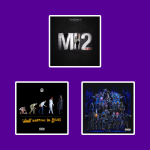
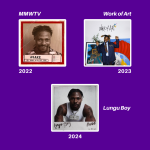
  • You have four pictures that’ll give you a clue. If your score is less than 7, you’ll listen to only Afrobeats for the next seven years.

    Take the quiz:

  • Get Ready With Me (GRWM) videos are as popular as comedy skits these days. So if you’re not funny, but you want to make it on the streets of social media, they’re a great alternative.

    To become an excellent GRWM content creator, you’ll need more than teasing thirst traps in front of your camera and ring light. It’s an oversaturated market, but the best GRWM creators get some things right.

    Create a plan

    Be intentional about crafting a unique format and tone, including how you showcase the steps. @missimaa, one of the top Nigerian GRWM creators on TikTok, interacts with her audience like it’s a gist party with her besties as she shares every step of her glam-up session.

    Do what you enjoy

    Charity Ekezie has built her TikTok and YouTube following entirely on “GRWM to make-up” videos. Doing what you’re passionate about and sticking to it beats doing everything and being all over the place.

    Skip the intimate part

    The colour of your underwear doesn’t interest us. Just let’s see how you apply your skincare, dress and glam up, so we can steal some tips—please and thanks.

    Don’t fake it sometimes

    Stop pretending you just woke up when you and I know you can’t act to save your life.

    GRWM isn’t “Go Through My Day With Me”

    If your GRWM video has a part two, stop it. We only want to get ready with you. We don’t want to follow you to the mall, drive around town with you or watch you eat all day. Stick to the script.

    Be fashion-forward

    TBH, the best part of watching a GRWM video is seeing you get into a killer outfit. It’s not worth anyone’s time or following if your dress-up is mid. Improve your wardrobe, and internet people may grace you with their attention.

    Quality >>>

    Making content with excellent replay value is essential. A good camera will help. A good mic will help too, but don’t disturb us when you get one, like Hauwa L.

  • As work resumed this new year, so did the music industry. The music release window has opened, and artists are back, pushing out fresh content. These songs are some of the best Afrobeats jams the first week of 2024 has to offer.

    Bump this:

    Better — Jaido P

    Jaido P’s latest song, Better, went live as we crossed into 2024. No saviour is coming for him, Jaido commits to making his life his full responsibility. Regardless of his background, he’s motivated because he’s alive. There’s hope to do and become better. This is positive energy to start the year.

    Look My Opps — Laxy-BBK

    Abuja artist, Laxy-BBK, started the year with a drill tune and visuals titled Look My Opps. His energy is competitive but still sounds feel-good, keeping the bars loose enough to get the chicks jamming, party vibing and provide enough pump for the hustlers.  

    DON’T KNOW — Eniola Havoc

    With a knack for clever punchlines and a combination of Yorùbá and English, Eniola Havoc takes strides in his music journey, not greeing for unbelievers and competition. DON’T KNOW is the most introspective and second track off his three-pack single, WITH LOVE, FROM BANDO.

    James Bond — Jujuboy, Banx & Ranx and Harley

    Aristokrat Records signee, Jujuboy, finds chemistry with Canadian production duo, Banx & Ranx, and Villeneuve-Saint-Georges-based artist, Harley, to flaunt their coolness and charisma. The sound on this track flirts with Afrobeats and rap — a fun anthem for fly guys.

    Hustle — Sola

    Patience drives Sola, but her eyes are glued on hustle — there’s money to get. Yet Hustle is a serenading Afrobeats jam about praying for grace, reminding us that cash rules everything.

    EL Chapo — Reechdee ft. Ice Prince

    Although El Chapo is a convicted criminal, his glorified, white-washed name pops up in too many lyrics and references. Burgeoning artist, Reechdee links with veteran rapper, Ice Prince, to floss about luxury and the rich guy lifestyle, drawing comparisons with Chapo. Hearing Ice Prince spit on this Afro-swing jam after he dropped his latest solo release, Woke, in December 2023, it seems he’s gearing up to become active in music again.

    I Go Dey — Lyta ft. Moyo Payne

    After dropping Correct, in December 2023, Lyta has put out another serenading love song that promises availability and commitment. It features fellow street-pop act, Moyo Payne, who closes the song.

    CHECK THIS: 2023 In Music: The Hardest Nigerian Drill Songs of the Year