• If your December agenda is simple, enjoy life without stress. This list is your whole ministry. Lagos is chaotic already. You deserve a soft landing.

    Here are ten hacks to help you survive the season peacefully.

    1. Let your loudest friend handle all the planning

    Every crew has that one overactive planner who knows every rave, brunch and beach day. Allow them to shine. Your own job is to show up moisturised.

    2. Make the Panarottis app your workday lifeline

    Lunch stress is unnecessary stress. Instead of stepping out in the sun and traffic, order pizza and keep your energy for the real December activities.

    3. Build a personal traffic survival kit

    Power bank, water and pizza slices. Perfect for surviving the Third Mainland traffic and still arriving like someone who has sense.

    4. Perfect your “I didn’t hear you” face during bill-splitting moments

    It’s a talent. Practice it. Protect your wallet. Then reward yourself later with Panarottis because at least pizza won’t judge you.

    5. Keep one emergency December outfit ready

    For IJGB meetups, random hangouts and last-minute “we’re outside tonight.” One ironed outfit can save your entire reputation.

    6. Avoid any conversation that starts with “So what are we doing next year?”

    It’s December. You’re trying to relax. Heavy conversations can resume in January. Use pizza as a distraction if necessary.

    7. Choose soft life over unnecessary movement

    If the venue is too far, skip it. If the sun is too hot, skip it. If your spirit says stay home, listen. Order in and enjoy your peace.

    8. Claim your right to disappear strategically

    Not every outing needs your attendance. Sometimes the softest life is staying indoors with a warm box of pizza and your favourite playlist.

    9. Always have a small-win treat for surviving the day

    Finished a deadline? Survived a family function? Didn’t curse anyone in traffic? Celebrate with a new Panarottis flavour. December is for enjoyment.

    10. Remember that food is the real festive hack

    Events can flop. Friends can stress you. The weather can embarrass you. But pizza will never disappoint. Order through the Panarottis app or walk into the closest branch and let happiness meet you.


    Enjoy the Season’s Slice of Happiness.
    Abraham Adesanya
    | Yaba | Ogudu | Festac Link Rd | Ilupeju | Admiralty | Chevron | Sangotedo | Surulere | Orchid Rd | Providence

    Download the Panarottis app to place your order or visit any outlet.

    [ad]

  • Whether you’re the girl who swears by coconut oil or the one who’s obsessed with her 10-step routine, skincare is personal. Joy Black is all about celebrating your kind of glow, natural, confident, and 100% you. Take this quiz to find out what kind of skincare girlie you are and how Joy Black fits into your routine.

    No matter your type, Joy Black’s got your skin covered. With every wash, it hydrates, repairs, and restores your glow because your skin deserves real care.

    Available at Bokku Mart and stores near you.

    [ad]

  • When Ayobami Akinrinade handed a boy a notebook she had spent her own money producing, she expected curiosity. Instead, he tore out the page showing the male reproductive system and threw it away. She remembers sitting in the school office, stunned and close to tears. The boy, she later learnt, said he couldn’t bear to see the anatomy laid out like that.

    “That moment hurt,” Ayobami told me. “It wasn’t just about the money. It was that a child would rather destroy information about his own body than face it. That showed me, again, how wide the gap is between what young people need and what adults think they should know.”

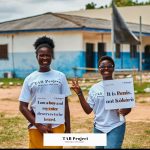
    Ayobami runs two interlocking initiatives, Sex Education with Balmbam and Teach A Boy Child (TAB), both designed to deliver age-appropriate, factual Sexual and Reproductive Health and Rights (SRHR) education to adolescents across Lagos and beyond. Her work ranges from school workshops to an active WhatsApp community.

    What sets Ayobami’s work apart, though, is how she brings faith into the conversation. A committed Christian, she works closely with churches and faith leaders to teach young people about sexual health through a moral and spiritual lens, one that promotes abstinence while also providing factual, science-based education about their bodies. “I always tell parents and pastors that knowledge doesn’t corrupt,” she said. “It empowers. You can teach abstinence and still teach sex.”

    The mission is simple: to educate on sex, make space for questions about consent and abuse, and bring boys into conversations that often focus only on girls.

    What is SRHR? It means that every adolescent has the right to accurate information, bodily autonomy, safe relationships, access to reproductive health services, and the freedom to decide about their sexual and reproductive life, without coercion, discrimination, or violence.

    And the World Health Organization (WHO) defines sexual and reproductive health as “… that people are able to have satisfying and safe sex lives, to have healthy pregnancies and births, and decide if, when and how often to have children. Access to sexual and reproductive health services is a human right.”

    Despite growing awareness about sexual and reproductive health, access remains low among Nigerian adolescents. A 2020 study found that only 38.2% of young people in Enugu State, Nigeria, aged 12 to 22 had never used sexual and reproductive health services, highlighting the deep gaps in information, stigma, and access.

    Why Faith, and how ‘Sex Education with Balmbam’ bridges it

    Ayobami’s own life is the engine behind her work. She disclosed that she was sexually abused from childhood into adolescence — an experience that drove her to study sex education, secure scholarships for international certification, and build programs that speak directly to the needs she once faced.

    That background also shaped an approach that deliberately engages religious communities. Many Christian parents and leaders, she says, view frank conversations about sex as a threat to morality. During a university class, she remembered, a fellow Christian student actually covered her ears and began to pray aloud when sex was being discussed.

    “Christian communities have demonised sex so much that married couples sometimes struggle physically and emotionally,” Ayobami said. “Teaching sex or pleasure is not anti-spiritual. I tell church groups up front: I will use the proper words. If you can’t accept that, I can’t teach here.”

    Her faith-forward framing, a project called Sex-gelism (Sex + Evangelism), aims to reconcile Christian belief with comprehensive SRHR. It helps her enter spaces many sex educators cannot. She insists on clarity rather than euphemism: “I don’t call their body parts by silly names. It’s the penis, vagina, vulva, and breast. Language matters.”

    Cultural barriers: parents, protocols and silence

    Across Lagos, she said, parents are the primary barrier. In one recent outreach, a boy confessed he had been punished and labeled “demonic” after his parents discovered he had watched pornography. Rather than guiding him, the adults had punished and shamed him.

    “Parents demonised the child,” Ayobami said. “They see exposure as sin, not an opportunity to educate. We must involve parents before we teach children. When parents understand what will be taught, they usually relax.”

    Teachers and school staff are often more receptive than religious leaders, Ada, a teacher who worked with Ayobami on the TAB project, said. Ada described how the project delivered lesson plans and educational materials that filled gaps schools were not equipped to cover. But she also warned of resistance in mixed-gender classrooms, cultural and religious pushback from parents, and a lack of training and resources for staff.

    There are institutional hurdles, too. Ayobami said public schools are often inaccessible because of bureaucracy: “Go to the ministry, they give you a date that doesn’t work. It’s easier to work with private schools.” That administrative inertia, coupled with the absence of government sponsorship, forces many small NGOs to rely on community, family, and modest donor support.

    Solutions in practice: WhatsApp, peer education and teacher training

    Ayobami’s methods are deliberately practical and youth-centred. She prioritises age-appropriateness: educators confirm age ranges before sessions and tailor content accordingly. She runs peer education and WhatsApp groups where adolescents can ask questions privately and maintain anonymity; she mentors volunteers who then deliver classroom sessions and community events, like a mini-conference held for the International Day of the Girl Child in partnership with a local brand.

    Favour, a volunteer, described her experience: she joined Ayobami’s WhatsApp community, volunteered at school outreach events, and saw the immediate uptake among girls. “The school proprietor said they had never had anything like this. The girls were so receptive,” she said.

    The work also includes counselling and healing sessions for survivors. Ayobami recounted a camper who reported attempted molestation after a festival; the girl resisted further harm, a response Ayobami credits in part to earlier education on body autonomy and consent. She has also worked with adults recovering from sexual pleasure after trauma and men who seek redemption after offending.

    Ayobami estimates she has reached over 2,000 young people and worked with more than 20 schools, and her WhatsApp community has over 1,000 members. She partners with national and local organisations, including Change Is Female, Smiley Foundation, and Teach for Nigeria fellows, but stresses the need for government recognition and funding.

    “If I had ₦50–₦100 million, I could roll TAB out across Nigeria and into other African countries,” she said. “Policy implementation is crucial. SRHR is often treated as a girls-only issue. Boys must be included. Also, we need young trainers; old methods don’t work with today’s adolescents.”

    She also named a persistent problem: capacity. Small NGOs are often run by a handful of exhausted founders who need professional staff and reliable funding. And public institutions rarely fund grassroots sex education initiatives, leaving critical work under-resourced and fragmented.

    From the interviews, it’s clear that practical, respectful engagement works. Teachers who co-design lessons, parents briefed in advance, faith-based framing that does not denigrate religion, age-appropriate modules, and safe digital spaces all reduce resistance. Peer testimony, girls and boys sharing what they learned, helps normalise SRHR education.

    But systemic change is needed. Ayobami and the educators want three policy shifts:

    • Integrate comprehensive SRHR into the school curriculum, not as an optional add-on but as a standard subject.
    • Fund and professionalise grassroots organisations so they can hire staff and scale.
    • Ensure boys are explicitly included in national SRHR guidelines and programmes.

    Hope?

    Back in that school office, after the boy tore out the page, Ayobami did not give up. She redesigned the workbook, worked with teachers to prepare students emotionally and built a WhatsApp forum where questions could be asked privately. Months later, the same school invited her back.

    “We’re not solving everything,” she says. “But every time a child knows the name of their body part, knows consent, knows who to tell if something happens — that’s a life changed. That is what keeps me going.”


    This story is made possible with support from Nigeria Health Watch as part of the Solutions Journalism Africa Initiative.


    [ad]

  • Life is stressful enough. Whether you’re squeezing into a danfo at 6 AM, vibing to Ayra Starr on a night out, or surviving your boss’ 3-hour meeting, one thing is constant: you need to smell fresh and feel confident. Luckily, Tag Deodorant has a variant for every vibe.

    Take this quiz to find out which one is your perfect match.

    Whatever your vibe, a Tag deodorant is made for you. Stay fresh for 48 hours and never miss a beat. Tag it on!

    Find your Tag variant today on Instagram, Twitter, TikTok, and Facebook

    [ad]

  • The first time Adeola* heard about the Human Papillomavirus (HPV) vaccine, she was afraid. Scrolling through Facebook, she saw claims that the vaccine was a secret plot to reduce Nigeria’s population. It didn’t matter how long she scrolled; post after post said the same thing. The speculation didn’t stop on social media; it continued at schools or among neighbours. “They said that if we allow the girls to take the vaccine, they won’t get pregnant in the future.”

    Adeola considered accepting the rumour, contemplating within herself if the vaccine would really affect her daughter, like the Facebook posts said. The fear almost stopped Adeola from getting her daughter protected against cervical cancer.

    Cervical cancer is the second most common cancer amongst Nigerian women, killing more than 8,000 women every year, with 12,000 new cases recorded in 2020 alone, according to the World Health Organisation. Almost all cases are linked to HPV, a virus so common that four in five sexually active people are guaranteed to get it at some point.

    The vaccine is one of the most effective tools of prevention: HPV types 16 and 18 alone cause at least 70% of cervical cancers. Yet in Lagos, as across much of Nigeria, misinformation and mistrust are slowing down vaccine uptake, despite the government’s ambitious plan to vaccinate millions of girls aged 9–14 years in its 2023 rollout, the largest HPV campaign in Africa. By the end of the introduction phase, more than 12 million girls nationwide had been vaccinated, according to official figures.

    “I didn’t know what to believe,” Adeola recalled. “It wasn’t until a doctor explained to me that I became convinced. The doctor told me clearly: The vaccine doesn’t affect fertility, it protects against cervical cancer.”

    After her daughter received the vaccine at a government health facility, Adeola tried to share her experience with other mothers in her community, hoping it would ease their fears. But the rumours proved harder to shake off than she expected. “People are difficult to convince,” she admitted. “I don’t know how to change their minds.”

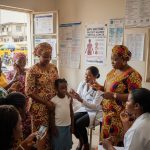
    Women Advocates for Vaccine Access (WAVA), established in 2016, was born out of a pressing need to close Nigeria’s immunisation gaps. At the time, routine vaccine coverage remained dangerously low, donor funding was beginning to waver, and millions of children risked being left behind. The coalition drew its strength from women-led organisations, recognising that women, often the primary decision-makers for family health, could be powerful advocates in demanding sustainable financing and equitable access to vaccines. 

    To address fear around the HPV vaccine, WAVA has focused on advocacy, policy engagement, and empowering women’s voices. Goodness Hadley, Director of Programs at WAVA, said, “We realised that one of the biggest barriers wasn’t access. It was fear. Many women worried about infertility, and others thought it was a vaccine only for teenagers. So, our work is to give correct, relatable information.”

    Through its advocacy, WAVA has partnered with health agencies and communities to push for stronger vaccine uptake. One of their flagship efforts is the Amplify project, which equips young people and women leaders with skills to advocate for routine immunisation, including HPV. “We want girls and women to lead the conversation,” Goodness explained. “From essay competitions to digital campaigns, we are creating platforms for them to speak directly to decision-makers.”

    Tackling Disinformation

    Dr. Chizoba Wonodi, convener of WAVA and faculty member at Johns Hopkins University, says the roots of hesitancy in Lagos go deeper than casual gossip.

    “There was a disinformation campaign just before the vaccine was introduced in the country,” she explained. Some people willfully created false narratives, like HPV vaccines causing infertility, for political or financial reasons. “That campaign had a dampening effect, especially in Lagos, where you’d expect higher uptake because of education levels and general acceptance of childhood vaccines.”

    This disinformation made a dangerous mix with cultural and religious concerns. According to Dr. Womi Samuel-Nnah, Research Assistant for SHARP (a Johns Hopkins University project) and WAVA’s Lagos focal person, many parents struggled with the idea of talking about sexual health with girls as young as nine. “Some parents felt it was too early. Others simply didn’t know HPV was a major cause of cervical cancer. And then you’d hear things like, ‘Government wants to reduce Nigeria’s population by giving this vaccine.’ These beliefs came up again and again in the communities.”

    Evidence and Impact

    Dr. Womi-Samuel recalled one striking moment during an outreach in Lagos. “A mother refused, insisting the vaccine was population control. But another woman stood up and said she paid ₦60,000 privately for her daughter’s HPV vaccine. She explained in Yoruba why it was important. That testimony changed minds on the spot. Parents started bringing out their daughters to get vaccinated. That kind of peer-to-peer persuasion works even better than anything we can say.”

    In schools, WAVA and its partners are already seeing changes. “In one school, after our session, over 100 girls were registered for HPV vaccination,” Dr. Womi-Samuel said. “That’s how we know the narrative is shifting.”

    The testimonies of parents who made private sacrifices for the vaccine have also become powerful proof. “When someone spends that much money on something, people take it seriously. They start asking: If she paid, maybe this thing is truly valuable. That’s evidence of trust spreading within communities,” she added.

    Learnings and Limitations

    WAVA’s work has also revealed surprising insights into hesitancy.

    “Interestingly, vaccine refusal doesn’t always follow education lines,” Goodness noted. “You’d expect literate, urban parents to be more accepting. But because of the early disinformation campaign, you sometimes find them more resistant than rural families. On the other hand, once women in less urban areas understand HPV’s link to cervical cancer, they are eager.”

    Language and trust are equally crucial. “We realised mothers trust other mothers more than health workers,” Dr. Chizoba said. “That’s why we focus on community champions who can share their own stories in their local language. It works better than medical jargon.”

    But the work is not without limits. Like many advocacy groups, WAVA grapples with dwindling donor support and the pressure to secure sustainable local funding for its activities. Capacity is another recurring hurdle; many smaller organisations in the coalition operate with lean teams and limited resources, making it challenging to sustain consistent outreach across multiple states. Beyond money and manpower, the persistent challenge of mistrust and misinformation demands ongoing community sensitisation to shift attitudes toward immunisation.

    A Personal Reflection

    Reporting this story made me confront my own blind spots. I wasn’t even sure whether I had taken the vaccine myself. When I asked my female friends, most of them weren’t sure either. That uncertainty shook me. If educated women like us with access to information didn’t know, how much harder must it be for women with less access to information?

    Women like Adeola, once doubtful but now convinced, are showing their communities what’s possible. And advocates like WAVA are building systems to ensure those voices ripple outward. The hope is that one day soon, the whisper that girls won’t get pregnant if they take the HPV vaccine will fade into history, replaced by the louder truth that this vaccine saves lives.

    As WAVA and other advocates continue their push, the hope is that more women in Agege, Surulere, Ikorodu, and Lekki will see the HPV vaccine not as a threat but as protection. For Adeola, the choice has already been made. She feels relieved. She knows she has done the right thing for herself, and she’s hoping other women will believe it too.


    This story is made possible with support from Nigeria Health Watch as part of the Solutions Journalism Africa Initiative.

    [ad]

  • If money were a superpower, how would you use it? Are you stretching every naira, flaming through life, clobbering obstacles, or building a money plan that no invisible weapon can conquer?

    Take this quiz to discover which Fantastic Four member matches your spending style, and how your Chipper Visa USD Card can take you from “thinking about it” to “booking it.”

    [ad]

  • Your hair has been dropping hints, now it’s time to find out exactly what type of baddie you’re working with. This quiz will help you figure out your hair type based on texture, curl pattern, length.

    Take this test:

    [ad]

  • Hot babes, HERtitude 2025 is about to be the hottest one yet, and we’re levelling up the glow with our headline sponsor, NIVEA!

    HERtitude is the party for hot babes only, where you can show up as your boldest, most confident self. Think of it as your ultimate girls’ day out, filled with music, fun activities, and all the hot babe energy you can imagine.

    Who better to help us celebrate than NIVEA, the skincare brand that has kept hot babes soft, smooth, and confident for nearly 140 years? Whether it’s locking in moisture, keeping you fresh all day, or giving you that effortless glow, NIVEA understands that real confidence starts from the inside out.

    Fiyin Toyo, Central, East & West Africa Marketing Director at Beiersdorf Nivea Consumer Products Limited, is super excited about this collaboration:

    “We are skincare. For nearly 140 years, we have cared for people from the outside in. Care represents both the physical nurture of skincare and the emotional care of empathy. Our goal is to help people feel good in their skin, giving them the confidence to reach out and build meaningful connections—an essential human need. Sponsoring HERtitude is a key pillar in driving meaningful connections, enabling young women to feel confident and equipped to take on leadership roles in every aspect of society.” 

    But babes, that’s not all. NIVEA is bringing the ultimate glow-up experience to HERtitude. Imagine:

    • A NIVEA booth where you can experience their top products firsthand.
    • Fun challenges & giveaways for the chance to snag exciting cash prizes up to ₦500k.
    • NIVEA merch to flex your hot babe status.

    The best part? You don’t need to do anything extra. Just show up, have fun, and bask in the confidence that comes with being a HERtitude hot babe.

    So round up your girls, get your Retro Glam fits ready, and come experience a HERtitude like never before, powered by Zikoko and NIVEA!

    Tickets are available now at hertitude.zikoko.com
    Follow @Zikokomag and @NIVEA_ng for all the HERtitude tea!


    Also Read: Nigerian Women on Their Life-Changing Female Friendships

    Get More Zikoko Goodness in Your Mail

    Subscribe to our newsletters and never miss any of the action

    [ad]

  • If there’s one thing Old Nollywood babes knew how to do, it was serving iconic fashion. From the slinky dresses of Regina Askia to the bold, thin brows of Eucharia-Anunobi, the 90s and 2000s were a golden era for statement style. And what better way to make an entrance at HERtitude than by channeling the retro glamour of this era? If you’re looking to turn heads and give hot babe energy, here’s how to bring Old Nollywood fashion into 2025.

    1. Ankara & Adire

    If Nollywood aunties of the 90s taught us anything, it’s that African prints will always be a slay. Whether it’s an Ankara two-piece, an adire wrap dress, or a structured boubou with exaggerated sleeves, the key is in the tailoring. You can wear Oleku (a short-sleeved top and wrapper combo). Pair with bold accessories, think chunky gold earrings and strappy heels, to add a modern twist.

    Photo Credit: Oye Diran

    2. Statement Sunglasses Are Non-Negotiable

    Remember when Genevieve Nnaji and Omotola Jalade-Ekeinde would pull up in those oversized, tinted sunglasses, serving boss babe realness? Well, that’s your blueprint. Go for retro, oval-shaped frames or dramatic cat-eye sunnies. Even better, pair them with a mini bag for that ultimate “rich aunty” aesthetic.

    3. Velvet, Satin & Silk—The Fabric of Luxury

    Old Nollywood glam was all about looking expensive. The ladies of that era understood the assignment, draping themselves in velvet gowns, satin midi dresses, and silk blouses. Choose rich jewel tones—emerald green, deep burgundy, royal blue, you can even do black—and let the fabric do the talking. Bonus points if you add a thigh-high slit for drama.

    4. Micro Bags & Chunky Gold Jewelry

    Handbags in Old Nollywood movies were either comically large or adorably tiny—there was no in-between. For HERtitude, lean into the micro bag trend, preferably in a bold color or textured material. And don’t forget the jewelry—layered gold chains, oversized hoop earrings, and chunky rings are your best friends.


    What’s a killer outfit without a place to show it off? Secure your HERtitude ticket today!


    Get More Zikoko Goodness in Your Mail

    Subscribe to our newsletters and never miss any of the action

    5. Short Skirts, Skimpy Dresses & Daring Fits

    Let’s be real! Old Nollywood baddies didn’t shy away from showing some skin, and neither should you. Think mini skirts, halter tops, tube dresses, and body-hugging fits that scream confidence. Channel your inner Rita Dominic by rocking a bold, short dress paired with knee-high boots or strappy heels. Add a cropped leather jacket for that extra Y2K touch.

    @jainabennett

    I looked high and low for some Y2K stuff on Amazon💕 hope this helps somebody #y2kfinds #y2kaesthetic #y2kamazonfinds

    ♬ The Jump Off – Lil’ Kim

    6. Hair & Makeup: The Ultimate Finishing Touch

    Channel the 90s and 2000s with bold beauty choices. High ponytails, yaki flip, puffy afro, deep side parts, and sleek buns were signature looks. And we can’t talk Old Nollywood beauty without mentioning those thin, long, perfectly arched brows that Eucharia Anunobi and co. rocked effortlessly. Pair them with deep brown lip liner, ultra-glossy lips, shimmery eyeshadow, and—if you’re feeling daring—a pop of blue or green eyeliner. And if you’re feeling extra, throw in some body glitter—because why not?

    7. The Ultimate Nollywood Diva Attitude

    Style isn’t just about what you wear, it’s about how you wear it. The true essence of Old Nollywood glam is confidence. So, whether you’re rocking a corset dress, a matching set, or a power suit, wear it like you just stepped out of a scene.

    HERtitude 2025 is themed Retro Glam, and we’re celebrating women who own their power, and what better way to embody that than by channeling the most iconic women of Old Nollywood? So, step out, serve lewks, and let the HERtitude energy flow. See you there, hot babes!

    Also Read: These Old-school Fashion Trends Still Bang in 2022

    [ad]

  • Ladies, gather around because the hottest festival for hot babes is making a comeback. HERtitude 2025 is here, and this year, we’re turning up the heat with Retro Glam—think bold, timeless, and effortlessly chic. If you thought last year’s edition was iconic, wait till you see what we have planned this time.

    A Quick Throwback to HERtitude 2024

    HERtitude 2024 was nothing short of legendary. Over 1,500 women showed up, showed out, and partied like the queens they are. From music performances to the best vibes, the energy was unmatched. It was giving community, freedom, and a whole lot of hotness.

    And now, we’re ready to do it all over again—but bigger, better, and bolder.

    So, What’s New in HERtitude 2025?

    This year’s theme, Retro Glam, is all about tapping into old-school elegance with a modern twist. We’re talking about:

    Insane music performances —Expect a lineup of your faves bringing the energy.
    Fashion show —A runway moment where you get to serve your best retro glam look.
    More interactive experiences —Games, speed-friending, tattoos, and all the good stuff.
    Secret location reveal —Only ticket holders get the exclusive address. (We love a little mystery.)

    @omajaybrand

    Filmhouse called and i answered! Vintage Nollywood Inspired Makeup! Shoutout to my mummy for the black and blue lippies 😂😂😂 Also na tattoo de my chest no be wound 💀 This look was inspired by Domitila (1996) film and it’s pretty obvious i has fun filming it 😁 Domitila was a mad hit so im already looking forward to the reboot hitting cinemas April 7th! #DomitilaTheReboot #domitilamakeup

    ♬ Bad Gang – Ajebutter22

    Basically, if HERtitude 2024 was the pregame, HERtitude 2025 is the main event.

    Date, Time & Where to Get Tickets

    Date: April 26th, 2025
    Time: 12PM till we say so.
    Venue: Exclusive to ticket holders (we keep it safe & private, always).
    Tickets: Available now on Tix Africa—so don’t slack!

    The Only Rule? Show Up & Show Out.

    HERtitude is all about you—the girls, the baddies, the queens, the babes who know they’re the moment. We want you to come as your most confident, vibrant, and unapologetic self. Because at HERtitude, every woman is a hot babe.

    So, get your outfits ready, grab your squad, and secure your tickets before they sell out. We’ll see you on April 26th for the best day of your life.

    [ad]