• If you enjoyed the first and second editions of our Nigeria’s Current Affairs quiz, you would love this edition even more. From major political moments to key decisions shaping Nigeria today, this 15-question quiz will challenge how well you really know the country’s political landscape. Ready to flex your muscles again?

    Who is the current speaker of Nigeria’s House of Representatives?

  • Reworked photo of Tinubu addressing the National Assembly. Credit: Aderemi Adesida BCM

    You know that confident, unbothered way you move when you know there’s nothing standing in your way? That’s exactly how Bola Tinubu has been operating. For the average person, that might be admirable, but for the president of a democratic country, it’s unsettling — and we have the National Assembly to blame for it.

    What’s happening?

    On Tuesday, March 18, President Bola Ahmed Tinubu made a national broadcast declaring a six-month-long state of emergency in the South-South state of Rivers. As part of this sweeping action, he also suspended the state’s governor, Sim Fubara, his deputy, Ngozi Odu, and the entire Rivers’ House of Assembly. Finishing off with a flourish, he appointed Vice Admiral Ibot-ette Ibas (rtd) as the state’s military administrator. 

    According to Tinubu, the move was necessary due to political unrest in the state. He cited Section 305 of the 1999 Constitution, which allows a president to declare a state of emergency in cases of national danger, disaster, or threats to public order and safety.

    But here’s the thing— the Nigerian constitution does empower a sitting president to make such declarations, but it also clearly outlines the conditions under which the powers can be exercised. These include war, major security threats, breakdown of public order and safety, natural disasters, the inability of the government to function properly, or a direct request from a governor — none of which apply to the situation in Rivers. And even if they did, Section 305 doesn’t give the president the authority to suspend elected officials like the governor or his deputy.

    Unsurprisingly, the backlash against this was swift. Political stakeholders, legal experts and organisations condemned the president’s glaring disregard of the Constitution. The Nigerian Bar Association (NBA) called it an “unconstitutional usurpation of power and a fundamental breach of Nigeria’s federal structure.” Femi Falana, a Senior Advocate of Nigeria (SAN), reminded Tinubu that “the office of an elected governor can only become vacant upon death, ill health, resignation, or impeachment. Even where the office of the Governor becomes vacant for any reason whatsoever, the Deputy Governor shall be sworn in as the Governor.”

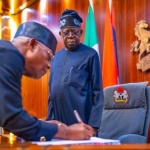
    Tinubu looks on as the newly appointed Rivers’ military administrator takes oath. Credit: National Record

    If the president heard any of these criticisms, he sure didn’t act like it. Barely 24 hours after his declaration, on Wednesday, March 19, he swore in Vice Admiral Ibot-ette Ibas as Rivers’ state military administrator.

    The Nigerian constitution also requires that the president publish such a proclamation in the official government gazette and obtain the National Assembly’s approval via a two-thirds majority.  But on Thursday, March 20, instead of doing their job and rejecting this blatant overreach, both chambers of the National Assembly approved it

    Why are we dragging Nigeria’s parliament?

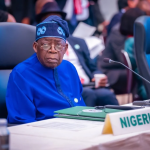
    Photo images of Nigeria’s Senate President and House of Reps Speaker Photo: Channels Television

    In most democracies, the legislature exists to keep the executive arm of government in check. But Nigeria’s National Assembly seems to have left that group chat and deleted the app. If you think this is the first time they’ve rolled over for Tinubu, then you’re in for a ride.

    The assembly has gotten so cosy with the president, that they have been deservedly tagged  a ‘rubber stamp’ assembly — yes-men who agree to anything the President says, no matter how ridiculous. And they’re not even subtle about it.

    Take November 2024, for example. After months of delay, Tinubu finally presented the 2025 budget —  ₦49 trillion, a whopping 36.8% increase from the previous year. But it wasn’t just its size that had Nigerians bothered; it was also the plan for financing it. According to Tinubu’s minister of finance, Wale Edun, ₦35 trillion would be gotten through revenue, while the remaining ₦13 trillion (4% of the country’s GDP) would come from borrowing. Financial experts and anyone with half a brain raised eyebrows and voices over the negative impact this would have on the country’s sorry public borrowing tab, already at  ₦134.3 trillion at the time.

    So, what did the National Assembly do? Grill him? Ask hard questions? Nope. On December 18 2024, when Tinubu entered the Senate chamber, Senate President Godswill Akpabio immediately broke into a pro-Tinubu song, ‘On your mandate we shall stand,’ even before the man got the chance to begin his presentation. By the next day, December 19, the budget had passed the first and second readings at the Senate and was on its way to the committee stage.

    And it doesn’t stop there.

    Tinubu and Akpabio pose for a photo. Credit: Vanguard

    In October 2024, Tinubu proposed changing Nigeria’s national anthem. Within a week, his besties in the National Assembly passed it, sparking outrage across the country. Political analyst Afolabi Adekaiyaoja told Financial Times, “The lack of public engagement also doesn’t show a legislature able to provide necessary checks on the executive — which doesn’t encourage citizens [that there is] effective accountability.”

    [ad]

    In March 2024, the National Assembly gave Usain Bolt a run for his money when they approved a whopping ₦1.2 trillion FCT budget just three legislative days after Tinubu submitted it. 

    In November 2024, they outdid themselves again, approving Tinubu’s $2.2 billion loan request barely 48 hours after he made it.

    In October 2023, Tinubu nominated 10 Resident Electoral Commissioners (RECs), four of whom  were his loyalists (including two card carrying members of the APC). Despite public outcry, the National Assembly confirmed them without hesitation..

    Why does this National Assembly hardly oppose the President?

    Tinubu speaks with the leaders of the National Assembly. Credit: Daily Trust

    If you think Tinubu simply lucked out with this assembly, think again. The president was very intentional about setting up a National Assembly that would cause him little to no stress.

    He played a central role in installing the leadership of both chambers — openly backing and working for the successful emergence of Godswill Akpabio as Senate President and Abbas Tajudeen as Speaker of the House.

    Tinubu was so public with his support that others openly talked about it as well. In May 2023, while National Assembly members prepared to select the leaders of both chambers, Tinubu’s current Chief Of Staff, Femi Gbajabiamila and Godswill Akpabio (before becoming  Senate President) held a meeting with members of the House of Representatives where they warned them against opposing Tinubu’s anointed candidates. Akpabio was quoted as saying “…In your daily dealings, my late mother told me that I should be aware of the 3Gs: The first G is God; the second G is Gun, and the third G is Government.

    “The first G is God Almighty. The second G is what? Gun, and the third one is Government. May you conduct yourself mindful of the admonition of my late mother by respecting the 3Gs, particularly the government,” he said.

    Tinubu likes to be thorough, so he didn’t stop at securing leadership spots for Akpabio and Tajudeen; he reportedly did the same hard work for Barau Jibrin and Ben Kalu, who emerged as deputy senate president and deputy speaker.

    The minority leaders — Kingsley Chinda (an ally of Nyesom Wike) and Abba Moro (announced by Akpabio) — weren’t left out. Neither were the chief whips of both chambers.

    But capturing the leadership of the Senate and House of Representatives wasn’t enough. Tinubu, through his loyal allies — Gbajabiamila, Akpabio, and Wike — ensured that the entire National Assembly would fall in line throughout his presidency. First, they formed a multi-party coalition within the Assembly. Then, they instilled the fear of God in lawmakers. Finally, Tinubu sealed the deal by dazzling them with a ₦70 billion “gift.”

    In July 2023, Tinubu submitted a bill to the National Assembly seeking to increase the 2022 supplementary budget originally signed by the previous Assembly. ₦185 billion was slated for the Ministry of Works and Housing for flood recovery, ₦19.2 billion to the Ministry of Agriculture to assist farmers affected by the flooding, ₦35 billion to the National Judicial Council, and ₦10 billion to Federal Capital Territory (FCT) projects. But most notably, ₦70 billion was earmarked for the National Assembly to “support the working conditions of new members.”

    Despite widespread criticism of both the ₦35 billion judiciary allocation and the ₦70 billion Assembly “support,” lawmakers from both majority and minority parties rushed to approve and amend the budget without hesitation.

    And just like that, Tinubu secured the most devoted fan club a president could hope for. From rubber-stamping his controversial proposals to singing his praises on the floor, this National Assembly has gone all in. The recent approval of his outrageous emergency rule? That might just be the tip of the iceberg.

    Why this is dangerous

    The Nigerian government is fashioned to run under the doctrine of the separation of powers.  The entire idea behind this doctrine is to ensure that the three arms of government (the judiciary, legislature, and executive) are independent of each other and that the powers of each arm do not conflict with the others.

    In order to ensure that the separation of powers is maintained, Nigeria also practices the principle of checks and balances. This is essentially a method designed to keep each branch of government in line. How does this principle work? By arming each branch of government with enough constitutional power to defend itself in the event that any arm tries to cross the lines drawn between them.

    Tinubu’s bromance with the National Assembly blurs these lines and renders them useless so that instead of watching his steps and his actions to be careful of overstepping his bounds, Tinubu confidently does whatever he likes, knowing his buddies would always have his back, even if he  single-handedly suspends a democratically elected governor, something only the legislative arm of government (specifically the State House of Assembly) can do. Today, the President suspended the governor of Rivers State; tomorrow, it could be in multiple states. Who will keep him in check then?

    [newsletter]

    How can you help to fix this mess?

    Nigerians might just have to step in if the National Assembly cannot call the President to order. Here are some of the ways you can help prevent Nigeria from descending into even bigger messes in the future:

    • Call your representatives in the National Assembly and tell them how you want them to vote on issues. You can find the lawmaker representing your constituency here.
    • Recall your lawmaker if you are convinced they are not performing. Here are the steps for recalling Senators and House of Rep members. If you have questions about this process, you can find your answers here.
    • Name and shame lawmakers who support illegality.
    • Speak up on social media using hashtags.
    • Start digital campaigns demanding that the National Assembly shut down laws unfavourable to Nigerians or decisions that disregard the constitution. Petitions are easy to create, and you can create one on platforms like this.
    [ad]
    
    
  • On the evening of Tuesday, March 18, Nigeria’s President, Bola Ahmed Tinubu, had everyone shook when he declared a state of emergency in Rivers State during a nationwide broadcast.

    The declaration also included the instant suspension of the state governor, Sim Fubara, his deputy, Ngozi Odu, and the state assembly for six months.

    Tinubu said that his decision became necessary following the political unrest in the state, which, according to him, has led to the destruction of several pipelines by militants.

    To take charge of the state’s administration while the governor and the assembly serve their suspension, the President appointed Vice Admiral Ibokette Ibas (rtd) as the military administrator.

    Immediately after Tinubu’s declaration, military trucks moved into the Rivers State government house. Daily Trust also reported that the governor’s whereabouts could not be ascertained suggesting it was likely he found out about the suspension beforehand.

    Hours later, however, the governor’s official statement on the matter was made available to journalists by the state’s Commissioner for Information and Communication, Joe Johnson. Read the full text of the governor’s message below.

    My dear Rivers People,

    I address you today with a deep sense of responsibility and calm, as we navigate this unfortunate moment in our state’s political history.

    Since assuming office as your Governor, all my actions and decisions have been guided by my constitutional oath of office and a great sense of duty.

    We prioritized the protection of lives and property and ensured the continuous progress of our dear State.

    Even in the face of the political impasse, we have remained committed to constitutional order and the rule of law, putting the interest of our people above all else.

    This was why, immediately after Mr. President’s intervention to broker peace, we did not hesitate to implement the agreed terms in good faith, including welcoming back commissioners who had previously resigned on their own volition.

    Furthermore, we moved swiftly to comply with the Supreme Court’s judgement immediately we received the certified true copy of the judgement to return the state to normalcy.

    These steps were taken not for personal gains but to foster peace, unity and stability in our dear State.

    Unfortunately, at every turn, members of the Rivers State House of Assembly frustrated our efforts, thus making genuine peace and progress difficult.

    Our priorities remained the security of lives and property and advancing the well-being and prosperity of Rivers people.

    Yes, we have political disagreements, but good governance had continued, salaries have been paid, and great projects were being executed to move the State forward. Above all, Rivers State is safe, secure and peaceful under our watch.

    At this critical time, I urge all Rivers people to remain peaceful and law-abiding. We will engage with all relevant institutions to ensure that our democracy remains strong and that Rivers State continues to thrive.

    We have always been a resilient people, and we will face this situation with wisdom, patience, and unwavering faith in the democratic process.

    God bless Rivers State. God bless the Federal Republic of Nigeria.

     Sir Siminalayi Fubara, GSSRS

    [ad]
  • If there’s one thing the Nigerian government and its officials would do, it’s to behave like freedom of speech is an alien concept. On Saturday, March 15, Ushie Uguamaye, aka Raye, a member of the  National Youth Service Corp (NYSC) posted a video on social media criticising President Ahmed Bola Ahmed Tinubu’s administration as well as the air quality and poor living conditions in Lagos State. Since then, she has been hounded more than people guilty of grave crimes against humanity.

    From the threat she got from her  NYSC Local Government Inspector (LGI), who demanded that she take down the post, to the  President’s media aide (Temitope Ajayi), who said that she deserved “capital punishment under NYSC,” Raye has been through it these past few days.

    The wild thing is that the Nigerian government is not new to this. Over and over, regardless of administration, governments at different levels have harassed citizens for criticising them. We couldn’t think of a better time to go down memory lane to highlight all the times the Nigerian government have moved like a dictatorship.

    Olamide Thomas: tracked down and arrested for cursing Tinubu in a video

    It’s not enough that the Nigerian government caused its youth pain during the EndSars protests; they have also continued to move weird at gatherings commemorating the sad event, either by show of force, arresting, or firing teargas at protesters. They did it in 2021, 2022 and in 2023.

    On October 20, 2024, like clockwork, they teargassed protesters marking the EndSars anniversary. One of the protesters, a nurse named Olamide Thomas, took to Facebook Live to curse President Tinubu, his children, the Inspector-General of Police, Kayode Egbetokun, and Force Public Relations Officer Muyiwa Adejobi, for the pain she was going through.

    Months later, on Friday, December 13, Thomas was arrested after the Police first arrested her colleague (by infiltrating a WhatsApp group), then her Uncle, whom they coerced to lead them to her. 

    She was first taken to Abuja, where she was arraigned on three counts of cyberbullying before a Federal High Court. The court ruled that she be detained on Cyberbullying charges and kept in custody at the Suleja Prison, Niger State. She was later granted bail on January 6.

    Sea King: arrested for criticising President Tinubu and the Police

    Roughly a week after Olamide Thomas’ arrest, the Police arrested another Nigerian for similar reasons on Saturday, December 21. The victim was Olumide Ogunsanwo, a TikToker popularly known as Sea King. Like Thomas, he had made a video cursing government officials, only this time, it was President Tinubu,  Lagos Governor Babajide Sanwo-Olu, Inspector General of Police (IGP) Kayode Egbetokun, and the Police force itself.

    Sea King was arrested hours after sharing his video and was remanded in KiriKiri prison for cyberstalking and alleged treason. On January 6, 2025, he was finally granted bail after 30 days, partly due to the Christmas/New Year holidays and administrative hiccups.

    Hamdiyya Sidi: arrested for alleged incitement against the Sokoto government

    On November 9, 2024, 18-year-old Hamdiyya Sidi was arrested by the Sokoto Police after she posted a video where she criticising the governor of the State, Ahmad Aliyu, calling out the rampant banditry in the state and negligence of displaced people by authorities.

    Though she was only arrested after her video made rounds, the Sokoto Police swears she wasn’t arrested because of the criticism contained in the video but for another incident on November 3, where she allegedly incited some women in a village in Wurno local government area of the State against the governor.

    Sidi was later released, but on November 13, 2024, she was kidnapped by gunmen, beaten, and pushed out of a moving tricycle (keke), which left her with serious injuries.

    After her first arrest, she was arrested again and charged in a Sharia court “for the use of abusive language and criticisms against constituted authority in the state.” In addition to this, Sidi also faces charges in regular court for incitement. During a hearing in January, her lawyer, Abba Hikima, said they were both stalked, accosted, and intimidated. Sidi last appeared in court in February 2025. Though her case was adjourned to March 13th and 14th, 2025, nothing has been heard since.

    Abdulganiu Olushipo: arrested for demanding accountability on budget allocation

    On March 4, 2024, a Nigerian activist, Abdulganiu Olushipo, was arrested by the Police in Lagos State on accusations of Cyberstalking and Cyberbullying. Olushipo was arrested after sharing information about budgetary allocation alleged to be received by the Lagos Mainland Local Government and asking that the Chairperson of the local government, Omolola Essien, be transparent with it.

    Youths in the local government quickly accused Essien of arranging Olushipo’s arrest and rallied around to protest it. Bowing to the mounting pressure, the Police released Olushipo the following day.

    Segun Olatunji: tracked, arrested and tortured for questioning a government official

    On March 15, 2024, Segun Olatunji, a Nigerian journalist and former editor of online news outlet FirstNews, was arrested, blindfolded, and flown to Abuja on a military aircraft after he published a story indicting President Tinubu’s Chief Of Staff, Femi Gbajabiamila of looting $30 billion.

    The military initially denied abducting Olatunji, but following the immense pressure mounted on it, the journalist was released after 14 days.

    Weeks after his release, Olatunji resigned from his job at FirstNews citing safety concerns for his life and that of his family. The management of the News outlet also tendered an apology to Femi Gbajabiamila regarding the news story but Olatunji continued to stand by his words. “in no distant time, the truth will come out and then it’ll be my word against theirs,” he said.

    Sunday Egena Odeh: arrested for criticising Benue State governor

    On April 30, 2021, the Police arrested and later released a journalist with Peoples Daily, Sunday Egena Odeh, for putting out a statement criticising then Benue State governor, Samuel Ortom, for the communal crises in Benue.

    “…we reminded the governor to spare a thought for the people of the two communities who had been facing untold hardships due to the lingering communal war. “Unfortunately, our suggestions have fallen on deaf ears, or at best had attracted name-calling by the governor’s aide who preferred to see us as a faceless group,” Odeh’s statement read in part.

    Ibrahim Dan-Halilu: arrested for social media post supporting a protest

    At about 2:00 am on August 5, 2019, Nigerian journalist and former Daily Trust editor, Ibrahim Dan-Halilu, found himself in the custody of the State Security Service (SSS) in Kaduna State, after he made a facebook post calling out the failures of then President, Muhammadu Buhari, and supporting the #RevolutionNow protest.

    Dan-Halili was released two days later but was rearrested after DSS in Kaduna  “received a marching directive from Abuja that he should be made to undergo further thorough investigation.” He was finally let go after eleven days.

    Henry Nwodo: arrested over planned protest against IGP

    On January 26, an activist and member of the Take It Back Movement was arrested by armed police officers in the Jahi area of Abuja for his involvement in a planned protest against police extortion.

    An eye witness said Nwodo “was  beaten, his phone seized while he was resisting, but they immediately pushed him into a waiting black car and drove off.”

    Agba Jalingo: arrested for news report calling out alleged corruption

    In August 2019, Nigerian Journalist Agba Jalingo, publisher of the online news outlet CrossRiverWatch, was arrested for reporting on a corruption allegation involving then-governor Ben Ayade.

    Though he was arrested in Lagos by the now-banned Special Anti-Robbery Squad (SARS) of the Nigerian Police, Jalingo was transferred the following day to another SARS facility in Calabar, the capital of Cross River State. The journalist remained in detention for nearly six months until the ECOWAS Court of Justice ordered the Nigerian government to release and compensate him for the prolonged detention.

    Dunamis five: arrested for wearing ‘Buhari Must Go’ shirts

    On July 4, 2021, five activists— Larry Emmanuel, Anene Victor Udoka, Samuel Gabriel, Henry Nwodo, and Ben Mannaseh were arrested and kept in the detention of the Department of State Services (DSS) after they wore #BuhariMustGo branded T Shirts at Dunamis Internation Gospel Centre to protest the state of things in Nigeria.

    While in detention, they were not allowed to see their lawyers or families. On July 29, the DSS arrainged them in court for ‘constituting themselves as vagabonds’ to disturb public peace,’ but they were later released on August 3, after 29 long days in DSS custody.

    Whether under the present administration or the one before it, whether on the Local, State, or Federal level, the Nigerian government has continued to show the sort of intolerance considered unhealthy for democracy. With each harassment and arrest, Nigerians ask the same question over and over again—“Are we truly in a democracy?”

    [ad]
  • Photo credit: African feminism

    On Friday, February 28, a Nigerian Senator representing Kogi Central, Natasha Akpoti-Uduaghan alleged that the Senate President, Godswill Akpabio had sexually harassed her and on March 5, she made her allegations official by submitting a pemission to the Senate.

    Instead of a proper investigation, what followed this was backlash from fellow senators and a 6-month suspension.

    Despite her suspension, Akpoti-Uduaghan did not back down or retract her allegations and many Nigerians have rallied behind her since then, demanding that her suspension be lifted and her allegations properly investigated.

    If the Senate heard any of these demands made by Nigerians online and offline, they have paid them no mind because on Tuesday, March 11, the Senate passed a vote of confidence on Godswill Akpabio. Speaking at the Senate that same day, Akpabio said that Akpoti-Uduaghan’s actions could harm women’s chances in politics, appealing also, that her actions should not be used to judge other women, especially his daughters.

    “I have four daughters, and I want to plead with politicians to still give them and other women a chance. The sins of one should not be used to punish others,” he said.

    Akpabio’s comments have sparked reactions and conversations among Nigerians. We asked eight Nigerian women to tell us how they feel about this and they did, in as many words as they could find.

    Simi

    “Akpabio’s comment shows the unfair way women in politics are treated. If one woman makes a mistake, it shouldn’t mean all women lose opportunities. When men in power mess up, no one says men should be banned from leadership, so why should it be different for women?

    Bringing up his daughters feels like a distraction. If he truly wants women to have a fair chance, the focus should be on creating a system where people are judged by their actions, not their gender. Women deserve opportunities on their own merit, not based on what one person did.”

    Esther

    “This is a clearly spelt- out hatred for women who dare to speak up when they’re being assaulted. This also emboldens abusers to keep it going. It’s such a shame that everyone has been silenced from speaking up when such happens

    I feel terrified that if something like this happens again, women will keep being blamed for it. It makes me feel unsafe that the system that is supposed to protect the rights of women are the ones against her.”

    Dolapo

    What Akpabio said is wrong on so many levels. He is essentially saying the Senate is not a place for a woman, especially when she voices her concerns. It is similar to what Senator Ireti kingibe said in that interview, where she implied Senator Natasha Akpoti should have been silent instead of speaking out because the men would no longer want her to be a part of the club. It also feels like he is saying women have to be compliant or be total suck-ups before they can get into that position

    Mmesoma

    “First of all, I think it’s really silly. It reflects a broader issue in Nigeria, where many people still believe that women don’t inherently deserve political positions and should be ‘grateful’ and ‘act accordingly’ when they are ‘allowed’ to hold them. 

    Meanwhile, male politicians have engaged in all sorts of ridiculous behaviour (exchanging blows, faking fainting, etc), yet no one questions whether men should be in power because of it.

    In Nigeria, a Senate President can remain in office despite serious allegations, punish his alleged victim, and he can still make threats with no real consequences. That’s the real problem.”

    Mikun 

    The Senate has the power to limit women’s participation in lawmaking and if the Senate president is making this sort of statement, we can quote him in the future if the numbers drop. However, it wouldn’t be because a woman spoke out against her abuser. It will be because men never truly believed that women should be involved in lawmaking, hence the reason why they want the said women to be grateful and humble even after they are rightfully elected

    Aisha

    “Senate President Godswill Akpabio’s statement is a troubling attempt to deflect from the real issue at hand. By suggesting that holding one individual accountable for alleged misconduct would jeopardise opportunities for all women, he not only misrepresents the situation but also reinforces a harmful narrative, one where women’s progress is conditional on their silence.

    This kind of narrative is not new. It weaponises the fear of lost opportunities to discourage women from speaking out against inappropriate behaviour. The implication that a single allegation could prevent future female vice presidents is both misleading and dangerous. Women are not a singular entity, and their access to leadership should not be tied to tolerating misconduct.

    His plea for politicians to still “give” women a chance, including his daughters, is particularly ironic. A true commitment to gender equity requires ensuring that political and professional spaces are safe for women, not positioning accountability as a threat to inclusion. The real pattern we should be concerned about is one where women who speak up face repercussions while powerful men evade scrutiny.

    If we are serious about equity and justice, we must resist narratives that frame accountability as a risk rather than a necessity. Women should not have to choose between leadership and dignity.”

    Chinecherem

    “First off, suspending a senator because she made accusations was uncalled for. If the matter was already in court, then they should have left it to the court to settle.

    His statement to me feels a bit too condescending to me. On one hand, he insults an entire community of women and, on the other hand, tries to lift them up by asking that they be given another chance.

    I think it’s just power play, to be honest. The bigger dog will always have the bigger bite”

    Mariam

    “Him saying this would create a precedent against women in politics makes no sense at all; men do horrible things all the time, but we don’t see that affecting them. The President of the United States is an alleged rapist and a convict. If Trump can become the President of the most powerful country in the world despite being named in a rape case and as well as the thing that happened at the capitol, then how does what a single woman did, whether right or wrong, have the ability to affect all other women? It makes no sense at all.

    Also, saying that the sins of one should not be used to punish the rest is somehow because this thing that has happened to Senator Natasha Akpoti happens to women across the country, only that a majority do not have the right to speak up, so what Natasha Akpoti is doing is good for us. In speaking up for herself, she is speaking up for all of us and we are happy for it.

    Again, it is ridiculous that he’s saying all of these things because a woman decided to speak up for herself.”

    [ad]
  • Since February, Nigeria’s Senate President, Godswill Akpabio, and the Senator representing Kogi Central, Natasha Akpoti-Uduaghan, have been in the news over allegations of sexual harassment and abuse of power against Akpabio. But beyond the glaring injustice done to Akpoti-Uduaghan, there’s an icky thing going on — everyone refers to the Senate President by his last name (Akpabio) but calls the Kogi Senator by her first name (Natasha).

    Chances are you haven’t noticed this, or maybe you did and thought it was just you. It’s not. The media and the general public are guilty of this, and the reason is simple: gender bias.

    But unlike some other forms of gender bias and discrimination, usually driven by men, both men and women are guilty of reinforcing this habit.

    No, you’re not imagining it

    If this article stopped here, you might begin to notice a pattern in how men and women are addressed in professional settings and be tempted to dismiss it as a coincidence, but it’s not. It’s a real thing, and there is data to prove it.

    It happens across the globe

    The phenomenon of men being addressed by their last names and women being denied the same is one of those things that can be dismissed in arguments as “imagined,” but big-time statistician Edwards Deming said everyone except God must bring data to back their claims. I don’t make the rules.

    A 2018 research by psychologists Stav Atir and Melissa Ferguson titled ‘How gender determines the way we speak about professionals,’ made some pretty interesting findings, and I’ll help you understand them.

    In eight studies which combined archival and experimental methods, the psychologists observed that “Men and women were, on average, more than twice as likely to describe a male (vs. female) professional by their surname in domains, such as science, literature, and politics.”

    Here’s a curious one — after testing and confirming that 4,494 students across several universities were 55.9% more likely to refer to their male professors by their surname than their female counterparts, they did another test to see if male professors described with “stereotypically feminine traits (pretty, cute, helpful, understanding, kind, supportive, emotional, or meek),” would enjoy the same privileges as those described with stereotypically male traits (analytical, easygoing, brilliant, tough, arrogant, or rude). They found that those associated with feminine traits were more likely to be called by their first names, while the ones described with masculine traits were more likely to be called by their surnames.

    If you haven’t been understanding my French, here’s what this study says — being associated with masculinity increases a person’s chances of being called by their surnames.

    Psychologists Atir and Ferguson didn’t stop there; they carried out similar tests in the media and found that political pundits often referred to men by their surname and rarely did the same for women. They found the same thing in science, where male scientists were mostly addressed by their surnames as opposed to females.

    Why is this a thing?

    While the study did not carry out experiments to answer this question definitively, one of its authors, Atir, believes the first-name-for-women phenomenon might stem from the perception that surnames are inherently male. This perception hinges on the reality that men often keep the surnames assigned to them at birth, while women are more likely to change theirs due to marriage. Additionally, surnames are typically passed on from father to child rather than mother to child.

    Atir explains that, while it is yet to be proven, these factors might explain why women are referred to in professional settings by their first or full names instead of surnames  — to properly identify their gender.

    Why is this bad?

    Calling women in leadership, politics, and other professional settings by their first names has far-reaching consequences. Speaking to Zikoko Citizen on the dangers of this practice, Writer/Editor and Communications Strategist Nana Sule referenced Harry Potter author JK Rowling’s lived experience.

    “The first thing that came to me was how J.K. Rowling famously used initials instead of her full name because her publisher believed a book by a woman might not appeal to male readers,” Sule said, pointing out that it is part of the broader issue caused by the disregard and disempowerment of feminine names in professional settings.

    Sule stresses that first-naming women in professional settings while calling men by their last names reinforces subtle power imbalances as the “casual familiarity (that comes with a first name) can diminish a woman’s perceived authority, while men maintain a level of professional distance and respect.”

    Stav Atir expressed similar opinions while speaking to the US-based news site Today.com in 2024. “We know the first name is kind of more associated with familiarity,” Stav said, explaining that it most often conveys informality and familiarity, suggesting that the person is more approachable and less authoritative. In contrast, surnames carry an air of importance and assertiveness, signalling respectability and a level of detachment that commands authority.

    In politics and leadership roles, for instance, referring to women by their first names while using surnames for men can undermine the authority and perceived competence of female leaders, regardless of their actual abilities. This may explain the excessive scrutiny imposed on female candidates during elections — the reason society tosses away their achievements, experiences, certificates and awards while obsessively digging into their personal lives. It may be the reason why awful behaviours and outright physical punches in parliament are excused for male politicians while their female counterparts are over-scrutinised even without wrongdoings.

    All of this, according to Louisville Political Review, widens the already existing gender gap.

    How can it be stopped?

    “What we must do is be intentional about language,” Nana Sule told Zikoko Citizen.

    “Organizations should standardize naming conventions in meetings, emails, and official documents, ensuring that women’s last names are used just as frequently as men’s,” she continued, adding that women should “also assert their preferences by signing emails and introducing themselves formally.” Sule also believes that creating awareness through workplace training and media representation can go a long way to change things.

    “Small changes in how we address women in professional spaces can have a lasting impact on how their authority and expertise are perceived,” Sule said.

    In a similar article for the US-based radio, WBUR, Gender Equity experts Dr. Amy Diehl and Dr. Leanne M. Dzubinski offered a strong pointer for countering the first-name bias: responding with the appropriate surname  anytime a female leader is called by her first name. While their suggestion was specifically in reference to former US Vice President Kamala Harris, this simple exercise can prove effective in similar situations.

    So, the next time someone says “Natasha,” it is your duty to respond with “Akpoti-Uduaghan.” When they say Achebe and then Buchi Emecheta, ask, “Why not Emecheta?” Because while women’s first names may be collectively used to mark their gender, Emecheta’s identity has been established for decades now — yet the continued use of her first name, while her male counterparts are referred to by their surname, reinforces the flawed belief that women are inferior to men.

    And because we are all guilty of this by default, you must also remind yourself it is Okonjo-Iweala, not Ngozi Okonjo-Iweala. It’s Kingibe, not Ireti. It’s Oshoala, not Asisat Oshoala, and more importantly, it is Akpoti-Uduaghan, not Natasha.

    [ad]
  • Back for more? If you aced Edition 1 of our ‘Nigeria’s Current Affairs’ quiz, it’s time to put your knowledge to the test again. From major political moments to key decisions shaping Nigeria today, this 15-question quiz will challenge how well you really know the country’s political landscape.

    Think you can beat your last score? Let’s see how well you do!

    [quiz id=341851]

  • By now, you’ve probably seen a thousand International Women’s Day (IWD) flyers, read a dozen messages from different service providers, and read tons of analyses on what would make life better for Nigerian women. Following the news cycle and consuming the numbers as closely as we do, we believe we have a fair idea of what would make life easier for Nigerian women, but this year, we have decided to shelve the numbers and hear from real Nigerian women (aged 18 to 35).

    You will find that some of their answers were straight to the point, while some hammered on other broader issues. Our big question?— “what would make your life better as a woman living in Nigeria?”

    Bimbo (housewife)

    “You might think I’m being funny, but money will make my life better,” Bimbo said.

    “I want to be heard, to be given the opportunity to make my own choices without interference from my husband, and it is money that will make all of that possible for me,” she continued.

    Favour (Digital Marketer)

    “I need access to opportunities that do not come with sexual harassment—I don’t want to be looked at sexually before I can get jobs,” Favour said.

    “I went for an interview once, and I was asked if I was a virgin. On another occasion, a male in my field demanded to have sex with me before he could teach me,” she explained.

    “I have experienced sexual harassment a lot, so I am just wondering if it’s even possible to just advance without all these unnecessary sexual advances,” she said.

    Ifeoma (Wig Maker)

    “I want money, and I think every woman wants the same, to be honest,” she said.

    “I feel like most of the issues we go through, like abuse and discrimination, are somehow rooted in financial dependence. Money gives a woman strength, the right to make her own choices and freedom. That’s why I want money.”

    Chinwe (remote worker)

    “I want to be heard, and I want to be considered. Do you understand?” she asked.

    “I really want to be listened to and considered as much as men. My opinion should count. Although most women are not seen as realistic or pragmatic (which I think is our nature), I still think I need to be heard,” she said, shrugging.

    Sonia (Product Manager)

    “I’m being serious with you. I need money, and I need a lot of it. With money, I would be able to provide all the basic amenities for myself and my loved ones, which the government has repeatedly failed to provide. I would even be able to live in a saner environment if I chose to, and I would live on my own terms.”

    “When I am able to earn more,  money will no longer be the driver of so many things; I will be able to make better choices. I can decide to take a year’s break from work and not worry about finances. Peace would be the driver of all my decisions, and I would finally have the ability not to take shit from anyone,” she said.

    Jennifer (Makeup artist/Jewellery vendor)

    “I don’t feel safe in Nigeria. No one one feels safe. Our rights are being tampered with,” she said.

    “I want the government to implement effective laws and policies that’ll protect women from violence, discrimination, and harassment.”

    “Being female in Nigeria is a tough war. We are faced with pressure within and outside, and every time we try to rise above it, there’s always someone somewhere working against our upliftment in politics, business, as well as our safety.”

    “We deserve to live fully and to do more,” she said.

    Helen (Cosmetics Vendor)

    “Money will make my life better,” she said, hesitating a little.

    “I want a Nigeria that works, and I need the right connection to get me to where I need to be in life,” she said.

    “I also think women are not treated right in Nigeria, and I wish that would change. The year has barely started, and we have already witnessed gruesome incidents of women being brutally murdered and victimized while their perpetrators roam about without consequences. This cycle of violence not only affects women but also affects their children as well, and it needs to stop.”

    Chika (Mandarin interpretator)

    “As a Nigerian woman living in Nigeria, having a normal life without feeling like a prey is almost impossible. It does not feel safe to exercise my human right as a woman; it’s almost like I am expected to accept whatever society wants from and with me, irrespective of how uncomfortable I may feel. 

    “I want an inclusive Nigerian society that would not silence a woman when she has barely even spoken. A society where patriarchy does not rule over women and humanity at large. I want a society where I would not feel guilty about birthing a girl child. I want a safe society for my unborn daughter(s). I want a society where an accused does not sit as both judge and executioner of the case simply because he is male. I want a society where divorce is not frowned upon and made very difficult when it is the woman who files. 

    “I want a lot of things, but I mostly want to feel okay about being a woman living in Nigeria.”

    Winnifred (teacher)

    “I need money, and I need business funding so I can be completely financially independent.”

    “It will help me to be independent while actualizing my goals and vision of building a safe place for children,” she said, explaining why money is important to her.

    Rose (Logistician and Gender-Rights Advocate )

    “As a Nigerian woman, my most pressing need is safety and security. I want to exist in public spaces without fear of harassment, assault, or worse. I should be able to go out at night without the constant anxiety of being raped, groped, or murdered. No man should feel entitled to violate my space or put his hands on me simply because I am a woman. Gender-based violence must end, and the systems that allow it to thrive must be dismantled.

    Beyond safety, ordinary Nigerian women like myself deserve better workplace policies. We need workplace flexibility, paid maternity leave, and an end to gender-based hiring biases that continue to limit our growth. Women should not have to choose between career advancement and motherhood and should not be denied opportunities simply because of their gender. I just want better.”

    The women who spoke to us are of different ages and occupations, but while these aspects of them may differ, their wishes point toward a need for resources to live freely and fully.

    The World Economic Forum has revealed that it’ll take until 2158 (133 years) for the world to attain gender parity— it is this revelation that has driven the theme of this year’s IWD celebration, ‘Accelerate Action.’

    In asking governments across the world to accelerate action, UN Women wants them to fasten their efforts in promoting women’s rights and equalities and for the Nigerian women who have spoken to us, these actions must come in different forms including financial opportunities, safety, and inclusion.

    [ad]
  • In what many on social media are describing as “expected,” the Nigerian Senate has on Wednesday, March 5, dismissed a petition brought before it by Senator Natasha Akpoti against the Senate President, Godswill Akpabio.

    Sexual assault accusation

    On Friday, February 28, the Senator representing  Kogi Central, Natasha Akpoti-Uduaghan, accused Nigeria’s Senate President of sexually harassing her. What followed her accusation was two ₦350 billion lawsuits by Akpabio’s wife, Ekaette Akpabio who said the accusation had caused her family emotional distress and harmed their reputation.

    Between February 28 to March 5, about four Senators have publicly spoken on the allegation, all of them heavily supporting and standing by the Senate President, including Senator Neda Imasuen, the Chairperson of the Senate Committee on Ethics, Code of Conduct and Public Petitions.


    Also read: Is the Nigerian Senate Trying to Silence Natasha Akpoti?


    Submission of petition

    Akpoti-Uduaghan’s accusation against Akpabio was made on television alone and therefore informal so on Wednesday, March 5, she formalised it by submitting a petition before the Senate.

    But hours after the Senator submitted her petition, the Senate dismissed it, saying it was invalid.

    Why was Akpoti-Uduaghan’s petition dismissed?

    Senator Akpoti-Uduaghan, who had staged a walkout earlier due to a commotion during the submission of her petition, was absent at the hearing. Explaining the reason for the petition’s dismissal, Senator Neda Imasuen, Chairman of the Senate Committee on Ethics, Code of Conduct, and Public Petitions, who first described the petition as “dead on arrival,” said it was dismissed because it was against Order 40 subsection four of the Senate Standing Orders which states that “no Senator will present to the Senate, a petition signed by him or herself.” This means that Akpoti-Uduaghan has to get another individual to sign the petition before the Senate can attend to it. 

    Additionally, Imasuen said the Senate could not consider the petition because the issues it raises are already in court. Hoever, Senator Akpoti-Uduaghan had already objected to this claim earlier, saying the case was not in court.

    “This matter is not in court. The matter in court is a defamation against the senate president’s special assistant on social media, Patrick Mfon, who accused me of dressing indecently to the senate,” she explained.

    This is a developing story


    News is boring, but we make it fun. Subscribe to The Big Daily to be the first to know the day’s biggest news.

    [ad]
  • If you’ve ever thought misinformation wasn’t much of a big deal, think again. The Citizen Report has just revealed that the effects of misinformation on Nigerian youths go way beyond what you’d ordinarily imagine.

    What is The Citizen Report, and why did we do it?

    The Citizen Report is a data-driven initiative by Zikoko Citizen in partnership with TechCabal Insights. Its major goal is to highlight the perspectives of Nigeria’s young people on crucial issues like misinformation, disinformation, artificial intelligence (AI), and digital threats. The idea is to understand what young people are thinking and feeling and how the government and other relevant stakeholders can help.

    Anita Eboigbe, the COO of Big Cabal Media (BCM), the parent company of Zikoko, explains it better: “The reason Zikoko Citizen was initiated is that there was a challenge in obtaining adequate information on young people’s perspectives, what they think, how they make decisions, and what matters most to them. We wanted to understand how they feel about politics, policies, and advocacies and why their voices deserve to be heard. Our goal is to bridge that gap. The Citizen Report specifically informs young people on how to recognize and combat rampant misinformation, which is crucial as the rise of AI brings concomitant risks of deepfakes that bad actors can use to target vulnerable Nigerians.”

    What exactly did we find?

    The Citizen report launched at the Citizen Town Hall organised by Zikoko Citizen in partnership with Luminate found that misinformation affects the lives of Nigerian youths, and one of them is their view of politics.

    Misinformation discourages 62% of Nigerian youths from political participation

    If you’ve ever wondered why there is a low level of youth participation in politics and governance, despite youths making up a bulk of Nigeria’s population (over 70%, to be exact), look no further. Apparently, misinformation has been one of the major culprits of this issue because 62% of young Nigerians surveyed for The Citizen Report say they’ve had to stay back from political participation due to some of the misinformation they consumed online.

    Where do they encounter this misinformation?

    Your answer is the big old internet, specifically social media platforms— Twitter, WhatsApp, and Instagram. After surveying 335 young Nigerians aged 18-35, we found that 92.5% of them spend over three hours daily on social media while 84.2% of them rely on social media for news now, more than they did, five years back.

    What is the nature of this misinformation?

    The thing about misinformation is that you might have seen it somewhere without knowing. Some examples are the narratives that young people are politically immature and responsible for political violence but evidence on the ground show that young people are in fact interested in politics as one-third of the registered voters in the 2023 Nigerian elections were young people below the age of 30.

    Also, formidable movements like the EndSars protests and the “Obidient movement,” which took the last election by storm, were spearheaded by young people—this is evidence that young people care and are active in showing it.

    Young Nigerians fear the rise of AI will worsen things

    It’s one thing to convince a person that something they read from a popular Twitter account or from a forwarded WhatsApp message is false, and it’s another thing to try to convince them that a video showing that same information is wrong— that’s the current situation of things now, and 53.4% of young  Nigerians surveyed for The Citizen Report recognise it and are deeply concerned.

    Nigeria’s youth are not wrong to be worried about AI worsening things because it is already happening–  On a global scale, the use of deepfake videos has increased by more than 1000% between 2022 and 2023. Why? Bad actors are using them to generate fake videos impersonating reputable figures to spread disinformation. 

    A Nigerian example is this AI-doctored video of Kayode Okikiolu of Channels Channels Television, falsely promoting a cure for hypertension. 

    What else did we find?

    Apart from misinformation’s effects on political participation among the youth, The Citizen Report also reveals other key insights about young people’s low level of trust in traditional media and their lack of trust in the Independent National Electoral Commission (INEC), among others. You can access the full report here.

    What are our solutions?

    Here are some of the ways we want the government and other relevant stakeholders to fix things:

    Just like Finland has done, the Nigerian government should introduce digital and media literacy as part of the basic education curriculum.

    • The government should invest more in fact-checking organisations. 
    • Civil Society Organisations (CSOs) should hold digital literacy campaigns on platforms like WhatsApp, where youths are more engaged.
    • The government should create regulations against AI-generated content
    [ad]