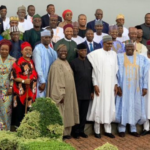
• On May 29, 2023, one of Nigeria’s political godfathers, who has spent a significant amount of time leading the political affairs of Lagos State as senator and governor, took the oath of office as Nigeria’s 16th president. 

    His name is Bola Ahmed Tinubu, and his campaign name is BAT. 

    The “Jagaban” right here 

    Many young Nigerians do not particularly like Tinubu, and many of them find his highly contested victory hard to swallow. 

    Citizens in our WhatsApp community share the same sentiments. Based on their suggestions, Citizen have identified key promises made by Tinubu and pressing issues they need the new president to address within his first 100 days in office as president. 

    This is a dare for the new presidency.

    Let’s dive in:

    Start clearing Nigeria’s ₦‎77 trillion debt 

    At the start of Nigeria’s democracy, Obasanjo inherited $28 billion (₦12.9 trillion) in debt.

    In 2010, Yar’Adua inherited $2.11 billion in debt after Obasanjo secured a write-off of the London and Paris Club debts, with Jonathan inheriting $3.5 billion shortly after.

    In 2015, Buhari inherited $10.32 billion in debt and is now leaving Tinubu with a debt of ₦‎77 trillion.

    How we imagine Tinubu when he sees Nigeria’s account balance 

    Even though settling debt as high as ₦‎77 trillion seems like a daunting task, we advise that he take action towards minimising the country’s debt profile.

    May God ‘epp’ us 

    Revisit Tinubu’s drug trafficking allegations

    As Tinubu’s administration begins to make efforts to build trust with its leadership, the first place to start is by having the new president address his drug trafficking allegations. Not many will forget this; the bombastic side eye will still roll. 

    Despite APC lawyers insisting that the new president was never indicted for drug-related offences, there is still the case of the Illinois government forfeiting $460,000 in two of his bank accounts, as well as $2 million in several of Tinubu’s accounts linked to heroin trafficking.

    Nigerians want Tinubu to come out and plainly confess or vindicate himself on the issue.

    Eliminate multiple FX regime 

    In October 2022, Tinubu promised Nigerians to eliminate multiple foreign exchange rates in the country, as it affects the costs of imports, the competitiveness of exports etc. He also mentioned in his inaugural speech that solving Nigeria’s forex issue would be a priority.

    Hopes are high with his promise in this regard. This is given that the nation’s currency currently stands at N460 to a dollar at the CBN rate for Nigeria’s dollar-to-naira exchange. Black market prices currently revolve around N770 or higher.

    Establish budgetary reform

    In his inaugural speech, Tinubu announced he would establish budgetary reform to stimulate the economy without causing inflation.

    If you don’t know why, let’s bring back the N21.83 trillion budget signed at the beginning of the year as a refresher. This consists of a debt service cost taking over nearly 31% of the budget at N6 trillion, which many financial analysts see as a poor decision.

    Answer the question, “Who gave the order?”

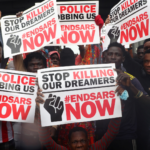
    It’s been three years since the Lekki Toll Gate massacre, and one question that the Buhari administration never answered to was “Who gave the order?”

    This is a question that is highly important to Nigerians for the newly established Tinubu administration to pay attention to and give an answer to especially since he has an interesting relationship with the governor of Lagos State.

    Phase out fuel subsidy 

    Our new president vowed to remove a big and important chunk of expenditure on Nigeria’s budget: the fuel subsidy.

    In March 2023, the Nigerian National Petroleum Company (NNPC) revealed that the nation spends over N400 billion every month on fuel subsidies.

    Tinubu promised to “re-channel the funds into better investment in public infrastructure, education, health care, and jobs that will materially improve the lives of millions.” Citizens are saying, “Shall he remove it?” 

    Improve on power generation

    If you live in Nigeria, you know that having a constant power supply is almost a distant dream. But with Tinubu, not anymore.

    The president has assured Nigerians that they can expect electricity to become more accessible and affordable for businesses and homes. There will be double of Nigeria’s power generation, and transmission and distribution networks will get improved. He also promised to encourage states to develop local power generation sources. Who won’t be happy with stable electricity? 

    Make Nigeria safe again

    According to the Nigeria Security Tracker, no fewer than 63,111 people were killed under the Buhari eight-year regime

    Nigerians experienced cases of terrorism, banditry, and pastoralist vs. farmer clashes. We also recorded several communal crises, cult clashes, and extrajudicial killings. 

    In his inaugural speech, Tinubu promised to answer this “debacle” by improving the security personnel with better training, equipment, pay, and firepower.

    Even though this helps, we also need the president to take stringent legal action against the 96 financiers of this terrorism. This was compiled by the Nigerian Financial Intelligence Unit for the Buhari government and never addressed.

    A year-long supply of cassava, garri and Ewa

    While we’re still significantly interested in agriculture and looking for ways for framers to make more money, let’s not forget our new president’s love for root crops like cassava, garri, ewa, and corn. We can expect to see more of this become part of our diet. 

    Hold Meffy accountable 

    It is strange that someone who created a naira redesign policy that eventually led to a nationwide cash scarcity that significantly affected Nigerians has not been properly checked for citizens to know what’s up.

    In these next 100 days, we need Tinubu to hold the CBN governor by the neck. We also need to make him accountable for his actions in playing with Nigeria’s economic and financial situation. 

    Expect a “money rain”

    There’s hope that Tinubu will run a more liberal economy than Buhari.

    We want Nigerians to begin testifying to this within his 100 days in office. We should be seeing the “Tinubunomics” equation and theories make sense. 

    Don’t dare censor social media 

    Due to the June 2021 events that followed former President Buhari’s ban on Twitter in Nigeria, a community member raised this particular challenge. 

    Even though Tinubu claims not to use social media, please don’t let us experience evil anymore. Please don’t.

    Work with foreign bodies to end conflict 

    In light of the recent crisis in Sudan and Nigerians stuck in the crosshairs, the BAT has assured Nigerians that peace and stability in West Africa and the continent at large will be his watchword. 

    To achieve this, he promises to work with the Economic Community of West African States (ECOWAS) and the African Union (AU). This is in order to end and resolve new conflicts.

    With all this, can we trust our new president to keep his promises? And would we see significant progress within his first 100 days in office? 

    Well, only time will tell.

  • The Nigerian experience is physical, emotional, and sometimes international. No one knows it better than our features on #TheAbroadLife, a series where we detail and explore Nigerian experiences while living abroad.


    To gain nuance on the trending topic of the UK’s restriction on family relocating with international postgraduate students, we interviewed a 25-year-old Nigerian postgraduate student who resides with her husband in Aberdeen, Scotland, the UK’s 2nd largest country.

    She speaks of her motivations for relocating, getting her student visa, registering her husband as her accompanying person, and navigating life with their current visa status. 

    What was your motivation for moving to Scotland? 

    I’d say that the act of “Japa,” or relocating to another country, has been my dream for as long as I can remember.

    I’ve always loved the atmosphere and culture of Caucasians. Also, getting a postgraduate degree has always been on my bucket list, and that was a key priority in my mind. 

    The UK had the best offers for me regarding tuition fees, and my school (the University of Aberdeen) is currently ranked as one of the best schools in the UK. 

    Nigeria was also getting very difficult with issues of fuel scarcity, frequently interrupted power supply, etc., which spurred me to take action on my Japa plans. 

    When did you start the process? 

    I applied for admission in October 2022, shortly after my wedding in June 2022. Towards the beginning of November, I had gotten my entry, and by 2nd week of December, we had our visa.

    By December 31, we had left the country for Scotland. 

    Wow, that was fast! Was anything done to hasten the process?

    No, not really. The significant steps are to get admission from your institution and stack your proof of funds for 28 days. 

    Then they gave us our university’s CAS (Confirmation of Acceptance for Studies). However, every school has its own admissions process. Some schools may need you to send a deposit (maybe £2k – £4k) before they give the CAS. And it’s not something you can do without, as you’d need it for your student visa application. 

    However, my school didn’t request the deposit, so I didn’t pay. I did get a priority visa, though. 

    What’s the difference between a priority visa and a regular one? 

    A priority UK visa takes five working days to process and costs more (£500 or N284,342), while a regular visa takes a maximum of 21 days to be processed, depending on when you apply. 

    Usually, there are peak visa periods, e.g., December, because of students going in January. 

    September and October are usually very busy and take longer processing times. However, if it’s not a peak season like April/May, no one would advise you to get a priority visa because it will likely take less than five working days. 

    Nice! How did your husband apply for his visa? 

    He applied as an [accompagnating person] under me.

    How does that work? 

    When I applied for admission, I informed the school that I’d be bringing my husband in as a matter of courtesy. 

    However, the family issue applies when you’re applying for a visa. When filling out the form online, one of the first questions asked is if you have a spouse or children legally recognised under the law. 

    You fill out the form separately for each person, and since it was just my husband, I filled out only one. You must also ensure that your Proof of Funds covers living expenses for yourself and your family members and your school fees.  

    For a student, there are two types of proof of funds. If you go to school in London, you’d need to show up to £1,334 (or N758,777) and £1,023 (N104,419) if you go outside London. And both are for if you’re coming alone. 

    If you’re coming with a family member, you must show £680 (or N386,706) each. Proof of funds is also needed for the duration of your course and your family member’s monthly living expenses. 

    It will be higher or lower depending on where you live in the UK. For instance, if you live outside London, your proof of funds would be much cheaper than for someone living in London. 

    It’s not complicated at all. 

    Great. How has Scotland been for you in terms of advantages and challenges? 

    There are a lot of advantages here, especially in terms of schooling. When you go to a well-known university with the best learning environment, you tend to want to excel at your studies so that it won’t be in vain. 

    It has been fantastic for my husband and me in terms of everyday life. People just smile at you and greet you when you pass by. Things are not overly expensive at grocery stores. You’re just getting what you paid for. One is not worried about unstable power or fuel scarcity. It’s been great for us so far. 

    For challenges, what I can think of so far is the fact that we’ve not had a lot of time to save pounds as new immigrants. It’s easy for us to believe we’ve spent much money on certain things. But we’ve realised that older families, even Nigerians, have lots of money saved up in pounds. We are getting there anyway. 

    Is there anything else you’re yet to figure out as a new immigrant? 

    Well, maybe just driving. I have to learn to drive on the other side of the road. Plus, unlike Nigeria, they’re very law-abiding regarding road safety. There are also cameras at every stop, so whatever you do, they’re watching you. 

    Are there any rules and regulations that restrict your spouse? 

    There are just 3: no access to public funds, one can’t be a sportsman (I have any clue why), and you can’t practise medicine if you’re still in training except if you have a degree from a UK institution. 

    So in terms of public funds, they can’t access welfare or unemployment funds. 

    In cases of an accident or injury, there is a hospital bill called the Immigration Health Surcharge (IHS). This is a UK health charge that non–Europe Economic Area (or EEA) immigrants must pay as part of the immigrant application process. It was paid for while you paid for your visa fee. 

    The IHS fee fully covers hospital bills. 

    Based on your understanding, are there any downsides to being an accompanying person in the UK?

    Honestly, my husband hasn’t had any so far. Once you’re here, you’re here. People even respect that you had to spend a lot of money to leave your country. 

    We’ve told people of our migration story in church, and they’re always amazed and like, “Wow, you guys must have been doing very well in your country”, and so on, for you to afford what you pay for. 

    Even if one is a driver, they treat the person with the same respect as a mayor. The people here are hot and friendly. 

    Are there any obligations for families that come over with post-grads?

    Yes. Firstly, they have to pay tax. As far as they’re working, they have to be unlike students. Students are limited to 20 hours per week, so it doesn’t interfere with studies, but there’s no time limit for families. 

    Would you say that tax laws are lenient for families? 

    Well, yes. So there are two types of tax—the income tax and the council tax. Income tax is a percentage of the salary, while council tax must be paid whether you have a job. 

    You’d usually pay council tax for utilities such as water, waste disposal, etc. 

    Speaking from our experience, my husband has been lucky because he found a job in tech shortly before we relocated. But even if he didn’t, they don’t impose council tax returns immediately. We’ve been in the UK for five months, and only last month did they start giving us council tax. Some cities process these things slower or faster than others. 

    Would you say that jobs are readily accessible for post-grads and their families? 

    It depends on the location. It is easier to find jobs in places like Edinburgh than in Aberdeen. It’s just like comparing the job opportunities volume between Lagos and Abeokuta. 

    Everyone can get jobs; depending on location and your skill set, it may take some time. 

    What do you think of the current visa ban for post-graduate student families? 

    I’ve heard that and don’t think it’s that way. Over time, the UK has habitually closed its borders for a while and then opened them back. Their visa processing is faster than in places like the US or Canada. 

    The UK’s land mass is comparatively smaller, so they must be careful. But there will always be a need for international students. From what I’ve been hearing, most universities in the UK cannot run without international students because that’s where the bulk of the money comes from. 

    If they decide to make this ban permanent, it will affect universities because it will discourage international students from applying to their universities. And that would mean a lack of money for them. 

    This video from Scottish UK Parliament member Carol Monoghan proves this point. I can understand why it’s happening, though, because you can see Nigerian postgraduate students with courses of 1 year bringing 5-6 family members. It makes one raise eyebrows. 

    All the same, even though I understand their motivations because of the population explosion, I am not in support of this ban. I’ve been on the other side of the fence regarding making relocation plans, and I know how frustrating it can be to change those plans and re-strategize from scratch. Plus, who wouldn’t like to have their loved ones close to them? It’s not easy. 

    Have you heard from postgraduate aspirants back home? How do they feel? 

    Well, everywhere is hot in that regard. I know some of them; the whole situation has made them livid. It has forced people to re-strategize all over again. I am incredibly grateful to God that my husband and I made it out when we did; if not…

    If not, indeed. Have you watched the Tiamiyu video? What are your opinions on it? 

    One thing we need to know about the UK is that they’re very brilliant. They know that people are taking advantage of the study route, but they wouldn’t want to say that for fear of being racist. He just said what he wasn’t supposed to say. 

    But do you think his actions would affect students already in the UK? 

    I don’t think so. I think they already know that this is what Nigerians are doing. The decision was already made before they posted the guy’s interview. 

    But from the Scottish MP’s video, it sounds like not all parties are still on board, and it’s still a matter of debate. Let’s watch and see. 

    How can your husband then upgrade their visa in the future? 

    So it depends, as there are several routes. I could either apply for a graduate visa after I graduate for two years, or any of us can get a sponsored job. These processes don’t take time at all. 

    Do you and your husband ever see yourselves relocating back to Nigeria? 

    Honestly, no. Maybe I can revisit Nigeria for “Detty December” or other special occasions, but I don’t want to limit myself to just the UK.

    My husband and I would love to explore other countries soon.

  • If you are a Benson Idahosa University (BIU) student in Edo State, Nigeria, you know about the institution’s tense and chaotic atmosphere. Angry protests have erupted, destroying property while mournful students hold candlelight processions. Other students are fleeing the university in droves and returning home until the tension calms. But what is the root cause of this chaos?

    To fully understand the cause of the turmoil, you have to know what exactly happened that led to the tragic death of Bruno Chigozie Ezeonye, a 21-year-old final-year student from the faculty of science at the university. His case has shed light on a concerning pattern of poor healthcare systems in many Nigerian tertiary institutions and pervasive medical negligence.  

    Bruno Chigozie and a tale of medical negligence 

    On May 22, 2023, final-year BIU students started a week-long series of events to celebrate their last days in school. The week, popularly tagged “final year week,” included a football match in which Bruno participated at the school’s Legacy Campus. 

    Citizen spoke to an eyewitness and friend, John*, a final-year student at the faculty of science, who shared his account of the incident that led to Bruno’s death.

    The events that led to Bruno’s death

    With a subdued voice and sad spirit, * John told us that “Bruno wasn’t feeling too well and was complaining that he was weak, but he still participated in the football match. During the match, he slumped and started convulsing. Doctors and other medical personnel arrived late to the football pitch. They tried to give him first aid, but to no avail. To make matters worse, the oxygen tank was empty, and the school could not use the ambulance due to a lack of fuel. 

    A private car had to transport Bruno to a nearby hospital (Faith Mediplex). When they got to the school gate, the security men on duty didn’t allow them to leave the school without a permit, and they had to call the Head of Life Campus before they could leave. Before they could get to Faith Mediplex, Bruno died. He was a very jovial and popular guy, and I can’t believe he is no longer with us”

    Unfortunately, Bruno isn’t the first to die due to medical negligence at BIU. Two sources say the school’s healthcare facility has always been at an all-time low, with doctors and nurses “doing nothing” but “watch TV and chill in the clinic.”

    They also alleged that a similar incident occurred in 2018, resulting in the unfortunate death of a student due to delayed medical attention. According to their account, students reacted by setting fire to the school’s clinic in response to this incident.

    What are the authorities doing about it?

    The day after, the school’s registrar circulated a memo announcing the immediate closure of the Legacy Campus. The management determined that this closure was necessary to look into Bruno’s death and repair the damages the protest caused.

    The school made a statement on Bruno’s death. This was posted on their social media page. However, it quickly became controversial due to the claim that he was “promptly attended to by the medical doctor on duty.”

    It was quickly taken down, and a new post was made, but it was noticed that the same claim was still made.

    Unfortunately, there are more victims like Bruno

    This incident might have happened at a private university, but Bruno isn’t the first victim of medical negligence and a lack of accountability across Nigeria’s higher institutions. Here are three victims of similar circumstances:

    Mayowa Alaran

    In 2015, Mayowa, a student at the University of Ibadan, was in a tightly packed common room with 100 or more students when he suddenly fainted. People called the Jaja clinic emergency hotline, which had promised to send an ambulance that never came. 

    His friend, Egbe, had to rush him to the clinic on a bike, or okada. He later died after nurses tried to resuscitate him.

    Austin Okafor

    On October 2, 2018, Austin, a University of Benin (UNIBEN) student, went to the health centre for medical attention. This was after discovering that he was experiencing hematuria, which is the presence of blood in the urine. He was referred to the university’s teaching hospital, and there was an attempt to get to the hospital via ambulance.

    Unfortunately, the ambulance couldn’t go past the school gate without clearance. It took nearly 35 minutes for them to get one. When they arrived at the teaching hospital, Austin was left alone at the Accident and Emergency Ward for another 15 minutes without any doctor attending. He eventually died.

    Precious Mhenuteur 

    On January 28, 2023, a 22-year-old University of Calabar (UNICAL) student, Precious Mheneuter, fell ill in the hostel and was rushed to the school’s medical centre. She was denied medical care simply because she had no medical card. It was impossible to get a card. This was because the incident happened at 5 a.m. and the records office hadn’t opened yet.

    She died two hours later at 7 a.m. Precious was later taken to the mortuary at 8 a.m. without the school informing her parents. 

    What actions must be taken to stop the trend of medical negligence?

    From all indications, the authorities of higher institutions are not paying close attention to the medical needs of their students.

    We are calling out all school authorities to ensure all medical facilities in schools are up and running. They should also discipline erring medical practitioners and remove bureaucratic systems in cases of emergency.

    If you are aware of someone who has suffered from medical negligence, you may sue them and even receive compensation from the High Courts and the Medical and Dental Council of Nigeria. Find out how to do it here.

  • “When the people stand up, imperialism trembles.”

                            — Thomas Sankara  

    This story of British tyranny and resistance began when the British Empire declared Northern Nigeria a protectorate in 1900. 

    Northern Nigeria Protectorate (1900-1914) [Dead Country Stamps and Banknotes]

    In reality, there was no “urgent” need to conquer the territory. Northern Nigeria at the time held no economic resources for them, and the local traditional rulers didn’t even like the British due to their previous activities of tyranny in other regions. 

    To understand this, read: How King Koko Created the White Man’s Graveyard in Bayelsa 

    To justify their actions to the public, they decided to go with the narrative of “keeping the peace” in the Sokoto Caliphate due to their corrupt, oppressive rule and incessant slave raiding. 

    View of Kano City, Nigeria, capital of the Sokoto Caliphate in 1851. [Heinrich Barth]

    But really, they had their own fears. They knew that their European rivals like France and Italy could easily take over the territory if they slacked on their authority, and the local leaders may never give them the respect they felt they deserved. 

    Thus, they felt it expedient to conquer the North and conquered it fast. 

    For this task, they chose one man. This was the man behind the amalgamation of Nigeria and the nation’s “founding father”, Lord Frederick Dealtry Lugard. 

    Lord Frederick Lugard, 1st baron [Elliott & Fry]

    Lugard’s origin story 

    To understand the story of Lord Lugard, we need to understand his origins. 

    He came from a polygamous family, with his mom being the third wife to his father, a chaplain in the East India Company. 

    Lugard was a British Army soldier who later received a posting to India, where he began an illicit relationship with an unnamed married woman and later got jilted by her. The heartbreak was so intense that he decided to go to Africa to escape unhappy memories under the British East Africa Company. This was from 1889–1892. 

    Before he came to Nigeria, he was already knee-deep in controversy concerning his time in Uganda. In his efforts to capture the nation for the British Crown, he was accused of playing a key role in the massacre of natives and using excessive force. 

    Uganda under colonial rule in government reports, 1903-1961 [Microform]

    Arrival into Nigeria and military promotion 

    When Lugard arrived in Nigeria in 1894, he nearly died from a poisonous arrow. 

    The incident happened as he returned from his negotiation duties with the local chiefs in Borgu (a region in present-day Niger State), under the Royal Niger Company. He only survived on the herbal potions that the native doctors in the area administered to him. 

    Three years later, in 1897, he was appointed commandant of the newly formed West African Frontier Force and, in 1900, High Commissioner for Northern Nigeria. 

    And as a high commissioner, he needed to show the natives that a new force in town needed to be obeyed. 

    Lugard as colonial administrator, Northern Nigeria [Britannica]

    The plot truly thickens here, with one line of correspondence that would change the course of history for Nigeria’s northern territory. 

    The spark of defiance that led to a full-blown war 

    After the official declaration of the North’s transformation as a protectorate in 1900, Lugard needed to inform the local leaders officially of Britain’s presence in the area. 

    To achieve this, he sent a Hausa translation of the proclamation to the Sarkin Musulmi, or “leader of all Muslims”, Abdulrahman. He had been in power for nine years before the arrival of the British. 

    The latter didn’t respond, but the messenger reports that he turned to his court and said, “No letters ever brought fear like this one. I will read no more letters from these white men.”

    The refusal to respond made Lugard extremely angry, as it was interpreted as an insult to him and the King of Britain. 

    With this in mind and to also teach Abdulrahman, Lugard made his way to the ancient cities of Bida and Kontogora to claim them under British command — without the Sarkin’s permission. 

    Want to know more about the tyranny and fall of the Bida Empire under the British? Then check out this weekly time machine again at the same time next week. 

    This article draws inspiration from Max Silloun’s “What Britain Did to Nigeria”

  • The phrase “good things don’t last forever” seems to be the new reality for Nigerians aspiring to relocate to the United Kingdom (UK). 

    Once a popular travel destination for the Nigerian “japa” dream, it is slowly dropping off the ‘wannabe list’. 

    The UK is set to add new restrictions to curb its migrant population boom. This week, the monarchy-led country plans to disclose more details of a restriction affecting foreign postgraduates; they won’t be able to bring their families to the UK.

    There are claims that this targeted Africans, and there are many reasons to believe so. But who exactly are the affected parties, and what would the impact of this restriction be for aspiring international students? 

    The affected parties 

    These include mostly students aspiring for a Master’s degree and some other postgraduate degrees. However, highly skilled PhD students with 3-5 years courses will remain unscathed by the ban.

    What brought about this upcoming policy change? To understand this, we need to understand a few things that contributed to the need for the UK to have plans for travel restrictions.

    You can also read: These Countries Are Red Flags for Your Japa Plans

    An explosion in migrant-dependent population

    In September 2022, official immigration data released by the British government revealed a surge in the number of foreign students in the UK. Students brought 135,788 family members—that’s nine times more than in 2019. Nigerian students—59,053 alone—brought over 60,923 relatives.

    UK government when they saw the numbers 

    As a result, the UK Home Secretary, Suella Braverman, has considered clamping down on international students coming to the UK due to the massive “structural pressures” that it imposes. 

    The decision also follows reports that net migration into the UK has hit 1 million. This has made the Tory MPs ‘apply pressure’ on Prime Minister Rishi Sunak “to get a  grip on the rocketing numbers”.

    UK’s 2019 international education strategy 

    In case you didn’t know, the UK wasn’t always a popular destination for Nigerian students. Between 2012 and 2017, the country experienced a 27% drop in Nigerian student admissions, and they saw the need to up their game.

    How we imagine the UK government plotting a way out of their predicament

    Hence, the Department for Education and the Department for International Trade created the International Education Strategy in March 2019. 

    In this strategy, Nigeria was part of five high-priority countries (India, Indonesia, Saudi Arabia, and Vietnam) that the UK chose to achieve two main goals. This was to increase education exports by £35 billion per year and increase the number of international higher education students studying in the UK to 600,000 annually.

    This plan worked on the Nigerian front, as the number of Nigerians who obtained UK student visas experienced a 39% increase (from 13,020 in 2019 to 21,305 in 2020). 

    But this wasn’t enough for the UK government. They needed to sweeten the deal, and in October 2020, the British Home Office introduced the student visa. It was established as an improvement to the former mode of student migration, called Tier 4. Among many new guidelines, it created a unique, golden opportunity for Nigerian students—to leave the country with their families.

    But even though this served as a blessing in disguise for international students, we can all see what the UK government is about to do. Problem.

    But why is the UK such a popular choice for Nigerian students?

    For starters, it is home to one of the best immigration policies in the world for migrants, according to U.S. News & World Report. It also gives Nigerians access to Ivy League universities (e.g., Oxford and Harvard) and diverse job opportunities after graduation.

    Due to these factors, the average Nigerian student can do anything to fund their access to UK education, from scholarships to even loans from family and friends.

    Is the ban valid or not?

    According to opinions on Twitter, most agree that there would be a drastic reduction in not just the families who make it abroad but in foreign students themselves.

    However, this could also mean the UK government ‘shooting themselves in the foot’.

    A 2021 report by SBM Intelligence revealed that Nigerian students and their families contributed as much as £1.9 billion to the economy in the 2020/2021 session. And really, would they want to miss out on that bag?

    Let’s wait and see. 

  • The Nigerian experience is physical, emotional, and sometimes international. No one knows it better than our features on #TheAbroadLife, a series where we detail and explore Nigerian experiences while living abroad.


    Nigeria’s economy may be hard, but you don’t need to abandon your travel dreams. In this week’s Abroad Life, we gave you the cheat code for five cheap countries you can visit on a budget.

    The life of a Nigerian ‘9-5er’ is not an easy one. From hustling in traffic to meeting up with crazy deliverables and KPIs, it could be a stressful life.

    Hence the need to sometimes spoil yourself with some elements of a “soft life”. And how else can you do that but by travelling? 

    For today’s Abroad Life, we have curated a list of affordable countries to consider for vacations, so you don’t have to.

    But first, you need to know the following:

    Factors Considered in Choosing Travel Destinations 

    When analysing the cheapest countries to travel to from Nigeria, many analogies must be considered.

    1. The country concerned’s standard of living.

    2. Ease of transportation to and within the country.

    3. Possibility or opportunity to get a job

    4. Ease of setting up a business as a startup.

    5. Easiest way of getting a visa to the country, better still, if it is a visa-free country

    Now, let’s dive into the list:

    Benin Republic 

    Grand Mosquee de Porto Novo, Benin Republic [Guardian Newspapers]

    A cheat code to getting cheap travel destinations is to look out for any of Nigeria’s neighbours, especially the Benin Republic. If you use Lagos as your taking-off point, getting to most of the Benin Republic’s towns is easy and cheap. It has some downsides, however, and you can learn more about this through the lens of this Nigerian living in Benin here

    Because you’re living in an Economic Community of West African States (ECOWAS) member country, you can enter and stay for 90 days visa-free. Afterwards, you can apply for a residence permit if you continue your stay. However, if you’re smart enough, just move across the border and get an entry stamp, and you will have another 90 days visa-free.

    Morocco

    The Le Jardin Secret, a botanical garden in Marrakech, Morocco

    According to the World Bank, Morocco’s standard of living is comparatively European. The cost of living here is much lower than in almost all European countries. Morocco is one of the cheapest countries with good facilities in the world.

    By African standards, Morocco is not a poor country, and it’s on record that it enjoys a stable economy and government. Morocco is one of the few northern African countries you can travel to by road from Nigeria with little-known fears.

    The beautiful aspect of travelling to Morocco is that getting an entry visa as a Nigerian is not difficult. When you enter and intend to stay, you have the freedom to extend your stay by applying for a residence permit.

    Rwanda

    King’s Palace Museum, Rwanda

    If you love wildlife, you’d love Rwanda. It is popular for its volcanoes, waterfalls, and rainforests, home to wildlife animals such as mountain gorillas and hippos. 

    An all-expense paid trip from Nigeria to Rwanda costs nothing less than N600k online. 

    Turkey

    Mount Nemrut, Turkeyo

    Turkey is gradually becoming a preferred destination for many Nigerians, and if you’re looking for the cheapest country to travel from Nigeria, Turkey, a gateway country to Europe, Asia, and the Middle East, is a place to go.

    The country is immigration friendly, with many budget flight providers you can approach to do it for you, depending on your needs.

    In most Turkish cities, goods and consumable items are relatively cheap and readily available.

  • The Nigerian experience is physical, emotional, and sometimes international. No one knows it better than our features on #TheAbroadLife, a series where we detail and explore Nigerian experiences while living abroad.


    The subject of today’s Abroad Life spent five years working at Microsoft as a software engineer before leaving for Texas in America. He tells us his motivations for leaving the country, his experiences, and how he built Vesti, a financial service app that has helped more than 120,000 immigrants.

    What motivated you to move to the United States?

    I considered moving to the US in 2016 but finally moved in 2019. This was because of my previous exposure at Microsoft, where I worked for about five years in Nigeria. This gave me an idea of what the American economy looked like and the kind of value that I could provide. And for me, it was a relatively easy decision because there were things I wanted to achieve. 

    Nigeria was making my opportunities limited. My earning potential was lower than I wanted it to be. I was working in an advisory role where my colleagues in the US were getting paid like 20 times more. 

    I also wanted to give my kids a head start by giving them passports to a country like America where they can get the best education and a bright future. 

    Overall, I wanted to multiply my earning power and achieve what I wanted globally, and America was the best place to do it.  

    Nice! But why did it take four years before you made the move?

    This was because I was unaware as of 2016 that I was qualified for the work permit, which is part of why I do what I do today. I had been qualified for the permit. They told me I had been qualified eight years prior, but I just didn’t know how to do it. 

    How did that happen? 

    When I was qualified, I was still two or three years into my job at Microsoft Nigeria, so I wasn’t planning to move permanently. But the moment I learned about the qualification in 2018, it would take me only four months to complete the work permit.

    The four months were even a result of personal delays. It took two weeks for the US government to approve my work permit. 

    That’s fast! Can you give us a step-by-step process of your migration?

    One needs to look for a first-world country with your skill set. I was a software engineer at Microsoft, so I knew relocating to the US wouldn’t be difficult. 

    The first thing to do is to narrow down your search and find out their popular job vacancies so that you can use your skill set to fill it up. Also, find out what visa type you’re qualified for. 

    In my case, it was the O-1 visa, and all I needed to do was to find an attorney who could file the petition for me, gather the documents submitted, and the petition got approved. 

    I then appeared at the embassy, the visa was granted within a couple of days, and I could move in with their family. 

    To check your eligibility, visit websites like WeVesti and check under visa. You’ll then participate in an eligibility test ranking from 1-7. If you scored high or above three, they are qualified. You have a call with the attorney. Then you pay a deposit and start working on a petition. You can move to the United States with your family within two or three months. It’s that basic. But I didn’t know back then. 

    Why did you decide to live in Texas? 

    Previously, I had gone to the East Coast, New York. DC was part of the Cold States of the US that I moved to when I first visited in 2015. I knew that the cold weather was not for me. So I wanted to stay in a place that has better weather. Texas allows you to feel tropical, like you’re in Africa. Also, there is a good number of Nigerians here. It’s a diverse area. Diverse with Indians with, Nigerians, Pakistans, and Mexicans. 

    I also have a great network of business partners, friends and mentors who moved to Texas long before I did and have been a source of great support.  

    What were the culture shocks you had in America?

    There were several culture shocks, but there’s the fact that you can’t just bring your money and pay for stuff. Everything has a process. For instance, you can’t just rent a house in the US if you have the money. You have to apply for the house and be selected; then, they run background checks on you before you pay.

    I also learnt that “takeaways” in Nigerian or UK restaurants are known in America as “to-go” boxes. 

    Did the rest of your family have culture shocks?

    My spouse experienced a lot of culture shocks. She had to go to school to be a cosmetologist to get a license. This was a job she was doing without a license in Nigeria. That’s the thing about America; you need a license for everything here.

    Regarding acclimatisation, she was also very lonely at first because our friends are not based here. Getting domestic help here is also extremely expensive; only wealthy people can afford it. Hence, she had to take care of two little girls alone. It was hard at first.

    Now she has older friends who have families here she can connect with. For her business, she started attending events, getting referrals and flyers to public places. Even though it’s been five years since we moved, it’s still a journey for us. We are still learning new things every day about America. 

    What are the advantages of you living in America? 

    Yeah, I’ll talk about the advantages. It helps me to clearly understand what it means to work in an enabling environment. So from an economics standpoint, my finances changed. I started earning what my global peers earned. The value of a software engineer in the US is twenty times more than that of a Nigerian software engineer. 

    The economy here changes your perspective. It is where you feel like you can become anything you want to be. Of course, there’s power, internet access, and the ability to finance things right and buy them outright. You don’t have to wait to be super rich to drive a brand-new car or to be able to live in a good house. You can build your credit; you have a lot of finance and low-interest financing. You get to send your kids to good schools at affordable prices. Also, getting a travel visa from here to other countries is so much easier than in Nigeria.

    Any disadvantages? 

    So in terms of disadvantages, the taxes here are much more enforced than in a country like Nigeria.

    However, it also serves as a good thing because paying taxes here means the money will be deployed towards public works and the public good. So, we’re happy to be paying those taxes. And US taxes isn’t as stifling as the UK of taxes. 

    Can you go more into how taxes are paid?

    It depends on what kind of work you do. You would be obliged to pay between 20-25% of your income now, and your income taxes are important. We pay Social Security taxes, which you contribute to the Social Security pool, which is eventually used when you are unemployed or for subsidising healthcare for the common good.

    Usually, if you are working and employed, you’d be paid W2, which is anything between 25-30% of your income as taxes. If I am also a business owner, there are ways for you to reduce your taxes based on your experiences and donate to non-profits. 

    Opening bank accounts here is not easy as well. Most banks here are not immigrant-friendly, and it took a while before we could acquire one. The mistakes I made with this were part of why I made Vesti, to make immigration processes smoother.

    Nice. So what was your motivation for starting a bank for immigrants?

    When I moved to the US, I moved as an entrepreneur. I wanted to come and build a talent marketplace for software engineers to be able to work. But remote work is one thing; being in person is another. 

    During the pandemic, we started helping many folks get advice on getting school admission, getting access to jobs abroad and moving here, moving with a special talent visa, etc. It started as a Telegram group for advising people on immigration and admissions. Soon, people started asking to pay for admission, visa, etc. From there, we saw it as a huge opportunity to build migration and financial services. We made the first version of our app in 2021.

    Nice! What have the successes been since then?

    We had 7,000 app downloads within the first couple of weeks, and we saw that is a huge opportunity here to help people transition. We then started building operating systems, both legal and financial, for the next one billion immigrants. You know, it’s been incredible. Last 12 months, we have processed nearly 15 million dollars on the platform. One hundred twenty thousand customers using the platform, and we could well get to like 500k immigrants. 

    They’re 53 million immigrants in the US. It’s a very, very immigrant-welcoming country. The UK is welcoming a lot of immigrants as well. So is Canada, mostly coming from Africa, Pakistan, India, and other countries. So this could be a huge opportunity for us to serve hundreds of millions of people with information, community and ultimately, a smooth transition to a new life in a new country. 

    How could you register a business like Vesti in America as an immigrant?

     It’s easy to register a business. Register your incorporation online, complete documents, and open a bank account.

    Funding the account took work, as we first had to use our money and borrow from family and friends. As time went on, we got some venture capital companies. With the help of referrals that spoke of us highly, we got our first funding of $500,000. We’ve raised a million dollars, which will help us grow more than ever. 

    Would you ever want to retire to Nigeria or America? 

    Nigeria. I believe seriously in the potential of Nigeria. I still have a lot of investment in Nigeria. My eventual work is to impact the education sector. So eventually, yes, I will move back home.

  • Every Nigerian is familiar with the term “go slow”, whether you live in go-slow hubs like Lagos or places with lesser go-slows.

    For Nigerians today, go-slow means traffic congestion.

    But have you ever wondered how that name come to be? We do, and here is your answer to this week’s episode of Citizen History.

    Traffic congestion [Guardian Nigeria]

    It’s a sad tale of maltreatment by the British government, fierce resistance, and a massacre.

    The Story of the Iva Valley Massacre 

    Enugu State in eastern Nigeria is known as the Coal City because of the massive coal deposit in the capital Enugu City.

    Coal, often used as fuel for locomotive engines, was valuable in pre-colonial Nigeria due to Nigeria Railway Corporation’s high coal consumption. 

    In 1915, the British colonial government opened the Udi Mine after discovering coal in Ngwo at the top of Milliken Hill. However, it closed two years later and was replaced with the Iva Valley mines in 1917. 

    Poor welfare of workers

    In the 1940s, there was a persistent issue of poor workers’ welfare for people working with the colonial government in Nigeria. A series of protests occurred, leading to a nationwide strike in 1945.

    The 1945 general strike in Nigeria [Alamy]

    With that, the importance of trade associations to improve working conditions, pay etc., grew with the formation of the Trade Union Congress of Nigeria in 1942. Workers knew they could bring about change if they dared to stand up together.

    However, the trade unions established around that time had internal beef, allowing their Opp, the colonial government, to be one step ahead.

    Excerpt from “THE ENUGU COLLIERY MASSACRE IN RETROSPECT: AN EPISODE IN BRITISH ADMINISTRATION OF NIGERIA” by S. O. Jaja

    By 1949, Enugu was already a cosmopolitan town with about 25,000 inhabitants and approximately 8,000 employed coal miners.

    But the growing production did not reflect the life of an average miner, who worked underground six days a week with poor oxygen. The pay was also minimal, as they experienced pay cuts and inflation due to the economic recession led by World War 2. 

    The colonial government also weaponised tribalism by making indigenes of the Ngwo community where the mine was located work as coal miners while non-indigenes worked above ground and did more clerical duties.

    Taking a leaf from the growth of trade unions in Nigeria, two unions came together to form the Colliery Workers Union (CWU), and their leader was the charismatic Isaiah Okwudili Ojiyi, a former schoolteacher.

    On November 1, 1949, the CWU demanded better pay for all workers, improved working conditions, upgrading the mine hewers to artisans, and the payment of housing and travelling allowances. Naturally, the capitalist colonial government rejected their demands and doubled down on intimidation, assault, and promoting infighting.

    The Go Slow strike 

    The workers at Iva Valley [Pulse Nigeria]

    In 1941, the colonial government created Nigeria General Defense Regulations (NGDR), which banned workers from going on strike.

    Therefore, the 1949 protesters had to be smart; otherwise, the miners would be fired altogether.

    So they devised an industrial action called the “Go-Slow”. 

    The workers would not lay down tools but work very slowly, affecting production. A handful of coal was being produced daily instead of wagon loads. But as they were “working”, they couldn’t be punished by the angry government.

    Reluctantly, the colonial government started a negotiation and reached an agreement but also breached it when it sacked more than 200 miners between November 10 and 12, 1949. 

    The Go-slow method escalated to a stay-in strike in which the workers came to the mine but did no work. This also prevented the colliery managers from simply replacing the protesting miners this time.

    It was then decided that the police would remove the protesting miners. To justify this, they claimed that a set of explosives used for work in the mine had gone missing.

    The Police were there to remove the bomb.

    The Massacre 

    On November 18, 1949, 50 armed riot police officers arrived at Iva Valley led by a Senior Superintendent of Police, F.S Philips.

    Superintendent F.S Phillips [BBC/Getty Images]

    The miners had tied strips of red cloth to their helmets as a mark of protest and as was their custom. They faced the armed police and began to dance and chant to boost morale.

    Philips decided that the miners looked menacing, “indulging in a war dance,” and started shooting.

    Twenty-one miners were killed, and many of them were shot in the back.

    The Aftermath

    The tragedy spread across places like Aba, Port Harcourt, Onitsha and even London, resulting in mass protests. 

    Nigerians at a rally in Trafalgar Square over the Iva Valley Massacre [Asiri Magazine]

    Eighteen prominent Nigerians created the National Emergency Committee (NEC) to coordinate a national response to this atrocity against humanity.

    The Iva Valley protest and massacre contributed to nationalist movements in Nigeria. It also helped in restructuring the trade unions, and the creation of a Nigeria Colliery Commission handled by Nigerians.

    The method of the go-slow strike was also seen as revolutionary and was exported to the UK as a form of industrial strike.

    Think about this the next time you find yourself in a “go slow”.

  • The Nigerian experience is physical, emotional, and sometimes international. No one knows it better than our features on #TheAbroadLife, a series where we detail and explore Nigerian experiences while living abroad.


    For Islamic student Umar, April 15, 2023, was one of the worst days of his life. He was a student in Khartoum, Sudan, when the Sudan conflict started. He tells us of life before Sudan, the day of the conflict, being stuck 300km away in Arbatah with other Nigerians, and how he hates hearing nothing but bomb blasts everywhere.

    Editorial Note: The interview was granted on May 1, 2023, and new events have overcome some of the information in the story.

    What was life like before schooling in Sudan?

    It was a very normal one. I’m from Katsina state, and my family is a close-knit one. I had schooled all my life in Katsina until it was time for my higher degree at the International University of Africa (IUA) in Khartoum, Sudan, to study Islamic Education. IUA was highly recommended as a good school for the course by a family friend, and Sudan was described as a country with a peaceful environment.

    But has it been peaceful?

    Up until now, yes. At the start of the Ramadan period in March, I won’t have believed anyone that would have said there would be war in Sudan. Classes were still ongoing. I was preparing for semester exams. Festivities were still being held around the streets of Khartoum. Nobody expected this. Schooling in Sudan has been great, and the teachers are excellent.

    What was your experience like on the first day of the attack?

    So the attacks started during the Ramadan period. I was in my dorm room and had taken my iftar to break my fast around 6:30 p.m. My eyes were drowsy and so, I took a nap. I then woke up at 8:30 p.m. to gunshots and bomb explosions. I then opened my window and noticed that a large crowd of people were gathered outside to see what was going on. Many people were scared and shocked (and still are) because they had never experienced conflict before.

    Smoke is seen in Khartoum, April 22. The fighting between the Sudanese Army and Rapid Support Forces in the capital resumed after an internationally brokered cease-fire failed. [Marwan Ali/AP]

    How have you been surviving the attacks?

    Sadly, nothing has improved, despite the 16th day of conflict and many promises of a “ceasefire”. I have been unable to sleep properly for 16 days because of the constant sounds of gunshots and bombs. There is no peace of mind for me to even think of sleeping.

    For daily amenities, I was managing. Back at IUA, food had started to run out, and there was hardly any water. Sometimes I had to go some days without bathing. There is hardly any electricity to charge one’s appliances. The only hope I had was with the Nigerian government to evacuate us.

    Did you witness casualties?

    No, I didn’t—just a shortage of essential amenities.

    What happened on the day of evacuation?

    On April 23, the Nigerian government came with only ten buses out of the 50 they promised. It was agreed that 13 buses would be used to transport the first batch of students, but they are still stuck at the Aswani border until now.

    No other bus came here until April 30, when the evacuation team came in with 26 buses. They said we were to go to Egypt, but we’ve not been there because the first batch is still stuck. They changed plans and said we should go to Port Sudan. We entered the bus using our states of origin and left Khartoum at midnight. We’ve stopped at Artrabah, 300km from Khartoum and a 7-hour journey. It remains 7 hours until we reach Port Sudan.

    However, we’ve been stuck at Arbatah for the past eight hours.

    Nigerians in Sudan waiting to be evacuated [El-Tayeb Siddiq/Reuters]

    Why?

    This is because the driver complained that the Nigerian Diaspora Commission (NIDCOM) has refused to pay the driver the fares needed. There has yet to be a response from the Nigerian Embassy or government officials. I hope they will come through soon.

    Do your family know where you are?

    I’ve decided not to tell my parents. I told them on April 30 that we were coming to Egypt. Telling them now that I am stuck in Arbatah may probably break their heart. I just want the Federal Government to handle this properly.

    Do you feel safe where you are?

    Yes, I do. We are several kilometres away from the conflict zone, and the people in Arbatah have been warm and friendly so far. If not for social media, I’m not sure they’d even be aware of the conflict in Sudan.

    Are you getting access to basic amenities?

    Yes, I am. There is food and water, and we use the USB cords inside the buses to charge devices for electricity. The only downside to me on this is the high prices of things here. You can purchase 1 bottle of water for almost 500 Sudanese pounds (₦400). There is also the toilet, which is always very dirty and makes me afraid of getting severe toilet infections. But what can I do? No one cares about the state of a toilet in the middle of a war. 

    Asides that, we’re all good.

    What has traumatised you the most about this experience?

    The jet fighters keep flying about, and the gunshots and bomb blasts. I have started hearing them everywhere now without wanting to. They don’t allow me to sleep.

    So sorry to hear this. What would your next plans be when you land in Nigeria?

    I will go and see my family first and celebrate with them while thanking Allah for bringing me safely home. I’d then discuss schools I can attend in Nigeria with my parents. Sudan was a lovely place, but with recent happenings, I’ve come to accept that there is no place like home. And then, hopefully, I will hear the bomb blasts no more. I will lay on my bed and finally get some sleep.

    Editorial note: The Nigerians in Diaspora Commission (NIDCOM), on May 3, announced the successful evacuation of the first batch of 376 evacuees. More people are expected to be evacuated over the next week.

  • You may notice something odd when visiting the Twon Brass Community in Bayelsa State, around the present-day Niger Delta region in Nigeria.

    An aerial view of the Twon Brass Community in Bayelsa, Nigeria [Guardian Nigeria]

    There is a piece of land called “Whiteman’s Graveyard” in Ada Ama area of the region. It is a cemetery dedicated to the graves of British Soldiers who died in the Akassa Assault of 1885.

    “The White Man’s Graveyard” [Nairaland Forum]

    Today’s story will explain the history behind the ‘white graves’. 

    It is a story of the trickery of a British mercantile company and the revenge of a local king. 

    This is the story of Frederick William Koko Mingi VIII (aka “Koko”) and his fight against the defunct Royal Niger Company (RNC). This was the Akassa Assault of 1895 or the Brass Oil War.

    We must know the Royal Niger Company and its origins to understand this story. 

    The Royal Niger Company (RNC)

    The flag of the Royal Niger Company [Wikipedia]

    Known as the “African Steamship Company” in 1832 and later the West African Company, it was founded by British explorer Richard Lander and 49 others as a trading post. The company’s trading post was located at the confluence of the rivers Benue and Niger in present-day North Central Nigeria. 

    A flyer for the African Steamship Company [Wikimedia Commons]

    Richard Lander, the British Explorer [Cornwall Guide]

    A trading post is typically a store or small settlement in a remote place where trading takes place. 

    Their first expedition was unsuccessful, as 40 out of 49 members died of fever or wounds. However, one of the survivors, Macgregor Laird, remained in Britain. He directed and funded the company’s expeditions until he died in 1861.

    In 1863, the company’s name changed to the West African Company (WAC). Around that time, other competitors sprang around their trading area, making it difficult for them to profit. 

    Here, we bring in an ambitious colonial administrator, George Goldie.

    George Taubman Goldie and the National African Company

    Sir George Dashwood Taubman Goldie by Sir Hubert Von Herkomer c. 1931 [National Portrait Gallery, London]

    When Goldie arrived in the Niger Delta region in 1877, he clamoured for all the trading companies to be registered as single chartered company. 

    By 1879, he had combined James Crowther’s WAC, David Macintosh’s Central African Company, and the Williams Brothers and James Pinnock’s firms into a single United African Company. He then acted as the firm’s agent in the territory.

    Kingsway Stores and the United African Company (UAC) in 1960 [Kirby Histories/Twitter]

    This amalgamation brought international competition from foreign trading companies from France and Senegal, which was not good for business profits. 

    To solve this, he needed to obtain a royal charter. This is when a member of the ruling monarchy issues gives the company access to certain rights or powers to trade in an area without competition. 

    However, the government was not giving it to him for two reasons. This avoided unnecessary conflict between the companies and the NAC’s poor financial status. However, he soon secured £1,000,000 in investments under a new name — National African Company

    By 1885, after the Berlin Conference, his company acquired 30 trading posts along Niger, giving the company a huge advantage over foreign trading companies. 

    This also helped him gain the British Monarchy’s royal charter in 1886, changing the company’s name to the Royal Niger Company Limited (RNC). With this, he could now authorise aides to supervise the Niger Delta and lands around the rivers Niger and Benue without any competition.

    The crafty negotiations between RNC and local chiefs

    With the royal charter, Goldie started meeting local rulers for trade negotiations on their most valuable product, palm oil. Goldie spent two years signing treaties with the rulers to give them free trade in their regions — but these treaties had clauses that the rulers didn’t know.

    Why was Palm Oil important? We touched it here: How Britain Bought Lagos with Blood and £1,000 

    The Royal Niger Company making a treaty with local chiefs c. 1899 [Financial Times/Getty Images]

    Due to the language barrier, the local leaders agreed they couldn’t export goods without RNC permission and taxes. As time passed, the leaders began to grumble about the unfair nature of the deal and started to take matters into their own hands. 

    King Koko takes revenge against the RNC

    Frederick William Mingi Koko, the Brass King [Alamy]

    By 1894, the Royal Niger Company dictated whom the locals could trade with and denied them direct access to formal markets.

    This limited their profits and kept them under the caprices of the RNC. In neighbouring communities such as Opobo, where the leader refused to bend, the Brits found a way to exile them to continue trading.

    As a result, local chiefs and kings were angry at the Brits and their ways. One such person was Koko, who converted to Christianity and was a school teacher at some point. 

    Koko rose to prominence as King of Nembe. This was alongside other chiefs and kings in the Niger Delta region who had burnt their gods to show allegiance to the white man’s God.

    Tired of the unfair trading conditions, Koko soon reverted to his traditional religion, refusing to worship a God used to oppress his people and allied with the neighbouring region, Okpoma, against RNC to take back their trade.

    King Koko goes to war

    On January 29, 1895, King Koko led an attack on the RNC headquarters in Akassa in present-day Bayelsa. He was accompanied by 22 war canoes and 1,500 soldiers.  

    King Koko in His War Canoe on His Way down the River, from The Daily Graphic of March 30, 1895 [Wikimedia Commons]

    They destroyed the warehouses and offices, vandalised official and industrial machines, and burnt down the entire depot. 

    70 men were captured, 25 were killed, and 32 Brits were taken as hostages. This was part of the spoils of war to Nembe, and 13 were not accounted for. Many Brits were allegedly executed at the “Sacrifice Island” the next day, January 30, 1895.

    He then attempted to negotiate the release of the hostages to the RNC and choose his trading partners in exchange. Britain refused to negotiate, and, in retaliation, he had 40 hostages killed.

    The RNC reacts

    On February 20, 1985, British Royal Navy, led by Rear Admiral Sir Frederick Redford, attacked Nembe and killed most of its people. They also burnt the town to ashes.

    Admiral Redford [Wikimedia Commons]

    In April 1896, Koko refused the British settlement terms and was declared an outlaw. Britain then offered a £200 bounty for King Koko. He was forced to flee from the British, hiding in remote villages.

    Koko fled to Etiema, a remote village in the hinterland, where he died in 1898 in a suspected suicide.

    The RNC’s many atrocities led to its charter being revoked in 1899. It had to sell all holdings and territories for £865,000. 

    This is equivalent to  £110 million today, which in today’s exchange in naira is ₦53 billion. This was the money used to buy the territories now known as the country Nigeria.

    The RNC is still present today in Nigeria, only that it is known by a different name— Unilever.