On July 1, many Twitter users worldwide started the weekend—and a new month—by receiving a “rate-limit exceeded” notification on their personal feed page.
The effects of this were limited page scrolling, disappearing timelines, and an inability to retrieve, send out tweets, or even send a direct message.
Anyone else getting “rate limit exceeded” on their twitter? My spread isn’t updating at all This guy called Elon hmmm
— Nigeria 🇳🇬 Sarkodie 👑 (@Ponialbert1) July 1, 2023
But what was the cause?
This is due to a new temporary policy limiting the number of tweets people can read. According to Elon Musk, the CEO of Twitter, verified accounts can only read 6,000 tweets per day, unverified accounts 600 tweets per day, and new unverified accounts 300 tweets per day until further notice.
To address extreme levels of data scraping & system manipulation, we’ve applied the following temporary limits:
– Verified accounts are limited to reading 6000 posts/day – Unverified accounts to 600 posts/day – New unverified accounts to 300/day
It has since been upgraded to 10,000, 1,000, and 500 tweets, respectively (after much backlash). According to Musk, this move was made to address “extreme levels of data scraping and manipulation.”
But what does data scraping even mean?
This is an automated process of extracting large amounts of data from websites or online sources.
According to the co-founder of legal tech startup Mustarred, Oyindolapo Olulesi, while this is useful for data analysts, it can also be a “powerful tool in the hands of bad actors”, which is why social platforms usually frown against it.
He also mentioned that there are other claims that Musk could just be using this to mask a bigger issue. “Some say Twitter is still owing AWS (Amazon); others say the platform probably had a cyberattack,” he says.
But beyond the discomfort of having to keep track of tweets, what impact does it have on the way Nigerians engage with Twitter? What does the future of civic engagement look like for the country?
For citizens, there are mixed feelings
We found many interesting responses in discussions among our Citizen Community members on WhatsApp.
Users like Acacia do not support the rate limit, as she fears missing out on important information.
She asked, “What if I see 600 tweets before a message by the Federal Government or maybe the Nigerian Centre for Disease Control and Prevention (NCDC)?”
Acacia also added that social media platforms like Twitter have become “means of expressing one’s rights”, and its usage should be based on the “user’s discretion and discipline.”
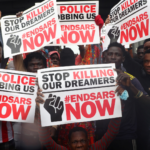
An example is the 2020 #EndSARS riot, which kickstarted as an online movement against harmful practices by the Special Anti-Robbery Squad (SARS).
There is a growing lack of care about the issue as well. For users like Teekay and Kindred who shared their opinions with Citizen, the move doesn’t affect them as they do not frequently use the app.
However, in the nooks and crannies where the conversation about Twitter usage and its end is being envisioned, there are citizens who don’t care. Some people, like Teekay, believe Twitter is still “unserious” about the new policy, especially as his “more active friends” on the platform have yet to complain about these restrictions bitterly.
“It’s us going back to traditional means of sourcing stories”
For Senior Editor at TechCabal, Noah Banjo, the new policy, even though temporary, could make sourcing for stories a hard task as a journalist.
He explains, “In instances where someone has used a keyword many times, how would you know when your limit is about to be exceeded? This will make the process of finding stories even more difficult. Journalists will now have to settle for breaking stories and move on. In-depth stories that give insight into important stories are usually found in Twitter threads, but these threads could now be cut short. This affects the journalists and audience that need this information.”
Banjo added that the new policy could make the art of fact-checking claims difficult. This is because the policy encourages more users to pay for verification, making these people “the forefront of spreading misinformation that can get more visibility as a result of their verification.”
“Curtailment of Twitter would likely result in diminished levels of civic engagement”
Ufuoma Oghuvwu, a Senior Programs Associate at Enough is Enough, believes that the effects of “curtailment of Twitter would likely result in diminished levels of civic engagement.”
She also believes it will affect civic communication with the youth and governmental NGOs, which happen to be “the largest voting bloc in our electorate.”
According to Oghuvwu, solutions with intentional physical civic engagement are the way to go. “Drawing lessons from the recent elections, it is evident that substantial efforts are required to establish a strong connection between the virtual realm of political engagement and offline structures necessary to shape governance in our society.”
How do you navigate life after graduate studies? How do you get jobs? These are questions that today’s feature on #AbroadLife answers with Grad School Buddy, a podcast and carefully curated digital companion that helps simplify the grad school application journey. She shared her migration journey into Washington, D.C., and her inspiration for the podcast with us.
How did you migrate to the United States?
While studying for my undergraduate degree in Economics back in Nigeria, I became very certain that I would study Development Economics. I believe that if the world is going to become a better place in the long run, we’ll definitely need to go through some policy changes. During my National Youth Service Corps (NYSC), I was posted to a primary school. I did a project to help sponsor kids who were out of school in Nigeria. These experiences then motivated me to look for the best places in the world where I could learn more about policy change.
Initially, I wanted to go to school in the United Kingdom. However, my friend then suggested Washington, D.C. This was because D.C. is a policy-centric location where I could meet with other policymakers and interact with organisations to get these policies done. So it was a step-by-step process. I first understood the course I wanted to study, and second was the location—where would I be most suited to study the course? I chose D.C. because of the people [policymakers], the jobs, and the exposure.
What was the process like?
So I applied on my own for my visa, admission, and all that because I had others who had gone through the same process, and they didn’t use agents. I had to do a lot of research. I had to check out which school in DC I wanted to apply to and why. How were the professors? What kind of funding does the school have, and what sort of funding do they have too?
Once I figured these out, I had to look at their requirements. I had to take the TOEFL to fulfil the language requirement and the GRE exam for proficiency. There was an analytical piece of writing where I was asked a policy-related question, and then there was also a Statement of Purpose (SOP) where I had to write about my own motivations for applying to the school. I also had to get my undergraduate transcript from my university, and I got a half-merit scholarship. I applied in 2018 and started in the fall of 2019.
Sweet! How was grad school for you?
So the first semester of my first year in grad school was all about focus. I really wanted to know more about the educational system and how to navigate life in America in general before water go carry me go. But by my second semester, I noticed that many students around me were “badass” and could do the things I was doing better, with brilliant projects. I also saw that some students had started having jobs since my first semester. I asked them more about their jobs and the professors they were working with, especially on impact evaluation across the world.
With this, I was able to start working in my second year as a research assistant, and I continued working with them until I finished. I had surveys, large data sets, survey designs, etc., which helped me get great internship or job opportunities outside school. Working gave me both the skills and the money.
How did you then get a job after grad school?
A lot of students abroad have probably heard of the use of networking to find jobs. It could be annoying and may be a bit out of my comfort zone, but I realised that this was something that had to be done if I eventually wanted an international career for myself. I had to meet people that I never knew to have coffee with me or meet somewhere just to get myself acquainted with them and keep me top of mind.
My first job was with a professor who I had worked with on a short-term project. After school, she introduced me to the very first job I got, which was a six month project. While working there, I was already looking out for the next job. I knew that I didn’t want to ask her for another job yet again.
So I started networking like crazy before I ended the project. I had to check organisations I wanted to work with and people in the sector I wanted to work in, as well as look at their previous projects to see if I had any affinity with them. I then asked my friends if they had emails on some of the people I had researched and started cold mailing them and setting up meetings with them. After these meetings, I only followed up with people that I felt I could work with.
Through these people, I was able to get recommended jobs from them. There were periods of rejection and tears. However, I had friends in my corner who served as a great support system for encouragement. I eventually reached a point where I could turn down jobs because there were so many.
What was your inspiration for the Grad School Buddy podcast?
So firstly, the Grad School Buddy is a podcast and carefully curated digital companion that helps simplify the grad school journey in an unconventional way. It started as a podcast, but now we have a newsletter and social media pages where we share information. What led me to start was that when I was going to grad school, I had people around me that had been through this process, including my siblings and friends. There was specifically one of my male friends who knew that I was very big on development economics in terms of education and financial inclusion policies. He was the one who made me start thinking of grad school beyond just the degree. But also about the importance of life after grad school. I had never really thought about what life after grad school entailed until he spoke about it.
Basically, I had knowledge of these things, but it wasn’t until I moved abroad to Washington, DC, and started school that people started to ask me questions about life after grad school. Then I realised that this information wasn’t accessible to everyone else out there. That’s how I got started. I wanted the podcast to encompass graduates from every walk of life, both the ones that paid tuition through scholarships, family income, or what have you. I also wanted to highlight alternatives to going abroad for a Masters. These included an online Masters or even having their Masters’ degree in Nigeria, how to get great internship opportunities, and so much more. If someone is trying to navigate problems surrounding their Masters’ degree and stumbles upon the podcast or newsletter, I’d love for them to get their answers via the Grad School Buddy Platform.
Why did you record your very first episode?
I recorded my first episode from a sad place. I was broke, and I needed an outlet to let out my feelings and thoughts. Then, I was starting to understand the process behind the “rejection before acceptance” process of getting job opportunities. I wanted other people who were like me also to experience what it felt like. There were friends who had different circumstances with grad school, and I felt like my friends and everyone else needed to share our grad school limitations and also share their solutions as well.
What’s the structure of Grad School Buddy like?
So, I initially started by myself, but now I have 5 people on the team. We plan the whole season to decide on a theme, then break down the topics and decide on profiles that could fit into these topics. For guests, it’s either have people call us requesting a feature or we contact them. We then interview them, and it gets to post-production where we edit the audio, send it to the guests for feedback, and once it’s approved, we start adopting and publishing it for different media.
Aside from this, Grad School Buddy also aims to get people of different nationalities, sexualities, and experiences to come together and share their thoughts. I would always like people to listen to the podcast or read the newsletter and find an episode or two that is for them.
What are your challenges with the podcast?
So I won’t necessarily call it a challenge, but I have noticed that some admission officers or counsellors request a fee when I reach out to them, and I feel that kind of demand doesn’t always serve the greater good. That’s the “challenge” in quote. Besides, Grad School Buddy is privately funded, and it’s not like we have the cash to blow. There are also the usual production glitches that I believe everyone else experiences, but there are always alternative episodes that we can always post in place to stay afloat.
What is next with the Grad School Buddy?
We are looking to launch Season 3 in October or November. I also hope to allow the team to handle more processes of the podcast in the long term as well as bring in more diverse voices.
Have you ever experienced a friendship betrayal?
If you have, you can relate to the eighteenth-century Benin Kingdom and how they must’ve felt when British soldiers invaded their land, looting over 2,500 artefacts and calling it an expedition.
But how did it all start? Let’s dive in:
The Benin-Britain Bromance
In 1553, British merchants sent out two ships to the Benin River under the command of Captain Thomas Windham.
A portrait of Thomas Wyndham in 1508 [Hans Eworth]
The then Oba of Benin, Orhogbua, welcomed them and agreed to sell pepper to them. However, almost 100 people in Windham’s crew caught malaria and eventually died between 1553-1556.
As a result, Queen Mary I prohibited all voyages to the Benin Kingdom.
Queen Mary I of England [The Print Collector/Getty Images]
Time passed, and voyages resumed, but only the crew of James Welsh could withstand the fever. From January to April 1591, they carted away valuable resources back to their country, including 589 servings of pepper, 82 barrels of palm oil, and 150 ivory tusks.
Thus began a prosperous British-Benin trade relation of trading pepper, gold, ivory, and later slaves, which lasted for many years.
But it didn’t last forever
Their breakup happened in several stages, which are all important to know:
A shaky trade agreement
The amount of power the then Oba, Ovoramwen Nogbaisi, had over trade in 18th-century Benin was, naturally, massive.
Ovonramwen, Oba of Benin [Edo State Archives]
The British needed his permission to use the trees in the village to collect palm kernels and tap rubber, which was a difficult process for them, and even export goods across the Benin River.
In 1892, Deputy Commissioner and Vice-Consul Captain Henry Lionel Galway tried to negotiate a trade agreement with Oba Ovọnramwẹn Nọgbaisi to allow for the free passage of goods through his territory and the development of the palm oil industry.
The treaty was signed, and there was free trade for the British, but Ovonramwen still collected customs duties. Major Claude MacDonald, Consul General of the Oil River Protectorate, saw the tax as a hostile act.
To make things worse, Ovonramwen then halted the trade of oil palm produce to the British due to price fixing and the refusal of Itseriki men to remit the customs duties.
Britain, not used to being told no, did not like this. But it was one murder they piled behind.
The Ambush and Slaughter of Phillips’ Crew
In November 1896, Phillips, the Vice Consul of a trading post on the African coast, decided to meet with Oba Ovonramwen to discuss the customs duties discomfort.
He formally asked his superiors in London for permission to visit Benin City, claiming that the costs of such an expedition would be reimbursed by trading for ivory.
In late December 1896, Phillips got tired of waiting and took a crew of 18 men, 180 Jakri Porters, to carry supplies and 6 Kru labourers to Benin. He sent an envoy to discuss trade and demand entry into the territory, while bringing numerous gifts for the Oba.
At this time, the Binis were celebrating the Igue Festival, and strangers were forbidden to see the Oba. Oba even sent a message to Phillips saying he wasn’t allowed and would send word in a month or two. But for impatient Phillips, that was time that he simply couldn’t afford.
On January 4, 1897, Phillips and his entire party were ambushed on their journey to Benin City at Ugbine village near Gwato. This was done by Iyase, a warlord who saw the British advance as a slap in the face despite Ovonramwhen’s warning not to harm them.
1897 [Agefotostock]
That day, both British officers and African porters were slaughtered. Only two British survived their wounds, Alan Boisragon and Ralph Locke.
Within a week, news of the massacre had made it to London, and the colonial officers were filled with rage.
For Britain, they needed to teach the Oba and his ‘savages’ a ruthless lesson not to kill their own. This singular event led to the invasion of Benin, also known as ‘the Punitive Expedition’.
The Punitive Expedition
Towards the end of the first week of February 1897, about 1,200 men, including marines, sailors, and protectorate troops, were assembled and prepped for war. This was under the leadership of Sir Harry Rawson.
Admiral Sir Harry Rawson [Historic Houses Trust]
They aimed to “divide and conquer” by advancing on three fronts. The first column was to take Ogbologbo Creek; the second was to advance through the Jameson River Line up to Sapomba; and the third was to maintain a joint attack through Uguto Creek.
On February 9, 1897, the invasion started, and by February 18, the Benin Kingdom fell and ceased to be an independent entity. The Bini soldiers put up a brave front but were no match for Britain’s superior war weapons.
The Aftermath
The city was later set ablaze, although the British later claimed it was ‘accidental.’
Members of the ‘expedition’ surrounded by objects from the royal palace [British Museum]
Benin was later annexed to the Niger Protectorate.
Many buildings were also burned down, including the famous King’s Court. Oba Ovonramwen was deported and exiled to Calabar until he died in 1914.
Ovonramwen on board the Niger Coast Protectorate steam yacht, Ivy, while the Oba was on his way to exile [Jonathan Adagogo Green]
The Benin Native Council was established to replace the monarchy. It also helped to absolve the kingdom into the colonial rule.
The Looting of Benin
The British expedition force looted and carted away Benin’s precious artworks. An estimated 2,500 wooden, bronze and ivory artefacts were stolen.
A photograph of the interior of Oba’s compound being burnt during the punitive expedition, with bronze plaques in the foreground and three soldiers from the punitive force in the background [Reginald Kerr Granville c. 1912]
European and American art collectors sell most of these artefacts at auctions. It is also exhibited in Western museums, mainly in Germany.
Looted Benin Bronzes that Germany returned to Nigeria are examined during a ceremony in Abuja on Tuesday. Nigerian officials said that more than 5,000 ancient artefacts are estimated to have been stolen from Nigeria, the majority by British colonisers. [Olamikan Gbemiga/AP]
It breaks my heart to tell you this, but the lynching of young Deborah Samuel in Sokoto is not the end of mob killing for blasphemy. Another case of blasphemy killing made the news, again.
On June 25, 2023, a local butcher, Usman Buda, met a sad and violent mob death in a Sokoto metropolis abattoir. Here’s how it happened.
The Murder of Usman Buda
Buda, according to eyewitnesses, made blasphemous statements against the Prophet Muhammad, and some young men challenged him to withdraw his statement. He refused.
The Sokoto State Police Command intervened, causing the mob to flee, with Buda being rescued and rushed to Usmanu Danfodiyo Teaching Hospital in Sokoto for treatment.
Sokoto Police Command arrive at the scene [Premium Times]
Unfortunately, Buda didn’t survive his injuries. He was later confirmed dead by medical personnel.
But does the law say anything against blasphemy?
Let’s just say the law here is a bit…tricky. Especially when it comes to Northern Nigeria.
To understand this, we must first note that Nigeria operates two legal systems: common law and customary law. What is customary law depends on if you’re in the South or North (Shariah).
Because of this, some activities are treated as crimes under Northern Nigeria’s penal code that are not under the South’s criminal code.
The penal code (Sharia law) applies in the north, where there is a Muslim majority. The criminal code applies in the southern part of the country, where there is a Christian majority.
The Kwara State Sharia Court of Appeal
When it comes to the issue of blasphemy, only Kaduna State approves of the death penalty for convicted offenders. This can be found under Section 406 of the Penal Code. Nowhere in Sharia Law does it approve of the masses taking life and death into their own hands via extrajudicial killings.
An excerpt of Section 406 of the Sharia Penal Code, with footnote 631 [Sharia in Africa.net]
However, this doesn’t mean that ‘blasphemers’ or people who ridicule the Islam religion get a jail-free card.
If you are convicted of the act under Section 402 of Sharia law, the offender will get either a two year imprisonment sentence, a fine of N20,000 or both. This also comes with a non-negotiable thirty lashes of the cane.
An excerpt of Section 402 of the Sharia Penal Code, with footnote 626 [Sharia in Africa.net]
What will happen next with this case?
The Sokoto State Police Public Relations Officer, ASP Ahmad Rufa’i, reassured the public that the investigation is still on to bring the mob to justice.
But the Sokoto State governor, Ahmed Aliyu, sees Buda’s death in a different light. Through a statement by his spokesperson, Abubakar Bawa, he vowed that “his present administration will not take the issue of blasphemy lightly.”
Ahmed Aliyu [Premium Times]
He also promised that “he will deal decisively with anyone found guilty of any act aimed at degrading the personality of Prophet Muhammad… in line with the provisions of Islamic laws.”
The Nigerian experience is physical, emotional, and sometimes international. No one knows it better than our features on #TheAbroadLife, a series where we detail and explore Nigerian experiences while living abroad.
Today’s #AbroadLife feature is an assistant audit manager who works for one of the world’s top accounting firms in New Zealand. He tells us how he got an amazing job opportunity and had to leave Nigeria. He is experiencing cultural shock that has shaken his views and stance on what morality truly is.
What inspired you to move to New Zealand?
So I didn’t have to leave; it was more of a work opportunity I could harness. Despite the economic difficulties, life was already good in Nigeria, and I consider myself lucky. In Nigeria, I worked for one of the biggest accounting firms in the country as an auditor. In September 2022, I saw an offer for auditors being able to work for the same firm in another country’s branch. I had already worked for this firm in Nigeria for three and a half years, so I said, Why not?
Nice! What was the process like for you?
So my migration path is different from others. My company had already worked everything out for me concerning my visa and other documents. I gained a work visa that allowed me to work for at most three years, and then I could apply for permanent residency. I came to New Zealand in February 2023.
However, there are different pathways. There are master’s scholarships and auditors that have now been included in the express pathway to permanent residency. If you know anyone in the audit line that can prove that they’ve been working in the field for at least three years, then they can apply.
Awesome! What would you say were your first experiences in New Zealand?
Because of the job pathway I came in with, settling in wasn’t stressful. My company already had mobile relocation experts that helped me settle regarding accommodation and immigration documents. I’d say the people there are extremely friendly, and the population there is only 5.1 million people, which makes it very small. The food here isn’t really great. I ate something during my first week (I don’t know the name of the meal), and since then, I’ve decided to stick with African dishes.
I can also say that you tend to see some crazy people on the street…
Crazy, how?
Well, I’d say the rate of gays, lesbians, and other people in the queer community is very rampant, like they are so open with their sexuality out there. I guess it shocks me more because I am a Christian. Anything goes here. The amount of people that take drugs here is crazy too. You can’t walk 100 metres without seeing a smoker of weed or other substances here in New Zealand. It’s impossible. Maybe it’s a normal thing out there.
Wow, are there any advantages so far in staying in New Zealand?
They have a structured economy in that even though you have a blue or white-collar job; you can rest assured that you’ll have a good quality of living. You don’t have to do too much to get food to eat, provided you work hard. With my NZ$10, I can feed for two days, more than you can get here in Nigeria. Over here, they pay workers’ wages by the hour, so you can make so much depending on how many hours you work. The value of the New Zealand Dollar is much better than Nigeria. Commodities seem readily available. The people I interact with, too, are amazing, as they have so much exposure.
What are the disadvantages?
In terms of raising kids, you don’t have so much control. You could be jailed in minutes if you spank your kids or chastise them in the smallest way. The kids here also seem to talk to their parents and act wayward. There seems to be a lack of a moral compass in that sense.
I would say my bills, too, are kind of high, but only because of the location I’m in. You pay rent weekly in New Zealand and can get a place for as low as NZ$300, like N120-150k in Nigeria. That isn’t bad at all. To live in nicer apartments, you must start paying NZ$700, equivalent to N400k in Nigeria.
With these disadvantages, do you see yourself settling permanently in New Zealand?
Well, New Zealand is not a bad place. It’s a very good place to start, but I’m not sure I want to settle down permanently in the long term. Maybe Australia or Canada perhaps. New Zealand can be very boring at times, and they also love travelling. Whenever public holidays come, the city is deserted because everyone has travelled to their villages for the holidays. It’s a great place to be, but one needs to manage the environment.
When discussing his plans for security when he gets into power, Tinubu once said, “To start chaos is easy”, but ensuring peace is a struggle. Given the events that have unfolded since he was declared the winner of the 2023 presidential election, we can all acknowledge the challenge of maintaining peace with other political parties.
Many people are no longer following up on efforts to challenge Tinubu’s victory, but let’s revisit the purpose and significance of an election tribunal.
The Recap
An election tribunal is a place where a sole judge can determine the contests or petitions alleged against a candidate during an election by all candidates.
On March 21, 2023, four presidential candidates, Atiku Abubakar of the Peoples Democratic Party (PDP), Peter Obi of the Labour Party (LP), Solomon Okangbuan of Action Alliance (AA) and Chichi Ojei of the Allied People’s Movement (APM) filed petitions at the Presidential Elections Tribunal in Abuja, seeking to nullify INEC’s declaration of Bola Tinubu as the winner of the 2023 presidential elections.
The petitions claim that the presidential election results should be annulled for the following reasons:
At the time of the elections, Tinubu wasn’t qualified to contest, which would infer that he received “wasted votes”.
Kasim Shettima had a double nomination, one as APC’s vice-presidential candidate and the other for a senatorial seat in the National Assembly, contrary to what’s permitted based on Section 35 of the Electoral Act.
Tinubu failed to get 25% of the votes in the Federal Capital Territory (FCT) and engaged in corrupt practices that were non-compliant with the Electoral Act.
The last time we covered the election tribunals, they had just begun court proceedings, with the AA withdrawing their petitions and backing out of the race. But so much more has happened since then. Let’s fill you in:
A tussle over live broadcasting of court proceedings
In May 2023, Atiku and Obi had been pleading with the court to grant a live broadcast of events due to the “national import” or importance of the case. But the APC wasn’t having that at all.
Tinubu’s counsel, Wole Olanipekun, says they are there for “serious business, not a parade ground”. Thus, there was no real reason for the proceedings to be televised.
Kemi Pinero, in defense said that they have responded to all subpoenas (including PDP’s) and that the LP counsel only wants to “stall the case”. She also said this had been a pattern of the LP for the last two weeks.
LP then tendered 18,000 blurred result sheets
On June 15, LP’s fourth witness, Eric Ofoedu, a mathematics professor who was commissioned to analyse election data in Rivers and Benue, claimed that INEC had uploaded 18 pages of unreadable data.
However, Mahmoud denied the claim. He added that the witness had sent in his statements only a few minutes before court proceedings for that day started.
How Ofoedu must have felt when his claims were dismissed
“There was no technical glitch as claimed by INEC”
Technical difficulties were a key reason voters could not view election results on the IReV (INEC Results Viewing Portal). That is, until LP’s seventh witness, Clarita Ogar, spoke on June 20.
Ogar is a cloud engineer with Amazon Web Services Incorporated (AWS), a firm INEC engaged in providing technical support. She claimed that AWS Cloud did not record any technical glitches in the country on February 25. Ogar brought six reports showing the status of the AWS dashboard of cloud services in 33 regions and certificates of compliance to back up her claims.
Tinubu’s legal team strongly disagreed with the allegation. They went to reference instances where the AWS software glitched in the past, e.g., MTN’s payment service bank in 2021.
Gideon Idiagbonya, APM counsel, said the party had analysed the judgement and intends to continue with the petition.
There was no objection from the court, as the panel noted that everyone is free to fight for their rights.
The PDP plans to wrap up by Friday
The PDP and Atiku have indicated they will close their case at the tribunal by Friday. But according to Chris Uche, his team had lost two of the 21 days allotted to them, with one being a public holiday,
The PDP legal team now has an extension of court. This means we should expect PDP presence for two more days.
Meanwhile, Obi is under pressure to give up the fight
A House of Representatives Member, Amobi Ogah, has asked Peter Obi and other parties’ candidates to support President Bola Tinubu.
According to him, “the election has come and gone. Now it is about governance. And whoever God has given that mandate to represent the people, you must respect that institution.”
But will Obi give up? Will shocking new evidence be uncovered? Let’s wait and see.
On June 16, 2023, a burly man met Nigeria’s president, Bola Tinubu, at the nation’s official residence — the Aso Villa. No one knows the nature of their clandestine conversation.
Bola Tinubu and “the mystery man” [Channels Television]
Older Nigerians may understand why his speech was so ‘inflammatory’, but the Gen Zs? Not so much. The biggest question on their lips has been: who is Asari Dokubo?
To answer this, we must time travel to when oil became Nigeria’s new gold up for grabs by foreign oil companies, causing a never-ending conflict in the oil-rich Niger Delta region and the rise of some indigenous ‘avengers’.
While they have existed under different tags, they are commonly addressed as the Niger Delta Militants.
Several militant groups in the Niger Delta have attacked oil facilities in the past [AFP]
And all this oil was coming from one region — the Niger Delta.
First test drilling for oil in Nigeria in Oloibiri, Imo State c. 1950 [Ukpuru]
Unfortunately, the vast wealth derived from petroleum didn’t trickle down to the masses in the Niger Delta, who suffer severe consequences due to oil exploration activities.
The region was severely exploited. This was since the 19th century with the discovery of palm oil and crude oil after Nigeria’s independence. Foreign oil companies like Royal Dutch Shell and Chevron set up bases in oil-rich areas, notably the Ogoniland in Rivers State. Indigenes were uprooted from their homes forcefully as government made a profit from the evacuations.
The Ogonis and other minority groups complained about the forced evacuations and very little compensation. The government looked away. So did the oil companies.
Members of Nigeria’s Ogoni community protest against Shell in New York. Photograph: Bebeto Matthews/AP
As all land belongs to the state and is held in trust by the government, the residents had little recourse under the law.
The law also prescribed that compensation for seized land would “be based on the value of the crops on the land at the time of its acquisition, not on the value of the land itself.”
For this reason, the Ogoni people became increasingly dissatisfied and soon formed one of the first Niger Delta agitation groups, the Movement for the Survival of the Ogoni People (MOSOP).
Beginning in December 1992, the Ogonis started fighting for their land and lives, and the oil companies fought back, leading to escalation on both sides.
MOSOP issued an ultimatum to the oil companies (Shell, Chevron, and the Nigerian National Petroleum Corporation (NNPC)) demanding some $10 billion in accumulated royalties, damages and compensation, and “immediate stoppage of environmental degradation”, as well as negotiations for mutual agreement on all future drilling.
What was the government’s response? Well, more agitation. They banned public gatherings and a declaration of disturbances made in oil production as an “act of treason.” But the protests seemed to work. Oil extraction decreased to a mere 10,000 barrels a day, and this got the government extremely pissed.
Several misunderstandings later, the Sani Abacha led military regime found its closure.
The Murder of the Ogoni Nine
In May 1994, nine activists from the movement who later became known as ‘The Ogoni Nine’, among them Ken Saro-Wiwa, were arrested and accused of incitement to murder following the deaths of four Ogoni elders (allegedly killed by a mob led by the Ogoni Nine).
Saro-Wiwa and his comrades denied the charges. However, they were imprisoned for over a year before being found guilty and sentenced to death by a tribunal on November 10, 1995.
Many Nigerians expected the sentence to be commuted, especially as pressure rose from the international community.
“Ogoni Nine: The Encirclement Begins” [Archiv.ing]
The activists were denied due process and, upon being found guilty, were hanged by the Nigerian state.
The Ogoni Nine [Center for Development]
“Saro-Wiwa Hanged? Ogonis Wail and Mourn” [Archiv.ing]
The hanging was met with global criticism from human rights organisations and countries. Shell was also accused of bribing the military to silence Saro-Wiwa and the other activists.
However, we must also note that MOSOP and the Ogonis were not the only people tired of the empty promises of the government and oil companies. This is where we cue in a younger Asari Dokubo and the emergence of the Ijaw Youth Council (IYC).
Asari Dokubo and the IYC
Tinubu’s guest, Asari Dokubo, grew up in the ashes of the Ogoni Nine murder, hating the Nigerian government for taking his home from him. We can trace his displeasure to 1998, when he founded the IYC —to make similar demands as the Ogoni Nine— and became its vice president.
In December 1998, it released the famous Kaiama Declaration, which demanded control of the Niger Delta’s energy resources. The declaration soon stirred the entire Ijaw population, and more than 500 communities supported it. This also helped Asari secure the position of organisation president in 2001.
During this period, however, Asari grew increasingly militant. His more radical agenda was at odds with the core leadership of the IYC. This made him to begin building a private militia organisation known as the Niger Delta People’s Volunteer Force (NDPVF).
The militancy of the Niger Delta People’s Volunteer Force (NDPVF).
The NDPVF is seen to date as one of the major catalysts for the crisis in the Delta region. The NDPVF, a militant group, was largely funded by local and regional politicians who sought great profits from the region’s oil revenue.
They quickly escalated an armed conflict with a rival group, the Niger Delta Vigilante (NDV), who also sought to control the Delta’s oil resources. Combat was concentrated primarily in Warri and, soon enough, Nigeria’s oil capital Port Harcourt and areas to the city’s southwest. Both groups engaged in oil ‘bunkering’ and other illegal forms of local resource extraction.
A change in political ideals by the NDPVF caused the group’s former sponsors to withdraw their financial support and begin funnelling funds to the rival NDV. Asari’s NDPVF declared an “all-out war” against the Nigerian state.
The Effects of the NDPVF Activities
The threats to attack oil wells and pipelines by the NDPVF caused terror for oil companies operating in the area. They started to withdraw most of their staff from the Niger Delta. This resulted in a massive drop in oil production of 30,000 barrels per day. It also significantly pushed the price of petroleum worldwide.
Due to the crisis, Nigerian President Olusegun Obasanjo called Asari and the leader of the NDV, Ateke Tom, to Abuja for peace talks. But unfortunately, these peace talks failed. After he refused to endorse the legitimacy of the Olusegun Obasanjo government, Asari was arrested and charged with treason by the Nigerian government.
On June 14, 2007, Asari was released on bail as part of President Umaru Yar’Adua’s pledge to try and bring peace to the Niger Delta region. He was also given $10 million a year from Abuja as a “federal pipeline security fee” to protect River State pipelines from banditry.
His old ‘crimes’ were overlooked as part of an extensive amnesty program across the Niger Delta region. This saw many of his followers lay down their arms as the government promised to provide jobs, protect the Niger Delta, and prioritise the people over profit.
The negative impact of oil theft on Nigeria
Now that you understand who Asari Dokubo is, you see why it’s ironic that he’s complaining about oil theft and pipeline (in)security. Here’s the reality of oil theft in Nigeria and how it affects you:
The stolen oil is sold on the black market. Since it doesn’t pass legal channels, it deprives the state of crucial income that could be used for public infrastructure, social programs, and economic development.
Oil spills and environmental pollution often accompany oil theft. Thieves use crude and unsafe methods to extract oil, damaging pipelines and infrastructure. These incidents result in widespread farmlands, water sources, and ecosystem contamination.
The proceeds from oil theft are often used to fund criminal activities, including insurgency, terrorism, and other forms of organised crime. This creates security challenges, particularly in the Niger Delta region, where most oil theft incidents occur.
Nonetheless, the impact of oil spillage and environmental degradation in the Niger Delta region remains a concern, as millions of people can’t lead normal lives and are not catered for by the Nigerian state.
In Nigeria, it is no longer rare to hear news about the arrests and court cases of corrupt government officials turned criminals. Several of them are making the headlines these days, with the latest addition being an ex-JAMB registrar, Dibu Ojerinde.
What did Ojerinde do?
Dibu Ojerinde, former ex-JAMB registrar [Premium Times]
On June 16, 2023, Ojerinde and three of his kids were arraigned by the Independent Corrupt Practices and Other Related Offences Commission (ICPC) for trying to sell off $150,000 worth of property in Accra, Ghana. This was even after it was forfeited to the Nigerian government.
Ojerinde, in particular, was also accused of incorporating six companies using forged documents and stolen identities.
Also, some of the offences were contrary to, and punishable under Section 1 of the Advanced Fee Fraud Act, 2006.
As shocking as Ojerinde’s crimes are, it might shock you that this isn’t the first time the ICPC will hold him by the neck. In fact, he has multiple criminal charges in his closet.
Let’s get into some of them:
2017 – Ojerinde gets probed on JAMB remittance
2017 was the beginning of Ojerinde’s many criminal accusations.
According to ICPC Spokesperson, Azuka Ogugua, there were also several allegations of multiple identities, abuse of office, money laundering, tax evasion, and making false statements to public officials. This was during his tenure as JAMB and NECO registrar.
July 2021 – Ojerinde is arraigned over N5 billion fraud
On July 8, 2021, the ICPC arraigned Ojerinde on 18 counts of diversion of public funds during his tenure as JAMB registrar — now to the tune of N5 billion.
Ojerinde, however, pleaded not guilty to all the charges. Later, he was admitted on bail of N200 million.
For Ojerinde, the judge, Inyang Ekwo, has granted bail based on earlier terms by the Federal High Court of Abuja.
His four kids will get N20 million bail and offer surety in the form of N20 million worth of property in Abuja.
They also confiscated their passports in case they wanted to flee the country.
What would happen next? Will justice prevail? We have no choice but to wait and see.
The Nigerian experience is physical, emotional, and sometimes international. No one knows it better than our features on #TheAbroadLife, a series where we detail and explore Nigerian experiences while living abroad.
The subject of today’s Abroad Life is Rukayat, a senior financial analyst in the UK whose side hustle is to connect foreign immigrants with job opportunitiesthrough RKY Careers. She spills the tea on her journey into resigning from a senior position at a legacy bank to relocate to the UK for her Master’s Degree and eventually starting her employment franchise.
What inspired you to move to the UK?
Oh, I moved to the UK to be with my fiancé (now husband) in 2019. As I started early, I was then at a senior level at Guaranty Trust Bank (not an executive). But I also wanted to further my education and get a Master’s degree.
What was the process like?
Well, I first have to start with the anxiety. I had to work through the fact that I was leaving my senior role at the bank to start a new life in the UK. I first tried to come in as a tourist to test the waters, as I didn’t have as much information on the process then as I do now.
However, I was later denied for reasons I’m not aware of. At the time, there wasn’t a specified student visa that could enable me to stay in the UK after my studies, so the “student visa” I got only allowed me access to the UK, which expired immediately after graduation. It was in 2021 that it became effective. I got admission to study Financial Technology at the University of Stirling, shortly after the COVVID in 2020
That’s wonderful! What was your Masters’ experience like?
I had the experience of taking physical classes for six months or four months after the peak of the COVID period. The percentage of Nigerians or even other Africans among the whites was very low.
In fact, I and one other Nigerian were the only two self-paid students in my class. The remaining two Nigerian students were on a Chevening scholarship. I also had the opportunity to pay my school fees in installments for twelve months. I was able to pay through savings from my salary at the bank, plus I had the support of my husband.
At that period, I had to live in Stirling, Scotland. Stirling was what I needed at the time because it was a very quiet and humble place. However, I didn’t live with my husband in England, so I still had to pay 350 pounds for my accommodation.
I got married a few months after I came in, was pregnant throughout the time of my studies, and gave birth at the time of my dissertation, so I needed a calm environment. It was also a struggle getting part-time jobs in the beginning (from September to December) because of the influx of international students rushing into the country. However, I could live with my husband’s support, and I finally got a part-time job in January.
Fantastic! How did you then come about creating RKY careers?
Getting my first job after school in the UK also birthed RKY careers in 2022. Going into the job market at first was scary because of the issue of not accepting Blacks lower rate than other races. However, this wasn’t the case. God favoured me with job offers, and I got various calls on salary expectations. At some interviews, I got rejected. At times, this happened in my final stage.
I was applying for jobs based on my research and had no guidance. I eventually got a job as a Senior Finance Analyst. After a couple of months, I then started to help Nigerians, from close friends and family to people in my current work who also had struggles getting a job in the UK for the first time. I first named the page “Live Careers in the UK” as a career consultation and advisory page, where I could dish out advice for first-time immigrants on careers in the country.
In the process, I also started helping people create CVs as well as LinkedIn optimisation. Last year, we also started to work on training for career professionals who wish to transition.
How did you register?
I first went to the Companies’ House where I paid a bill of 13 pounds. You can register as a limited liability company or a sole entity, but mine was a sole entity. You must also be eligible for it, as not everyone’s visa allows them to own companies in the UK.
What have been the achievements and setbacks so far?
So I’d say our team has done a good job so far regarding achievements. We had over 150 success stories of people who got jobs in the UK and even Nigeria and were called for speaking events, and they are generally doing very well. We have also empowered people to live their dreams in whichever career opportunity they choose.
The challenge, I’d say, is dealing with people, as you cannot satisfy everyone with a peculiar style. You have to offer bespoke services. It is also uncommon for Africans to patronise their own people, and even if they do, they make so many demands. I think we need to do better to respect black owned companies.
Where do you see RKY careers in the next 5 years?
We intend to make more impact and help more people be an inspiration to many others. We also need to increase inclusion and diversity in the workplace, not just for Nigerians but for all Africans.
Want to know Nigeria’s political history since 1999? Sign up here.
Trigger Warning: This story contains sensitive content that may be distressing to some readers. Please proceed with caution.
Editorial Note: The names mentioned in this story have been replaced with pseudonyms to safeguard the identity of the person sharing their experience.
At 80 years old, Hannah from Nanka, Anambra State, has “lived two lives”—the life before the night of May 1, 2022, and the life that followed. Motherly love and betrayal represent these two lives.
That night, the first day of May, changed her life. Hannah experienced theft, harassment, and sexual assault by her carer, John, who ironically happens to be the son of her late best friend.
Hannah now battles insomnia and nightmares every night due to the incident with her carer. This is the first time she has found the strength to share what happened to her and the feelings that night left in her.
A ‘mother-son’ relationship
Before the tragic incident, Hannah and John’s relationship was not just that of carer and homeowner but also that of mother and son. “I paid this boy’s fees through secondary school and brought him up in his teenage years,” Hannah said.
“He was the one face I saw every day, and because of my relationship with Ada [late friend], I called him my son, and he called me his mother. He was always respectful towards me. I never believed in all my life that John would do what he did to me.”
“The night my caretaker sexually assaulted me”
Hannah’s eyes welled up with tears as she bravely shared her harrowing tale, the weight of that fateful night still etched in her memory. Her voice trembled with a mix of fear, anger, and resilience as she recounted the chilling details.
“I was surprised to see John there,” Hannah began, her voice quivering with raw emotion.
“He had the spare keys, so it wasn’t entirely unexpected, but his presence that night sent shivers down my spine. With a gun pressed against my face, he demanded that I hand over my gold jewellery, cash, and will. I couldn’t discern whether the gun was real in the moonlight with no streetlights. And at that moment, I dared not find out.”
Forced to act swiftly under the threat of violence, Hannah recounted the painful submission that followed. “I stood up as quickly as possible and handed him everything he requested. But John’s cruelty didn’t end there,” she revealed, her voice laden with anguish. “In a final act of degradation, he violated my most intimate boundaries. Since that night, I have slept with a bucket beside my bed because of the constant nausea that results from the nightmares. Speaking on the subject now will be my first step towards recovery and psychological healing.”
As Hannah’s voice faded on the video call with me, I could tell she was carrying a heavy weight of unresolved pain. Her story serves as a poignant reminder of the underreported gender-based violence against the elderly and the physical and mental trauma that emerges.
Every year, on June 15, the world comes together to observe World Elder Abuse Awareness Day. It is a crucial occasion that sheds light on a pressing issue affecting our society.
This largely depends on the country you’re in. In the case of Hannah, as a Nigerian, you should contact ARDA-DCI’s (a non-governmental organisation) toll-free line, 08000202020. The ARDA-DCI offer medical care, psychosocial support, legal aid, and important information on sexual and gender-based violence.
Want to know Nigeria’s political history since 1999? Sign up here.