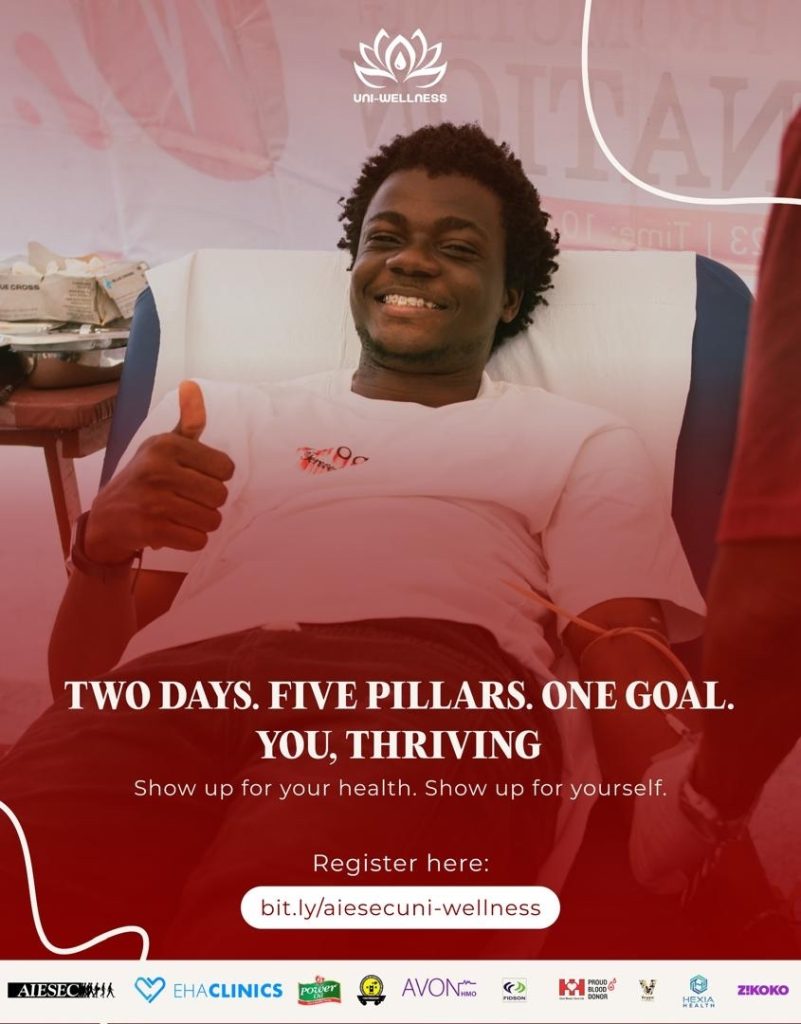
Lagos is fast, but Muyiwa is faster.
Muyiwa’s walk is brisk, on the verge of breaking into a run. He is trying to catch a rickety korope as usual to class. He dodges all the motorcycle riders with terrifying accuracy—until he doesn’t.
In a blink of an eye, Muyiwa is shoved into a nearby gutter. The afterimage of a black and red okada is the last thing he sees, before the blood and darkness. Muyiwa is rushed to the hospital by some Good Samaritan passersby. The medical personnel have stabilised him, but blood. They need blood.
His blood type is rare, and no one so far is both eligible as a blood donor and a match. The hospital’s blood reserves are dry. Blood cannot be manufactured, and Muyiwa is deteriorating fast. His mother is rolling on the floor of the ward. His father is away on a business trip.
By the time he gets back, his only child’s body will be cold and lifeless.
In a not-so-distant alternate reality, there is blood in the hospital’s reserves from voluntary donors. The appropriate amount is transfused into Muyiwa. He lives to see his father’s face again.
About two million units of blood are needed annually in Nigeria, but only around 500,000 units are eventually collected for use, according to the National Blood Transfusion Service. Paid donors and family replacement donors are usually relied on to remedy this deficit, but paid donors can hide transmissible infections or high-risk behaviours while family replacement donors may not be available in time.
Uni-wellness was created to fill this blood supply gap. Universities often have a large body of young people who can voluntarily donate blood to save lives. Proper screening will be done to ensure blood collected is safe and healthy for transfusion.
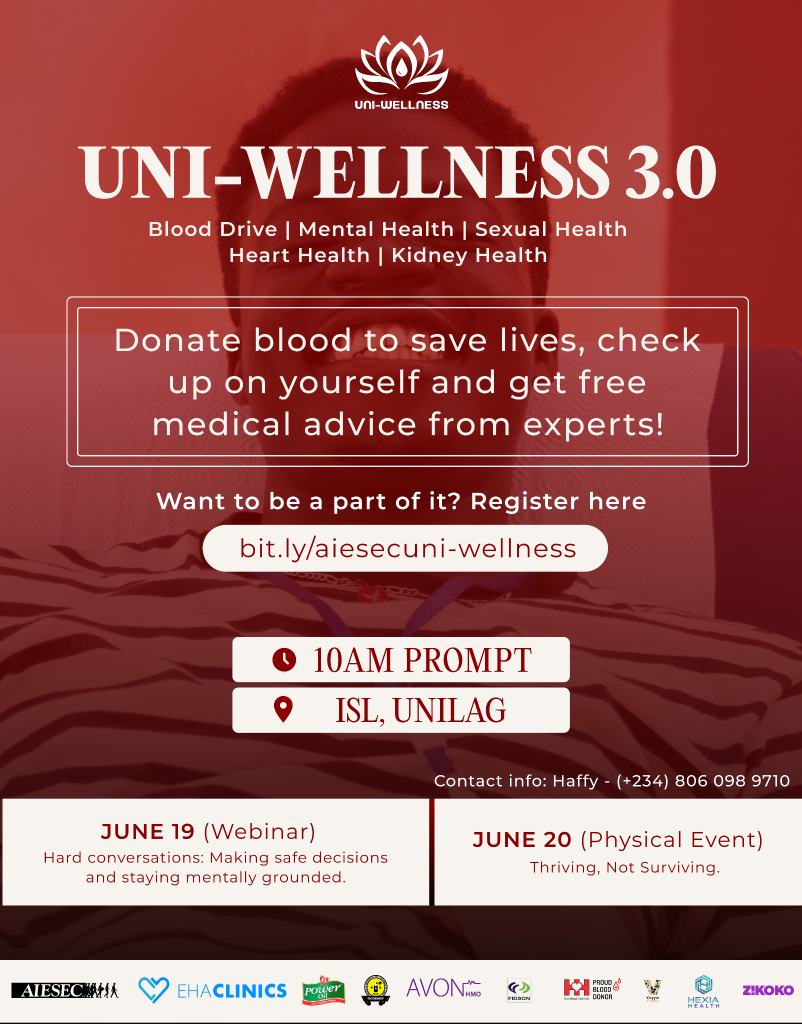
For the third edition of Uni-wellness, there are four health pillars in addition to the usual blood drive. They are: Sexual Health, Mental Health, Heart Health and Kidney Health. Uni-wellness will take place over two days, June 19th and 20th, 2026. The first day will feature a webinar on sexual and mental health, with the theme “Hard Conversations: Making Safe Choices and Staying Mentally Grounded.”
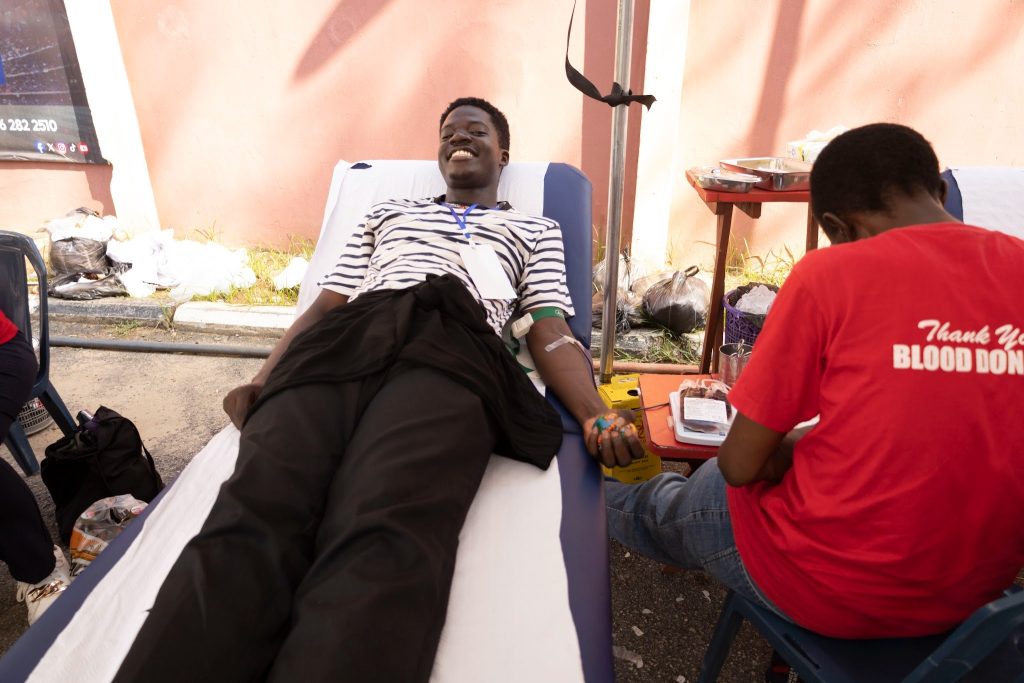
The second day will be a physical event with the theme “Thriving, Not Surviving”, hosted at the University of Lagos, Akoka. The blood drive is a key part of this day and other activities like blood pressure checks, on-ground medical consultations will also be featured. There will also be sessions on heart and kidney health.
Refreshments and freebies will be provided for attendees. In all, Uni-wellness 3.0 promises to be unforgettable and impactful. So, what are you waiting for?
CHANGE MUYIWA’S STORY. Sign up here to be a part of Uni-wellness.