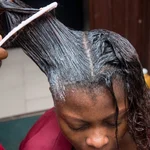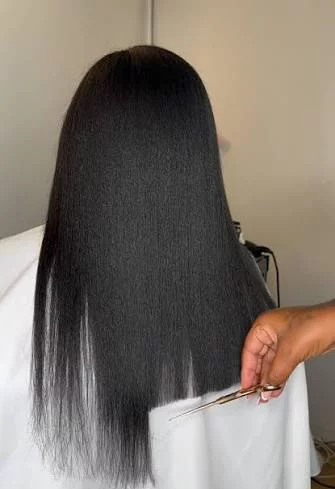
Relaxed hair does not have to be perfect to be healthy. It should have movement, feel comfortable and respond well to moisture and conditioning. If you want healthy relaxed hair, start by paying attention to what your hair is actually doing.
What Healthy Relaxed Hair Actually Looks Like
Healthy relaxed hair is realistic rather than aspirational. It has some movement instead of feeling stiff, and it should not feel dry again a few hours after moisturising. When wet, it should stretch slightly and return rather than immediately snapping.
Your ends should look relatively even rather than thin, wispy or see-through. Your hair should also hold moisture for more than a few hours. If it constantly feels rough, dry or brittle despite regular conditioning, your routine may need adjusting.
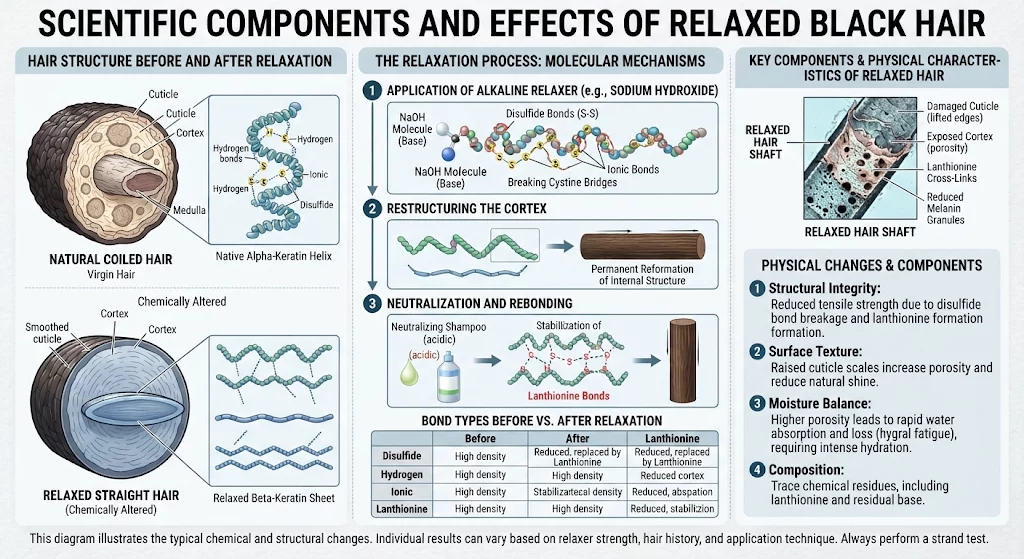
If you are asking how to know if your hair is healthy, look at patterns rather than one bad hair day. Consistent dryness, tangling or snapping tells you more.
Shedding or Breakage: They Are Not the Same Thing
Shedding is hair completing its natural growth cycle and coming away from the scalp. A shed strand comes from the root and may have a small white or club-shaped bulb at one end. Broken hair is different. It is usually a shorter piece with no bulb because it has snapped somewhere along the shaft.
This distinction matters. Seeing strands in your comb does not automatically mean your hair is damaged. Look at what you are actually losing. Full-length strands with a bulb point towards shedding. Numerous short pieces without a bulb, especially around your clothes or sink, are more likely relaxed hair breakage.
The Early Signs Most People Miss
Some signs of damaged relaxed hair develop gradually. Ends that become increasingly thin, hair that tangles more than usual, excessive dryness and snapping during detangling are all worth noticing.
Another clue is how your hair behaves after moisturising. If it feels soft briefly but becomes dry and brittle again quickly, adding more product may not solve the problem. Look instead at your conditioning routine, handling, heat use and chemical processing.
Protein or Moisture: How to Tell Which You Need
The practical way to assess protein moisture balance is to watch how your hair behaves when wet. Hair that feels rough, straw-like or stiff and snaps quickly generally needs more moisture. Hair that stretches excessively, feels mushy or limp when wet and does not bounce back generally needs protein or reconstruction.
So, how do I know if my hair needs protein or moisture? Use that wet-hair response as your starting point rather than automatically adding whichever treatment is popular. A moisturising deep conditioner most weeks can support softness and flexibility, while a protein or reconstructing treatment every four to six weeks may help when hair needs more structure.
MegaGrowth Deep Conditioner can fit into the moisturising side of that routine and support softer, more flexible hair. Between washes, Breakfree Leave-In Strengthener can help maintain moisture and manageability without weighing hair down.
Where Damage Shows Up First
Damage often becomes obvious at the ends because they are the oldest part of the hair. They have experienced more washing, styling, friction and heat than newer hair closer to the scalp.
The demarcation line, where new growth meets relaxed hair, is another vulnerable area. The texture change creates a weaker point, particularly during washing and detangling.
Pay attention to both areas. Thinning ends and lots of short broken pieces around new growth are signs to reduce manipulation and improve protection.
What to Change, and How Long Before You See It
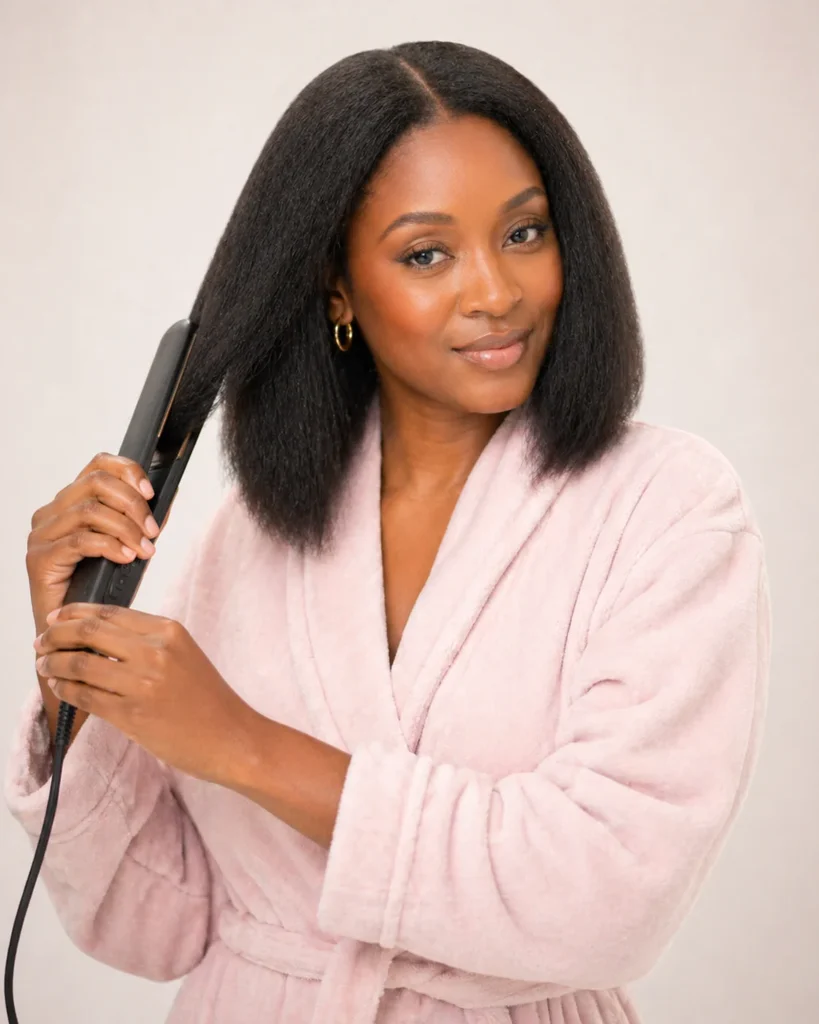
Start with the habits most likely to reduce unnecessary stress. Be gentle when detangling, limit excessive heat and avoid repeatedly manipulating fragile ends. Keep your conditioning routine consistent instead of changing products every week.
MegaGrowth Damage Protection can support an aftercare routine focused on protecting hair during everyday styling and handling. But the goal is not to make damaged hair healthy overnight. Damaged hair does not repair itself. It has to be protected while new, healthier growth comes in.
Measure progress over months, not weeks. You may notice less snapping before you see a dramatic difference in length. Consistency allows healthy new growth to remain on your head long enough to become visible length.
FAQs
Why is my relaxed hair breaking?
Relaxed hair can break when it is overprocessed, repeatedly manipulated, excessively heat-styled or not adequately conditioned. Breakage can also happen at the demarcation line where new growth meets relaxed hair. Look for short pieces without a root bulb and review how you handle, detangle and chemically process your hair.
How do I know if my hair needs protein or moisture?
Pay attention to how it feels and stretches when wet. Rough, stiff hair that snaps quickly often needs moisture, while hair that feels mushy, stretches excessively and fails to bounce back may need protein. Use your hair’s response to guide the next treatment.
Is it normal for relaxed hair to shed every day?
The important thing is what those strands look like. Full-length strands with a small bulb suggest shedding, while numerous short pieces without a bulb point more towards breakage. If shedding seems unusually heavy or is accompanied by visible thinning, seek professional advice rather than assuming it is routine shedding.
Conclusion
Healthy relaxed hair is not defined by zero shedding or perfectly smooth ends. It is hair that remains flexible, retains moisture, handles normal styling without excessive snapping and continues to grow without constantly losing length to breakage. If you are asking what does healthy relaxed hair look like, focus on how your hair behaves over time.
If your routine is not giving you those results, adjust one thing at a time and give it time to work. MegaGrowth products can support a consistent conditioning and protection routine, but the bigger win is learning what your hair is telling you.
If you notice patchy hair loss, traction alopecia or scalp symptoms, speak with a doctor or trichologist rather than treating the problem as ordinary breakage.