If you want to know how to relax hair without damage, start with four mistakes that cause most problems: overlapping onto already-relaxed hair, leaving the product on too long, combing while it processes and under-neutralising. The right technique protects the hair from unnecessary chemical and mechanical stress.
What Damage Actually Comes From
A relaxer changes the hair’s structure to make it straighter. The process is permanent, so previously relaxed hair does not need another application.
Overlapping is a major source of weakness because the same section receives repeated chemical processing. Breakage may not happen on relaxer day; weakened hair can show the damage weeks later. Excessive combing adds mechanical stress, while excessive processing increases chemical exposure. Neutralisation matters because the relaxer must be thoroughly rinsed away and the chemical process properly stopped.
The Week Before
Preparation begins before application. Avoid shampooing for a day or two beforehand unless your product instructions say otherwise. Natural oils can help reduce scalp irritation.
Check your scalp and hair. If the scalp is sore, scratched or irritated, or the hair is already breaking badly, postpone the service. A strand test is also worthwhile, particularly with a new product or unfamiliar hair.
Have everything ready before you begin: gloves, clips, protective base, applicator, timer, towels, water and neutralising shampoo. Working with everything within reach means you are less likely to rush once the chemical process has started.
The Process, Step by Step
Sectioning
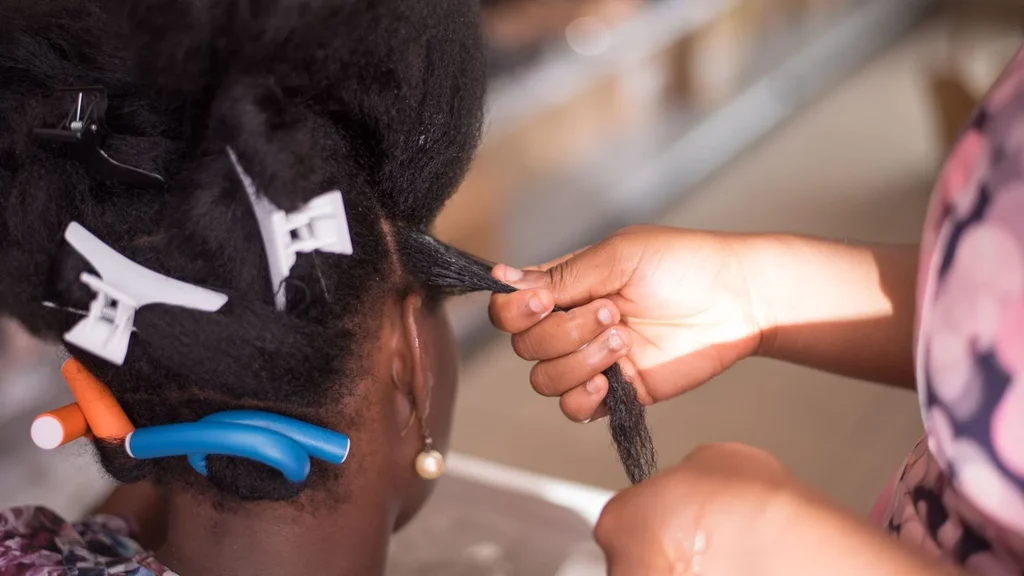
Divide the hair into four or five sections before applying the relaxer. Good sectioning lets you work efficiently and keeps the application controlled and even.
Basing the Scalp
Apply the protective base recommended for your relaxer to the scalp, hairline, ears and nape before the product comes near your head. Do not apply relaxer directly to the scalp. Pay particular attention to the hairline and nape because these areas can be delicate.
Applying to New Growth Only
This is the most important instruction: relaxer new growth only.
New growth is hair that has appeared since the previous relaxer. Previously relaxed lengths have already been processed and should not receive another application.
So, should relaxer be applied to the roots or the ends? Apply it to the new growth at the roots, not through the previously relaxed lengths. Overlapping can over-process the hair and lead to weakness and breakage. Apply the hairline and nape last because they can process quickly.
If you use MegaGrowth Relaxer, follow the directions supplied with your specific kit for application, strength and processing time.
Smoothing, Not Combing
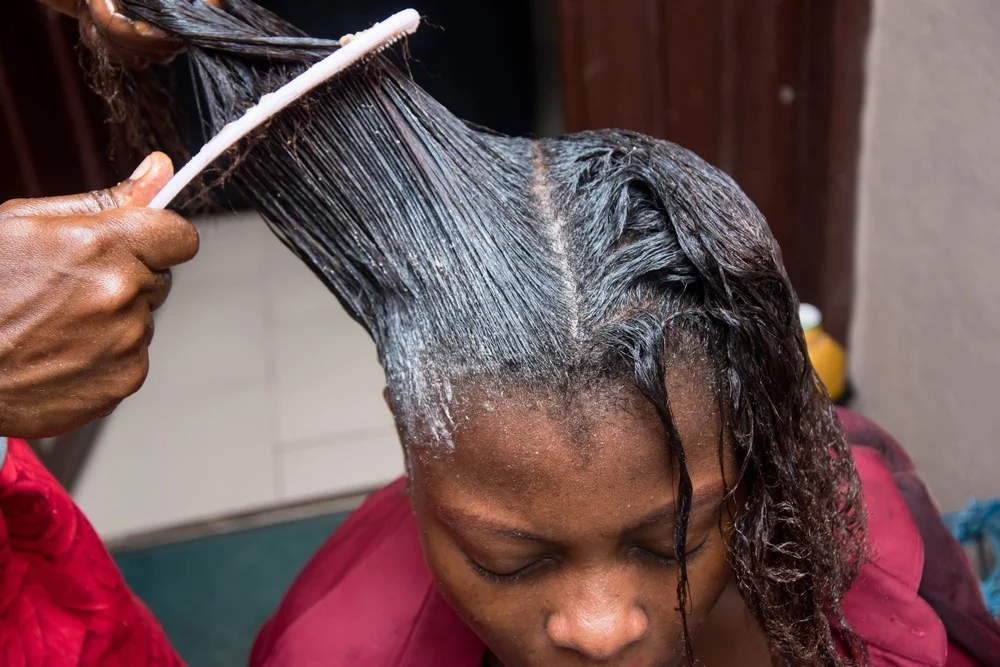
After application, gently smooth the new growth according to the product directions. Do not comb relaxer through the hair to make it straighter. Smoothing distributes the product without unnecessary manipulation; combing can add stress while the hair is chemically processing.
Timing and Rinsing
A common question is how long to leave relaxer on. There is no universal timing for every product or head of hair, so follow the manufacturer’s instructions for your relaxer.
Do not extend processing because the hair is not as straight as you want. Around 80 percent straight can leave more strength than chasing bone-straight hair. Under-processed hair can be addressed at a later service; over-processed hair cannot simply be reversed.
When the recommended time is reached, rinse thoroughly with plenty of water before neutralising. Make sure you remove as much relaxer as possible before moving to the next stage.
Neutralising Properly
Neutralising is not an optional final wash. After rinsing, use the neutralising shampoo specified for your relaxer system. Work it through thoroughly and follow the instructions for how many applications are required.
If the shampoo has a colour-change indicator, use it as directed and continue until the product indicates adequate neutralisation. Do not substitute ordinary shampoo for a neutralising shampoo designed for the chemical service.
This is also why knowing how to neutralize relaxer properly matters. Rinsing alone is not the same as completing the neutralisation process.
Conditioning Straight Afterwards
Once neutralisation is complete, condition immediately. A strengthening or reconstructing treatment can support chemically processed hair, followed by moisture to improve softness and manageability. Use products recommended for your system and follow their directions rather than piling on several treatments.
Salon or at Home
If you are wondering how do I relax my hair safely at home, preparation and precision matter. Home relaxing is common, but working alone makes the back of the head harder to reach and increases the chance of uneven application or overlap.
A second pair of hands can make the process easier. A professional stylist can also assess new growth and previously treated hair more easily, but a salon appointment does not remove the need for good technique. Ask how the stylist will prevent overlapping and neutralise the hair.
Either way, a strand test is worth doing. It is a small step that can reveal how your hair responds before you commit to treating the entire head.
The First 72 Hours
Freshly relaxed hair needs gentle handling. Avoid tight styles, unnecessary pulling and excessive heat immediately after the service.
Keep manipulation low and moisturise when needed. Do not repeatedly test the hair by pulling or combing it. The real measure of a successful relaxer is not only how straight it looks on day one, but how well it holds up in the weeks that follow.
FAQs
How long should relaxer stay on your hair?
Relaxer should stay on the hair only for the processing time specified by the manufacturer and appropriate for your hair. Do not extend the timing for a straighter result. Leaving relaxer on too long increases chemical exposure and can contribute to over-processing, weakness and breakage.
Should relaxer be applied to the roots or the ends?
Relaxer should be applied to new growth rather than previously relaxed lengths. The new growth needs the chemical treatment, while the ends have already been processed. Applying relaxer over those lengths can cause overlapping and unnecessary damage, particularly when repeated during successive touch-ups.
What happens if you leave relaxer on too long?
Leaving relaxer on too long can over-process the hair, making it weaker, drier and more prone to breakage. Follow the instructions for your specific relaxer rather than extending the processing time. If your hair is not straight enough, address it at a later service instead of processing it beyond the recommended time.
Conclusion
Knowing how to relax hair without damage is really about controlling every stage. Prepare the scalp, section the hair, apply only to new growth, smooth rather than comb, respect the processing time, rinse thoroughly, neutralise properly and condition immediately.
If MegaGrowth Relaxer is part of your routine, follow the directions supplied with your specific kit. You can also shop MegaGrowth products at The Diva Shop for your wider post-relaxer routine.
Straight hair is only one measure of a successful relaxer. Hair that remains manageable, healthy-looking and strong weeks later is the result worth aiming for.