
Everybody knows the pattern. The rains start, and within a few weeks you are killing three of them before bed instead of one. Rainy season mosquitoes are not a feeling, though. The numbers really do climb, and they don’t appear immediately when the rain falls, which is why the worst nights arrive weeks after the first heavy rain.
Why the Rains Bring Them to Nigerian Homes
Rain creates temporary pools, and Anopheles gambiae, the main vector across much of Nigeria, breeds in exactly that kind of shallow, sunlit water. Mosquito numbers rise within a week or two of the rain. The rise in malaria in rainy season months follows about two months behind.
The second half is less obvious and matters more. Humidity keeps adult mosquitos alive longer, and a mosquito has to live long enough for the parasite inside it to develop before it can pass anything on. A study in north central Nigeria measured adult longevity at 6.8 days in the dry season and 16.95 days in the rains.
More of them, living more than twice as long.
The Breeding Sites Around Your Home
Alt text: “Mosquito breeding sites around a Nigerian home”
The standing water mosquitoes need is far smaller than people picture.
The usual mosquito breeding sites around a Nigerian house: buckets and storage drums, especially uncovered ones, blocked gutters along the roofline, old tyres in the yard, plant saucers under the pots, bottle caps and tins in the corner nobody sweeps, uncovered tanks, and puddles that sit for days.
Egg to flying adult takes ten to fourteen days for Anopheles, so anything holding water a fortnight is capable of producing mosquitos.
The honest limit is that mosquitoes travel. Your compound being clear helps, and helps much less when the one next door is not.
The Problems Everybody Recognises
Four of these will sound familiar.
The Ones That Get In When You Open the Door
You open the door for ten seconds and three come in with you. Then the light goes on and they vanish into the ceiling until you are lying down.
How do I stop mosquitoes coming in when it rains is really a question about gaps. The doorway is one. Windows without nets, or nets torn at one corner, are the rest, and most get in around the frame rather than through the mesh.
Standing Water You Cannot Control
You clear your own compound. Then there is the gutter outside the fence that has not drained in years, the empty plot next door holding water across half of it, and the street drainage everybody complains about and nobody fixes.
That part is outside your control, which is why indoor protection is more important here than where the outdoor side can be solved.
Power Cuts on the Worst Nights
The plug-in is running, the light goes, and it stops. It always seems to happen on the night they are loudest.
There is no way to dress that up. A vaporiser needs a socket, and no socket means no cover for as long as the outage lasts. Which is the argument for a second layer that you can spray and get protected.
Children Playing Outside at Dusk
Six in the evening, the rain has stopped, the compound has finally cooled, and no child is coming inside voluntarily.
That hour is the start of the mosquito biting window. You are not keeping them in, so the workable version is long sleeves as the sun sets.
What to Do Before the Season Peaks
Everything here works better done in May than in August.
Walk the compound weekly and empty whatever holds water. Cover the drums and the tank. Clear the gutters before the rain tests them. Check every net and door gap now, while you can still get somebody to fix them.
Alt text: “GoodKnight Power Activ+ for rainy season mosquito protection”
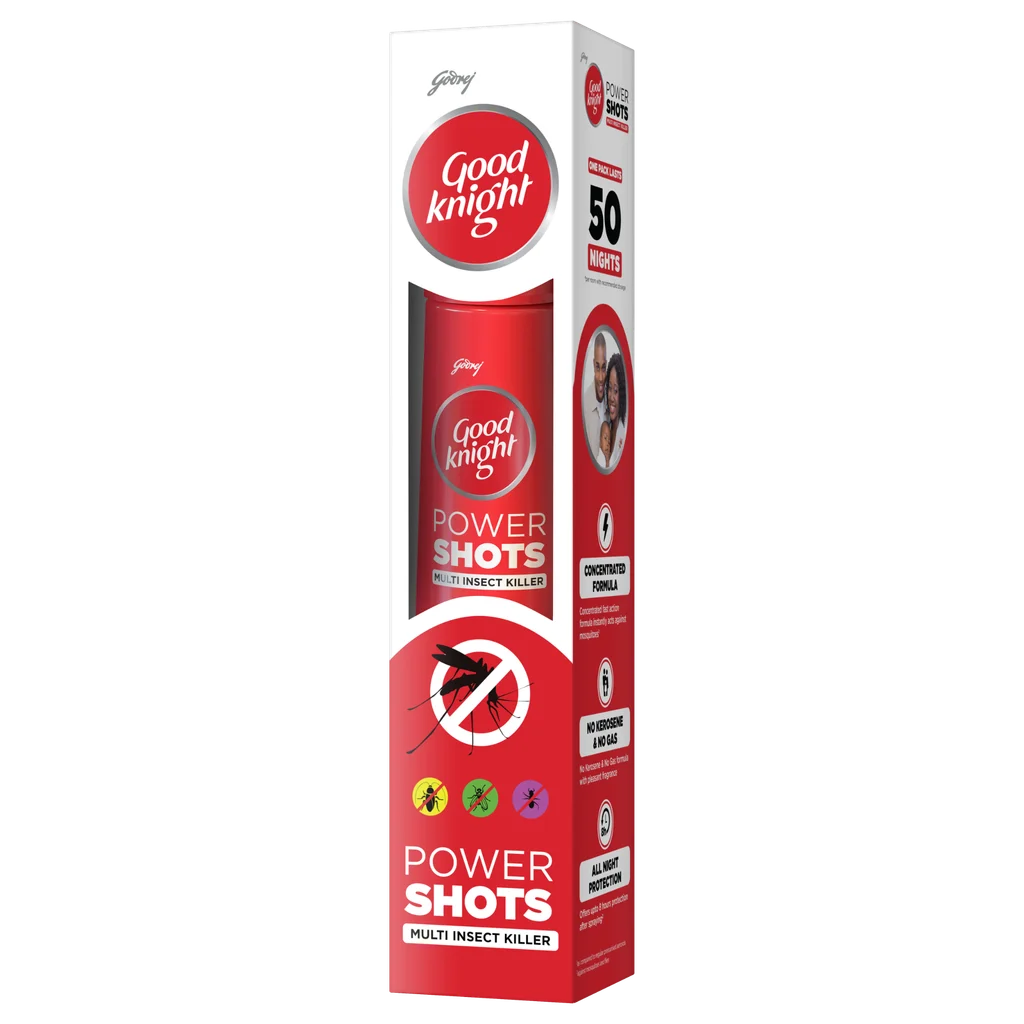
Then get the overnight layer running. GoodKnight Power Activ+ is the one to have going through the peak, and starting early means you are not reacting at 1am. Keep a spare Power Activ+ refill on standby. A can of Power Shots alongside it covers the rest. That is most of how to prevent mosquitoes during the rainy season.
Keeping It Up Through August and September
Alt text: “GoodKnight Power Shots spray for indoor mosquitoes”
August and September are the peak. Malaria cases in Nigeria climb from June and top out around then, so this is where the routine has to be consistent the most.
GoodKnight Power Shots deals with whatever gets in, and it is the answer on the night the power goes, you can spray it while your family is indoors. Spray the room, corners and behind the curtains, you can still have your family time while it does its work.
Keep Power Activ+ is great for every night protection, just plug it in or dedicate a wall socket to it that you can switch on whenever you are indoors. The value of a continuous layer is that it is continuous. The GoodKnight range at The Diva Shop has both, and the case for year-round protection covers why none of this stops in November.
FAQs
Why Are There More Mosquitoes When It Rains?
Rain creates the shallow temporary pools Anopheles gambiae breeds in, so numbers rise within a week or two of heavy rain. Humidity also extends adult survival, and in north central Nigeria longevity measured almost 17 days in the rains against under 7 in the dry season.
When Is Malaria Season in Nigeria?
Transmission peaks roughly June to October, with cases climbing from June and topping out in August and September. It is not a season with an off switch, though. Malaria transmits year-round across most of Nigeria, all year in the south and around three months in the far north.
How Long Does It Take Mosquitoes to Breed in Standing Water?
Around ten to fourteen days from egg to flying adult for Anopheles, depending on temperature. That is why emptying containers weekly works. Anything holding water for a few days produces nothing, and anything holding it for a fortnight or more is producing mosquitoes.
Conclusion
The rains do not create the problem, they enlarge it. Clear the water weekly, close the gaps before June, and have the overnight layer running before August rather than after the first bad night.