In October 2020, Mbah Nicholas Ugochukwu was living in Ojo, Lagos, where he ran a barbershop while building other businesses. When the #EndSARS protests began, he joined because he wanted to stand up for the rights of Nigerians, having experienced harassment from SARS officers himself. Nine days after one of the protests, he was arrested and sent to prison where he would remain for eight months for a crime he didn’t commit. Six years later, Nicholas is still trying to rebuild his life after losing his business, home and sense of security. This is his story, as told to Babatunde.
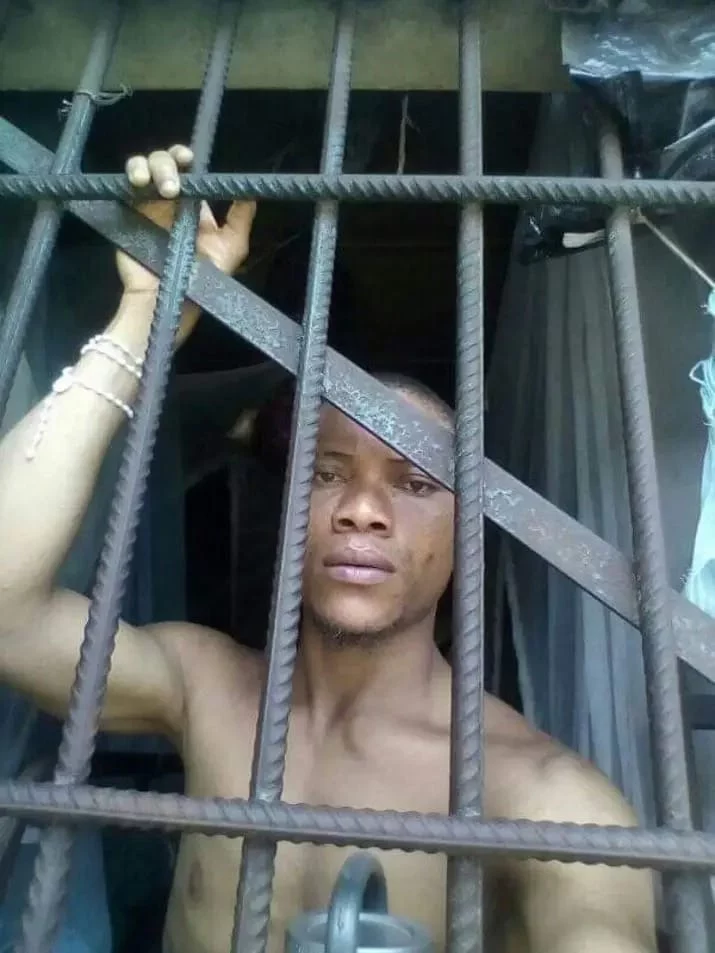
At the time, I was living in Ojo, Lagos State. On that day, October 20 2020, we had held a protest at Ojo, and it ended peacefully. There was no fighting or destruction of property. However, later that day around 7pm, we heard about what had happened at the Lekki tollgate.
Nine days later, on October 29, 2020, I went to open my barbershop. I had to visit the bank to obtain some official documents for an online business I wanted to start, so I left the shop half-closed after opening for the day.
After I finished at the bank, I stepped outside and waited for a keke (tricycle) to take me back to my shop. Suddenly, a Hilux van stopped in front of me, and before I could say anything, five men stepped out.
One of them shouted that they recognised me and knew I was among the people who had participated in the protests. Before I could react, they pounced on me and started dragging me away. By then, I was already weak from the beating. They collected everything I had on me, threw me into the back of the car, and drove off to Ojo Police Station.
When we arrived, they told the Police officers that I was one of the coordinators of the #EndSARS protests. At the mention of this, the officers immediately started beating me up before locking me up.
I asked to make a phone call so I could inform my family and friends about my whereabouts, but they refused. Even when I could hear my phone ringing and see that messages were coming in, they wouldn’t give it to me.
I spent two days at the station without being allowed to eat or contact anybody. I was just there.
Inside the cell, I met two other men. One of them told me he was a tricycle driver who had been arrested while picking up passengers.
After two days, the officers brought us outside and told us to write statements. They wanted us to write statements that would implicate us. I refused because I didn’t understand why I had been arrested in the first place. I insisted that I wanted to make a phone call instead. Eventually, one of the officers wrote a statement on my behalf.
That same day, some policemen arrived in a minibus and took us to the State Criminal Investigation Department (SCID) in Panti. The officers from Ojo handed over everything they had collected from me to the officers there before throwing me into a cell. The beating I received at Panti was the worst of my life.
A few weeks before my arrest, I had undergone surgery for haemorrhoids and was still recovering. The beatings made my recovery even more difficult. I had joined the protests despite my health condition because I wanted to defend this country and our rights as citizens.
I had also experienced terrible treatment at the hands of SARS officers because of the way I dressed. At the time, I was trying to pursue a music career, and I wore dreadlocks; that hairstyle caused me several arrests..
Back in the Panti cell, my condition continued to deteriorate. I hadn’t recovered fully from the surgery, and I had been beaten repeatedly. I appealed to the officers to let me take the injections and medication I needed to recover, but they refused.
Accused of armed robbery, arson and rioting
I spent six days in the cell at Panti with other detainees. On the sixth day, we were taken to the Yaba Magistrate Court.
The magistrate joined me and the tricycle driver I had met at Ojo Police Station as co-defendants. We were charged with armed robbery, arson and rioting.
The magistrate asked whether we understood the charges. I raised my hand and told him I didn’t understand them. I didn’t even know why I had been brought before the court.
The court clerk read the charges again and asked if I understood. I maintained that I didn’t. I explained that the police hadn’t told me what crime I had committed when they arrested me, that nobody had informed me I would be brought to court on those charges, and that I didn’t have a lawyer.
After that, they handcuffed the two of us, took us back to the vehicle and drove us to Panti.
By then, my girlfriend knew I was being held there. She later told me she had seen my picture circulating online when we were taken to court. People were already protesting against my arrest and demanding my release.
Early the following morning, at about 2 a.m., the officers brought us out. There were about 90 men and a woman. They packed us into a bus and drove us to Kirikiri Maximum Correctional Centre in Apapa.
The journey was extremely uncomfortable, and I was in terrible pain. Almost everyone on the bus was coughing.
Life lnside Kirikiri
Life in prison was difficult from the moment I arrived. I was already injured, my health was deteriorating, and I wasn’t receiving the medical attention I needed.
The conditions in the cell were terrible. There was no proper medical treatment, and the only food available to us was dry garri. I was struggling physically and mentally.
When people arrived at the prison, they were welcomed as “visitors”. The officials would read the rules to them and explain that the laws governing life inside the prison were different from those governing the outside world.
You could imagine the level of control we were under. If you laughed, you had to explain why you were laughing. If you farted, you had to explain why you had done it.
I didn’t understand most of what was happening around me. Nobody was allowed to visit me during this period.
When my family brought food, the prison officials would collect it, take some for themselves and give me what remained. I only found out later that this was happening.
On my way back from court, some inmates assaulted me because they had seen my girlfriend give me money. They beat me to collect it. It was a terrible experience.
Even while I was in prison, people knew about my case. Whenever other inmates returned from court, they would ask who I was because my face had become familiar around the court premises. People were demanding my release.
The parts I still struggle to talk about
The entire experience is difficult for me to discuss because I haven’t healed from it. There are things I cannot share. Even talking about some of them now makes me uncomfortable and brings back painful memories.
One experience that continues to torment me happened at Kirikiri. There is a place in the prison called Angola. That is where new arrivals are taken when they first get there, and you are made to stay for five days.
You remain in darkness throughout that period. What makes it worse is that you are beaten mercilessly every day. Imagine being flogged from every direction in a dark room where you cannot even see who is beating you. They beat you until you collapse, then leave you alone for the rest of the day.
Those five days were hell for me.
Afterwards, you are taken to meet the people in charge of the prison. They assess your financial capacity and start demanding money from you.
They first pay prison officials to secure their position over you, then they make financial demands on you to recover what they have spent. If you refuse to keep paying, or they cannot recover what they believe you owe them, they make life difficult for you.
They also took a share of whatever my family brought for me.
There were churches and mosques inside the prison, so I started attending church. I had to pay money to be allowed out of the cell to attend the service.
That was how I tried to keep myself sane. I had been damaged physically and mentally, and I needed something to hold on to.
Court appearances
While I was in prison, my court appearances kept being missed. I believed this was because the authorities didn’t want my face to appear in court. People were already protesting and demanding my release, and I felt they wanted to keep me away from public attention.
Eventually, my family got a lawyer who took my case seriously. He was the first person I was allowed to see in prison after I had spent months there. By then, the protests calling for my release were becoming more intense.
Eventually, I was taken to court. The prison officials seemed unhappy with the way I looked in public. I had several bodily injuries; I was weak, and I could barely walk. My condition almost caused an issue in court, soI was taken back to prison that day.
Later, I learnt that the prosecution had changed the charges against me. The original charges of armed robbery, arson and rioting were changed to unlawful gathering.
After two months of going back and forth, my lawyer informed me that the case had been dismissed. I was finally free, but the experience had already taken so much from me.
Life after prison
When I got out, my friends and family tried to help me recover mentally. They would spend time with me, engage me in conversations and try to cheer me up. But I knew I had been damaged.
One day, my friends took me out; They bought me a drink, but I didn’t even touch it. I had completely zoned out. They noticed what was happening and left me alone to process whatever I was going through.
I wanted to be by myself and rest. There was so much going through my mind.
I had lost everything, including my bank accounts, apartment, barbershop and other businesses I had invested in.
Fortunately, an X account had been created to campaign for my release while I was in prison. Through that account, I met someone who gave me money to help me get back on my feet.
I could no longer stay in Lagos. The trauma was too much to bear. Every time I walked along the streets, I was reminded of what I had gone through.
I eventually relocated to Rivers State, where I am trying to rebuild my life, but it is still difficult, even six years later. Some experiences never leave you. There are days when I have no motivation to do anything.
This country took a lot from me. I am now learning to drive trucks so I can gain the experience required for driving jobs. It is a long road, but I don’t have a choice. I have to find a way to move forward.
Six years later, there is still no accountability
One of the things that hurts me most is that there has been no compensation, no apology and no accountability for what was done to me.
It makes me feel that anybody can do anything in this country and get away with it. That is one of the reasons I believe insecurity and corruption continue to grow.
I testified before the panel set up to investigate the events surrounding the #EndSARS protests. I told them everything I went through, but nothing has been done for me.
Every day, I am reminded that I paid a heavy price for standing up for my rights and those of other Nigerians.
It was hell.