The second season of Zikoko’s Life Production series is out soon, and Siraam is part of the lineup. Genoveva Umeh plays the eponymous character of Siraam. A young creative with big ambitions and a messy personal life. Siraam has the kind of spirit that refuses to be smothered by circumstance. Written and directed by Uzoamaka Power, Siraam was brought to life through a collaboration between BluHouse Studios and Zikoko.
In this interview, Genoveva talks about falling in love with playing Siraam’s character. What it means to see a Nigerian woman be fully herself on screen and why the only thing worth striving for is great work.
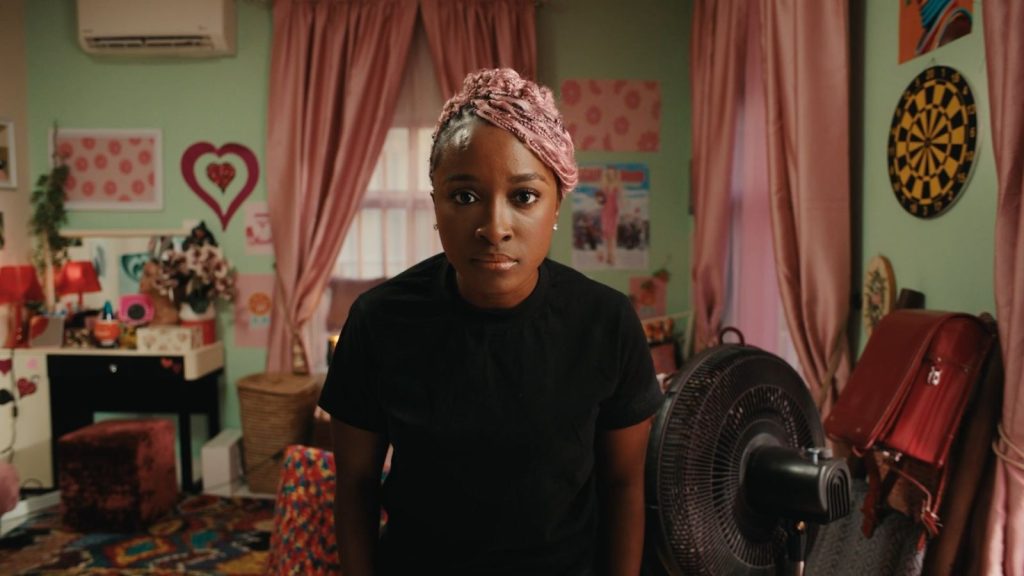
When you first read the script for Siraam, what did you think of the character?
I read it and thought, she’s really fun. She felt colourful and animated, and I just wanted to play her. I remember thinking, Uzoamaka is such a phenomenal writer. Because there was something about the way Siraam was written that just jumped off the page. She had this incredible timing, this warmth, this physical personality. Siraam wasn’t just a character. She was a whole experience.
When I was cast, Uzoamaka sent me a message saying she’d had a great feeling about it, and hoped it would mean something to both of us. I thought it was so honest. We make a lot of things and appear in a lot of things, and sometimes you’re just asking yourself, how does this story move the needle? That’s what I hoped Siraam would do.
This is not the first time you’ll be playing a bold, imperfect character. In what ways did Siraam stretch or challenge you as an actor?
Playing her was easy because I loved her. But what she gave me the space to do? That’s where it gets interesting. She has this gift of physical personality. She’s musical, young and unashamed. And she speaks Igbo, that felt so important to me.
Growing up, speaking your language sometimes felt uncool. I was raised between Nigeria and London, so even though my Igbo isn’t perfect, I understand it. I’m proud of that. And Siraam gets to carry that pride on screen. Uzoamaka and Blessing were so generous in guiding me through the Igbo-speaking parts. I felt comfortable exploring it as best as I could. That felt like a gift.
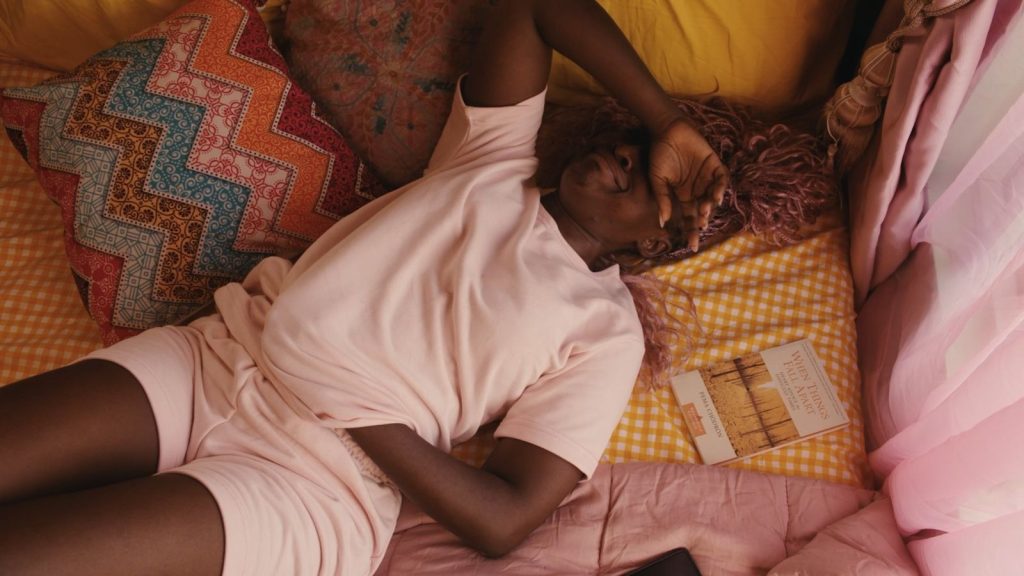
Siraam is a blend of so many things: whimsical, creative, chaotic. Why was it important to bring a story like this to life on screen?
I saw it for the first time at S16. Despite being on set and even having been in the writer’s room, I wasn’t fully prepared for what watching it with an audience would feel like. There’s something completely lost on set that only comes together on screen. And in that room, it hit me.
Stories like Siraam will find girls who haven’t seen themselves reflected anywhere. Nigeria can be aesthetically and environmentally uninspiring. But Siraam says, you can still build whimsy in your head. You can still decide what your room looks like, where you eat and who you speak to. You have autonomy, even in an environment that rarely encourages it. I’m so glad that this story exists in the Nigerian sphere, told by Nigerians, about a Nigerian woman who wins in the end.
How did you prepare yourself for this story, from the first read to the last scene on set?
It started with a self-tape, and really wanting the role. Once I got the role, I talked to Uzoamaka about her writing, and all the characters Siraam reminded me of. I told her she reminded me of Michaela Coel’s character in Chewing Gum. Someone who wants to explore the world and break free from something. Then there’s the messy, bleeding-on-people energy of Fleabag. Siraam has a bit of both.
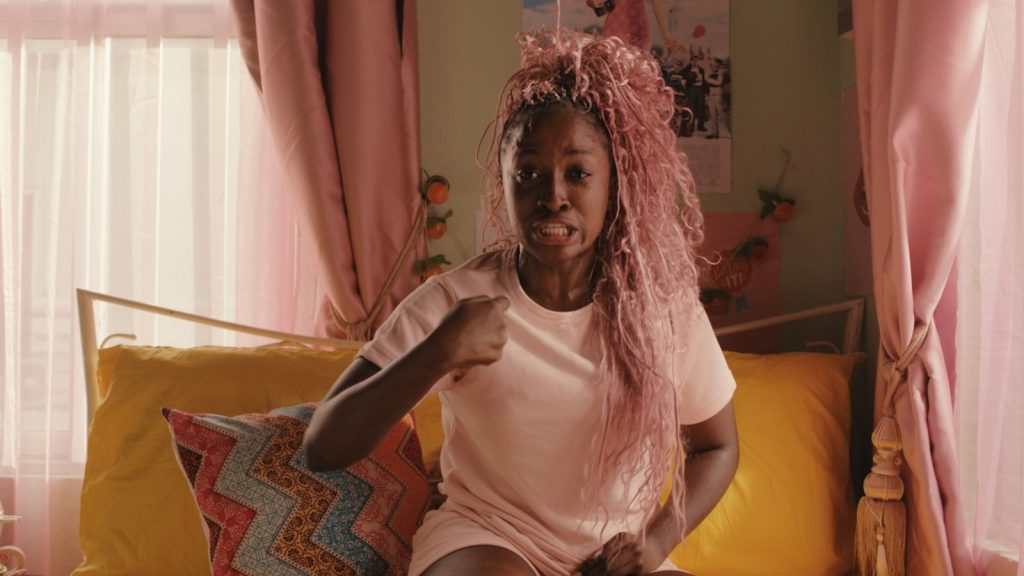
From there it became about rehearsing the big monologues. Sitting with the scenes, and allowing myself to feel whatever feelings she had. I think that was my approach. Allowing myself. The pink hair also helped, because in real life I made it a tradition to get pink braids every Christmas from 2018 to 2021. When I saw that was Siraam’s choice too, I was instantly aligned. I also vlogged the entire production. We filmed for three days and I vlogged every single day. It was a way of staying in Siraam’s energy. Whimsical and joyful. I even opened the first vlog with a prayer that we’d have an easy time and that God would give me direction with my choices.
What are the things you loved about this collaboration, and how does it speak to young women navigating the complexities of being themselves in Nigeria?
Blessing Uzzi and Uzoamaka Power knew the story they wanted to tell. From production design down to how Siraam’s hair would be styled. When you find a partnership that aligns in friendship and in work, you feel it. They made the set so comfortable, and that comfort showed up in the delivery.
I’ve always been a fan of Uzoamaka. I watched her on MTV Shuga when I was in uni in London, gathering my friends around my single bed to watch. When I got to Lagos and saw her at an audition, the first thing I said was, I think you’re amazing. Seeing her blossom into this, and finding this partnership with Blessing, it’s not just great for their careers. It’s great for the kind of work that comes out of Nigeria, out of Nollywood. I’m honoured to be part of that journey.
Can you share one thing you particularly love about Siraam that Genoveva would definitely do, and another thing she did that made you think ‘oh no’?
The pink hair, absolutely. I already lived that life, so that was instant recognition. As for the oh no moment, I don’t want to judge her. Her experiences are too relatable for that. But what I will say is that I’d want her to be a little more careful with who she chooses to be intimate with. To hold herself like an egg. To pamper herself. But when a girl gets there, a girl gets there. And Siraam does get there.
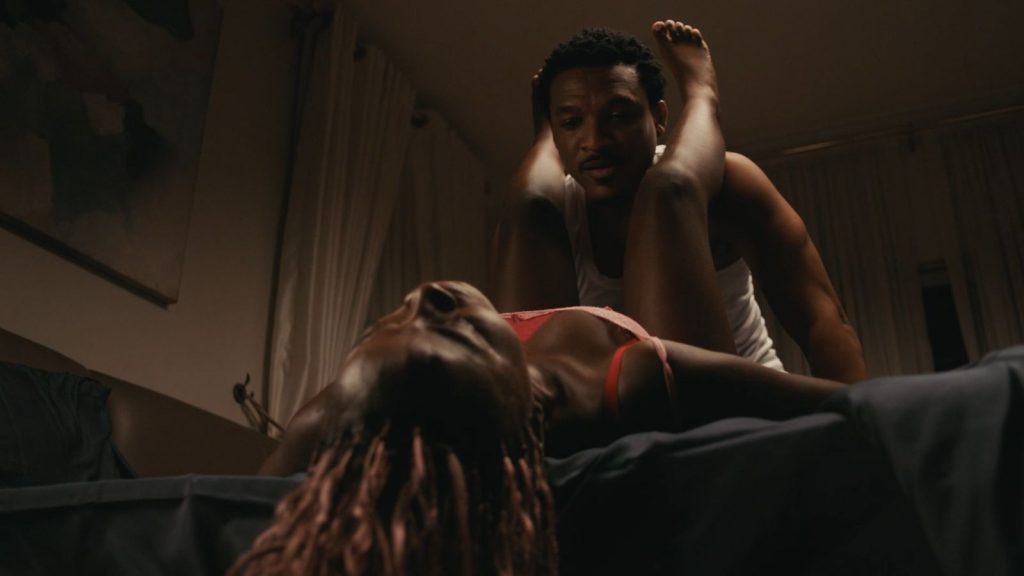
Sexual agency is a core theme in this story. Why do you think young women need to be unashamed about theirs?
Having sexual agency doesn’t mean being sexually active or ignoring consequences. It means having the freedom to choose. Whether to have sex or not, who to be with, what boundaries to set, when to say yes or no. That autonomy belongs to every woman, whether she’s choosing abstinence, casual dating, marriage, or celibacy.
We only live once, and we’re only young once. Our sexual autonomy needs to be explored confidently. We have to be prepared that not everyone will accept those choices. But the decisions are ours. Society doesn’t get to dictate what’s acceptable. We have to be happy with our own decisions regardless of whether we’re supported.
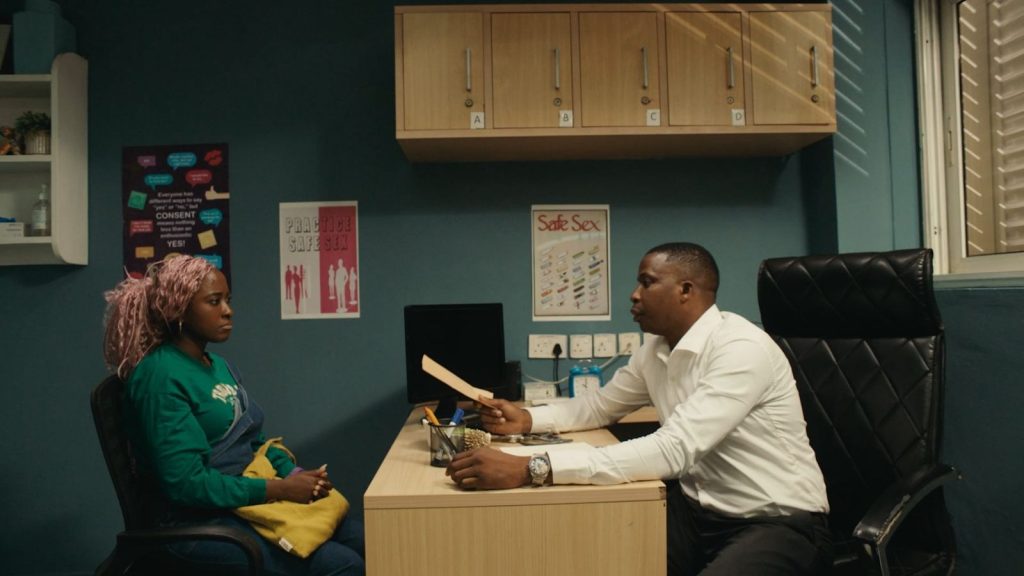
And part of that agency is showing up for your own health. Going to the clinic and taking the test. I know how scary those spaces can feel. Especially when the person attending to you is a male staff member, and you’re worried about being judged. But prepare your mind, set your goal, and show up anyway. Be cautious about who you’re intimate with. There’s so much we’re not taught about what can be passed between people, even through oral sex. Condoms are non-negotiable. Taking control of your sexual health is part of taking control of your life.
Another wholesome element of this film is the relationship between Siraam and Chidaalu. Can you speak to the critical nature of female friendships in the life of a young woman trying to find herself?
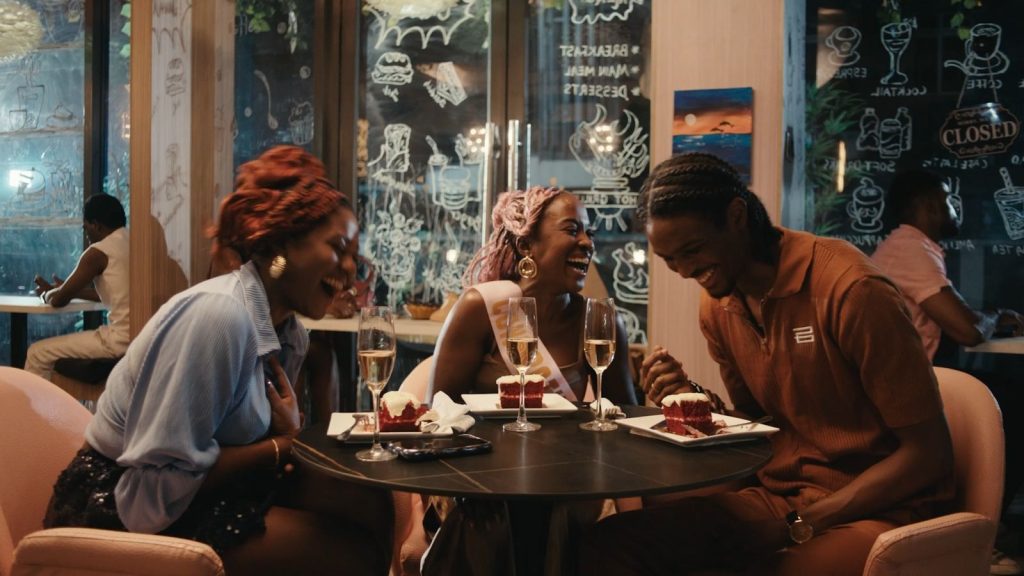
Female friendships are literally the light of my life. And the actress who plays Chidaalu? She and I go way back without even fully realising it. She recently sent me videos from the very first party I ever threw when I landed in Lagos. We’d been in each other’s orbit the whole time. So playing alongside her was easy. We brought our friendship into it, and you can feel that on screen.
There’s also Chidaalu’s brother. That dynamic adds something meaningful to the mix. Siraam respects the friendship so much that she doesn’t even clock that he’s pining for her. Real friendship creates space for things to unfold the right way, and that’s what happens between them. In my life, my friendships with women are everything. They make me laugh when my head is full.
I have a best friend from uni who used to do my makeup before I’d head to film premieres at Greenwich. When I’d come back, she’d give me mock interviews because she loved watching them on YouTube. She was practising, but she was also helping me dream. Our friendship is over ten years now, and she’s still part of how I show up. There’s just such warmth when women love each other. When it’s completely safe, it’s a beautiful thing.
Can you speak to the importance of not giving up, especially for women whose dreams are unconventional and who tend to be misunderstood?
Being misunderstood is often a side effect of seeing a future that others are yet to see. Especially for women whose ambitions don’t fit into what society expects. Whether that’s acting, entrepreneurship, sports, or activism, the challenge often isn’t the work itself. It’s carrying the weight of not being understood.
But you have to keep going. History is full of women who were considered unconventional and became defining. Don’t abandon the parts of yourself that feel called to bigger things. Even when you’re the only one who can see the vision.
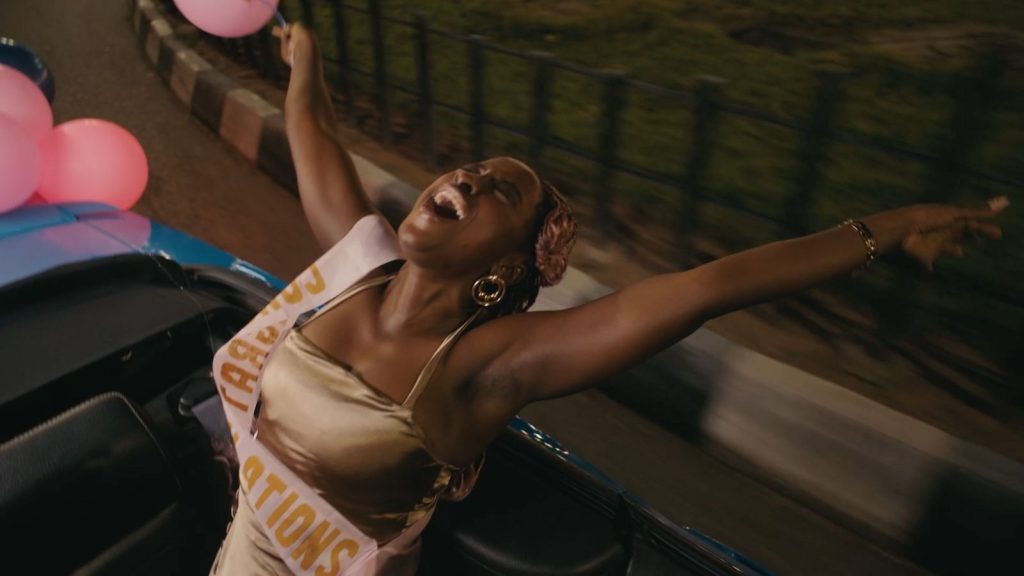
What we see in Siraam is a woman who had those big dreams. A woman who experienced the backlash and the uncertainty, stuck it out and got her big break. And I think that’s the question she’s asking all of us. Are you going to stick it out? Are you going to keep showing up for the things that matter to you? Strive to do great work. Don’t strive to be liked.
Read Next: Overthinkers Anonymous: EDK Is Not Here For Hot Takes