Someone you know has left or is planning to leave. 1,000 Ways to Japa speaks to real people and explores the endless reasons and paths they take to japa.
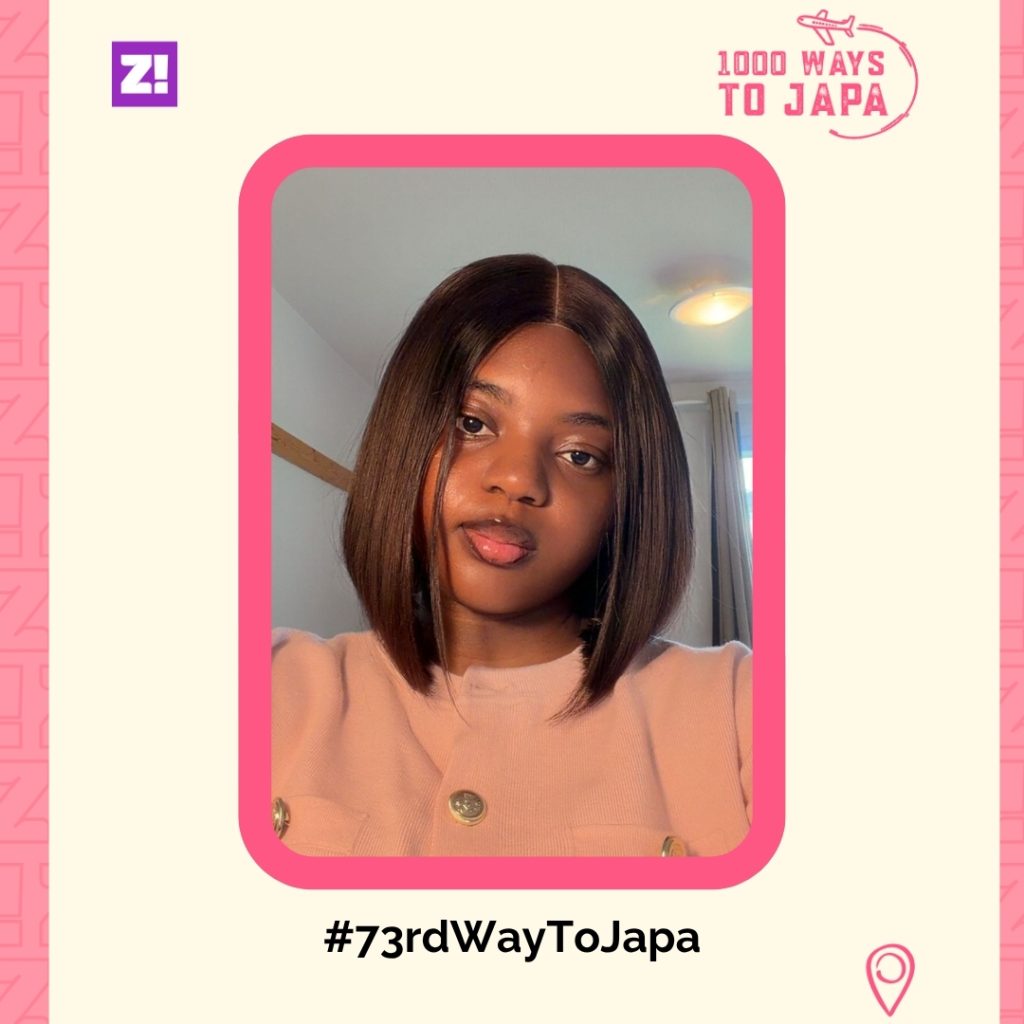
When Timileyin set her mind on leaving Nigeria, Finland wasn’t in the plan, but one Twitter post from a travel consultant changed everything. In this story, she shares how she navigated the country’s joint application system and the one thing she’d warn every prospective applicant about.
Where do you currently live, and when did you leave Nigeria?
I live in Turku, Finland. I left Nigeria in August 2025.
What was life like in Nigeria right before you left?
I travelled a few months after graduating from Kwara State University. I wasn’t working, but I was more or less a full-time content creator on Twitter (X) at that point.
Before I left, I had about 40,000 to 50,000 followers. I used to post relatable, funny tweets, but as I got closer to leaving, I started getting more strategic with my content.
Did you consider doing NYSC before you left?
I actually had plans to. My school kept delaying the National Youth Service Corps (NYSC) process. I registered, thinking I’d do my orientation and work in between, but they kept extending it until the travel process began. So it wasn’t that NYSC was never in the plan; it just got overtaken by events.
When did you first think of leaving Nigeria?
Honestly, it was way before I graduated. My sister had travelled out on a scholarship before me, so it was already like a blueprint in my mind.
I knew Nigeria wasn’t going to give me the life I wanted. As early as my 200-level, I kept telling myself I’d start looking for opportunities to leave once I got to the 300 or 400 level. It was always at the back of my mind.
Was Finland always the destination?
No, it wasn’t always Finland. I used to look at Canada, the United Kingdom (UK), and sometimes the United States (US).
Canada was actually top of my list because my sister lives there, and I felt it’d be easier to go where she was. But sometime in my 300-level, I saw a post on my timeline from a travel consultant about Finland, saying there were many scholarship opportunities and that it was relatively easy to migrate.
I sent him a DM, and he told me to reach out once I was done with school. But I didn’t just wait on that; on my own, I started researching schools, requirements, and the people I needed to talk to .
What did you study for your undergrad, and what pushed you toward your current course?
My undergrad was in Business Administration, and I always wanted to do an MBA. But over time, I started exploring other options and became interested in AI governance.
Right now, I’m doing my Master’s in Governance of Digitalisation at Åbo Akademi University. It’s a two-year program, and I’m done with coursework. I only have my thesis left to write.
Nice! Let’s get into the process — how did you apply to school in Finland?
I used the joint application system, which usually opens in January. You can apply to up to six schools in Finland for a flat fee of €100. I picked three schools and four courses — your course has to align with what you studied for undergrad, they’re strict about that.
Everything from the schools, their courses, requirements, and scholarship provisions is on one site. Depending on the school, you might need a recommendation letter, an academic CV, a motivation essay, or, in my case, a one-minute video explaining why you chose that school and course and why you deserve a scholarship.
How does the scholarship work?
It’s part of the same joint application. You have the option to pay your own fees or receive financial assistance. I selected the financial assistance option for all three schools.
I got my first admission in March, with a 50% scholarship. I decided to wait on the other two schools since they were offering higher percentages. Later that March, I was invited to interview at the school I’m at now, and about a month later, I got the 80% scholarship. The third school rejected me. So out of three schools, I got two offers.
How did the visa process go?
I didn’t use a travel agent to apply for the visa. About a month after my admission, I went to Migri.fi, the Finnish Immigration Service, and did it myself.
What documents did you need for the visa?
The big one is proof of funds. The standard requirement at the time was around €9,600 to prove you could sustain yourself for a year. I had about €9,800 in my account.
They’re also particular about the source of the money. Some people earn funds through salary, some through business ownership, some through selling assets like land or cars, and some through sponsorship. I used my brother’s business as my sponsor.
For sponsorship specifically, they asked for his Corporate Affairs Commission (CAC) documents, his six-month bank statement, my own three-month bank statement, a signed and stamped sponsorship letter from him, and a cover letter from me explaining the arrangement — how much he was sending, when, and how he makes his money.
Beyond that, I submitted my admission letter, my passport data page, my school fee receipt, and proof of health insurance, which I got through Mutual Benefits for about ₦30,000.
Wish someone would just explain what’s going on in Nigeria?
That’s exactly what The Big Daily Newsletter does. We break down Nigeria’s biggest stories, explain what they mean, and why they matter, all in one quick read.
What happened at the visa interview?
The consul asked which school had admitted me and how I was paying my fees. I told her about the 80% scholarship and explained that I had already paid the remaining 20%, with receipts attached.
I also told her about the sponsorship from my brother and what his business does. That was really it. The whole thing is built around proving your source of funds is genuine.
How long did the visa process take, and how did you feel waiting?
It took 28 days for the decision, then about another week for the residence permit to arrive from Abuja. Honestly, I can’t fully explain how I felt waiting; I was anxious the whole time. I knew I hadn’t touched the money in my account, so there was no reason for a red flag, but I had heard of people waiting from 20 days to a full year for a decision.
I was in a group chat with other applicants, constantly asking when they were going for their appointments so I could calculate my own timeline. The day my visa came through, I nearly lost my mind.
What did the whole process cost you?
Aside from the ₦18 million proof of funds, I estimate I spent around ₦5-6 million in total. That covers the €100 joint application fee (about ₦150,000+ at the time), the visa application fee of about €450 (which came to over ₦800,000 paid in person at VFS, plus delivery charges), the ₦30,000-ish health insurance, and flights to Abuja first, then to Finland. There’s also the balance of my school fees.
Did you need an English proficiency test?
No, I didn’t. My school gave me a letter of English proficiency instead; there was an exemption specifically for Nigerian students. But it varies; some schools ask for a formal English test. For the general application, you’ll need your transcript, degree certificate, and either the test or the proficiency letter.
What are some mistakes you made during the process?
Just one: when I submitted my visa application, I was sure I had attached everything, but my passport data page didn’t show up on the site. I only caught it a day or two before my VFS appointment and panicked, but it turned out to be a small fix; I just had to re-upload it as an additional document, since the system sometimes drops a file if you’ve attached too many at once. Lesson: always double-check every document actually uploaded, not just that you attached it.
What was the first week in Finland like, and what culture shocks stood out?
I wasn’t overly excited when I landed. I think I was just tired from the two-day journey. It hit me properly on the second or third day.
One early culture shock: public transport runs strictly on schedule. In Nigeria, you can just stand at a bus stop and something will come; here, you check Google Maps, and if you miss the bus, you’re waiting another ten to 20 minutes.
Another one — a lecturer once lost 20 minutes to a technical issue in a computer room, and later that day sent an email apologising to the whole class and confirming that the material wouldn’t appear on our exam. I remember thinking that could never happen back home.
Registering as a resident and opening a bank account were another shocker; everything runs by appointment. I waited close to two months to open a Finnish bank account. You can’t just walk into a bank the way you would in Nigeria.
How did you sort out accommodation?
Honestly, this tested my patience the most. I didn’t know anyone in Finland before arriving, and I made the mistake of waiting until my residence permit was approved before applying for student housing. Because of that delay, I didn’t get my own apartment until December, even though I arrived in August.
Before travelling, I messaged someone on Instagram, and she agreed to let me stay with her for the first month if I hadn’t sorted accommodation by the time I arrived; she ended up picking me up from the airport too.
I stayed with her far longer than a month in the end, and we just clicked. My advice to anyone coming: the moment you get your admission and start your visa application, apply for student housing immediately so you’re not stranded.
What do you love most about living in Finland?
The security and quality of life, honestly. My door can stay unlocked, and I can walk outside at 1 a.m., without anything happening to me. Everything just works. The one thing that drags the experience down is the job market, which is genuinely difficult right now.
How have you built community there?
I have, and my church has been a big part of it. It helps that we’re a Black congregation.
The friend who housed me had already been in Finland a year longer, so she introduced me to her circle, including other international students. A group of us who arrived around the same time now hang out occasionally. Beyond that, I keep a small circle and enjoy my own space. I’m not an extrovert, so being indoors doesn’t bother me much, except that it gets boring sometimes.
Has the language been a barrier?
Yes, especially for jobs — that’s actually one of the biggest reasons the job market is difficult for internationals. Finnish people can speak English, but they default to Finnish first, and they take pride in the language. If I say “English, please,” they’ll usually switch, but early on, when I got lost navigating the city, some people would just point me to Google Maps instead. I still don’t speak Finnish — I’m learning slowly, but I get by on English day-to-day.
What’s the cost of living like as a student?
It’s still cheap, at least where I am. Student housing ranges from about €230 to €250-plus a month, depending on the setup and the city you live in.
Food isn’t too expensive either. As long as you have a job, you’re generally fine. The minimum wage varies by industry, but it’s roughly €10-€12 per hour, and as a student, you’re allowed to work up to 30 hours per week.
Do you miss Nigeria?
I mostly miss my mum and the general chaos and energy of home. There’s a liveliness in Nigeria that I miss.
t’s not really about the food, since I still cook Nigerian food here. But if you sent me back right now, I couldn’t last more than three weeks before wanting to return to Finland.
What does the path to permanent residency look like from here?
My residence permit lasts for two years. The rules have recently changed — if you complete 15 credit units of Finnish-language coursework while studying, you can now apply for PR much sooner than before, instead of waiting four to five years.
Once my current permit expires, I can also apply for an extended residence permit that gives me time to look for a good job. I don’t know the full details of that process yet, though.
Anything else you want people to know?
Scholarship policies are changing. My school used to offer an 80% scholarship, but that’s gone now. What’s available currently is more of an “early bird” discount, around €3,000 off if you pay your school fees on time.
Universities across Finland seem to be cutting back on scholarships in general, so anyone considering this route needs to check directly with their target schools rather than assume scholarships like mine are still on the table.
On a scale of one to ten, how would you rate life in Finland?
I’d have said ten, but the job situation knocks off two points. So, eight out of ten.
Want to share your japa story? Please reach out to me here.

The Naira Life Conference is returning on August 22, 2026, in Lagos! Come learn from finance experts and industry leaders, and partake in unfiltered conversations about building wealth and diversifying your income stream in a country like Nigeria. Real stories, expert advice you can actually use, and a community ready to build wealth together. Secure your spot here.